
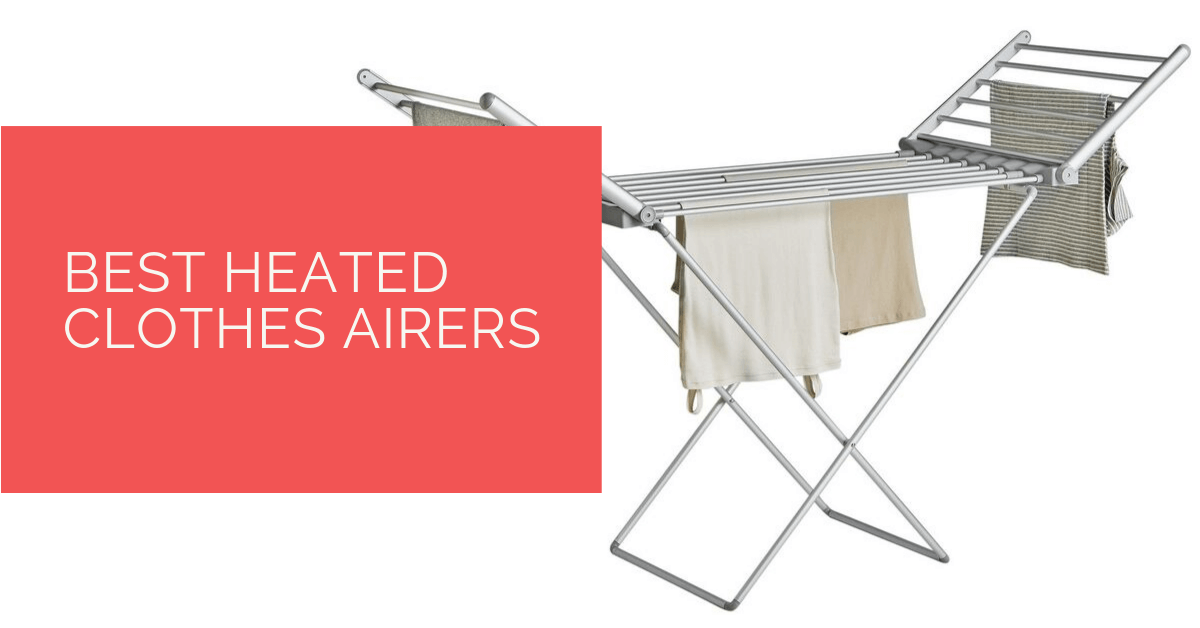
If you’re spending money on a tumble dryer every time it rains, a heated clothes airer is one of the most cost-effective changes you can make. The Lakeland Dry:Soon 3-Tier Heated Clothes Airer is our top pick: it’s the most reviewed electric airer in the UK, folds away easily, and runs at a fraction of what a tumble dryer costs per cycle.
We’ve tested and researched the eight best options available on Amazon UK right now, from budget 300W models to digital airers with timers and the wall-mounted foxydry for those who want something more permanent.
Our Top Picks
| Image | Name | |
|---|---|---|
| Lakeland Dry:Soon 3-Tier Heated Clothes Airer | |
| GlamHaus 4-Tier Digital Heated Clothes Airer with Cover | |
| Homefront EcoDry Electric 3-Tier Heated Clothes Airer 330W | |
| Neo XL Large Indoor Electric 3-Tier Heated Clothes Airer | |
| Duronic CA30 BK 3-Tier Electric Heated Clothes Airer | |
| Vivo Technologies 3-Tier Electric Heated Clothes Airer | |
| Innotic 330W Electric Heated Clothes Airer 3-Tier | |
| foxydry Air Electric Wall-Mounted Drying Rack |
8 Best Heated Clothes Airers
1. Lakeland Dry:Soon 3-Tier Heated Clothes Airer
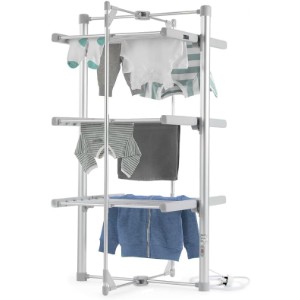
This is the one most UK households end up buying, and for good reason. The Lakeland Dry:Soon has over 1,300 reviews, holds up to 21 metres of drying space across three tiers, and folds down to just 8cm wide when not in use. That last point matters more than people expect: most heated airers are a nuisance to store, but this one genuinely disappears behind a door or under the stairs.
It’s not the cheapest option on this list at around £160, but it’s earned that price through reliability. The aluminium frame is lightweight at 6.8kg, the bars heat evenly, and it copes well with a full family wash load. It won’t shrink or damage delicates the way a tumble dryer will, and it costs a fraction of a tumble dryer per cycle. If you’re looking for the safest all-round choice, this is it.
The main limitation is that it doesn’t include a cover. Adding a fitted airer cover (sold separately by Lakeland) makes a substantial difference to drying speed, trapping the warm air and reducing drying time by roughly a third. If you’re going to run it daily, the cover is worth having.
Features
- 21m of drying space across three tiers
- Lightweight aluminium frame, 6.8kg
- Folds to 8cm wide for easy storage
- 15kg laundry capacity
- Dimensions: 73D x 75W x 137H cm
- Most reviewed electric airer in the UK — proven track record
- Folds very slim for storage
- Even heat distribution across all bars
- Gentle on delicates
- No cover included — buy separately for faster drying
- 15kg capacity is lower than some rivals
2. GlamHaus 4-Tier Digital Heated Airer
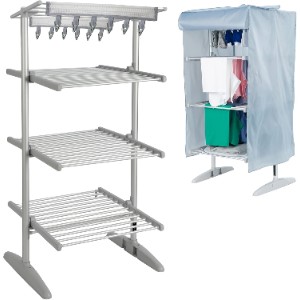
If you want digital controls and a cover included in the box without paying Lakeland or DrySoon prices, the GlamHaus is the one to look at. It runs at 300W, includes a nine-hour countdown timer, and lets you set the temperature to your preferred level rather than just switching on and hoping for the best. The cover is included and makes a real difference to drying times.
Four tiers give you more hanging area than most three-tier models, and the extendable design means you can adjust it to suit awkward spaces. At 4.6kg it’s lighter than many rivals, which makes moving it between rooms easy. The trade-off is that with only 199 reviews it hasn’t been proven over years the way the Lakeland has — but the reviews it does have are largely positive, particularly about the digital interface.
Features
- 300W with digital temperature control
- 9-hour countdown timer
- 4 tiers, extendable design
- Cover included for faster drying
- Lightweight: 4.6kg | 15kg laundry capacity
- Dimensions: 70D x 72W x 149H cm
- Digital timer and temperature control
- Cover included in the box
- 4 tiers — more hanging space
- Very lightweight at 4.6kg
- Fewer reviews than the established brands
- 15kg capacity rather than 30kg
- Some users find the digital panel less intuitive
3. Homefront EcoDry Electric Heated Clothes Airer 330W
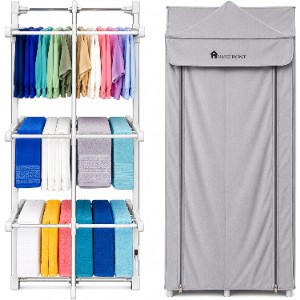
The Homefront EcoDry is one of the better-known electric clothes airers in the UK, with 521 reviews at 4.4 stars backing up its reputation. The 330W output means it runs at very low cost per hour, and it comes with a zip-up cover included — something many rivals charge extra for or don’t offer at all.
The three-tier design gives you a useful amount of drying space for a typical household wash, and the heated rails warm clothes without cooking delicates. It folds flat for storage, which matters if you don’t have a utility room to park it in permanently.
Features
- 330W electric 3-tier heated clothes airer
- Free zip-up insulating cover included
- Energy-efficient — costs pennies per hour to run
- Folds flat for storage
- 4.4 stars from 521 reviews
- Cover included — no extra purchase needed
- Well-reviewed with 500+ ratings
- Very low running costs at 330W
- No timer or temperature control
- Cover can be fiddly to fit initially
- Not suitable for very large households
4. Neo XL Large Indoor Electric 3-Tier Heated Clothes Airer
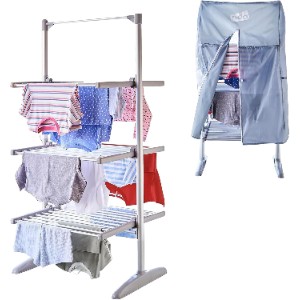
If you need more drying space than a standard airer provides, the Neo XL is worth considering. The 147cm span across 36 rails gives genuinely more capacity than most rivals, and it comes with a cover to speed up drying and retain heat. At 4.4 stars from 737 reviews, it’s the most-reviewed replacement pick on this list.
It folds and stores neatly, and the XL size handles bulkier items — duvets, towels, and school uniforms — without needing to run multiple loads. Running costs are low at 300W, and the included cover makes a meaningful difference to drying time.
Features
- XL 3-tier heated airer with 36 rails, 147cm wide
- 300W energy-efficient operation
- Cover included
- 30kg load capacity
- Foldable and portable
- Extra-large capacity — ideal for bigger households
- 737 reviews at 4.4 stars — strong track record
- Cover included as standard
- Good value for the size
- Larger footprint when open
- No digital controls or timer
5. Duronic CA30 BK Electric Clothes Airer
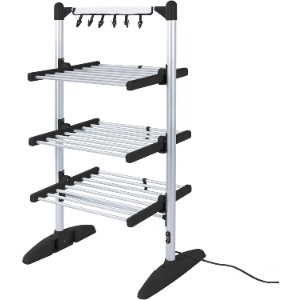
This is the one to buy if you’re on a tight budget but still want a proper electric heated airer. The Duronic CA30 runs at 300W, has a 3-tier foldable frame, and comes with some useful extras that most airers at this price don’t include: washing pegs and sock hangers. Socks are always the awkward item on a standard airer, and having dedicated holders built into the price is a practical touch.
At under £80 it’s one of the most affordable electric heated airers with a decent review base, and the 4.3-star average from 48 reviews reflects a product that works without drama. It won’t dry as fast as a covered premium airer, but if you’re drying overnight or during the day while you’re at work, speed isn’t the critical factor.
Features
- 300W low-energy operation
- 3-tier foldable design
- Includes washing pegs and sock hangers
- Gentle heating to reduce shrinkage and fabric wear
- Dimensions: 147D x 73.5W x 70H cm
- Budget-friendly price point
- Sock hangers and pegs included
- 300W efficient heating
- No cover included
- Fewer reviews than established rivals
- Slower drying without a cover
6. Vivo Technologies 3-Tier Heated Clothes Airer
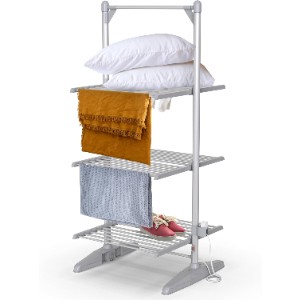
Vivo Technologies market this as an aerospace-grade aluminium frame, which sounds like marketing until you pick it up and notice it genuinely doesn’t flex under a full load of wet laundry. The 36 heated rails span 21 metres of drying space, the 30kg capacity matches more expensive models, and at £80 it undercuts several rivals with a similar spec sheet.
It’s a slightly newer product with fewer reviews than the Duronic or Beldray, but the 4.2-star average is solid enough to warrant inclusion. It suits households that want a robust, no-frills heated airer without spending Lakeland money. The lack of a cover and digital controls keeps the price down while delivering the core functionality most people actually need.
Features
- 300W with 36 heated rails
- 21m drying space, 30kg capacity
- Aerospace aluminium frame
- Foldable, freestanding
- Dimensions: 73.5D x 70W x 139H cm
- 30kg capacity at a budget price
- Sturdy aerospace aluminium frame
- 21m drying space
- No digital controls or timer
- No cover included
- Fewer reviews than market leaders
7. Innotic 330W Electric Heated Clothes Airer 3-Tier
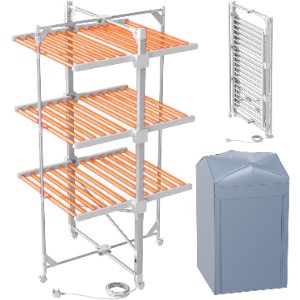
The Innotic is the budget-friendly option here, but it doesn’t compromise where it matters. At 330W with 36 rails and a 21kg load capacity, the basics are well covered. It’s 4.4 stars from 662 reviews, which is enough to take seriously.
What stands out is the price — it typically comes in cheaper than Lakeland or GlamHaus alternatives while offering comparable drying space. If you don’t need a digital display or timer and just want a reliable heated airer that does the job, the Innotic hits the mark.
Features
- 330W 3-tier electric heated clothes airer
- 36 heated rails, 21kg load capacity
- Energy-efficient operation
- Foldable for storage
- 4.4 stars from 662 reviews
- Very competitive price
- 660+ reviews at 4.4 stars
- Solid drying capacity for the money
- No cover included
- No timer or temperature control
- Less well-known brand than competitors
8. foxydry Air Electric Wall Drying Rack
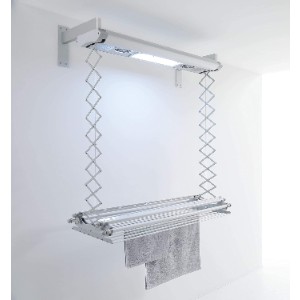
Plug it in, set the thermostat, done — except this one mounts to the wall and folds completely flat when not in use. The foxydry Air is a different category of product from everything else on this list: it’s a remote-controlled wall-mounted electric drying rack that disappears against the wall between uses rather than taking up floor space. With 607 reviews and a 4.6-star average it has more proof behind it than several of the freestanding options.
The £500 price is substantial, and fitting it requires drilling into a wall — so it’s not for renters or anyone not committed to the concept. But for smaller homes or flats where floor space is genuinely scarce, a wall-mounted rack that takes up zero floor space is the only option that makes practical sense. The remote control and electric heating bars mean you can start it warming from another room and come back to dry laundry on a rack that doesn’t require you to drag it out from a cupboard each time.
Features
- Wall-mounted electric drying rack
- Remote controlled operation
- Folds flat against the wall when not in use
- 4.6 stars from 607 reviews
- Permanent, space-saving installation
- Takes up zero floor space
- Remote controlled — very convenient
- 607 reviews, 4.6★ — strong track record
- Expensive at around £500
- Requires wall installation — not suitable for renters
- Permanent commitment to one location
Heated Clothes Airer Buying Guide
Key Takeaways
- A 300W electric heated airer costs roughly 7–11p per hour to run, compared to 50–80p per hour for a tumble dryer
- A cover dramatically reduces drying time — often cutting it by a third or more
- Most standard airers fit a typical family wash load of 4–5kg of wet laundry comfortably
- Digital models with timers allow you to set drying cycles and switch off automatically
- Wall-mounted models are ideal for small spaces but require permanent installation
- Three-tier models are the most versatile — four-tier models offer more space but are taller
- Never use an electric heated airer in a small, unventilated bathroom or wet room
What Is a Heated Clothes Airer?
A heated clothes airer is an electric indoor clothes drying rack with heated bars or rails that warm the laundry placed on them. Unlike a standard unheated clothes horse that relies on ambient air to dry clothes, a heated airer actively warms each item of clothing, accelerating evaporation and cutting drying time significantly. Most models in the UK operate at around 300W, making them far cheaper to run than a tumble dryer, which typically draws 2,000 to 5,000W per cycle.
The concept is particularly well-suited to the UK climate: we have more wet days than dry ones, most homes have limited outdoor drying space, and electricity from a 300W appliance is a manageable running cost. Heated clothes airers have become increasingly popular as tumble dryer energy costs have risen, and the market has grown substantially, with options now ranging from basic freestanding racks to digital models with programmable timers and wall-mounted permanent installations.
How Do Heated Clothes Airers Work?
Electric heated clothes airers use resistive heating elements built into the horizontal bars or rails of the frame. When powered, electricity passes through the elements and generates heat, warming the bars to a gentle temperature — typically between 40°C and 60°C depending on the model. This warmth conducts directly into the fabric draped over each bar, while also warming the air immediately around the laundry.
The drying mechanism is primarily evaporative: the warmth encourages water molecules in the fabric to evaporate as water vapour, which then disperses into the room’s air. This is why using a fitted cover over the airer speeds things up so significantly. The cover traps the warm, humid air immediately around the laundry rather than letting it disperse into the room, raising the effective temperature and accelerating evaporation. Without a cover, the warm air rises freely and the drying effect is more gradual.
Most models have a single power setting, though digital models allow temperature adjustment. At 300W, running costs at the UK average electricity rate of roughly 24p per kWh work out at around 7–8p per hour. A typical drying cycle of four to six hours costs under 50p — compared to 50p to £1 or more for a tumble dryer cycle.
Benefits of Using a Heated Clothes Airer
The most obvious benefit is cost. Running a 300W airer for five hours costs around 36p at current rates. Running a tumble dryer for an hour costs roughly 50p to 80p depending on the model, and most loads need at least an hour. Over a year, households that switch from tumble drying to airer drying for the majority of their laundry can save several hundred pounds.
The second benefit is fabric care. Tumble dryers are hard on clothes: the heat, friction, and mechanical action cause fibres to break down over time, shortening the life of clothing, particularly knitwear, delicates, and anything with elastane. A heated airer dries clothes gently without agitation, preserving the fabric and reducing pilling, shrinkage, and colour fade. For anyone with expensive or delicate garments, this alone can justify the purchase.
Third is convenience. Once you have an electric airer set up in a utility room or bedroom, doing laundry becomes less dependent on the weather forecast. You’re not watching the sky and racing to get washing in before it rains. You put the wash on the airer before bed, and it’s dry by morning. The indoor drying approach suits UK winters particularly well, when outdoor drying is impractical for months at a time.
Things to Keep in Mind Before Buying
Running costs are low, but not zero. At 300W and 24p per kWh, every hour of use costs around 7–8p. If you’re running the airer for six hours daily for six months of the year, that’s roughly £15–20 per year — genuinely modest. But it’s worth factoring into your calculations, particularly if you’re already on a tight electricity budget.
Ventilation matters. A heated airer releases moisture into the air as it dries your laundry. In a poorly ventilated room, this moisture has to go somewhere, and the result is condensation on windows and walls, which can eventually lead to damp or mould. Use the airer in a room with adequate ventilation — even just leaving a window slightly open — and avoid running it in a small sealed space for extended periods. A dehumidifier running alongside the airer is the ideal combination: the airer dries the clothes, the dehumidifier extracts the moisture from the air.
Check your capacity needs before buying. Most standard 3-tier heated airers hold around 15kg of laundry, which is typically one medium family wash load of wet laundry. If you have a large household and do heavy wash loads regularly, look for models with 30kg capacity. The Beldray EH3752 and Vivo Technologies both offer this at a reasonable price.
A cover is important if drying speed matters. Without a cover, an electric airer running for six hours will produce dry clothes, but not as quickly as one with a fitted cover. If you’re drying overnight or during the day while you’re out, cover or no cover makes little practical difference. If you need laundry dry within two or three hours, a cover changes the equation considerably.
Types of Heated Clothes Airer
The vast majority of electric heated airers sold in the UK are the standard 3-tier freestanding model. These have two side wings and a central section, fold flat for storage, and provide 18 to 21 metres of drying space depending on the model. They’re the right choice for most households.
Four-tier models like the GlamHaus provide more vertical drying space in the same footprint, which is useful if you have a large amount of laundry but limited floor area. The trade-off is that the top tier is quite high, which can make hanging heavier items awkward.
Digital models add a timer and temperature control. The timer is the genuinely useful feature: you can set the airer to run for four hours and switch off automatically rather than having to remember to turn it off. Temperature control is a nice-to-have for delicates, though most laundry dries fine at the standard temperature.
Wall-mounted electric racks like the foxydry are a distinct category. They mount permanently to the wall, fold flat when not in use, and work with electric heating elements in the bars. They’re a premium product suited to flats and small homes where floor space is at a premium and a permanent installation is acceptable.
Covered models bundle a zippered fabric cover with the airer. The cover converts the airer into a mini-drying cabinet, trapping warm humid air and significantly accelerating drying. If you plan to use the airer regularly and want the fastest results, a covered model or buying the cover separately is worth the investment.
Running Costs vs Tumble Dryer: The Real Numbers
This is where heated airers make their strongest case. At the current Ofgem price cap of approximately 24.5p per kWh, a 300W heated airer costs around 7.3p per hour to run. A 6-hour drying cycle without a cover costs around 18p per load. A 4-hour cycle with an insulating cover costs around 12p per load.
Compare that to a standard condenser tumble dryer, which draws between 2,000W and 3,500W and typically costs 60–86p per load (at 24.5p/kWh for a 2.5kWh average cycle). A family running five washes per week would spend around £22–£24 per year on a heated airer versus £160–£210 per year on a condenser dryer. Even accounting for longer drying times, the saving is significant.
Higher-wattage airers (400–500W) are faster but cost proportionally more. A 500W airer running for 4 hours with a cover costs around 20p per load — still well under a quarter of the tumble dryer cost. The precise figure depends on your tariff, but the direction is always the same: heated airers are substantially cheaper to run than any form of tumble drying.
The Cover: What It Does and Whether You Need One
A cover is an insulating tent that fits over the airer, trapping heat around the clothes rather than letting it dissipate into the room. It typically reduces drying time by 30–40% and cuts the electricity cost of each load by a similar proportion. It also reduces the amount of moisture released into the room air, which matters for condensation management in smaller or less ventilated spaces.
Not all heated airers come with a cover included. Some brands sell it separately, and for some models you can use a universal cover from a third-party supplier. When choosing a cover, check that it fits your specific model and bar layout — a poorly fitting cover is worse than no cover at all, as it traps moisture unevenly and can leave sections of laundry damp for longer.
Whether you need one depends on your situation. In a well-ventilated utility room with no condensation issues, and where you’re happy with longer drying times, you can use an airer without a cover. For a bedroom, living room, or any space where condensation is a concern, a cover is worth having. For families doing multiple loads per week where running cost efficiency matters, the cover pays for itself quickly in reduced electricity use.
Drying Times: What to Expect Realistically
Manufacturers quote drying times that assume optimal conditions: a standard wash load, an even spread of garments, good airflow, and a well-insulated cover. In practice, drying times vary considerably based on the fabric weight, the load size, the room temperature and ventilation, and whether you use a cover.
As a rough guide: lightweight items (shirts, underwear, socks, thin cotton tops) typically dry in 2–4 hours with a cover, or 3–6 hours without. Heavier items (jeans, towels, thick cotton sweatshirts) take 4–6 hours with a cover and may need 6–8 hours without. Denim specifically can be stubborn — heavier denim may need overnight drying or a longer cycle even on a quality airer.
The most common cause of poor results is overloading. Clothes that overlap or bunch together don’t get adequate airflow between them and dry unevenly. A standard 14-bar family airer handles around 4–5kg of wet laundry comfortably at full capacity — which is roughly one machine load. Consistently overloading the airer leads to results that compare unfavourably with what reviewers report, so stick to the recommended capacity.
Dampness and Condensation: Managing It Well
The moisture in your laundry has to go somewhere. In a tumble dryer, it goes out through the exhaust or condenses in the water tank. On a heated airer, it evaporates into the room air. In a well-ventilated space — a utility room with an extractor, a kitchen with a window cracked open, or a garage — this is not a problem. In a small bedroom or bathroom without adequate ventilation, it can cause condensation on windows, dampness on walls, and in the worst cases, mould growth over time.
The practical solutions are: use a cover to contain the moisture within the airer’s footprint and allow more controlled evaporation; use a dehumidifier in the same room (a 10–20L/day dehumidifier running during the drying cycle removes the moisture efficiently and costs around 3–6p per hour to run); or ensure adequate ventilation via an open window or extractor fan. The cover-plus-dehumidifier combination is recommended for anyone drying indoors in a bedroom or living space.
Newer homes built to post-2010 standards with MVHR (mechanical ventilation with heat recovery) handle indoor drying much better than older, draughtier properties. In Victorian and Edwardian terraces that have been sealed and double-glazed, indoor laundry drying is a significant source of excess humidity — this is a real risk and worth taking seriously.
Heated Airer vs Tumble Dryer: Which Is Right for You
A tumble dryer does one thing extremely well: it dries a full load quickly, typically in 45–60 minutes, with no management required. Load it, press start, come back and everything is dry. For households that generate large volumes of laundry, have children in sports, or value speed above everything, a tumble dryer is often indispensable.
A heated airer dries more slowly (4–8 hours depending on load and settings), requires you to hang each item individually, and occupies more floor space during the drying cycle. In exchange, it costs a fraction of the price to run, is gentler on fabrics (no tumble action, lower heat), and does the job of a radiator-based drying system but without the condensation problems of draping clothes on cold radiators.
The most honest answer for most households is that they’re not direct alternatives: a heated airer works best as a primary drying method for lighter loads, delicates, and overnight drying cycles where time is not critical, while a tumble dryer handles heavy loads and time-sensitive drying. If you currently use a tumble dryer for everything, replacing it entirely with a heated airer requires a change in laundry habits. If you primarily dry on radiators or on a standard unheated airer, a heated model is a straightforward upgrade that will satisfy most of what you need.
The Off-Peak Tariff Trick
If you’re on an Economy 7, Octopus Go, or similar off-peak electricity tariff, a heated airer becomes even cheaper to run. Off-peak rates are typically 7–12p per kWh — roughly half the standard rate. A 300W airer running overnight at 7p/kWh costs around 2.1p per hour. A 6-hour overnight cycle costs around 12.6p, versus 18p at the standard day rate.
To take advantage of this, you need either a digital airer with a built-in timer (which lets you set it to switch on at 12:30am and off by 7:00am, for example) or a plug-in smart timer from a hardware shop. The Lakeland and VonHaus models with digital controls are well-suited to this approach. Load the airer in the evening, set the timer to start at the off-peak window, and come down to dry clothes in the morning.
Tips for Getting the Best Results
- Shake each item out before hanging it: Wet laundry that comes out of the machine in a tight ball takes significantly longer to dry. Shake each item to open it out fully before placing it on the bars.
- Don’t bunch items together: Hang one item per bar section where possible. Overlapping reduces airflow and leads to damp patches on both items.
- Put heavier items on higher bars: Heat rises. If your airer has multiple levels, put towels and jeans on the top tier where air is hottest, and put lighter items lower down.
- Use the cover for the first few hours, then remove it: The cover accelerates initial drying by concentrating heat. Removing it for the final hour or two allows any residual moisture to disperse and gives clothes a fresher finish.
- Spin at maximum speed before loading: The difference between a 1,000rpm spin and a 1,600rpm spin is significant in terms of residual moisture in the laundry. A higher spin reduces drying time on any method.
- Dry clothes in the room where you spend the most time: This is not about efficiency — it’s about practical comfort. The gentle warmth and slight humidity from a drying airer is pleasant in a living room in winter. Drying in a cold spare bedroom extends drying time.
Pairing a Heated Airer with a Dehumidifier
A dehumidifier running in the same room as a heated airer is the most effective way to dry laundry indoors without condensation issues. The airer evaporates moisture from the clothes; the dehumidifier removes that moisture from the air before it can settle on windows or walls. The combination typically reduces drying time further compared to an airer alone.
For laundry use, a dehumidifier with a laundry mode (often called “boost” mode or “laundry dry”) is the most useful. These run at higher fan speeds to maximise moisture extraction during the active drying period. A 10–20 litre per day model is appropriate for a standard room. Running costs are typically 150–300W for a dehumidifier, so 3–7p per hour — adding perhaps 15–30p to the cost of a drying cycle, but saving you from dealing with condensation problems.
If you’re using a heated airer in a bedroom, this combination is close to essential in a poorly-ventilated modern home. The moisture output from drying a full wash load indoors is equivalent to adding several litres of water to the room air — which a dehumidifier handles efficiently and a ventilation fan does much less effectively.
Common Mistakes Buyers Make
Buying without checking the folded or wing-out dimensions is the most common error. Many heated airers are marketed by their bar count or drying capacity, but what matters practically is whether the airer fits in your utility room, bathroom, or designated drying area when fully open — and whether it folds small enough to store when not in use. Always check both the open and folded dimensions before buying.
Second most common: not buying a cover and then being disappointed with drying times. A heated airer without a cover is significantly slower than one with, and many negative reviews of otherwise good airers come from buyers who expected faster results without the cover. If speed matters to you, budget for the cover at the same time as the airer.
Third: expecting tumble dryer results from a heated airer. They are different tools with different workflows. If you load the airer, close the door, and expect dry clothes in an hour, you’ll be disappointed. If you set it up the night before with a timer and come back to dry clothes in the morning, you’ll be satisfied. The adjustment required is in expectations and routine, not in the product.
Finally: buying an unheated standard airer and expecting it to perform better than just draping clothes over radiators. An unheated airer does essentially the same job as a radiator horse. The heated element is what makes the difference — it’s worth spending the extra £30–50 for a quality heated model rather than a basic unheated one if the goal is faster, more reliable indoor drying.
When Not to Buy a Heated Clothes Airer
If you regularly need to dry large volumes of laundry quickly — a family with young children, someone who does sport five days a week, or anyone running a household that generates consistent large washes — a heated airer alone will struggle to keep up. You’ll either need multiple airers, or a combination of airer for lighter loads and tumble dryer for heavy ones. Replacing a tumble dryer entirely with a single airer only makes sense if your laundry volume and timing requirements allow for slow overnight drying.
If you live in a very small flat without a utility room or spare space to leave the airer set up overnight, the floor space requirement is a genuine issue. A standard family airer open measures around 140–160cm wide and 85–95cm deep. If you don’t have a dedicated spot for it, the airer becomes an obstacle rather than a convenience.
If your home has severe damp or condensation problems already, adding indoor laundry drying — even with a cover — will make things worse unless you invest in adequate ventilation or dehumidification. A heated airer is not a suitable product for a room with active mould problems.
And if you primarily need something for drying one or two items quickly on a regular basis — a gym kit, a school shirt for the morning — a heated airer is overkill. A small targeted heated towel rail or a single-tier compact airer near a radiator is a better fit for that specific use case.
Quick Buyer Checklist
- What is the floor space available in your intended drying room, and does the airer’s open footprint fit within it?
- How much laundry do you typically dry per cycle — is the bar capacity sufficient for one machine load?
- Do you need a cover included, or is it sold separately? Have you budgeted for it?
- Do you want a timer to run overnight or during off-peak hours?
- Is condensation a concern in the room where you’ll use it? If yes, do you have a dehumidifier or plan to get one?
- What wattage suits your priorities — lower wattage (300W) for economy, or higher (400–500W) for speed?
- Does the airer fold compactly enough to store in the space you have available?
- Are you on an off-peak tariff that would make timer-controlled overnight drying particularly cost-effective?
Case Study: Replacing a Tumble Dryer in a Two-Bedroom Flat
Background
A couple in a two-bedroom flat in Bristol decided to stop using their tumble dryer after energy prices rose significantly. Their dryer was drawing around 2,500W per cycle, and with three or four loads per week, it was contributing noticeably to their electricity bills. They were looking for a practical alternative that didn’t require outdoor drying space, which the flat didn’t have.
Project Overview
The requirements were: something that would dry a medium wash load overnight without dominating the flat, under £200, and easy enough to put away when not in use. They were also concerned about adding moisture to the air, as the flat had experienced some condensation on windows during previous winters.
Implementation
They opted for the Lakeland Dry:Soon 3-Tier at around £160 and ordered the fitted cover separately. They set it up in the spare room overnight for the first few cycles to gauge moisture levels, running a small window open a couple of centimetres. After noticing the spare room windows were showing condensation after a few hours, they added a compact dehumidifier to the room. From that point, the combination worked effectively: the airer dried the clothes, the dehumidifier removed the moisture from the air, and the room stayed dry.
Results
After three months, they calculated a saving of roughly £12 per month on electricity — around £144 per year at their rates. The tumble dryer was unplugged and moved to a storage space. They noted that some thicker items like jeans and bath towels(took longer to dry than in the tumble dryer (around eight hours rather than two), but for everyday laundry the overnight drying worked seamlessly. They wouldn’t go back.
Expert Insights From Our Heating Engineers About Heated Clothes Airers
One of our senior heating engineers with over 15 years of experience advising UK households on energy efficiency has a straightforward view on heated clothes airers: “The biggest mistake people make is not managing the moisture. A heated airer is doing its job when it’s pushing water vapour into the room air. If you run it in a sealed room without ventilation or a dehumidifier, you’ll see condensation on your windows and potentially on external walls. That’s not an airer problem — it’s a moisture management problem. Crack a window, or run a dehumidifier alongside it, and the airer works brilliantly.”
On the question of covers: “The cover is not optional if you want the airer to work at its best. Without it, you’re losing most of the warm air into the room rather than keeping it around the clothes. The cover turns it from a gentle warming rack into something that actually dries clothes at a useful speed. I tell everyone who asks — buy the cover at the same time, don’t wait until you’re frustrated with how long drying is taking.”
His practical tip for maximising results: “Spin your laundry at the highest speed your machine allows before putting it on the airer. Every extra minute at 1400rpm versus 800rpm makes a real difference to how much residual moisture the airer has to evaporate. A higher spin speed can shorten drying time by an hour or more, which is significant if you’re trying to get a load dry in an afternoon.”
Frequently Asked Questions
How much does it cost to run a heated clothes airer?
At the UK average electricity rate of around 24p per kWh, a 300W heated airer costs approximately 7–8p per hour to run. A typical drying cycle of five to six hours costs around 35–48p. This compares very favourably with a tumble dryer, which draws 2,000–5,000W and costs 50p to £1+ per hour. Over a year, switching from a tumble dryer to a heated airer for most loads can save several hundred pounds.
Do heated clothes airers cause damp?
They can, if used in a poorly ventilated room. The airer works by evaporating moisture from your laundry into the room air. In a sealed space, that moisture has to go somewhere and will condense on cold surfaces like windows and external walls. The solution is simple: leave a window slightly open during drying, or run a small dehumidifier in the same room. With adequate ventilation, a heated airer should not cause any damp issues.
How long does a heated clothes airer take to dry clothes?
Without a cover, most loads take four to eight hours depending on fabric weight. With a fitted cover, this reduces to roughly two to four hours for a typical mixed load. Lightweight items like T-shirts and underwear dry faster; heavy items like jeans, towels, and knitwear take longer. Spinning laundry at the highest possible speed before putting it on the airer has a significant effect on drying time.
Is a heated clothes airer better than a tumble dryer?
For running costs and fabric care, yes — a heated airer wins clearly. At 300W versus 2,000–5,000W for a tumble dryer, the energy saving is substantial. The gentle heat also extends the life of clothing, particularly delicates and knitwear. The trade-off is speed: a tumble dryer dries a load in an hour; a heated airer takes four to eight hours. If you plan around it — putting laundry on overnight or while you’re at work — the slower drying time becomes irrelevant in practice.
Do I need a cover for a heated clothes airer?
You don’t need one, but it makes a significant difference. A fitted cover traps the warm, humid air around the clothes, raising the effective drying temperature and cutting drying time by roughly a third. Without a cover, the airer still dries clothes — it just takes longer. If you’re drying overnight or during the day, the cover is optional. If you want clothes dry in two to three hours, the cover is effectively essential.
Can I use a heated clothes airer in a bedroom?
Yes, but manage the ventilation. Running a heated airer in a bedroom overnight is a common approach, and it works well — you wake up to dry clothes. The consideration is moisture: leave a window very slightly open or run a compact dehumidifier to prevent condensation on the windows. Some people find the gentle warmth actually comfortable in cooler months, as the airer also contributes a small amount of heat to the room.
What wattage is best for a heated clothes airer?
300W is the standard for almost all mainstream UK heated airers, and it’s the right balance between running cost and drying performance. Some larger or premium models may draw slightly more, but the difference is minor. At 300W you’re paying around 7–8p per hour, which is genuinely cheap. The key variable for drying speed is not wattage but whether you use a cover — the cover makes far more difference than any wattage increase.
How do I stop condensation when using a heated clothes airer?
Ventilate the room and/or run a dehumidifier alongside the airer. Leaving a window slightly open (even in winter) allows moist air to escape. A compact dehumidifier placed near the airer is more effective and keeps the room warmer — it extracts the moisture from the air as the airer releases it. Running both together is the ideal setup for households that dry laundry indoors regularly throughout the winter months.
Summing Up
For most households, the Lakeland Dry:Soon 3-Tier Heated Clothes Airer is the right starting point: the most reviewed, the most proven, and genuinely easy to live with day to day. Add a cover and it covers most drying needs at a running cost of pennies per cycle. If you want digital controls and a cover in the box without paying DrySoon Deluxe money, the GlamHaus 4-Tier is a credible alternative. Budget buyers should look at the Duronic or Vivo Technologies — both do the job at under £80. And if floor space is genuinely scarce, the foxydry wall-mounted rack is worth the premium.
Updated