
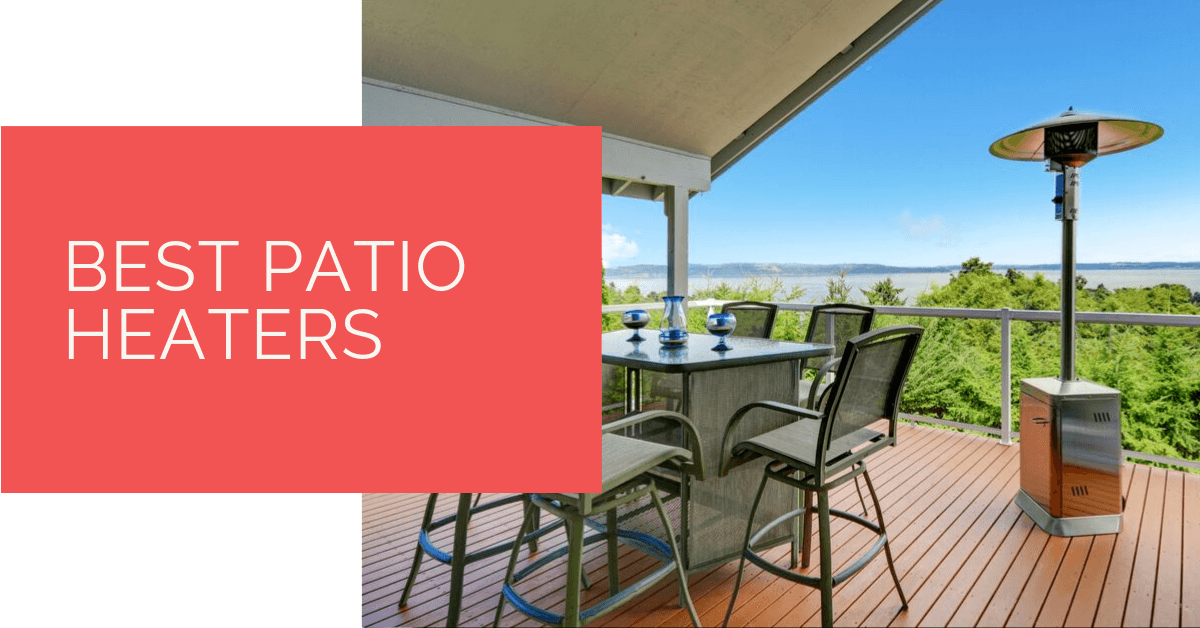
A good patio heater extends your outdoor season by weeks. With a decent electric infrared model and a mild UK evening, you can be sitting outside comfortably in October when you’d otherwise be indoors. Our top pick for most gardens is the Oypla Electrical 2KW Quartz Freestanding Patio Heater: over 1,100 reviews, competitive pricing around £49, and a track record that speaks for itself.
Whether you want a budget freestanding heater, a wall-mounted model with remote control, or a premium ceiling-hung unit for a covered terrace, the options below cover the full range of what’s available in the UK market right now.
Contents
- 1 Our Top Picks
- 2 8 Best Patio Heaters
- 2.1 1. Oypla Electrical 2KW Quartz Free Standing Outdoor Electric Garden Patio Heater
- 2.2 2. Heatlab 2KW IPX4 FreeStanding Infrared Electric Garden Outdoor Patio Heater
- 2.3 3. HARRIER 2000W Rounded Standing Outdoor Patio Heater
- 2.4 4. Futura Deluxe Wall Mounted Electric Infrared Outdoor Garden Patio Heater 2000W
- 2.5 5. Devola Electric Infrared Patio Heater Wall Mounted 2000W with WiFi
- 2.6 6. DONYER POWER Outdoor Patio Heater 800W and 2000W Halogen Hanging Heater
- 2.7 7. Outsunny 1000W/2500W Infrared Halogen Electric Patio Heater Ceiling Hanging
- 2.8 8. Veito Blade S2500 Waterproof IP55 Wall/Ceiling Mounted Patio Heater
- 3 Patio Heater Buying Guide
- 4 Case Study: Extending the Season at a Converted Outbuilding in Cheshire
- 5 Expert Insights From Our Heating Engineers About Patio Heaters
- 6 Frequently Asked Questions
- 6.1 What is the best type of patio heater for a UK garden?
- 6.2 How much does it cost to run an electric patio heater?
- 6.3 Can I leave a patio heater outside in the rain?
- 6.4 Are electric patio heaters safe to use under a covered area?
- 6.5 How much wattage do I need for a patio heater?
- 6.6 What’s the difference between halogen and carbon fibre patio heaters?
- 6.7 Do I need planning permission for a patio heater?
- 6.8 How long do electric patio heaters last?
- 7 Summing Up
Our Top Picks
| Image | Name | |
|---|---|---|
| Oypla Electrical 2KW Quartz Free Standing Outdoor Electric Garden Patio Heater | |
| Heatlab 2KW IPX4 FreeStanding Infrared Electric Garden Outdoor Patio Heater | |
| HARRIER 2000W Rounded Standing Outdoor Patio Heater | |
| Futura Deluxe Wall Mounted Electric Infrared Outdoor Garden Patio Heater 2000W | |
| Devola Electric Infrared Patio Heater Wall Mounted 2000W with WiFi | |
| DONYER POWER Outdoor Patio Heater 800W and 2000W Halogen Hanging Heater | |
| Outsunny 1000W/2500W Infrared Halogen Electric Patio Heater Ceiling Hanging | |
| Veito Blade S2500 Waterproof IP55 Wall/Ceiling Mounted Patio Heater |
8 Best Patio Heaters
1. Oypla Electrical 2KW Quartz Free Standing Outdoor Electric Garden Patio Heater
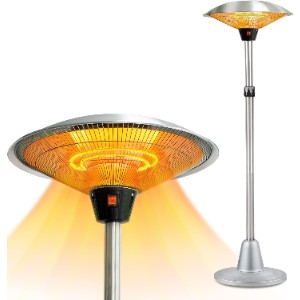
With over 1,100 Amazon reviews at 4.4 stars, the Oypla is the most-reviewed electric patio heater on the UK market. That’s not a coincidence. It’s a 2kW quartz infrared heater on an adjustable stand, priced at around £49, and it does exactly what most people actually need: plug it in, point it at your guests, and enjoy the warmth. The instant-heat quartz element produces radiant infrared warmth in seconds rather than the slow warm-up of some other types.
The adjustable height stand makes it easy to angle the heat where you need it. At 2kW it’s capable of warming a small to medium patio area on all but the coldest nights. The IPX4 splash-proof rating means it handles UK drizzle without complaint, though you’ll want to store it indoors if you’re expecting a proper downpour or leaving it out overnight through winter.
It’s not the most feature-rich heater on this list. There’s no remote control, no built-in timer, and no WiFi connectivity. What it has is a large and enthusiastic user base, proven reliability, and a price that means you could buy two for the cost of some single wall-mounted units. If you’re new to patio heaters and want to try one without a significant outlay, this is the obvious starting point.
The quartz element is replaceable if it ever fails, which keeps long-term running costs low. Several reviewers mention using the same unit across three or four seasons without issues. At this price, that’s a strong case for its value.
Features
- 2kW quartz infrared heating element
- IPX4 splash-proof rated for outdoor use
- Adjustable height freestanding stand
- Instant heat, no warm-up time
- Over 1,100 reviews at 4.4 stars
- Most-reviewed electric patio heater on Amazon UK
- Excellent value at around £49
- Instant infrared heat with no delay
- Adjustable stand height
- No remote control
- Should be stored indoors in heavy rain
2. Heatlab 2KW IPX4 FreeStanding Infrared Electric Garden Outdoor Patio Heater
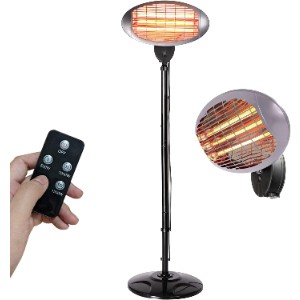
The Heatlab is the natural step up from the Oypla: similar freestanding format, similar 2kW output, but with a few practical extras that justify the higher price. Chief among them is a remote control, which lets you adjust heat settings from your chair without getting up. There are also three power settings (low, medium, high), a 4.8-metre cable for flexible positioning, and an adjustable heating element angle of 45 degrees up or down. With 903 reviews at 4.3 stars it has a strong track record.
The IPX4 rating and waterproof construction make it suitable for use in light rain. The adjustable cable length is particularly useful in gardens where the power socket isn’t conveniently positioned. If you regularly entertain outdoors and want a heater you can control without moving, the Heatlab’s remote adds genuine convenience over the Oypla.
One point worth noting: the heat element is tilted rather than pointing directly outward by default, so take a moment to adjust the angle when setting it up. Once positioned correctly, the coverage is good for a typical outdoor dining table and chairs grouping.
Features
- 2kW infrared heating element
- IPX4 waterproof rated
- 3 heat settings
- Remote control included
- 45-degree adjustable element angle
- 4.8m detachable cable
- Remote control for convenience
- Over 900 reviews at 4.3 stars
- 3 heat settings for flexibility
- More expensive than Oypla for similar output
- Element angle needs adjusting out of the box
- No timer function
3. HARRIER 2000W Rounded Standing Outdoor Patio Heater
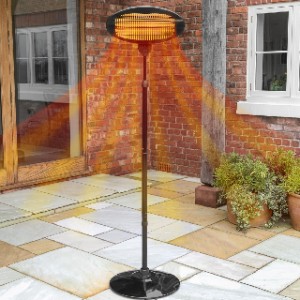
The HARRIER earns its place here by being genuinely two heaters in one. The 2000W unit works as a freestanding heater on its weighted base or mounts directly to a wall. If you’re not sure yet whether you’d prefer a freestanding or fixed heater, this hedges your bets. The IPX4 approval covers both configurations. At around £49 it undercuts many wall-mounted models significantly, while the 287 reviews at 4.3 stars suggest buyers are generally happy with the compromise.
Three heat settings and a 9kg base weight give it stability outdoors. The rounded design is more modern-looking than some older freestanding heaters, which suits a contemporary garden or decked area better.
Features
- 2000W infrared heating element
- IPX4 rated for outdoor use
- 2-in-1 freestanding or wall-mounted
- 3 heat settings
- 9kg weighted base for freestanding stability
- Freestanding or wall-mounted flexibility
- Budget-friendly at around £49
- Modern rounded design
- No remote control
- Lower review count than Oypla or Heatlab
- Wall mounting requires additional brackets
4. Futura Deluxe Wall Mounted Electric Infrared Outdoor Garden Patio Heater 2000W
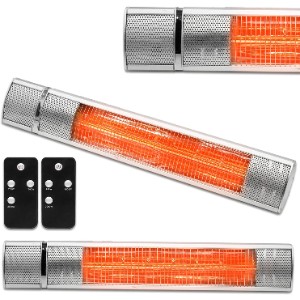
If wall-mounted is the direction you’re going, the Futura Deluxe is one of the most popular options in the UK. At 2000W with three heat settings (750W, 1500W, and 2000W), a remote control, and a waterproof rating suitable for outdoor use, it covers the bases well. The 289 reviews at 4.4 stars reflect broadly positive experiences, with owners using it across covered porches, pergolas, and bar areas.
Wall-mounting a patio heater does a few useful things: it keeps the floor clear, it positions the heat source at a better angle for seated guests, and it eliminates the trip hazard of a freestanding unit and cable on the ground. The Futura’s remote control means you can adjust the heat without reaching up to the unit. Installation is straightforward, though you’ll want to plan the cable routing before drilling.
At around £93 it costs roughly twice as much as the freestanding options, but for a permanent outdoor entertaining area, that’s a reasonable investment. A covered terrace or pergola that gets used throughout spring and autumn will recoup that difference quickly in extended use.
Features
- 2000W infrared heating element
- 3 heat settings: 750W, 1500W, 2000W
- Remote control included
- Waterproof for outdoor use
- Wall-mounted design keeps floor clear
- Well-reviewed with 289 ratings at 4.4 stars
- Remote control for adjustable heat settings
- Wall-mount frees up floor space
- More expensive than freestanding alternatives
- Installation required (drilling, cable routing)
- Fixed position once mounted
5. Devola Electric Infrared Patio Heater Wall Mounted 2000W with WiFi
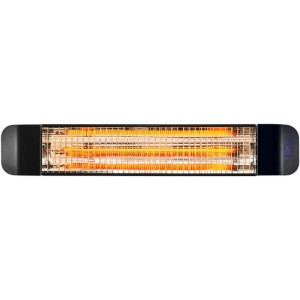
The Devola takes the wall-mounted formula further with WiFi connectivity, a 24-hour timer, an LED display, and IP65 waterproofing. If you want to schedule your patio heater to come on before you head outside, or control it from your phone, this is the model to consider. The IP65 rating is genuinely higher than most rivals, meaning it handles rain rather than just splash. At 150 reviews and 4.4 stars, the feedback is positive if not yet extensive.
The timer function is more useful than it might initially seem. Setting the heater to switch on 15 minutes before guests arrive means stepping out into a pre-warmed terrace rather than waiting for the chill to dissipate. For anyone who entertains regularly and values that kind of convenience, the price premium over the Futura is defensible.
Features
- 2000W infrared wall-mounted heater
- IP65 waterproof rated
- WiFi enabled with app control
- 24-hour programmable timer
- LED display and remote control
- WiFi and app control for remote scheduling
- IP65 waterproof rating, higher than most rivals
- 24-hour timer for pre-heating
- Only 150 reviews, less proven than the Futura
- App setup required for full functionality
- Higher price than Futura for similar wattage
6. DONYER POWER Outdoor Patio Heater 800W and 2000W Halogen Hanging Heater
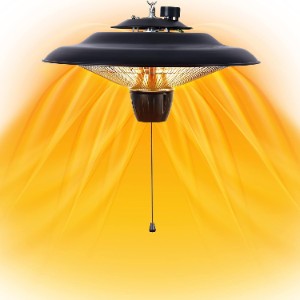
The DONYER POWER offers something different: a hanging or ceiling-mount installation via an adjustable 1-metre chain. This format suits covered pergolas and gazebos particularly well, distributing heat downward over a seating area without occupying wall or floor space. Two heat settings (800W and 1000W, though the listing says 2000W combined output) produce rapid warmth. With 268 reviews at 4.2 stars, it’s a reasonable choice for this format.
Installation takes some planning since the chain height needs to suit the ceiling height and the positioning of the seating area beneath. Done well, a ceiling-hung heater is one of the most effective formats for a covered outdoor space. The DONYER’s chain is adjustable, which gives some flexibility.
Features
- 800W and 2000W heat settings
- Ceiling/hanging mount via 1m adjustable chain
- Rapid 3-second heat-up
- Suitable for pergolas, gazebos, and covered areas
- Ceiling-mount ideal for covered outdoor areas
- Adjustable chain for flexible positioning
- Requires ceiling or overhead mounting point
- 4.2 stars is the lowest rating on this list
- Installation more involved than freestanding options
7. Outsunny 1000W/2500W Infrared Halogen Electric Patio Heater Ceiling Hanging
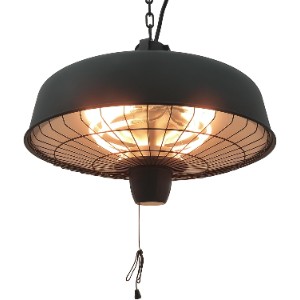
The Outsunny ceiling-hung model offers a meaningful step up in output compared to the DONYER: a 2500W top setting versus 2000W. That extra 500W makes a tangible difference when heating a larger covered area on a cold evening. The 4.6-star rating from 110 reviews is the highest on this list, suggesting buyers are particularly satisfied. At around £93 it’s similarly priced to wall-mounted alternatives, but delivers heat from above rather than from the side.
The 1000W low setting is genuinely useful for mild evenings when you don’t need full power. Ceiling mounting here is via the included hardware, and the black finish suits a modern outdoor room well.
Features
- 1000W and 2500W heat settings
- Ceiling hanging mount included
- Durable halogen infrared element
- 4.6 stars from 110 reviews
- Highest-rated heater on this list at 4.6 stars
- 2500W top setting for larger covered areas
- Only 110 reviews, smaller sample size
- Ceiling mounting required, not suitable for all spaces
8. Veito Blade S2500 Waterproof IP55 Wall/Ceiling Mounted Patio Heater
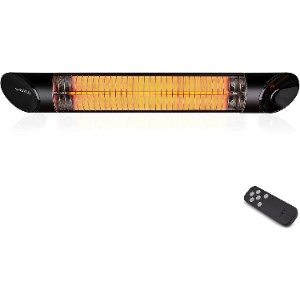
The Veito Blade S2500 is the premium option at around £250. It’s a carbon fibre infrared heater with four heat levels (1000W, 1500W, 2000W, and 2500W), an IP55 waterproof rating, and tip-over and overheat protection. The carbon fibre element produces a warmer, more comfortable form of infrared heat than halogen alternatives, and it operates silently. At 73 reviews and 4.3 stars it’s less proven than the other products on this list, but Veito is a respected European heating brand with a track record in commercial outdoor heating.
The price is harder to justify for occasional domestic use, but for a covered terrace that gets heavy use through spring and autumn, or for a hospitality setting where appearance and reliability both matter, the Veito Blade earns its premium. The slim blade profile is also considerably more attractive than the utilitarian look of most budget infrared heaters.
Features
- 2500W carbon fibre infrared element
- 4 heat levels: 1000W, 1500W, 2000W, 2500W
- IP55 waterproof rated
- Wall or ceiling mounting
- Automatic overheat and tip-over protection
- Carbon fibre element for comfortable, silent warmth
- Premium build quality and slim design
- IP55 waterproofing and 4 heat levels
- Significantly more expensive than alternatives
- Only 73 reviews, limited track record
Patio Heater Buying Guide
Key Takeaways
- Most patio heaters produce meaningful warmth up to 2 metres from the unit on their highest setting. Beyond that, radiated heat drops off sharply. Buy for the zone you want to warm, not the total garden area. A single 2kW electric infrared heater effectively covers a 2m × 2m seating area; a larger 13kW gas pyramid heater covers approximately 3m radius
- Electric infrared patio heaters are the more practical choice for UK gardens: no fuel storage, instant heat, can be mounted on walls or pergolas to save floor space, and IP-rated models handle year-round outdoor exposure without corrosion. Gas heaters produce more raw heat but require propane cylinder management and have higher running costs per hour
- IP ratings are non-negotiable outdoors. Look for IP44 minimum for covered outdoor areas (pergolas, gazebos); IP55 or IP65 for fully exposed installations. Standard domestic heaters are not rated for outdoor use and will fail within one season
- Gas patio heaters typically use 13kg propane cylinders. At 13kW maximum output, a full cylinder gives approximately 8 to 10 hours of use. Electric infrared heaters at 2kW cost around 54p per hour at 27p/kWh — comparable to gas on a per-session basis but easier to control and stop
- Stability matters in UK wind conditions. Tall gas pyramid heaters have a high centre of gravity and can topple in strong gusts. Models with weighted bases, ground anchors, or anti-tilt cutoffs are safer choices for exposed gardens
Gas vs Electric: The Main Decision
Gas pyramid and mushroom heaters produce 10kW to 15kW of heat output — substantially more than any mains electric alternative. In a large open garden with no shelter, this raw output matters. They also require no power supply, making them practical for gardens without outdoor sockets. The cost is cylinder logistics: you need to source, store, and swap 13kg propane cylinders, and the cylinder running empty mid-evening is a familiar frustration.
Electric infrared patio heaters run from an outdoor socket, turn on instantly, and can be mounted at head height on a wall or ceiling, which distributes radiant heat more effectively than a floor-standing unit. At 1.5kW to 3kW, they produce less raw output than gas, but in a smaller covered area (a pergola, an outdoor dining area with a roof), the directed overhead heat is often more effective than a gas pyramid standing at the edge of the space.
The practical conclusion: for a large uncovered garden terrace where you want maximum warmth over a wide area, gas. For a covered outdoor dining area, pergola, or smaller patio where overhead mounting is possible, electric infrared. For a balcony or small patio, electric every time — gas cylinders take up too much space.
IP Ratings for Outdoor Use
Outdoor heaters face rain, humidity, condensation, and frost. Any heater without an appropriate IP (Ingress Protection) rating will corrode, fault, or fail — and a faulty heater with damaged cabling outdoors is a serious shock and fire hazard.
IP44 provides protection against splashing water from any direction — minimum for covered outdoor areas, pergolas, and gazebos. IP55 protects against low-pressure water jets and is the right choice for exposed installations where rain can blow in from the side. IP65 provides full dust-tight protection and resistance to directed water jets — specified for the most exposed outdoor positions.
Check the IP rating of every electric patio heater you consider. It should be stated clearly in the product specification. If it isn’t listed, assume it is not outdoor-rated.
Output, Coverage, and Running Costs
Patio heater output is quoted in watts (W) for electric models and BTU/h or kW for gas models. 1kW = 3,412 BTU/h. A 13kW gas patio heater produces around 44,000 BTU/h. Most electric infrared models run at 1.5kW to 3kW (5,000 to 10,000 BTU/h).
| Heater Type | Typical Output | Effective Radius | Running Cost/hr |
|---|---|---|---|
| Electric infrared wall-mount | 1,500–2,000W | 1.5–2m | 41–54p (at 27p/kWh) |
| Electric freestanding infrared | 2,000–3,000W | 2–2.5m | 54–81p |
| Gas mushroom/pyramid heater | 10,000–13,000W | 2.5–3m radius | £1.00–£1.50 (propane) |
| Gas tabletop heater | 2,000–4,000W | 1–1.5m | 40–70p (propane) |
Gas running costs assume £0.75 per kWh of propane at current UK prices (13kg cylinder approximately £25–30, providing ~175kWh of heat output).
Where to Position Your Patio Heater
Placement makes a bigger difference to perceived warmth than wattage. An overhead infrared panel mounted at 2.2 to 2.5m directly above a seating area produces more usable heat than the same panel mounted to the side at head height. The radiant effect is directional — you want the element pointing down at the people, not across at a wall.
For wall-mounted electric heaters, aim for 1.8 to 2.2m mounting height, angled 30 to 45 degrees downward toward the seating zone. This maximises the coverage area and avoids the “hot head, cold feet” effect of heaters mounted too high horizontally. Under a pergola or covered structure, ceiling mounting is the most effective option: direct downward radiation with no wasted output to the sides.
Gas pyramid heaters work best positioned at the edge of the seating area, not in the middle of a walkway. Place them upwind where possible so the rising warm air and radiant heat from the reflector directs toward guests rather than away from them. Keep a 1m minimum clearance from the heater to any combustible material (timber pergola posts, garden furniture cushions, overhead fabric canopies).
Things to Keep in Mind Before Buying
Covered storage extends the life of any patio heater, particularly stainless steel and powder-coated models that can pit and rust from constant exposure. A weatherproof cover in winter, or storing the heater indoors, significantly extends product life.
Tall freestanding gas heaters are not suitable for areas with significant foot traffic — they are easy to knock and will fall if brushed in passing. Wall-mounted and overhead electric models eliminate this risk entirely and are the better choice where children or guests move around the space.
Types of Patio Heater
Gas pyramid patio heaters are the traditional garden party heater. High output, wide coverage, no power supply required. Require 13kg propane cylinders. Suitable for large uncovered outdoor areas. Price range £80 to £300.
Electric infrared wall or ceiling-mounted heaters are the practical choice for covered outdoor areas. IP-rated, directional heat, no floor space used. Output 1.5kW to 3kW. Price range £60 to £250.
Electric freestanding infrared patio heaters replicate the standing format of gas heaters but use electric infrared elements. More portable than wall-mounted models, no cylinder needed. Output 1.5kW to 3kW. Price range £50 to £200.
Gas tabletop patio heaters use smaller butane or propane cartridges and suit small balconies or intimate outdoor dining settings. Lower output than full-size gas models. Price range £30 to £100.
Case Study: Extending the Season at a Converted Outbuilding in Cheshire
Background
A homeowner in rural Cheshire had converted an outbuilding into a covered outdoor entertaining area, with three open sides, a polycarbonate roof, and a flagstone floor. They used it regularly from May to September but found October evenings too cold for guests to remain comfortable, cutting the season short just as autumn entertaining was getting into full swing.
Project Overview
The structure had a single power socket and exposed timber beams overhead. The client wanted to extend the usable season by at least six weeks and wanted a solution that didn’t require a gas cylinder or ongoing fuel management. Wiring wasn’t an option given the rental status of the property. Budget was flexible, but value for money mattered.
Implementation
Two 2kW freestanding electric infrared heaters were positioned at either end of the seating area, angled toward the centre. Extension leads were cable-managed along the walls to minimise trip hazards. Both heaters were IPX4 rated, suitable for the semi-exposed conditions. On milder evenings only one was needed; on colder nights both ran simultaneously at full output.
Results
The covered outdoor area was used comfortably through October and into early November. Two evenings of temperatures below 5°C with both heaters running at 2kW each were notably less comfortable than milder nights, but workable with outdoor blankets available. Total electricity cost over the extended six-week period was under £15. The homeowner’s view: the heaters paid for themselves in extended use within the first season.
Expert Insights From Our Heating Engineers About Patio Heaters
“The most common mistake people make is buying a single 2kW heater for a large open patio and being disappointed. One of our engineers with over 18 years of experience in outdoor heating installations makes this point regularly: infrared heaters work on line of sight. If you’re sitting three metres away from a 2kW heater in the open air, a significant portion of the heat is missing you entirely. Two heaters at 1kW each, positioned on either side of the seating area, will warm people more effectively than one 2kW unit at the end of the table.”
“Waterproof ratings are often misunderstood. IPX4 is fine for UK outdoor use in typical conditions, but if your heater will be in a position where water could fall directly onto the element, such as under a leaky pergola or next to a downpipe, you want IP55 or IP65. The IP rating system specifies direction and intensity of water contact; IPX4 only guarantees protection from splash from any angle, not sustained direct water contact from above.”
“Carbon fibre infrared elements are genuinely worth the premium for regular users. Halogen elements produce a bright reddish light which some people find uncomfortable after prolonged exposure, particularly in the dark. Carbon fibre elements glow at a lower temperature with a subtler light, which is easier on the eyes during a long evening outside. They also tend to last longer. For occasional use the difference matters less, but for a patio heater that runs for four or five hours an evening through autumn, it’s noticeable.”
Frequently Asked Questions
What is the best type of patio heater for a UK garden?
For most UK domestic gardens, a 2kW electric infrared freestanding heater is the most practical starting point. It requires only a standard power socket, produces instant heat, generates no fumes, and can be moved as needed. Wall-mounted models suit permanent covered areas like pergolas and verandas better, as they free up floor space and distribute heat more evenly over a seating group. Gas patio heaters work well where mains power isn’t available but require gas cylinder management.
How much does it cost to run an electric patio heater?
At current UK electricity rates, a 2kW electric patio heater costs around 50–60p per hour to run at full power. Run it for three hours on a Friday evening and you’re looking at roughly £1.50–£1.80. Over a full autumn season of twice-weekly use, that’s in the region of £30–£40 in electricity costs. Using the lower heat settings extends running time for the same cost. Most people find the cost very manageable compared to the value of being able to use their outdoor space comfortably through autumn.
Can I leave a patio heater outside in the rain?
Short answer: it depends on the IP rating. Heaters rated IPX4 can handle rain splashing from any direction, which covers typical UK rainfall in normal use. Models rated IP55 or IP65 handle more sustained water contact and are better suited to more exposed positions. That said, leaving any electric heater switched on in heavy rain isn’t advisable regardless of rating, and most manufacturers recommend storing freestanding heaters indoors when not in use to maximise their lifespan.
Are electric patio heaters safe to use under a covered area?
Yes, electric infrared heaters are among the safest options for covered outdoor areas. They produce no fumes, no combustion byproducts, and no carbon monoxide risk. Gas heaters, by contrast, require adequate ventilation in covered spaces. The main safety consideration with electric heaters under a cover is ensuring there’s adequate clearance between the element and any overhead surface, and that the heater is positioned away from flammable materials like timber beams and fabric. Always check the manufacturer’s clearance recommendations before installation.
How much wattage do I need for a patio heater?
As a rough guide, 2kW is sufficient to warm a small to medium patio area (up to around 8–10 square metres) in typical UK autumn temperatures. For larger spaces, or open exposed patios where heat dissipates quickly, 2.5kW or two separate 2kW units provide better coverage. Covered and enclosed outdoor areas retain heat more effectively, so a single 2kW heater can work well in a covered pergola even at low temperatures. Open exposed gardens need more power or multiple units.
What’s the difference between halogen and carbon fibre patio heaters?
Both produce infrared radiant heat, but carbon fibre elements operate at a lower temperature and emit a softer, subtler light. Halogen elements get hotter and produce a brighter reddish-orange glow that some users find uncomfortable over a long evening. Carbon fibre heaters also tend to be more durable and more energy-efficient at lower settings. The downside is cost: carbon fibre models typically start at £150–£250, while halogen heaters are available from under £50. For occasional use the difference matters less; for regular long-evening use, carbon fibre is worth considering.
Do I need planning permission for a patio heater?
No planning permission is required for a standard domestic patio heater. They’re treated like any other garden appliance. If you’re fitting a wall-mounted heater to the exterior wall of a listed building, it’s worth checking with your local authority, but for standard domestic properties, no permission is needed. Electrical work for permanently wired heaters should be carried out by a qualified electrician and may require a building regulations notification, but plug-in models need no formal approval at all.
How long do electric patio heaters last?
A good quality electric infrared patio heater, stored properly when not in use and kept dry, should last five to ten years. The main wearing part is the heating element itself. Quartz and halogen elements can be replaced in many models if they fail, keeping the cost of ownership low. Carbon fibre elements have a longer expected lifespan. The biggest factors in longevity are protection from sustained moisture and physical damage, so storing freestanding units indoors through winter makes a significant difference.
Summing Up
For most UK gardens, the Oypla Electrical 2KW Quartz Freestanding Patio Heater is the right call: over 1,100 reviews, around £49, and straightforward to use. If you want remote control and IPX4 waterproofing, the Heatlab is the natural step up. For wall-mounted options, the Futura Deluxe delivers reliable mid-range performance, while the Devola WiFi model adds smart scheduling for those who want it. At the premium end, the Veito Blade S2500 offers carbon fibre heat and a more refined finish for covered terraces where quality matters.
Updated