
If you’re waking up cold in the night or dreading getting into a freezing bed, an electric blanket is one of the cheapest fixes available. A good underblanket costs less to run than keeping the central heating on for an extra hour, and it warms the bed in minutes. The Homefront Electric Blanket Double is our top pick: it has over 5,000 reviews, fits beds up to 40cm deep, and comes in at a price that’s easy to justify. If you need a king size or a heated throw instead, read on.
We’ve tested and researched the eight best options on Amazon UK right now, covering single, double, and king underblankets, plus a heated throw for sofa or bed use.
Our Top Picks
| Image | Name | |
|---|---|---|
| Homefront Electric Blanket Double | |
| Homefront Electric Blanket King Dual Control | |
| VonHaus King Electric Blanket Dual Control | |
| MYLEK Single Electric Blanket | |
| Silentnight Hotel Collection Electric Blanket | |
| Dimplex Heated Throw Blanket | |
| TLGREEN Single Electric Blanket | |
| Abode Single Electric Blanket |
8 Best Electric Blankets
1. Homefront Electric Blanket Double
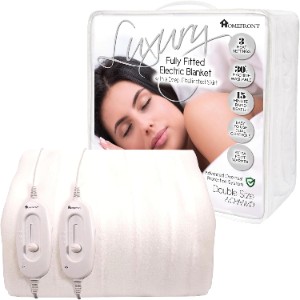
With over 5,400 reviews and a consistent 4.5-star rating, the Homefront Double is the most validated electric blanket in this category on Amazon UK. It’s a fitted underblanket that goes under your bottom sheet, with an elasticated skirt that stays put through the night. The 193 x 137 x 40cm size accommodates most double mattresses including deeper memory foam models, which is a practical detail that cheaper blankets often overlook.
It has three heat settings and heats up quickly from cold, which is the main thing you want from a pre-bed warmer. The fleece upper surface feels comfortable if you happen to sit on it before making the bed, and the machine-washable construction means you don’t need to detach anything complicated before washing. Just remove the controller and put the blanket in.
The price sits at around £39, which puts it firmly in the mid-range. For that you’re getting a product that thousands of buyers have used across multiple winters without reporting reliability issues. Overheat protection is built in, and the controller is simple enough that you’re not reading the manual after a year. If you want a double underblanket and nothing else, this is the one to buy.
Features
- 193 x 137 x 40cm fitted underblanket for double beds
- 3 heat settings with fast heat-up
- Elasticated skirt for secure fit
- Overheat protection
- Machine washable (remove controller first)
- Over 5,400 reviews — proven reliability track record
- 40cm depth fits most deep mattresses including memory foam
- Simple controller, no unnecessary complexity
- Good value at around £39
- Only 3 heat settings — no precise control
- Single controller only, not dual zone
2. Homefront Electric Blanket King Size Dual Control
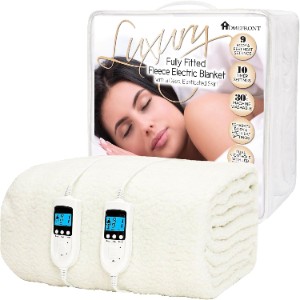
The king size version of the Homefront with over 6,100 reviews — the most-reviewed electric blanket in this entire roundup — and it adds something the double doesn’t have: dual controls. Each side of the bed gets its own controller, so a couple who can’t agree on temperature can both sleep comfortably without compromise. It covers a 152 x 203 x 40cm mattress, which fits standard UK king size beds with the same deep-skirt design as the double.
The dual controller setup is genuinely useful. If one person runs hot and the other cold, this solves the problem without negotiation. Each zone heats independently, and you can have one side on maximum and the other off entirely if needed. The fleece material is soft underfoot when you’re making the bed, and the construction feels solid — which you’d expect from a product with this many reviews and this long a track record on Amazon UK.
At around £74 it’s more expensive than most single-zone alternatives, but the dual control feature justifies the premium for couples. If you’re buying a king size blanket for a solo sleeper, the VonHaus below offers similar coverage for significantly less.
Features
- 152 x 203 x 40cm fitted underblanket for king size beds
- Dual independent controllers
- 3 heat settings per zone
- Fleece upper surface
- Overheat protection, machine washable
- Dual controls — each side independently adjustable
- Over 6,100 reviews — outstanding reliability record
- 40cm depth fits deep king size mattresses
- Established brand with consistent quality
- Most expensive underblanket on this list at ~£74
- Only 3 heat settings per zone
3. VonHaus Electric Blanket King
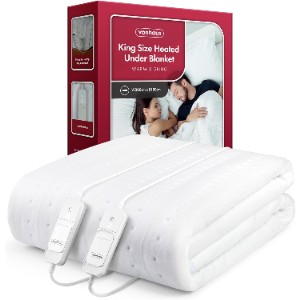
The VonHaus King gives you dual controls on a 200 x 150cm king blanket for around £44. That’s a meaningful saving versus the Homefront King, and the feature set is competitive: three heat settings per zone, corner ties to hold the blanket in place, safety auto shut-off, and machine washability. With 730 reviews at 4.5 stars, it’s a well-validated option.
The corner ties are a practical detail worth flagging. King size underblankets have a tendency to migrate overnight if the mattress is deep or if either sleeper moves a lot, and having proper ties rather than just an elasticated skirt helps. The auto shut-off adds reassurance if you fall asleep with it still on, which is the most common concern buyers have about electric blankets.
It’s not quite as deeply reviewed as the Homefront, but at a significantly lower price it’s a reasonable trade-off. If you’re equipping a guest room or want dual controls without paying Homefront prices, the VonHaus is the sensible pick.
Features
- 200 x 150cm fitted king size underblanket
- Dual independent controllers
- 3 heat settings per zone
- Corner ties and safety auto shut-off
- Machine washable
- Dual controls at a significantly lower price than Homefront
- Corner ties reduce overnight movement
- Safety auto shut-off
- Fewer reviews than Homefront — less proven long-term
- Only 3 heat settings per zone
- Some reports of controller leads being on the short side
4. MYLEK Electric Blanket Single
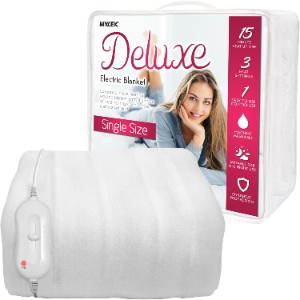
MYLEK is one of the more consistently reliable names in budget UK electric blankets, and the single size is the product that built that reputation. At around £29 with over 1,400 reviews and a 4.5-star rating, it sits in a sweet spot: cheap enough to be an easy purchase, reviewed enough to be trustworthy. It’s a fitted underblanket with an elasticated skirt, three heat settings, and machine-washable construction.
For a single bed — whether a child’s room, a guest room, or a student flat — this covers most needs without overcomplicating things. The controller is simple, the heat-up time is quick, and the overheat protection means you’re not lying awake worrying. It won’t have the depth of fit of the Homefront for very thick mattresses, so check dimensions before buying if you have a particularly deep mattress topper setup.
Features
- Fitted single size underblanket with elasticated skirt
- 3 heat settings
- Overheat protection
- Machine washable (remove controller first)
- Fast heat-up
- Over 1,400 reviews — well-proven for the price
- Good value at around £29
- Simple, reliable controller
- Single size only — need to check other Homefront/VonHaus for larger beds
- 3 heat settings only — no precise temperature control
- May not accommodate very deep mattresses
5. Silentnight Hotel Collection Electric Blanket
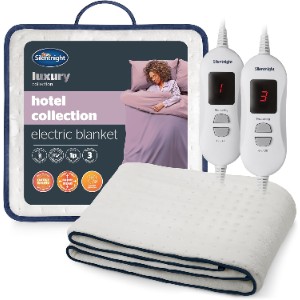
Silentnight is one of the most recognisable British bedding names, and the Hotel Collection electric blanket is their premium underblanket. At around £69 it’s not cheap, but the product reflects the price: it comes in a wider range of sizes, the material quality is noticeably better than budget options, and the “hotel collection” branding is backed by genuine attention to finish and washability.
The Hotel Collection has 785 reviews at 4.5 stars. That’s a good count for a premium product. Where it earns the premium is in longevity: Silentnight products at this end of the range are built to outlast several budget alternatives, and the brand’s customer service is considerably easier to deal with than generic brands if something does go wrong in year two or three.
If you want an electric blanket that doesn’t feel like a compromise — where the material, the finish, and the brand name all match the quality of the rest of your bedding — the Silentnight is the logical choice. For buyers who just want a functional blanket at a lower price, the Homefront does the job just as well for considerably less.
Features
- Available in multiple sizes including single, double, and king
- Hotel-quality soft upper material
- Multiple heat settings
- Overheat protection
- Machine washable
- Recognisable UK bedding brand with strong customer support
- Better material quality than budget alternatives
- Available in multiple sizes
- Premium price — around £69 for a single
- Fewer reviews than Homefront — less community-validated
6. Dimplex Heated Throw Blanket
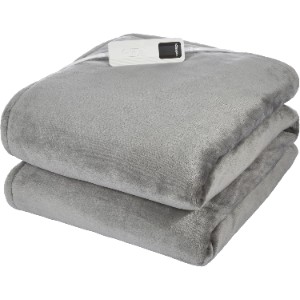
Dimplex is better known for electric heating products than electric blankets, which is why this heated throw is worth paying attention to. It comes with 9 heat settings, which is more granular control than most in this category, and a 5-hour timer with auto shut-off so you don’t have to think about switching it off. The soft fleece finish and fast warm-up makes it practical for sofa use as well as bed use.
At 4.9 stars it’s one of the highest-rated heated throws on Amazon UK. Fewer reviews than the more established electric blanket brands, but the rating consistency across them is reassuring. Machine washable with a detachable cord, which makes it far easier to keep clean than throws where the cord is fixed. If you want a heated throw from a name you already associate with reliable heating, this is a solid choice.
Features
- 9 heat settings for fine-grained comfort control
- 5-hour timer with auto shut-off
- Soft fleece finish, fast warm-up
- Machine washable with detachable cord
- 4.9-star rating from verified buyers
- 9 heat settings is exceptionally granular at this price
- Trusted Dimplex brand in heating products
- Detachable cord makes washing easy
- Fewer reviews than longer-established rivals
- Grey colour only — limited choice
- Throw format, not a fitted underblanket
7. TLGREEN Single Electric Blanket
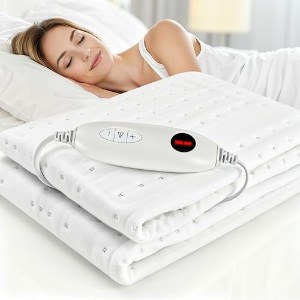
A straightforward single underblanket with 6 heat levels, 100W output, and an 8-hour auto switch-off. The TLGREEN ticks the practical boxes: elastic straps to keep it in place, machine washable, and overheat protection built in. It’s the kind of product that doesn’t do anything surprising, which in an electric blanket is exactly what you want.
With 1,300+ reviews at 4.6 stars, it’s a well-validated choice at this price point. Dimensions are 193x91cm, fitting a standard single mattress properly rather than leaving gaps at the sides. A dependable option if you want a single blanket without spending more than you need to.
Features
- 6 heat levels with 100W output
- 8-hour auto switch-off
- Fits single mattress: 193x91cm
- Overheat protection and elastic straps
- Machine washable
- 4.6 stars from 1,300+ reviews
- 8-hour auto shut-off is generous
- Proper single mattress fit
- Budget brand with less recognition than Homefront or Silentnight
- 6 levels fewer than some higher-end models
- Single only — no other sizes in this range
8. Abode Single Electric Blanket
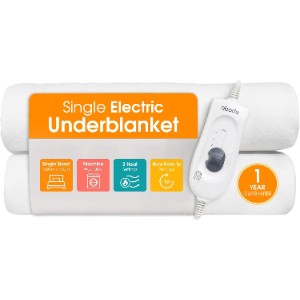
At £16, the Abode is the most affordable electric blanket on this list, and it covers the basics: 60W single underblanket, three heat settings, overheat protection, and machine washable construction. It’s a straightforward product aimed at buyers who want to warm a single bed for as little outlay as possible. The 66 reviews is the lowest count on this list, which makes it harder to validate long-term reliability, but the reviews that do exist are generally positive.
This is the right choice for a rarely-used guest room, a temporary purchase while deciding whether electric blankets suit your sleep habits, or simply the tightest possible budget. Don’t expect premium materials or precise temperature control — this is a functional product at a functional price. For a guest bedroom that gets used a few times a year, it’s perfectly sensible.
Features
- Single size underblanket
- 60W with 3 heat settings
- Overheat protection
- Machine washable
- White finish
- Lowest price on this list at around £16
- Covers all the basics competently
- Only 66 reviews — limited reliability data
- Basic features only — 3 settings, no timer
- Not ideal for regular heavy use
Electric Blankets Buying Guide
Key Takeaways
- Underblankets fit under your bottom sheet and pre-warm the bed before you get in. Throws/overblankets go on top and can be used on sofas too.
- For couples sharing a king or super-king bed, dual controls are worth the extra cost — each side heats independently.
- Check the mattress depth compatibility before buying: most underblankets fit mattresses up to 40cm deep, but some cheaper models are designed for shallower mattresses.
- Running costs are very low — a 60-100W blanket costs roughly 1.4–2.4p per hour at UK electricity rates.
- All modern electric blankets include overheat protection. The main additional safety feature to look for is auto shut-off after a set time period.
- Machine washability is now standard, but always remove or detach the controller before washing.
What Is an Electric Blanket?
An electric blanket is a bedding product with embedded heating elements powered by mains electricity. The term covers two distinct product types. An underblanket (also called an electric underblanket or heated mattress cover) fits under your bottom sheet and warms the bed surface before you get in — you switch it off before sleeping or use a timer. An overblanket or heated throw goes on top of the bed like a conventional blanket and can remain on during sleep, often at a lower heat setting.
UK homes have used electric blankets since the 1930s, and modern versions are substantially safer than older designs. Overheat protection, machine-washable materials, and auto shut-off timers are now standard features on reputable models. The main remaining safety rule is never to use them with a hot water bottle in the same bed — combining two heat sources creates an overheating risk.
How Do Electric Blankets Work?
Electric blankets contain a network of thin resistance heating wires woven through the fabric. When current passes through them, the wires generate heat — the same principle as an electric heater, but at very low wattage spread across a large surface area. Most single underblankets draw 60–75W; double and king models draw slightly more, typically 100–150W depending on the number of zones.
The controller regulates heat output by varying the current. Basic models offer three settings: low, medium, and high. More sophisticated controllers offer 10 or more levels with timers. Dual-control models have two independent controllers wired to separate heating zones on each half of the blanket.
Benefits of Using an Electric Blanket
The most straightforward benefit is warmth at very low cost. Pre-warming a bed for 30 minutes costs around 1–2p — less than leaving a lamp on. For anyone who struggles to get warm in winter or who has poor circulation, the practical comfort benefit is significant. Cold beds are one of the main reasons people delay going to sleep, which affects sleep quality.
Electric blankets also reduce the need to heat the whole bedroom to a warm temperature. Running central heating to warm a room costs considerably more than running an electric blanket to warm just the bed. For people who heat only the rooms they actively use, an electric blanket allows the bedroom thermostat to be lower without sacrificing sleep comfort.
For older adults, people with arthritis, or anyone whose joints stiffen in the cold, waking up in a consistently warm bed also reduces morning discomfort — something that’s hard to quantify but consistently mentioned in reviews of electric blankets by buyers in this demographic.
Things to Keep in Mind Before Buying
The most important pre-purchase check is mattress depth. Underblankets have an elasticated skirt designed to fit mattresses up to a specified depth, typically between 30cm and 40cm. If your mattress exceeds this — which is increasingly common with thick memory foam mattresses and toppers — the skirt won’t stay secured and the blanket will shift overnight. Always check the maximum mattress depth listed on the product page against your actual mattress measurement.
Size matters too. Blankets are sized to match UK bed sizes, but measurements vary between manufacturers. A “double” from one brand may be 135cm wide while another is 137cm. Check the actual centimetre dimensions rather than just the bed-size label, particularly if your bed is non-standard.
For couples, the dual control question is significant. A single-zone blanket heats the entire surface at the same temperature. If one person is always too hot and the other always too cold, a dual-zone blanket with independent controllers is the only solution that satisfies both without compromise. The price premium for dual control is typically £20–30 and is money well spent if temperature disagreement is a regular bedroom topic.
Types of Electric Blankets
Underblankets are the most common type. They fit between the mattress and the bottom sheet, heat from below, and are typically used to pre-warm the bed before sleeping. Most include an overheat cut-out and are designed to be used on a low setting during sleep if desired, though many users simply turn them off before getting in.
Heated throws and overblankets sit on top of the bed or can be used on the sofa. They tend to have more visible design consideration — since they’re seen rather than hidden under a sheet — and are often used as supplementary warmth during TV watching or reading. They typically include timers and are designed to remain on during use, unlike underblankets which are more often pre-warming devices.
Dual-zone models split the heating surface into two independent zones, each with its own controller. This is almost exclusively relevant for king and super-king size beds where a couple shares. For solo sleepers, single-zone blankets are simpler and sufficient.
Running Costs: What to Budget For
Electric blankets are among the cheapest heating products to run. At the current Ofgem rate of approximately 24p per kWh (Q2 2026 price cap), the running costs break down as follows:
- 60W single blanket: 1.4p per hour
- 75W single blanket: 1.8p per hour
- 100W double blanket: 2.4p per hour
- 150W king dual-zone blanket: 3.6p per hour
In practice, most people use an electric blanket for 20–30 minutes before sleep rather than all night. Pre-warming a single bed for 30 minutes every evening costs around 0.7–0.9p. Run for the full winter season (roughly 180 evenings from October to March), that’s about £1.25–£1.60 for the entire season — less than a cup of coffee.
Even if you prefer to leave it on a low setting all night, the numbers remain very low. A single blanket running for eight hours draws around 11p of electricity. Compare that to a fan heater running for one hour at roughly 25–75p, or the cost of heating an entire bedroom with central heating. For the specific job of keeping your bed warm, an electric blanket is comfortably the most cost-effective tool available.
Safety Features: What to Look For
All electric blankets sold in the UK must meet the BS EN 60335-2-17 safety standard, which mandates minimum requirements for overheat protection and electrical insulation. In practice, every reputable product on this list meets this standard as a baseline. The safety features that separate good products from mediocre ones are:
- Overheat protection: A thermostat that cuts power if the blanket reaches an unsafe temperature. This is mandatory and present in all products listed.
- Auto shut-off timer: Automatically turns the blanket off after a set period (typically 1–12 hours). Not universal — check the product listing if this matters to you.
- Detachable controller: Allows the blanket to be washed without the electrical components. Standard on quality models; some very cheap models have fixed controllers that complicate washing.
The key safety rules for electric blanket use are simple and worth repeating. Never use an electric blanket with a hot water bottle in the same bed — combining two heat sources creates a genuine overheating risk that has caused fires. Don’t fold an electric blanket for storage — rolling is correct, as folding repeatedly in the same place can damage the internal wiring at fold points. Don’t buy second-hand electric blankets: you can’t assess the condition of the internal wiring by looking at the exterior, and the risk is not worth the saving. And always check for scorch marks, cold spots, or signs of fraying before the first use each winter season.
How Long Should an Electric Blanket Last?
A quality electric blanket, properly stored and correctly washed, should last between five and ten years. The London Fire Brigade and most manufacturers recommend replacing electric blankets every ten years regardless of apparent condition. The internal heating wires degrade over time even without visible damage, and older blankets carry a higher risk of localised overheating.
The signs that a blanket needs replacing sooner include: scorch marks or discolouration on the fabric, areas that feel notably warmer or cooler than surrounding fabric (cold spots indicate wire damage), the controller running hot to the touch, or any smell of burning during use. A blanket exhibiting any of these symptoms should be unplugged and not used again. The cost of a new blanket — £20–£40 for a reliable model — is not worth comparing against the cost of a house fire.
Electric Blanket vs Central Heating: Which Is Better for the Bedroom?
They solve different problems. Central heating warms the air in the room; an electric blanket warms the bed itself. For comfort during sleep, warming the bed surface is often more effective than warming the air — you feel the warmth directly rather than relying on ambient temperature.
Running costs strongly favour the electric blanket. Heating a bedroom to 18°C from a cold house via a wet central heating system involves the boiler running for extended periods, with costs that vary considerably by system type, insulation quality, and thermostat setting. A rough comparison: a central heating radiator for a double bedroom running for two hours to pre-warm the room might cost 30–60p depending on your boiler and fuel. The same period with an electric blanket costs under 5p. The trade-off is that the electric blanket only warms the bed, not the room. For getting to sleep in a cold bedroom, that’s often exactly what you need.
The practical approach most energy-conscious households use is a combination: keep the bedroom thermostat lower than the rest of the house (14–16°C rather than 18–20°C), and use the electric blanket to pre-warm the bed 30 minutes before sleep. The room stays habitable while the actual sleep environment is warm without running the boiler to heat air you’re not directly benefiting from.
Storage and Care
How you store an electric blanket between seasons has a direct impact on how long it lasts. The correct method is to roll it loosely rather than fold it. Folding creates persistent crease points in the internal wiring, and repeated folding at the same point gradually damages the resistance wires until you get a cold spot or, in worst cases, a hot spot. Roll it around a cardboard tube if you have one, or roll it freeform into a loose coil. Store in a breathable bag — a pillowcase works well — rather than a sealed plastic bag, which can trap moisture.
For washing, the standard process is: detach or remove the controller, set a cool wash (30°C or 40°C as per the care label), use a gentle cycle, and lay flat or drape over a clothes airer to dry. Never tumble dry — the heat and tumbling action can damage the internal elements. Most underblankets dry overnight if laid flat. Check the blanket for any physical damage — fraying, loose connectors, or discolouration — before using it again after washing.
Common Mistakes Buyers Make
The most common error is buying by bed size label without checking actual dimensions. An electric blanket listed as “double” might be 135cm or 137cm wide depending on the brand, and may fit mattresses up to 30cm or 40cm deep. If you have a memory foam mattress with a topper — a combination that can easily reach 35–40cm total depth — a budget blanket with a shallow skirt will slide out from under the sheet overnight. Always check the centimetre measurements and maximum mattress depth before buying.
Second most common: buying second-hand. The internal wiring condition of an electric blanket can’t be judged from the outside, and a blanket that looks fine can have localised wire degradation that creates overheating risks. The price difference between a new budget blanket (£16–£29) and a second-hand one is rarely worth the risk.
Third: folding instead of rolling for storage. This is the main cause of early failure in electric blankets that otherwise get minimal use. If you use the blanket only in winter and store it in a drawer folded in half for eight months, you’ll start noticing cold spots within two or three seasons.
Finally, ignoring the mattress depth issue with modern toppers. Many buyers purchase an electric blanket that was perfectly sized for their old mattress, then add a thick memory foam topper and find the blanket skirt no longer reaches. If you’ve recently upgraded your mattress setup, re-check the depth compatibility before buying.
When Not to Buy an Electric Blanket
If you run hot during sleep, an electric blanket is probably not for you. People who regularly kick off covers or wake overheated will find even the lowest setting uncomfortable, and a pre-warmed bed may make the problem worse rather than better. A better option for cold bedroom discomfort without sleep overheating is a higher tog duvet or a heated throw used only on the sofa before bed.
If your main concern is daytime warmth in a cold house — sitting on the sofa, working from home in a cold room — an electric blanket is the wrong tool. A heated throw is better suited to multi-room, daytime warmth use. An electric blanket is specifically a bed-warming product.
If you or someone in your household has limited mobility and may not be able to safely operate the controls or would not reliably remember to turn the blanket off, the auto shut-off timer becomes a hard requirement rather than a nice-to-have. Verify that any blanket you buy has this feature before purchasing.
And if you’re looking for an electric blanket for a young child’s bed, check the manufacturer’s age guidance. Most blankets are not recommended for children under three years old, and for older children it’s worth looking specifically for products with child-safe low-heat limits and reliable auto shut-off.
Quick Buyer Checklist
- What is your mattress depth including any topper? Does the blanket’s skirt depth accommodate this?
- What size bed — and do the actual centimetre dimensions of the blanket match your mattress, not just the size label?
- Solo sleeper or couple? If couple on a king or super-king bed, do you need dual controls?
- Do you want to leave it on during sleep? If so, does it have a reliable auto shut-off timer?
- Is the blanket machine washable, and does the controller detach for washing?
- What is the wattage — and are you comfortable with the running cost for your intended use pattern?
- Is the brand established and well-reviewed, or are you buying an unverified generic product?
- Is the blanket new? (Never buy second-hand.)
Case Study: Replacing Central Heating in a Victorian Terrace Bedroom
Background
A homeowner in Sheffield with a two-bedroom mid-terrace Victorian house had a poorly insulated rear bedroom that was consistently colder than the rest of the house in winter. The central heating radiator in the room was undersized for the volume and single-glazed windows, making the room uncomfortable to heat cost-effectively.
Project Overview
Rather than upgrading the radiator or replacing the windows — both expensive projects — the homeowner decided to experiment with an electric blanket to reduce reliance on the bedroom radiator during winter nights. The aim was to keep the room at a lower thermostat setting and use the blanket for bed warmth instead.
Implementation
A Homefront double underblanket was fitted to the existing double mattress. The bedroom thermostat was dropped from 18°C to 14°C overnight. The blanket was set on medium heat 30 minutes before bedtime and turned off on entry to the bed. A timer was used to ensure automatic switch-off in case of falling asleep with it still running.
Results
Over a full winter season, the household recorded a noticeable reduction in heating runtime for that zone. The bedroom felt subjectively warmer at the lower thermostat setting because the bed itself was warm rather than just the air temperature. Energy costs were not formally tracked, but the combination of lower thermostat and minimal electric blanket running cost was felt to be beneficial. The homeowner noted that the primary benefit was improved sleep quality — waking up less often due to cold — rather than a dramatic energy saving.
Expert Insights From Our Heating Engineers About Electric Blankets
One of our senior heating engineers with over 20 years of experience advising UK households on home comfort has worked with electric blankets in the context of broader heating assessments. His view is clear: “People overcomplicate this. An electric blanket is a bed warmer, not a room heater. Use it to pre-warm the bed, turn it off or down when you get in, and let the central heating do the rest of the room. That’s the right application and it makes complete sense cost-wise.”
On safety concerns: “Modern electric blankets are very safe — the engineering is straightforward and the safety standards in the UK are well enforced. The rules are simple: replace them every five to ten years, don’t fold them for storage (roll them instead), never use them with a hot water bottle, and don’t buy unbranded versions from unverified sellers. Stick to those rules and the risk profile is minimal. The older blankets with exposed elements are what gave them a bad reputation, and those designs are decades behind us now.”
His practical advice for buyers: “The dual control question comes up all the time with couples. My advice is always the same — if you’re on a king or super-king and you disagree about temperature even once a week, buy the dual control. The extra cost pays for itself in reduced arguments within a month. For single beds, just get the most-reviewed basic model you can find and stop overthinking it.”
Frequently Asked Questions
Are electric blankets safe to leave on all night?
Modern electric blankets with overheat protection are designed to be used on low settings during sleep, but most manufacturers recommend switching off or using a timer before falling asleep as a precaution. The risk is not from the blanket itself but from overheating — particularly if the blanket is folded, covered with additional bedding, or used with a hot water bottle at the same time. On a flat, unobstructed mattress at a low setting, the risk is minimal. If you prefer to leave it on all night, use the lowest heat setting and ensure the blanket is not bunched or folded.
How much does an electric blanket cost to run?
Very little. A typical single underblanket draws 60–75W. At the UK average electricity rate of around 24p per kWh, that’s roughly 1.4–1.8p per hour. Running it for 30 minutes before bed every night for a full winter (October to March, approximately 180 days) costs around £1.30 to £1.60 for the season. Even if you leave a double blanket on all night at 100W, you’re spending around 2.4p per hour — significantly less than keeping a central heating radiator running.
Can you wash an electric blanket?
Yes — almost all modern electric blankets are machine washable. The key step is to remove or detach the controller before washing. Most underblankets have a connector where the controller cable plugs in, and this unplugs before the blanket goes in the machine. Follow the care label for temperature — most recommend a cool wash (30°C or 40°C) with a gentle cycle. Do not tumble dry; lay flat or drape over a clothes airer to dry. Check the blanket for any damage to the wiring before using again after washing.
What’s the difference between an underblanket and an overblanket?
An underblanket fits under your bottom sheet, between the sheet and the mattress. It heats from below and is typically used to pre-warm the bed before getting in. An overblanket or heated throw goes on top, like a conventional blanket, and is more often used during use — on the sofa or in bed as an extra layer. Underblankets are the more common type for pre-warming. Heated throws are more versatile but don’t warm the mattress surface in the same way.
How long do electric blankets last?
A good-quality electric blanket should last five to ten years with proper care. The main factors that shorten lifespan are incorrect storage (folding rather than rolling, which can damage the heating wires at fold points), washing at too high a temperature, and physical damage to the controller cable. The Safety Standards Authority recommends replacing electric blankets every ten years regardless of apparent condition, as the internal wiring degrades over time even with careful use. Always check for scorch marks, fraying, or cold spots before each season’s first use.
Do electric blankets use a lot of electricity?
No — they’re one of the most energy-efficient ways to stay warm in bed. A single underblanket typically draws 60–75W, which is less than a standard light bulb in old money. Compare that to an electric fan heater (1,000–3,000W) or a central heating radiator (which requires the boiler to run). The reason they’re so efficient is that they warm the immediate bed surface rather than the entire room — a fundamentally more efficient use of energy when you just want to be warm in bed.
Can I use an electric blanket with a memory foam mattress?
Yes, but check the mattress depth first. Memory foam mattresses are often thicker than traditional spring mattresses — 25–30cm is common, and with a topper on top you can easily reach 40cm or more. Most electric underblankets are designed for mattresses up to 40cm deep, but some cheaper models specify a lower maximum. Check the exact maximum mattress depth listed by the manufacturer before buying, and measure your mattress plus any topper. If the skirt won’t reach, the blanket will shift overnight.
Should I get a single or dual control electric blanket?
If you share a king or super-king bed with someone who has different temperature preferences, get dual control. Each side of the bed heats independently, so one person can sleep on maximum while the other has the blanket off entirely. For solo sleepers, single control is simpler and cheaper. For couples on a double bed, the blanket is typically only available in single-zone versions anyway — the dual control option mainly applies to king size and above.
Summing Up
For most households buying a double underblanket, the Homefront Electric Blanket Double is the obvious starting point: over 5,400 reviews, proven reliability across multiple winters, and a price that’s easy to justify at around £39. Couples on a king bed should look at the Homefront King Dual or the VonHaus King for independent temperature control at each side. Solo sleepers on a budget will find the TLGREEN Single a dependable choice with 6 heat levels and an 8-hour auto shut-off, while the Abode covers the basics for under £20. And if you want something for the sofa as much as the bed, the Dimplex Heated Throw is the most versatile option on the list.
Updated