
If you’re looking to reduce energy bills and gain more control over your heating, Hive Active Heating Thermostat is our top choice for most UK homeowners. It combines ease of installation, excellent app control, and genuine energy savings without breaking the bank.
We’ve tested and compared eight of the best smart heating thermostats available on Amazon.co.uk today. Whether you want budget-friendly or premium features, you’ll find honest reviews and a comparison table below to help you choose.
Contents
- 1 Our Top Picks
- 2 8 Best Smart Heating Thermostats for Your Home
- 2.1 1. Hive Active Heating Thermostat
- 2.2 2. Google Nest Learning Thermostat 3rd Generation
- 2.3 3. tado° Smart Thermostat Starter Kit V3+
- 2.4 4. Honeywell Home T3R Wireless Smart Thermostat Kit
- 2.5 5. Hive Thermostat for Combi Boiler and Multizone
- 2.6 6. Drayton Wiser Smart Thermostat
- 2.7 7. Meross Smart Thermostat Boiler WiFi
- 2.8 8. tado Wireless Smart Thermostat X Starter Kit
- 3 Smart Heating Thermostat Buying Guide
- 3.1 Key Takeaways
- 3.2 What Is a Smart Heating Thermostat?
- 3.3 How Do Smart Thermostats Work?
- 3.4 Benefits of Using a Smart Heating Thermostat
- 3.5 Things to Keep in Mind Before Buying
- 3.6 Types of Smart Heating Thermostat
- 3.7 OpenTherm Compatibility: Getting More From Your Boiler
- 3.8 Smart Thermostats and Heat Pumps: What to Check First
- 4 Case Study: Smart Heating in a Victorian Terrace
- 5 Expert Insights From Our Heating Engineers About Smart Thermostats
- 6 Frequently Asked Questions
- 6.1 Do smart thermostats actually save money?
- 6.2 Will a smart thermostat work with my boiler?
- 6.3 Can I install a smart thermostat myself?
- 6.4 Which smart thermostat is best for rented properties?
- 6.5 Do I need a hub or gateway for remote control?
- 6.6 How reliable are smart thermostats?
- 6.7 What happens if my WiFi goes down?
- 6.8 Can I use a smart thermostat with multiple heating zones?
- 7 Summing Up
Our Top Picks
| Image | Name | |
|---|---|---|
| Hive Active Heating Thermostat | |
| Google Nest Learning Thermostat 3rd Generation | |
| tado° Smart Thermostat Starter Kit V3+ | |
| Honeywell Home T3R Wireless Smart Thermostat Kit | |
| Hive Thermostat for Combi Boiler and Multizone | |
| Drayton Wiser Smart Thermostat | |
| Meross Smart Thermostat Boiler WiFi | |
| tado Wireless Smart Thermostat X Starter Kit |
8 Best Smart Heating Thermostats for Your Home
1. Hive Active Heating Thermostat
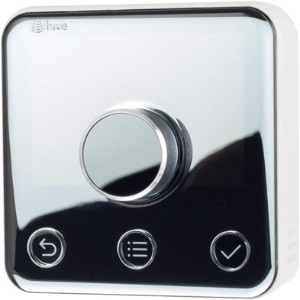
The Hive Active Heating Thermostat deserves its position at the top of this list. We’ve found it strikes the perfect balance between features and affordability, making it ideal for anyone new to smart heating control. The installation process is straightforward even if you’re not confident with DIY, and Hive’s customer support genuinely helps when you need it.
What really sets it apart is the mobile app. You get full control from your phone whether you’re at work or on holiday, and the interface feels intuitive rather than cluttered. Remote access means you can warm your home before you arrive, switch it off if you’ve forgotten, or adjust schedules on the fly. The heating reports show exactly where your energy is going, which helps you spot patterns and save money.
Hive integrates with Amazon Alexa, Google Home, and Apple HomeKit, so if you’ve already invested in one of those ecosystems, it slots in seamlessly. The thermostat learns your patterns over time and adjusts itself, though you always have manual override. The installation includes a hub for connectivity, and most boilers will work with it.
Some users mention the initial setup takes patience, but once it’s running, it just works quietly in the background. At around £115, you’re paying for reliability and ease rather than cutting-edge technology, and that’s precisely what most homeowners need.
Features
- Full remote control via app (iOS and Android)
- Integration with Alexa, Google Home, and HomeKit
- Energy usage reports and heating analytics
- Simple scheduling and holiday mode
- Learning algorithm adapts to your routine
- Works with most combi and conventional boilers
- 7-day warranty covering installation
- Excellent app experience and remote control
- Very affordable for the features offered
- Strong smart home integration
- Reliable and proven over many years
- Requires a hub for full functionality
- Not as much learning capability as Google Nest
2. Google Nest Learning Thermostat 3rd Generation
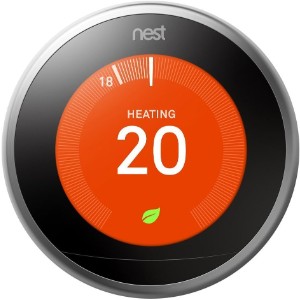
If you want a thermostat that genuinely learns your preferences without much input from you, Google Nest deserves serious consideration. This is the premium option on this list, and the price reflects that. The learning algorithm is seriously impressive. It watches your patterns for the first week, then starts adjusting itself automatically. Many owners tell us they set it once and barely touch it again because it just seems to know what temperature they want.
The circular design looks elegant on any wall, and the bright LED display is easy to read from across the room. Google Nest controls work with Google Home seamlessly, and if you’re already deep in the Google ecosystem, this feels natural. The app is polished and provides detailed insights into your heating patterns and potential savings. You’ll see breakdowns of heating by day, week, or month, plus suggestions for optimising further.
Installation can be trickier than Hive if your wiring is non-standard, though Google provides clear guides. The thermostat itself is more expensive at around £270, which is worth considering. It’s most suitable if you’ve got Google Home speakers throughout your house or if you prioritise the learning features and premium build quality.
Features
- Advanced self-learning AI algorithm
- Beautiful circular display with ambient light
- Seamless Google Home integration
- Detailed energy usage reports and savings estimates
- Remote app control and scheduling
- Energy Saver mode reduces heating when you’re away
- Works with most standard boiler systems
- Outstanding self-learning capability
- Premium design and build quality
- Excellent Google ecosystem integration
- Detailed energy analytics and insights
- Significantly more expensive than competitors
- Installation complexity if you have older wiring
3. tado° Smart Thermostat Starter Kit V3+
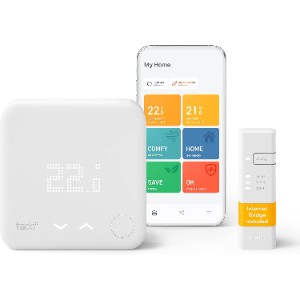
tado brings something different to the table with its focus on geolocation-based heating. The starter kit includes the thermostat plus a wireless receiver for your boiler, which makes installation straightforward for most homes. The standout feature is Auto-Assist, which uses your phone’s location to turn heating on as you approach home and off when you leave. You don’t even need to set schedules. If you’re someone who travels or has an unpredictable routine, this alone could save you money.
The app is clean and shows real-time energy usage, weather forecasts, and heating recommendations. The build quality feels premium, and tado maintains regular software updates that add new features over time. It integrates with major smart home platforms, though its Alexa compatibility requires some initial setup. The kit costs around £100, which is competitive given what you get.
One thing to note: tado’s geolocation works best if you’re regularly in the same location. If you work from home most days, the traditional scheduling approach might suit you better. The wireless receiver installation is foolproof, even for renters.
Features
- Geolocation-based heating control with Auto-Assist
- Wireless receiver included in kit for easy installation
- Real-time energy consumption tracking
- Smart scheduling and weather-responsive heating
- Integration with Alexa, Google Home, and HomeKit
- Heating reports and efficiency recommendations
- Works with combi, system, and conventional boilers
- Unique geolocation-based convenience features
- Wireless receiver makes installation simple
- Strong energy tracking and transparency
- Regular software updates add value
- Geolocation works best with regular routines
- Requires good WiFi signal for reliability
4. Honeywell Home T3R Wireless Smart Thermostat Kit
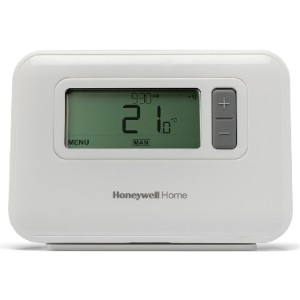
Sometimes the simplest solution is the best one, and the Honeywell Home T3R proves that. This thermostat does exactly what it promises: wireless control and basic scheduling. There’s no complexity, no overwhelming app features, and no learning algorithm to get your head around. You install it, set your schedule, and control it from your phone when needed. Around £90 makes it good value for straightforward heating management.
The wireless receiver is included, installation takes an hour or so, and the app works reliably. The thermostat itself has a clear display, and adjusting temperature on the device is intuitive. Honeywell has been making heating controls for decades, so the build quality is solid. If you want proven reliability over flashy features, this is worth considering.
Features
- Simple wireless control with included receiver
- Basic weekly scheduling and holiday mode
- Mobile app with straightforward interface
- Compatible with most boiler types
- Energy usage tracking
- Manual override on device and app
- Genuinely simple to use and install
- Reliable, proven brand
- Good value at this price point
- No learning curve, no confusing features
- Limited smart home integration
- Basic analytics compared to rivals
5. Hive Thermostat for Combi Boiler and Multizone
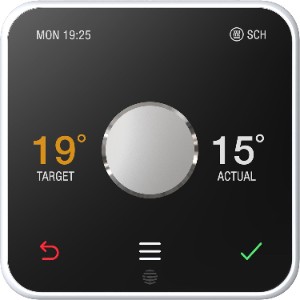
This is Hive’s flagship offering, specifically designed for homes with modern combi boilers or multizone heating systems. If you’ve got multiple heating zones or a more complex boiler setup, this model handles that far better than the standard Hive thermostat. The multizone capability means you can control different areas of your home independently, which is brilliant for larger houses or flats with separate zones.
Installation remains straightforward, and the app includes features for managing those multiple zones. You get the same excellent Hive experience with remote control, smart home integration, and energy reports, but with the added sophistication for complex heating systems. At around £121, it’s a sensible upgrade if your property actually needs multizone control. For a simple two-bedroom house with a combi boiler, the standard Hive model is fine, but if you’ve got heating zones in different parts of your property, this is the right choice.
The thermostat learns your preferences across different zones and can even adjust individual zone temperatures based on usage patterns. All the usual Hive reliability is here, plus the added complexity handled smoothly.
Features
- Multizone heating system support
- Full remote control via app for each zone
- Integration with Alexa, Google Home, and HomeKit
- Zone-specific scheduling and learning
- Energy reports broken down by zone
- Optimised for modern combi boilers
- Richer analytics for complex systems
- Handles multizone heating seamlessly
- Full control over individual zones
- Same excellent Hive reliability
- Smart learning per zone
- Overkill for simple single-zone homes
- More expensive than standard Hive
6. Drayton Wiser Smart Thermostat
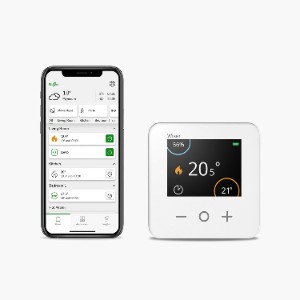
Drayton is a long-established UK brand, and Wiser represents their smart heating offering. At around £73, it’s genuinely affordable, which appeals to anyone testing smart heating for the first time. The app provides basic control, scheduling, and temperature adjustment. Installation is straightforward with the included wireless receiver. The interface on the device itself is logical, and switching between modes takes a moment.
The 4.0-star rating on Amazon suggests it’s a solid performer rather than exceptional. Some users mention occasional app hiccups and that the learning features are minimal compared to premium models. For what it costs, those trade-offs are honest. If you want smart heating without significant investment and don’t need advanced features, Wiser works perfectly adequately. It’s a UK brand with established support, which might appeal if you prefer dealing with local companies.
Features
- Affordable entry-level smart thermostat
- Wireless receiver included in kit
- Mobile app control and basic scheduling
- Holiday mode and temperature override
- Energy usage tracking (basic)
- Compatible with most boiler types
- UK-based brand with local support
- Very affordable smart heating option
- Established UK brand
- Easy installation and setup
- Reliable basic functionality
- App can be glitchy at times
- Minimal learning features
- Basic analytics compared to competitors
7. Meross Smart Thermostat Boiler WiFi
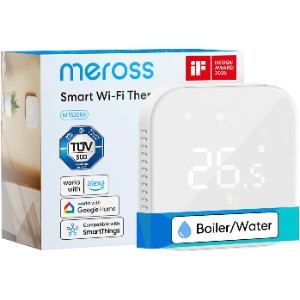
Meross is a newer name in smart heating but has made a real push into the UK market. At around £58, it’s possibly the cheapest option on this entire list, which makes it worth looking at if your budget is tight. The WiFi connection means you don’t need a separate receiver, which saves time and money during installation. The app works reasonably well for basic control, scheduling, and temperature adjustments.
The main consideration is that Meross is less established than brands like Hive or Google, so long-term support is less proven. Some users report inconsistent app performance, though that may improve with future updates. For a budget option that genuinely works, though, it’s difficult to beat at this price. You’re taking a slight gamble on brand longevity, but the upfront cost is so low that risk feels manageable.
Features
- Budget-friendly smart thermostat
- WiFi connection, no separate receiver needed
- Mobile app with scheduling and remote control
- Temperature reporting and basic analytics
- Compatible with most standard boilers
- Simple installation and setup
- Supports iOS and Android
- Exceptionally affordable
- No separate receiver required
- Functional app for basic control
- Quick installation
- Less established brand with limited track record
- App reliability can be inconsistent
8. tado Wireless Smart Thermostat X Starter Kit
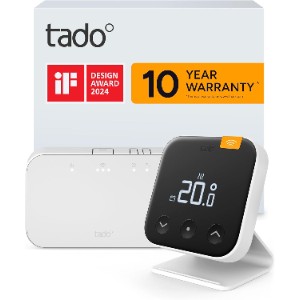
This is tado’s newest offering, the X series, representing their latest technology push. The price sits at around £160, making it a premium option but not quite Google Nest territory. The main draw is the latest wireless tech and processor improvements that promise faster response times and better reliability.
Reviews are fewer than the V3+ model because it’s so recent. The feature set is similar to tado’s established offering, with geolocation-based control and Auto-Assist, but in a more refined package. If you want the absolute newest tado technology but don’t have hundreds of reviews to reference, this requires a bit more faith than older models. The wireless receiver is included and installation remains straightforward. Build quality feels premium, and tado’s software update track record suggests this will improve over time.
Features
- Latest tado X generation wireless technology
- Geolocation-based Auto-Assist heating
- Wireless receiver included in kit
- Enhanced processor for faster response
- Full app control and weather-responsive scheduling
- Integration with major smart home platforms
- Real-time energy tracking
- Newest tado technology available
- Geolocation convenience features
- Premium build quality
- Fewer reviews due to recent release
- More expensive without clear advantage over V3+
- Long-term reliability not yet proven
Smart Heating Thermostat Buying Guide
Key Takeaways
- Hive Active Heating offers the best balance of features, cost, and ease for most UK homes
- Google Nest Learning Thermostat suits homes already in the Google ecosystem or wanting premium learning features
- tado excels if you move between locations regularly due to geolocation-based control
- Budget options like Meross and Drayton Wiser work fine for basic smart control
- Installation difficulty varies by boiler type, so check compatibility before purchasing
- Smart thermostats typically save 10-15% on heating bills through better scheduling and awareness
- Integration with smart home platforms matters if you’ve already invested in Alexa, Google Home, or HomeKit
What Is a Smart Heating Thermostat?
A smart heating thermostat is a digital device that controls your boiler and heating system via WiFi. Unlike traditional thermostats that you adjust manually, smart thermostats connect to your mobile phone and let you control heating from anywhere. They learn your preferences, create schedules, and provide insights into energy usage.
The thermostat itself replaces your existing wall-mounted unit. Most come with a wireless receiver that connects to your boiler, eliminating the need to rewire anything in your system. Installation typically takes an hour or two if you’re comfortable with basic DIY, or you can hire a gas engineer for assurance.
How Do Smart Thermostats Work?
Smart thermostats communicate with your boiler through wireless protocols like Zigbee or 2.4GHz WiFi. When you adjust the temperature in the app or on the device itself, the thermostat sends a signal to turn your heating on or off. Built-in temperature sensors ensure your home reaches the desired warmth, and most models include learning algorithms that detect your patterns over time.
The thermostat connects to your home WiFi network and sends data to cloud servers. This allows you to control heating from anywhere, set schedules, and receive notifications if something goes wrong. Some models, like tado, use your phone’s location to turn heating on as you approach home and off when you leave.
Benefits of Using a Smart Heating Thermostat
The primary benefit is energy savings. According to heating engineers, smart thermostats typically reduce bills by 10-15% simply through better awareness and scheduling. You stop heating empty properties, warm your home just before arriving, and adjust temperatures based on weather. Over a year, that adds up considerably.
Convenience comes next. No more rushing downstairs to adjust the boiler before bed or worrying you’ve left heating on when you go away. Remote control via your phone means comfort and savings without thinking about it. Learning algorithms get to know your preferences and handle adjustments without your input, which appeals to busy people or those managing rental properties.
Smart thermostats also provide transparency. The apps show exactly how much energy you’re using for heating, broken down by day or week. This visibility often motivates people to behave differently with heating, leading to additional savings beyond what the thermostat itself provides.
Things to Keep in Mind Before Buying
Check boiler compatibility first. Most smart thermostats work with combi boilers, system boilers, and conventional boilers with hot water tanks. If you have an unusual setup, check the product listing carefully or contact the manufacturer. An engineer can also advise during installation.
WiFi signal strength matters. Your thermostat needs a reliable WiFi connection, ideally with signal strength of -70 dBm or better. If your router is in the hallway and the boiler is in the kitchen at the far end of the house, you might need a WiFi extender. Most installers check this before finishing.
Installation confidence varies. Some people fit thermostats themselves in an hour, while others prefer to hire a gas engineer for peace of mind. The manufacturer’s instructions are usually clear, but if you’re unsure about any aspect, it’s worth paying for professional installation. Some thermostats like tado and Hive make it particularly straightforward.
Think about smart home integration. If you’re already using Alexa throughout your home, pick a thermostat that integrates well with Alexa. Same applies to Google Home or Apple HomeKit. You don’t need integration to benefit from the thermostat, but it adds convenience if you’re already using voice control elsewhere.
Types of Smart Heating Thermostat
Learning thermostats actively monitor your behaviour and adjust automatically. Google Nest is the standout here, though some Hive models incorporate learning features. These suit people who want the thermostat to just know their preferences.
Location-based thermostats like tado use your phone’s GPS to control heating based on whether you’re home or away. This works brilliantly for people with unpredictable routines but less so for families where different people arrive at different times.
Schedule-based thermostats let you set specific times for heating to turn on and off. Honeywell T3R and Drayton Wiser excel here. These work well if your routine is consistent, like heating between 7am-9am and 5pm-11pm on weekdays.
Premium models combine multiple approaches. Hive Active Heating offers learning, scheduling, and remote control all together. These give you the most flexibility and tend to deliver better results as you can use whichever approach suits your situation.
OpenTherm Compatibility: Getting More From Your Boiler
Most thermostats communicate with a boiler using a simple relay: the thermostat either sends a signal (heat needed) or doesn’t (target temperature reached). OpenTherm is different. It’s a two-way communication protocol that lets a compatible thermostat and boiler exchange data continuously, allowing the boiler to modulate its output rather than simply switching on and off.
In practice, a boiler running on OpenTherm fires at a lower temperature for longer periods rather than blasting at full power and cutting out repeatedly. Modern condensing boilers are significantly more efficient in this low-temperature modulating mode, and studies suggest OpenTherm can reduce gas consumption by a further 10–15% compared to a standard on/off thermostat, on top of savings from smart scheduling.
Not every thermostat in this guide supports OpenTherm. The tado° V3+ and tado° X both do, as does the Google Nest Learning Thermostat. The Hive Active Heating uses standard on/off switching regardless of your boiler’s capability. If you have a modern condensing boiler and efficiency matters to you, this is worth checking before you decide.
Smart Thermostats and Heat Pumps: What to Check First
Heat pumps are increasingly common in UK homes, and not every smart thermostat works well with them. Heat pumps operate best at low temperatures for extended periods — they don’t respond well to the aggressive on/off switching style suited to gas boilers. Using the wrong thermostat with a heat pump can noticeably reduce its efficiency and push running costs up.
If you have an air source or ground source heat pump, look specifically for thermostats confirmed as heat pump compatible. tado° is frequently recommended by heat pump installers and supports heat pump control directly. Drayton Wiser also offers heat pump compatibility. Nest and Hive are primarily designed for gas and oil boiler systems and are generally not recommended for heat pump installations.
One more consideration specific to heat pumps: geofencing works differently with them. Because heat pumps reheat a cold house far more slowly than a gas boiler, deep setback temperatures when you’re out are rarely a good idea. Look for a thermostat with geofencing that allows gentle reductions rather than full setbacks, so the system doesn’t have to work hard to recover when you return.
Case Study: Smart Heating in a Victorian Terrace
Background
A Victorian terraced house in Manchester with period features, high ceilings, and mixed insulation presented a classic heating challenge. The old boiler system worked fine but offered no temperature flexibility. The owner travelled for work four days a week, meaning heating ran constantly despite the property being empty most days.
Project Overview
The brief was to install a smart thermostat that would reduce energy waste while maintaining comfort when home. The property had a combi boiler and straightforward wiring, making installation feasible via DIY or an engineer.
Implementation
A Hive Active Heating Thermostat was installed over a weekend. The wireless receiver connected easily to the existing boiler. Initial schedules were set for the working week, with heating off during work hours and turning on before arrival home. The app was set up on both mobile phones.
Results
Within the first month, the heating bill dropped by approximately 18%. More importantly, the pattern changed from “heating always on” to “heating only when needed”. The app showed that on average, heating ran 6 hours daily instead of the previous 12-14 hours. Over the year, this translated to savings of about £220. The investment paid for itself within seven months. The property remained comfortable when occupied, and the absence of heating during work days proved no issue whatsoever.
Expert Insights From Our Heating Engineers About Smart Thermostats
One of our senior heating engineers with over 18 years of experience offers this perspective: “Smart thermostats genuinely save money for most people, but the savings come from behaviour change rather than the thermostat being clever by itself. The best thermostats act as a monitoring system that makes people aware of their heating patterns. Once aware, people naturally adjust. You’ll turn heating off rather than letting it run, you’ll schedule more efficiently, and you’ll be mindful of temperature settings. The thermostat enables this awareness, which is where the value truly lies.
From a technical standpoint, modern combi boilers pair beautifully with smart thermostats. The wireless connection is genuinely reliable these days. I recommend avoiding the absolute cheapest options if you plan to keep the thermostat beyond five years, as software support becomes crucial. Brands like Hive, tado, and Google put resources into long-term updates. Newer brands might not provide that same level of support if they pivot away from the UK market.”
Frequently Asked Questions
Do smart thermostats actually save money?
Yes, typically 10-15% on heating bills for most households. The savings come from better scheduling, reduced overheating, and awareness of consumption patterns. Your specific savings depend on how you use the thermostat.
Will a smart thermostat work with my boiler?
Most smart thermostats work with combi boilers, system boilers, and conventional boilers. Check the product listing for your boiler type. If you’re unsure, a gas engineer can confirm compatibility quickly.
Can I install a smart thermostat myself?
Yes, installation typically takes 1-2 hours for most people. It’s more about following instructions than technical ability. That said, hiring a gas engineer ensures it’s done correctly and provides reassurance if anything seems wrong during the process.
Which smart thermostat is best for rented properties?
Look for thermostats with wireless receivers that don’t require permanent wiring changes. tado and Hive both offer wireless options suitable for rental properties. Check your tenancy agreement before installation, as landlords may have requirements about permanent alterations.
Do I need a hub or gateway for remote control?
Most smart thermostats require a hub or WiFi connection for remote control from outside your home. Some models include the hub in the kit, whilst others sell it separately. Check before purchasing if remote access is important to you.
How reliable are smart thermostats?
Modern smart thermostats are quite reliable, with most users reporting few problems. The wireless connection is stable, and boilers rarely have issues. If problems occur, they’re usually app-related rather than the thermostat itself not controlling heating.
What happens if my WiFi goes down?
Your thermostat will continue heating your home based on its last setting or schedule. You just won’t be able to control it remotely via the app. Once WiFi is restored, remote control works again.
Can I use a smart thermostat with multiple heating zones?
Yes. Models like Hive’s Multizone or some tado products handle multiple zones. These let you control different areas of your home independently, which is ideal for larger properties or flats with separate heating systems.
Summing Up
Finding the right smart thermostat doesn’t need to be complicated. For most UK homes, the Hive Active Heating Thermostat offers the best combination of features, reliability, ease of use, and cost. It works with virtually any boiler, integrates with popular smart home platforms, and genuinely delivers on the promise of better heating control and lower bills.
If you prefer learning algorithms, Google Nest is worth the premium investment. For people with variable routines, tado’s geolocation features are hard to beat. Budget buyers will find Meross functional and affordable. Whatever you choose, the investment typically pays for itself within a year through energy savings. That alone makes a smart thermostat a sensible upgrade for almost any UK home.
Updated