
The Dreo 1500W Electric Heater Atom 316 is the best electric heater for most homes. With over 11,000 ratings and a 4.6-star average, it’s the most-reviewed electric heater on Amazon UK, and the combination of instant PTC ceramic heat, a remote control, and a 12-hour timer at under £50 is hard to beat. Whether you need a bedroom heater, a home office top-up, or something to take the chill off a cold bathroom, there’s an option on this list for you.
We’ve tested and reviewed eight of the best electric heaters available on Amazon UK right now, covering everything from compact fan heaters and budget oil-filled radiators to silent tower heaters and smart WiFi-connected wall units.
Contents
- 1 Our Top Picks
- 2 8 Best Electric Heaters
- 2.1 1. Dreo 1500W Electric Heater Atom 316
- 2.2 2. Pro Breeze 2000W Mini Ceramic Fan Heater
- 2.3 3. Dreo 25 Inch Electric Tower Heater
- 2.4 4. De’Longhi Dragon 4 TRD40820T Oil Filled Radiator
- 2.5 5. Zanussi 2000W Oil Filled Radiator
- 2.6 6. Duronic HV220 Micathermic Panel Heater
- 2.7 7. ANSIO 2000W Tower Heater
- 2.8 8. Dreo Smart Electric Wall Heater
- 3 Electric Heater Buying Guide
- 4 Case Study: Home Office Heating in a Victorian Terrace
- 5 Expert Insights From Our Heating Engineers About Electric Heaters
- 6 Frequently Asked Questions
- 6.1 What is the cheapest electric heater to run?
- 6.2 Are electric heaters expensive to run?
- 6.3 What is the difference between a fan heater and an oil-filled radiator?
- 6.4 What size electric heater do I need?
- 6.5 Is it safe to leave an electric heater on overnight?
- 6.6 Can I use an electric heater as my main heating source?
- 6.7 What electric heater is best for a bedroom?
- 6.8 Do electric heaters use a lot of electricity?
- 7 Summing Up
Our Top Picks
| Image | Name | |
|---|---|---|
| Dreo 1500W Electric Heater Atom 316 | |
| Pro Breeze 2000W Mini Ceramic Fan Heater | |
| Dreo 25 Inch Electric Tower Heater | |
| De'Longhi Dragon 4 TRD40820T Oil Filled Radiator | |
| Zanussi 2000W Oil Filled Radiator | |
| Duronic HV220 Micathermic Panel Heater | |
| ANSIO 2000W Tower Heater | |
| Dreo Smart Electric Wall Heater |
8 Best Electric Heaters
1. Dreo 1500W Electric Heater Atom 316
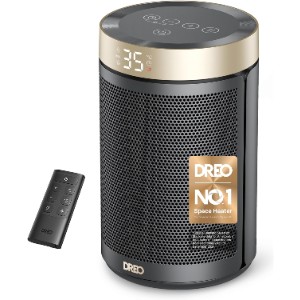
If you want one heater that does everything well, this is it. The Dreo Atom 316 has been the top-selling electric heater on Amazon UK for good reason: 1500W of PTC ceramic heat delivers warm air Within seconds, the remote control is genuinely useful, and the 3-mode setup (eco, low, high) lets you dial in the right output for any room. The 12-hour timer means you can set it to switch off after you fall asleep rather than leaving it running all night, and the tilt-detection tip-over protection is more accurate than the older designs you’ll find on cheaper heaters.
The upgrade to remote control in September 2025 makes this feel like a step up from the previous version. You get real control over thermostat temperature and timer without getting out of your chair, which is more practical than it sounds at 11pm in a cold bedroom. Heat distribution is helped by the funnel design, which Dreo claims pushes warm air up to 200% further than traditional heaters. In a modest bedroom or home office, it heats the space noticeably quickly.
The downsides are worth knowing. At 1500W it won’t heat a large open-plan living room on its own, and like all fan heaters there’s a soft rushing sound when it’s running. Not loud, but not silent. The gold finish is also polarising. The white version is a little less conspicuous if that matters to you.
Features
- 1500W PTC ceramic heating element
- 3 modes: eco, low heat, high heat
- Remote control included
- 12-hour programmable timer
- Tip-over and overheat protection
- V0 flame-retardant materials
- Heats rooms up to approximately 18m²
- Over 11,000 reviews — the most trusted electric heater on Amazon UK
- Remote control included as standard
- Heats a room within seconds
- Compact footprint fits anywhere
- Fan noise means it isn’t truly silent
- 1500W won’t heat large open-plan rooms alone
2. Pro Breeze 2000W Mini Ceramic Fan Heater
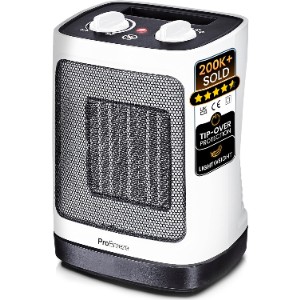
The Pro Breeze Mini is the one to buy if your main priority is price. At £32.99 it’s one of the cheapest electric heaters on Amazon UK with a meaningful review count — over 7,000 ratings and a 4.5-star average says this isn’t a gamble. It’s genuinely small: you could fit it on a desk or windowsill without it getting in the way, and the oscillation mode spreads heat around the room reasonably well for something this compact.
Two heat settings (1000W and 2000W), a tip-over cut-off, and overheat protection cover the basics. There’s no thermostat, which means it runs at full power until you switch it off. That’s fine for short bursts of heat, but it’s less efficient than a model with automatic temperature cycling. If you’re heating a room for more than 20 minutes at a stretch, something with a thermostat will cost you less to run over time.
Features
- 2000W with 1000W low-heat mode
- Oscillation mode for wider coverage
- Built-in overheat and tip-over protection
- Compact desktop/tabletop design
- Available in white
- One of the most affordable well-reviewed heaters available
- Tiny footprint — suits desk use or small spaces
- Oscillation mode helps spread heat
- No thermostat — runs at constant power
- Not suited to large rooms
- No timer or remote
3. Dreo 25 Inch Electric Tower Heater
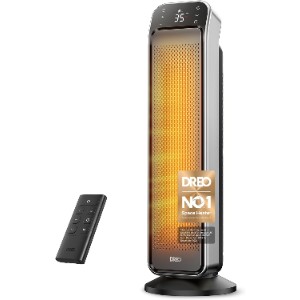
This is the pick if you want something for a larger room and don’t want the noise of a standard fan heater. The Dreo 25 Inch runs at just 25 decibels, which is closer to a quiet library than a conventional blow heater. The 70-degree oscillation covers a wide arc, and the remote control means you can adjust the speed, heat setting, and timer from across the room. At 7,631 reviews and 4.5 stars, it has more customer validation behind it than most heaters at this price point.
The three-speed, three-mode setup gives you a decent range of output. In practice the 2000W high setting will heat a living room or large bedroom reasonably quickly, while the eco mode cycles the heater to maintain your target temperature without running at full power constantly. The 12-hour timer and child lock round out the feature set. At £109.99 it’s not cheap for an electric heater, but the low noise level genuinely sets it apart from cheaper models if that matters to you.
Features
- 2000W PTC ceramic heating
- 70° oscillation
- 25dB quiet operation
- 3 heat modes, 3 fan speeds
- Remote control and 12-hour timer
- Child lock and tip-over/overheat protection
- ETL certified
- 25dB operation is genuinely quiet — notably quieter than standard fan heaters
- Over 7,600 reviews at 4.5 stars
- Eco mode cycles to reduce running costs
- Remote control and timer included
- Expensive relative to basic fan heaters
- Tower design means it needs floor space
4. De’Longhi Dragon 4 TRD40820T Oil Filled Radiator
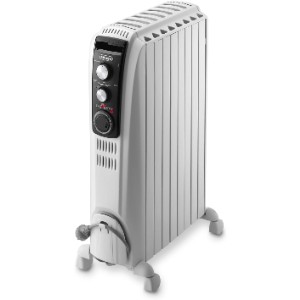
De’Longhi has been making oil-filled radiators for decades, and the Dragon 4 remains one of the most consistently recommended models in the UK. At £129 it’s more expensive than most options on this list, but the build quality justifies it. The patented thermal slots increase surface area to improve heat circulation, and the Dragon 4 noticeably distributes heat more evenly around a room than cheaper oil-filled designs.
Oil-filled radiators work differently to fan heaters. They take longer to warm up — typically 10 to 15 minutes — but the heat they store in the oil means they continue radiating warmth for a while after switching off. That makes them well-suited to bedrooms, where you want steady background heat rather than a sudden blast. The Dragon 4’s built-in electronic thermostat is accurate, which keeps running costs down by preventing the heater from running more than it needs to. The wheels and carry handle make it easy to move between rooms.
One honest caveat: 2000W oil-filled radiators are not cheaper to run than fan heaters of equivalent wattage. The running cost per hour is the same. Where they save money is in the thermostat cycling off more quickly because the stored heat supplements the room temperature even when the element is off.
Features
- 2000W output, 8-fin design
- De’Longhi patented thermal slots
- Electronic thermostat with multiple heat settings
- Timer function
- Castors and carry handle for portability
- Overheat protection and safety thermal cut-off
- Even, gentle heat — no fan noise
- Retains warmth after switching off
- Accurate thermostat helps manage running costs
- Trusted brand with strong long-term reliability
- Expensive compared to other types
- Takes 10-15 minutes to reach full operating temperature
- Heavy and bulky compared to fan heaters
5. Zanussi 2000W Oil Filled Radiator
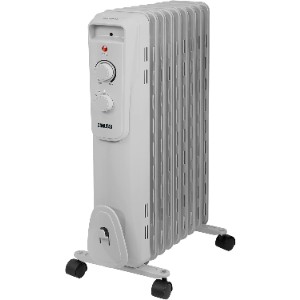
If the De’Longhi is out of budget, the Zanussi is a solid second choice in the oil-filled category. At £44.99 it’s a significant step down in price but covers the essentials: 2000W output across 9 fins, three heat settings (800W, 1200W, 2000W), an adjustable thermostat, and coverage up to 20m². The two-year guarantee is useful, and the castors and carry handle make it manageable to move around the house.
With 379 reviews it doesn’t have the track record of some options on this list, but the Zanussi brand carries a degree of reassurance, and the ratings so far are positive. It’s a practical choice if you want an oil-filled radiator for bedroom use and don’t want to spend £129 on a De’Longhi.
Features
- 2000W, 9-fin design
- 3 heat settings: 800W, 1200W, 2000W
- Adjustable thermostat dial
- Covers up to 20m²
- Castors and carry handle
- 2-year manufacturer guarantee
- Good budget price for an oil-filled radiator
- 2-year guarantee
- Three heat settings for flexible output
- Fewer reviews than most picks on this list
- No timer or digital thermostat
- Dial-only controls feel basic
6. Duronic HV220 Micathermic Panel Heater
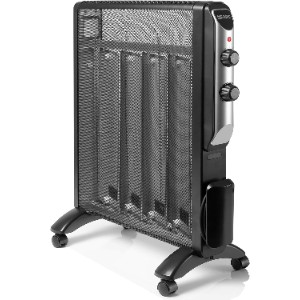
Micathermic heaters are worth understanding because they don’t work the same way as fan heaters or oil-filled radiators. The Duronic HV220 uses mica panels to produce both radiant heat (like an infrared heater) and convection heat (like a panel radiator), without a fan and without oil. The result is silent heating that warms the room in about a minute — much faster than oil-filled, and without the noise of a fan heater.
The HV220 is slim, lightweight, and can be mounted on a wall if you’d rather not have it taking up floor space. The 2000W output is reasonable for a room up to around 20m², and because there’s no fan moving air around, it doesn’t disturb dust — which matters if anyone in the household has allergies. At £55.99 it’s not the cheapest on this list, but it fills a genuine gap between the oil-filled and fan heater categories that some buyers find useful.
Features
- 2000W micathermic technology
- No fan, no oil — completely silent operation
- Heats up in approximately one minute
- Wall-mountable or freestanding
- Two heat settings and thermostat
- Tip-over protection
- Silent — no fan, no moving parts
- Heats quickly, unlike oil-filled models
- Slim and wall-mountable
- Good for allergy sufferers — doesn’t circulate dust
- Relatively few reviews compared to top picks
- Not as compact as fan heaters
- No remote or timer
7. ANSIO 2000W Tower Heater
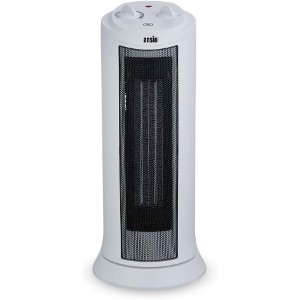
If you want a tower heater at around half the price of the Dreo 25 Inch, the ANSIO is the alternative to consider. At £49.95 it offers 70-degree oscillation, PTC ceramic heating, and an adjustable thermostat in a freestanding column format. The two power modes (1200W and 2000W) give you a basic low-high option, and the overheat and tip-over protection cover the safety essentials.
What you’re trading down on is noise level and controls. The ANSIO doesn’t have a remote or a timer, so you have to adjust it manually. It’s also louder than the Dreo 25 Inch. For a bedroom where silence matters, spend the extra. For a garage, workshop, or utility room where you just want oscillating heat at a low price, the ANSIO does the job at a fraction of the cost.
Features
- 2000W PTC ceramic heating
- 70° oscillation
- Two power modes: 1200W and 2000W
- Adjustable thermostat
- Overheat and tip-over protection
- Affordable tower heater with oscillation
- 2000W output for larger spaces
- Adjustable thermostat helps manage running costs
- No remote control or timer
- Noisier than premium tower heaters
- Manual controls only
8. Dreo Smart Electric Wall Heater
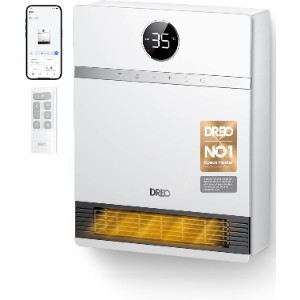
The Dreo Smart Wall Heater is for anyone who wants their heater connected to their phone or voice assistant. You can schedule it, adjust the temperature remotely, and set it to warm the room before you wake up — which is the most practical smart heating use case. At 28dB it’s among the quietest options on this list, which makes it well-suited to bedrooms and home offices where background noise matters.
It can be floor-standing or wall-mounted, which is a useful dual option. Wall-mounting keeps the floor clear and looks tidier than a freestanding heater, particularly in a bedroom or living room where aesthetics matter. The £119.99 price puts it alongside the Dreo 25 Inch Tower, so the choice between them really comes down to whether you want WiFi and wall mounting (this one) or tower-format oscillation at a near-silent noise level (the 25 Inch).
Features
- WiFi-connected with app and voice control
- 28dB silent operation
- Wall-mountable or freestanding
- PTC ceramic heating element
- Programmable schedule and remote control via app
- Tip-over and overheat protection
- WiFi smart control via phone or voice assistant
- 28dB — very quiet for a ceramic heater
- Wall-mountable for a neat installation
- Good for scheduling to avoid wasted energy
- Premium price for a portable heater
- Requires app setup and WiFi to use smart features
Electric Heater Buying Guide
Key Takeaways
- For most UK homes, 1500W suits a bedroom or home office; 2000W is more appropriate for a living room or large open-plan space
- Fan heaters heat a room in minutes; oil-filled radiators take 10-15 minutes but retain heat after switching off
- At the current UK electricity rate of around 34p per kWh, a 1500W heater costs approximately 51p per hour to run; a 2000W heater costs around 68p per hour
- A thermostat makes a significant difference to running costs — the heater cycles off when it reaches temperature rather than running flat out
- Tip-over protection and overheat protection are non-negotiable safety features; all eight products on this list include both
- Smart heaters with WiFi scheduling are the most energy-efficient option if you want to pre-heat a room before arriving
- Oil-free micathermic heaters are the best choice if anyone in the household has dust allergies, as they don’t circulate air
What Is an Electric Heater?
Electric heaters convert electrical energy directly into heat. Unlike gas boilers or heat pumps, they don’t require a separate fuel supply, a flue, or any permanent installation in most cases. You plug them in, switch them on, and they heat. This simplicity makes them the most common supplementary heating solution in the UK, particularly in rooms not connected to the central heating system or in homes where the central heating isn’t cost-effective to run all day.
Electric heating is 100% efficient at the point of use — every unit of electricity consumed is converted to heat. The real running cost question is how much electricity you’re using, which is where wattage, thermostat behaviour, and usage patterns matter.
Types of Electric Heater
There are five main types of electric heater commonly sold in the UK, and the right choice depends on how you plan to use it.
Ceramic fan heaters are the most popular type. They use a ceramic element heated by electricity and a fan to push warm air into the room. They’re fast — most heat a small room in a few minutes — and compact. The Dreo Atom 316 and Pro Breeze Mini on this list are ceramic fan heaters. The downside is fan noise and the fact that they stop producing heat the moment you switch them off.
Oil-filled radiators use electrical elements to heat oil sealed inside the radiator body. The oil stores heat and radiates it gradually. They’re silent, they continue warming the room after switching off, and they feel more like conventional central heating than other electric types. The De’Longhi Dragon 4 and Zanussi on this list are oil-filled models. The downsides are slower warm-up times and greater weight.
Tower heaters are a format rather than a distinct technology — most use PTC ceramic elements like fan heaters but in a tall column design with wider-angle oscillation. The Dreo 25 Inch and ANSIO on this list are tower heaters. They’re better for larger rooms than compact fan heaters because the oscillation and height distribute heat more widely.
Micathermic panel heaters use mica panels to produce a combination of radiant and convective heat without a fan. Silent and fast to heat up, they’re a middle ground between oil-filled (silent but slow) and fan heaters (fast but noisy). The Duronic HV220 is the micathermic option on this list.
Smart heaters are any of the above with WiFi connectivity added. The Dreo Smart Wall Heater is the smart option here. The advantage is remote scheduling and control, which allows you to heat a room only when needed rather than running the heater continuously.
What Wattage Do You Need?
A rough guide for UK homes is to allow 100W per square metre of room area for a well-insulated modern property. So a 15m² bedroom suits a 1000-1500W heater; a 25m² living room needs at least 1500-2000W. Older properties with poor insulation, high ceilings, or single glazing may need 20-30% more than these figures.
Going above 2000W for a plug-in portable heater isn’t practical on a standard 13A socket, so for very large rooms you’re better off with two heaters or a permanently wired unit installed by an electrician.
Running Costs
Electric heating is more expensive to run per unit of heat than gas central heating, but for supplementary use in individual rooms it can work out cheaper than heating the whole house. The key figure is wattage multiplied by the electricity rate.
At approximately 34p per kWh (the current UK unit rate as of mid-2026), here’s what it costs to run different heaters for one hour at full power: a 1000W heater costs about 34p; a 1500W heater costs about 51p; a 2000W heater costs about 68p. Using a thermostat to cycle the heater on and off at your target temperature typically cuts effective running time by 30-50%, which matters a lot over a full heating season.
The most cost-effective approach is a smart heater or one with a 24-hour timer, so it only runs when you’re actually in the room. Pre-heating a bedroom for 20 minutes before you go to sleep is much cheaper than leaving a heater running all night.
Safety Features to Look For
All eight heaters on this list include tip-over protection (cuts power if the heater falls) and overheat protection (cuts power if internal temperature exceeds safe limits). These are the two essential safety features for any portable electric heater.
Additional features worth noting: child lock prevents settings being accidentally changed; V0 flame-retardant casing doesn’t catch fire even if the element fails; thermal fuses provide a backup cut-off if the primary overheat protection fails. The Dreo models use V0 rated materials, which is the highest flame-retardant classification for plastics.
Never use an extension cable with an electric heater unless the cable is rated for the heater’s wattage. Most manufacturers advise plugging directly into a wall socket. Keep heaters at least one metre from curtains, furniture, and bedding.
Things to Consider Before Buying
Think about how long you’ll be heating the room and whether you’ll remember to switch it off. If the answer is “probably not”, spend the extra on a model with a timer. Think about noise — oil-filled radiators and micathermic heaters are silent; fan heaters and tower heaters have a continuous fan sound that becomes noticeable in a quiet bedroom. Think about portability — if you want to move the heater between rooms, a lightweight ceramic fan heater beats a 5kg oil-filled radiator.
If you’re heating a room that doesn’t have central heating at all — a converted garage, a garden office, a loft room — factor in longer operating hours and lean toward a 2000W model with a thermostat rather than a 1500W fixed-power heater. The thermostat will save you money even if the higher wattage means a slightly higher peak draw.
Types of Electric Heater by Room
For bedrooms: oil-filled radiators or micathermic heaters (silent), or a low-noise tower heater like the Dreo 25 Inch. Avoid noisy fan heaters if you’re a light sleeper. A timer is useful so the heater switches off once you’re asleep.
For home offices: a compact ceramic fan heater like the Dreo Atom 316 is ideal. Fast to heat, small footprint, and controllable with a remote without leaving your desk.
For living rooms: a 2000W model with wide oscillation gives the best room coverage. The Dreo 25 Inch tower heater suits this use case well.
For bathrooms: use only heaters with an appropriate IP rating for wet rooms. None of the heaters on this list are rated for bathroom use — for that, see our guide to the best bathroom heaters.
Case Study: Home Office Heating in a Victorian Terrace
Background
A self-employed designer in a Victorian terraced house in Leeds had converted a rear reception room into a home office. The room had single-glazed sash windows and high ceilings — a combination that makes it one of the hardest room types to heat efficiently in the UK. Central heating reached the room via one radiator on the far wall, but it wasn’t enough to keep the space comfortable during winter months.
Project Overview
The priority was a heater that could be switched on quickly when starting work and would maintain a comfortable temperature without running flat out all day. Noise was a consideration because of video calls. Budget was around £60.
Implementation
A 1500W ceramic fan heater with thermostat was installed on the desk alongside the monitor. The thermostat was set to 20°C. On cold mornings the heater ran at full power for 15-20 minutes to bring the room up to temperature, then cycled on and off to maintain it. A 2-hour timer was set so the heater couldn’t run unattended if the user left the room for a meeting.
Results
The room reached a comfortable working temperature within 20 minutes on most mornings. The thermostat cycling reduced effective run time to around 30-40 minutes per hour, keeping daily running costs below £1.50 for a full working day. The fan noise was noticeable but not intrusive enough to cause issues on calls when the heater was positioned to one side rather than directly behind the microphone.
Expert Insights From Our Heating Engineers About Electric Heaters
One of our senior heating engineers with over 18 years of experience in domestic heating installation and energy efficiency assessments had this to say about supplementary electric heating:
“The biggest mistake people make with electric heaters is buying a 2000W model when a 1500W model with a good thermostat would cost them less to run. A 1500W heater cycling between on and off to hold 20°C in a bedroom uses far less electricity over the course of an evening than a 2000W heater without a thermostat running continuously. Wattage tells you the peak draw — it doesn’t tell you how efficiently the heater manages that draw over time.”
“Oil-filled radiators have a reputation for being more economical that I’d push back on slightly. They’re not intrinsically cheaper per kilowatt-hour — electricity is electricity. What they do is retain heat so the element doesn’t need to run as often, which is the same thing a thermostat achieves on a fan heater. If you compare a thermostat-controlled ceramic fan heater to a thermostat-controlled oil-filled radiator in the same room, the running costs will be similar. The real advantage of oil-filled is the silence and the fact they stay warm to the touch after switching off, which some people find more comfortable.”
“For anyone heating a room for more than 3-4 hours a day, I’d strongly recommend investing in a smart heater or at minimum one with a 24-hour timer. Pre-heating to a schedule rather than running the heater reactively throughout the day is the single biggest change most people can make to reduce their electric heating costs.”
Frequently Asked Questions
What is the cheapest electric heater to run?
The cheapest to run is the one with the lowest effective wattage for your room, combined with a thermostat that cycles it off when the target temperature is reached. A 1500W heater with a thermostat will typically cost less to run per day than a 2000W heater without one, even though the 1500W heater has a lower puak output. At around 34p per kWh, running costs are approximately 51p per hour at full power for a 1500W heater and 68p per hour for a 2000W model — but thermostat cycling usually reduces the effective running time by 30-50%.
Are electric heaters expensive to run?
More expensive than gas central heating, yes — but not unreasonable for supplementary use in a single room. At 34p per kWh, a 1500W heater running for 3 hours costs about £1.53. Whether that’s expensive depends on context: if you’re heating one room you actually use rather than the whole house, it can work out cheaper than running the boiler. The key is to use a thermostat and a timer to avoid wasting electricity on an empty room.
What is the difference between a fan heater and an oil-filled radiator?
Fan heaters use a ceramic or element to heat air and a fan to blow it into the room — they’re fast and noisy, and stop producing heat the moment you switch them off. Oil-filled radiators heat oil in the radiator body electrically, then the oil radiates heat slowly and silently. They take 10-15 minutes to reach full output, but continue warming the room for a while after switching off. Fan heaters suit quick bursts of heat; oil-filled radiators suit longer heating sessions where silence matters.
What size electric heater do I need?
A useful starting point is 100W per square metre for a well-insulated modern room. A 15m² bedroom suits a 1000-1500W heater; a 25m² living room benefits from at least 1500-2000W. Add 20-30% for older properties with poor insulation, high ceilings, or single glazing. Most plug-in electric heaters top out at 2000W due to socket limitations, so for very large rooms you’d need two heaters or a permanently wired unit.
Is it safe to leave an electric heater on overnight?
Not advisable without a timer. The heaters on this list all have tip-over and overheat protection, which are important safety features, but no freestanding electric heater should be left running unattended all night. If you want to maintain warmth overnight, use a heater with a thermostat and set it to a low temperature (around 16°C) to prevent the room from getting cold without running at full power. A timer that switches the heater off after a set period is the safest option.
Can I use an electric heater as my main heating source?
You can, but it will cost significantly more than gas central heating. Electric heating is roughly 3-4 times more expensive per unit of heat than gas in the UK at current rates. For homes without gas supply — rural properties, flats, newer developments — electric heating may be the only option. In that case, storage heaters or heat pumps are more cost-effective than portable electric heaters for whole-home heating. Portable electric heaters work best as supplementary heating for individual rooms.
What electric heater is best for a bedroom?
The best bedroom heater is one that’s quiet and has a thermostat. Oil-filled radiators and micathermic heaters are completely silent — the Duronic HV220 and De’Longhi Dragon 4 both suit bedrooms for this reason. If you prefer a fan heater, the Dreo 25 Inch Tower at 25dB is among the quietest fan heaters available. Add a timer so it switches off after you fall asleep rather than running all night.
Do electric heaters use a lot of electricity?
Relative to most appliances, yes. A kettle uses 3000W but only for 2-3 minutes at a time. An electric heater uses 1500-2000W for potentially hours at a stretch, which adds up. A 1500W heater running for 8 hours uses 12kWh — costing around £4.08 at 34p/kWh. The practical answer is to use the lowest wattage that keeps your room comfortable, with a thermostat and a timer, and only in rooms where you actually are.
Summing Up
The Dreo 1500W Atom 316 is our pick for most homes: affordable, compact, fast-heating, and now with a remote control included. If budget is tight, the Pro Breeze 2000W Mini covers the basics at £32.99. For a larger room or a quieter bedroom, the Dreo 25 Inch Tower at 25dB is the standout. The De’Longhi Dragon 4 remains the best oil-filled radiator for steady, silent heat, with the Zanussi offering a budget alternative in the same category. The Duronic HV220 is worth considering if you want silent, rapid heat without a fan or oil. The ANSIO Tower covers the affordable oscillating option, and the Dreo Smart Wall Heater is the pick if you want WiFi scheduling and a wall-mounted option.
Updated