

For most UK buyers, the Bimson Power 5kW 3-Phase Electric Space Heater is the best industrial heater to buy. It offers the strongest mix of practical performance, value and usability in a category where the right choice depends heavily on where and how you plan to use it. Industrial heaters need to be chosen around the workspace rather than the product photo. Power supply, ventilation, dust, fuel storage, door opening, ceiling height and whether people are working nearby all affect what will feel safe and effective.
Industrial heaters need to be matched to power supply, ventilation, workspace size and fuel rules. A heater that is excellent in a ventilated workshop may be totally wrong for a closed room. The products below include 240V workshop heaters, 3-phase electric heat and diesel space heaters for suitable ventilated areas. The buying guide goes deeper on the trade-offs because a heater that is excellent for one workshop can be the wrong choice in another.
Contents
- 1 Our Top Picks
- 2 5 Best Industrial Heaters
- 2.1 1. Bimson Power 5kW 3-Phase Electric Space Heater
- 2.2 2. Autojack 3kW Industrial Electric Fan Heater
- 2.3 3. Benross 3000W Industrial Fan Heater
- 2.4 4. JCB 70,000 BTU 20kW Diesel Space Heater
- 2.5 5. Bimson Power 20kW Diesel Space Heater
- 2.6 Key Takeaways
- 2.7 Direct vs Indirect Heating: A Critical Distinction
- 2.8 Infrared Heating for Industrial Spaces
- 2.9 Sizing: How Much Heat Do You Actually Need?
- 2.10 Power Supply: Single-Phase vs Three-Phase
- 2.11 IP Ratings for Industrial Environments
- 2.12 Things to Keep in Mind Before Buying
- 2.13 Types of Industrial Heater
- 3 Industrial Heater Buying Guide
- 4 Case Study: Choosing Heat for a Real UK Space
- 5 Expert Insights From Our Heating Engineers About Industrial Heaters
- 6 Frequently Asked Questions
- 7 Summing Up
Our Top Picks
| Image | Name | |
|---|---|---|
| Bimson Power 5kW 3-Phase Electric Space Heater | |
| Autojack 3kW Industrial Electric Fan Heater | |
| Benross 3000W Industrial Fan Heater | |
| JCB 70,000 BTU 20kW Diesel Space Heater | |
| Bimson Power 20kW Diesel Space Heater |
5 Best Industrial Heaters
1. Bimson Power 5kW 3-Phase Electric Space Heater
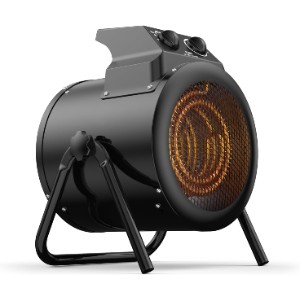
Bimson Power 5kW 3-Phase Electric Space Heater is the strongest starting point in this list because it gives most buyers a sensible mix of performance, practical features and everyday usability. The best clean electric option for workshops and commercial units with a suitable 3-phase supply.
Bimson Power 5kW 3-Phase Electric Space Heater should be matched to the site conditions first. A workshop with 3-phase power, high ceilings and regular door opening has very different needs from a small garage on a normal 240V supply.
Output is only useful if the building can use it safely. Electric heaters need the right circuit, while diesel and fuel-burning heaters need ventilation and fume management. In dusty or solvent-heavy spaces, placement and suitability become even more important.
Think about whether you need to heat the whole building or just a work zone. Spot heating around benches, bays or occupied areas can be more realistic than trying to turn a draughty workshop into a living room.
Features
- 5kW electric fan heater
- 3-phase supply required
- Portable industrial body
- Fume-free heat
- Two heat settings
- For garages and commercial units
- Clean fume-free heat
- Good workshop output
- No fuel storage
- Requires 3-phase power
- Not for normal domestic sockets
2. Autojack 3kW Industrial Electric Fan Heater
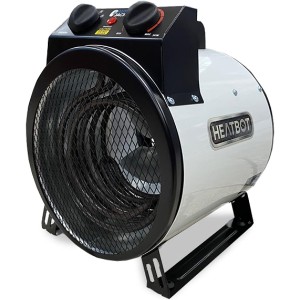
Autojack 3kW Industrial Electric Fan Heater earns its place as a practical alternative, especially if its particular format suits your setup better than the top pick. A portable 240V workshop fan heater for garages, sheds and small workspaces needing simple electric heat.
Output is only useful if the building can use it safely. Electric heaters need the right circuit, while diesel and fuel-burning heaters need ventilation and fume management. In dusty or solvent-heavy spaces, placement and suitability become even more important.
Think about whether you need to heat the whole building or just a work zone. Spot heating around benches, bays or occupied areas can be more realistic than trying to turn a draughty workshop into a living room.
Features
- 3kW electric fan heater
- 240V supply
- Three heat settings
- Portable 4kg body
- Workshop and garage design
- Runs from suitable 240V supply
- Portable and simple
- Good for small work zones
- 3kW may push socket limits
- Not enough for large warehouses
3. Benross 3000W Industrial Fan Heater
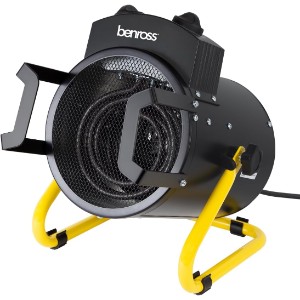
Benross 3000W Industrial Fan Heater earns its place as a practical alternative, especially if its particular format suits your setup better than the top pick. A yellow portable industrial fan heater with thermostat, tilting body and IPX4 protection for tougher workspace use.
Think about whether you need to heat the whole building or just a work zone. Spot heating around benches, bays or occupied areas can be more realistic than trying to turn a draughty workshop into a living room.
Noise and air movement are practical issues too. Big fan heaters can move dust and feel harsh at close range, so the best option is often the one that fits the workflow, not just the one with the biggest BTU number.
Benross 3000W Industrial Fan Heater should be matched to the site conditions first. A workshop with 3-phase power, high ceilings and regular door opening has very different needs from a small garage on a normal 240V supply.
Features
- 3000W fan heater
- Adjustable thermostat
- Cool air setting
- Tilting design
- Carry handle
- IPX4 rating
- Good value 3kW workshop option
- Tilting body helps aim heat
- IPX4 rating
- Mixed review score
- Limited to smaller zones
4. JCB 70,000 BTU 20kW Diesel Space Heater
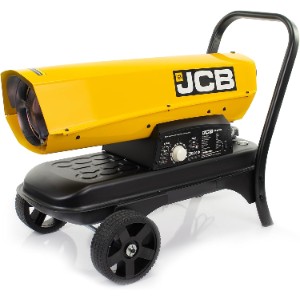
JCB 70,000 BTU 20kW Diesel Space Heater earns its place as a practical alternative, especially if its particular format suits your setup better than the top pick. A powerful diesel space heater for ventilated workshops, garages and site use where high output is needed.
Noise and air movement are practical issues too. Big fan heaters can move dust and feel harsh at close range, so the best option is often the one that fits the workflow, not just the one with the biggest BTU number.
JCB 70,000 BTU 20kW Diesel Space Heater should be matched to the site conditions first. A workshop with 3-phase power, high ceilings and regular door opening has very different needs from a small garage on a normal 240V supply.
Features
- 20kW diesel space heater
- 70,000 BTU output
- Diesel or kerosene fuel
- Adjustable thermostat
- Portable industrial design
- Approximate 496m3 coverage claim
- Very strong heat output
- Recognisable JCB branding
- Good for ventilated site spaces
- Requires ventilation and fume management
- Not for enclosed occupied rooms
5. Bimson Power 20kW Diesel Space Heater
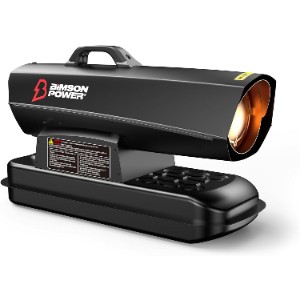
Bimson Power 20kW Diesel Space Heater earns its place as a practical alternative, especially if its particular format suits your setup better than the top pick. A heavy-duty diesel or kerosene heater for workshops, sheds and large ventilated spaces needing rapid warm-up.
Bimson Power 20kW Diesel Space Heater should be matched to the site conditions first. A workshop with 3-phase power, high ceilings and regular door opening has very different needs from a small garage on a normal 240V supply.
Output is only useful if the building can use it safely. Electric heaters need the right circuit, while diesel and fuel-burning heaters need ventilation and fume management. In dusty or solvent-heavy spaces, placement and suitability become even more important.
Features
- 20kW diesel space heater
- 70,000 BTU class output
- Kerosene or diesel fuel
- Adjustable thermostat
- Portable body
- Three-year warranty claim
- High output
- Good for cold workshops and site spaces
- Portable diesel format
- Needs proper ventilation
- Fuel storage and noise must be considered
Key Takeaways
- Industrial and commercial heaters are designed for spaces with high ceilings, poor insulation, or large volumes that standard domestic heaters cannot warm effectively. They typically start from 3kW and scale to 50kW or above for large buildings
- The choice between direct and indirect heating is critical in workshops and garages: direct heaters (oil-fired, gas-fired) blow combustion products into the space, which is unsuitable where people work continuously. Indirect heaters use a heat exchanger to separate combustion from the air output, making them safe for occupied workspaces
- Infrared heaters warm people and objects directly without heating the air, making them highly effective in open-sided structures, loading bays, and spaces where doors are frequently opened. There is no warmup delay and no energy wasted heating air that escapes immediately
- Three-phase 400V electric heaters (9kW to 50kW) are available for large spaces with suitable electrical supply. Single-phase 13A or 16A circuits limit electric output to 2 to 3.6kW per circuit, which is insufficient for most industrial applications without multiple units
- IP (Ingress Protection) ratings matter in workshop environments. Dusty conditions, grinding debris, and water from pressure washing require IP54 or above. Standard domestic heaters rated IP20 or unrated should not be used in industrial spaces
- For temporary heat (construction sites, events, emergency heating), diesel or propane heaters are the practical solution: high output, fully portable, no permanent installation. For permanent installations, piped gas or hard-wired electric with properly rated units gives lower running costs and better control
- Sizing industrial spaces requires calculating the heat loss through the building fabric, not just applying a watts-per-square-metre rule. A poorly insulated steel agricultural building needs 5 to 10 times the heat input of a well-insulated modern commercial unit of the same floor area
Direct vs Indirect Heating: A Critical Distinction
Direct-fired heaters burn fuel (diesel, kerosene, propane, or gas) and discharge the hot combustion gases directly into the space being heated. This is straightforward and highly efficient in terms of thermal output, but it means combustion products including nitrogen dioxide, carbon monoxide, and water vapour all enter the workspace. Short-term use in well-ventilated spaces is acceptable; continuous use in occupied workshops is not. Direct-fired heaters are the correct choice for unoccupied spaces (drying floors, frost protection, space warming before workers arrive) and outdoor or heavily ventilated structures.
Indirect-fired heaters use a heat exchanger to separate the combustion process from the airstream that enters the room. Combustion gases are vented externally via a flue or exhaust duct. The air output is clean, warm, and suitable for continuous occupancy. All oil-fired cabinet heaters, most commercial gas unit heaters, and ducted air heating systems are indirect. For any workshop or warehouse where people work throughout the day, indirect heating is the required standard.
Infrared Heating for Industrial Spaces
Infrared heaters emit radiant heat that warms objects and people directly, bypassing the need to raise the air temperature of the entire space. In a poorly insulated warehouse with a high ceiling, this is a significant advantage: convected warm air rises immediately to the roof and is lost, whereas infrared radiation travels directly from the panel to the work surface and the people below it.
Infrared is particularly effective for:
- Loading bays and open-fronted buildings: Doors open repeatedly; heated air escapes instantly. Infrared heats the workers regardless of air movement
- High-ceiling workshops: A 6-metre ceiling space takes enormous energy to heat with convected air. Infrared heating positioned above the work area delivers comfort at the occupied zone without heating the roof void
- Spot heating: A specific workstation, machine area, or security post can be heated by a single overhead unit without heating the entire building
Electric infrared panels are clean, silent, and instant. Gas-fired infrared radiant tubes provide higher output for larger spaces but require gas supply installation. Both are well-suited to permanent overhead mounting in industrial environments.
Sizing: How Much Heat Do You Actually Need?
The standard domestic rule of 100W per m² is almost meaningless for industrial buildings. Heat requirement depends on the building’s thermal characteristics: insulation, glazing, air infiltration, ceiling height, and the temperature difference between inside and outside targets. A modern insulated warehouse might need 15 to 30W/m³ of volume; an uninsulated steel agricultural building could need 50 to 80W/m³.
As a starting point for common UK industrial scenarios:
- Insulated workshop or garage (volume up to 100m³): 3 to 6kW electric or LPG to maintain 15 to 18°C in UK winter conditions
- Uninsulated garage or detached workshop (100 to 200m³): 6 to 15kW. Insulation is a better investment than a larger heater; adding 100mm of roof insulation typically cuts heat loss by 30 to 50%
- Industrial unit or commercial workshop (200 to 1,000m³): 15 to 60kW. Gas unit heaters or overhead infrared radiant tubes are the standard solution at this scale
- Large warehouse or factory (1,000m³+): Full heat loss calculation by a heating engineer is required. Destratification fans to recirculate warm air from ceiling level are often as cost-effective as adding more heating output
Power Supply: Single-Phase vs Three-Phase
Most UK premises have single-phase 230V supply. On a standard 13A socket, maximum output is approximately 3kW. On a 16A or 32A circuit (blue commando socket), 3.6 to 7.2kW. For workshop outputs above 7kW from electric, three-phase 400V supply is required, which gives access to units from 9kW to 50kW and above.
If your premises doesn’t have three-phase supply, the alternatives are multiple single-phase units (practical up to about 12kW total) or switching to gas or oil for high-output requirements. Three-phase supply installation from the Distribution Network Operator is a significant project and cost, but worthwhile if you’re installing permanent industrial heating.
For temporary or portable requirements, propane or diesel heaters on standard 13A for ignition controls bypass the electrical supply constraint entirely and can deliver 15 to 100kW of thermal output from a cylinder or tank.
IP Ratings for Industrial Environments
Industrial environments expose heaters to conditions that domestic ratings don’t anticipate. Metal grinding produces conductive dust; pressure washing after a job covers floors in water; oil mist from machinery settles on surfaces. IP ratings define protection against both solid particles and liquids:
- IP20: Protected against fingers, no liquid protection. Domestic standard. Not suitable for industrial use
- IP44: Protected against solid objects over 1mm; splash-proof from all directions. Minimum for most workshop environments
- IP54: Dust-resistant; splash-proof. Suitable for general workshop use including grinding and moderate water exposure
- IP65: Dust-tight; jet-proof. Suitable for environments with pressure washing or heavy water exposure
Fan heaters for workshop use should be IP44 minimum. Units used in spray booths, wash-down areas, or near outdoor pressure washing should be IP65. Infrared heating panels are often IP65 as standard due to their sealed construction.
Things to Keep in Mind Before Buying
Insulation comes before heater size. An uninsulated steel building will lose heat faster than any portable heater can replace it in a British winter. Even basic measures like a thermal roller door, roof insulation boards, and draught sealing around door frames will reduce the required heater output dramatically and pay back in lower fuel costs within a season.
Consider the fuel source economics for your site. Mains gas is the cheapest fuel per kWh for heating in the UK, typically 6 to 9p/kWh. LPG (propane or butane) costs 8 to 12p/kWh from cylinders. Electricity costs 25 to 30p/kWh for standard tariff, making electric resistance heating substantially more expensive per unit of heat than gas at scale. For a large workshop running 8 hours a day through winter, the fuel cost difference between gas and electric is significant over a heating season.
Temporary hire is worth considering for one-off needs. Propane cannon heaters, large electric fan heaters, and diesel cabinet heaters are all available from tool hire companies. For a building refurbishment or a temporary space requirement, hire avoids capital expenditure and the question of what to do with the unit afterwards.
Types of Industrial Heater
Electric fan heaters (industrial grade) are wall-mounted or ceiling-mounted units with IP44 or IP54 ratings and outputs from 3kW to 15kW per unit. Low installation cost where electrical supply is adequate. Higher running costs than gas at scale. Best for smaller workshops, offices within industrial units, and spaces used intermittently.
Gas unit heaters (overhead warm air, indirect) are the standard solution for most UK commercial workshops and warehouses. Piped natural gas or LPG supply runs to ceiling-mounted fan units that heat exchanger-clean air across the space. Outputs from 15 to 100kW per unit. Low running costs on mains gas. Requires gas supply installation and Gas Safe registered installation.
Oil-fired indirect cabinet heaters are portable units that burn kerosene or diesel through an indirect heat exchanger and vent combustion gases externally via a duct through an external wall or door. Fully portable, high output (30 to 100kW), no gas supply required. Popular on construction sites and for temporary industrial use. The ID65 and similar cabinet heaters are a UK industry standard for this application.
Propane and diesel direct-fired heaters (cannon heaters, torpedo heaters) deliver high output rapidly without a flue, making them effective for warming unoccupied spaces quickly. Not suitable for occupied workspaces due to combustion products. Use for frost protection, drying out after flooding, or initial heating before workers arrive.
Infrared radiant heaters (electric panel or gas tube) are mounted overhead and heat people and surfaces without warming the air volume. The correct choice for high-ceiling buildings, open-fronted structures, and spot-heating specific workstations. Electric panels need no installation beyond power connection; gas tubes require piped gas and flue.
Industrial Heater Buying Guide
Key Takeaways
- Industrial heaters are rated in kilowatts (kW) for electric models and BTU or kW for gas and diesel. Outputs start at 3kW and can exceed 100kW for large workshop or warehouse units — far above the 2kW domestic maximum. Sizing requires knowing the volume of the space and the insulation level
- Propane and diesel heaters deliver more heat output per pound of running cost than electric equivalents for very large spaces. At current UK energy prices, propane costs roughly 7–9p per kWh of heat output vs 27p/kWh for electricity — making gas a significantly cheaper choice for spaces above 100m² that need frequent heating
- Combustion heaters (propane, diesel) require ventilation. Running a torpedo heater in a sealed workshop is dangerous — CO builds up faster in an unventilated industrial space than in a tent. All combustion heaters must have adequate air supply and exhaust provision
- Three-phase electric supply allows significantly higher output from industrial electric heaters (9kW to 30kW+) without the cable and circuit constraints of single-phase 13A sockets. Check your supply before purchasing a high-output electric unit
- IP ratings matter in dusty, damp, or spray-affected environments. A standard domestic heater in a metalworking shop or agricultural building will fail quickly. Look for IP44 or above for dusty workshops and IP55 or above for outdoor covered areas and washdown environments
Fuel Type: Electric vs Propane vs Diesel
The right fuel depends on the size of the space, how often you heat it, and what supply infrastructure is available. For occasional or weekend workshop use in a small garage, electric is the simplest option. For large or frequently heated spaces, the economics of propane or diesel become compelling.
Electric industrial heaters are clean, instant, and require no fuel storage or ventilation. They range from 3kW fan heaters on a standard 13A socket to 30kW+ three-phase cabinet heaters. There are no fumes, no CO risk, and no fuel logistics. The running cost is the main disadvantage in large spaces.
Propane torpedo heaters produce 15kW to 100kW+ of heat output and can warm a warehouse in minutes. Fuel is stored in portable cylinders, which is practical where gas supply isn’t available. The combustion produces CO and moisture, requiring air supply and ventilation. Running costs are substantially lower than electric for large spaces used regularly.
Diesel heaters (direct-fired or indirect/clean-air) use on-road or heating oil and are the standard choice for very large areas, construction sites, and temporary structures. Indirect diesel heaters vent combustion gases externally and deliver clean, dry warm air — suitable for warehouses with stock that needs to remain dry and odour-free.
Wattage, BTU, and Space Sizing
Industrial space heating requires significantly more output than domestic. Use 30 to 50W per m³ as a starting rule for well-insulated industrial spaces (equivalent to 30,000 to 50,000W/m³ BTU). For poorly insulated steel-portal agricultural or industrial buildings, increase to 80 to 100W per m³.
| Space Volume | Typical Use | Recommended Output |
|---|---|---|
| 50–100m³ (single garage) | Home workshop, hobby space | 3–6kW electric |
| 100–300m³ (large garage/workshop) | Trade workshop, small unit | 6–15kW electric or 15–30kW propane |
| 300–1,000m³ (small warehouse) | Light industrial, storage | 15–30kW electric or 30–60kW propane/diesel |
| 1,000m³+ (large warehouse) | Manufacturing, heavy storage | 50–100kW+ propane/diesel |
These figures assume a target of 15°C from a 0°C starting point. Agricultural and construction uses may only need frost protection (5°C), which reduces output requirements by 30 to 40%.
Single-Phase vs Three-Phase Electric
Standard UK domestic supply is single-phase 240V, limited to 13A sockets (3kW) or 32A circuits (7.5kW). Most small workshops operate on this supply. Industrial and commercial premises typically have three-phase 415V supply, which allows much higher outputs from a single unit: 9kW, 15kW, or 30kW from a fixed electric heater without the wiring constraints of single-phase.
If your unit or workshop has three-phase supply, electric industrial fan heaters and cabinet heaters become a highly practical option at lower running cost than single-phase alternatives (which would require multiple units and circuit upgrades to achieve the same output). If you’re unsure of your supply, check the main distribution board or ask a qualified electrician.
IP Ratings and Environment
Industrial environments challenge heaters in ways domestic settings don’t. Dust from metalworking, wood, or grain clogs unprotected fan motors. Water spray from washdowns corrodes standard-rated elements. Explosive atmospheres (paint spray booths, fuel storage areas) require ATEX-rated equipment — standard heaters are not permitted.
For dusty environments (woodworking, fabrication): IP44 minimum. For areas subject to water spray or outdoor covered use: IP55. For areas subject to directed water jets (food production, carwashes): IP65. ATEX-rated heaters are a specialist category and must be specified with the hazardous area classification — consult a specialist supplier.
Things to Keep in Mind Before Buying
Ventilation is non-negotiable for combustion heaters. A 30kW propane torpedo heater consuming 3kg of propane per hour produces significant CO and large volumes of water vapour. In a sealed steel building, this creates unsafe CO levels and condensation problems within minutes. Provide fresh air makeup and exhaust venting proportional to the heater output.
Noise from industrial fan heaters is substantial at full output. Torpedo heaters running at full blast in a workshop are loud enough to require hearing protection for prolonged exposure. Consider this in spaces where staff work nearby for long periods.
Types of Industrial Heater
Electric industrial fan heaters (3kW to 15kW, single or three-phase) are the simplest choice for small to medium workshops. No fumes, no fuel, instant on/off. Price range £50 to £500.
Propane torpedo/space heaters are portable, very high output (15kW to 100kW+), and ideal for temporary heating of large spaces. Require ventilation. Price range £80 to £600.
Indirect diesel heaters vent combustion gases externally and deliver clean warm air — suited to warehouses with goods, food production, or any space where fumes are unacceptable. Price range £500 to £5,000+.
Electric tube heaters are low-output (150W to 300W per metre), frost-protection-focused, and mounted along walls or under benches. They prevent freezing without being the primary heat source. Price range £20 to £80 per tube.
Cabinet/unit heaters are ceiling-mounted, ducted electric or hot-water units that distribute heat evenly across a large floor area without taking up floor space. Suited to permanent industrial installations. Price range £200 to £2,000+.
Case Study: Choosing Heat for a Real UK Space
Background
A homeowner needed extra heat for a cold, awkward space that was not being served well by the main heating system. The first instinct was to buy the most powerful portable heater available.
Project Overview
Instead of choosing on output alone, they compared the space size, ventilation, power supply, clearance around furniture and how long the heater would run each day.
Implementation
The final choice was a heater matched to the actual use case rather than the biggest model on the page. The setup also included safer cable routing, better placement and a clear rule that the heater would not be used outside the manufacturer instructions.
Results
The space became more comfortable without overloading the power supply or creating avoidable safety risks. The biggest improvement came from choosing the right heater type, not simply more heat.
Expert Insights From Our Heating Engineers About Industrial Heaters
“The right heater is the one that suits the space, the power supply and the user. A powerful heater in the wrong place can be inefficient, uncomfortable or unsafe.”
“One of our senior heating engineers with over 15 years of experience recommends checking the practical details first: ventilation, clearance, cable route, fuel storage, IP rating and whether the heater is designed for that exact environment.”
“Do not treat safety features as permission to ignore the manual. Tip-over switches, overheat protection and oxygen sensors are backups, not a substitute for proper use.”
Frequently Asked Questions
Can I run an industrial heater from a normal plug?
Only some smaller electric industrial heaters can run from a standard 240V socket, and even then you must check the rating. Larger heaters often need dedicated or 3-phase power. The key is to match the product to the space and follow the manufacturer instructions rather than relying on the headline output alone.
Are diesel space heaters safe indoors?
Only in suitable ventilated industrial spaces and according to the manufacturer instructions. They are not domestic room heaters and fume management matters. If you are unsure, choose the more conservative setup and prioritise ventilation, clearance and stable placement.
What size industrial heater do I need?
It depends on room volume, insulation, air leakage, ceiling height and whether you need whole-space or spot heating. Large draughty spaces need much more output. For regular use, controls and safe habits matter just as much as the product specification.
Is electric or diesel cheaper for workshops?
It depends on fuel prices, electricity tariff, insulation and usage pattern. Electric is cleaner and simpler, while diesel often delivers much higher heat output. The key is to match the product to the space and follow the manufacturer instructions rather than relying on the headline output alone.
Do industrial heaters need maintenance?
Yes. Keep air intakes clear, inspect cables and plugs, service fuel-burning heaters, and follow the manufacturer maintenance schedule. If you are unsure, choose the more conservative setup and prioritise ventilation, clearance and stable placement.
Can I use an industrial heater in a dusty workshop?
Use caution. Dust and combustible particles increase risk, and fan heaters can stir material into the air. Keep the heater clear and choose equipment suitable for the environment. For regular use, controls and safe habits matter just as much as the product specification.
Summing Up
The Bimson Power 5kW 3-Phase Electric Space Heater is the best industrial heater for most people because it gives the most sensible balance of performance, value and everyday usability. It is the product we would start with before comparing the more specialist options, especially if you want a dependable answer rather than simply chasing the highest output.
The other options are still worth considering if your situation is more specific. Think about where the heater will be used, how it will be powered, whether ventilation is needed, and how easy it will be to use safely every time. The right heater should make the space more comfortable without creating extra problems in the process.
Updated