

For most UK buyers, the Dreo Atom 316 Portable Electric Heater is the best camping heater to buy. It offers the strongest mix of practical performance, value and usability in a category where the right choice depends heavily on where and how you plan to use it. Camping heaters need more caution than most portable heating products because tents, awnings and small shelters can become risky quickly. A heater that is useful outside a tent or on a powered pitch may be completely unsuitable for sleeping spaces.
Camping heater choice depends on where you camp. Electric heaters are only for electric hook-up, while fuel-burning heaters must not be used inside tents unless the manufacturer explicitly approves that use and all ventilation requirements are met. This guide separates electric hook-up options from outdoor fuel-burning heaters and focuses on realistic cold-weather use. Warm clothing, insulated mats and a proper sleeping bag still do most of the work, but the right heater can make mornings, awnings and supervised sitting areas more comfortable.
Contents
- 1 Our Top Picks
- 2 6 Best Camping Heaters
- 2.1 1. Dreo Atom 316 Portable Electric Heater
- 2.2 2. Bimson Power 2kW Electric Space Heater
- 2.3 3. CAMPLUX Nano Portable Gas Heater
- 2.4 4. Lixada Portable Camping Gas Heater
- 2.5 5. Taylor and Brown 2 in 1 Portable Gas Heater and Stove
- 2.6 6. Mr. Heater Portable Buddy Heater
- 2.7 Key Takeaways
- 2.8 The Safety Case First
- 2.9 Types of Camping Heater
- 2.10 Hook-Up Power: Understanding Amperage Limits
- 2.11 Gas Types: Butane vs Propane
- 2.12 Essential Safety Features to Check
- 2.13 Things to Keep in Mind Before Buying
- 2.14 Types of Camping Heater Summary
- 3 Camping Heater Buying Guide
- 4 Case Study: Choosing Heat for a Real UK Space
- 5 Expert Insights From Our Heating Engineers About Camping Heaters
- 6 Frequently Asked Questions
- 7 Summing Up
Our Top Picks
| Image | Name | |
|---|---|---|
| Dreo Atom 316 Portable Electric Heater | |
| Bimson Power 2kW Electric Space Heater | |
| CAMPLUX Nano Portable Gas Heater | |
| Lixada Portable Camping Gas Heater | |
| Taylor and Brown 2 in 1 Portable Gas Heater and Stove | |
| Mr. Heater Portable Buddy Heater |
6 Best Camping Heaters
1. Dreo Atom 316 Portable Electric Heater
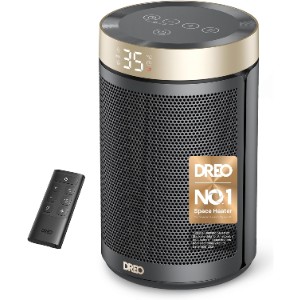
Dreo Atom 316 Portable Electric Heater is the strongest starting point in this list because it gives most buyers a sensible mix of performance, practical features and everyday usability. The best camping heater for electric hook-up pitches, with thermostat control, timer, remote and tip-over protection for suitable indoor use.
Dreo Atom 316 Portable Electric Heater needs to be used with the campsite setup in mind. Powered pitches, awnings, open shelters and small tents all have different risks, so a heater that works well in one place may be wrong somewhere else.
Electric heaters are usually the simplest option when hook-up is available, but campsite amp limits still matter. Low settings can be more useful than a high-output heater that cannot be run alongside normal camping gear.
Fuel-burning heaters need stricter boundaries. They should not be treated as tent bedroom heaters, and carbon monoxide risk is not solved by leaving a small opening in the fabric.
Features
- 1500W ceramic electric heater
- Thermostat
- Remote control
- 12-hour timer
- Tip-over protection
- Overheat protection
- No combustion fumes
- Good controls and safety features
- Useful for hook-up camping and cabins
- Requires electric hook-up
- 1500W may be too much for some campsite supplies
2. Bimson Power 2kW Electric Space Heater
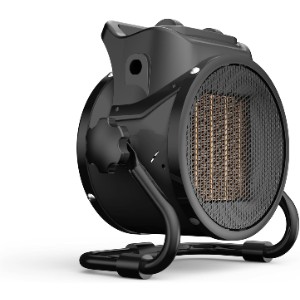
Bimson Power 2kW Electric Space Heater earns its place as a practical alternative, especially if its particular format suits your setup better than the top pick. A low-cost electric heater for hook-up camping, garages and small sheltered spaces where a simple fan heater is enough.
Electric heaters are usually the simplest option when hook-up is available, but campsite amp limits still matter. Low settings can be more useful than a high-output heater that cannot be run alongside normal camping gear.
Fuel-burning heaters need stricter boundaries. They should not be treated as tent bedroom heaters, and carbon monoxide risk is not solved by leaving a small opening in the fabric.
Features
- 2kW electric fan heater
- Adjustable heat settings
- Portable design
- Indoor electric use
- 12-month warranty
- Affordable
- Simple heat for hook-up pitches
- No fuel storage
- Needs mains power
- Check campsite amp limit before use
3. CAMPLUX Nano Portable Gas Heater
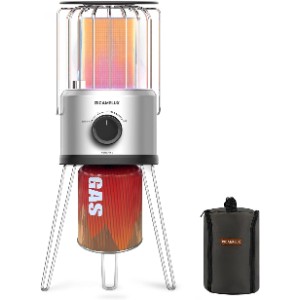
CAMPLUX Nano Portable Gas Heater earns its place as a practical alternative, especially if its particular format suits your setup better than the top pick. A portable outdoor gas heater for camping, fishing and garden use, with ODS and tip-over protection.
Fuel-burning heaters need stricter boundaries. They should not be treated as tent bedroom heaters, and carbon monoxide risk is not solved by leaving a small opening in the fabric.
In cold weather, the heater is only part of the comfort plan. A warm sleeping bag, insulated mat, dry layers and wind protection often do more for overnight comfort than adding more heat.
CAMPLUX Nano Portable Gas Heater needs to be used with the campsite setup in mind. Powered pitches, awnings, open shelters and small tents all have different risks, so a heater that works well in one place may be wrong somewhere else.
Features
- 2.34kW gas heater
- Two-stage heating
- ODS protection
- Tip-over protection
- Butane operation
- Outdoor-focused portable design
- Good outdoor heat output
- Safety features included
- Useful away from mains power
- Fuel-burning appliance needs strict ventilation
- Not for sleeping in tents
- Gas canisters add running cost
4. Lixada Portable Camping Gas Heater
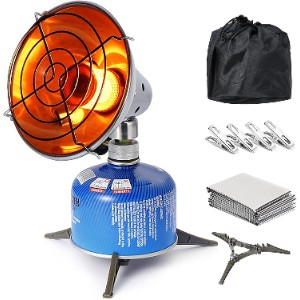
Lixada Portable Camping Gas Heater earns its place as a practical alternative, especially if its particular format suits your setup better than the top pick. A lightweight gas heater attachment for outdoor camping warmth, best treated as a simple open-air heat source.
In cold weather, the heater is only part of the comfort plan. A warm sleeping bag, insulated mat, dry layers and wind protection often do more for overnight comfort than adding more heat.
Lixada Portable Camping Gas Heater needs to be used with the campsite setup in mind. Powered pitches, awnings, open shelters and small tents all have different risks, so a heater that works well in one place may be wrong somewhere else.
Features
- Portable gas heater
- Stainless steel construction
- Lightweight design
- For outdoor camping and picnic use
- Compact pack size
- Light and inexpensive
- Useful for outdoor sitting areas
- Not suitable for enclosed tent heating
- Needs compatible gas and careful handling
- Basic safety features
5. Taylor and Brown 2 in 1 Portable Gas Heater and Stove
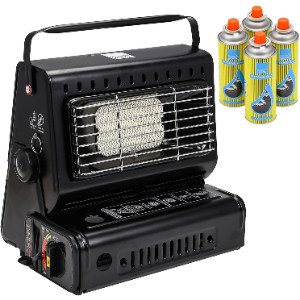
Taylor and Brown 2 in 1 Portable Gas Heater and Stove earns its place as a practical alternative, especially if its particular format suits your setup better than the top pick. A combined outdoor heater and stove for camping, fishing and emergency use where cooking and heat are both useful.
Taylor and Brown 2 in 1 Portable Gas Heater and Stove needs to be used with the campsite setup in mind. Powered pitches, awnings, open shelters and small tents all have different risks, so a heater that works well in one place may be wrong somewhere else.
Electric heaters are usually the simplest option when hook-up is available, but campsite amp limits still matter. Low settings can be more useful than a high-output heater that cannot be run alongside normal camping gear.
Features
- 2 in 1 gas heater and stove
- Butane canisters included in some packs
- Auto ignition
- Carry handle
- Safety grill
- Temperature control
- Flexible outdoor camping tool
- Good value bundle
- Can heat and cook outside
- Must not be used inside tents
- Combustion and fire risks need care
6. Mr. Heater Portable Buddy Heater
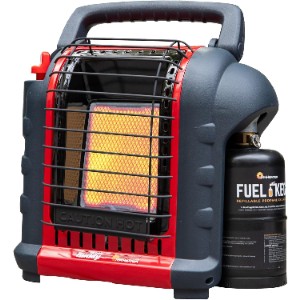
Mr. Heater Portable Buddy Heater earns its place as a practical alternative, especially if its particular format suits your setup better than the top pick. A popular propane heater with strong output and built-in safety features, best for users who understand fuel-burning heater ventilation requirements.
Electric heaters are usually the simplest option when hook-up is available, but campsite amp limits still matter. Low settings can be more useful than a high-output heater that cannot be run alongside normal camping gear.
Fuel-burning heaters need stricter boundaries. They should not be treated as tent bedroom heaters, and carbon monoxide risk is not solved by leaving a small opening in the fabric.
Features
- Propane portable heater
- 9000 BTU maximum output
- Foldable handle
- Piezo ignition
- Tip-over safety feature
- Portable design
- Strong heat output
- Huge review base
- Recognisable camping heater design
- Fuel-burning heater requires ventilation
- Not a casual tent heater
- Cylinder compatibility must be checked
Key Takeaways
- Carbon monoxide (CO) is the primary safety concern with any fuel-burning heater in an enclosed space. CO is colourless, odourless, and lethal within minutes at high concentrations. Any gas, catalytic, or diesel heater used inside a tent or vehicle must have adequate ventilation, and a CO alarm is non-negotiable
- Electric heaters are the safest option for enclosed spaces: they produce no combustion gases, no CO risk, and no flame. They require a hook-up connection to a campsite EHU (electric hook-up), limiting where they can be used
- Gas catalytic heaters produce heat by oxidising gas over a catalyst surface without a flame. They’re more fuel-efficient than radiant gas heaters and produce less moisture, but still require ventilation and must not be left running while sleeping in a sealed tent
- Hook-up power limits vary by campsite but are typically 10 to 16 amps (2.3 to 3.7kW). A single 2kW heater is usually safe to run without tripping the supply; add any other appliances and you risk overloading the circuit. Always check the campsite’s maximum amperage before connecting high-draw appliances
- Catalytic heaters have no visible flame, which reduces fire risk compared to radiant gas heaters, but they still consume oxygen and must not be used in fully sealed spaces. An oxygen depletion sensor (ODS) cuts off the gas supply if oxygen levels drop, and is an essential safety feature
- For off-grid camping with no hook-up, the practical choice is gas (with strict ventilation discipline), a battery-powered ceramic heater with a power station, or a diesel heater for van and caravan use
- A camping-rated CO alarm (EN 50291 compliant) is not optional when using any fuel-burning heater indoors. Many camping fatalities occur when heaters are left running overnight in sleeping spaces
The Safety Case First
No buying guide for camping heaters should start anywhere other than carbon monoxide. Every year, campers are killed by CO poisoning from heaters used in enclosed spaces without adequate ventilation. The gas is produced whenever fossil fuels combust with insufficient oxygen. In a sealed tent, the concentration can reach lethal levels within 30 minutes. In a confined vehicle or caravan, even faster.
The rules that prevent this are straightforward: never use a fuel-burning heater (gas, petrol, paraffin, charcoal, or diesel) in a fully sealed space. Always leave ventilation open at tent ridgeline or door. Never run a fuel-burning heater while sleeping in an enclosed space. Fit a CO alarm in any enclosed sleeping area where a heater is used. These are not cautious preferences; they are the minimum requirements to use portable fuel heaters safely.
Electric heaters have none of these concerns, which is why they’re the recommended choice for any camping situation where hook-up is available.
Types of Camping Heater
Electric fan heaters and ceramic heaters are the safest and most practical option for hook-up campsites. Run directly from the EHU via an extension lead rated for outdoor use. No fuel, no CO, no ventilation requirement. Keep consumption below 2kW (ideally 1 to 1.5kW) to avoid tripping the campsite supply. Ceramic PTC heaters are preferable to bare-element fan heaters because the PTC element doesn’t glow red-hot, reducing fire risk if the unit is knocked over near fabric.
Catalytic gas heaters work by chemically oxidising propane or butane over a catalytic pad. No flame is visible. They’re more efficient than radiant gas heaters and produce less water vapour as a by-product. The heat output is gentle and radiant rather than convected, making them suitable for moderate temperatures. Always use with ventilation open, fit a CO alarm, and never run while sleeping. Popular examples include the Campingaz Trekker and Mr Heater Buddy series.
Radiant gas heaters use a visible glowing element heated by burning gas. Higher heat output than catalytic, faster warmup, but a visible flame increases fire risk near tent fabric and sleeping bags. The same ventilation requirements apply as catalytic heaters, plus additional caution around flammable materials. Better suited to awnings and porches than tent interiors.
Battery and power station heaters pair a compact electric heater (typically 200 to 750W) with a portable power station (lithium battery pack). The Jackery, EcoFlow, and similar units can power a 500W heater for several hours per charge. Safe to use in enclosed spaces, no ventilation requirement, but limited run time means this is best suited to taking the chill off a tent for a couple of hours rather than all-night heating.
Hook-Up Power: Understanding Amperage Limits
UK campsites typically offer 10 amp (2.3kW) or 16 amp (3.7kW) hook-up supplies. The total draw of everything connected to the EHU (heater, phone charger, fridge, lighting) must stay under the site’s limit or the circuit will trip. Campsites with older installations may be limited to 6 amps (1.4kW).
In practice, this means a 2kW heater takes most of your available capacity on a 10-amp pitch. Running a 2kW heater plus a 700W microwave will trip a standard UK campsite supply immediately. Size your heater to leave 400 to 600W headroom for other essential appliances. A 1.5kW heater is a safer default than 2kW for this reason.
Always use a fully rated outdoor extension lead, not a household indoor lead. Outdoor extension leads are designed to be unrolled and rated for moisture exposure; indoor leads coiled inside a tent create a heat risk and can fail at campsite damp levels.
Gas Types: Butane vs Propane
Most portable camping gas heaters in the UK use butane, propane, or a butane/propane mix in either Campingaz cartridges or screw-fit cylinders. The choice matters in cold weather: butane stops vaporising reliably below about 0°C and performs poorly below 5°C. Propane remains effective to around -40°C.
For UK camping in spring and autumn, a butane/propane mix (typically 70/30) works for most conditions. For winter camping in genuinely cold conditions, a pure propane cylinder is the reliable choice. Campingaz 901/904/907 cylinders use a proprietary pigtail connection; screw-fit cylinders (Calor and others) use a standard thread that many heaters can connect to directly.
Essential Safety Features to Check
Any gas heater used inside an enclosed camping space should have all three of these features as a minimum:
- Oxygen Depletion Sensor (ODS): Cuts the gas supply if atmospheric oxygen drops below the safe threshold. This is the primary protection against CO buildup in enclosed spaces. A heater without an ODS should not be used inside a tent or vehicle
- Tip-over protection: Cuts the gas supply or extinguishes the heater if it falls over. Essential in any camping context where stability isn’t guaranteed
- Flame failure device: Cuts the gas supply if the flame is extinguished by wind or accidental contact. Prevents unburned gas from accumulating
For electric heaters, tip-over cut-off is the key safety feature. Overheat protection cuts power if the unit’s internal temperature rises above a safe limit, which matters if the heater ends up partially covered by bedding.
Things to Keep in Mind Before Buying
Think about where you’ll actually use the heater. If all your camping is at hook-up sites, an electric ceramic heater is simpler, safer, and cheaper to run than any gas option. If you wild camp, camp without hook-up, or tour with a van, gas or a battery-power-station setup makes sense.
Consider the space you’re heating. A 2.3kW gas heater can raise the temperature in a small porch or awning by 10 to 15°C in calm conditions. In a large family tent in wind without adequate draught-proofing, the same heater will struggle. Insulating the tent with a carpet and draught-excluding entrance vestibule makes more difference to overnight temperature than upgrading from a 1.8kW to a 2.3kW heater.
Never heat a sleeping space with a fuel-burning heater running unattended. If you want overnight warmth, the only safe methods are an electric heater on a hook-up supply, a properly installed diesel heater in a van or caravan with an external exhaust, or high-quality sleeping equipment rated for the ambient temperature.
Types of Camping Heater Summary
Electric ceramic heaters are the best all-round choice for hook-up camping. Safe, no ventilation requirements, adjustable thermostat, low maintenance. Constrained entirely by the need for an EHU connection. Wattage: 750W to 2,000W.
Catalytic gas heaters work without a flame, making them lower fire risk than radiant designs. Best for porches, awnings, and brief periods in ventilated tents. Not for overnight use in sleeping spaces. Run on standard camping gas cartridges or propane cylinders.
Radiant gas heaters are better suited to outdoor or semi-outdoor use: open porches, gazebos, and fire pits. The visible element is a genuine fire risk near fabric at close range. More heat output than catalytic, but less suitable for any enclosed space.
Power station and electric combos offer the safety of electric heating without needing a hook-up. Run time is limited (typically 3 to 6 hours from a 1kWh battery at 200 to 300W), but sufficient for warming a tent before sleep or for short stops. The power station serves other purposes (charging devices, powering lights), making the combined system versatile for off-grid camping.
Camping Heater Buying Guide
Key Takeaways
- Safety is the overriding consideration for camping heaters. Gas and diesel heaters produce carbon monoxide (CO) in enclosed spaces. Never run a combustion heater inside a sealed tent. Catalytic gas heaters produce less CO than open-flame models but still require ventilation. Always use a CO alarm when camping with any combustion heat source
- Electric heaters are the safest option in an enclosed space but require a mains hookup or a sufficiently large power station. A 1,000W fan heater draws around 1kWh per hour — most portable power stations (500–2,000Wh capacity) will run one for 30 minutes to 2 hours before recharging is needed
- Catalytic gas heaters use a chemical reaction rather than a flame, producing more complete combustion, less CO, and no naked flame. They are the preferred gas option for use in well-ventilated tents and awnings. Models include the Campingaz Lumogaz and Mr Heater Buddy ranges. Never sleep with one running
- BTU output determines how much space a camping heater can warm. A typical 3m × 3m canvas tent needs approximately 3,000 to 5,000 BTU (around 900W to 1,500W) to take the chill off on a UK autumn night. Larger awnings and glamping structures need significantly more
- Gas camping heaters typically use Campingaz, butane, or propane cartridges. Butane performs poorly below 0°C — propane or blended cartridges maintain output in freezing conditions. Check which cartridge type your heater requires before buying in winter
Safety First: Carbon Monoxide and Ventilation
Carbon monoxide (CO) is the most serious risk with camping heaters. It is colourless, odourless, and fatal in high concentrations — and enclosed tents trap it fast. Any combustion heater (gas, diesel, or paraffin) produces CO as a byproduct, even catalytic models that claim “flameless” operation.
The rules are simple: never run a combustion heater in a sealed tent while sleeping. Ventilate fully before use, keep a vent open during operation, and turn the heater off before you close the tent for the night. A battery-operated CO alarm is essential kit — not optional. Models designed for motorhomes comply with EN 50291 and work in tents too.
Electric heaters (from mains hookup or power station) carry no CO risk and are the genuinely safe option for use in enclosed sleeping spaces. If safety is your primary concern, electric is the right choice regardless of the convenience trade-offs.
Gas vs Electric vs Catalytic
Gas heaters run on cartridge fuel (butane, propane, or blended), produce more heat output per unit of fuel than electric alternatives, and don’t need a power source. The trade-off is CO risk and the need for ventilation. They suit well-ventilated awnings, large canvas tents with open vents, and outdoor use. They should not be used in sealed modern nylon tents.
Catalytic heaters use a platinum catalyst to oxidise fuel at low temperatures, producing heat without an open flame and with significantly less CO than a standard gas burner. They run cooler on the surface, don’t have ignition risks, and are practical for well-ventilated canvas or bell tent use. They are still combustion heaters and still require ventilation.
Electric heaters (fan heaters, panel heaters, or infrared) are the safest indoor option. A mains hookup site gives you access to the same 2kW fan heater you’d use at home. Off-grid, you’re limited by power station capacity, which makes a low-wattage (500–700W) ceramic or panel heater a more practical choice than a 2kW fan heater.
BTU, Wattage, and Tent Sizing
Tent size and season determine the output you need. UK camping conditions (spring through autumn) are rarely extreme, but a 3°C night in a damp canvas tent requires meaningful heat output. As a rough guide: 3,000 BTU (900W) for a small 2–3 person tent in mild conditions; 5,000 to 8,000 BTU (1,500–2,400W) for a larger family tent or awning in cold weather.
Keep in mind that modern nylon tents are not designed for internal heating — they’re built to be lightweight, not insulated. Canvas and polycotton tents (bell tents, safari tents, tipi glamping) hold heat far better and are the more practical use case for portable heaters.
Fuel Types: Butane, Propane, and Blended
Butane is the most common camping cartridge fuel in the UK and works well in temperatures above 5°C. Below that, butane vapour pressure drops and output falls noticeably. For late-season autumn camping, use propane or a blended cartridge (typically 70% butane/30% propane or similar). Blended cartridges are widely available at camping retailers and maintain output at sub-zero temperatures.
Propane is the better cold-weather choice and is used in larger gas heaters designed for winter camping and touring. Standard Campingaz C206 and C206GLS cartridges are butane; EN417 threaded cartridges (used by many high-output heaters) are available in blended formulations. Check compatibility with your specific heater before buying non-standard cartridges.
Things to Keep in Mind Before Buying
Check your campsite rules. Many sites prohibit gas heaters inside tents and specify that only electric heaters are permitted on hookup pitches. Ignoring this risks your tent, your pitch neighbours, and your insurance.
Camping heaters get hot. Keep children and pets away from the unit during operation and do not use near flammable materials (sleeping bags, tent fabric, clothing). Most models have tip-over cutoffs, but these are a backup, not a substitute for keeping a clear zone around the heater.
Runtime matters as much as output. A 190g cartridge running a 2,500 BTU heater gives approximately 2 to 3 hours of heating. If you need overnight warmth (even just evening and morning use over a weekend), factor in fuel quantity and cost when budgeting.
Types of Camping Heater
Catalytic gas heaters are the best gas option for semi-enclosed use. Flameless, lower CO output, suitable for well-ventilated canvas tents and awnings. Popular models include the Campingaz Lumogaz and Mr Heater Buddy range. Output 1,000 to 4,500 BTU. Price range £30 to £100.
Open-flame gas convection heaters are suited to outdoor covered use (gazebos, open-sided marquees). High output, compact, fuel-efficient. Not safe for enclosed tent use. Output up to 9,000 BTU. Price range £20 to £80.
Portable electric fan heaters suit mains hookup pitches. The safest option for tent interiors. A compact 1,000W model with a thermostat will run all night on hookup. Price range £20 to £60.
Low-wattage electric panel or ceramic heaters (400–700W) are better suited to power station use than 2kW fan heaters, extending runtime significantly. Price range £30 to £100.
Diesel and paraffin heaters (e.g., Chinese diesel heaters popular in overlanding) provide very high output suitable for large vans, campers, and yurts. Require fuel management and installation. Not practical for standard tent camping. Price range £60 to £300.
Case Study: Choosing Heat for a Real UK Space
Background
A homeowner needed extra heat for a cold, awkward space that was not being served well by the main heating system. The first instinct was to buy the most powerful portable heater available.
Project Overview
Instead of choosing on output alone, they compared the space size, ventilation, power supply, clearance around furniture and how long the heater would run each day.
Implementation
The final choice was a heater matched to the actual use case rather than the biggest model on the page. The setup also included safer cable routing, better placement and a clear rule that the heater would not be used outside the manufacturer instructions.
Results
The space became more comfortable without overloading the power supply or creating avoidable safety risks. The biggest improvement came from choosing the right heater type, not simply more heat.
Expert Insights From Our Heating Engineers About Camping Heaters
“The right heater is the one that suits the space, the power supply and the user. A powerful heater in the wrong place can be inefficient, uncomfortable or unsafe.”
“One of our senior heating engineers with over 15 years of experience recommends checking the practical details first: ventilation, clearance, cable route, fuel storage, IP rating and whether the heater is designed for that exact environment.”
“Do not treat safety features as permission to ignore the manual. Tip-over switches, overheat protection and oxygen sensors are backups, not a substitute for proper use.”
Frequently Asked Questions
Can you use a camping heater inside a tent?
Fuel-burning heaters should not be used inside tents unless the manufacturer specifically approves that use and all ventilation requirements are met. UK fire services warn that carbon monoxide can build up quickly in tents and awnings. The key is to match the product to the space and follow the manufacturer instructions rather than relying on the headline output alone.
What is the safest camping heater?
On a powered campsite, a suitable electric heater is usually safer than a fuel-burning heater because it produces no combustion fumes. It still needs safe placement and supervision. If you are unsure, choose the more conservative setup and prioritise ventilation, clearance and stable placement.
Can I sleep with a camping heater on?
Do not sleep with fuel-burning heaters running in a tent. For electric heaters, only follow the manufacturer instructions and keep the heater well clear of bedding and fabric. For regular use, controls and safe habits matter just as much as the product specification.
Are gas camping heaters dangerous?
They can be if used incorrectly. Gas heaters need ventilation, stable placement and careful fuel handling, and they must not be used in enclosed sleeping spaces unless specifically designed for that use. The key is to match the product to the space and follow the manufacturer instructions rather than relying on the headline output alone.
What wattage heater can I use on campsite hook-up?
It depends on the campsite amp limit. A 2kW heater may be too much when other appliances are also running, so check the site rules and use lower settings where possible. If you are unsure, choose the more conservative setup and prioritise ventilation, clearance and stable placement.
How can I stay warm camping without a heater?
Use a suitable season-rated sleeping bag, insulated mat, dry base layers, warm socks, a hat, and a hot water bottle. Reducing heat loss is often safer than adding a heater. For regular use, controls and safe habits matter just as much as the product specification.
Summing Up
The Dreo Atom 316 Portable Electric Heater is the best camping heater for most people because it gives the most sensible balance of performance, value and everyday usability. It is the product we would start with before comparing the more specialist options, especially if you want a dependable answer rather than simply chasing the highest output.
The other options are still worth considering if your situation is more specific. Think about where the heater will be used, how it will be powered, whether ventilation is needed, and how easy it will be to use safely every time. The right heater should make the space more comfortable without creating extra problems in the process.
Updated