
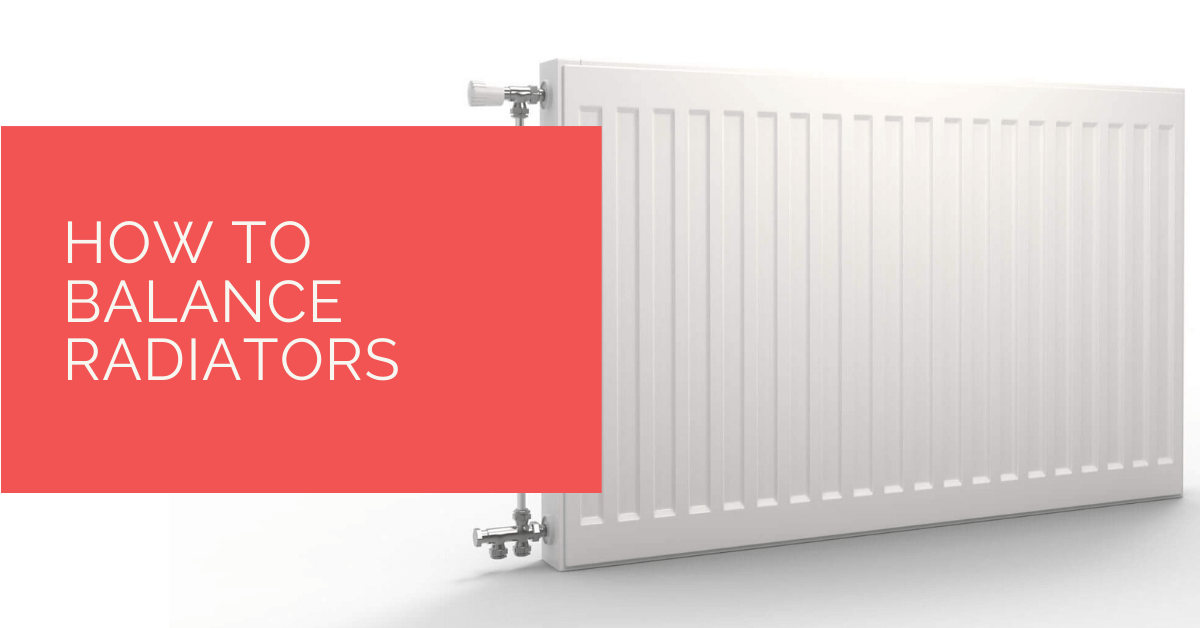
Balancing radiators is one of those maintenance jobs that most UK homeowners never attempt because it sounds technical. In practice, it takes about an hour, requires a lockshield valve key and a clip-on thermometer, and can meaningfully improve how well your central heating performs, particularly if some rooms heat up quickly while others take a long time or never seem to get warm enough.
This guide takes you through the full process step by step, explains why it matters, and covers the troubleshooting scenarios that come up most often.
Contents
- 1 Key Takeaways
- 2 What Tools Do You Need to Balance Radiators?
- 3 How to Balance Radiators: Step-by-Step
- 3.1 Step 1: Bleed All Radiators First
- 3.2 Step 2: Open All Lockshield Valves Fully
- 3.3 Step 3: Turn on the Heating and Identify the Order of Heating
- 3.4 Step 4: Return to the First Radiator
- 3.5 Step 5: Adjust the Lockshield Valve
- 3.6 Step 6: Work Through Each Radiator in Order
- 3.7 Step 7: Check the System Temperature on All Radiators
- 3.8 Step 8: Check Room Temperatures
- 4 Why Should You Balance Radiators?
- 5 Bleeding vs Balancing: What Is the Difference?
- 6 Troubleshooting Common Balancing Problems
- 7 When to Call a Heating Engineer
- 8 Case Study: Balancing a Five-Radiator Terrace in South Yorkshire
- 9 Expert Insights From Our Heating Engineers About Radiator Balancing
- 10 Frequently Asked Questions
- 10.1 How often should you balance radiators?
- 10.2 Can I balance radiators without a thermometer?
- 10.3 Why is my radiator hot at the top but cold at the bottom?
- 10.4 How long does it take to balance radiators?
- 10.5 Will balancing radiators reduce my heating bills?
- 10.6 What is a lockshield valve and where is it?
- 10.7 Can I balance radiators with thermostatic radiator valves (TRVs)?
- 11 Summing Up
Key Takeaways
- Balancing radiators is the process of adjusting how much hot water flows to each radiator so all rooms heat to the correct temperature at roughly the same rate
- You’ll need a lockshield valve key (or adjustable spanner), a clip-on pipe thermometer or infrared thermometer, and a radiator bleed key
- The process takes 60 to 90 minutes for a typical three-bedroom UK home, longer if you have many radiators or a complex system
- Always bleed all radiators before balancing; trapped air causes uneven heating and will skew your results
- The target is a temperature difference of approximately 12°C between the flow and return pipes on each radiator, this is the standard used by heating engineers for a correctly balanced system
- Balancing will not fix underlying problems like a failing pump, a dirty system, or undersized radiators, if your heating system has never worked well, consider a power flush before balancing
What Tools Do You Need to Balance Radiators?
Before starting, gather the following:
Lockshield valve key, This is the essential tool. The lockshield valve is the capped valve at one end of each radiator (opposite the thermostatic or manual control valve). It’s normally set once during installation and left alone. To adjust it, you remove the plastic cap and use a lockshield valve key or adjustable spanner. Keys cost around £3–5 from plumbing merchants or online.
Clip-on pipe thermometer or infrared thermometer, You need to measure the pipe temperature on both sides of each radiator during balancing. A clip-on thermometer attaches directly to the pipe and gives a stable reading. An infrared (laser) thermometer is faster but slightly less accurate for narrow pipes. Either works; clip-on is preferred.
Radiator bleed key, For bleeding before you start. Most homeowners already have one; if not, they cost about £1.
Pen and paper or a phone, For noting down each radiator’s position in the heating sequence and its target temperature differential.

How to Balance Radiators: Step-by-Step
Step 1: Bleed All Radiators First
Air trapped in radiators causes cold spots and prevents them from heating properly. Before balancing, bleed every radiator in the property. Start from the ground floor and work upward; start with the radiator furthest from the boiler.
To bleed a radiator: place a cloth under the bleed valve, insert the bleed key, and turn anticlockwise by half a turn. You’ll hear air hissing out. When water begins to trickle (not spurt, a steady trickle), close the valve. Check your boiler pressure afterwards and top up if needed (most combi boilers should sit between 1.0 and 1.5 bar when cold).
If air comes back quickly over the following days, you may have a system issue such as a microleak or a fault with the automatic air vent, worth investigating before balancing.
Step 2: Open All Lockshield Valves Fully
Starting with all lockshield valves fully open gives you a baseline. Locate the lockshield valve on each radiator, it’s the one with the plastic cap (usually at the bottom of the radiator on the opposite side from the thermostatic radiator valve or manual control). Remove the cap and turn the valve anticlockwise as far as it will go. Count the turns so you know how many full turns were needed to open it from its previous position.
Do this on every radiator in the property.
Step 3: Turn on the Heating and Identify the Order of Heating
Turn the heating on at full temperature. As the system heats up, walk around and note which radiators reach temperature first. Typically, the radiators closest to the boiler heat up first because hot water reaches them with less resistance.
Write down the order, from first (closest to the boiler, heats quickest) to last (furthest away or slowest to heat). This sequence matters because you’ll be adjusting the flow to the fast-heating radiators first to restrict them slightly, which pushes more hot water to the slower ones.
Step 4: Return to the First Radiator
Go to the first radiator that heated up. Attach your clip-on thermometer to the flow pipe (the pipe bringing hot water in, usually slightly hotter initially) and note the reading. Then attach it to the return pipe (the pipe taking cooled water back to the boiler) and note that reading.
The difference between these two pipe temperatures is called the temperature differential. The target for a correctly balanced radiator is approximately 12°C, the water flowing in should be around 12°C warmer than the water leaving.
If the differential on the first radiator is much less than 12°C (say, 4–6°C), the radiator is getting too much water flow. You need to partially close the lockshield valve to restrict it.
Step 5: Adjust the Lockshield Valve
Turn the lockshield valve clockwise (closing it) in small increments. After each adjustment, wait a few minutes for the temperature to stabilise, then remeasure the differential. You’re aiming for the flow and return pipes to be approximately 12°C apart.
It takes patience. The system takes a few minutes to respond to each adjustment. Don’t rush this step, small over-adjustments can send you back and forth unnecessarily.
Once you’ve achieved approximately 12°C differential on the first radiator, note how many turns (or fractions of a turn) the lockshield is from fully open. Move on.
Step 6: Work Through Each Radiator in Order
Repeat Step 4 and 5 on each radiator in the order you identified in Step 3, working from fastest-heating to slowest-heating. The general pattern is:
- Radiators nearest the boiler: lockshield partially closed (sometimes significantly)
- Radiators in the middle of the circuit: lockshield partially closed but less than the first ones
- Radiators furthest from the boiler: lockshield left fully open or very slightly adjusted
The final radiator in the circuit (furthest from the boiler) is typically left fully open, as it needs the maximum flow to compensate for the distance hot water has to travel.
Step 7: Check the System Temperature on All Radiators
Once you’ve worked through all radiators, go back to the beginning and check the temperature differential on each one again. The system conditions will have changed slightly as you restricted earlier radiators, so some may need fine-tuning.
Repeat the measurement-and-adjustment cycle until all radiators show approximately 12°C differential between flow and return pipes. This might take two or three passes around the property.
Step 8: Check Room Temperatures
After the system has been running for 30 minutes post-adjustment, walk through each room and check whether the temperature is even across the property. The final practical test of a balanced system is that all rooms reach a comfortable temperature within a similar timeframe, not that one room is roasting while another is cool.
If a room is still significantly colder than others despite its radiator now showing a 12°C differential, the radiator may be undersized for the room, or there may be a heat loss issue (poor insulation, draughts).
Why Should You Balance Radiators?
Hot water flowing through a central heating system naturally follows the path of least resistance. Without balancing, radiators close to the boiler receive a disproportionate amount of flow, they heat up quickly and efficiently, while radiators further around the circuit receive less water, heat more slowly, and may struggle to reach the set temperature at all.
The practical symptoms of an unbalanced system include:
- Some rooms reaching temperature before others by a significant margin
- Rooms furthest from the boiler remaining cool or taking a very long time to warm up
- The boiler cycling on and off frequently because the rooms nearest the boiler trigger the thermostat before distant rooms have reached temperature
- Higher energy bills than expected, because the boiler runs longer or at higher output to compensate for uneven distribution
Balancing addresses these issues by introducing controlled resistance at the lockshield valve of each radiator, evening out the flow across the whole circuit.
Bleeding vs Balancing: What Is the Difference?
These two maintenance tasks are often confused but address completely different problems.
Bleeding removes trapped air from inside a radiator. Air in the system causes cold spots (typically at the top of the radiator), gurgling noises, and reduced heat output. You bleed a radiator to remove that air and allow the full radiator to fill with water.
Balancing adjusts the water flow to each radiator across the whole system. It doesn’t remove air, it adjusts how much hot water flows to each radiator via the lockshield valve.
You should always bleed before balancing, because air in the system affects the temperature readings you use during the balancing process and can make accurate adjustment impossible.
Troubleshooting Common Balancing Problems
One radiator won’t get warm no matter what. Check the thermostatic radiator valve (TRV), if the pin inside is stuck, the valve won’t open even if the lockshield is fully open. Remove the TRV head and push the pin manually; if it’s seized, the TRV needs replacing.
Temperature differential is very small across all radiators. This may indicate a pump problem. If the pump speed is too low, insufficient water circulates and the whole system underperforms. Most modern pumps have a speed setting, check the manufacturer guide and try a higher setting.
Radiators are hot but rooms still don’t warm up. The radiators may be undersized for the room’s heat loss. This is a common issue in older UK properties with poor insulation or very high ceilings. Balancing won’t fix an undersized radiator, it needs to be replaced with a larger output model.
The system worked before but has become uneven. Sludge and debris building up in the system over time can restrict flow to certain radiators. If the system is over 10–15 years old and hasn’t been serviced, a power flush before balancing may be needed to clear the blockages.
When to Call a Heating Engineer
Balancing is a straightforward DIY task for most homeowners. However, call a professional if:
- You can’t get any radiator to show a meaningful temperature differential despite adjusting the lockshield
- The boiler pressure keeps dropping after bleeding (potential microleak)
- You hear persistent banging or kettling noises from the boiler or pipes
- Your system has micro-bore pipework (very narrow pipes common in 1970s–80s homes), this requires a professional assessment
- Multiple radiators are cold at the bottom (indicates sludge requiring a power flush)
Case Study: Balancing a Five-Radiator Terrace in South Yorkshire
Background
The owners of a mid-terrace Victorian property in Sheffield had a consistently cold back bedroom and dining room, while the front lounge and hallway radiators were running very hot. The boiler was a 5-year-old combi and had never had issues, but the rooms at the rear of the property were uncomfortable in winter.
Project Overview
A heating engineer assessed the property and confirmed the system had never been balanced since the boiler was installed. The front radiators, being closest to the boiler, were receiving the majority of the hot water flow. The rear bedroom and dining room radiators, furthest from the boiler, were getting minimal flow.
Implementation
After bleeding all five radiators, the engineer measured the temperature differential on each radiator with the lockshield valves fully open. The front lounge radiator had a differential of only 5°C (indicating excess flow), while the rear bedroom was showing 18°C (indicating restricted flow and the radiator struggling). The engineer progressively closed the lockshield valves on the two front radiators and the hallway radiator, working through three passes of measurement and adjustment over approximately 75 minutes.
Results
After balancing, all five radiators showed a temperature differential of 10 to 13°C. The rear bedroom reached the thermostat set point within 25 minutes of the heating starting, previously it had taken over 45 minutes and never felt truly warm. The front lounge, now receiving less excessive flow, still reached temperature comfortably but within the same window as the rest of the house. The owners reported their heating bills reduced noticeably in the following winter.
Expert Insights From Our Heating Engineers About Radiator Balancing
One of our senior heating engineers with over 19 years of experience in domestic central heating systems shared the following.
“Balancing is one of the most impactful things you can do to improve heating performance, and it’s consistently undervalued by both homeowners and some installers. A new boiler fitted to an unbalanced system will still underperform.
The 12°C differential target is a starting point, not a rigid rule. Some engineers prefer 10°C, some prefer 15°C. What matters is consistency across the system and whether all rooms reach temperature. If one room is still cold despite showing a 12°C differential, the issue is elsewhere, undersized radiator, heat loss, or a blocked TRV.
The one thing I’d emphasise is to be patient. Spend at least 3 to 5 minutes between adjustments to let the system settle. The number of times I’ve seen people readjust a valve that was actually correct because they didn’t wait long enough is significant. Get your thermometer readings, make a small adjustment, make a note, then go make a cup of tea before remeasuring.”
Frequently Asked Questions
How often should you balance radiators?
Balancing typically lasts for several years unless you change something in the system, add a new radiator, remove one, replace the boiler, or have a power flush. If your heating starts feeling uneven again after a few years of working well, a re-balance is worth attempting. For most UK homes with a stable, well-maintained system, balancing once is often sufficient for the life of the current boiler.
Can I balance radiators without a thermometer?
You can do a rough balance by feel, adjusting lockshield valves until all radiators heat up at roughly the same rate, but you won’t achieve an accurate result. The temperature differential method (targeting approximately 12°C between flow and return) is significantly more precise. A basic clip-on pipe thermometer costs £5 to £15 and makes the difference between a good balance and an excellent one. It’s worth buying.
Why is my radiator hot at the top but cold at the bottom?
Cold at the bottom usually indicates sludge or debris accumulated inside the radiator, blocking the lower section from filling with hot water. This is different from cold at the top, which indicates trapped air. Cold at the bottom is not fixed by bleeding or balancing, the radiator typically needs to be removed and flushed, or the system needs a power flush to clear the build-up.
How long does it take to balance radiators?
Allow 60 to 90 minutes for a three-bedroom UK home with 8 to 10 radiators. Larger homes or homes with more radiators take proportionally longer. The process involves at least two passes around all radiators, and each adjustment requires 3 to 5 minutes of settling time before remeasuring. If you’re doing it for the first time, budget two hours to be comfortable.
Will balancing radiators reduce my heating bills?
Yes, if your system is currently unbalanced. An unbalanced system causes the boiler to run longer because rooms nearest the boiler trigger the thermostat before distant rooms reach temperature, meaning the boiler overshoots and cycles inefficiently. Balancing allows the system to reach the target temperature uniformly, which means shorter, more efficient boiler cycles. The saving varies depending on how unbalanced the original system was, but improvements of 5 to 15% in heating efficiency are plausible for a significantly unbalanced system.
What is a lockshield valve and where is it?
The lockshield valve is a flow-control valve fitted to one end of every radiator, typically the bottom-left or bottom-right, on the opposite side from the manual or thermostatic radiator valve (TRV). It’s usually capped with a plastic cover. Underneath is a small spindle that turns to control water flow. It’s called a lockshield because it was traditionally “locked” in position with a cover to prevent tampering after the initial setting. You adjust it with a lockshield valve key or adjustable spanner.
Can I balance radiators with thermostatic radiator valves (TRVs)?
Yes, but set all TRVs to their maximum setting before balancing so they don’t interfere with the flow during the adjustment process. The lockshield valve (on the opposite side) is what you adjust during balancing, TRVs control room temperature automatically after balancing is complete. Once balancing is done, set TRVs back to your preferred temperature setting for each room.
Summing Up
Balancing radiators is genuinely worth doing if your heating system is uneven. The tools cost less than £20, the process takes an afternoon, and the improvement in comfort and efficiency can be significant. Follow the steps in order, bleed first, open all lockshields, identify the heating sequence, then work through adjusting each radiator to achieve the 12°C flow-return differential, and you’ll have a well-balanced system.
If the job reveals deeper problems (sludge, failing pump, seized TRVs), those warrant attention before or alongside balancing. But for most UK homes with a functioning central heating system that just heats unevenly, balancing is the fix.
Updated

