

For most UK buyers, the Outdoor Revolution Electric Heater is the best caravan and campervan heater to buy. It offers the strongest mix of practical performance, value and usability in a category where the right choice depends heavily on where and how you plan to use it. Heating a caravan or campervan is not the same as heating a normal room. Space is tighter, ventilation matters more, campsite electrical limits can be restrictive and anything involving combustion needs a proper carbon monoxide safety plan.
For caravans and campervans, the safest heater depends heavily on whether you have electric hook-up, a professionally installed diesel system, or only temporary outdoor use. The products below cover electric hook-up heaters, low-wattage options, oil-filled background heat and diesel-style choices for users who understand installation requirements. The safest choice is usually the one that fits your power setup and your overnight routine, not simply the hottest heater available.
Contents
- 1 Our Top Picks
- 2 6 Best Caravan and Campervan Heaters
- 2.1 1. Outdoor Revolution Electric Heater
- 2.2 2. Geepas 400W/800W Quartz Halogen Heater
- 2.3 3. Russell Hobbs 500W Ceramic Plug Heater
- 2.4 4. Schallen 800W Slim Oil Filled Radiator
- 2.5 5. 8KW Portable Diesel Air Heater
- 2.6 6. Triclicks 12V Diesel Air Heater
- 2.7 Key Takeaways
- 2.8 Diesel Heaters: The Off-Grid Standard
- 2.9 Premium vs Budget Diesel Heaters
- 2.10 Electric Heaters for Hook-Up Camping
- 2.11 Gas: The Risks in Enclosed Spaces
- 2.12 12V Heaters: Understanding Their Limits
- 2.13 Things to Keep in Mind Before Buying
- 2.14 Types of Caravan and Campervan Heater
- 3 Case Study: Choosing Heat for a Real UK Space
- 4 Expert Insights From Our Heating Engineers About Caravan and Campervan Heaters
- 5 Frequently Asked Questions
- 6 Summing Up
Our Top Picks
| Image | Name | |
|---|---|---|
| Outdoor Revolution Electric Heater | |
| Geepas 400W/800W Quartz Halogen Heater | |
| Russell Hobbs 500W Ceramic Plug Heater | |
| Schallen 800W Slim Oil Filled Radiator | |
| 8KW Portable Diesel Air Heater | |
| Triclicks 12V Diesel Air Heater |
6 Best Caravan and Campervan Heaters
1. Outdoor Revolution Electric Heater
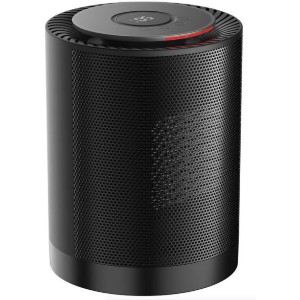
Outdoor Revolution Electric Heater is the strongest starting point in this list because it gives most buyers a sensible mix of performance, practical features and everyday usability. The best simple electric hook-up heater for many caravan and awning setups, with a compact body and camping-focused design.
Outdoor Revolution Electric Heater should be assessed around how you actually tour: electric hook-up, off-grid stops, awning use, overnight warmth or quick morning heat. Those scenarios need different heaters, and the safest answer is not always the most powerful one.
For electric hook-up, wattage is crucial because many UK campsites have limited amp supply. A low-wattage heater may look modest at home, but in a van it can be far easier to live with than a 2kW fan heater that trips the supply when another appliance is running.
For diesel or fuel-burning heat, the installation and ventilation are the product. Exhaust routing, intake position, fuel storage and carbon monoxide protection matter more than a headline output claim.
Features
- Portable electric heater
- Compact caravan-friendly design
- Mains powered
- Suitable for electric hook-up use
- Simple controls
- Designed with camping and caravan use in mind
- No combustion fumes
- Easy to move and store
- Requires electric hook-up
- Not for off-grid heating
2. Geepas 400W/800W Quartz Halogen Heater
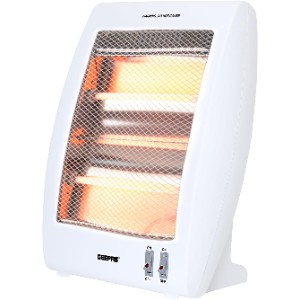
Geepas 400W/800W Quartz Halogen Heater earns its place as a practical alternative, especially if its particular format suits your setup better than the top pick. A low-wattage electric heater for hook-up sites where you need gentle personal heat without tripping limited campsite supplies.
For electric hook-up, wattage is crucial because many UK campsites have limited amp supply. A low-wattage heater may look modest at home, but in a van it can be far easier to live with than a 2kW fan heater that trips the supply when another appliance is running.
For diesel or fuel-burning heat, the installation and ventilation are the product. Exhaust routing, intake position, fuel storage and carbon monoxide protection matter more than a headline output claim.
Features
- 400W and 800W heat settings
- Quartz halogen heater
- Tip-over safety switch
- Compact body
- Portable carry design
- Low wattage suits limited hook-up better than 2kW heaters
- Very affordable
- Instant radiant warmth
- Personal heat only
- Visible glowing element needs careful placement
3. Russell Hobbs 500W Ceramic Plug Heater
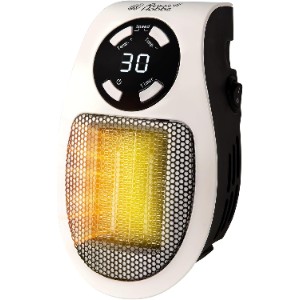
Russell Hobbs 500W Ceramic Plug Heater earns its place as a practical alternative, especially if its particular format suits your setup better than the top pick. A tiny plug-in ceramic heater for very small spaces where safe socket positioning and low output matter.
For diesel or fuel-burning heat, the installation and ventilation are the product. Exhaust routing, intake position, fuel storage and carbon monoxide protection matter more than a headline output claim.
Also think about condensation. Heating a small vehicle without ventilation can make windows stream and soft furnishings feel damp, so the best setup balances warmth with controlled fresh air.
Russell Hobbs 500W Ceramic Plug Heater should be assessed around how you actually tour: electric hook-up, off-grid stops, awning use, overnight warmth or quick morning heat. Those scenarios need different heaters, and the safest answer is not always the most powerful one.
Features
- 500W ceramic plug heater
- Adjustable thermostat
- 12-hour timer
- LED display
- Two fan speeds
- Very compact
- Low output for small spaces
- Timer included
- Only works where socket position is suitable
- Not enough for large or poorly insulated vans
4. Schallen 800W Slim Oil Filled Radiator
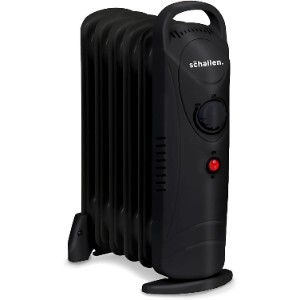
Schallen 800W Slim Oil Filled Radiator earns its place as a practical alternative, especially if its particular format suits your setup better than the top pick. A small oil-filled radiator for quiet background heat on electric hook-up, better for gentle overnight warmth than fan blast.
Also think about condensation. Heating a small vehicle without ventilation can make windows stream and soft furnishings feel damp, so the best setup balances warmth with controlled fresh air.
Schallen 800W Slim Oil Filled Radiator should be assessed around how you actually tour: electric hook-up, off-grid stops, awning use, overnight warmth or quick morning heat. Those scenarios need different heaters, and the safest answer is not always the most powerful one.
Features
- 800W oil-filled radiator
- Six fins
- Adjustable thermostat
- Slim portable design
- Quiet operation
- Silent heat
- Good for steady background warmth
- No fan noise
- Slow warm-up
- Needs floor space and stable placement
5. 8KW Portable Diesel Air Heater
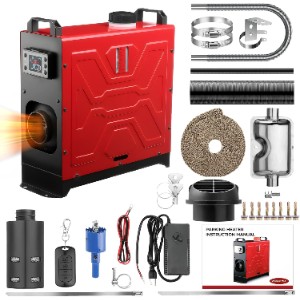
8KW Portable Diesel Air Heater earns its place as a practical alternative, especially if its particular format suits your setup better than the top pick. A portable diesel air heater for garages, vans and outdoor use where combustion exhaust can be routed safely outside.
8KW Portable Diesel Air Heater should be assessed around how you actually tour: electric hook-up, off-grid stops, awning use, overnight warmth or quick morning heat. Those scenarios need different heaters, and the safest answer is not always the most powerful one.
For electric hook-up, wattage is crucial because many UK campsites have limited amp supply. A low-wattage heater may look modest at home, but in a van it can be far easier to live with than a 2kW fan heater that trips the supply when another appliance is running.
Features
- Portable diesel air heater
- 12V/24V support
- Remote control
- LCD display
- All-in-one body
- Diesel fuel tank
- Useful off-grid heat source
- Strong output
- Portable all-in-one design
- Requires correct exhaust routing and ventilation
- Not a casual indoor heater
- Output may be too high for small vans
6. Triclicks 12V Diesel Air Heater
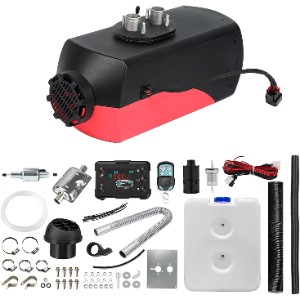
Triclicks 12V Diesel Air Heater earns its place as a practical alternative, especially if its particular format suits your setup better than the top pick. A budget diesel air heater kit for campervan conversions where installation will be handled properly and safely.
For electric hook-up, wattage is crucial because many UK campsites have limited amp supply. A low-wattage heater may look modest at home, but in a van it can be far easier to live with than a 2kW fan heater that trips the supply when another appliance is running.
For diesel or fuel-burning heat, the installation and ventilation are the product. Exhaust routing, intake position, fuel storage and carbon monoxide protection matter more than a headline output claim.
Features
- 12V diesel air heater
- 5KW to 8KW style kit
- LCD display
- Remote control
- All-in-one design
- For vans, trucks, boats and RVs
- Popular budget diesel heater format
- Good for off-grid heating when installed correctly
- Professional-quality installation is critical
- Too much output for some small vans
- Combustion safety cannot be ignored
Key Takeaways
- The right heater type depends entirely on how you use your van or caravan: hook-up camping calls for an electric heater; off-grid wild camping or extended trips without mains power means gas or diesel; year-round touring in a fully converted van points to a fitted diesel heater as the long-term solution
- Diesel heaters (also called air parking heaters) are the most practical solution for off-grid warmth. They draw fuel from the vehicle’s diesel tank, run independently of hook-up, produce no CO inside the living space (combustion gases vent externally), and consume as little as 0.1 to 0.3 litres per hour at low output
- Gas heaters carry a significant CO and fire risk in enclosed van and caravan spaces. Catalytic gas heaters can be used with ventilation open, but gas is not recommended for overnight heating in sleeping spaces without a properly installed vent and CO alarm as absolute minimum requirements
- Electric hook-up heaters are safe, simple, and produce no combustion gases. They’re limited to campsites with EHU and to the site’s maximum amperage (typically 10 to 16 amps, or 2.3 to 3.7kW total). A 1 to 1.5kW electric heater leaves capacity for other appliances
- Budget Chinese diesel heaters (Vevor, Hcalory, and similar) cost £80 to £200 and are functionally capable, but quality control is variable and the installation hardware is often lower grade than premium brands. They’re a reasonable starting point for van lifers on a budget; premium brands (Webasto, Eberspächer) cost £500 to £1,500 but are quieter, more reliable, and better supported
- 12V ceramic heaters (typically 150 to 300W) can take the edge off overnight temperatures but are not true van heaters. They draw heavily from leisure batteries for modest output and will flatten most battery setups within a few hours at higher settings
- A carbon monoxide alarm rated to EN 50291 is mandatory if any fuel-burning heater is used in an enclosed sleeping space. This applies to diesel heaters too, even though external exhaust is a safety feature rather than a guarantee
Diesel Heaters: The Off-Grid Standard
A diesel air parking heater (or diesel space heater) works by drawing a small amount of diesel from a dedicated fuel tank or a T-piece connection from the vehicle’s main tank, igniting it in a combustion chamber, and using a heat exchanger to warm a separate airstream that’s blown into the living space. Combustion gases are ducted outside through a separate exhaust. The living space air never contacts the combustion process.
This makes diesel heaters genuinely different from gas heaters in terms of safety: there is no CO entering the sleeping space under normal operation. The heater runs on a 12V electrical supply (drawing 10 to 25W once running), meaning it works off a leisure battery without needing engine running or hook-up. Output is controlled via a controller or phone app, and most units include a thermostat function that cycles the heater to maintain a target temperature.
Fuel consumption at low output (1 to 2kW) is typically 0.1 to 0.15 litres per hour. At maximum output (5kW), consumption rises to 0.4 to 0.6 litres per hour. For a typical overnight trip running at low output, consumption is 1 to 1.5 litres, a negligible cost compared to any alternative heating method.
Premium vs Budget Diesel Heaters
The German brands (Webasto and Eberspächer) dominate the premium end. Both are OEM suppliers to vehicle manufacturers, used in trucks, coaches, and motorhomes from the factory. Their heaters are significantly quieter than budget alternatives, have precise fuel metering, and come with comprehensive dealer networks and parts availability. An Eberspächer Airtronic or Webasto Air Top costs £500 to £1,200 for the unit alone, plus installation.
Budget diesel heaters from Chinese manufacturers (marketed under brands including Vevor, Hcalory, Autoterm, and others) cost £80 to £250 for a complete kit including installation hardware. They use the same basic technology as premium brands and in many cases produce adequate heat. The differences are in consistency: quality control on budget units is variable, some produce more noise (combustion rattle and fan noise), and installation components (fuel pick-ups, exhaust fittings, control units) are often lower grade. For a van being used occasionally for weekends, a budget unit is a reasonable starting point. For year-round living or a professional build, premium brands are worth the investment in reliability.
Electric Heaters for Hook-Up Camping
For caravan or motorhome use on EHU, a compact electric heater is the simplest option. The main considerations are size, wattage, and safety certification:
Oil-filled mini radiators (500W to 1,000W) are the safest electric option for overnight use. They retain heat after switching off, produce steady warmth without drying the air, and have no visible elements that can ignite nearby materials. The most practical choice for caravans and motorhomes where you want a heater that can safely run during the night.
Ceramic PTC fan heaters heat up faster and can warm a van or caravan interior in minutes after arriving at a cold pitch. The PTC element (Positive Temperature Coefficient ceramic) is inherently safer than a bare wire element because it self-limits its own temperature, so it can’t glow red-hot even if airflow is restricted. Tip-over protection is standard on any decent model.
Panel heaters (flat panel convectors, wall-mountable) are increasingly popular in motorhome conversions because they take no floor space. A 500W to 750W panel heater on a timer provides gentle background warmth without the noise of a fan heater and can be permanently mounted to a wall or cupboard.
Gas: The Risks in Enclosed Spaces
Gas heaters are common in caravans with factory-fitted Truma or Carver systems, which are installed professionally with proper ventilation, gas supply lines, and certified components. These are not the concern here.
Portable gas heaters (catalytic or radiant, running on cartridges or cylinders) carry genuine risks in confined spaces. Catalytic heaters have no flame, which reduces fire risk, but they still consume oxygen and produce water vapour and trace CO. Running one overnight in a sealed van or caravan without ventilation is dangerous. The Camping Gaz Trekker and similar compact catalytic heaters are suitable for short periods in a well-ventilated awning or porch, or for taking the chill off a van while awake with ventilation open. They are not a safe all-night sleeping option.
If you’re considering a portable gas heater for off-grid van use, the practical alternative is a fitted diesel heater: same level of fuel independence, no CO risk in the living space, and substantially more convenient for regular use.
12V Heaters: Understanding Their Limits
12V electric heaters draw current directly from the vehicle’s leisure battery. The physics limits their practical output: a 300W heater on 12V draws 25 amps, which a typical 100Ah leisure battery can sustain for about 4 hours before discharging to 50% capacity (the threshold for avoiding battery damage). A 150W heater draws 12.5 amps and runs for about 8 hours before reaching the same threshold.
In a well-insulated modern campervan in mild autumn conditions, 150 to 200W might maintain overnight temperature. In winter, in an older or poorly insulated van, it won’t. 12V heaters are useful for supplementary warmth, defrosting, or brief morning warm-up rather than as a primary overnight heating solution unless paired with a high-capacity lithium battery setup (200Ah+) and solar or shore power to keep the battery topped up.
Things to Keep in Mind Before Buying
Insulation is the force multiplier for any heater. A van with properly lined walls (Kingspan or PIR insulation board behind ply lining), an insulated floor, and a wool-and-foil ceiling loses heat far more slowly than an untreated metal shell. A well-insulated van with a 2kW diesel heater will maintain sleeping temperature more comfortably than a poorly insulated van with a 5kW heater, at a fraction of the fuel cost.
Consider installation carefully for diesel heaters. The fuel pick-up must be correctly sized for your tank type, the exhaust must exit through a protected exit point well away from any ventilation inlets, and the air intake must draw from outside the vehicle. A poorly installed diesel heater can develop fuel leaks at the pick-up, rattle loudly, or in rare cases introduce combustion gases if the exhaust seals fail. Professional installation by a van conversion specialist adds cost but removes these risks.
Always fit a CO alarm regardless of heater type. Even a properly installed diesel heater can develop an exhaust seal failure. An EN 50291-compliant CO alarm positioned at sleeping height provides early warning before concentration reaches dangerous levels.
Types of Caravan and Campervan Heater
Fitted diesel air heaters are the best all-round solution for regular off-grid or year-round van life. Independent of hook-up, low fuel consumption, external exhaust, thermostat control. Premium brands (Webasto, Eberspächer) for reliability; budget brands for cost-conscious builds. Installation requires basic mechanical skill or professional fitting.
Electric oil-filled radiators are the safest option for hook-up caravan use. No combustion, no noise, gentle overnight warmth. Constrained to EHU pitches. Compact models (500W to 1,000W) work well in the limited floor space of a van or caravan.
Electric ceramic fan heaters warm spaces quickly and are effective for evening use at a pitch. Louder than oil-filled radiators due to the fan. Better for rapid heat-up than sustained overnight use. Tip-over and overheat protection are standard requirements.
Catalytic gas heaters provide off-grid warmth for awnings and porches with adequate ventilation. Not recommended for overnight use in sleeping spaces. Useful as a supplement to electric heating at a hook-up pitch when the EHU supply is limited.
12V ceramic heaters are best viewed as a supplementary or short-duration option. Useful for morning warm-up while the van is running or for brief comfort periods. Inadequate as sole overnight heating unless paired with significant battery capacity.
Case Study: Choosing Heat for a Real UK Space
Background
A homeowner needed extra heat for a cold, awkward space that was not being served well by the main heating system. The first instinct was to buy the most powerful portable heater available.
Project Overview
Instead of choosing on output alone, they compared the space size, ventilation, power supply, clearance around furniture and how long the heater would run each day.
Implementation
The final choice was a heater matched to the actual use case rather than the biggest model on the page. The setup also included safer cable routing, better placement and a clear rule that the heater would not be used outside the manufacturer instructions.
Results
The space became more comfortable without overloading the power supply or creating avoidable safety risks. The biggest improvement came from choosing the right heater type, not simply more heat.
Expert Insights From Our Heating Engineers About Caravan and Campervan Heaters
“The right heater is the one that suits the space, the power supply and the user. A powerful heater in the wrong place can be inefficient, uncomfortable or unsafe.”
“One of our senior heating engineers with over 15 years of experience recommends checking the practical details first: ventilation, clearance, cable route, fuel storage, IP rating and whether the heater is designed for that exact environment.”
“Do not treat safety features as permission to ignore the manual. Tip-over switches, overheat protection and oxygen sensors are backups, not a substitute for proper use.”
Frequently Asked Questions
What is the safest heater for a caravan?
On electric hook-up, a suitable electric heater is usually the simplest option because it produces no combustion fumes. It still needs safe placement and a suitable power supply. The key is to match the product to the space and follow the manufacturer instructions rather than relying on the headline output alone.
Can I use a gas camping heater in a campervan?
Do not use outdoor gas heaters inside a campervan unless the appliance is specifically designed, installed and ventilated for that use. Carbon monoxide risk is serious. If you are unsure, choose the more conservative setup and prioritise ventilation, clearance and stable placement.
Are diesel heaters good for campervans?
Yes, when properly specified and installed. They are popular for off-grid van heating, but exhaust routing, fuel supply, wiring and ventilation must be done correctly. For regular use, controls and safe habits matter just as much as the product specification.
Is 8KW too much for a campervan heater?
Often, yes. A small insulated van usually does not need huge output. Oversized heaters can short cycle and feel uncomfortable. The key is to match the product to the space and follow the manufacturer instructions rather than relying on the headline output alone.
Can I sleep with an electric heater on in a caravan?
Only use heaters suitable for unattended or overnight use and follow the manufacturer instructions. Keep clearances around bedding and fit smoke and carbon monoxide alarms as appropriate. If you are unsure, choose the more conservative setup and prioritise ventilation, clearance and stable placement.
How do I avoid condensation when heating a campervan?
Use ventilation, avoid drying wet kit inside where possible, cover pans when cooking, and keep some airflow even when heating. For regular use, controls and safe habits matter just as much as the product specification.
Summing Up
The Outdoor Revolution Electric Heater is the best caravan and campervan heater for most people because it gives the most sensible balance of performance, value and everyday usability. It is the product we would start with before comparing the more specialist options, especially if you want a dependable answer rather than simply chasing the highest output.
The other options are still worth considering if your situation is more specific. Think about where the heater will be used, how it will be powered, whether ventilation is needed, and how easy it will be to use safely every time. The right heater should make the space more comfortable without creating extra problems in the process.
Updated