
For most UK buyers, the Dimplex ECOT2FT Tubular Heater is the best airing cupboard heater to buy. It gives the strongest balance of practical warmth, safety-conscious design and everyday usability. Airing cupboard heaters need a different mindset from normal room heaters. The aim is gentle, steady warmth for towels, bedding and stored linens, not a blast of heat or a quick laundry-drying shortcut.
Airing cupboard heaters are usually low-wattage tube heaters designed for gentle background warmth, not fast room heating. The best options are usually low-wattage tube heaters that can be mounted neatly with clear space around them. The reviews below focus on output, tube length, thermostats, running costs and whether each model suits a small cupboard or a more generous airing space.
Contents
Our Top Picks
| Image | Name | |
|---|---|---|
| Dimplex ECOT2FT Tubular Heater | |
| Dimplex ECOT1FT Tubular Heater | |
| Hylite Slimline Ecoheater 500mm Tube Heater | |
| Hylite Slimline Ecoheater 300mm Tube Heater | |
| Morris 2FT 120W Tubular Heater |
5 Best Airing Cupboard Heaters
1. Dimplex ECOT2FT Tubular Heater
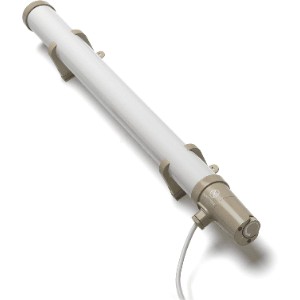
The Dimplex ECOT2FT is the safest starting point for most airing cupboard uses because it comes from a well-known heating brand and has the right tube-heater format. It is designed for gentle background warmth rather than fast heat. The built-in thermostat is useful because airing cupboards do not usually need constant full-output heat. The heater can help keep towels aired, reduce chill and provide low-level warmth without turning the cupboard into a hot box.
It still needs proper mounting and clearance. Do not bury any tube heater under towels or allow fabrics to rest directly on it.
Dimplex ECOT2FT Tubular Heater should be treated as a background airing heater, not as a replacement for a tumble dryer or a heated clothes airer. It is there to keep cupboard air a little warmer and help towels or bedding feel fresher once they are already mostly dry.
Running cost is usually modest compared with room heaters, but low wattage also means slow results. If the cupboard is cold because damp laundry keeps being shut inside it, the answer is ventilation and better drying habits first, then gentle heat.
Features
- 2ft tubular heater
- Built-in thermostat
- Mounting brackets included
- Low-wattage background heat
- White and grey finish
- Best all-round choice
- Trusted brand
- Thermostat included
- Needs correct mounting clearance
- Not for rapid drying
2. Dimplex ECOT1FT Tubular Heater
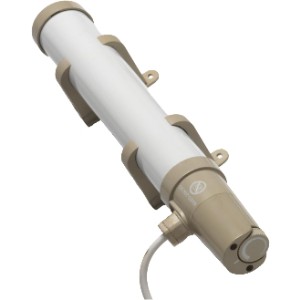
The Dimplex ECOT1FT is the compact alternative for narrow cupboards or small enclosed spaces. It is a better fit where the 2ft model would be awkward to mount neatly.
Output is lower, so it suits gentle airing rather than meaningful drying power. That is exactly what many airing cupboards need: steady low-level warmth, not a fan heater. Choose this if space is limited. If the cupboard is larger or very cold, a 2ft model may be more effective.
The key detail is clearance. Tube heaters can look harmless because they are slim and low wattage, but they still need to be mounted so fabrics cannot rest directly on them. A tidy cupboard layout will do more for safety and performance than simply choosing the longest tube.
Features
- 1ft tubular heater
- Built-in thermostat
- Mounting brackets included
- Compact size
- Low background heat
- Good for small cupboards
- Compact
- Trusted brand
- Lower output
- Less suitable for larger spaces
3. Hylite Slimline Ecoheater 500mm Tube Heater
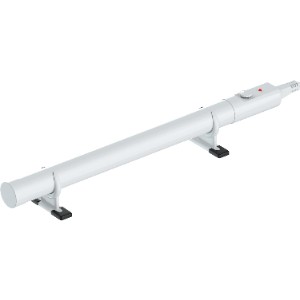
The Hylite 500mm Ecoheater is a slim low-wattage option for users who want background warmth with minimal running cost. It is not powerful, but that is the point. The 55W output makes it suitable for gentle cupboard airing, frost protection and spaces where you do not want aggressive heat. It should be mounted securely with enough space around it.
It is a practical choice if you want low running cost above all else. Just do not expect it to dry heavy laundry quickly. Running cost is usually modest compared with room heaters, but low wattage also means slow results. If the cupboard is cold because damp laundry keeps being shut inside it, the answer is ventilation and better drying habits first, then gentle heat.
Hylite Slimline Ecoheater 500mm Tube Heater should be treated as a background airing heater, not as a replacement for a tumble dryer or a heated clothes airer. It is there to keep cupboard air a little warmer and help towels or bedding feel fresher once they are already mostly dry.
Features
- 500mm tube heater
- 55W output
- Thermostat
- Slimline design
- Wall mounting
- Low running cost
- Slim design
- Good gentle heat
- Low output
- Slow effect
4. Hylite Slimline Ecoheater 300mm Tube Heater
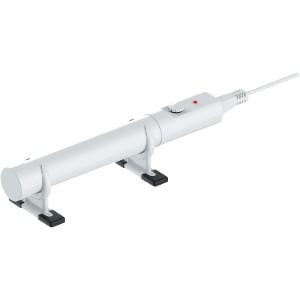
The Hylite 300mm Ecoheater is the tiny option for very small spaces. At 28W, it is about gentle background warmth rather than drying or heating.
It can make sense in a small cupboard where the aim is to keep the edge off cold, not to create a warm drying cabinet.
The limitation is obvious: output is very low. Buy it only if that matches the space. This type of heater is most useful in modern homes where the old hot-water-cylinder warmth has disappeared. It can restore some of that gentle airing effect without making the cupboard uncomfortably hot.
Features
- 300mm tube heater
- 28W output
- Thermostat
- Slimline white body
- Low energy use
- Very low running cost
- Tiny footprint
- Very limited output
- Only for small spaces
5. Morris 2FT 120W Tubular Heater
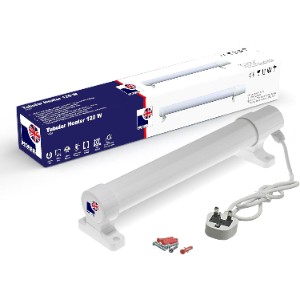
The Morris 2FT 120W heater is a useful alternative if you want a straightforward tube heater with a little more output than the very low-wattage models. The 2ft size is practical for larger cupboards, airing spaces or similar small areas needing steady background warmth.
Brand recognition is lower than Dimplex, so check the listing details and installation instructions carefully before buying.
Morris 2FT 120W Tubular Heater should be treated as a background airing heater, not as a replacement for a tumble dryer or a heated clothes airer. It is there to keep cupboard air a little warmer and help towels or bedding feel fresher once they are already mostly dry.
Features
- 2ft tubular heater
- 120W output
- Wall-mountable design
- Suitable for cupboards and greenhouses
- Low-level heat
- Good output for a tube heater
- Useful 2ft size
- Less established brand
- Needs careful installation
Airing Cupboard Heater Buying Guide
Key Takeaways
- Airing cupboards need a low, consistent heat, not a blast. Tubular heaters rated 60W to 120W per metre maintain 15°C to 25°C reliably without drying out fabrics. A single 1-foot tube at 60W is usually sufficient for a standard airing cupboard; larger or poorly insulated cupboards benefit from a 2-foot or 3-foot tube
- IP55 is the minimum recommended rating for an airing cupboard heater. The enclosed, humid environment of a linen cupboard accelerates corrosion and moisture ingress on unrated equipment. IP55 protects against dust and low-pressure water spray, suitable for the condensation-prone conditions inside a boiler or linen cupboard
- A timer is almost as important as the heater itself. Running a 60W tube heater 24/7 costs around 40p per day at 27p/kWh. That is over £140 per year for no benefit. A 4 to 6-hour daily schedule with a 24-hour mechanical or digital timer keeps costs under £20 per year while maintaining dry, warm linen
- Tubular heaters are the standard choice for airing cupboards because they generate a gentle, even heat across the full length of the tube without the airflow of a fan heater. Fan heaters dry out fabrics too aggressively and disturb loose items. Tubular heaters gently warm the air without disturbing anything stored
- The primary function is damp and mould prevention, not warmth. Maintaining 18°C to 22°C inside the cupboard prevents condensation on the walls, keeps towels and bedding fresh, and stops mould developing on stored items. If your airing cupboard smells musty, a tubular heater will resolve it within days
Why Airing Cupboards Need a Dedicated Heater
Most modern homes no longer have a hot water cylinder in the airing cupboard, which traditionally kept the space warm enough to dry linen passively. Without that heat source, the enclosed cupboard becomes a cold, poorly ventilated space that holds moisture. Condensation builds on walls and shelves. Towels and bedding stay damp and start to smell musty. In poorly insulated or north-facing cupboards, mould growth follows.
A small tubular heater replaces the warmth that the cylinder used to provide. It keeps the temperature consistently above the dew point so moisture can’t settle, and gently warms stored linen so it feels fresh when you use it. The running cost is minimal: a 60W tube heater running 4 hours daily costs under 25p per week.
Sizing: Wattage and Tube Length
Tubular heaters are rated by length and wattage. A 1-foot tube produces around 60W; a 2-foot tube produces 120W; a 3-foot tube produces 180W. The standard rule is 60W per linear foot of tube, and you choose the tube length to suit your cupboard’s width or the shelf you want to mount it under.
| Cupboard Size | Recommended Tube | Output | Running Cost/Day (4hrs) |
|---|---|---|---|
| Small (under 0.5m wide) | 1-foot tube | 60W | 2.6p |
| Standard (0.5–0.9m wide) | 2-foot tube | 120W | 5.2p |
| Large (0.9m+ wide) | 3-foot tube | 180W | 7.8p |
Running costs assume 27p/kWh. For a poorly insulated or particularly damp cupboard, a longer tube is worth the marginal extra running cost because the damp prevention benefit far outweighs the pennies per day difference.
Controls: Timer, Thermostat, and IP Rating
The simplest tubular heaters have no controls at all. They run whenever the circuit is live. This is fine if the heater is on a switched spur you remember to turn off, but most people forget. A basic 24-hour mechanical timer plug adds 4 to 6 hours of daily use on a fixed schedule, which is all a typical airing cupboard needs.
Thermostatic tubular heaters include a built-in adjustable thermostat that cycles the element on and off to maintain a set temperature. These are more expensive but genuinely efficient because the heater runs only when the cupboard temperature drops below your chosen level, typically 20°C to 22°C. For a frequently opened airing cupboard or one in a cold location, a thermostatic model pays for itself in lower running costs.
IP55 is the minimum worth looking for. This rating means the unit is protected against dust ingress and low-pressure water spray from any direction, suitable for the damp conditions inside an airing or boiler cupboard. Standard IP20-rated heaters are not appropriate for enclosed, humid spaces.
Safety Guards and Mounting
Tubular heaters reach surface temperatures of 60°C to 80°C at full output. A steel wire safety guard is essential if children or pets have access to the cupboard, or if you store items like ironing or soft furnishings close to the heater. Many tubular heaters are sold as kits that include the guard. Confirm this before buying if you want one included.
Mounting on the floor of the cupboard or under the lowest shelf is the most common installation. Floor mounting allows warm air to rise naturally through stored linen. Wall-mounting at skirting level is an alternative for cupboards where the floor is used for storage. Either way, maintain a minimum 50mm clearance around the tube to allow airflow and prevent contact with stored items.
Things to Keep in Mind Before Buying
Installation must be on a fused spur or via a properly rated socket. Running a tubular heater from an extension lead is not recommended for permanent installation. If the cupboard has no power outlet, a qualified electrician can install a fused spur for around £80 to £150, a one-off cost that pays off in convenience and safety.
Never store items directly on top of or against a running tubular heater. The surface temperature is hot enough to scorch fabric and can cause a fire if flammable materials are in contact with the element or guard. Maintain clearance at all times.
Types of Airing Cupboard Heater
Standard tubular heaters are the most common choice: low wattage, long life, simple installation. Available in 1-foot to 6-foot lengths. No controls; use with a separate timer. Price range £15 to £60.
Thermostatic tubular heaters include a built-in adjustable thermostat. They self-regulate to maintain a set temperature, which saves electricity compared to a basic tube on a fixed timer. Price range £30 to £90.
Tubular heater kits include the heater, safety guard, and a 24-hour timer as a complete package. The best option if you want a ready-to-use solution without sourcing components separately. Price range £25 to £70.
Panel heaters for airing cupboards suit larger spaces such as boot rooms, utility rooms, or walk-in linen stores where a tubular heater wouldn’t provide enough coverage. IP-rated slim panel heaters with programmable timers work well in these applications. Price range £60 to £200.
Case Study: Choosing Safer Supplementary Heat
Background
A homeowner wanted extra heat in a space that was cold at certain times of day, but did not want to run the main heating system for the whole house.
Project Overview
The goal was not simply to buy the highest-wattage heater. They checked the room size, power supply, ventilation, cable route, clearance around furniture and how long the heater would realistically run.
Implementation
They chose a heater matched to the actual task and set simple rules for use: clear space around the heater, no unattended running and no use near fabrics, clutter or blocked airflow.
Results
The space became more comfortable without relying on an oversized heater or creating avoidable safety risks. The biggest improvement came from choosing the right heater type for the job.
Expert Insights From Our Heating Engineers About Airing Cupboard Heaters
“Portable and supplementary heaters are useful when they are chosen for the right space. The problems usually start when people ask a small heater to do a big heater’s job, or use a powerful heater too close to furniture and fabrics.”
“One of our senior heating engineers with over 15 years of experience recommends checking wattage, clearances, controls and the intended use before buying. The safest heater is the one that suits the room and is easy to use correctly every time.”
“For any heater, do not ignore the manual. Tip-over switches, thermostats and overheat protection are helpful backups, not permission to place the heater badly or leave it running unattended.”
Frequently Asked Questions
Can I put a heater in an airing cupboard?
Yes, but only if it is a suitable low-wattage heater installed according to the manufacturer instructions. Tube heaters are commonly used because they provide gentle background warmth. Do not use a fan heater in a packed cupboard, and never allow fabrics to rest directly on the heater.
What wattage is best for an airing cupboard heater?
It depends on cupboard size and how much warmth you need. Very small spaces may only need 28W to 60W, while larger cupboards may suit around 120W. Lower wattage costs less to run but works more slowly.
Will an airing cupboard heater dry clothes?
It can help keep towels and bedding aired, but it should not be used as a fast clothes dryer. Wet laundry in a closed cupboard can create humidity and smells. Use proper ventilation or drying equipment for genuinely wet clothes.
Are tube heaters cheap to run?
Yes, compared with normal electric room heaters. A 60W tube heater uses only 0.06kWh per hour. The cost stays low because the output is low, but it also means the heater works gradually rather than quickly.
Where should I mount an airing cupboard heater?
Mount it where air can circulate and where towels, clothes or bedding cannot fall onto it. Follow the manufacturer clearance guidance. If the cupboard is too cramped to provide safe clearance, rethink the setup.
Do I need a thermostat on a tube heater?
A thermostat is worth having for most airing cupboards because it reduces unnecessary running and helps avoid overheating the space. It is not a substitute for safe mounting, but it makes everyday use more controlled.
Summing Up
The Dimplex ECOT2FT Tubular Heater is the best airing cupboard heater for most people because it gives the most sensible balance of warmth, control and value. It is the model we would start with before comparing the more specialist options in the list, especially if you want a dependable recommendation rather than simply the highest wattage on the page.
The right choice still depends on the space. Check output, clearances, safety features, running cost and how the heater will actually be used before ordering. A heater that fits the task will feel better, run more sensibly and be easier to use safely than one chosen purely by headline wattage. That is the thread running through all the picks here: choose the heater for the situation, not just the spec sheet.
Updated