

For most UK buyers, the DREO Smart 4L Cool Mist Humidifier is the best humidifier to buy. It offers the strongest mix of practical performance, value and usability in a category where the right choice depends heavily on your room, budget and expectations.
A humidifier is only helpful when your home is genuinely dry. Aim for comfortable humidity, not maximum mist, and avoid adding moisture to rooms that already suffer from condensation or mould.
Our Top Picks
| Image | Name | |
|---|---|---|
| DREO Smart 4L Cool Mist Humidifier | |
| Dreo Smart 6L Warm and Cool Mist Humidifier | |
| Levoit Smart 6L Humidifier | |
| Meaco Deluxe Humidifier | |
| Dreo 3L Cool Mist Humidifier | |
| Philips Series 2000 Humidifier | |
| raydrop 3L Cool Mist Humidifier |
7 Best Humidifiers
1. DREO Smart 4L Cool Mist Humidifier
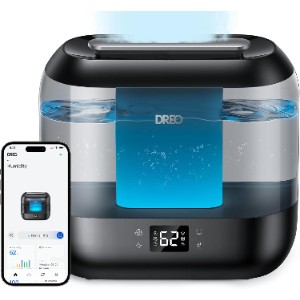
The DREO 4L smart model hits the sweet spot for most bedrooms and living spaces. It is large enough to run for long periods but still simple enough to clean and refill. Smart controls are genuinely useful on a humidifier because you can avoid leaving it running blindly. The aim is steady comfort, not fogging up the windows.
It is a strong first choice if you want quiet operation, automatic control and a sensible price. DREO Smart 4L Cool Mist Humidifier is best judged by how easy it is to live with, not just by how much mist it can produce. A humidifier that is awkward to refill or unpleasant to clean usually ends up abandoned in a cupboard. The better models are the ones you can top up, wipe down and control without turning the whole routine into a chore.
The real goal is controlled comfort. You want enough moisture to stop the room feeling dry, but not so much that windows run with condensation or walls feel cold and damp. This is why a humidistat, hygrometer or smart humidity control is more useful than simply choosing the biggest tank. Capacity matters, but only when the output is being managed sensibly.
Features
- 4L tank
- Smart app and voice control
- Built-in humidity sensing
- Up to 36 hours runtime
- Top-fill design
- Quiet operation
- Best balance of features and price
- Automatic humidity control
- Easy top filling
- Quiet enough for bedrooms
- Needs regular cleaning
- Cool mist only
2. Dreo Smart 6L Warm and Cool Mist Humidifier
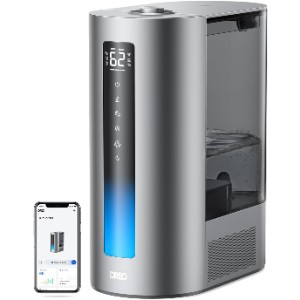
This is the step-up Dreo for people who want more capacity and warm mist as well as cool mist. The 6L tank makes more sense in larger rooms or homes where dry air is a constant winter problem. Dreo Smart 6L Warm and Cool Mist Humidifier is best judged by how easy it is to live with, not just by how much mist it can produce. A humidifier that is awkward to refill or unpleasant to clean usually ends up abandoned in a cupboard. The better models are the ones you can top up, wipe down and control without turning the whole routine into a chore.
Warm mist can feel more comfortable in cold weather, but it also makes cleaning discipline more important. Mineral build-up and stale water are not things to ignore. If you want power and automation, it is excellent. If you want the simplest low-maintenance humidifier, choose a smaller cool-mist model. The real goal is controlled comfort. You want enough moisture to stop the room feeling dry, but not so much that windows run with condensation or walls feel cold and damp. This is why a humidistat, hygrometer or smart humidity control is more useful than simply choosing the biggest tank. Capacity matters, but only when the output is being managed sensibly.
Features
- 6L tank
- Warm and cool mist
- Smart app control
- Humidity control
- High mist output
- Long runtime
- High output
- Warm and cool mist flexibility
- Good for larger rooms
- Larger unit to clean
- More expensive than simple models
3. Levoit Smart 6L Humidifier
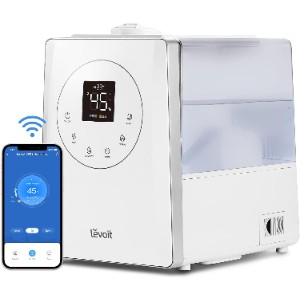
Levoit is a safe brand choice in home air treatment, and this 6L model is a good option if you want a larger smart humidifier without going obscure. The larger tank is convenient, but it should not tempt you to leave water sitting for days. Empty, rinse and dry it regularly.
It is a good fit for larger bedrooms and open living spaces where a compact unit runs out too quickly. Levoit Smart 6L Humidifier is best judged by how easy it is to live with, not just by how much mist it can produce. A humidifier that is awkward to refill or unpleasant to clean usually ends up abandoned in a cupboard. The better models are the ones you can top up, wipe down and control without turning the whole routine into a chore.
The real goal is controlled comfort. You want enough moisture to stop the room feeling dry, but not so much that windows run with condensation or walls feel cold and damp. This is why a humidistat, hygrometer or smart humidity control is more useful than simply choosing the biggest tank. Capacity matters, but only when the output is being managed sensibly. Think about the room before the appliance. A dry, heated bedroom is a very different use case from a poorly ventilated spare room with condensation. In one, a humidifier can help. In the other, it can make the problem worse. If the room already feels musty, deal with moisture and airflow before adding more water to the air.
Features
- 6L capacity
- Smart app controls
- Large-room output
- Auto humidity control
- Quiet settings
- Top-fill design
- Large tank
- Trusted air-treatment brand
- Good smart features
- Takes more space
- Needs careful cleaning
4. Meaco Deluxe Humidifier
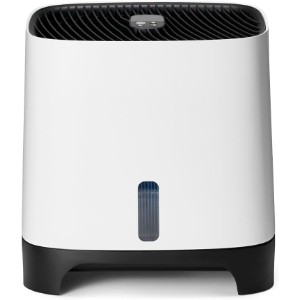
The Meaco Deluxe is for buyers who care about build quality and aftercare as much as headline tank size. Meaco has a strong reputation in UK air-treatment products.
It is a sensible choice for people who have already used cheaper humidifiers and want something more polished. You still need to size it sensibly and clean it properly. Better hardware does not remove the basic hygiene rules. Meaco Deluxe Humidifier is best judged by how easy it is to live with, not just by how much mist it can produce. A humidifier that is awkward to refill or unpleasant to clean usually ends up abandoned in a cupboard. The better models are the ones you can top up, wipe down and control without turning the whole routine into a chore.
The real goal is controlled comfort. You want enough moisture to stop the room feeling dry, but not so much that windows run with condensation or walls feel cold and damp. This is why a humidistat, hygrometer or smart humidity control is more useful than simply choosing the biggest tank. Capacity matters, but only when the output is being managed sensibly.
Features
- Premium home-air brand
- Room humidity control
- Quiet operation
- Designed for home use
- Reusable daily use format
- Modern control layout
- Strong brand reputation
- Good long-term option
- Bedroom-friendly format
- Costs more than budget models
- Feature details should be checked before purchase
5. Dreo 3L Cool Mist Humidifier
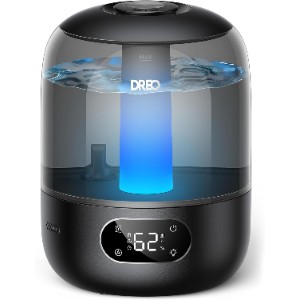
This is the one to buy if you want a capable humidifier without spending much. The 3L tank is enough for normal bedroom use, and the top-fill design keeps refilling simple. It is not as clever as the smart models, so you need to monitor humidity yourself or use a separate hygrometer. For a dry bedroom, nursery or office, it gives plenty of bang for your buck.
Dreo 3L Cool Mist Humidifier is best judged by how easy it is to live with, not just by how much mist it can produce. A humidifier that is awkward to refill or unpleasant to clean usually ends up abandoned in a cupboard. The better models are the ones you can top up, wipe down and control without turning the whole routine into a chore. The real goal is controlled comfort. You want enough moisture to stop the room feeling dry, but not so much that windows run with condensation or walls feel cold and damp. This is why a humidistat, hygrometer or smart humidity control is more useful than simply choosing the biggest tank. Capacity matters, but only when the output is being managed sensibly.
Features
- 3L tank
- Cool mist output
- Top-fill design
- Up to 30 hours runtime
- Quiet operation
- 360-degree nozzle
- Good value
- Easy to refill
- Quiet for bedrooms
- Less automatic control
- Not ideal for large rooms
6. Philips Series 2000 Humidifier
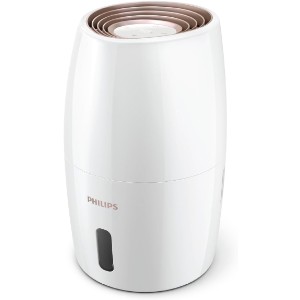
Philips humidifiers appeal to people who dislike visible mist clouds and want a more controlled appliance feel. Evaporative-style humidification can be neater in everyday use. The downside is price and replacement consumables. Always check ongoing filter or wick costs before buying.
It is a strong alternative if you want a recognised brand and do not mind paying more for it. Philips Series 2000 Humidifier is best judged by how easy it is to live with, not just by how much mist it can produce. A humidifier that is awkward to refill or unpleasant to clean usually ends up abandoned in a cupboard. The better models are the ones you can top up, wipe down and control without turning the whole routine into a chore.
The real goal is controlled comfort. You want enough moisture to stop the room feeling dry, but not so much that windows run with condensation or walls feel cold and damp. This is why a humidistat, hygrometer or smart humidity control is more useful than simply choosing the biggest tank. Capacity matters, but only when the output is being managed sensibly.
Features
- Philips home-air appliance
- Evaporative humidification style
- Room humidity support
- Quiet operation
- Recognised brand
- Home-friendly design
- Good brand confidence
- Less visible mist than ultrasonic units
- Useful for steady humidity
- Replacement consumables may add cost
- Higher price than basic humidifiers
7. raydrop 3L Cool Mist Humidifier
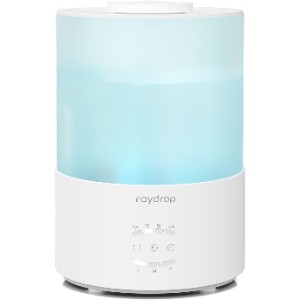
The raydrop 3L is a budget pick, and it should be judged that way. It offers the basics for small rooms without pretending to be a premium smart appliance. raydrop 3L Cool Mist Humidifier is best judged by how easy it is to live with, not just by how much mist it can produce. A humidifier that is awkward to refill or unpleasant to clean usually ends up abandoned in a cupboard. The better models are the ones you can top up, wipe down and control without turning the whole routine into a chore.
Auto shut-off and quiet running are welcome at this price. Use a hygrometer if you want tighter control. It is a decent choice for occasional dry-air use, but heavy daily users should spend more. The real goal is controlled comfort. You want enough moisture to stop the room feeling dry, but not so much that windows run with condensation or walls feel cold and damp. This is why a humidistat, hygrometer or smart humidity control is more useful than simply choosing the biggest tank. Capacity matters, but only when the output is being managed sensibly.
Features
- 3L tank
- Cool mist output
- Top-fill design
- Timer
- Auto shut-off
- Quiet operation
- Affordable
- Simple top-fill design
- Good for small rooms
- Basic controls
- Not the best long-term heavy-use option
Humidifiers Buying Guide
Key Takeaways
- Humidifiers add moisture to the air to raise indoor relative humidity, which is most useful in winter when central heating dries the air below the comfortable 40 to 60% range
- Ultrasonic models are quiet, energy-efficient, and cool-to-touch, making them the most popular for bedrooms and nurseries. They need distilled or filtered water in hard water areas to avoid white mineral dust
- Evaporative humidifiers use a fan to pass air through a wet wick filter; they self-regulate by slowing moisture output as humidity rises and are less likely to over-humidify a room
- Steam (warm mist) humidifiers boil water to produce vapour; more hygienic than ultrasonic models but significantly more energy-intensive and not suitable for use around young children
- Running costs vary widely: an ultrasonic model costs 1 to 6p per night; a steam humidifier costs 35 to 78p per night. Annual filter or wick replacement adds £10 to £30 depending on model
- A built-in hygrometer and auto-shutoff at target humidity prevents over-humidification, which causes condensation and mould problems in UK homes
- Clean the tank and wick/filter regularly: a neglected humidifier sprays bacteria and mould spores into the air, creating the opposite of the intended benefit
Why Humidity Matters in UK Homes
The ideal indoor relative humidity is 40 to 60%. During winter, central heating warms the air significantly without adding moisture, which drops relative humidity to 20 to 35% in many UK homes. Dry air causes irritated airways, dry skin and eyes, and increased static electricity. It can also dry out wooden furniture and floors, causing warping and cracking over time.
In summer, the concern is usually the opposite: high humidity creating condensation and mould risk. A humidifier is typically a winter appliance in the UK. Running one in summer in a damp house is counterproductive and could contribute to mould growth. If you’re unsure of your current humidity level, a basic hygrometer (under £10) is worth buying before any humidifier purchase to confirm whether you actually have a problem worth addressing.
Types of Humidifier
- Ultrasonic humidifiers: Use a vibrating ceramic disc to break water into microscopic droplets, which are expelled as a cool visible mist. Very quiet (often under 30dB), energy-efficient (20 to 50W), and cool-to-touch, making them safe around children. Main drawback: the mist carries dissolved minerals from tap water, leaving white dust on surfaces in hard water areas. Use filtered or distilled water to avoid this
- Evaporative humidifiers: Draw air through a wet wick filter using an internal fan. Water evaporates into the air naturally without creating visible mist or mineral dust. The evaporation rate naturally decreases as humidity rises, providing a useful self-regulating effect. Slightly noisier than ultrasonic models due to the fan. Wick filters need replacing every 1 to 3 months
- Steam humidifiers (warm mist): Boil water to create steam vapour. The boiling process kills bacteria and impurities, making them the most hygienic option. Effective at higher moisture output rates. Drawbacks: hot steam from the outlet poses a burn risk, high energy consumption (200 to 500W), and the heating element furs up in hard water areas and needs regular descaling
- Dual warm and cool mist: Combine ultrasonic cool mist with a gentle warming element. Offer flexibility between seasons but at higher energy use. A good choice if you want the option of warm mist for congestion relief in winter without committing to a steam unit
Choosing the Right Tank Size and Output
Tank capacity determines how long the humidifier runs between refills. Most household models range from 2L to 6L:
- 2 to 3L: Suits small bedrooms and home offices. Needs refilling every 8 to 12 hours on medium output. Compact and easy to carry to a sink for refilling
- 4 to 5L: Standard for a medium bedroom or living room. Runs 12 to 20 hours on medium speed before refilling. Good balance of capacity and weight when full
- 6L and above: For large rooms or if you want to run overnight without daily refilling. Can be heavy when full (water weighs 1kg per litre)
Moisture output is rated in millilitres per hour (ml/hr). For a room of 15 to 20m², 200 to 300ml/hr is typically sufficient. Larger rooms may need 300 to 500ml/hr. The ideal is to raise humidity to around 50% and maintain it there, not to run at maximum output continuously.
Smart Features and Controls
- Built-in hygrometer and auto mode: The single most useful feature. The unit monitors room humidity and adjusts output or cycles off when the target level is reached. Prevents over-humidification without requiring you to manually turn it down
- Programmable timer: Set the humidifier to run overnight and switch off in the morning, or to come on an hour before you go to bed. Reduces unnecessary running time
- App and Wi-Fi control: Useful for smart home integration and for monitoring humidity levels remotely. Some models log humidity trends over time, which is helpful for identifying problem rooms
- Night mode: Dims or switches off display lighting and reduces fan speed. Important for bedroom use where display glow can disturb sleep
Maintenance: The Part Most People Underestimate
Humidifiers are one of the few home appliances where poor maintenance actively makes air quality worse rather than just reducing performance. Standing water in the tank, particularly in a warm room, grows bacteria and mould within days. When the fan runs, those microorganisms are expelled into the air you breathe. The guidance is:
- Empty and rinse the tank daily when the humidifier is in active use
- Clean the tank and base with a mild antibacterial solution once a week
- Descale with white vinegar every 2 to 4 weeks in hard water areas
- Replace wick filters every 4 to 8 weeks on evaporative models, or as indicated by the filter life indicator
- At the end of the heating season, drain fully, clean all components, dry thoroughly, and store disassembled to prevent mould during storage
Running Costs
Humidifiers are low-wattage appliances. A typical ultrasonic humidifier draws 25–40W; a warm-mist (steam) humidifier draws 200–400W. At 28p/kWh the difference matters over a full heating season.
| Type | Typical wattage | Cost/hour | 8 hrs/day monthly |
|---|---|---|---|
| Ultrasonic (cool mist) | 25–40W | 0.7–1.1p | £1.70–£2.60 |
| Evaporative | 15–50W | 0.4–1.4p | £1.00–£3.40 |
| Warm mist / steam | 200–400W | 5.6–11.2p | £13.50–£26.90 |
Ultrasonic and evaporative humidifiers are cheap to run continuously overnight. Steam humidifiers cost significantly more — worth knowing if you plan to run one in a bedroom for eight-plus hours a night. The trade-off is that steam models are self-sterilising and produce the cleanest mist, whereas ultrasonic models can disperse mineral deposits (white dust) from hard water if you do not use filtered or demineralised water.
Pre-Buy Checklist
- What room size do you need to humidify? Match the humidifier’s quoted coverage (m²) to the room — undersized units run flat-out and still fail to maintain target humidity.
- Do you have hard water? If yes, choose a warm-mist or evaporative model, or plan to use filtered water with an ultrasonic unit to avoid white dust.
- Do you need it to run overnight in a bedroom? If yes, check the noise rating — ultrasonic models are typically 25–35 dB; some evaporative fan models are louder.
- Does the model have a built-in hygrostat (automatic humidity control)? This stops it running once your target humidity is reached and avoids over-humidifying, which causes condensation and mould.
- How easy is the tank to fill and clean? Wide-mouth tanks are much easier to clean than narrow-neck designs. This matters more than you think — monthly cleaning is essential to prevent bacterial build-up.
- Is there a UV sterilisation function or antimicrobial tank coating? Worth having for households with young children, older relatives, or anyone with respiratory conditions.
- What is the tank capacity? A 4–5 litre tank gives 12–20 hours of use between refills at medium output. Smaller tanks need daily refilling.
Things to Keep in Mind Before Buying
Hard water is the most common frustration with ultrasonic humidifiers in the UK. If your area has hard water (most of England outside the north and west), you’ll either need to use distilled or filtered water, or accept white dust on furniture and surfaces near the unit. Evaporative models handle tap water fine. Check your water hardness before choosing a type.
Don’t over-humidify. Indoor humidity above 60% in a UK home promotes condensation on cold surfaces, mould growth in corners and behind furniture, and dust mite proliferation (which thrive in humid conditions). The goal is 45 to 55%, not maximum output. A model with auto humidity control is worth the extra cost specifically to avoid this problem.
Case Study: Improving Comfort in a UK Home
Background
A family in a 1990s detached house wanted to improve comfort in a bedroom and home office. The rooms were not dangerously poor, but they felt stale at night and uncomfortable during winter heating season.
Project Overview
Rather than buying the first product with the highest rating, they looked at room size, noise, maintenance and what problem they were actually trying to fix.
Implementation
They chose equipment matched to the room instead of the largest unit available. They also changed daily habits: better ventilation after cooking and showering, regular filter checks, and more consistent monitoring of humidity and indoor air readings.
Results
The rooms felt easier to live with, and the family avoided buying a product that would have added moisture or noise in the wrong place. The biggest improvement came from matching the product to the cause rather than the symptom.
Expert Insights From Our Heating Engineers About Humidifiers
“The product that looks strongest on paper is not always the best one for a real home. Room size, airflow, moisture, power supply and maintenance are what decide whether it works day after day.”
“One of our senior heating engineers with over 15 years of experience recommends checking the upkeep before you buy. Filters, descaling, replacement parts and installation costs are easy to overlook, but they are often what decide whether people are still happy six months later.”
“Do not use smart readings as decoration. If a monitor shows high CO2, ventilate. If humidity is high, reduce moisture and improve airflow. If a purifier filter needs replacing, replace it. The data only helps when it changes what you do.”
Frequently Asked Questions
What humidity should my home be?
A useful target for many UK homes is roughly 40 to 60% relative humidity. Below that, air can feel dry and irritating, especially in heated rooms during winter. Above that, condensation, dust mites and mould risk become more likely. If your windows are wet or mould is appearing, you probably need moisture control rather than a humidifier.
Are humidifiers good for bedrooms?
They can be good for bedrooms when the air is genuinely dry, particularly during winter heating season. The key is control. Use automatic humidity settings or a separate hygrometer so the room does not become damp overnight. Keep the humidifier away from bedding, walls and electronics, and avoid aiming mist at cold windows.
Do humidifiers cause mould?
Humidifiers can contribute to mould if they are overused, badly placed or used in rooms with poor ventilation. They add moisture to the air, so if humidity rises too high or condenses on cold surfaces, mould risk increases. Stop using one if condensation appears, and deal with ventilation or damp before adding more moisture.
How often should I clean a humidifier?
Follow the manufacturer instructions, but regular emptying, rinsing, drying and descaling are essential. A humidifier should not be treated like a sealed water tank that can be topped up indefinitely. Stagnant water, scale and residue can cause smells and hygiene problems, so easy cleaning should be a buying priority.
Is warm mist better than cool mist?
Not always. Warm mist can feel comfortable in winter and may suit some adults, but it usually uses more energy and needs extra care around children and pets. Cool mist is often simpler and more efficient for bedrooms. Evaporative models can also be worth considering because they are less likely to over-humidify a room.
Can I use tap water in a humidifier?
Often yes, but hard tap water can leave scale inside the unit or create white mineral dust with some ultrasonic humidifiers. Filtered, distilled or demineralised water can reduce that problem, although it adds cost and effort. If you live in a hard-water area, check cleaning requirements and whether the model uses cartridges before buying.
Summing Up
A humidifier is useful only when the room is genuinely dry. The best models add moisture in a controlled way, are easy to clean and make it simple to avoid pushing humidity too high. If a room already suffers from condensation, musty smells or mould, a humidifier is usually the wrong purchase.
For most bedrooms and living spaces, the DREO Smart 4L Cool Mist Humidifier is the best balance of capacity, control, quiet operation and price. Larger warm-and-cool models are worth considering for bigger rooms, while budget 3L models are fine for occasional use. Measure humidity first, then choose the model that keeps the room comfortable without making it damp.
Updated