
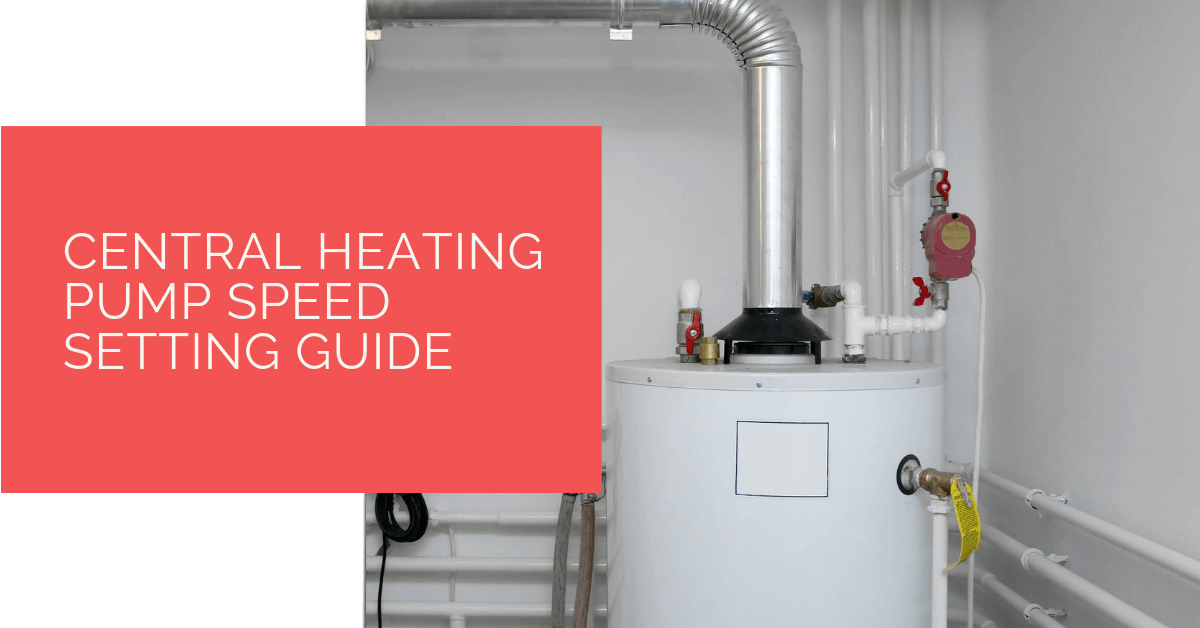
Your central heating pump has a speed dial with three settings, and most people have never touched it. In most UK homes, Speed II is the right starting point. But if your boiler keeps cutting out, certain radiators never quite warm up, or your pipes sound like a percussion instrument, the pump speed could be part of the problem.
This guide explains what each setting does, which one is right for your home, how to change it, and how much electricity each setting actually costs to run. There’s also a troubleshooting section for the most common pump-related symptoms, and a straight answer on whether upgrading to a modern variable-speed pump is worth the money.
Contents
- 1 Key Takeaways
- 2 What Does a Central Heating Pump Do?
- 3 Understanding the Three Speed Settings
- 4 Which Speed Setting Should You Use?
- 5 How to Change the Pump Speed Setting
- 6 How Much Energy Does Each Setting Use?
- 7 Troubleshooting by Symptom
- 8 Should You Upgrade to a Variable-Speed Pump?
- 9 Case Study: Persistent Boiler Lockouts in a Four-Bedroom Detached House
- 10 Expert Insights From Our Heating Engineers About Central Heating Pump Speed
- 11 Frequently Asked Questions
- 11.1 What Speed Should I Set My Central Heating Pump?
- 11.2 What Happens If My Pump Speed Is Set Too Low?
- 11.3 Can I Save Money by Lowering My Pump Speed?
- 11.4 Why Does My Boiler Keep Cutting Out — Is It the Pump?
- 11.5 What Is the Difference Between a 3-Speed and a Variable-Speed Pump?
- 11.6 Is It Worth Replacing My Old Pump With a Variable-Speed Model?
- 11.7 Why Is My Central Heating Pump Making a Noise?
- 11.8 Should I Turn Off My Central Heating Pump in Summer?
- 12 Summing Up
Key Takeaways
- Speed II (medium) is the correct starting point for most UK homes with 3–4 bedrooms and 8–12 radiators.
- Speed I is fine for small properties with 4–6 radiators and short pipe runs.
- Speed III is needed for larger homes, complex systems, or long pipe runs — but uses significantly more electricity.
- Running a pump at Speed III instead of Speed I can cost £30–£60 more per year in electricity.
- If your boiler keeps cutting out, try increasing the pump speed before assuming there’s a fault.
- Never switch off the pump at the isolator while the boiler is still running — always let pump overrun complete first.
- A modern variable-speed (A-rated) pump can cut pump electricity use by 50–80% compared to an old fixed-speed model.
What Does a Central Heating Pump Do?
The circulator pump sits inside your boiler or nearby on the pipework, and its job is to push hot water around the system. Water heated by the boiler flows out through the flow pipe, passes through each radiator, and returns cooler through the return pipe. The pump keeps that circulation going continuously while the heating is on.
Without the pump, the heated water would barely move. In older gravity-fed systems, hot water rose naturally through convection, but modern sealed systems rely entirely on the pump for circulation. The faster the pump pushes water around, the quicker heat reaches every radiator in the house.
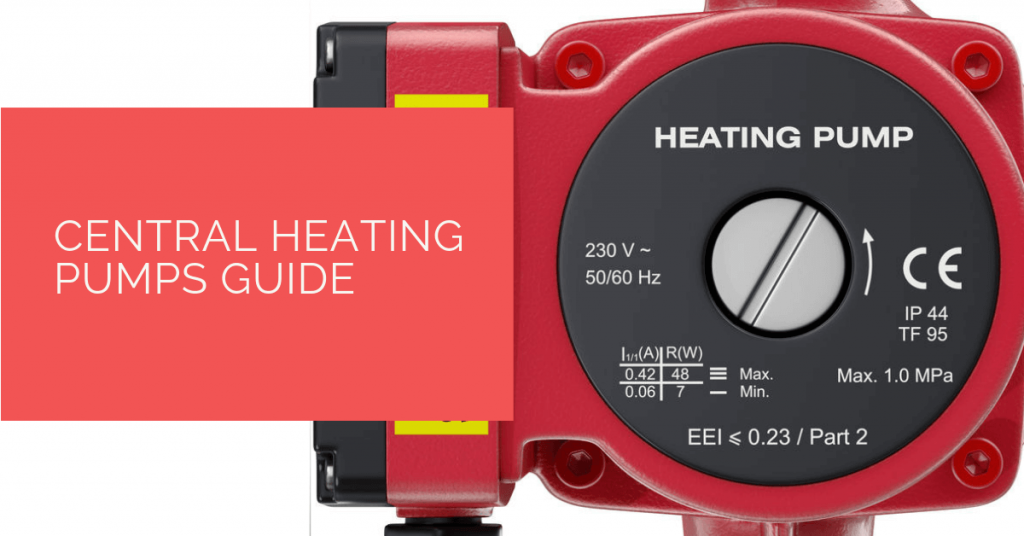
Most UK homes have a pump running at roughly 45–80 watts, mounted inside or adjacent to the boiler. The most common brands you’ll encounter are Grundfos, Wilo, and Lowara — all use a similar three-position speed selector on the pump head or casing.
Understanding the Three Speed Settings
Speed Setting I (Low)
Speed I circulates water slowly through the system. It uses the least electricity and runs quietly. For the right type of system, it’s perfectly adequate — but in the wrong home it causes problems.
It’s suited to smaller properties: think 1–2 bedrooms, 4–6 radiators, and pipework that doesn’t run far from the boiler. In these homes, water doesn’t need to travel far and the system resistance is low. The pump doesn’t have to work hard to maintain good circulation.
The risk with Speed I is that in homes with more radiators or longer pipe runs, the pump can’t push water fast enough to meet the boiler’s minimum flow requirements. The boiler overheats, detects insufficient flow, and shuts off — what’s often called a boiler lockout. If your boiler is cutting out and you’re on Speed I, try Speed II first before calling an engineer.
Speed Setting II (Medium)
Speed II is the default recommendation for most average UK homes. If your property has 3–4 bedrooms and 8–12 radiators, this is almost certainly where you want to start.
It balances efficiency with circulation. The pump moves water at a pace that satisfies most boilers’ minimum flow rate, distributes heat reasonably evenly across the system, and runs at moderate electricity consumption. If your heating is working well and you’ve never changed the pump speed, it’s probably already at Speed II.
Moving from Speed II to Speed I is worth trying if your system seems to work fine and you’d like to reduce running costs slightly. Run the system on Speed I for a few days and check that all radiators are heating evenly and the boiler isn’t cutting out. If it is, go back to Speed II.
Speed Setting III (High)
Speed III pushes water around the system as fast as the pump can manage. It’s designed for homes where Speed II isn’t cutting it: large properties with 5+ bedrooms, 15 or more radiators, or systems with long pipe runs, multiple heating zones, or complex layouts.
Open-vent systems (older systems with a header tank in the loft rather than a sealed pressurised system) sometimes need Speed III because they have higher hydraulic resistance.
The downsides are real. Speed III uses significantly more electricity, and it can cause noise: water hammer, gurgling in the pipes, or vibration from the pump itself. If your system runs fine on Speed II, there’s no benefit to going higher. Save Speed III for situations where you genuinely need it — not as a first instinct when heating feels slow.
Which Speed Setting Should You Use?
| Property Size | Bedrooms | Radiators | Recommended Speed | Notes |
|---|---|---|---|---|
| Small flat or cottage | 1–2 | 4–6 | Speed I | Short pipe runs, low system resistance |
| Average semi-detached or terrace | 3–4 | 8–12 | Speed II | Best starting point for most UK homes |
| Large detached house | 5+ | 13+ | Speed II or III | Start at II; move to III if radiators don’t heat evenly |
| Any size with long pipe runs | Any | Any | Speed II or III | Resistance increases with pipe length |
| Open-vent (gravity) system | Any | Any | Speed III | Higher resistance than sealed systems |
| Underfloor heating zones added | Any | Any | Speed II or III | UFH adds resistance; test on II first |
If you’re unsure, start at Speed II. Check that all radiators heat up fully within 20 minutes of the system firing. Pay particular attention to the radiators furthest from the boiler — if they’re consistently cold or slow compared to those nearby, the pump may need to be on a higher speed. If the boiler keeps cutting out on Speed I or II, try the next setting up.
How to Change the Pump Speed Setting
Before doing anything, turn off the central heating at the boiler and give the system 15–20 minutes to cool. You don’t need to drain the system or open any pipework. This is a straightforward adjustment.
- Locate the pump. It’s usually mounted on the pipework coming out of the boiler, either inside the boiler casing or in an airing cupboard. Look for a cylindrical motor unit with pipes connecting either side of it.
- Find the speed selector. On most Grundfos and Wilo pumps, it’s a rotary dial on the pump head, sometimes covered by a plastic cap. It will be marked I, II, III (or 1, 2, 3). Some newer models have a button instead of a dial.
- Turn or press to select the new speed. A flat-head screwdriver may help with the dial. Turn the dial to the desired position — you should feel a click at each setting.
- Restore power to the boiler and run the heating as normal.
- Test the result. After 20–30 minutes, check the radiators furthest from the boiler. They should be hot to the touch across the whole panel. If they’re cold in patches, you may need to bleed the radiators or increase the pump speed.
If you can’t locate the speed selector or the pump head looks different to what’s described, check the pump manufacturer’s documentation. Most Grundfos, Wilo, and Lowara pumps have easily downloadable installation manuals with diagrams.
How Much Energy Does Each Setting Use?
Circulator pumps are relatively low-wattage devices, but they run for hours every day during the heating season. The difference between Speed I and Speed III adds up over a year.
A typical fixed-speed circulator pump uses approximately:
- Speed I: 25–40 watts
- Speed II: 45–65 watts
- Speed III: 70–95 watts
Annual Running Cost Comparison
Using the current Ofgem unit rate of approximately 27.7p/kWh and assuming the pump runs for an average of 8 hours per day over an 8-month heating season (roughly 1,960 hours per year):
| Speed Setting | Typical Wattage | Annual kWh | Annual Cost (at 27.7p/kWh) |
|---|---|---|---|
| Speed I (low) | 35W | 69 kWh | ~£19 |
| Speed II (medium) | 55W | 108 kWh | ~£30 |
| Speed III (high) | 85W | 167 kWh | ~£46 |
The difference between Speed I and Speed III is roughly £27 per year for a pump running within the wattage ranges above. With older, less efficient pumps running at higher wattages (some older fixed-speed pumps draw 80–120W even on their lowest setting), the gap can be £45–£65 per year.
These figures assume you can actually use the lower speed without affecting system performance. If your home needs Speed III to heat properly, running it at Speed I won’t save money — it’ll just mean cold radiators and potential boiler faults.
Troubleshooting by Symptom
Boiler Keeps Cutting Out
The most common pump-related cause of boiler lockout is insufficient flow — the pump isn’t circulating water fast enough to satisfy the boiler’s minimum flow rate requirement. The boiler detects this, overheats at the heat exchanger, and shuts off as a safety measure.
Try increasing the pump speed by one setting. If you’re on Speed I, try Speed II. If the lockouts stop, you’ve found the issue. If they continue even on Speed III, the pump speed isn’t the problem — consider blocked filters, sludge in the system, a failing pump, or an engineer fault diagnosis.
Radiators Are Cold in Some Rooms
Cold radiators furthest from the boiler often indicate insufficient pump speed, especially in larger homes. The pump isn’t pushing water far enough through the system with enough force.
However, pump speed is only one possible cause. Before increasing the speed, check whether the radiators need bleeding (air trapped in the top of the panel is a very common cause of partial heating) and whether the system is balanced correctly. An unbalanced system — where some radiators are fully open and others barely restricted — can cause uneven heat distribution regardless of pump speed. If you’ve recently had radiators added or the system altered, balancing may be needed.
Pump or Pipes Are Noisy
Noise from the pump circuit is often worse at Speed III and usually takes one of three forms: a continuous hum or vibration from the pump itself, a banging or tapping in the pipes (water hammer), or gurgling and bubbling sounds.
Gurgling almost always means air in the system — bleed the radiators first. Vibration can sometimes be reduced by dropping from Speed III to Speed II if the system can cope. Water hammer at Speed III can indicate that the flow is too fast for the pipework, or that there is a part-closed valve somewhere creating turbulence. Check all lockshield valves are properly open.
If the pump itself makes a persistent grinding or rattling noise on any speed, the bearings may be worn and the pump may need replacing.
Heating Is Slow to Come On
A slow warm-up time can mean the pump speed is too low for the size of the system, but it can equally mean the boiler output isn’t matched to the heat load, the system needs power flushing to clear sludge, or the thermostat is set conservatively. Try increasing the pump speed by one setting and see if warm-up time improves measurably. If not, the pump speed is probably not the limiting factor.
Should You Upgrade to a Variable-Speed Pump?
If your pump is more than 10 years old, an upgrade to an A-rated variable-speed pump is almost certainly worth considering. The efficiency difference is substantial.
Old fixed-speed pumps run at constant wattage regardless of demand. A variable-speed pump — the Grundfos Alpha and Wilo Stratos are the most common replacements in UK homes — uses an electronic control to vary the motor speed based on the actual flow demand of the system. When fewer zones are calling for heat, the pump slows down. When the system is working hard, it ramps up. This is called proportional pressure or constant pressure control.
The electricity savings are significant: variable-speed pumps typically use 5–20 watts in normal operation, compared to 35–95 watts for a fixed-speed equivalent. That’s a saving of 50–80% on pump electricity costs annually. In cash terms, switching from an older fixed-speed pump running at 80W to a modern variable-speed pump could save £30–£45 per year in electricity.
A replacement pump typically costs £80–£180 for the unit, plus £80–£150 for a plumber to fit it. Payback time is usually 3–5 years, after which you’re saving money every year. The pumps themselves last 10–15 years, so the net saving over a pump’s lifetime is meaningful.
Variable-speed pumps also reduce noise (lower flow speeds at partial load), reduce wear on valves and fittings, and often come with a 2-year or longer warranty as standard.
One thing to note: a variable-speed pump doesn’t have a traditional speed dial. It has a mode selector — usually constant pressure, proportional pressure, or a fixed-speed fallback for commissioning. Your heating engineer should set the correct mode when fitting it; in most sealed UK systems, proportional pressure mode is the right choice.
Case Study: Persistent Boiler Lockouts in a Four-Bedroom Detached House
Background
A homeowner in Cheshire had been experiencing intermittent boiler lockouts for several months. The boiler, a combination boiler installed five years earlier, would fire up and then cut out after 10–15 minutes, displaying a flow fault error. An engineer visit had found no fault with the boiler itself.
Project Overview
The property was a four-bedroom detached house with 14 radiators across two floors and a long pipe run to a utility room extension at the back. The circulator pump, a Grundfos UPS fixed-speed model, had been running on Speed II since installation. On inspection, we noticed the pump speed had likely been set at commissioning for a smaller property and never adjusted when the extension was added two years later.
Implementation
We changed the pump speed from II to III. We also checked the lockshield valve on the utility room radiator, which had been fully closed (forgotten during a painting job), and reopened it. The system was bled throughout before testing.
Results
No further boiler lockouts in the following three months. The utility room now heats properly for the first time since the extension was built. Given the property’s size, we also recommended the homeowner consider upgrading to a variable-speed pump when this one reaches end of life — it would recover its cost within four years at current electricity prices.
Expert Insights From Our Heating Engineers About Central Heating Pump Speed
One of our senior heating engineers with over 25 years of experience in domestic central heating installation and maintenance shared the following:
“Most homeowners don’t know their pump has a speed setting, and most engineers don’t explain it at commissioning. Speed II is usually fine, but if you’ve extended the house, added radiators, or had an open-vent system converted to sealed, there’s a good chance the pump was left on whatever setting it came on. It’s always one of the first things I check when someone reports slow heating or a boiler that keeps cutting out.”
“The variable-speed pump upgrade is genuinely worth it if you have an old pump. A lot of homes still have pumps from the nineties running at 80, 90 watts constantly. A modern Grundfos Alpha or Wilo equivalent will do the same job on 10 or 15 watts most of the time. The payback is real. The main thing to get right is the mode setting — I see a lot of engineers leaving it in fixed-speed mode after installation, which defeats the purpose entirely.”
“The one thing people always get wrong is switching off the pump at the fuse spur while the boiler is still running. The pump needs to keep running briefly after the boiler fires off to dissipate heat from the heat exchanger — this is called pump overrun. Cut the pump power prematurely and you risk overheating the heat exchanger. Always let the system power down naturally.”
Frequently Asked Questions
What Speed Should I Set My Central Heating Pump?
For most UK homes with 3–4 bedrooms and 8–12 radiators, Speed II (medium) is the right starting point. Small properties with 4–6 radiators can often use Speed I. Larger homes with 5+ bedrooms, long pipe runs, or complex systems may need Speed III. Start at Speed II, check that all radiators heat evenly, and adjust up or down based on results.
What Happens If My Pump Speed Is Set Too Low?
If the pump speed is too low for your system, the boiler may not receive enough water flow and will cut out (lockout) as a safety response. Radiators — especially those furthest from the boiler — may also heat unevenly or stay cold. Increasing the speed by one setting usually resolves both problems if pump speed is the cause.
Can I Save Money by Lowering My Pump Speed?
Yes, if your system can manage on a lower setting. The difference in electricity cost between Speed I and Speed III is roughly £22–£45 per year for a typical pump, using current UK electricity rates (~27.7p/kWh). Only lower the speed if you’ve confirmed the heating still works properly at the reduced setting — radiators heat evenly and the boiler doesn’t cut out. If you need to go back up, the saving disappears.
Why Does My Boiler Keep Cutting Out — Is It the Pump?
It could be. Boiler lockouts caused by insufficient flow are a common result of pump speed being set too low for the system. Try increasing the pump speed by one setting. If lockouts stop, pump speed was the issue. If they continue even on Speed III, the problem likely lies elsewhere — a blocked filter, sludge build-up, a failing pump, or a boiler fault that needs an engineer to diagnose.
What Is the Difference Between a 3-Speed and a Variable-Speed Pump?
A 3-speed pump runs at fixed power levels: low, medium, or high. A variable-speed pump automatically adjusts its speed based on demand — slowing down when the system doesn’t need full circulation and speeding up when it does. Variable-speed pumps use much less electricity (typically 5–20W vs 35–95W for fixed-speed) and are significantly cheaper to run over time. Most modern replacement pumps are variable-speed.
Is It Worth Replacing My Old Pump With a Variable-Speed Model?
Usually yes, especially if your pump is more than 10 years old. The electricity savings (50–80% less than an old fixed-speed pump) typically repay the cost of the pump and installation within 3–5 years. After that, you’re saving money every year. A new pump also usually comes with a 2-year warranty and will last 10–15 years. It’s a practical upgrade that pays for itself.
Why Is My Central Heating Pump Making a Noise?
Gurgling usually means air in the system — bleed the radiators. A vibration or hum can sometimes be reduced by lowering the pump speed from III to II. Water hammer (banging in the pipes) at Speed III can indicate the flow rate is too fast for the pipework, or that a valve is partially closed causing turbulence. Grinding or rattling noises suggest the pump bearings may be worn and the pump may need replacing.
Should I Turn Off My Central Heating Pump in Summer?
You don’t need to manually switch it off — the system’s controls do this automatically when there’s no heating call. However, if the pump sits completely idle for months, the impeller can seize. Many heating engineers recommend running the heating briefly once or twice during summer (some boilers have a pump exercise function that does this automatically) to prevent the pump from sticking when you need it in autumn.
Summing Up
The right pump speed for most UK homes is Speed II. It’s the setting that balances circulation, boiler performance, and running costs across the widest range of system sizes. If your heating is working well, leave it there. If radiators are struggling to heat up or your boiler keeps cutting out, try Speed III. If you have a small property and want to save a few pounds on electricity each year, Speed I may be worth testing.
The bigger opportunity, if your pump is old, is upgrading to a variable-speed model. The electricity savings are real, the payback period is reasonable, and you’ll never need to think about speed settings again — the pump adjusts itself. Ask your heating engineer about it at your next boiler service.
Updated