
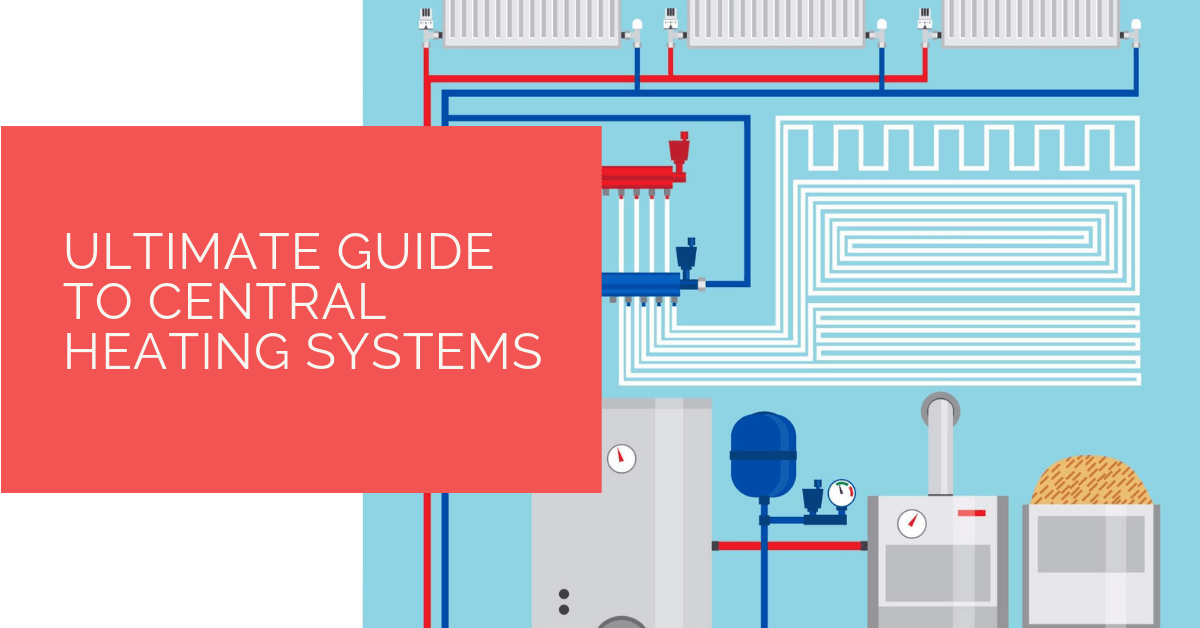
Central heating is one of the most significant systems in any UK home — and one of the least understood until something goes wrong. Whether you’re comparing boiler types before a replacement, trying to work out why some radiators heat up and others don’t, or weighing up heat pumps against gas, the fundamentals are the same: you need to know what you have, what it costs to run, and how to keep it working.
This guide covers every main type of central heating system available in the UK in 2026, what each costs to install and run, how to maintain what you have, and what the realistic options look like if you’re considering switching.
Key Takeaways
- Gas central heating with a modern condensing boiler remains the cheapest whole-home heating option for the 85% of UK homes connected to the gas grid
- The proposed 2035 ban on new gas boiler installations was scrapped by the Labour government in January 2026 — there is no current legal requirement to replace your gas boiler
- Heat pumps are the government-backed low-carbon alternative: the Boiler Upgrade Scheme offers £7,500 towards installation (£9,000 for oil/LPG homes)
- Electric central heating is viable but expensive to run — at current electricity prices of ~24.7p/kWh versus gas at ~5.9p/kWh, direct electric heating costs roughly four times as much per unit
- Combi boilers suit smaller homes with one or two bathrooms; regular (heat-only) boilers with a hot water cylinder suit larger homes with higher simultaneous hot water demand
- Annual servicing by a Gas Safe registered engineer is the single most important maintenance task — it extends boiler life, maintains efficiency, and keeps the warranty valid
- Cold radiator bottoms (sludge), cold radiator tops (trapped air), and pressure drops are the three most common central heating problems — all are DIY-fixable in most cases
How Central Heating Works
A central heating system heats water at a single point — the boiler, heat pump, or other heat source — and circulates it around the property through a network of pipes to radiators or underfloor heating in each room. Each radiator transfers heat from the water to the room air as the water passes through. The cooled water returns to the heat source to be reheated, and the cycle continues.
A pump (the central heating circulator) drives the water around the system. The room thermostat tells the boiler when to fire and when to stop. Thermostatic radiator valves (TRVs) on individual radiators let you control temperatures room by room — though they work correctly only if the system is balanced, which many aren’t.
Open-Vented vs Sealed Systems
Older systems are open-vented: a small feed-and-expansion tank in the loft maintains water pressure and accommodates expansion. Modern systems are sealed and pressurised — no loft tank required. If your boiler has a pressure gauge (typically reading 1 to 1.5 bar when cold), you have a sealed system. Sealed systems are simpler to maintain and more compatible with modern boilers and heat pumps.
Types of Central Heating Systems
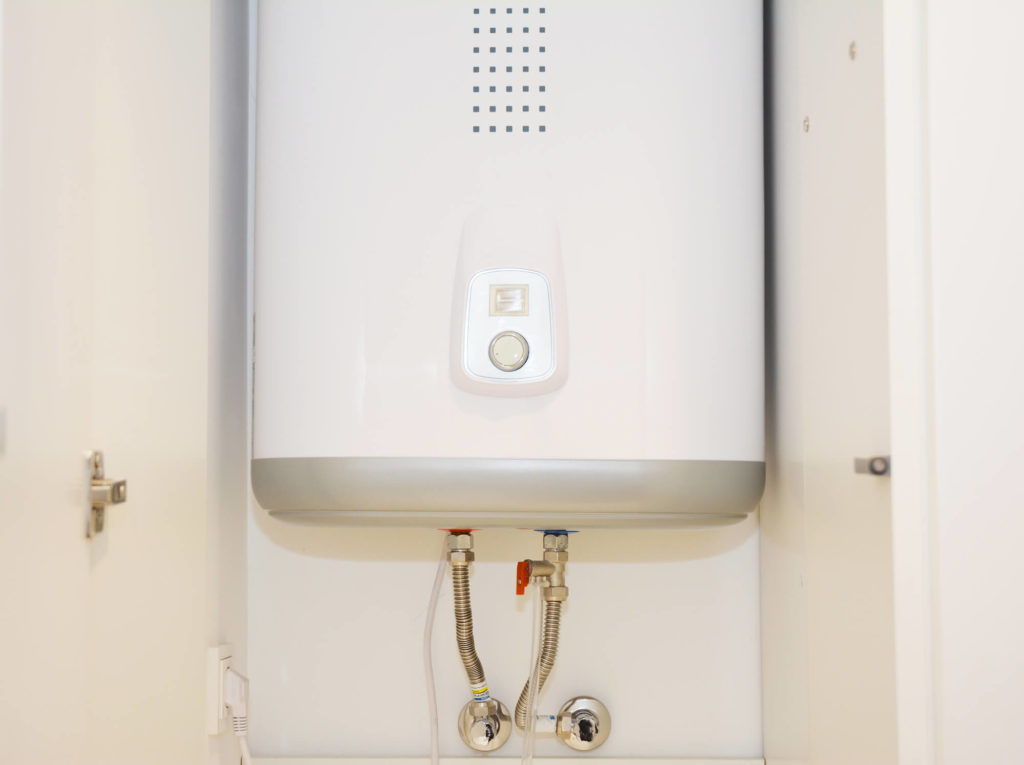
Gas Boiler — Combi
Combination (combi) boilers are the most common type in UK homes, particularly in smaller properties. They heat water on demand for both central heating and domestic hot water — no separate cylinder needed. Hot water arrives immediately at any tap without waiting for a tank to heat up.
Best for: Flats, terraced houses, and properties with one or two bathrooms where simultaneous hot water demand is low.
Running cost: Approximately 6.5–7p per kWh of useful heat at current gas prices (~5.9p/kWh), assuming a modern A-rated condensing boiler at around 90% efficiency.
Limitation: Flow rate drops when multiple outlets demand hot water simultaneously. Not the right choice for a large house with multiple bathrooms in regular use.
Gas Boiler — Regular (Heat-Only)
A regular or conventional boiler heats water stored in a separate hot water cylinder. Cold water feeds from a loft tank (open-vented) or directly from the mains via an unvented cylinder. Multiple bathrooms can draw hot water simultaneously at good flow rates.
Best for: Larger homes with multiple bathrooms, or properties where the existing pipework configuration makes switching to a combi impractical or expensive.
Limitation: You can exhaust the cylinder before it reheats (typically 30–60 minutes). Unvented cylinders resolve this but require a qualified engineer to install and service.
Gas Boiler — System Boiler
A system boiler sits between a combi and a regular: it heats water from the mains like a combi but stores it in a cylinder like a regular. No loft tank needed. Good flow rates, mains pressure, and compatible with solar thermal panels on the cylinder coil.
Best for: Larger homes wanting mains-pressure hot water without the complication of an open-vented system.
Oil Central Heating
Oil boilers work on the same principle as gas boilers but burn heating oil (kerosene) stored in an external tank. Common in rural areas without gas grid access. Modern oil condensing boilers are efficient, but oil prices are more volatile than gas and the infrastructure — tank maintenance, delivery logistics — adds complexity.
Running cost: Approximately 8–11p per kWh of useful heat, depending on current oil prices. Significant price volatility makes budgeting difficult.
Best for: Rural properties without gas grid access where heat pump installation isn’t practical or has been deferred.
LPG Central Heating
LPG (liquefied petroleum gas) systems use propane or butane stored in large tanks. Like oil, they’re for off-grid properties. LPG is generally more expensive per unit than mains gas and more convenient than oil for properties with limited outdoor tank space.
Electric Central Heating
Electric boilers circulate water through radiators as a gas boiler would, and electric storage heaters distribute heat without pipework. Both avoid the need for gas or oil infrastructure and have no flue requirement.
Running cost: The main constraint. At ~24.7p/kWh for electricity versus ~5.9p/kWh for gas, running an electric boiler as a whole-home replacement costs roughly four times as much per unit of heat. Electric central heating makes economic sense mainly for small flats, off-grid properties where other options aren’t feasible, or as part of a time-of-use tariff strategy with storage heaters.
Heat Pump Central Heating
Air source and ground source heat pumps extract heat from outdoor air or the ground rather than generating it by combustion. For every 1 kWh of electricity consumed, a heat pump delivers 2.5 to 4 kWh of heat — making them far more efficient than direct electric heating.
At current electricity prices, a heat pump with a Seasonal Coefficient of Performance (SCOP) of 3.5 produces heat at roughly 7.1p/kWh — broadly comparable to a gas boiler. The case is stronger for oil and LPG homes, where heat pumps are typically significantly cheaper to run.
Upfront cost: Air source heat pumps cost £9,000–£17,000 installed. Ground source systems cost £20,000–£35,000. The Boiler Upgrade Scheme offers £7,500 (or £9,000 for oil/LPG homes) towards installation. See our heat pump grants guide for the full eligibility detail.
Best for: Well-insulated properties, particularly those with underfloor heating or large radiators that allow the lower flow temperatures heat pumps operate at most efficiently.
Hybrid Heat Pump Systems
A hybrid system combines a heat pump with an existing gas boiler. The heat pump handles heating during milder weather when it runs most efficiently; the gas boiler takes over during the coldest days. This reduces gas consumption without the full commitment of a heat-pump-only system and works well with existing radiators sized for higher flow temperatures.
Biomass Boiler Central Heating
Biomass boilers burn wood pellets, chips, or logs, connecting to a standard radiator system. They’re an option for rural off-grid properties with space for fuel storage and are classed as low-carbon for policy purposes. Installation is complex, fuel storage is substantial, and maintenance is higher than gas or heat pump systems. The BUS offers £5,000 towards biomass boilers for eligible rural properties.
District Heating
District heating pipes hot water from a central energy source to multiple buildings — common in new housing developments and some urban regeneration areas. If your property is on a district heating network, your heating is managed by the network operator rather than equipment you own. Government consumer protections for heat network customers were strengthened in 2024-25.
Running Cost Comparison
| System Type | Approx. Cost per kWh of Heat | Annual Cost (typical 3-bed, ~15,000 kWh/yr) |
|---|---|---|
| Gas boiler (modern condensing) | ~6.5p | ~£975 |
| Oil boiler | ~9–11p | ~£1,350–£1,650 |
| LPG boiler | ~10–13p | ~£1,500–£1,950 |
| Heat pump (SCOP 3.5) | ~7.1p | ~£1,065 |
| Heat pump (SCOP 3.0) | ~8.2p | ~£1,230 |
| Storage heaters (Economy 7, ~11p/kWh overnight) | ~12–14p | ~£1,800–£2,100 |
| Direct electric (standard rate) | ~24.7p | ~£3,705 |
Actual costs vary significantly with property size, insulation, occupancy, and thermostat settings. These figures assume a three-bedroom semi-detached with average insulation.
Boiler Efficiency Ratings
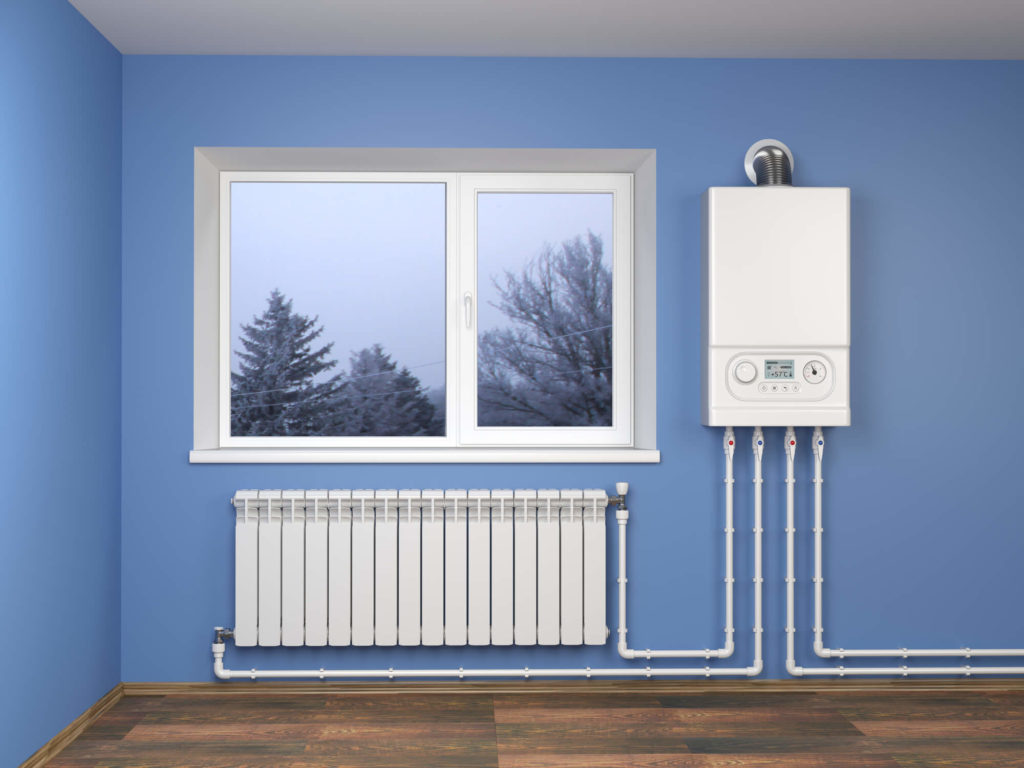
All new UK gas and oil boilers must be condensing boilers, recovering heat from flue gases that older boilers wasted. Condensing boilers carry an ErP (Energy-related Products) efficiency rating. A-rated boilers achieve 90%+ efficiency.
When to replace: A well-serviced boiler lasts 10–15 years. A boiler older than 15 years is likely running at 70–80% efficiency. Replacing it with an A-rated model typically reduces gas consumption by 10–15%, with a payback period of 5–8 years in fuel savings.
Combi vs regular: Switching from a regular boiler to a combi frees up the hot water cylinder space. But it requires pipework changes and isn’t always the right call for larger homes — get a heating engineer’s assessment first.
Maintaining Your Central Heating System
Annual Boiler Service
A Gas Safe registered engineer should service your boiler every year. This covers the heat exchanger, burner, flue, controls, and safety devices. It maintains manufacturer’s warranty (usually required), keeps efficiency up, and catches developing faults before they become breakdowns. Typical cost: £70–£120.
Check and Repressurise
Sealed systems lose pressure slowly over time. The gauge should read 1–1.5 bar when cold. Below 1 bar, repressurise via the filling loop — a small valve usually near the boiler. Your manual covers the process; it takes about two minutes. If pressure drops repeatedly, there’s a leak somewhere that needs finding.
Bleed Radiators
Air trapped in radiators leaves cold spots at the top. Use a radiator bleed key to open the bleed valve until water runs — have a cloth ready. Work from the top floor down. See our guide: how to bleed a radiator.
Balance Radiators
If some radiators are significantly hotter than others, the system needs balancing. Adjust the lockshield valves to restrict flow to closer radiators and allow more to distant ones. See our guide: how to balance radiators.
Top Up Inhibitor
Central heating inhibitor prevents corrosion and sludge. It degrades over time. DIY test kits are available, or an engineer can check during a service. Depleted inhibitor leads to magnetite sludge, cold radiator bottoms, and eventually heat exchanger damage.
Powerflush and Magnetic Filter
If radiators have persistent cold spots at the bottom, a powerflush removes the accumulated sludge using high-velocity water and chemicals (£300–£600 depending on system size). After flushing, fit a magnetic filter to capture particles before they accumulate again. This is particularly important before fitting a new boiler or heat pump on an old system.
Troubleshooting Common Problems
| Symptom | Most Likely Cause | Action |
|---|---|---|
| Radiators cold at bottom, hot at top | Sludge build-up | Powerflush; fit magnetic filter |
| Radiators cold at top, warm at bottom | Trapped air | Bleed radiators |
| Some radiators cold throughout | System unbalanced or zone valve fault | Balance lockshield valves; check zone valve |
| Boiler pressure dropping repeatedly | Leak in system or faulty PRV | Inspect pipework; call engineer if no visible leak |
| Noisy pipes or radiators | Air, pump speed, or limescale | Bleed; check pump speed setting; descale if hard water area |
| Boiler fires but no heat to radiators | Pump failure or zone valve stuck | Check pump is running; call engineer |
| Hot water only, no central heating | Zone valve or programmer fault | Check programmer settings; inspect mid-position valve |
For pump-speed-related issues, see our detailed guide: central heating pump speed settings explained.
Case Study: Upgrading an Ageing Gas System in a 1970s Detached House in Cheshire
Background
A couple in Cheshire had lived in their 1970s four-bedroom detached house for 12 years. The original gas boiler had been replaced around 2009 but was now 16 years old and had needed two repairs in the past three years. Several radiators had persistent cold spots at the bottom and the system had never been power flushed.
Project Overview
The question was whether to repair the existing boiler again or replace both the boiler and address the sludge problem properly. Budget was a consideration but not the deciding factor.
Implementation
A Gas Safe engineer serviced the boiler and confirmed the heat exchanger was showing significant wear. A powerflush cleared substantial sludge from four radiators — including the two worst performers that had been essentially decorative for two winters. A magnetic filter was fitted to the return pipe.
The boiler was replaced simultaneously with a new A-rated combi. The engineer’s assessment was that another failure within 12 months was likely given the heat exchanger condition. The new boiler came with a 10-year parts warranty.
Results
All radiators now heat evenly. Gas consumption in the following year fell by around 12% — attributable partly to the more efficient boiler and partly to improved system flow after flushing. The couple noted the house reaches temperature faster and holds it more consistently than before.
Expert Insights From Our Heating Engineers About Central Heating Systems
One of our senior heating engineers with over 25 years of experience across domestic and commercial heating systems shared his view.
“The biggest single mistake homeowners make is skipping the annual service. A service costs £80 to £100 and takes an hour. A heat exchanger replacement — when the boiler breaks down — costs £500 to £800. Full replacement if the exchanger is beyond repair runs to £2,000 or more. The service is the cheapest insurance available. I’ve seen boilers that never had a service fail at eight years old; I’ve seen serviced boilers running well at eighteen.”
“On the heat pump question: people hear that the gas boiler ban was scrapped and assume nothing has changed. The market has changed. Off-grid properties on oil or LPG now have a £9,000 grant available and genuinely better running economics with a heat pump. For gas homes, the economics are close but not compelling unless you’re replacing the boiler anyway and have good insulation. The key question isn’t ideology — it’s heat loss. Get a proper heat loss calculation before deciding.”
“Don’t ignore sludge. Cold radiator bottoms are not a nuisance — they’re a warning. Magnetite settling in radiators is also settling in your boiler heat exchanger. A powerflush and magnetic filter done properly is a few hundred pounds. A new boiler because the exchanger is destroyed is a few thousand.”
Frequently Asked Questions
Is the gas boiler being banned in the UK?
No mandatory ban is currently in force. The proposed 2035 deadline for phasing out new gas boiler installations was scrapped by the Labour government in January 2026. There is no legal requirement to replace a working gas boiler, and no confirmed future date for a ban on new installations. The government’s position in 2026 is to encourage voluntary switching through grants (the Boiler Upgrade Scheme) rather than compulsion.
What is the most efficient type of central heating in 2026?
For homes on the gas grid, a modern A-rated condensing boiler is still the most cost-efficient option at current energy prices — producing useful heat at around 6.5p/kWh. A well-specified heat pump (SCOP 3.5) produces heat at roughly 7.9p/kWh — slightly more expensive but close, and improving as electricity prices fall relative to gas. Heat pumps are already cheaper to run than oil or LPG systems for most properties.
How long does a central heating boiler last?
A well-maintained gas boiler typically lasts 10–15 years, sometimes longer. Annual servicing is the single biggest factor — boilers that are never serviced often fail at 8–10 years. A new boiler should carry a manufacturer’s warranty of 5–10 years provided annual service conditions are met.
Why are my radiators cold at the bottom?
Cold at the bottom almost always means magnetite sludge has settled in the lower section of the radiator, blocking water flow. This sludge comes from corrosion inside the system — steel pipes and radiators slowly corrode and shed particles that circulate until they settle. The fix is a powerflush to remove the sludge, followed by fitting a magnetic filter to prevent recurrence. Don’t leave it — the same sludge is circulating through your boiler heat exchanger.
What pressure should my central heating be at?
A sealed system should read 1–1.5 bar on the boiler pressure gauge when cold (not running). When hot, pressure rises slightly — typically to 1.5–2 bar. Below 1 bar when cold means repressurise via the filling loop. Consistently above 2.5 bar when hot suggests the pressure relief valve may be opening — get an engineer to check, as repeated pressure release can point to an expansion vessel fault.
Can I replace a gas boiler with a heat pump?
Yes, in most homes. Air source heat pumps can replace gas boilers, but the installation is more involved than a straight swap. Heat pumps deliver heat at lower flow temperatures — typically 35–45°C versus 60–70°C for a gas boiler — which means larger radiators or underfloor heating are often needed to distribute equivalent warmth. A heat loss survey and radiator assessment should be done before committing. The Boiler Upgrade Scheme offers £7,500 towards the cost.
How much does central heating cost to run per year?
For a typical three-bedroom semi-detached with gas central heating, annual heating and hot water costs run approximately £900–£1,300 at current gas prices, depending on insulation, thermostat settings, and occupancy. An A-rated boiler consuming around 15,000 kWh of gas per year at 5.9p/kWh works out to roughly £885 in gas costs before standing charges. Oil central heating typically costs 40–60% more at current prices; LPG is broadly similar to oil.
Summing Up
For the majority of UK homeowners on the gas grid, a well-maintained gas boiler remains the most cost-effective central heating option in 2026. With no gas boiler ban in force or imminent, there’s no urgency to switch — but there is real value in keeping what you have running properly through annual servicing, pressure management, and dealing with sludge before it causes expensive damage.
For those on oil or LPG, the economic case for switching to a heat pump has strengthened significantly. The £9,000 Boiler Upgrade Scheme grant combined with lower running costs makes a compelling argument for off-grid properties with reasonable insulation.
Whatever system you have, routine maintenance is the best investment you can make in it. A properly serviced, balanced, and filtered system will run efficiently for 15 years or more.
Updated