
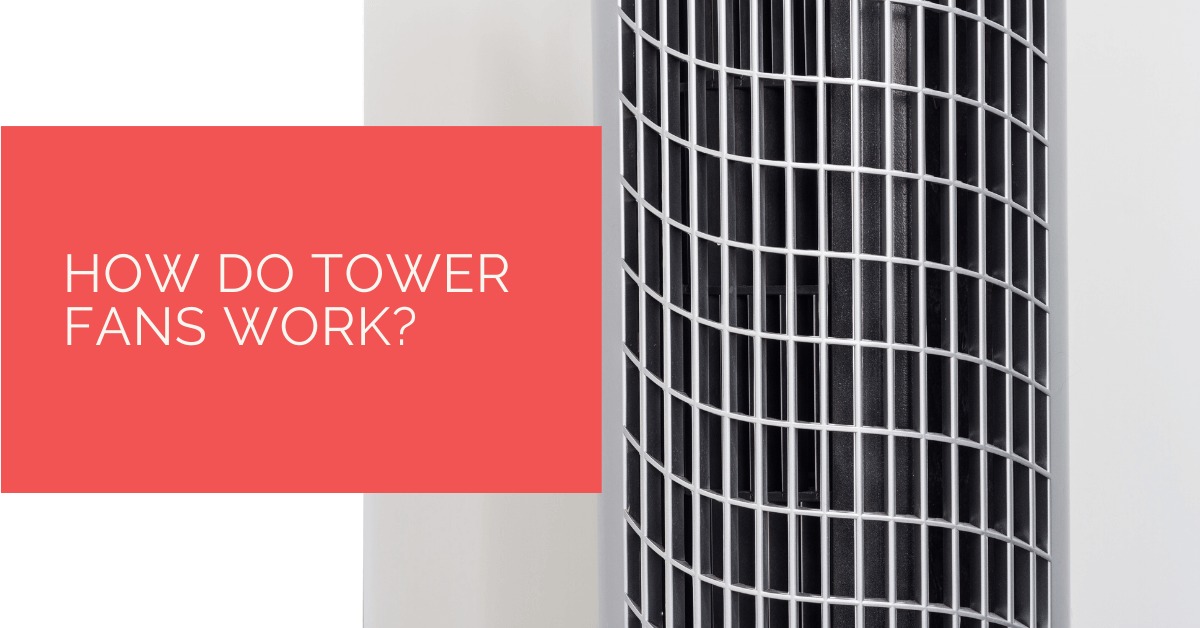
Tower fans work by drawing air into the body of the fan, pushing it through a vertical internal impeller, and sending it out through a tall narrow outlet. The slim shape makes the airflow feel more like a column or sheet of moving air than the circular blast you get from a traditional pedestal fan.
The important thing to understand is that a tower fan does not refrigerate the air. It makes you feel cooler by moving air across your skin, helping sweat evaporate and improving air circulation. In a hot UK bedroom or living room, that can be enough for comfort. In a sealed room during a heatwave, it is not the same as air conditioning.
Contents
- 1 Key Takeaways
- 2 What Happens Inside A Tower Fan?
- 3 Why A Tower Fan Feels Cool
- 4 How Oscillation Changes The Airflow
- 5 Tower Fans Vs Pedestal Fans Vs Desk Fans
- 6 Are Tower Fans Good For Bedrooms?
- 7 Features That Actually Matter
- 8 Cleaning And Maintenance
- 9 Where To Put A Tower Fan
- 10 Expert Insights From Our HVAC Engineers
- 11 Frequently Asked Questions
- 11.1 Do Tower Fans Actually Cool The Air?
- 11.2 How Does A Tower Fan Move Air Without Visible Blades?
- 11.3 Are Tower Fans Better Than Pedestal Fans?
- 11.4 Are Tower Fans Good For Bedrooms?
- 11.5 Do Tower Fans Use Much Electricity?
- 11.6 Why Does My Tower Fan Get Dusty?
- 11.7 Can A Tower Fan Replace Air Conditioning?
- 11.8 Where Should I Place A Tower Fan?
- 12 Summing Up
Key Takeaways
- Tower fans use an internal cylindrical impeller or blade assembly to move air through a vertical outlet.
- They do not actively lower room temperature like an air conditioner.
- The cooling feeling comes from airflow over your skin and better air circulation.
- Oscillation spreads the airflow across a wider area rather than cooling one fixed spot.
- Noise level, cleaning access, stability, timer settings and sleep mode matter more than looks alone.
What Happens Inside A Tower Fan?
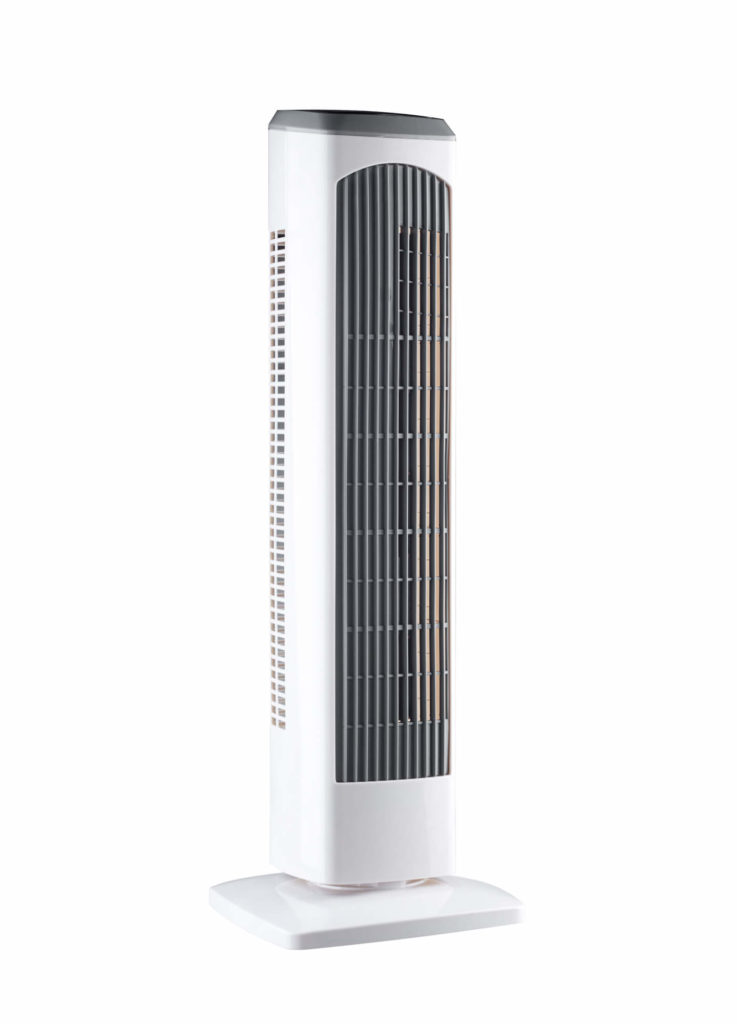
Most tower fans have air intake vents on the rear or sides of the body. Behind the casing is a vertical fan drum, often described as a cylindrical impeller. When the motor turns the impeller, air is pulled in and forced out through the front grille.
Because the outlet is tall and narrow, the airflow is spread over more height than a small desk fan. This can make tower fans feel pleasant beside a sofa, bed or desk, especially when the fan oscillates.
Some “bladeless” tower fans still have blades hidden in the base or body. The difference is that the moving parts are concealed and the airflow is channelled through a shaped outlet. They are not literally blade-free inside.
Why A Tower Fan Feels Cool
A tower fan cools the person more than the room. Moving air helps moisture evaporate from your skin, and evaporation takes heat away from the body. That is why a fan can feel refreshing even though the air temperature measured by a thermometer has barely changed.
This also explains why fans feel less effective in very humid conditions. When the air is already full of moisture, sweat evaporates more slowly. The fan still moves air, but the body-cooling effect is weaker.
If you need to lower the actual room temperature, compare fans with portable air conditioners. The two appliances solve different problems.
How Oscillation Changes The Airflow
Oscillation turns the fan from side to side so the airflow sweeps across a wider area. This is useful in living rooms, shared offices and bedrooms where more than one person wants some airflow.
A fixed fan gives stronger airflow in one direction. Oscillation gives wider but less constant airflow. Neither is automatically better. If you are sitting at a desk, fixed direction may be more comfortable. If the fan is cooling a seating area, oscillation may feel more even.
Look at the oscillation angle before buying. Some tower fans sweep around 60 degrees, while others go wider. A wider angle can help in larger rooms but may also mean each person gets less continuous airflow.
Tower Fans Vs Pedestal Fans Vs Desk Fans
Tower fans are slim and easy to place in corners or beside furniture. Pedestal fans often move more air and can be height-adjusted, but they take up more visual and floor space. Desk fans are compact and direct, but they cover a smaller area.
| Fan Type | Strength | Trade-Off |
|---|---|---|
| Tower fan | Slim, oscillating, good for bedrooms and living rooms | Can be harder to clean internally |
| Pedestal fan | Strong adjustable airflow | Bulkier and more visually obvious |
| Desk fan | Cheap, direct and compact | Limited coverage |
| Air conditioner | Actually lowers room temperature | More expensive, noisier and needs venting or installation |
For a fuller product comparison, see our guide to the best tower fans.
Are Tower Fans Good For Bedrooms?
Tower fans can be good for bedrooms because they are slim, stable and often include timers, remote controls and sleep modes. A timer is useful because you may only need airflow while falling asleep, not all night.
Noise matters. Some tower fans have a low hum, while others create a higher-pitched airflow sound. Decibel ratings help, but the tone of the sound also affects comfort. If you are sensitive to noise, choose a model with a quiet night mode and dimmable display.
Avoid placing the fan where it blows directly into your face all night. A gentle oscillating airflow across the room is usually more comfortable than a constant blast at close range.
Features That Actually Matter
Useful features include multiple fan speeds, a timer, oscillation, remote control, stable base, carry handle, washable pre-filter where fitted and a display that can be dimmed or switched off.
Air purification claims need careful reading. Some tower fans include filters, but a basic fan with a small dust filter is not the same as a dedicated air purifier. If air quality is the main issue, read our guide to air purifiers and air conditioners before choosing.
Misting and evaporative features can help in dry heat but may be less suitable in already humid rooms. Adding moisture to a damp room can make comfort worse and may increase condensation risk.
Cleaning And Maintenance
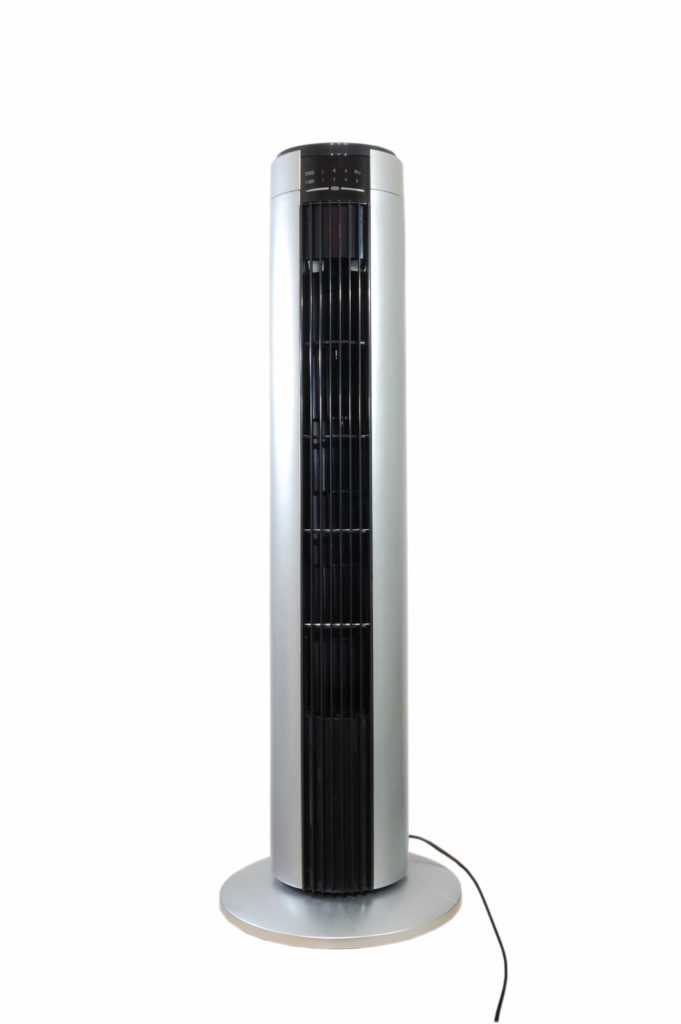
Tower fans can collect dust on intake grilles and internal blades. Dust reduces airflow and can make the fan noisier. Wipe the exterior regularly and vacuum the intake vents with a brush attachment.
Some models allow partial disassembly for deeper cleaning. Others do not. If you have pets, allergies or a dusty home, cleaning access should be part of the buying decision.
Always unplug the fan before cleaning. Do not spray water into the motor or controls. If the fan rattles, smells hot or becomes unstable, stop using it until the cause is clear.
Where To Put A Tower Fan
Place the fan where it can draw air freely through the rear intake and blow across the occupied part of the room. Avoid pressing it against curtains, walls or furniture, as this restricts intake airflow.
In the evening, a tower fan can work well near a cooler hallway or open window if outdoor air is cooler than indoor air. During the hottest part of the day, it is usually better to keep sun-facing windows covered and use the fan for personal cooling.
In bedrooms, position the fan so it sweeps across the bed rather than blasting one person constantly. In living rooms, place it where oscillation reaches the seating area without being blocked by a sofa.
Case Study: Choosing Between A Tower Fan And Portable AC
Background
A homeowner wanted better summer comfort in a small bedroom but did not want a bulky appliance.
Project Overview
The room became warm at bedtime but cooled overnight once windows were opened. The main issue was comfort while falling asleep, not all-day overheating.
Implementation
A quiet tower fan with a sleep timer was placed near the doorway to move cooler evening air across the room. Blackout curtains reduced afternoon heat gain.
Results
The tower fan was enough for most nights. A portable air conditioner would have been more powerful, but unnecessary for the actual problem.
Expert Insights From Our HVAC Engineers
One of our senior HVAC engineers with over 18 years of experience says fans are best judged by use case. If the room air is too hot and trapped, a fan cannot remove heat. If the person simply needs airflow, a tower fan can be a low-cost, low-energy solution.
He recommends checking airflow path, noise and cleaning access before choosing a model. A sleek fan that is difficult to clean or too bright for a bedroom often becomes irritating after the first week.
Frequently Asked Questions
Do Tower Fans Actually Cool The Air?
No. A tower fan moves air but does not refrigerate it. It makes you feel cooler by increasing airflow over your skin and helping sweat evaporate. In a hot, still room, that can improve comfort, but it will not reduce the room temperature like air conditioning.
How Does A Tower Fan Move Air Without Visible Blades?
Most tower fans have hidden blades or a cylindrical impeller inside the body. The motor spins the internal fan, drawing air in through vents and pushing it out through the front outlet. The blades are still there; they are simply enclosed inside the casing rather than exposed like a pedestal fan.
Are Tower Fans Better Than Pedestal Fans?
They are better for slim spaces, bedrooms and discreet room cooling. Pedestal fans often provide stronger adjustable airflow, but they take up more space and are more visually obvious. The better choice depends on whether you value footprint, quietness, coverage or raw airflow most.
Are Tower Fans Good For Bedrooms?
Yes, if they are quiet and have useful night features such as a timer, low-speed setting and dimmable display. Avoid placing the fan too close to your face while sleeping. Also consider outlet height, as some tower fans blow strongly at torso level but less directly over a high bed.
Do Tower Fans Use Much Electricity?
Most tower fans use much less electricity than portable air conditioners. Running cost depends on wattage and hours used, but fans are usually a low-cost comfort option compared with active cooling.
Why Does My Tower Fan Get Dusty?
The fan constantly pulls room air through intake vents, so dust, hair and fibres collect on grilles and internal parts. Regular vacuuming and wiping help maintain airflow.
Can A Tower Fan Replace Air Conditioning?
Only if you need airflow rather than actual temperature reduction. During extreme heat, a tower fan may not be enough, especially in a sealed, sunny or humid room.
Where Should I Place A Tower Fan?
Place it where the rear intake is clear and the outlet can sweep across the occupied area. Avoid blocking it with curtains, furniture or walls.
Summing Up
Tower fans work by using an internal impeller to draw in room air and push it out through a vertical outlet. They are slim, convenient and useful for personal cooling, especially in bedrooms and living spaces.
They do not lower air temperature like an air conditioner. Their value is airflow, comfort and convenience. Choose one when you need a quiet, space-saving fan, not when you need to remove heat from the room.
Updated