
Infrared heaters work by sending out radiant heat that warms people, objects and surfaces directly. Instead of heating all the air in a room first, they make the things in front of them feel warmer. That is why an infrared heater can feel quick and comfortable when it is positioned well, but underwhelming when it is hidden behind furniture, aimed at the wrong area or expected to heat a large draughty space on its own.
The important point is that infrared heating is not magic and it is not free heat. It still uses electricity, so running cost depends on the heater’s wattage, how long it is on and the electricity tariff. What makes it interesting is the way the heat is delivered. Used in the right place, it can provide targeted comfort without needing to raise the air temperature of a whole room as much as a conventional convector or fan heater.
Contents
- 1 Key Takeaways
- 2 What Is Infrared Heat?
- 3 How An Infrared Heater Produces Warmth
- 4 Infrared Heating Vs Convection Heating
- 5 Types Of Infrared Heaters
- 6 Where Infrared Heaters Work Best
- 7 Where Infrared Heaters Can Disappoint
- 8 Running Costs And Controls
- 9 Installation And Placement
- 10 Safety Points To Check
- 11 Case Study: Heating A Garden Office Desk Area
- 12 Expert Insights From Our Heating Engineers
- 13 Frequently Asked Questions
- 13.1 Do Infrared Heaters Heat The Air?
- 13.2 Are Infrared Heaters Cheap To Run?
- 13.3 Do Infrared Heaters Work Instantly?
- 13.4 Can An Infrared Heater Heat A Whole Room?
- 13.5 Where Should An Infrared Heater Be Placed?
- 13.6 Are Infrared Heaters Safe Indoors?
- 13.7 Are Infrared Heaters Better Than Convector Heaters?
- 13.8 Do Infrared Heaters Help With Damp?
- 14 Summing Up
Key Takeaways
- Infrared heaters use radiant heat to warm people, walls, floors, furniture and other surfaces directly.
- They feel different from convectors because they do not rely mainly on circulating warm air around the room.
- Good placement is essential because infrared heat works best when the heater has a clear line of sight to the area being warmed.
- They can be useful for home offices, bathrooms, workshops, patios and rooms used for short periods, but they are not always the best answer for whole-home heating.
- Running costs still follow the same basic formula as other electric heaters: power in kW multiplied by hours used multiplied by the electricity unit rate.
What Is Infrared Heat?
Infrared is a type of electromagnetic radiation. That sounds technical, but the everyday experience is familiar: you feel radiant warmth from the sun, an open fire or a hot stove even before all the surrounding air has warmed up. Infrared heaters use the same broad principle, although in a controlled electric appliance rather than from combustion or sunlight.
In a home, infrared heat is useful because it can make people and nearby surfaces feel warm directly. A convector heater warms air first. An infrared heater sends heat outwards and the surfaces it reaches absorb that energy. Those warmed surfaces can then release heat back into the room more gradually.
This difference matters because comfort is not only about the air temperature shown on a thermostat. Surface temperature, draughts, clothing, humidity and where you are sitting all affect how warm a room feels. Infrared heating can work well when it is aimed at the occupied part of the room rather than wasting energy trying to heat unused air volume.
How An Infrared Heater Produces Warmth
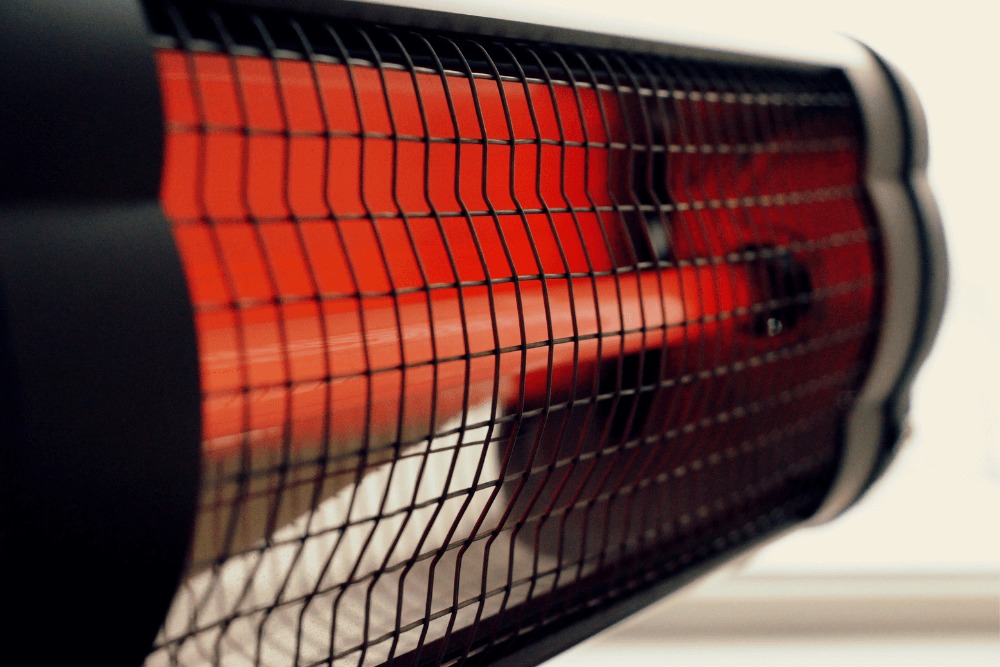
Most domestic infrared heaters use an electric element, panel or lamp. When electricity passes through the element, it heats up and emits infrared radiation. The design of the heater determines whether the warmth is gentle and spread out, as with many wall panels, or more intense and directional, as with some halogen patio heaters.
The heater does not need a fan to move heat around. That makes many infrared panels silent, with no moving parts and no blown dust. It also means the heat pattern is more directional. If you stand, sit or work within the warmed zone, the effect can be noticeable quickly. If you are outside that zone, the room may not feel as warm as it would with a convection heater.
This is why infrared heaters are often judged unfairly in both directions. In the right setting, they can feel efficient and responsive. In the wrong setting, they can feel patchy. The technology is not the problem; the match between heater, room and use pattern is usually the deciding factor.
Infrared Heating Vs Convection Heating
Convection heaters warm air. The warm air rises, circulates around the room and gradually raises the general temperature. This can be effective in enclosed, well-insulated rooms where you want even background warmth.
Infrared heaters warm surfaces and people directly. They are less dependent on air circulation, so they can be useful in spaces where warm air is easily lost, such as draughty rooms, workshops, garden rooms, high-ceilinged areas and covered outdoor seating. They can also be helpful in a home office where you only need warmth around a desk rather than the whole house.
The trade-off is coverage. A convector can make a small enclosed bedroom feel evenly warm. An infrared panel may feel excellent at the desk but weaker in a corner it cannot “see”. If you are choosing between heater types, our guide to how electric heaters work explains the wider differences between convection, fan-assisted and radiant heat.
Types Of Infrared Heaters
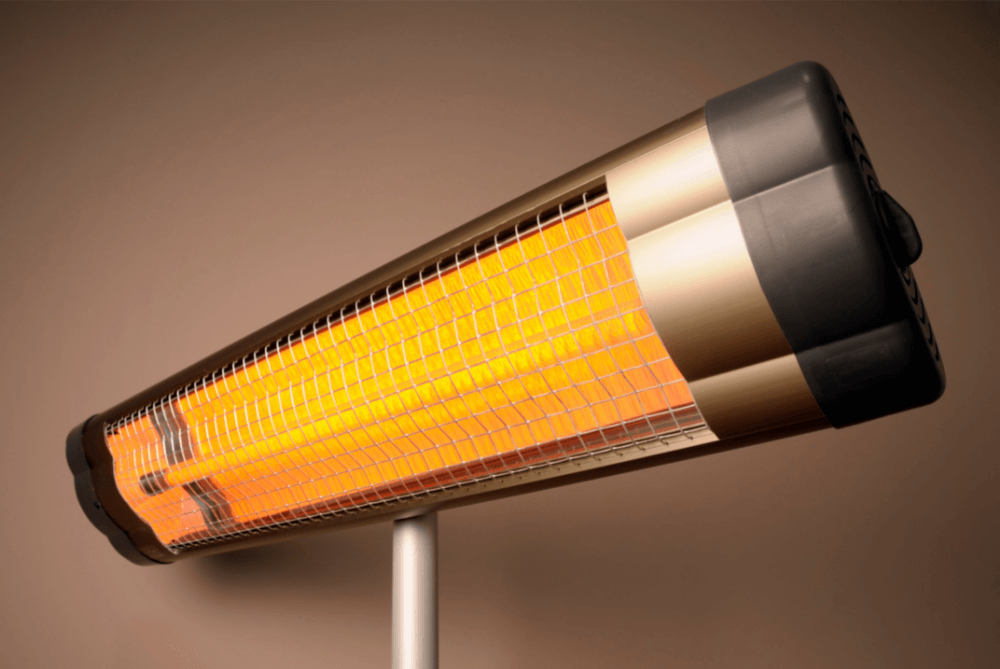
Infrared heaters are not all the same. The right type depends on where it will be used, how quickly you need warmth and whether it is intended as background heating or targeted comfort.
Infrared Panel Heaters
Infrared panels are usually flat wall-mounted or ceiling-mounted heaters. They are common in home offices, bathrooms, bedrooms and living spaces where a discreet, silent heater is wanted. Many have a white glass, metal or mirror finish, so they can blend into the room more easily than a portable heater.
Panels tend to provide gentler radiant warmth than glowing quartz or halogen heaters. They suit regular indoor use, especially when paired with a thermostat, timer or smart control. They do need careful sizing and placement. A small panel on the wrong wall will not perform like a central heating system.
Quartz, Halogen And Bar Heaters
Quartz and halogen infrared heaters usually produce a visible glow and more intense directional warmth. They are often used for patios, garages, workshops, warehouses or short bursts of heat in a specific zone.
They can feel warm very quickly, which is useful outdoors or in spaces that would be expensive to heat with warm air. Indoors, they need more caution around clearance distances, glare, exposed hot surfaces and placement near soft furnishings.
Bathroom Infrared Heaters
Bathroom infrared heaters may be panels, mirrors or ceiling-mounted units. The appeal is that they can warm the person and nearby surfaces rather than relying only on humid air circulation. Some mirror panels also reduce condensation on the mirror itself.
Bathrooms need the correct IP rating and safe installation. This is not a place to improvise with a generic portable heater. Any fixed electrical appliance in a bathroom should be suitable for the zone and installed in line with electrical safety requirements.
Outdoor Infrared Heaters
Outdoor infrared heaters are common on patios because convection heating is almost useless outside. Warm air simply drifts away. Radiant heat is more practical because it can warm people sitting within the beam.
The limitation is obvious once you understand the principle: if the heater is too far away, poorly angled or blocked, the warmth drops sharply. Outdoor infrared heating works best for defined seating areas rather than open gardens.
Where Infrared Heaters Work Best
Infrared heaters are strongest when people use a room in a predictable way. A desk, reading chair, bathroom mirror area, workbench, treatment room or covered patio table can all be good candidates because the heater can be aimed at the occupied zone.
They can also help in rooms where warm air escapes quickly, because they are not entirely dependent on heating the air. A draughty workshop is a good example. Trying to heat all the air may be wasteful, but radiant warmth directed at the work area can still improve comfort.
Another useful scenario is short-period use. If a room is occupied for one or two hours, a targeted heater may be more sensible than heating a whole central heating zone. This is the same reason many readers compare infrared heating with other electric heating options before choosing a permanent setup.
Where Infrared Heaters Can Disappoint
Infrared heaters can disappoint when they are bought as a like-for-like replacement for a full central heating system without considering heat loss, coverage and controls. They are not immune to poor insulation. If a room loses heat quickly through walls, windows and draughts, any electric heater will have to work harder.
They can also feel uneven if the heater is undersized or badly positioned. A wall panel behind a sofa, a ceiling panel too far from the seating area, or a patio heater mounted too high can all produce weak results.
The final caveat is running cost. Some infrared marketing makes the technology sound automatically cheaper than other electric heaters. It can reduce wasted heating in the right use case, but a 700 W panel still uses 0.7 kWh for every hour it runs at full output. A 2 kW outdoor heater still uses 2 kWh per hour.
Running Costs And Controls
The running cost calculation is straightforward:
Heater power in kW x hours used x electricity unit rate = running cost
For example, a 700 W infrared panel is 0.7 kW. If it runs for four hours, it uses 2.8 kWh. At 25p per kWh, that session costs 70p. A 1.5 kW patio heater running for two hours uses 3 kWh, costing 75p at the same tariff.
The real saving potential comes from using the heater only where and when warmth is needed. Timers, thermostats, occupancy sensors and smart controls are valuable because they reduce unnecessary hours. Energy Saving Trust explains that direct electric heating can suit flexible room-by-room use, but whole-home electric heating needs careful cost consideration, so control and use pattern matter as much as the heater type.
For a fuller comparison, see our guide to electric heater running costs.
Installation And Placement
Placement is one of the biggest differences between a good infrared heater and a disappointing one. The heater needs a clear path to the people or surfaces it is meant to warm. Furniture, partitions, curtains and recesses can all block or weaken the effect.
Wall panels are usually best positioned where they can face the occupied area rather than a doorway or empty space. Ceiling panels can work well in offices and bathrooms, but height and wattage matter. Outdoor heaters should be angled towards seated people and mounted at the manufacturer’s recommended distance.
For fixed installations, use the supplied brackets and follow clearance guidance. If the heater is hard-wired, ceiling-mounted, installed in a bathroom or connected to a controller, it is normally a job for a qualified electrician. Do not assume a plug-in heater can be installed permanently just because it works from a socket.
Safety Points To Check
Infrared heaters are widely used, but they still need normal electric heating precautions. Keep combustible materials away from hot surfaces, do not cover the heater, check that wall or ceiling fixings are secure, and make sure cables are not trapped, damaged or run under rugs.
For bathrooms and outdoor areas, check the IP rating and suitability for the location. Outdoor heaters need weather resistance. Bathroom heaters need to be suitable for the relevant bathroom zone. Portable heaters should have stable bases, overheat protection and clear instructions.
If a heater smells hot after the initial settling-in period, makes unusual noises, trips the electrics or shows cable damage, stop using it. Electrical safety is more important than squeezing another winter out of a suspect appliance.
Case Study: Heating A Garden Office Desk Area
Background
A homeowner used a small insulated garden office for remote work. The space was occupied for four to five hours on weekdays, but not in the evenings or at weekends.
Project Overview
They wanted quick comfort without keeping the whole space warm all day. A fan heater worked quickly but was noisy during calls, while a small oil-filled radiator took too long to make the desk area feel comfortable.
Implementation
An infrared panel was mounted so it faced the desk and chair rather than the door. A timer brought it on shortly before the working period, and a thermostat stopped it running continuously once the space felt comfortable.
Results
The improvement came from targeted heat and control, not from infrared being a miracle technology. The heater suited the room because the person stayed in one position and only needed warmth during set hours.
Expert Insights From Our Heating Engineers
One of our senior heating engineers with over 20 years of experience says infrared heating should always be judged by the room layout. The first question is not “how many watts does it have?” but “what exactly is it trying to warm?”
He recommends checking seating position, ceiling height, draughts, insulation and the route between the heater and the person using the space. A well-positioned smaller heater can outperform a badly positioned larger one, especially where the goal is comfort in a specific zone.
For whole-home heating, he advises caution. Infrared panels can form part of an electric heating strategy, but heat loss, controls and electricity prices still need to be considered properly. For some homes, improving insulation or choosing a different heating system may make more sense.
Frequently Asked Questions
Do Infrared Heaters Heat The Air?
Infrared heaters mainly warm people, objects and surfaces directly rather than heating the air first. The air can warm gradually as those surfaces release heat, but the immediate comfort comes from radiant warmth. This is why they feel different from convectors and fan heaters.
Are Infrared Heaters Cheap To Run?
They can be economical in the right use case, especially when used for targeted heating over short periods. However, they still use electricity. A 1 kW infrared heater running for one hour uses 1 kWh, so the running cost depends on your tariff and how long the heater is on.
Do Infrared Heaters Work Instantly?
Some infrared heaters, especially quartz and halogen models, feel warm almost immediately. Infrared panels may take longer to reach full surface temperature, but they can still provide direct radiant warmth faster than waiting for all the air in a room to heat up.
Can An Infrared Heater Heat A Whole Room?
Yes, but only if it is correctly sized and positioned for the room. Infrared panels can contribute to whole-room comfort by warming surfaces, but they are not automatically a direct substitute for central heating. Large, poorly insulated or awkwardly shaped rooms may need more than one heater or a different heating approach.
Where Should An Infrared Heater Be Placed?
Place it where it has a clear line of sight to the area you want to warm. For a desk, that may mean a wall panel facing the chair. For a patio, it may mean a heater angled towards the seating area. Avoid positions where furniture, curtains or partitions block the radiant heat.
Are Infrared Heaters Safe Indoors?
Indoor infrared heaters can be safe when used according to the manufacturer’s instructions. Check clearances, do not cover them, keep them away from combustible materials, and use suitable products for bathrooms or damp areas. Fixed or bathroom installations should be handled by a qualified electrician where required.
Are Infrared Heaters Better Than Convector Heaters?
Neither is better in every situation. Infrared heaters are often better for targeted warmth, draughty spaces, outdoor areas and rooms used intermittently. Convector heaters can be better for evenly warming the air in a small enclosed room. The best choice depends on the room, insulation and how the space is used.
Do Infrared Heaters Help With Damp?
Infrared heaters can warm surfaces, which may reduce the chance of condensation forming on cold walls or ceilings in some situations. They do not fix the underlying causes of damp. Ventilation, insulation, moisture control and repairs to leaks or bridging problems may still be needed.
Summing Up
Infrared heaters work by delivering radiant warmth directly to people and surfaces. That makes them useful for targeted comfort, home offices, bathrooms, work areas and outdoor seating where heating all the air first would be slow or wasteful.
The best results come from choosing the right type, sizing it properly and placing it where the heat can actually reach the user. Treat infrared as a practical heating tool, not a universal shortcut. If it matches the room and usage pattern, it can be comfortable and controlled. If it is undersized, badly positioned or expected to overcome serious heat loss, it will disappoint like any other heater.
Updated