
You can leave a good-quality electric fan running for several hours, overnight, or even all day in the right conditions. The important detail is not the exact number of hours. It is whether the fan is clean, stable, undamaged, correctly positioned and being used for a reason.
For most UK households, a modern desk, pedestal, tower or ceiling fan is a low-power appliance. It costs very little to run compared with air conditioning and is usually safe when it is in good condition. The risks increase when a fan is old, dusty, making odd noises, sitting too close to bedding or curtains, or left running in an empty home where nobody can notice a fault.
This guide explains how long you can leave a fan on, when overnight use is reasonable, what it costs at current UK electricity rates, and the checks that matter before you rely on one during hot weather.
Key Takeaways
- Most modern electric fans can run overnight if they are clean, stable, undamaged and not obstructed.
- There is no universal hour limit. Condition, build quality, placement and airflow matter more than runtime.
- Fans cool people through airflow and evaporation. They do not lower the actual room temperature like an air conditioner.
- A typical 50W fan costs about 1.2p per hour at the April to June 2026 Ofgem electricity unit rate of 24.67p/kWh.
- Do not leave a fan running if it smells hot, buzzes, rattles, has a damaged lead, is very dusty, or is close to loose fabric.
- A timer is useful overnight because many people only need the fan for the first few hours of sleep.
- During extreme heat, fans should be combined with hydration, shade, ventilation and other cooling measures.
How Long Can You Leave an Electric Fan Running?
A well-made electric fan can usually run for as long as you need it while you are using the room. Overnight use is normal. All-day use during a heatwave is also normal, provided the fan is in good condition and has clear airflow around it.
What you should avoid is treating every fan as equally suitable for continuous use. A ceiling fan or a quality pedestal fan is built for long periods of operation. A cheap, ageing desk fan with a noisy motor is a different proposition. If the casing becomes unusually hot, the fan smells of hot plastic, or the motor sound changes, switch it off and stop using it until it has been checked.
The simplest way to think about it is this: a fan can run for many hours if it is clean, cool-running and unobstructed. It should not be left running for any length of time if it already shows signs of wear or electrical trouble.
Is It Safe to Leave a Fan on Overnight?
Yes, it is usually safe to sleep with a fan on, but only if the fan is suitable for unattended use while you are asleep. That means it should sit on a stable surface, have a sound cable and plug, and be positioned away from bedding, curtains, clothing and paper.
Overnight risk is less about the fan being on for eight hours and more about what could happen while you are asleep. You may not notice a burning smell, a new buzzing sound, a blocked grille or fabric being pulled towards the intake. This is why condition and placement matter so much.
If you use a fan every night in summer, clean it regularly and consider using the timer function. Many bedrooms cool down later in the night, especially if windows can be opened safely, so a fan may only need to run for two to four hours rather than until morning.
When You Should Not Leave a Fan Running
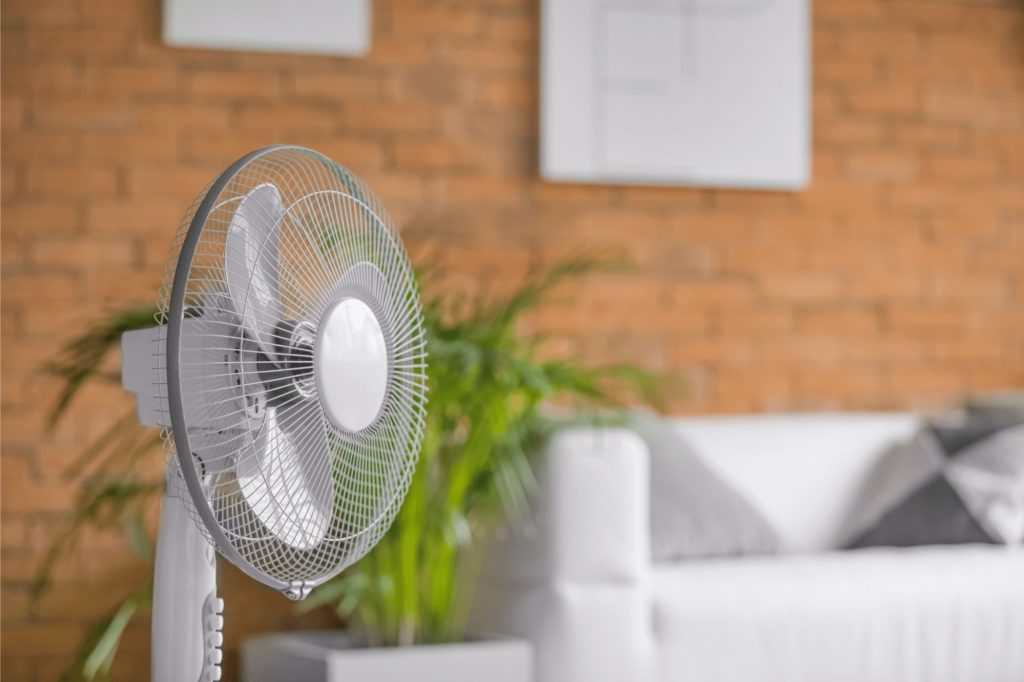
Turn the fan off immediately if you notice any sign of electrical or mechanical trouble. That includes a burning smell, buzzing, grinding, rattling, visible sparks, a damaged cable, a loose plug, scorch marks, or a motor casing that feels hotter than usual.
You should also avoid leaving a fan running if it is thick with dust. Dust on the grille, blades and motor housing restricts airflow and can make the fan run hotter. It also blows allergens around the room, which matters if you sleep with it on.
Placement is another common issue. A fan should not sit where curtains can be drawn into it, where bedding can fall across it, or where it can be knocked over. Keep the intake and outlet clear. If a fan is on the floor, make sure pets, children and loose cables cannot interfere with it.
How Much Does It Cost to Run a Fan?
Fans are cheap to run because they use relatively little electricity. The calculation is simple:
Fan wattage ÷ 1,000 × electricity unit rate × hours used = running cost.
Ofgem lists the average electricity unit rate for Direct Debit customers under the price cap as 24.67p per kWh from 1 April to 30 June 2026. Your actual rate may be different, so check your bill if you want an exact figure.
| Fan Type | Typical Power | Approx. Cost Per Hour | Approx. Cost for 8 Hours |
|---|---|---|---|
| Small Desk Fan | 25W | 0.6p | 5p |
| Tower Fan | 50W | 1.2p | 10p |
| Pedestal Fan | 60W | 1.5p | 12p |
| Large Box Fan | 100W | 2.5p | 20p |
A 50W tower fan running for eight hours every night for 30 nights would use 12kWh, costing about £2.96 at that rate. Even a larger 100W fan used overnight for a month would cost about £5.92. That is why fans are often the cheapest way to improve comfort, although they cannot do the same job as air conditioning.
If running costs are your main concern, check the wattage label, use the lowest comfortable speed, and choose a fan with a timer. For more detailed appliance comparisons, see our guide to how much an electric fan costs to run.
Do Fans Cool Rooms or Just People?
A fan does not cool a room in the way an air conditioner does. It moves air across your skin, which helps sweat evaporate and makes you feel cooler. The room temperature may stay exactly the same.
This is why leaving a fan on in an empty room is usually pointless. There is no person there to benefit from the airflow. If anything, the fan motor adds a tiny amount of heat to the room while using electricity.
Fans work best when they are aimed where people actually sit or sleep, or when they are used to move cooler air through the home. In the evening, for example, placing a fan near a safe open window can help bring in cooler outdoor air. During the hottest part of the day, closing curtains and keeping hot air out may be more useful than simply circulating warm indoor air.
Fan Use During Hot Weather and Heatwaves
During normal summer heat, a fan can make a room much more comfortable. During extreme heat, it should be part of a wider cooling plan rather than the only measure you rely on.
The British Red Cross and public health guidance both make an important distinction: fans help ventilate and cool the body, but they do not reduce indoor temperature. The World Health Organization advises using electric fans only when temperatures are below 40°C, and UK public-health advice commonly warns that fans may be less helpful above about 35°C unless you are also cooling the body and drinking enough fluids.
That does not mean fans are dangerous in ordinary UK summer conditions. It means you should be realistic. If the room is extremely hot, especially for older people, babies, young children or anyone with heart, lung or kidney conditions, use other measures too: close sun-facing curtains during the day, open windows when it is cooler outside, take cool showers, drink water, and move to the coolest room available.
If a fan is not enough, you may need a stronger cooling option. Our guide to ways to cool down a room covers lower-cost measures, while our portable air conditioner guide is more relevant if you need actual temperature reduction.
Health Effects of Sleeping With a Fan On
Sleeping with a fan on does not cause the dramatic health problems sometimes claimed online. It does not cause facial paralysis and it does not make you ill simply because air is moving across the room.
There are still some practical health effects worth understanding. Direct airflow can dry your mouth, throat, eyes or nasal passages. If you wake up congested or with a sore throat, try pointing the fan across the room rather than directly at your face.
Fans also move dust, pollen, pet dander and mould spores. If you have hay fever, asthma or dust sensitivity, a dirty fan can make symptoms worse overnight. Cleaning the grille and blades is not just a safety habit. It is also an air-quality habit.
For babies, older people and anyone who is medically vulnerable, be more cautious. A fan can help comfort, but it should not replace hydration, shade, cool clothing, appropriate room temperature and regular checks during hot weather.
Fan Safety Checklist Before Bed
Before leaving a fan on overnight, use this quick check:
- Is the cable intact with no cracking, fraying or exposed wire?
- Is the plug secure, with no scorch marks or looseness?
- Is the fan clean, especially around the grille, blades and motor housing?
- Is it standing on a flat, stable surface?
- Is it clear of curtains, bedding, clothing, paper and other loose items?
- Does it sound normal, with no grinding, buzzing or rattling?
- Does the casing feel normal rather than unusually hot?
- Can you use a timer so it switches off once the room is more comfortable?
If the answer to any of those questions is no, fix the issue before running the fan while you sleep.
Which Type of Fan Is Best for Long Running?
Ceiling fans are usually the best option for long, regular use. They are fixed in place, move air across a wider area and are designed to run for extended periods. They are a good choice for bedrooms and living rooms if you regularly rely on airflow in summer.
Tower fans are convenient for bedrooms because they are slim, often quiet and commonly include timers or sleep modes. They are suitable for overnight use if they are stable and clean, but they are easier to knock over than a ceiling fan.
Pedestal fans move a lot of air and can be very effective in larger rooms. The main safety point is stability. Make sure the base is secure and the cable is not a trip hazard.
Desk fans vary the most. A good-quality desk fan is fine for long use, but very cheap compact fans may have weaker motors, smaller vents and poorer stability. Do not leave a low-quality desk fan running unattended just because it is small.
If you are replacing an old fan, look for a model with a timer, stable base, removable grille for cleaning and clear safety certification. Our guides to the best tower fans and best desk fans may help if you want a better overnight option.
Case Study: Overnight Fan Use During a UK Heatwave
Background
A family in a three-bedroom semi-detached home used fans during a hot spell because the upstairs bedrooms stayed warm into the evening. They had a tower fan in the main bedroom, a pedestal fan in a child’s room and a ceiling fan downstairs.
What They Changed
Instead of running all three fans at full speed all night, they cleaned each fan, closed sun-facing curtains during the afternoon, opened windows once the outside air cooled, and set timers on the portable fans. The tower fan ran for four hours after bedtime. The pedestal fan ran on a lower speed and was angled across the room rather than directly at the bed.
Result
The bedrooms felt more comfortable, the fans were quieter, and the family avoided unnecessary all-night use. The total cost was still low, but the bigger improvement came from using the fans as part of a cooling routine rather than expecting them to cool the rooms by themselves.
Expert Insights From Our Heating Engineers
One of our senior heating engineers with over 15 years of experience in domestic heating and ventilation says the most common mistake is judging fan safety only by how long it has been running.
“Runtime is not the first thing I look at. I look at condition. A clean, stable fan with a sound cable is a very different risk from an old fan that rattles, smells hot or has dust packed into the grille. If you want to run a fan overnight, clean it, keep fabric away from it and use the timer if it has one.”
He also points out that comfort and safety are separate questions. “A fan can be electrically safe and still not be enough in a very hot room. During a heatwave, airflow helps, but people still need shade, water, cooler night air and somewhere genuinely cooler if the room temperature stays high.”
Frequently Asked Questions
Can Leaving a Fan on All Night Cause a Fire?
It can, but the risk is low when the fan is modern, clean, undamaged and correctly positioned. The risk rises with old motors, damaged cables, dust build-up, blocked vents and loose fabric near the fan. If a fan smells hot, buzzes, rattles or has a damaged lead, do not leave it running.
Is It Safe to Sleep With a Fan On?
Yes, most people can sleep with a fan on safely. Use a clean fan in good condition, keep it away from bedding and curtains, and point the airflow across the room if direct airflow dries your throat or eyes. A timer is useful if you only need the fan while falling asleep.
How Much Does It Cost to Run a Fan Overnight?
A typical 50W fan costs about 10p to run for eight hours at the April to June 2026 Ofgem electricity unit rate of 24.67p/kWh. A 100W fan costs about 20p for the same period. Your actual cost depends on your tariff and the wattage of your fan.
Can I Leave a Fan on When I Am Not at Home?
It is better not to. Fans cool people, not empty rooms, so there is little benefit to leaving one running when nobody is there. If a fault develops, you also will not be present to notice a smell, sound or obstruction.
Do Fans Actually Cool a Room?
No. A fan moves air and helps your body cool itself through evaporation. It does not remove heat from the room like an air conditioner. This is why fan placement matters: aim the airflow where people are, or use it to move cooler air through the home when outdoor conditions allow.
Can Sleeping With a Fan Make You Ill?
A fan does not make you ill by itself, but direct airflow can dry your throat, nose or eyes, and a dirty fan can circulate dust and pollen. If you wake up congested, clean the fan, move it further away and angle it across the room rather than directly at your face.
Should You Use a Fan for a Baby or Older Person?
Use extra care. A fan can help air movement, but babies, older people and medically vulnerable people need proper heat protection: hydration, shade, light bedding, regular checks and a room that is not excessively hot. Do not aim strong airflow directly at them for long periods.
How Often Should You Clean an Electric Fan?
Clean a fan every two to four weeks during regular summer use, and more often in dusty rooms. Unplug it first, vacuum the grille, wipe the blades if accessible and remove dust from the intake. A clean fan is safer, quieter and less likely to aggravate allergies.
Is a Ceiling Fan Safer Than a Desk or Tower Fan?
Usually, yes. A properly installed ceiling fan is fixed, stable and designed for long running. Desk, pedestal and tower fans can also be safe, but they are easier to knock over, block or place too close to fabric. Condition and placement still matter more than the fan type alone.
Summing Up
You can leave an electric fan on for hours, overnight or through much of the day if it is clean, stable and in good working order. There is no special cut-off point where a safe fan suddenly becomes unsafe. The real issues are dust, damage, overheating, poor placement and leaving it running when nobody benefits from the airflow.
For most people, the best approach is simple: clean the fan regularly, inspect the cable and plug, keep it away from loose fabric, use a timer overnight, and remember that a fan cools you rather than the room. If the heat is extreme or someone in the home is vulnerable, combine fan use with proper heatwave precautions rather than relying on airflow alone.
Updated