
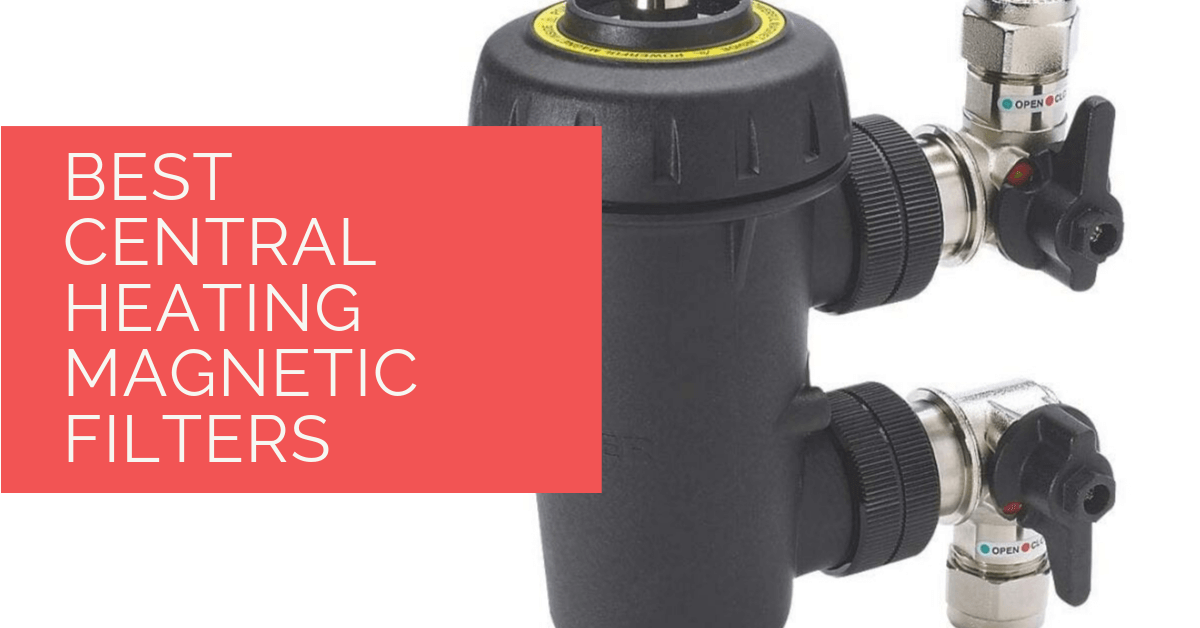
For most UK homes, the ADEY MagnaClean Professional2 22mm Filter is the best central heating magnetic filter to buy. It is widely used by heating engineers, simple to service, and strong enough for typical domestic radiator systems where sludge protection matters.
A magnetic filter is not exciting, but it can save a boiler from a miserable life. Below, we’ve compared five of the strongest options for UK wet central heating systems, including compact filters, premium dirt separators, and brand-matched choices for Worcester boilers.
Our Top Picks
| Image | Name | |
|---|---|---|
| ADEY MagnaClean Professional2 22mm Filter | |
| Fernox TF1 Central Heating Magnetic Filter 22mm | |
| BoilerMag 22mm Domestic Heating System Filter | |
| Worcester Bosch Greenstar Central Heating System Filter | |
| Altecnic Dirtmag IQ 22mm Magnetic Filter |
5 Best Central Heating Magnetic Filters
1. ADEY MagnaClean Professional2 22mm Filter
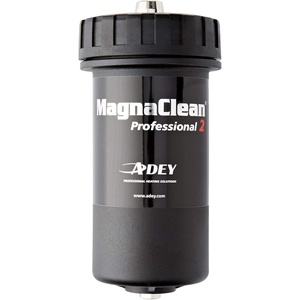
This is the safe recommendation for most homes. The ADEY MagnaClean Professional2 has become almost the default magnetic filter for UK domestic heating systems because installers know it, parts are easy to understand, and servicing is straightforward during an annual boiler visit.
Its job is simple: catch magnetite before it circulates through the boiler, pump, valves, and radiators. That black sludge is one of the quiet killers of older wet heating systems. Left alone, it reduces efficiency, creates cold spots in radiators, and can shorten the working life of expensive components.
The Professional2 is a good fit for standard 22mm pipework and typical family homes. It is not the smallest filter here, so tight airing cupboards may need careful measuring, but the extra capacity is part of its appeal.
If you want the broadest, most installer-friendly choice, this is the one to start with. It is not trying to be clever. It just does the core job well.
The important practical point is servicing. A magnetic filter only keeps protecting the boiler if someone can isolate it, open it and clean it properly during routine maintenance. A brilliant filter squeezed into an impossible corner becomes a poor long-term installation.
Features
- 22mm domestic central heating filter
- Designed to capture magnetic sludge and debris
- Large collection capacity for typical radiator systems
- Removable lid for servicing
- Suitable for many domestic boiler installations
- Best fitted by a qualified heating engineer
- Excellent all-round domestic choice
- Very familiar to UK heating engineers
- Good sludge capacity for family homes
- Straightforward annual servicing
- Needs enough clearance around the pipework
- Not the most compact option for cramped cupboards
2. Fernox TF1 Central Heating Magnetic Filter 22mm
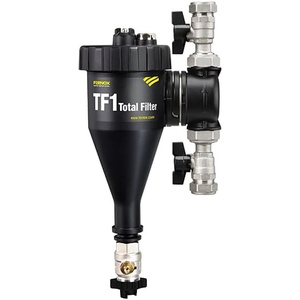
The Fernox TF1 is the other big name most heating engineers will recognise immediately. It combines magnetic capture with debris separation, so it is a strong choice for systems where you want more than just a magnet in the flow.
Fernox has a long track record in heating chemicals and system protection, which makes this filter a natural fit if you are also using inhibitor, cleaner, or a full system treatment. The design is practical, with service valves and a drain point that make maintenance less messy when fitted correctly.
The TF1 is especially worth considering if your heating engineer already prefers Fernox products. Brand familiarity matters here because the filter has to be installed, cleaned, and checked over the long term, not just bought in a box.
It is also worth matching the filter to the condition of the system. A fairly clean, modern system may only need straightforward magnetic protection, while an older radiator system with cold spots may benefit from a filter with broader debris separation after a clean and inhibitor treatment.
Features
- 22mm central heating magnetic filter
- Captures magnetic sludge and non-magnetic debris
- Designed for domestic wet central heating systems
- Service valves and drain point
- Works well as part of a wider Fernox treatment plan
- Professional installation recommended
- Strong brand reputation in heating system protection
- Good for both magnetic and general debris capture
- Practical servicing design
- Can be bulkier than compact inline filters
- Needs correct orientation and access for servicing
- Often best chosen with installer input
3. BoilerMag 22mm Domestic Heating System Filter
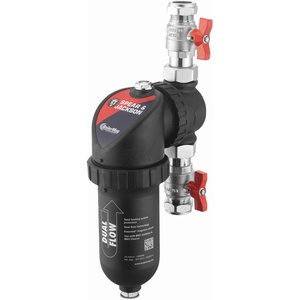
The BoilerMag is a good pick if you want a heavy-duty filter with a strong magnet and a service-friendly design. It is often chosen for systems where sludge has already been a problem, or where the homeowner wants an extra layer of boiler protection after a flush.
The body shape is taller than some compact filters, so space is the first thing to check. If there is room near the boiler return, the BoilerMag gives you reassuring capacity and a robust feel.
It is not the neatest filter visually, but this is a plumbing component rather than a kitchen appliance. The important question is whether it catches debris and can be cleaned properly. On that front, it is a solid option.
Do not look at the filter as a cure for every heating-water problem. It works best as part of a package: system cleaning where needed, inhibitor, correct installation and annual checks.
Features
- 22mm domestic heating system filter
- Strong magnetic collection core
- Designed to protect boilers and pumps from magnetite
- Drain and service access for maintenance
- Suitable for many radiator-based heating systems
- Best installed on the boiler return pipework
- Robust, heavy-duty feel
- Good option after a system clean or power flush
- Strong magnet for sludge capture
- Taller body needs decent installation clearance
- Less discreet than compact filters
- May be more filter than a very small flat needs
4. Worcester Bosch Greenstar Central Heating System Filter
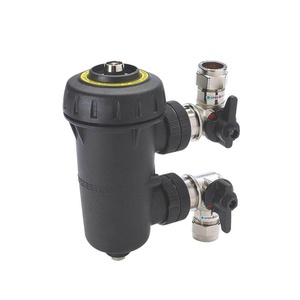
If you have a Worcester Bosch boiler, the Greenstar system filter is the tidy brand-matched option. It is designed to sit naturally alongside Worcester installations, which can make the conversation easier when your boiler engineer is already working with Worcester parts.
The main reason to buy it is compatibility confidence. It is not that a MagnaClean or Fernox filter cannot protect a Worcester boiler, because they can. It is that some homeowners and installers prefer keeping protection products within the same ecosystem.
Before buying, check the exact listing and pipework size. Worcester filters can vary by pack and fitting arrangement, and the best choice is the one your installer is happy to fit and service.
The important practical point is servicing. A magnetic filter only keeps protecting the boiler if someone can isolate it, open it and clean it properly during routine maintenance. A brilliant filter squeezed into an impossible corner becomes a poor long-term installation.
Features
- Designed for Worcester Bosch Greenstar heating systems
- Magnetic protection for boiler and system components
- Brand-matched option for Worcester installations
- Suitable for many domestic radiator systems
- Requires correct sizing and professional fitting
- Natural match for Worcester Bosch boilers
- Good option for brand-consistent installations
- Installer-friendly when fitted with compatible Worcester systems
- Less universal than MagnaClean or Fernox options
- Exact pack details need checking before purchase
- May not be the best value if you do not have a Worcester boiler
5. Altecnic Dirtmag IQ 22mm Magnetic Filter
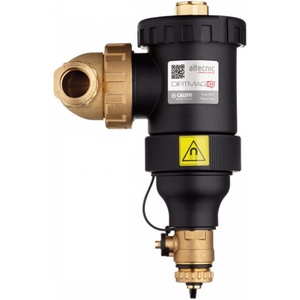
The Altecnic Dirtmag IQ is the more engineering-led option on this list. It combines magnetic filtration with dirt and air separation, which makes it interesting for systems where general debris and trapped air are recurring problems.
It is not the simplest recommendation for every home, partly because the fitting and servicing approach may be less familiar to some domestic installers than MagnaClean or Fernox. But in the right hands, it is a capable system protection component.
This is the one to consider if your heating engineer specifically recommends a dirt separator style filter rather than a basic magnetic canister. It is a more technical choice, but not a weak one.
It is also worth matching the filter to the condition of the system. A fairly clean, modern system may only need straightforward magnetic protection, while an older radiator system with cold spots may benefit from a filter with broader debris separation after a clean and inhibitor treatment.
Features
- 22mm magnetic sludge filter and dirt separator
- Designed to capture magnetic and non-magnetic debris
- Air and dirt separation design
- Brass and composite construction
- Best suited to professional specification and installation
- Combines magnetic filtration with dirt separation
- Good technical option for problem systems
- Less familiar to some domestic installers
- More specialist than most homeowners need
- Check installation space and orientation carefully
Central Heating Magnetic Filter Buying Guide
Key Takeaways
- A magnetic filter protects your boiler by collecting black iron oxide sludge before it reaches the heat exchanger, pump, diverter valve, and other sensitive parts.
- The best filter is not always the most expensive one. It is the one that fits your pipework, has enough capacity for your system, and can be cleaned easily every year.
- A magnetic filter helps prevent future sludge problems, but it will not fully clear an already blocked system on its own.
- For dirty older systems, the best approach is usually a system clean or flush, fresh inhibitor, and then a magnetic filter to keep the water cleaner afterwards.
- Most domestic systems use 22mm pipework near the boiler, but larger homes and some installations may need 28mm fittings or a higher-capacity filter.
- Installation position matters. The filter should usually go on the return pipe before the boiler, with enough access for cleaning and servicing.
- Ask your installer which filters they are comfortable servicing, because a filter that never gets cleaned is only doing half its job.
What Is a Central Heating Magnetic Filter?
A central heating magnetic filter is a protective device fitted to the pipework of a wet heating system. It is designed to collect magnetite, the black iron oxide sludge that forms when steel radiators and other metal components corrode inside the system.
The filter usually contains a powerful removable magnet inside a canister. As heating water passes through the filter, magnetic particles stick to the magnet instead of continuing through the boiler, pump, valves, and radiators. During servicing, the engineer isolates the filter, removes or wipes down the magnet, and flushes away the collected sludge.
Some filters do more than magnetic capture. Models such as the Fernox TF1 and Altecnic Dirtmag style filters also help separate non-magnetic debris, air, or general dirt from the water. These can be useful on older systems where the problem is not only magnetite.
Why Sludge Builds Up in Central Heating Systems
Most UK radiator systems contain a mix of metals, including steel radiators, copper pipework, brass fittings, and boiler components. Over time, oxygen in the system reacts with steel and creates corrosion. The result is magnetite: a fine black sludge that circulates with the heating water.
That sludge does not stay harmlessly suspended forever. It settles in low-flow areas, collects at the bottom of radiators, coats heat exchangers, and can restrict small waterways inside modern boilers. This is why a system can have hot pipework but radiators that still feel patchy or slow to heat.
A magnetic filter does not stop corrosion at source. That is the job of proper water treatment and inhibitor. What it does is trap a large amount of the magnetic debris before it can keep circulating and causing more trouble.
Signs You May Need a Magnetic Filter
If you are having a new boiler fitted, a magnetic filter is usually worth discussing as part of the installation. On an existing system, look for warning signs that dirty water or sludge is already affecting performance.
- Radiators are cold at the bottom but warm at the top.
- The boiler is noisy, kettling, or struggling to reach temperature.
- The system water is black or very dirty when bled or drained.
- Pumps, valves, or heat exchangers have failed before.
- Some radiators heat much more slowly than others.
- You need frequent bleeding, topping up, or engineer visits.
- The heating system is older and has never been flushed or treated properly.
These symptoms do not prove that a filter alone will solve the issue. They are signs that the system water needs checking. A good engineer may recommend a chemical clean, power flush, inhibitor, and filter together rather than treating the filter as a miracle cure.
How Magnetic Filters Work
The water in your central heating system is pumped around the pipework, through the radiators, and back to the boiler. A magnetic filter is normally fitted in that return path. When water passes through the filter body, the magnet attracts iron-based particles and holds them inside the chamber.
During the annual service, the engineer isolates the filter using its valves, removes the magnetic core or opens the collection chamber, and washes out the trapped sludge. On a dirty system, the first clean after installation can produce a surprising amount of black paste.
Filters with dirt separation features use internal flow paths, chambers, or cyclonic action to slow down the water and encourage debris to drop out. These can catch non-magnetic material as well, which is useful if the system contains scale, flux residue, or general installation debris.
Magnetic Filter vs Power Flush vs Chemical Clean
This is where many buying guides are too vague. A magnetic filter and a flush are not the same thing.
A magnetic filter is a preventative protection device. It sits on the system and keeps collecting magnetic debris during normal use. It is best at stopping fresh sludge from circulating after the system has been cleaned or treated.
A chemical clean uses cleaning chemicals and normal system circulation to loosen debris. It is usually less aggressive than a power flush and may be suitable for systems that need improvement but are not severely blocked.
A power flush uses external flushing equipment to move water and chemicals around the system at higher flow. It can remove heavier sludge from radiators and pipework, but it takes longer, costs more, and is not always suitable for fragile or very old systems.
The best order on a dirty system is often: clean or flush the system, rinse it properly, add inhibitor, then fit or service the magnetic filter. If you only fit a filter to a heavily sludged system, it may collect debris, but radiators with established cold spots may still need proper cleaning.
Where Should a Magnetic Filter Be Fitted?
In most domestic heating systems, the filter is fitted on the return pipe before the water re-enters the boiler. This position catches sludge before it reaches the boiler’s heat exchanger and other vulnerable components.
It should usually be close enough to the boiler to protect it effectively, but not so crammed in that servicing becomes a chore. Access is important. The engineer needs room to isolate the valves, remove the magnet or lid, place a container or cloth below the drain point, and clean the filter without flooding the cupboard.
Some filters can be fitted vertically or horizontally, while others have stricter orientation rules. Always follow the manufacturer’s instructions. A filter installed in the wrong direction, too close to an obstruction, or without enough valve access can be awkward to clean and less effective over time.
Pipe Size, Compatibility, and Boiler Warranty
Most domestic magnetic filters are sold in 22mm versions because 22mm pipework is common around UK boilers. Larger homes, higher-flow systems, or some older layouts may use 28mm pipework, so check before buying. Adapters can sometimes be used, but it is better to choose the right filter size from the start.
Compatibility is not only about pipe size. You also need to think about available space, flow direction, valve clearance, drain access, and whether the filter suits a combi boiler, system boiler, or heat-only boiler layout. In most cases, a good universal filter such as MagnaClean, Fernox, or BoilerMag can work across many boiler brands if installed correctly.
Some boiler manufacturers and installers strongly recommend magnetic filters, and some extended warranty packages expect proper system protection and water treatment. If you are fitting a new boiler, ask the installer what filter and inhibitor requirements apply to your warranty paperwork.
How to Choose the Best Magnetic Filter
Start with your system, not the brand name. A small flat with six radiators has different needs from a large house with old steel radiators and long pipe runs. The dirtier and larger the system, the more capacity and service access matter.
Look at these factors before buying:
- Capacity: Larger filters hold more debris before cleaning, which helps on older or larger systems.
- Magnet strength: A strong magnet improves capture of fine magnetite particles.
- Debris handling: Some filters catch non-magnetic dirt as well as magnetic sludge.
- Service access: The filter should be easy to isolate, drain, open, clean, and reseal.
- Footprint: Compact filters are useful in tight boiler cupboards, but may have less capacity.
- Installer familiarity: A filter your engineer knows well is more likely to be fitted and serviced properly.
- Spare parts: Seals, valves, and replacement components should be easy to source.
For most homes, the ADEY MagnaClean Professional2 is the balanced option. Fernox is a strong alternative if your installer favours Fernox water treatment. BoilerMag suits heavier-duty protection, Worcester makes sense for Worcester-focused installs, and Altecnic is worth considering when a dirt separator design is preferred.
Installation Cost and Value
The cost of fitting a magnetic filter varies by region, pipework access, and whether it is fitted with a new boiler or added to an existing system. As a rough UK guide, a filter supplied and fitted often sits in the low hundreds rather than the tens. If the system needs draining, pipework alteration, inhibitor, or a clean at the same time, the total cost rises.
It can be tempting to save a little by buying the cheapest filter, but the unit price is only part of the picture. A well-fitted, easy-to-service filter can protect a boiler for years. A cheap filter installed badly, hidden behind pipework, or never cleaned is poor value.
Think of the filter as part of a water-quality package. The best value often comes when it is fitted during a boiler replacement, radiator work, or system clean, because the engineer is already draining and refilling the system.
Maintenance and Cleaning
A magnetic filter should normally be cleaned during the annual boiler service. The engineer isolates the filter, removes the magnet or opens the chamber, clears the collected sludge, checks seals, and makes sure there are no leaks afterwards.
If the filter has collected a lot of sludge soon after installation, that does not mean it has failed. It often means it is doing its job on a dirty system. However, repeated heavy sludge collection suggests the system may need better cleaning, inhibitor testing, or further investigation.
Do not assume a filter is maintenance-free. A full filter can become less effective, and a neglected one can make servicing messier than it needs to be. Make sure your annual boiler service includes filter cleaning, not just a quick visual check.
Inhibitor, Cleaner, and Water Testing
A magnetic filter catches debris. Inhibitor helps slow down corrosion so less debris forms in the first place. You usually need both.
After a system has been drained, flushed, or altered, the engineer should dose it with a suitable corrosion inhibitor. On older systems, a cleaner may be circulated before draining to loosen sludge and deposits. Some engineers will also test inhibitor levels or water quality, especially where boiler warranty requirements are strict.
If your system keeps producing sludge after a filter and inhibitor have been added, there may be an underlying issue such as oxygen ingress, repeated topping up, leaks, poor water quality, or unsuitable components.
Common Mistakes to Avoid
- Buying a filter before checking pipe size and clearance.
- Fitting the filter where it cannot be opened or drained easily.
- Assuming a filter removes the need for inhibitor.
- Using a magnetic filter instead of cleaning a badly sludged system.
- Ignoring manufacturer flow direction and orientation instructions.
- Skipping annual filter cleaning during the boiler service.
- Choosing a compact filter for a large, dirty system just because it is easier to fit.
Types of Magnetic Filters
Standard magnetic filters use a magnet inside a canister to capture iron oxide sludge. These are the most common domestic option and suit most radiator systems.
Compact magnetic filters are designed for tight boiler cupboards and small spaces. They sacrifice some capacity but can be easier to fit when pipework is cramped.
Dirt separator filters capture magnetic sludge and other debris. These are useful for older systems, larger homes, or installations where the engineer wants broader water protection.
Brand-matched filters are designed or marketed for a particular boiler brand. They can be a neat choice when your installer wants a consistent manufacturer setup, but they are not always necessary if a high-quality universal filter is fitted correctly.
Before You Buy: Quick Checklist
- Confirm the pipe size, usually 22mm or 28mm.
- Check the space available near the boiler return pipe.
- Ask whether the system needs cleaning before the filter is fitted.
- Confirm that inhibitor will be added after installation.
- Make sure the filter can be serviced without removing half the cupboard.
- Check whether your boiler warranty or installer specifies a particular filter type.
- Ask your engineer to clean the filter during every annual boiler service.
Installation Access and Service Clearance
Ask where the filter will be fitted before buying. It needs enough space for isolation valves, lid removal, drain access and annual cleaning. A filter hidden behind boxing or crammed under a boiler may be skipped during servicing because it is awkward to reach.
Magnetic Filters and Heating Inhibitor
A magnetic filter catches circulating debris, while inhibitor slows the corrosion that creates new sludge. They are partners rather than substitutes. If the system water is dirty, a filter alone will not restore performance without cleaning and correct chemical treatment.
Case Study: Protecting an Older Radiator System
Background
A family in a 1970s detached house had a gas combi boiler feeding eleven radiators. Several radiators had cold spots at the bottom, and the boiler had become noisier during winter.
Project Overview
The heating engineer recommended a system clean, fresh inhibitor, and a magnetic filter on the boiler return pipe. The aim was to remove existing sludge and reduce the risk of it returning to the boiler.
Implementation
The system was cleaned, flushed until the water ran clearer, then treated with inhibitor. A 22mm magnetic filter was fitted with enough clearance for annual servicing. The engineer showed the homeowner how much black debris was collected during the first follow-up check.
Results
The radiators heated more evenly, and the boiler ran more quietly. The filter collected visible sludge during the first service, confirming that debris was still being captured rather than circulating through the boiler.
Expert Insights From Our Heating Engineers About Central Heating Magnetic Filters
“A magnetic filter is one of the easiest protection upgrades to justify on a wet heating system. It will not fix a badly corroded system by itself, but it gives sludge somewhere to go before it reaches the boiler. That matters, especially with modern high-efficiency boilers.”
“One of our senior heating engineers with over 15 years of experience recommends fitting the filter where it can actually be serviced. We see filters squeezed into impossible corners, and then nobody cleans them properly. Access is not a luxury. It is part of the installation.”
“The best results come from doing the full water-quality job: clean the system, dose it with inhibitor, fit the filter, and check it every year. Buying the filter is only step one.”
Frequently Asked Questions
Do I really need a magnetic filter on my central heating system?
If you have a wet radiator system, it is strongly worth considering. A magnetic filter helps protect the boiler from black iron oxide sludge, especially on older systems. The filter also needs to be cleaned during servicing, otherwise the captured debris simply sits there and long-term protection is reduced.
Where should a magnetic filter be fitted?
It is usually fitted on the return pipe before the boiler. That position lets it catch sludge before water re-enters the boiler. The filter also needs to be cleaned during servicing, otherwise the captured debris simply sits there and long-term protection is reduced.
Can I fit a magnetic filter myself?
Most homeowners should not. It involves cutting into central heating pipework, isolating and draining part of the system, and checking for leaks. Use a qualified heating engineer. The filter also needs to be cleaned during servicing, otherwise the captured debris simply sits there and long-term protection is reduced.
How often should a magnetic filter be cleaned?
At least once a year during the boiler service. Very dirty systems may need an earlier check after installation. The filter also needs to be cleaned during servicing, otherwise the captured debris simply sits there and long-term protection is reduced.
Will a magnetic filter remove existing radiator sludge?
It will catch sludge that circulates through it, but it will not fully clean blocked radiators by itself. If radiators already have cold spots, the system may need flushing as well. The filter also needs to be cleaned during servicing, otherwise the captured debris simply sits there and long-term protection is reduced.
Do magnetic filters work with combi boilers?
Yes. They are commonly fitted with combi boilers, system boilers, and heat-only boilers, provided the pipework size and installation layout are suitable. The filter also needs to be cleaned during servicing, otherwise the captured debris simply sits there and long-term protection is reduced.
Is inhibitor still needed if I have a magnetic filter?
Yes. Inhibitor helps slow corrosion, while the filter catches debris. They work together rather than replacing each other. The filter also needs to be cleaned during servicing, otherwise the captured debris simply sits there and long-term protection is reduced.
Summing Up
The ADEY MagnaClean Professional2 22mm Filter is the best central heating magnetic filter for most UK homes. It is proven, widely understood by heating engineers, and well suited to standard domestic radiator systems.
If your installer prefers Fernox, the TF1 is an excellent alternative. For systems that need more heavy-duty protection, BoilerMag and Altecnic are worth discussing. And if you have a Worcester Bosch boiler, the Greenstar filter may be the neatest brand-matched route.
Updated