
If your immersion heater is running whenever it feels like it rather than when you actually need hot water, you’re paying far more than necessary. An immersion heater timer puts you back in control, letting you schedule heating around your household routine or off-peak electricity tariffs. The Timeguard FST24 is our top pick for most homes, it’s the most reviewed immersion heater timer on Amazon UK, it’s hardwired directly into your fused spur, and it does exactly what it’s supposed to do without any fuss. For Economy 7 users, the Timeguard TRTD7N is the one to choose instead.
We’ve reviewed the best immersion heater timers currently available on Amazon UK, covering 24-hour mechanical switches, 7-day digital programmers, Economy 7 controllers, boost timers, and a smart WiFi option. Here’s what we found.
Our Top Picks
| Image | Name | |
|---|---|---|
| Timeguard FST24 24-Hour Fused Spur Timeswitch | |
| Timeguard NTT03 24-Hour / 7-Day Electronic Timeswitch | |
| Timeguard FST77 7-Day Fused Spur Timeswitch | |
| Timeguard TGBT4 Electronic Boost Timer | |
| Timeguard TRTD7N Digital Economy 7 Controller | |
| Companyblue 1–5 Hour Boost Timer Switch | |
| Sure Time 2-Hour Electronic Boost Timer | |
| Smart WiFi Fused Spur Timer Switch |
8 Best Immersion Heater Timers
1. Timeguard FST24 24-Hour Fused Spur Timeswitch
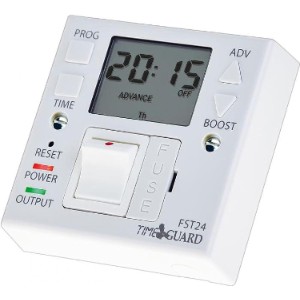
The Timeguard FST24 is the sensible starting point for most people. Over 870 verified Amazon UK reviews back it up, which in a product category this specific is a significant number, it means thousands of real households are using this timer day in, day out without problems. It replaces your existing fused spur directly, operates on a simple 24-hour mechanical dial with push-in switching pins for on and off periods, and handles the 3kW draw of a standard immersion heater without any issues. At £28.50 it’s not the cheapest option here, but it’s the cheapest with a meaningful review track record.
The 30-minute minimum programming intervals on a mechanical dial are a small constraint, but in practice most people set their immersion heater to come on for a two to three hour window in the morning or evening, which the FST24 handles perfectly. If your household routine barely changes week to week, a 24-hour timer is all you need, the added complexity of 7-day programming genuinely isn’t worth paying for in that situation.
Who it suits: anyone replacing a failed timer on an existing fused spur installation who wants a proven, simple solution. Who it doesn’t suit: households on Economy 7 tariffs (use the TRTD7N instead) or anyone who wants different hot water schedules on weekends versus weekdays.
Features
- 24-hour mechanical timeswitch with 30-minute switching intervals
- 16A rated, suitable for all standard 3kW immersion heaters
- Direct fused spur replacement
- Override switch for manual control
- 870+ Amazon UK reviews
- Most-reviewed immersion heater timer on Amazon UK, proven reliability
- Simple installation, direct fused spur swap
- Manual override switch included
- Solid 16A rating for safe long-term use
- 24-hour only, no weekday/weekend flexibility
- Mechanical dial limits precision to 30-minute intervals
2. Timeguard NTT03 24-Hour / 7-Day Electronic Timeswitch
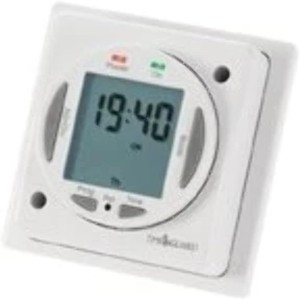
The NTT03 is the step up from the FST24 and it’s worth the extra £7 for two reasons. First, it’s digital rather than mechanical, which gives you 15-minute programming intervals instead of 30, and a display that’s easier to read and confirm at a glance. Second, it switches between 24-hour mode for households with consistent daily routines and 7-day mode for those who want different schedules on Saturday and Sunday. You don’t have to use the 7-day function, but it’s there when you need it, useful if you work from home some days and are in the office on others, for example.
With 835 reviews at 4.5 stars, it’s almost as well-tested as the FST24, which is reassuring for a product you expect to run reliably for years. It fits in the same fused spur position as the FST24, so the installation process is identical.
If you’re not sure whether to choose the FST24 or NTT03, the NTT03 is the better long-term purchase. The flexibility costs almost nothing extra and the digital display makes programming quicker and more precise.
Features
- 24-hour or 7-day programmable digital timeswitch
- 15-minute minimum switching intervals
- 16A rated for all standard immersion heaters
- Digital display with manual boost/override
- Fused spur replacement
- Switchable 24-hour or 7-day modes in one unit
- Digital display easier to confirm programming than mechanical dial
- 835+ reviews at 4.5 stars, strong track record
- Only £7 more than the FST24 for noticeably more flexibility
- Not suitable for Economy 7, use the TRTD7N for off-peak tariffs
- Slightly more complex to program than the mechanical FST24
3. Timeguard FST77 7-Day Fused Spur Timeswitch
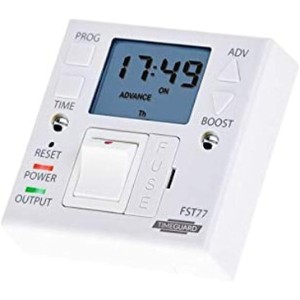
The FST77 is the 7-day fused spur version of the range. Where the NTT03 integrates the timer and fused spur connection into one compact unit, the FST77 is built slightly differently, the fused spur and timeswitch are both present but in a more traditionally sized housing that some electricians prefer when replacing older, bulkier units. Whether the FST77 or NTT03 is the better fit often comes down to the existing wiring arrangement and the physical space available in the spur position.
Programming is digital, 7-day, with up to six on/off events per day. With 521 reviews at 4.5 stars it’s thoroughly tested. At £33.99 it sits between the NTT03 and the TRTD7N on price, and is the right choice when the physical format of the FST77 suits the existing installation better.
Features
- 7-day programmable fused spur timeswitch
- Up to 6 on/off events per day
- 16A rated
- Manual override
- 521+ reviews on Amazon UK
- Full 7-day programming for varied weekly routines
- 6 switching events per day gives precise scheduling
- 521+ reviews confirms consistent reliability
- Larger housing than NTT03, check space availability before ordering
- No Economy 7 off-peak functionality
4. Timeguard TGBT4 Electronic Boost Timer
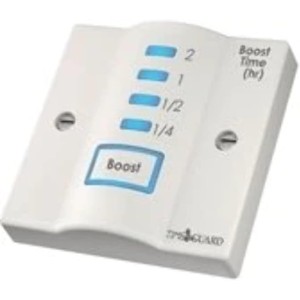
Plug it in, press the button, get hot water in two hours. That’s the TGBT4’s entire job description, and it does it reliably. There’s no programming, no schedule, no display to interpret, it’s a manual boost timer that runs for a fixed period (you select 30 minutes, 1 hour, or 2 hours) and then switches off automatically. This makes it ideal for properties where the immersion heater is a backup or secondary heat source rather than the primary means of heating water.
At £23.99 with 451 reviews, it’s the best-tested dedicated boost timer on this list. The 3kW rating is correct for a standard domestic immersion heater. It fits a standard fused spur. If all you want is the ability to top up hot water on demand without leaving the heater running unattended, this is the right product, no more, no less.
Features
- Manual boost timer: 30-minute, 1-hour, or 2-hour settings
- 3kW / 16A rated
- Automatic cut-off after selected period
- No programming required
- 451+ reviews on Amazon UK
- Dead simple to use, press a button, set duration, done
- Auto cut-off prevents accidental overnight running
- 451+ reviews, very well proven for this type
- No automatic scheduling, purely manual operation
- Not suitable as a primary scheduling timer
5. Timeguard TRTD7N Digital Economy 7 Controller
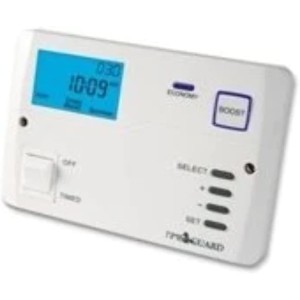
If you’re on an Economy 7 or Economy 10 electricity tariff, this is the timer to buy. The TRTD7N is specifically designed to maximise off-peak electricity use for immersion heater hot water, it’s programmed to run during your cheap rate hours (typically midnight to 7am, though this varies by supplier) and includes a boost function for when you need additional hot water during the day at standard rate. A standard 24-hour or 7-day timer technically works on Economy 7, but the TRTD7N makes the off-peak window and boost management genuinely straightforward rather than something you have to configure yourself.
The digital Economy 7 controller format is more complex than a basic timer, the programming reflects the dual-rate structure of the tariff, but at 4.7 stars it’s rated higher than most products on this list, which tells you that the people who need it appreciate what it does. At £60.17 it’s the most expensive product here, but if you’re on Economy 7 and currently running your immersion heater during expensive peak hours, the extra cost pays back quickly.
Check your electricity supplier to confirm your exact off-peak window before programming. Not all Economy 7 tariffs run at identical hours.
Features
- Digital Economy 7 / Economy 10 controller
- Programmes to run during off-peak cheap rate hours
- Manual boost function for daytime top-ups
- 16A rated
- 4.7 stars, highest-rated on this list
- Designed specifically for Economy 7 and Economy 10 tariffs
- 4.7 stars, highest-rated timer on this list
- Boost function handles daytime top-up needs
- Most expensive product here at £60, only justified for Economy 7 users
- More complex to program than standard timers
- Fewer reviews (100) than the FST24/NTT03
6. Companyblue 1–5 Hour Boost Timer Switch
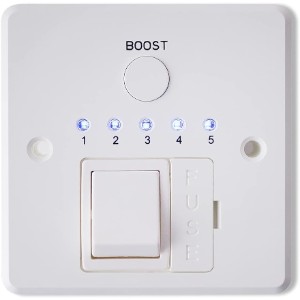
The Companyblue is a boost-only timer in the same category as the TGBT4, but with a wider selection of run durations, you can set it for anywhere between one and five hours in one-hour steps. That five-hour option is useful for larger cylinders or situations where you need more hot water than a two-hour boost provides. At £29.95 with 86 reviews at 4.6 stars, it’s well-received. If the TGBT4’s maximum two-hour window isn’t enough for your cylinder, this is the natural upgrade.
Features
- Manual boost timer: 1, 2, 3, 4, or 5 hour settings
- Fused spur wall controller
- 16A rated for immersion heaters and electric towel rails
- Automatic cut-off after selected period
- Up to 5-hour boost window suits larger cylinders
- 4.6 stars, well rated for a smaller review count
- Wider duration range than the TGBT4
- Manual operation only, purely manual operation
- Fewer reviews than the TGBT4
7. Sure Time 2-Hour Electronic Boost Timer
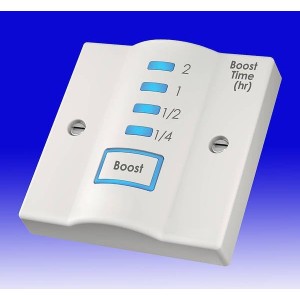
The cheapest boost timer on this list at £18.99. The Sure Time does one thing: it heats for up to two hours when you press the button and then switches off. There’s no display, no app, no complexity. With 106 reviews at 4.5 stars it’s a decent product for what it is. Choose it if budget is the primary concern and a two-hour maximum boost window is enough. If you need longer than two hours or want more duration options, the TGBT4 at £23.99 or the Companyblue at £29.95 are better fits.
Features
- Electronic boost timer up to 2 hours
- Simple manual operation
- 16A rated
- Automatic cut-off
- Cheapest boost timer on this list at £18.99
- Simple operation with no programming required
- 2-hour maximum may not suit larger cylinders
- No scheduling function at all
8. Smart WiFi Fused Spur Timer Switch
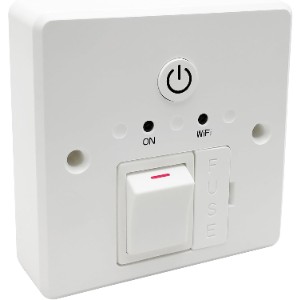
Full app control over your immersion heater from anywhere, set schedules, change them on the fly, switch it on while you’re on your way home, track usage from your phone. The Smart WiFi Fused Spur Timer is the only product on this list that offers remote control, and at £39.99 the premium over a standard Timeguard is modest for the capability it adds. If you already use a smart home system or find yourself wanting to change your hot water schedule regularly, this is worth the extra £4 over the NTT03.
It’s the newest product here with 50 reviews, so you’re relying on a shorter track record than the established Timeguard models. The early reviews are positive. It installs in the same fused spur position as the other timers on this list and requires a 2.4GHz WiFi network, not 5GHz, which is standard for smart home devices. If reliability over years matters more than smart features, the NTT03 with its 835 reviews is the lower-risk choice.
Features
- WiFi-connected fused spur timer with app control
- Remote scheduling and manual control via smartphone
- 16A rated for immersion heaters, towel rails, and heated floors
- 2.4GHz WiFi required
- Compatible with Alexa and Google Assistant
- Remote control and scheduling from anywhere via app
- Only £4 more than the NTT03 for smart home capability
- Alexa and Google Assistant compatible
- Only 50 reviews, shorter track record than Timeguard models
- Requires 2.4GHz WiFi, won’t work offline
- App dependency adds a point of failure vs. standalone timers
Immersion Heater Timer Buying Guide
Key Takeaways
- All immersion heater timers must be 16A rated minimum, standard 3kW heaters draw about 12.5A and the extra headroom matters for long-term reliability
- Installation must be carried out by a qualified electrician under Part P of the Building Regulations, this is a legal requirement, not optional
- Economy 7 users should use a dedicated Economy 7 controller like the TRTD7N rather than a standard timer to properly maximise off-peak rate benefits
- At 24p/kWh, a standard 3kW immersion heater costs 72p per hour to run, Economy 7 off-peak rates (typically 9–11p/kWh) reduce this to 27–33p per hour
- A boost timer is the right choice when your immersion heater is a backup or emergency source rather than your primary hot water heating method
What Is an Immersion Heater Timer?
An immersion heater timer is a switching device that controls when mains electricity reaches your immersion heater element. Fitted in the fused spur position between your consumer unit and the heater itself, it replaces the standard on/off switch with a programmable unit that turns the heater on and off at set times. This means your hot water can be ready when you wake up or return from work without the heater running all day, and without you having to remember to switch it on and off manually.
How Does an Immersion Heater Timer Work?
The timer interrupts the live feed to the immersion heater on a schedule you set. At the programmed on time, the relay closes and current flows to the heating element. At the programmed off time, the relay opens and the heater stops. The hot water cylinder retains heat for several hours after the heater switches off, a well-insulated modern cylinder typically stays hot for 8–12 hours. Most timers also include a manual override or boost button so you can run the heater outside the scheduled period when needed.
Types of Immersion Heater Timer
Mechanical 24-hour timers use a rotating dial with push-in pins or tabs to set on and off times. They’re simple, reliable, and need no programming knowledge. The limitation is that they run the same schedule every day and only allow switching at 30-minute intervals. Digital 24-hour timers do the same job but with a keypad and display, allowing 15-minute precision and easier adjustment.
Seven-day programmable timers let you set a different schedule for each day of the week. This is useful if your routine varies significantly between weekdays and weekends. Economy 7 controllers are a specific type designed for households on dual-rate tariffs, they’re programmed to run during cheap off-peak hours automatically, with a boost function for daytime top-ups.
Boost timers are not programmable at all. You press a button to heat for one or two hours and the timer cuts off automatically. They’re the right tool when your immersion heater is a supplementary or backup heat source rather than your primary hot water method. Smart WiFi timers add remote app control to the mix, useful for households with irregular routines who want to manage their hot water schedule from a phone.
The 16A Rating Requirement
This is the most important technical specification to understand. A standard domestic immersion heater element is 3kW. At 240V, that draws 12.5 amps. A timer rated at only 13A (the standard UK socket rating) is operating right at its limit, which generates heat in the switching contacts over time and can cause premature failure or, in the worst case, a fire. All immersion heater timers should be rated at 16A minimum, all the products on this list meet this requirement. If you’re looking at products not on this list, check the amperage rating before buying.
Economy 7 and Running Costs
At the current standard electricity rate of around 24p per kWh, a 3kW immersion heater costs 72p per hour to run. Heating a 150-litre cylinder from cold takes roughly two to three hours, which means each full heating cycle costs between £1.44 and £2.16 at the standard rate. Over a year, this adds up quickly for a household that relies on an immersion heater as a primary hot water source.
Economy 7 tariffs offer substantially lower rates during off-peak hours, typically around 9–11p/kWh, though the exact rate varies by supplier. At 10p/kWh, that same 2–3 hour heating cycle costs 60–90p rather than £1.44–£2.16. For households using their immersion heater regularly, the saving across a winter is meaningful, and a dedicated Economy 7 controller makes accessing those savings straightforward.
If you’re not on Economy 7 but rely heavily on your immersion heater, it’s worth checking whether your energy supplier offers a dual-rate tariff. The switch plus a TRTD7N controller often pays for itself within one heating season.
Fused Spur vs. Timeswitch, What Is the Difference?
A fused spur is the connection unit that includes its own fuse and isolator, it provides a local means of disconnection and protects the circuit. Most modern immersion heater installations in UK homes use a switched fused connection unit (SFCU) rather than wiring the heater directly into the consumer unit. A fused spur timeswitch replaces the standard fused spur with a version that includes the timer function built in, one unit does both jobs.
A timeswitch is the timer element only, without the fused spur function. Some installations wire the timeswitch in a separate position, with the fused spur elsewhere in the circuit. If you’re replacing a failed timer, the easiest approach is to match the type you already have. If you’re unsure, ask your electrician to assess the existing installation before ordering.
Installation Requirements
Immersion heater timer installation is notifiable work under Part P of the Building Regulations (England and Wales). This means it must be carried out by a qualified electrician who is registered with a competent person scheme such as NICEIC, NAPIT, or ELECSA, or it must be notified to your local building control authority before work begins. This isn’t optional and exists for good reason: incorrect installation of a 16A switched circuit near hot water systems carries genuine fire and electrocution risk.
The installation itself is not complex for a qualified electrician and typically takes under an hour. The cost is usually £60–£120 depending on location and whether other work is done at the same time. Factor this into your budget when comparing products.
Benefits of Using an Immersion Heater Timer
The primary benefit is energy saving. An immersion heater that runs only when hot water is actually needed uses significantly less electricity than one that runs continuously or is switched on and forgotten. A well-programmed timer ensures your cylinder is hot when you need it and off when you don’t.
Automatic scheduling also protects the element itself. Immersion heater elements degrade faster when they cycle on and off repeatedly due to forgetful manual switching compared to a consistent programmed routine. A timer provides predictable, consistent operation. For Economy 7 users, the combination of a dedicated controller and off-peak heating is one of the most cost-effective ways to reduce hot water running costs available to UK households.
Common Mistakes When Buying and Installing Immersion Heater Timers
The most common error is buying a plug-in socket timer rather than a hardwired fused spur unit. Plug-in timers are not designed for the sustained 3kW load of an immersion heater, even if they’re rated at 13A, the contacts aren’t built for continuous high-current switching over years. All the products on this list are hardwired units. If you see a timer with a standard 3-pin plug at the back, it’s not appropriate for an immersion heater.
The second most common mistake is buying an Economy 7 controller when you’re not on an Economy 7 tariff. The TRTD7N is purpose-built for dual-rate metering, if you’re on a single-rate tariff it will work, but you’re paying £60 for functionality you can’t use. Check your electricity tariff before buying.
Programming errors are also common with digital timers. Setting AM when you mean PM and vice versa is easy to do on a small display. After installation, always run through a test cycle or check the override function before relying on the schedule, especially if hot water for the household depends on it being correct.
When Not to Install a Timer
If your immersion heater is never used, for example, you have a gas combi boiler that provides all your hot water and the immersion heater is only there as a backup, a timer is unnecessary. A manual switch or basic boost timer is sufficient for rare use.
If your hot water cylinder is old and poorly insulated, a timer will save you less than expected because heat loss during the off period is significant. In that situation, cylinder insulation (a “hot water cylinder jacket” from any DIY retailer costs around £15–£20) is a better first investment than a timer. A well-lagged cylinder holds heat for 8–12 hours; a bare cylinder loses half its heat in 3–4 hours.
Quick Buyer Checklist
- What type of existing installation do you have, fused spur, or separate timeswitch position?
- Are you on Economy 7 or Economy 10? If yes, the TRTD7N is the right product
- Do you need the same schedule every day, or different weekday/weekend schedules?
- Is the heater your primary hot water source or a backup? If backup, a boost timer may be all you need
- Do you want remote app control? Budget at least £40 for this
- Have you budgeted for qualified electrician installation (£60–£120 typical)?
- Is your cylinder insulated? If not, insulate it first, the savings dwarf what a timer alone delivers
Case Study: Victorian Terraced House, West Midlands
Background
A homeowner in a Victorian terrace in the West Midlands had a gas combi boiler as their primary heating and hot water system, but also had a 150-litre hot water cylinder with an immersion heater as a backup, useful when the boiler needed servicing or when demand was high. The cylinder’s original fused spur switch had no timer at all, just a manual on/off switch, and had been left running overnight on multiple occasions, resulting in electricity bills significantly higher than expected.
Project Overview
The brief was to install a programmable timer that would prevent accidental overnight running, allow scheduled use on days when the boiler was being serviced, and ideally work with the Economy 7 tariff the household had recently switched to.
Implementation
A qualified electrician installed the Timeguard TRTD7N Economy 7 controller, replacing the existing manual fused spur switch. The controller was programmed to run during the Economy 7 off-peak window (1am to 6am for this supplier) with a two-hour boost function available during the day via a button press. Installation took under an hour and the work was certified under Part P.
Results
Accidental overnight running at the standard rate was eliminated. On days when the cylinder is used as the primary hot water source, the off-peak heating window provides enough hot water for a four-person household for most of the day, with the boost function covering any shortfall. The household estimates a saving of around £80–£120 per year compared to their previous uncontrolled usage.
Expert Insights From Our Heating Engineers About Immersion Heater Timers
One of our senior heating engineers with over 22 years of experience working on domestic plumbing and electrical systems shared the following:
“The most important thing I tell customers is to check the rating. Sixteen amps minimum, no exceptions. I’ve replaced failed timers that were only rated to 13A, they work fine for a year or two and then the contacts burn out. It’s a false economy. All the major Timeguard units are 16A and that’s what I always recommend.”
“Economy 7 is massively underused. A lot of households have it on their tariff but their immersion heater is running during peak hours because nobody ever set up the controller properly. The TRTD7N is the right product for those homes, it’s designed specifically for that purpose and once it’s set up correctly it just runs. I’ve installed dozens of them.”
“One thing people overlook is the cylinder insulation. I’ve seen customers install a timer and then wonder why their bills haven’t dropped much, and it turns out their cylinder is bare or lagged with a thin jacket from 30 years ago. Fit a proper modern cylinder jacket first. Then install the timer. The combination of both makes a real difference.”
Frequently Asked Questions
Do I need an electrician to fit an immersion heater timer?
Yes. Immersion heater timer installation is notifiable work under Part P of the Building Regulations in England and Wales, which means it must be carried out by a registered electrician or notified to building control before work begins. This is a legal requirement, not a recommendation. The work itself typically takes under an hour and costs £60–£120 depending on location and the installer.
How much can an immersion heater timer save on electricity bills?
It depends on how the heater was being used previously. A household that previously left the heater on continuously could save £300–£500 per year by scheduling it to run for only 2–3 hours per day. More typically, switching from ad hoc manual use to a programmed routine saves £50–£150 per year. Economy 7 users who switch from running during peak hours to programmed off-peak heating can save significantly more, the off-peak rate is typically 60–70% cheaper than the standard rate.
What is the difference between a boost timer and a programmable timer?
A boost timer is manual, you press a button to heat for a fixed period (usually 1–2 hours) and it switches off automatically. There’s no automatic scheduling. A programmable timer runs automatically at set times without any daily input. For households where the immersion heater is the primary hot water source, a programmable timer is the right choice. For backup or occasional use, a boost timer is simpler and often all that’s needed.
Can I use a plug-in socket timer for my immersion heater?
No. Immersion heaters are hardwired appliances, not plug-in devices, and they draw up to 12.5A continuously, a load that standard socket timers are not designed to handle safely over time. Always use a hardwired 16A-rated fused spur timer. All products on this list are the correct type.
What is Economy 7 and which timer should I use?
Economy 7 is a dual-rate electricity tariff that charges a significantly lower rate during seven off-peak hours overnight (typically midnight to 7am, though the exact window varies by supplier). It’s designed for households with storage heating or hot water cylinders that can be heated overnight cheaply. For Economy 7 users, the Timeguard TRTD7N is the recommended timer, it’s specifically designed to maximise off-peak charging and includes a daytime boost function for top-ups.
How long does it take for an immersion heater to heat a full cylinder?
A standard 3kW immersion heater takes approximately 2–3 hours to heat a 150-litre cylinder from cold. Smaller cylinders (100 litres) take around 1.5–2 hours. If your hot water runs out before the programmed heating period ends, the water in the cylinder hasn’t reached temperature yet, extend the run time or check that the thermostat is set correctly (typically 60°C to prevent Legionella growth).
Should I set my immersion heater to 60°C or higher?
The NHS and HSE recommend 60°C as the minimum for stored hot water to prevent the growth of Legionella bacteria. Don’t be tempted to set it lower to save energy, the risk isn’t worth it. At 60°C the water is hot enough to kill Legionella while the thermostat still prevents overheating and wasted energy. Avoid setting it above 65°C as this increases scale build-up and energy consumption without meaningful benefit.
How long does an immersion heater timer last?
A good quality hardwired timer like the Timeguard range should last 10–15 years under normal use. Mechanical timers with no moving parts beyond the clock mechanism are particularly durable. The most common failure point is the relay contacts, which can burn out if the timer is undersized for the load, another reason 16A rating matters. If a timer fails before 5 years, it was likely undersized, installed incorrectly, or was a lower-quality product.
Summing Up
For most households, the Timeguard FST24 at £28.50 is the right choice, it’s the most proven immersion heater timer on Amazon UK and it does the job reliably. If you want the flexibility of different weekday and weekend schedules, spend the extra £7 on the NTT03. Economy 7 users should go straight to the TRTD7N, it’s specifically built for your tariff and the higher price pays back quickly. If you just want a simple boost function for occasional use, the TGBT4 at £23.99 is all you need. Remember to budget for a qualified electrician installation and sort your cylinder insulation first if it hasn’t been done already.
Updated