
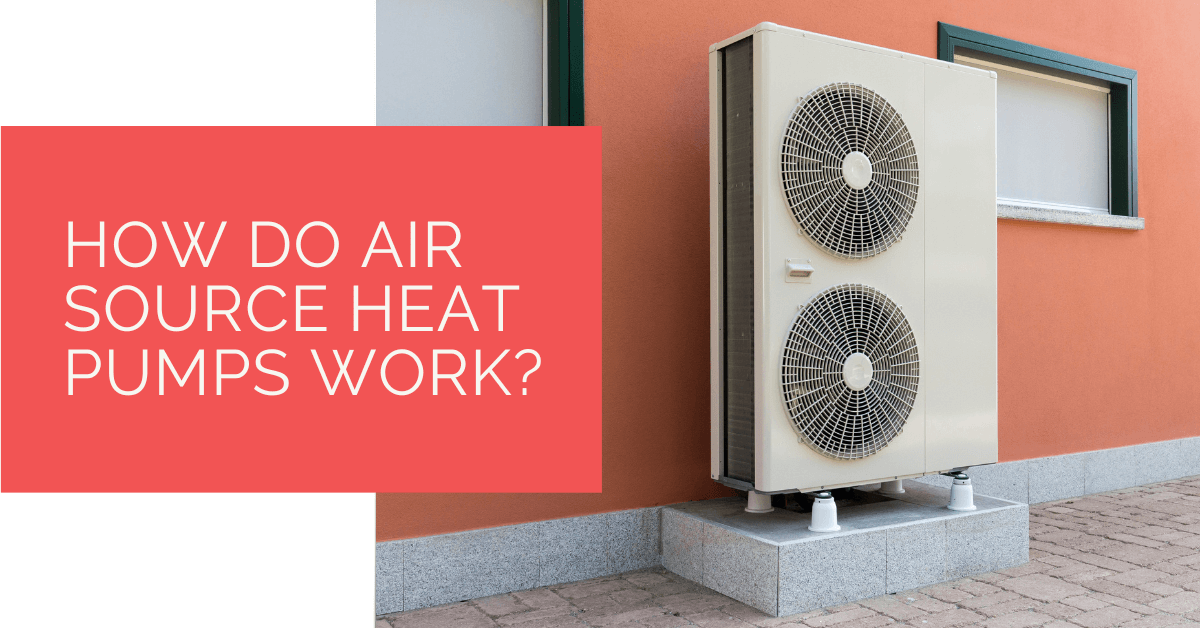
An air source heat pump heats a home by taking heat from outdoor air and moving it indoors. That sounds unlikely on a cold day, but outdoor air still contains heat energy even when it feels chilly. The heat pump’s job is to collect that low-temperature heat, upgrade it, and deliver it through the heating system.
The technology is proven, but the result in a real home depends on design. A heat pump connected to suitable radiators, underfloor heating and a correctly specified cylinder can feel steady and efficient. The same type of unit fitted to a high heat-loss home with undersized emitters can be forced to run hotter, which weakens efficiency and comfort.
This guide explains how air source heat pumps work, what the outdoor unit is doing, how heat reaches radiators and hot water, what COP and SCOP mean, and what to check before deciding whether one is right for your property.
Contents
- 1 Key Takeaways
- 2 The Simple Explanation
- 3 The Refrigerant Cycle Explained
- 4 Air-To-Water vs Air-To-Air Heat Pumps
- 5 How Heat Reaches Radiators, Underfloor Heating And Hot Water
- 6 Flow Temperature, COP And SCOP
- 7 Cold Weather, Defrost And Winter Performance
- 8 What A Good Installation Survey Checks
- 9 Costs, Grants And Running Costs
- 10 Noise, Placement And Practical Issues
- 11 Pros And Cons Of Air Source Heat Pumps
- 12 Case Study: Making An Older Bungalow Heat Pump Ready
- 13 Expert Insights From Our Heating Engineers
- 14 Frequently Asked Questions
- 14.1 How Does An Air Source Heat Pump Heat A House?
- 14.2 Can An Air Source Heat Pump Work In Cold Weather?
- 14.3 Do Air Source Heat Pumps Work With Radiators?
- 14.4 Do I Need A Hot-Water Cylinder?
- 14.5 What Is COP On An Air Source Heat Pump?
- 14.6 What Is SCOP And Why Is It More Useful?
- 14.7 Are Air Source Heat Pumps Noisy?
- 14.8 How Long Does Installation Take?
- 14.9 What Can Make An Air Source Heat Pump Expensive To Run?
- 15 Summing Up
Key Takeaways
- An air source heat pump extracts heat from outdoor air and upgrades it using a refrigerant cycle.
- Most UK whole-home systems are air-to-water heat pumps, meaning they heat water for radiators, underfloor heating and a hot-water cylinder.
- Heat pumps usually work best at lower flow temperatures than boilers, so emitter sizing matters.
- Existing radiators can work, but they need checking room by room rather than guessed from age or size.
- COP shows efficiency at one set of conditions, while SCOP gives a more useful seasonal view.
- Defrost cycles are normal in cold damp weather, but constant short cycling or poor comfort needs investigation.
- Good installation starts with heat-loss calculations, outdoor unit placement, cylinder design, controls and clear handover.
The Simple Explanation
An air source heat pump works a little like a fridge in reverse. A fridge removes heat from inside the cabinet and releases it into the room. An air source heat pump collects heat from outside air and releases it into your home.
It does this with refrigerant, a compressor, heat exchangers and controls. The refrigerant can absorb heat at very low temperatures. The compressor then raises its pressure and temperature so that heat can be transferred into your heating system.
The important difference from a gas boiler is that the heat pump is moving heat rather than burning fuel to create it directly. That is why a well-designed heat pump can deliver more heat energy than the electrical energy it uses.
The Refrigerant Cycle Explained
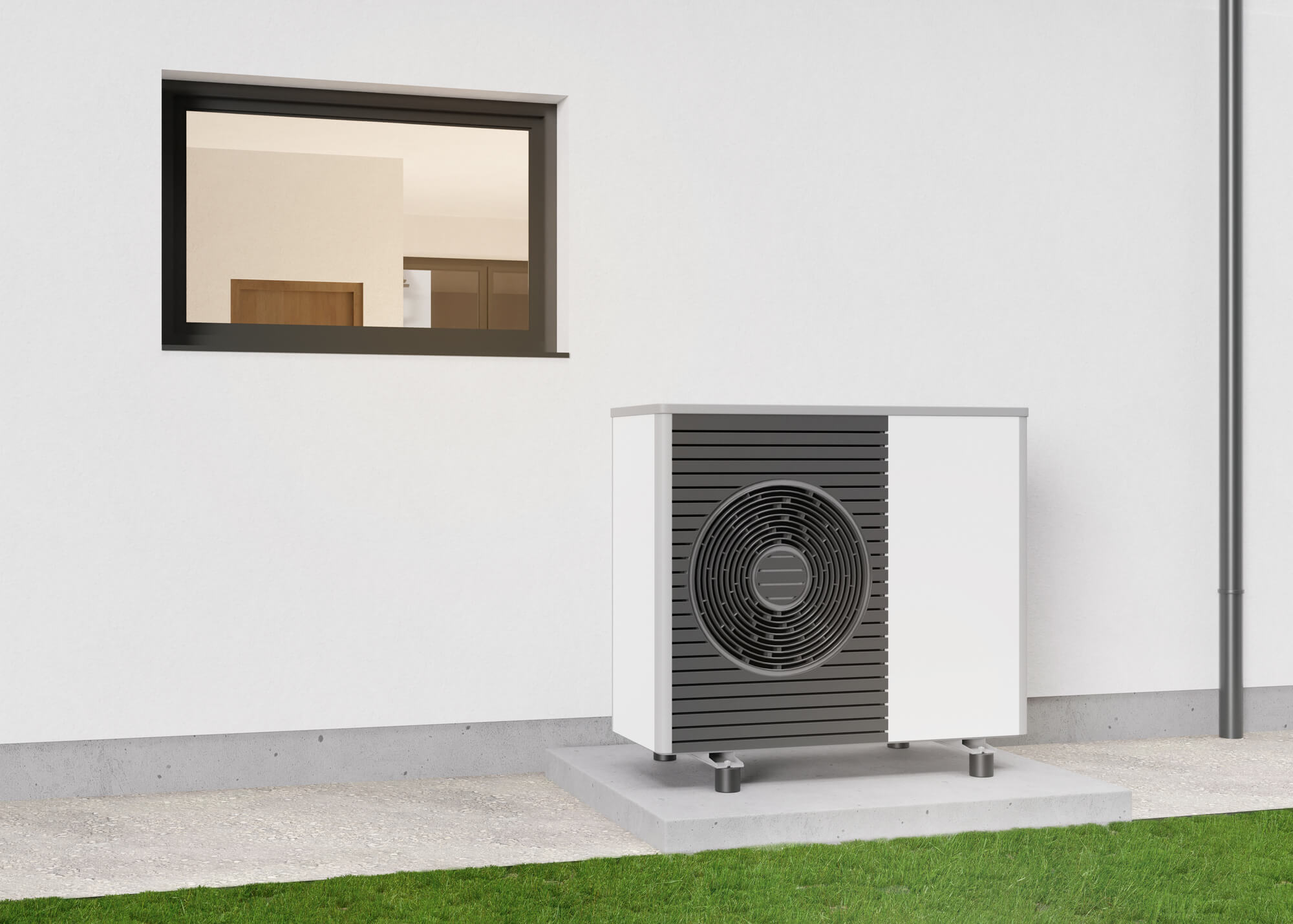
The cycle has four main stages. First, the outdoor fan draws air across the evaporator coil. The refrigerant inside that coil absorbs heat from the air and changes into a vapour.
Second, the compressor squeezes that vapour, raising its temperature. This is why the compressor is such a critical part of the system. Modern inverter-driven compressors can adjust their output, which helps the heat pump run steadily rather than constantly switching fully on and off.
Third, the hot refrigerant passes through a heat exchanger, where it releases heat into the home’s water circuit or indoor air stream. Finally, the refrigerant passes through an expansion valve, cools down and starts the cycle again.
| Stage | What Happens | Why It Matters |
|---|---|---|
| Evaporation | Refrigerant absorbs heat from outdoor air | This is how useful heat is collected even in cool weather |
| Compression | The vapour is compressed and gets hotter | This raises the heat to a useful temperature |
| Condensation | Heat transfers into water or indoor air | This is what warms the home |
| Expansion | The refrigerant cools and resets | The cycle can repeat continuously |
Air-To-Water vs Air-To-Air Heat Pumps
Most UK domestic heat pump discussions are about air-to-water systems. These connect to a wet central heating system, so they can heat radiators, underfloor heating and usually a hot-water cylinder.
Air-to-air systems work differently. They deliver warm air indoors through fan units and can often provide cooling in summer. They can suit some flats, extensions, garden rooms and open spaces, but they do not usually replace a full wet central heating and hot-water system in the same way.
If you are replacing a boiler and want to keep radiators or underfloor heating, you are usually looking at air-to-water. If you want room-by-room warm air and cooling, air-to-air may be worth discussing, but it is a different proposition.
How Heat Reaches Radiators, Underfloor Heating And Hot Water
In an air-to-water system, the heat pump transfers heat into water. That water then circulates through radiators, underfloor heating, fan convectors or a hot-water cylinder.
Heat pumps are usually most efficient when they produce lower-temperature water for longer periods. A boiler might send very hot water to smaller radiators in short bursts. A heat pump is normally happier sending cooler water steadily through larger emitters.
| Emitter | How It Works With A Heat Pump | What To Check |
|---|---|---|
| Existing Radiators | Can work if output is high enough at lower water temperatures | Room-by-room heat output at the proposed flow temperature |
| Larger Radiators | Often improve comfort and allow lower flow temperatures | Wall space, pipework and appearance |
| Underfloor Heating | Excellent match for low-temperature heating | Floor insulation, build-up and response time |
| Fan Convectors | Useful where wall space is limited | Noise, power supply and maintenance |
Hot water is usually stored in a compatible cylinder with a coil designed for heat pump operation. Old boiler cylinders are not always suitable. Cylinder size, coil size, reheat time and immersion backup all affect how the system performs.
Flow Temperature, COP And SCOP
Flow temperature is the temperature of the water leaving the heat pump for the heating system. Lower flow temperatures usually improve efficiency, provided the radiators or floor heating can still deliver enough warmth.
COP, or coefficient of performance, shows how much heat the system delivers compared with the electricity it uses at a specific moment. A COP of 3 means the heat pump is delivering three units of heat for one unit of electricity.
SCOP, or seasonal coefficient of performance, is usually more useful because it reflects performance across a heating season. It accounts for changing outdoor temperatures and operating conditions. A single COP figure from ideal test conditions does not tell you how the system will perform in a real UK winter.
For wider context on suitability and system design, our complete heat pump guide explains how air source and ground source systems compare.
Cold Weather, Defrost And Winter Performance
Air source heat pumps can work in cold weather, but they have to work harder as outdoor temperature falls. The colder the air and the hotter the water the system is asked to produce, the more pressure is placed on efficiency.
In cold damp weather, frost can form on the outdoor coil. The heat pump will periodically run a defrost cycle to clear it. During defrost, you may see steam-like vapour, hear a change in sound or notice water draining from the unit. That is normally part of the process.
Defrost becomes a concern if it is excessive, if the unit is badly placed, or if comfort drops sharply because the system has too little capacity. A good design allows for winter performance rather than relying on mild-weather figures.
What A Good Installation Survey Checks
A proper survey should start with the building, not the product brochure. The installer should calculate heat loss room by room, then check whether each radiator, underfloor loop or fan convector can meet that demand at the planned flow temperature.
The survey should also check hot-water demand, cylinder space, pipe routes, electrical supply, outdoor unit location, condensate drainage, planning constraints, service access and controls. If the installer only asks about your current boiler size, the design is not detailed enough.
Questions To Ask Before Accepting A Quote
- What is the room-by-room heat loss?
- What flow temperature is the system designed around?
- Which radiators need changing, and why?
- What hot-water cylinder is included?
- How has outdoor unit noise been assessed?
- Where will defrost water drain?
- What seasonal performance is expected?
- How will the system be commissioned and handed over?
The installer should be able to answer these in plain English. If the quote focuses only on the heat pump brand and not the system around it, keep comparing.
Costs, Grants And Running Costs
Installation cost depends on the property and the scope of work. A straightforward air source heat pump project may involve the outdoor unit, cylinder, controls and commissioning. A more involved retrofit may also need radiator upgrades, pipework changes, electrical work, insulation improvements and access equipment.
The Boiler Upgrade Scheme can support eligible air source heat pump installations in England and Wales. The installer normally applies and deducts the grant from the quoted cost if the system qualifies. Always check current rules before relying on any grant figure.
Running costs depend on seasonal efficiency, electricity tariff, heat demand, hot-water use and controls. A heat pump with a strong SCOP can be competitive, but poor design can quickly erode the advantage. High flow temperatures, undersized radiators, frequent immersion heater use and constant manual boosts all push costs up.
Noise, Placement And Practical Issues
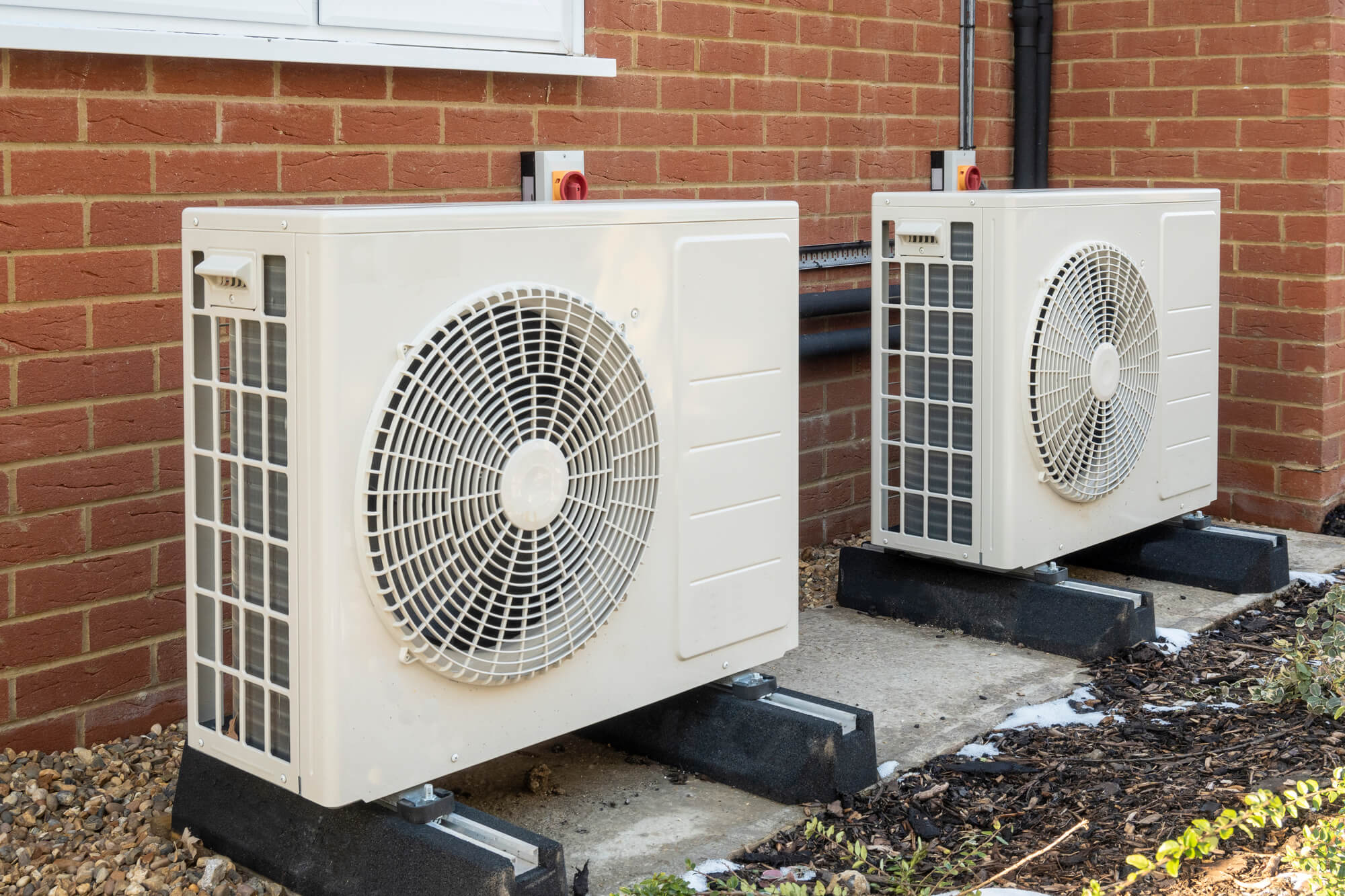
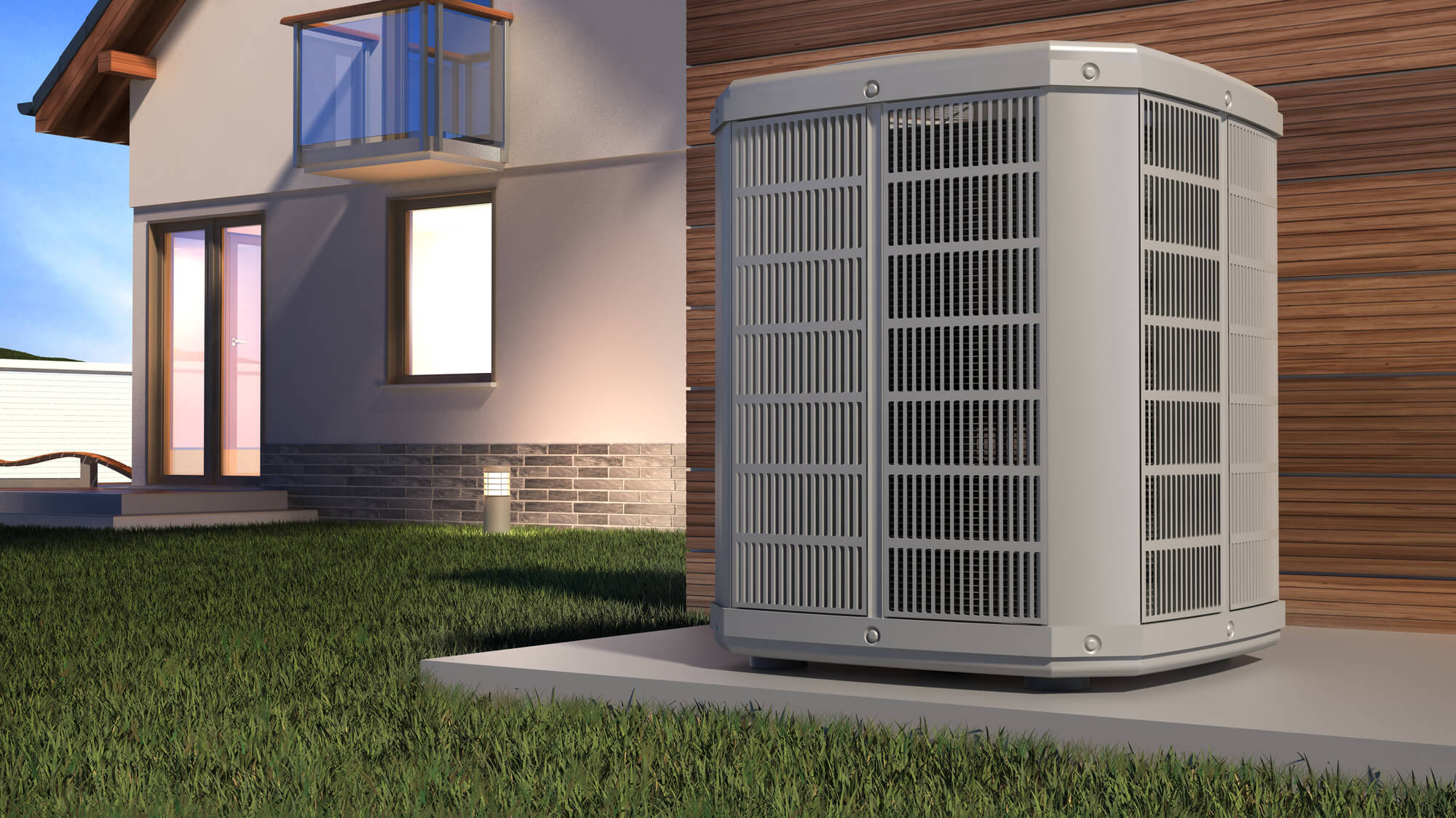
The outdoor unit makes sound from its fan and compressor. Modern units are designed to be manageable, but placement still matters. Avoid boxed-in locations, tight corners where airflow recirculates, and mounting positions that send vibration into bedroom walls.
Noise also changes with operating conditions. A unit may be very quiet on a mild day and more noticeable on a cold day when it is working harder. That does not automatically mean it is faulty, but the installer should consider neighbours, windows, boundaries and service access when choosing the location.
Condensate and defrost water need a safe route away from the unit. If water drains onto a path in freezing weather, it can create a slip risk. This is a small detail, but good installations pay attention to small details.
Pros And Cons Of Air Source Heat Pumps
| Pros | Cons |
|---|---|
| Can provide efficient, lower-carbon heating | Upfront cost can be high without grant support |
| Suitable for many UK homes after proper assessment | Some homes need radiator, cylinder or insulation upgrades |
| Works well with low-temperature emitters | Performance depends heavily on design and commissioning |
| Can reduce reliance on gas, oil or LPG | Outdoor unit location and noise need careful planning |
Case Study: Making An Older Bungalow Heat Pump Ready
Background
A homeowner in a rural bungalow wanted to replace an ageing oil boiler with an air source heat pump. A first opinion suggested the property was unsuitable because several radiators were old and the home had a long heating circuit.
Assessment
A second assessment took a more detailed approach. The installer calculated heat loss room by room, checked radiator outputs, reviewed loft insulation and looked at cylinder space. The survey found that the whole property was not the problem. Two cold rooms and the existing cylinder were the weak points.
Decision
The homeowner upgraded the lounge and hallway radiators, replaced the cylinder with a compatible heat pump cylinder, and positioned the outdoor unit away from the main bedroom window. Controls were set up for steady operation rather than short high-temperature bursts.
Result
The project worked because the design focused on the building rather than making a blanket judgement. The lesson was not that every bungalow is suitable. It was that suitability needs evidence: heat loss, emitters, cylinder, outdoor location and user expectations.
Expert Insights From Our Heating Engineers
One of our senior heating engineers with over 18 years of experience says air source heat pumps are straightforward in principle but unforgiving of lazy design.
“The outdoor unit is only one part of the system. If the heat loss is wrong, the radiators are too small or the cylinder is unsuitable, the heat pump has to work harder than it should. That is where comfort problems and high bills usually start.”
He also says homeowners should ask about normal operation. “People need to know what defrost looks like, why the system may run for longer periods, and why constantly turning up the flow temperature is not the answer. A good handover prevents a lot of avoidable problems.”
Frequently Asked Questions
How Does An Air Source Heat Pump Heat A House?
It absorbs heat from outdoor air, raises the temperature using a compressor and transfers that heat into the home. In most UK air-to-water systems, the heat is sent to radiators, underfloor heating and a hot-water cylinder.
Can An Air Source Heat Pump Work In Cold Weather?
Yes. Outdoor air still contains heat energy in cold weather, and the refrigerant cycle can collect and upgrade that heat. Efficiency normally falls as outdoor temperature drops, so correct sizing and low-temperature heating design are important.
Do Air Source Heat Pumps Work With Radiators?
They can work with radiators, but the radiators must be large enough to heat each room at the proposed flow temperature. Some existing radiators may be suitable, while others may need upgrading. Our radiator sizing guide explains why output changes with water temperature.
Do I Need A Hot-Water Cylinder?
Most whole-home air-to-water heat pump systems need a compatible hot-water cylinder. The cylinder must be sized for the household and designed to work efficiently with the heat pump. Some air-to-air systems do not heat water, so they need a separate hot-water solution.
What Is COP On An Air Source Heat Pump?
COP is the coefficient of performance. It compares heat output with electricity input at a specific moment. A COP of 3 means the heat pump is delivering three units of heat for one unit of electricity under those conditions.
What Is SCOP And Why Is It More Useful?
SCOP is the seasonal coefficient of performance. It gives a broader view of efficiency across a heating season, rather than at one test point. It is more useful for homeowners because real systems face changing weather, hot-water demand and flow temperatures.
Are Air Source Heat Pumps Noisy?
They make some sound from the fan and compressor, especially when working harder in colder weather. A correctly chosen and positioned unit should be manageable, but poor placement near bedrooms, boundaries or reflective walls can make noise more noticeable.
How Long Does Installation Take?
A straightforward air source heat pump installation may take a few days, but timing depends on radiator changes, cylinder work, pipe routes, electrical upgrades and access. A proper quote should explain the expected schedule and what disruption to expect.
What Can Make An Air Source Heat Pump Expensive To Run?
High flow temperatures, poor insulation, undersized radiators, frequent immersion heater use, weak controls and constant manual boosting can all increase running costs. The system needs to be designed around the property, not forced to behave like a high-temperature boiler.
Summing Up
An air source heat pump works by moving heat from outdoor air into your home through a refrigerant cycle. The science is simple enough, but the success of the installation depends on the building, the emitters, the cylinder, the controls and the installer’s design work.
If you are considering one, ask for heat-loss calculations, radiator checks, hot-water design and a clear explanation of winter operation. A good air source heat pump should not feel mysterious. It should be designed, commissioned and explained well enough that you understand how it will keep your home comfortable.
Updated