

An air conditioner and a dehumidifier can both make a room feel more comfortable, but they solve different problems. An air conditioner is mainly for cooling. A dehumidifier is mainly for reducing moisture. The confusion comes from the fact that cooling and humidity often affect comfort at the same time.
This guide explains when each appliance makes sense, what to check before buying, and when you might need both. It also covers running costs, noise, window hose practicalities, damp caveats and the common mistake of buying the wrong machine for the symptom you are noticing.
Contents
- 1 Key Takeaways
- 2 Air Conditioner vs Dehumidifier: the Quick Decision
- 3 What an Air Conditioner Does
- 4 What a Dehumidifier Does
- 5 Room Size, Noise and Running Costs
- 6 When You Might Need Both
- 7 Case Study: Choosing Between Cooling and Moisture Control
- 8 Expert Insights from Our Heating and Cooling Engineers
- 9 Frequently Asked Questions
- 10 Summing Up
Key Takeaways
- Choose an air conditioner if the room is too hot and needs active cooling.
- Choose a dehumidifier if the main issue is damp, condensation or high humidity.
- A dehumidifier may make a room feel less clammy, but it will not cool like an air conditioner.
- A portable air conditioner needs a window hose setup to remove heat properly.
- If mould is present, moisture source control matters more than appliance choice.
Air Conditioner vs Dehumidifier: the Quick Decision
| Problem | Better Choice | Why |
|---|---|---|
| Room is too hot in summer | Air conditioner | It removes heat from the room and exhausts it outside. |
| Windows stream with condensation | Dehumidifier | It removes moisture from indoor air. |
| Bedroom feels sticky but not very hot | Dehumidifier first | Lower humidity can improve comfort without active cooling. |
| Loft room overheats during heatwaves | Air conditioner | Moisture removal alone will not lower temperature enough. |
| Mould keeps returning | Neither as the full answer | You need to fix moisture, ventilation and cold surfaces. |
If the main problem is damp, start with the cause. Our guide to getting rid of damp explains why a dehumidifier can help symptoms but should not be treated as a repair for leaks, poor insulation or inadequate ventilation.
What an Air Conditioner Does
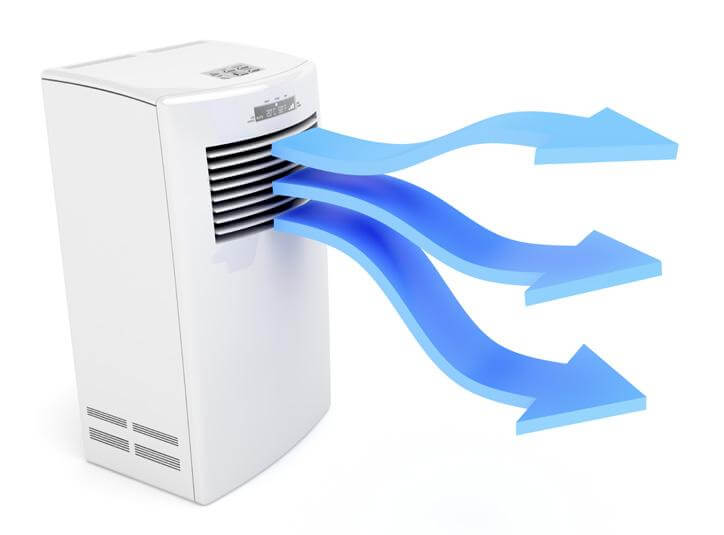
An air conditioner removes heat from indoor air and transfers it outside. A portable air conditioner normally does this through a hose placed in a window or wall vent. Without a proper exhaust path, the appliance cannot cool the room effectively because the removed heat has nowhere useful to go.
Air conditioners also remove some moisture as part of the cooling process, which is why they can make a hot room feel more comfortable. That does not make them the best tool for winter condensation or persistent damp. They are usually a summer cooling appliance first.
What a Dehumidifier Does
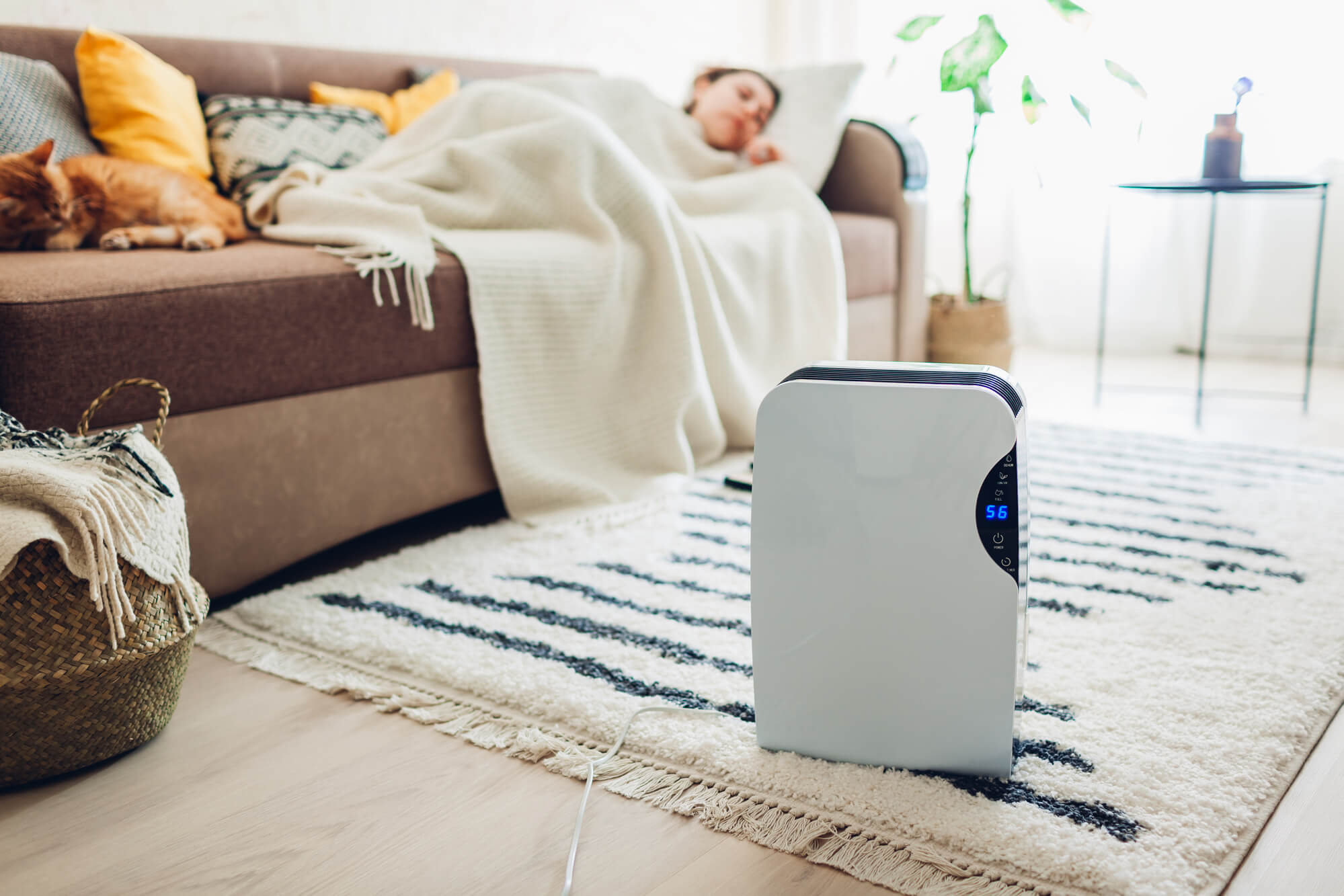
A dehumidifier draws in moist air, condenses water out of it and returns drier air to the room. It can help with condensation, drying laundry indoors, musty smells and rooms that feel clammy. It may add a small amount of warmth because the motor and compressor release heat into the room.
A dehumidifier does not remove heat from the building. In a hot bedroom during a heatwave, it may make the air feel less sticky, but it will not perform like an air conditioner. If temperature is the real problem, choose cooling rather than moisture removal.
Room Size, Noise and Running Costs
| Factor | Air Conditioner | Dehumidifier |
|---|---|---|
| Main output | Cooling, measured in BTU or kW | Moisture removal, measured in litres per day |
| Typical setup issue | Window hose sealing and hot-air exhaust | Drainage, tank size and humidistat settings |
| Noise | Often louder, especially portable units | Usually quieter but varies by compressor speed |
| Running cost | Higher during active cooling | Lower per hour in many cases, but can run longer |
| Best season | Summer and heatwaves | Autumn, winter and damp periods |
Running cost depends on wattage and hours used. For a deeper cost calculation, our electric running-cost guide shows the same kWh logic that applies when comparing plug-in appliances.
When You Might Need Both
Some homes need both appliances, but usually not for the same job at the same time. A dehumidifier may be useful in winter to control condensation, while an air conditioner may be useful during summer heat. A basement, utility room or poorly ventilated flat can have moisture problems even when the main bedroom overheats in July.
Be careful with placement. A portable air conditioner needs an exhaust route and clear airflow. A dehumidifier needs access to moist air and enough time to work. Hiding either appliance behind furniture makes performance worse.
Case Study: Choosing Between Cooling and Moisture Control
A renter in a top-floor flat was struggling with two separate problems: summer overheating in the bedroom and winter condensation around the windows. They first considered a dehumidifier because the flat felt stuffy, but that would not have solved the peak summer heat.
They mapped the problem by season. In summer, the room temperature stayed high even when humidity was moderate, so a portable air conditioner with a proper window seal made sense. In winter, the temperature was not the issue, but moisture from cooking, showers and drying clothes was causing condensation.
The renter bought a dehumidifier for winter moisture control and borrowed a portable air conditioner during the hottest weeks before deciding whether to buy one. They also improved window ventilation habits and stopped drying laundry in the bedroom.
The useful lesson was that one comfort complaint can have two causes. Once heat and humidity were separated, the appliance decisions became much clearer and the renter avoided expecting one machine to do everything.
They also learned to empty and clean the dehumidifier regularly. Once the tank and filter became part of the weekly routine, the appliance performed more consistently and the room no longer swung between dry one day and damp the next.
They also changed when they used each appliance. The dehumidifier ran after showers and laundry drying, while cooling was saved for warm evenings when the room temperature stayed high after sunset.
That separation made the decision clearer. Moisture control became a daily background task, while cooling became a comfort tool for hot spells rather than something expected to fix damp walls.
Expert Insights from Our Heating and Cooling Engineers
One of our senior heating engineers with over 18 years of experience says: “If the room is hot, remove heat. If the room is damp, remove moisture. People waste money when they buy the appliance that sounds closest rather than the one that matches the actual problem.”
For mould or persistent damp, appliance choice should come after diagnosis. GOV.UK’s guidance on damp and mould health risks is a useful reminder that visible mould should not be dismissed as a comfort issue only.
Decision Guide by Room Type
Bedrooms often create the hardest decision because both heat and humidity affect sleep. If the bedroom is hot after sunset, especially during summer, an air conditioner is the more direct solution. If the windows are wet in the morning during winter, a dehumidifier is more relevant. If both happen in different seasons, one appliance will not cover the whole year perfectly.
Living rooms are usually larger and more open, so sizing becomes more important. A small dehumidifier may reduce humidity slowly in a big open-plan space, and a small portable air conditioner may struggle to cool beyond the area immediately around it. Check appliance capacity against the room, not just the price.
Bathrooms and utility rooms usually point towards moisture control. A dehumidifier can help with drying and humidity, but proper extraction should come first. If steam from showers is the cause, removing moisture at source is better than moving it into the rest of the home and trying to collect it later.
Practical Setup Checks
| Check | Air Conditioner | Dehumidifier |
|---|---|---|
| Where will it sit? | Near a window or vent route for the hose. | Where moist air can circulate freely. |
| What needs emptying? | Condensate may need draining on some models. | Water tank or continuous drain. |
| What blocks performance? | Poor hose seal, direct sun and undersizing. | Closed doors, blocked inlet and wrong humidistat setting. |
| What should you measure? | Room temperature and BTU requirement. | Relative humidity and litres per day. |
| When should it run? | During heat peaks, often for shorter periods. | When humidity is high, often more steadily. |
A useful test is to measure both temperature and humidity for a week. If temperature is high but humidity is normal, choose cooling. If humidity is high while temperature is acceptable, choose dehumidification. If both are high, deal with heat first in summer and moisture sources year-round.
When the Appliance Is Not the Main Fix
Neither appliance repairs a building defect. If rainwater is entering through a wall, if a bathroom extractor is broken or if a cold room has no background heat, the right appliance may only reduce symptoms. Persistent mould, peeling paint, swollen skirting boards or a musty smell behind furniture should trigger investigation rather than another appliance purchase.
For renters, it is especially important to document the issue. Photos, humidity readings and notes about when condensation appears can help separate lifestyle moisture from repair problems. The appliance can support comfort, but it should not be used to normalise a home that needs maintenance.
Questions to Ask Before Buying
Before buying either appliance, write down what is happening, when it happens and which room is affected. “The room feels uncomfortable” is not specific enough. A room that reaches 28°C in the evening needs a different solution from a room at 18°C with 75% relative humidity and wet windows.
- Is the main problem temperature, humidity, condensation, smell or mould?
- Does it happen in one room or across the whole home?
- Is there a window or vent route for an air conditioner hose?
- Can a dehumidifier drain continuously, or will you empty the tank daily?
- Will the appliance run while you sleep, and is the noise acceptable?
- Is there a repair issue, such as a leak, poor extraction or missing insulation?
These answers stop you buying based on appliance popularity. A dehumidifier is not a budget air conditioner, and an air conditioner is not the best long-term answer to winter condensation.
Common Buying Mistakes
The most common mistake is undersizing. A small appliance can look cheaper and neater, but if it cannot serve the room, it runs for longer and still disappoints. The second mistake is ignoring setup. A portable air conditioner with a poor hose seal can leak heat back into the room, while a dehumidifier hidden behind furniture cannot sample the room air properly.
Final Sense Check Before You Decide
If you are still unsure, ask what would make the room comfortable in the next hour. If the answer is lower temperature, choose cooling. If the answer is drier air, choose dehumidification. If the answer is removing mould, stale smells or water damage, pause the purchase and investigate the building issue first.
Frequently Asked Questions
Will a Dehumidifier Cool a Room?
Not in the way an air conditioner does. A dehumidifier can make humid air feel more comfortable, but it usually adds a little heat to the room while removing moisture. If the room temperature is genuinely too high, you need cooling rather than just drying.
Can an Air Conditioner Work as a Dehumidifier?
It removes some moisture while cooling, but it is not always the best tool for damp control. Air conditioners are usually used in summer, while condensation problems often appear in colder months. A dedicated dehumidifier gives more direct moisture control.
Which Is Cheaper to Run?
A dehumidifier is often cheaper per hour, but it may run for longer. A portable air conditioner usually uses more power because it is actively moving heat outdoors. Compare wattage, runtime and the size of the room rather than judging by appliance type alone.
Do I Need a Window Hose for an Air Conditioner?
For most portable air conditioners, yes. The hose removes hot air from the room. If the hose is badly fitted or the window is left wide open around it, warm air can leak back in and cooling performance drops.
Which Is Better for Mould?
A dehumidifier can help reduce condensation and moisture, but it will not fix leaks, cold bridging or poor ventilation by itself. If mould keeps returning, treat the underlying moisture source and use the appliance as support rather than the cure.
Can I Use Both in the Same Room?
You can, but it is rarely necessary to run both at once for normal domestic use. If the air conditioner is cooling properly, it will remove some moisture too. Use the dehumidifier when moisture is the main issue and the air conditioner when heat is the main issue.
What Humidity Level Should I Aim For Indoors?
A comfortable indoor range is usually around 40% to 60% relative humidity. Below that, the air may feel dry and irritate your throat or skin. Above that, condensation, musty smells and mould risk become more likely, especially on cold surfaces and poorly ventilated walls.
Summing Up
Choose an air conditioner when heat is the problem. Choose a dehumidifier when moisture is the problem. If you have both problems at different times of year, you may need both, but each should be used for the job it is good at.
Updated