
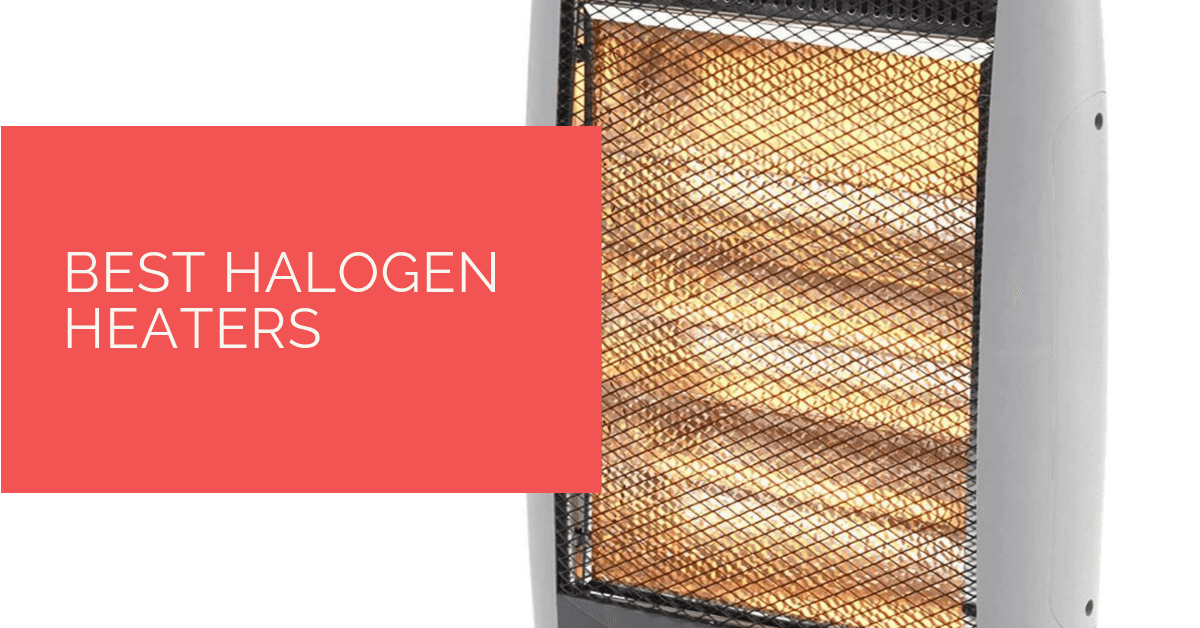
Halogen heaters are popular choices for instant warmth and efficiency in UK homes. They use infrared technology to warm objects and people directly rather than heating air, making them ideal for targeted heating in specific rooms or areas. The Belaco Electric 3 Bar Halogen Heater 1200W stands out as our top pick, combining reliable performance, affordability, and practical features that make it the best all-rounder for most UK households.
Whether you’re looking for a budget-friendly option, a portable desktop heater, or something with advanced features like oscillation and remote control, we’ve tested and compared eight of the best halogen heaters available on Amazon.co.uk to help you find the right one for your needs and budget.
Contents
- 1 Our Top Picks
- 2 8 Best Halogen Heaters
- 2.1 1. Belaco Electric 3 Bar Halogen Heater 1200W
- 2.2 2. Belaco Electric 3 Bar Halogen Heater with Oscillation
- 2.3 3. Warmlite 3 Bar Halogen Heater with Carry Handle
- 2.4 4. Senelux 2000W Infrared Tower Patio Heater
- 2.5 5. DONYER POWER Garden Heater Halogen Outdoor
- 2.6 6. Belaco 2000W Turbo Convector Electric Heater
- 2.7 7. Electric Heater Portable Fan with 3 Modes
- 2.8 8. Deluxe 1500W Wall-Mounted Halogen Heater
- 3 Halogen Heater Buying Guide
- 4 Case Study: Heating a Home Office in London
- 5 Expert Insights From Our Heating Engineers About Halogen Heaters
- 6 Frequently Asked Questions
- 7 Summing Up
Our Top Picks
| Image | Name | |
|---|---|---|
| Belaco Electric 3 Bar Halogen Heater 1200W | |
| Belaco Electric 3 Bar Halogen Heater with Oscillation | |
| Warmlite 3 Bar Halogen Heater with Carry Handle | |
| Senelux 2000W Infrared Tower Heater | |
| DONYER POWER Garden Heater Halogen Outdoor | |
| Belaco 2000W Turbo Convector Electric Heater | |
| Electric Heater Portable Fan with 3 Modes | |
| Deluxe 1500W Wall-Mounted Halogen Heater |
8 Best Halogen Heaters
1. Belaco Electric 3 Bar Halogen Heater 1200W
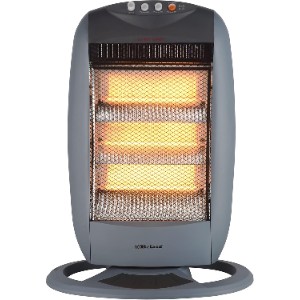
The Belaco Electric 3 Bar is a freestanding halogen heater that delivers instant warmth to any room in your home. With three heat bars and a compact design, it heats up immediately when switched on, making it perfect for supplementing your central heating or taking with you between rooms. The adjustable thermostat lets you set your ideal temperature, and the tip-over safety switch ensures peace of mind if it falls.
This heater is popular with UK homeowners because it’s lightweight, portable, and effective at warming medium-sized rooms. At around £18-25, it’s one of the most affordable options on the market. The basket design keeps the heating elements safely enclosed, and the carry handle makes it easy to move from room to room. Amazon reviews praise its quick warm-up time and reliability.
Features
- 1200W output with 3 halogen bars
- Adjustable thermostat with temperature control
- Freestanding portable design with carry handle
- Tip-over safety switch
- Compact footprint suitable for small to medium rooms
- Fast warm-up time
- Affordable price point
- Easy to move between rooms
- Reliable performance
- No remote control
- Basic thermostat only
2. Belaco Electric 3 Bar Halogen Heater with Oscillation
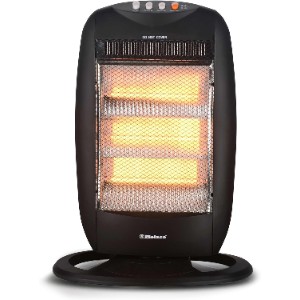
The upgraded Belaco model with 90-degree oscillation improves upon the basic version by spreading warmth more evenly across a room. As the heater slowly rotates, it prevents heat concentration in one spot and creates a more balanced temperature environment. This makes it particularly useful for larger spaces or open-plan areas where you want coverage beyond a fixed point.
The oscillation feature doesn’t compromise on simplicity or price. It still offers the same reliable 1200W output and portable design, but with the added bonus of better heat distribution. The rotation is smooth and quiet, so you won’t notice any vibration or noise. If you have a slightly larger room or want more even heating, this is worth the small premium over the basic model.
Features
- 1200W with 3 halogen bars
- 90-degree oscillating function
- Adjustable thermostat
- Portable freestanding design
- Tip-over safety switch
- Improved heat distribution via oscillation
- Still very affordable
- Smooth, quiet rotation
- No remote control
- Slightly bulkier than non-oscillating version
- More parts means slightly higher maintenance
3. Warmlite 3 Bar Halogen Heater with Carry Handle
Warmlite is a trusted UK brand for heating appliances, and their 3 bar halogen heater proves why. This model emphasises portability with an ergonomic carry handle that makes it one of the easiest heaters to move around. The design is sleek and modern, and it fits neatly into corners or against walls without taking up excessive space.
The Warmlite heater delivers solid 1200W performance with the same instant warm-up you’d expect from halogen technology. The thermostat is straightforward to use, and the safety tip-over switch is a standard but essential feature. It’s a good choice if you prioritise portability and brand reliability over fancy features. Many UK customers appreciate that Warmlite has been manufacturing heating solutions for decades.
Features
- 1200W power output with 3 halogen bars
- Ergonomic carry handle for portability
- Adjustable thermostat
- Safety tip-over switch
- Compact, modern design
- Excellent portability with sturdy handle
- Trusted UK brand
- Reliable build quality
- No oscillation
- No remote control
- Slightly more expensive than budget options
4. Senelux 2000W Infrared Tower Patio Heater
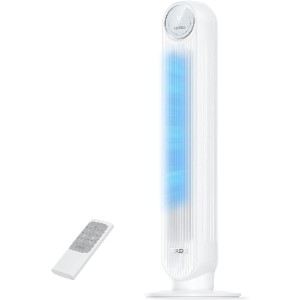
If you want something more powerful and feature-rich, the Senelux 2000W tower heater offers significantly more heat output and modern conveniences. The remote control allows you to adjust temperature and settings from across the room without getting up. With 2000W of infrared heating power and nine heat settings, this heater suits larger rooms or outdoor covered areas.
The tall tower design projects heat efficiently across wider spaces, and it’s well-suited to gardens, patios, or conservatories. The remote functionality is genuinely useful if you’re relaxing and want to fine-tune comfort without moving. Build quality is solid, and the unit feels stable even in breezy outdoor conditions. It’s pricier than basic halogen heaters, but you’re paying for extra power and convenience.
Features
- 2000W infrared heating power
- Nine heat settings for precision control
- Remote control included
- Tower design for wide heat distribution
- Suitable for indoor and covered outdoor use
- Much higher heat output
- Remote control convenience
- Covers larger areas effectively
- Modern design
- Significantly heavier and harder to move
- Takes up more floor space
- Higher price point
5. DONYER POWER Garden Heater Halogen Outdoor
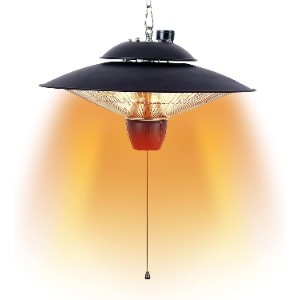
DONYER POWER specialises in outdoor heating solutions, and their halogen heater is purpose-built for gardens and patios. If you’re looking to extend your outdoor season without the expense of a larger commercial-grade patio heater, this offers decent warmth coverage at a reasonable price. The design is sturdy and built to withstand outdoor conditions.
This heater works well for intimate outdoor spaces like small patios or balconies. It’s not as powerful as full-size patio heaters, so it’s best suited to people sitting close by rather than heating a wide area. Assembly is straightforward, and the unit is designed with weather resistance in mind. It’s an excellent option if you want to use halogen heating outside without going to full premium patio heater territory.
Features
- Halogen heating optimised for outdoor use
- Weather-resistant construction
- Suitable for gardens, patios, and balconies
- Easy assembly required
- Energy efficient compared to larger patio heaters
- Purpose-built for outdoor use
- Robust and durable
- Good value for outdoor heating
- Limited coverage area
- Requires assembly
- Better for close-proximity warmth than wide coverage
6. Belaco 2000W Turbo Convector Electric Heater
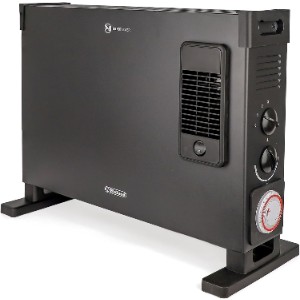
The Belaco Turbo Convector steps away from traditional halogen bars into convection heating technology. With 2000W output and a turbo fan mode, it heats air in the room quickly and efficiently. The three-speed setting lets you choose between turbo, medium, and low depending on how much heat you need and your energy budget.
This heater is particularly good if you want rapid room warming rather than targeted infrared heat. The fan circulates warm air throughout the space, reaching higher and further than stationary halogen models. It’s noisier than pure halogen heaters due to the fan, but many users find the faster overall warming time worth the noise trade-off. The compact design fits easily on a floor or table.
Features
- 2000W power output
- Three-speed fan settings (turbo, medium, low)
- Convection heating with rapid air circulation
- Compact portable design
- Adjustable thermostat
- Much faster room heating
- Higher power output
- Good value for the wattage
- Fan noise can be noticeable
- Not true halogen technology
7. Electric Heater Portable Fan with 3 Modes
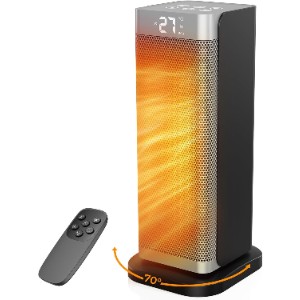
This compact portable fan heater offers three distinct operating modes to suit different situations. It’s one of the smallest options on this list, making it perfect if space is at a premium. The lightweight design means you can easily move it from your desk to your bedroom to your living room.
The heater is quiet compared to some fan-based options, and the three-mode system gives you flexibility to match heat output to your actual needs. It’s especially popular for people working from home who want targeted desk warmth without heating an entire room. The safety features include overheat protection and a tip-over switch.
Features
- Three operating modes for varied heating
- Portable compact design
- Lightweight and easy to relocate
- Overheat protection
- Tip-over safety switch
- Very compact and portable
- Quiet operation
- Good for desk or small space heating
- Lower power output
- Not suitable for large rooms
8. Deluxe 1500W Wall-Mounted Halogen Heater
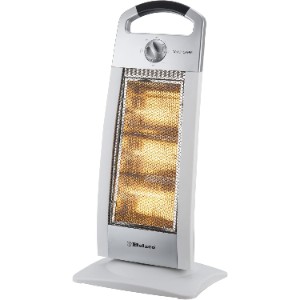
If you want to free up floor space, this wall-mounted halogen heater is a clever space-saving solution. At 1500W, it’s slightly more powerful than standard freestanding models, and it mounts securely to your wall, leaving your room uncluttered. Installation is straightforward if you’re comfortable with basic wall mounting.
The heater delivers instant warmth once switched on, just like portable halogen models. The wall-mount design means it’s permanent or semi-permanent, so it suits bathrooms, bedrooms, or areas where you consistently want supplemental heat. The thermostat is accessible and easy to adjust. This is brilliant for rental properties where you can’t or don’t want to use floor space for heating.
Features
>
- 1500W wall-mounted halogen heater
- Space-saving wall installation
- Adjustable thermostat
- Quick warm-up time
- Suitable for any room
- Saves valuable floor space
- Permanent heating solution
- More power than some portable options
- Requires wall installation
- Not portable once mounted
- Installation may need tools or help
Halogen Heater Buying Guide
Key Takeaways
- Halogen heaters provide instant radiant heat and cost roughly 24p per hour to run at 1500W using standard UK rates. They’re ideal for spot heating rather than warming entire rooms.
- A 3-bar halogen heater covers a typical 10–15 square metre room. A single bar works well for desks or small spaces. Choose outdoor models with IP ratings for garden or patio use.
- Most halogen heaters lack thermostats, so they run at full power whenever switched on. This makes them less efficient than convector heaters for sustained heating, but more practical for quick bursts of warmth.
- Safety features matter more than any other purchase decision. Tip-over protection and automatic shut-off sensors aren’t optional extras; they’re essential. Never run a halogen heater unattended overnight.
- Infrared tower heaters (like the Senelux 2000W model) are a better choice if you want to heat a large outdoor patio. Halogen bars are primarily for indoor spot heating or small enclosed spaces.
- Wall-mounted halogen heaters save floor space and work well in bedrooms or offices where free-standing models might be tripped over. They’re often fixed installations, so plan before buying.
- An extension lead must be rated for at least 1500–2000W. Using the wrong cable is a fire risk. When in doubt, plug directly into a wall socket instead.
- Halogen bars degrade over time and will eventually need replacing. Budget for replacement bars (usually available cheaply) if you plan to use the heater regularly for more than one season.
How Halogen Heaters Work
A halogen heater is a form of radiant heating. Inside the unit, a halogen bulb or element glows at extremely high temperature, producing infrared radiation that travels in straight lines through the air. Unlike convection heaters that warm the air around them, a halogen heater warms the objects and people in its direct path. This is why you feel heat from a halogen heater almost instantly after switching it on, yet the air in the room stays relatively cool.
The halogen element itself is a tungsten filament filled with halogen gas (usually iodine or bromine). As electricity passes through the filament, it heats to around 2500 degrees Celsius. A reflector behind the element focuses the infrared radiation outward into your space. Some models include a fan to help circulate the warm air, though this is secondary to the radiant heating effect.
This radiant heating approach has important implications for efficiency. Halogen heaters convert roughly 90 percent of electrical energy into radiant heat with very little waste. However, that heat only warms things it can “see.” If you’re sitting in an armchair with the heater pointing at you, you’ll feel toasty within seconds. If you walk to the other side of the room, you’ll feel significantly colder. This makes halogen heaters excellent for spot heating and terrible for heating an entire home uniformly.
Choosing the Right Wattage
Halogen heater wattage typically ranges from 400W up to 2000W. The higher the wattage, the more heat output and the faster you’ll feel warmth. However, higher wattage also means higher electricity bills and more fire risk if the unit is placed too close to flammable materials.
For a standard UK bedroom or home office (around 10–15 square metres), a 1500W heater with three bars is the sweet spot. This gives you noticeable radiant warmth without excessive power consumption. If you’re heating a smaller space like a desk or reading nook, a single 400–600W bar is sufficient and uses less electricity.
Here’s how bar count translates to heat output. Each halogen bar on a standard 3-bar heater typically delivers 400–600W of heat. A 1-bar heater gives you roughly 400–600W total. A 2-bar model provides around 800–1200W. A 3-bar heater delivers the full 1500W. The advantage of multiple bars is flexibility. Most 3-bar heaters let you switch individual bars on or off, so you can run just one bar on a cold evening (using 400–600W) or all three bars when you need maximum warmth (using 1500W).
For outdoor patio heating, the calculation changes. A 2000W infrared tower heater or outdoor halogen model will cover a larger area effectively. However, outdoor heaters lose efficiency to wind and air movement, so you’ll need more wattage than an equivalent indoor setup. The Senelux 2000W and DONYER POWER models are rated for outdoor use and typically cover patios up to 20–25 square metres, though effective heating range depends heavily on wind conditions.
Indoor vs Outdoor Halogen Heaters
The fundamental difference between indoor and outdoor halogen heaters is protection against the elements. Indoor models like the Belaco 3-bar and Warmlite heaters assume a dry environment and aren’t sealed against moisture or dust.
Outdoor models are built tougher. They carry an IP rating, which tells you how much water and dust protection the unit provides. An IP rating like IP34 or IP44 means the heater can withstand light rain, splashing water, and dust. The first digit represents dust protection (higher is better, up to 6). The second digit is water protection (higher is better, up to 8). For a garden patio heater, look for at least IP34. This ensures the electrical components stay safe during typical UK weather.
Outdoor heaters also use sturdier materials. Metal casing instead of plastic, corrosion-resistant elements, and weather-sealed wiring are standard. Some outdoor models, like the Senelux infrared tower heater, use halogen or infrared elements mounted in protective tubes that prevent direct contact with rain.
If you’re using an indoor halogen heater outdoors, even occasionally, you’re risking a dangerous electrical fault. Moisture can damage the heating element, short the wiring, or cause the unit to fail unexpectedly. The small saving of buying a cheaper indoor model isn’t worth the safety risk or replacement cost when the unit fails after one season in the garden.
That said, some people successfully use standard 3-bar halogen heaters in covered patios or conservatories where they’re protected from direct rain. A covered patio with a roof but open sides means the heater stays mostly dry, and you avoid the weather exposure of a fully exposed garden. If you choose this approach, keep the heater plugged into a weatherproof outdoor socket (IP65 rated) with an RCD circuit breaker for additional safety.
Halogen vs Infrared vs Convector Heaters
Halogen is just one option in the portable electric heater market. Understanding how it compares to other types helps you pick the right tool for your situation.
Halogen heaters produce intense radiant heat instantly. You’ll feel warmth within 5–10 seconds of switching on. They excel at spot heating one person in a room. However, they’re inefficient for heating entire rooms because heat dissipates quickly away from the radiant beam.
Infrared heaters (like tower models) are a step up. They work similarly to halogen by producing infrared radiation, but they often include larger elements and better reflectors for broader heat distribution. Infrared heaters are gentler and more even than halogen bars. The Senelux 2000W infrared tower heater covers larger areas more effectively than a 3-bar halogen because the infrared radiation spreads wider. However, you still get the advantage of fast, radiant heating without needing to wait for air temperature to rise.
Convector heaters (the Belaco Turbo Convector is an example) use a heating element to warm air, which then rises naturally through the unit. The warm air circulates throughout the room, gradually raising the overall air temperature. This takes longer to feel warm but eventually heats the entire space more evenly. Convectors work best when you want consistent room temperature over a few hours. They’re less effective for quick bursts of warmth.
Fan heaters (like the Electric Heater Portable Fan with 3 Modes) combine the heating element with a fan to push warm air around the room faster. They heat rooms quicker than passive convectors but less instantly than halogen. Fan heaters work well for bedrooms where you want the room warm before you get into bed.
Here’s a comparison table to help you decide:
| Heater Type | Time to Feel Warmth | Best For | Running Cost (1500W) | Disadvantages |
| Halogen | 5–10 seconds | Spot heating one person | 36p/hour | Only heats what it points at; no thermostat on most models |
| Infrared Tower | 15–30 seconds | Outdoor patio or larger room | 48p/hour (2000W models) | Larger footprint; less portable than halogen bars |
| Convector | 10–20 minutes | Heating entire room over several hours | 36p/hour | Slow to warm up; uses more electricity if run continuously |
| Fan Heater | 1–3 minutes | Bedroom or office before work begins | 36p/hour | Noisier than other types; can blow dry, dusty air |
The running costs assume standard UK electricity at 24p per kWh (as of 2026). A 1500W heater running continuously for one hour costs 36p. A 2000W model costs 48p per hour. These are rough figures; your actual rate may be higher or lower depending on your energy supplier and tariff.
Safety Considerations
Halogen heaters must be treated with respect. They get extremely hot during operation, and the reflector and element can reach temperatures that cause serious burns. Safety isn’t a feature you can compromise on.
First, tip-over protection is non-negotiable. Many halogen heaters are tall, narrow units with a small base. If knocked over by a pet, child, or careless movement, an unprotected unit can fall directly onto a person or start a fire. Every halogen heater on the market should include a tip-over switch that automatically cuts power if the unit falls over. Check the product specifications before buying. If a listing doesn’t explicitly mention tip-over protection, that’s a red flag.
Second, keep clear distances. Most manufacturers recommend keeping the heater at least 60 centimetres away from curtains, sofas, bedding, and other flammable fabrics. Never place a halogen heater in front of a curtain pole where the curtain could fall and drape over it. Never use one in a cluttered bedroom or under a shelf. The heater doesn’t need a flat, clear surface underneath it; it needs clear space around all sides. Dust accumulation on the halogen element is a fire hazard and reduces efficiency.
Third, never leave a halogen heater running unattended. If you leave your office for a meeting and forget to switch off the heater, you risk coming back to a fire. Many people use halogen heaters as “spot heating” before bedtime, which is fine. Using them overnight whilst you sleep is not. There’s no thermostat to turn the heater off once the room reaches temperature, so it’ll run indefinitely, getting hotter and hotter.
Fourth, check the heater’s electrical safety features. Look for models with an overheat protection sensor. If the internal temperature gets dangerously high, the sensor triggers an automatic shut-off. This prevents the heater from catching fire if something accidentally blocks the cooling vents or dust clogs the element.
Fifth, be cautious with extension leads. A halogen heater draws significant current, typically 6–10 amps on a standard 13-amp circuit. An undersized extension lead can overheat and cause a fire. Any extension lead you use must be rated for at least 2000W (16 amps minimum). If you’re unsure, don’t use an extension lead at all. Plug the heater directly into a wall socket instead. This is especially important for outdoor models, which should only use RCD-protected outdoor sockets.
Finally, halogen heaters are not suitable for damp environments. Moisture and electricity don’t mix. Never use a halogen heater in a bathroom, kitchen, or any room where humidity is high. The moisture can damage internal wiring and create shock hazards. If you want additional heating in a bathroom, use a dedicated heated towel rail or a ceramic fan heater designed for damp environments.
Energy Efficiency and Running Costs
A common misconception is that halogen heaters are cheaper to run than other electric heaters. They’re not. All electric heaters convert roughly the same amount of electrical power into heat. A 1500W halogen heater, a 1500W convector, and a 1500W fan heater all cost the same per hour to run: roughly 36p at current UK rates.
The difference lies in how effectively each heater delivers that heat to you. A halogen heater delivers heat to objects in its direct path almost instantly. A convector eventually heats the entire room but takes longer. The halogen heater feels more efficient because you feel warm quickly, not because it uses less electricity.
Here’s what this means for your household bills. If you use a 1500W halogen heater for two hours each evening (spot heating whilst you work), you’ll spend roughly 72p per day, or about £22 per month. If you use the heater for six hours daily, expect roughly £65 per month. A 2000W outdoor infrared heater will cost about 48p per hour, or roughly £29 per month for two hours daily use.
These costs are significant, which is why running costs matter. If you’re using a halogen heater to heat your entire home as the primary heating source, you’ll see dramatic increases in your electricity bill. For spot heating and occasional use, the costs are manageable.
The key to keeping costs down is using the lowest wattage that’s effective. If a single halogen bar (400–600W) gives you enough warmth, use just that bar instead of all three (1500W). Most 3-bar halogen heaters let you switch individual bars on or off, so you can tailor power consumption to your comfort needs.
Here’s a rough breakdown of costs by wattage at 24p per kWh:
| Heater Wattage | Cost Per Hour | Cost Per Day (2 hours) | Cost Per Month (60 hours) |
| 400W (single bar) | 9.6p | 19.2p | £5.76 |
| 1000W (2 bars) | 24p | 48p | £14.40 |
| 1500W (3 bars) | 36p | 72p | £21.60 |
| 2000W (infrared tower) | 48p | 96p | £28.80 |
One final point on efficiency: most halogen heaters don’t include a thermostat. This is a major limitation. A thermostat would let the heater turn off once the room reaches your target temperature, saving electricity. Without a thermostat, the heater runs at full power whenever it’s switched on. Some premium models do include thermostats, but they’re rare and more expensive. If thermostat control is important to you, a convector heater like the Belaco Turbo Convector or a wall-mounted halogen model with temperature control might be a better choice than a simple bar heater.
Things to Keep in Mind Before Buying
Before you commit to a halogen heater, ask yourself these practical questions:
Where will you use it? Be specific. Are you heating your home office on cold mornings, a bedroom before bedtime, or a covered patio in summer? Indoor halogen bars are cheap and effective for small rooms and spot heating. Outdoor models cost more but are essential if you want patio heating. Wall-mounted models suit fixed locations where floor space matters. Portable models work best where you can easily move the heater between rooms.
How big is the space? A 1500W 3-bar heater works well for rooms up to 15 square metres. Larger rooms need either a more powerful model, multiple heaters, or a different heating approach altogether. If you’re unsure of your room size, measure the length and width, multiply them together, and you’ve got your square metres. Anything larger than 20 square metres is better served by a convector or a proper heating system.
What safety features does the model include? Mandatory features are tip-over protection and an overheat sensor. Nice-to-have features are adjustable thermostats, remote controls, and quiet operation. Read customer reviews on Amazon carefully; they often mention whether these features actually work well or fail after a few months. A heater with great safety features that breaks after two months is no bargain.
How portable do you need it to be? A lightweight 3-bar halogen heater is easy to carry between rooms and take upstairs or downstairs. Wall-mounted models require installation and are permanent. Outdoor infrared towers are heavy and clumsy to move. If you think you’ll want to heat different rooms at different times, choose a lightweight portable model.
What’s your electricity supply? All standard UK homes have 13-amp plug sockets that can safely handle 3000W at full power. Most halogen heaters are 1500W or less, so standard sockets are fine. If you want to use an extension lead, it must be rated for at least 2000W. Avoid extension leads altogether if possible; plug the heater directly into the wall socket instead.
Are you going to use this seasonally or year-round? If you use a halogen heater every day, expect the halogen bars to eventually degrade or burn out after several seasons. Replacement bars are usually available for £5–20 each, depending on the model. Factor this into your long-term cost. If you use the heater only occasionally, you might get several years of use before needing replacement bars.
Can you store it safely? Even when switched off, a halogen heater has sharp reflectors and fragile elements. It needs safe storage away from damp, dust, and curious children or pets. A cupboard or garage shelf is ideal. Never leave the heater outside year-round or in an unheated shed where moisture can damage the elements.
Do you have children or pets? Halogen heaters reach burning temperatures. If you have young children who might touch the unit or pets that might knock it over, a halogen heater requires careful placement and constant vigilance. Wall-mounted models keep the heater out of reach of children and pets and may be safer for your household.
Once you’ve answered these questions, you’re ready to choose between the portable 3-bar models (Belaco, Warmlite) for indoor spot heating, the wall-mounted option (Deluxe 1500W) for space-saving, the convector (Belaco Turbo) if you want whole-room heating, or an outdoor infrared tower (Senelux 2000W, DONYER POWER) for patio heating. Each serves a different purpose, and choosing the right tool for your situation is what makes the difference between a heater you use daily and one that gathers dust in a cupboard.
Case Study: Heating a Home Office in London
Background
A freelance professional in London has converted a spare bedroom into a home office but found the room becomes uncomfortably cold during winter. The central heating is controlled by someone else in the shared property, so increasing temperature throughout the house isn’t an option.
Project Overview
The office is about 15 square metres, poorly insulated, and faces north. Winter temperatures in the room drop to 12-14 degrees Celsius, making it difficult to concentrate for eight-hour working days.
Implementation
Rather than investing in expensive permanent solutions, they purchased a Belaco Electric 3 Bar Halogen Heater. Positioned roughly two metres behind the desk, the heater’s infrared output directly warms the person without heating the entire room unnecessarily. The thermostat is set to 18 degrees Celsius, and the heater runs during working hours only.
Results
The halogen heater transformed comfort in the office. Within minutes of switching on, infrared warmth reaches the desk area. The space feels comfortable despite the broader room remaining cooler. Electricity costs are manageable since the heater only runs during work hours, and the ability to switch it off instantly prevents wasted energy. The freelancer reports paying roughly £2-3 per week for supplemental heating during winter months, far less than upgrading building insulation or installing permanent heating.
Expert Insights From Our Heating Engineers About Halogen Heaters
One of our senior heating engineers with over 15 years of experience working with UK residential heating systems notes that halogen heaters remain excellent for supplemental, targeted heating. “Their instant warmth and portability make them genuinely useful,” she explains. “However, they’re not a replacement for proper insulation or central heating. They work best as zone heating for specific rooms where you spend time.”
She emphasises safety and efficiency: “Choose heaters with good thermostat controls and never use them as permanent solutions for cold properties. If an entire home is cold, that’s a property or insulation issue that halogen heaters will only mask. Use them strategically for comfort and cost savings, not as a primary heating strategy.”
Her final recommendation reflects what most UK heating professionals agree on: “Halogen heaters fill a genuine niche. They’re brilliant for temporary warmth, supplementing inadequate central heating in specific rooms, or extending your outdoor season affordably. Buy quality from reputable brands, use them sensibly, and they’ll serve you well for several winters.”
Frequently Asked Questions
Are halogen heaters energy efficient?
Halogen heaters are efficient because they target infrared warmth at people and objects rather than wasting energy heating entire rooms. However, they use significant electricity per hour. If left running constantly, bills can add up. Use them strategically for zone heating rather than continuous whole-house heating.
How long do halogen heater elements last?
Halogen elements typically last 2-5 years depending on how frequently you use the heater and the quality of the element. Premium brands often include more durable elements than budget models. Replacement elements are available separately if your heater’s bars eventually burn out.
Can you leave a halogen heater on overnight?
It’s not recommended to leave halogen heaters unattended for extended periods. Quality units have safety features including tip-over switches and thermostats, but leaving them on overnight increases fire risk and wastes electricity. Use them during active hours when you’re present and can monitor them.
Do halogen heaters work outdoors?
Some halogen heaters are designed for covered outdoor use on patios or in conservatories. Standard indoor models aren’t weatherproof. If you want outdoor heating, choose models specifically labelled for outdoor or patio use, as they’re built to withstand moisture and temperature fluctuations.
What’s the cheapest type of halogen heater?
Basic freestanding 1200W halogen heaters without oscillation or extra features cost £15-25, making them the most affordable option. These perform well for small rooms and offer straightforward, reliable heating. More expensive models add conveniences like remote control or oscillation but cost £30-100.
Is infrared heat bad for your health?
Infrared heat is safe and natural. The sun produces infrared radiation, and halogen heater infrared at normal levels is not harmful. However, looking directly at the glowing heating elements can damage eyes, so keep the protective cage intact and don’t stare at them. Normal use of quality heaters poses no health risk.
Can halogen heaters cause fires?
Quality halogen heaters with proper safety features and careful use are safe. Never place curtains, furniture, or combustible materials close to the heater. Keep at least one metre clearance. Use heaters on stable, level surfaces only. The protective basket prevents accidental contact with hot elements. Always buy from reputable manufacturers.
Summing Up
Halogen heaters remain one of the simplest, most affordable ways to add instant warmth to specific rooms in your home. Whether you need supplemental heating during winter, warmth for a home office, or a way to extend your patio season, halogen technology delivers reliable results at reasonable cost.
The Belaco Electric 3 Bar Halogen Heater 1200W remains our top recommendation because it combines affordability, proven reliability, and practical features that suit most UK homes. If you want more features like oscillation or remote control, step up to one of the upgraded models. Budget-conscious buyers won’t regret the basic version, whilst those with larger spaces or outdoor heating needs will find options suited to their requirements across our eight recommendations.
Updated