
Infrared heaters can be safe when they are correctly specified, installed and used with suitable clearances. They heat people and surfaces directly rather than warming all the air first, which is why they can feel comfortable in certain rooms. The safety questions are mainly about surface temperature, placement, electrical load, mounting, vulnerable users and whether the heater is suitable for the space.
Infrared heating is not dangerous simply because it uses infrared radiation. Infrared heat is part of everyday warmth from the sun and from warm objects. The practical risks are more ordinary: burns from close contact, overheating nearby materials, poor installation, unsafe wiring, and leaving portable models where they can be knocked or covered.
Contents
- 1 Key Takeaways
- 2 How Infrared Heating Feels Different
- 3 Health And Radiation Safety
- 4 Installation And Electrical Safety
- 5 Safe Clearances And Room Suitability
- 6 Can Infrared Heaters Be Left On?
- 7 Running Costs And Efficiency Claims
- 8 Choosing The Right Infrared Heater For The Room
- 9 Who Needs Extra Care Around Infrared Heat?
- 10 Expert Insights From Our Heating Engineers
- 11 Summing Up
- 12 Frequently Asked Questions
- 12.1 Are Infrared Heaters Safe For Health?
- 12.2 Can Infrared Heaters Cause Fires?
- 12.3 Are Infrared Heaters Safe In Bathrooms?
- 12.4 Can I Leave An Infrared Heater On Overnight?
- 12.5 Do Infrared Heaters Use A Lot Of Electricity?
- 12.6 Are Infrared Panels Hot To Touch?
- 12.7 Are Infrared Heaters Safe For Pets?
- 12.8 What Is The Safest Way To Use Infrared Heating?
Key Takeaways
- Infrared heaters are generally safe when installed and used according to the manufacturer’s instructions.
- Wall and ceiling panels need secure mounting, correct clearances and suitable electrical supply.
- Portable infrared heaters need the same care as other portable heaters: clear space, stability and supervision.
- Keep heaters away from curtains, bedding, furniture, paper and clothing.
- Use bathroom or outdoor infrared heaters only if they are specifically rated for that environment.
How Infrared Heating Feels Different
Infrared heaters emit radiant heat that warms people, objects and surfaces in their path. This is different from a fan heater, which mainly warms air. The result can feel immediate, especially when you are within the heater’s radiant zone. It also means placement matters more than with some convection heaters.
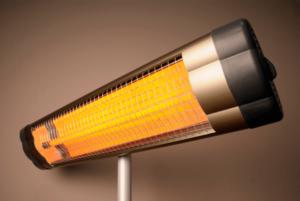
A panel mounted too far away, aimed poorly or hidden behind furniture may feel ineffective. A heater mounted too close to seating, curtains or a bed can be uncomfortable or unsafe. The technology is not the problem; the design and use decide the outcome.
Health And Radiation Safety
Infrared heaters used for home heating are not the same as UV lamps. They are designed to provide heat, not ultraviolet exposure. For most people, the main health issue is comfort: avoiding prolonged close exposure, excessive heat on skin, and dry-eye discomfort if the heater is badly positioned.
People with reduced sensation, limited mobility, young children and some older adults need extra care because they may not move away quickly if they become too hot. Position heaters so they warm the occupied area without creating a hot spot directly on the face, bedding or one part of the body for long periods.
Installation And Electrical Safety
Fixed infrared panels should be mounted according to the manufacturer’s instructions, using suitable fixings for the wall or ceiling. The electrical connection must be appropriate for the load and location. Bathrooms, wet rooms and outdoor areas need products with the correct rating and installation method.
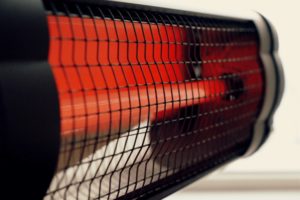
Do not run high-wattage heaters through overloaded extension leads. If a panel is hardwired, use a qualified electrician where required. If the heater is portable, inspect the plug, cable, stand and grille before use. Electrical Safety First’s portable heater advice is relevant here too: clear space, direct sockets and no unattended misuse.
Safe Clearances And Room Suitability
| Use Case | Main Safety Check | Practical Advice |
|---|---|---|
| Wall panel in living room | Clearance from furniture and curtains | Do not hide the panel behind sofas or drapes |
| Ceiling panel | Secure fixings and height | Follow weight and clearance instructions exactly |
| Bathroom heater | Correct IP rating and electrical zone | Use only products designed for bathrooms |
| Portable infrared heater | Stability and supervision | Keep away from beds, rugs and children’s play areas |
Infrared heaters are often best in rooms where people occupy predictable positions: desks, seating areas, garden rooms, home offices and bathrooms with suitable rated products. They are less effective if you expect one small panel to heat people around corners or through furniture.
Can Infrared Heaters Be Left On?
Fixed panels with thermostats and correct installation can be used as part of a controlled heating system. Portable infrared heaters should be treated like other portable heaters and not left unattended casually. Overnight use needs particular caution because bedding, clothing and reduced awareness increase risk.
If you need background heat while asleep, a fixed, correctly installed, thermostatically controlled system is safer than a portable radiant heater beside a bed. Do not use any infrared heater to dry clothes unless the manufacturer specifically says that use is allowed, which is uncommon for domestic heaters.
Running Costs And Efficiency Claims
Infrared heaters are not magic. A 700W panel uses 0.7 kWh per hour when running, and a 1.2 kW heater uses 1.2 kWh per hour. They can feel efficient because they heat occupants directly and may allow lower air temperatures, but savings depend on room use, insulation, controls and whether you are heating only occupied zones.
For broader heater comparisons, our guide to infrared heaters is useful, while electric heater safety covers portable heater precautions in more detail.
Choosing The Right Infrared Heater For The Room
Safety and comfort both improve when the heater matches the room. A ceiling panel above a desk, a wall panel in a bathroom and a portable radiant heater in a workshop are not interchangeable just because they all use infrared heat. Check the mounting height, wattage, surface temperature, control method, IP rating and whether the heater is designed for fixed or portable use.
| Setting | Better Infrared Choice | What To Check |
|---|---|---|
| Home office | Wall or ceiling panel aimed at the desk area | Mounting position and thermostat control |
| Bathroom | Bathroom-rated panel or mirror heater | IP rating, electrical zone and professional installation |
| Living room | Panel sized for occupied seating area | Clearance from curtains and furniture |
| Workshop or garage | Suitable radiant heater for the environment | Dust, damp, flammable materials and cable route |
| Outdoor seating | Outdoor-rated infrared patio heater | Weather rating, mounting and safe distance |
A common disappointment is installing one small panel and expecting it to perform like a central heating system. Infrared heating is strongest when it is planned around occupied zones and surface warmth, not when it is asked to heat hidden corners, open stairwells or poorly insulated rooms on its own.
Who Needs Extra Care Around Infrared Heat?
Most healthy adults will simply move away if radiant heat feels too intense. Extra care is needed for babies, young children, older people, anyone with reduced skin sensation, people with limited mobility and anyone sleeping near a heater. The concern is not unusual “radiation” exposure from a domestic heater; it is ordinary heat exposure, burns, discomfort and the chance that someone may not react quickly enough.
Pets also need consideration. Do not place beds, cages or sleeping areas directly in the radiant path of a heater. A warm spot may seem comfortable at first, but animals cannot always move away if confined. Keep cables out of chewing range and avoid placing portable heaters where they can be knocked over during normal household movement.
People using infrared heaters for health reasons should be particularly careful about marketing claims. A domestic infrared heater is a heating appliance, not a medical treatment. It may feel comfortable and may reduce the need to overheat the whole room, but any claims about therapeutic benefit should be treated separately from basic home-heating safety. For ordinary homeowners, the practical decision is whether the heater is correctly rated, positioned, controlled and supervised.
Installation instructions should be treated as part of the safety system, not as packaging. Minimum distances, wall fixings, ceiling heights, bathroom zones and control placement are there because radiant heat behaves differently from warm air. A panel that is safe on one wall may be unsuitable above a bed, behind curtains or near a damp area.
Expert Insights From Our Heating Engineers
Our heating engineers like infrared heating when the design matches the room. It can be excellent for spot comfort, bathrooms, home offices and rooms where convection heat disappears quickly. Problems arise when panels are undersized, badly placed or treated as ordinary radiators.
They recommend checking surface temperature, mounting height, clearances, control method and room layout before buying. If the heater is going into a bathroom, workshop, outdoor area or rented property, installation requirements matter as much as wattage.
Summing Up
Infrared heaters are safe when the product, installation and use are right. The infrared heat itself is not the issue for normal domestic heaters; the practical concerns are burns, clearances, electrical load, mounting and misuse.
Choose a reputable model, install it correctly, keep combustible materials away and use the right heater for the room. A well-placed infrared heater can be comfortable and efficient. A badly placed or unattended portable heater can still be a hazard.
The safest infrared setup is usually the least improvised one: a correctly rated heater, mounted or positioned as instructed, controlled by a thermostat or timer, and kept clear of fabrics and furniture. If the room layout makes those basics difficult, choose a different heater type or position rather than forcing the panel into the wrong place. Good placement is a safety decision, not just a comfort decision, especially in smaller rooms with limited clearance.
Clearance should always come before aesthetics.
Frequently Asked Questions
Are Infrared Heaters Safe For Health?
Domestic infrared heaters are generally safe when used correctly. They provide heat, not UV exposure. Avoid sitting too close for long periods, and take extra care with children, older adults and people with reduced heat sensitivity.
Can Infrared Heaters Cause Fires?
Any heater can cause a fire if installed badly, covered, placed too close to combustible materials or used with unsafe wiring. Keep clearances, follow instructions and do not dry clothes on infrared heaters.
Are Infrared Heaters Safe In Bathrooms?
Only if the heater is specifically rated for bathroom use and installed in the correct electrical zone. Do not put a standard infrared panel or portable heater in a damp room unless it is designed for that environment.
Can I Leave An Infrared Heater On Overnight?
A fixed thermostatic system may be suitable if installed correctly, but portable infrared heaters should not be left running unattended or beside bedding. Overnight heating needs careful risk assessment.
Do Infrared Heaters Use A Lot Of Electricity?
They use their rated wattage while running. A 700W panel uses 0.7 kWh per hour, while a 1.2 kW heater uses 1.2 kWh per hour. Controls and zoning decide real cost.
Are Infrared Panels Hot To Touch?
Many panels become hot during operation and should not be touched while running. Surface temperature varies by model, so check the product instructions and place panels away from accidental contact.
Are Infrared Heaters Safe For Pets?
They can be, but pets should be able to move away from the heat and should not sleep against a heater. Keep cables protected and avoid portable heaters that can be knocked over.
What Is The Safest Way To Use Infrared Heating?
Use a reputable product, follow mounting instructions, keep clearances, avoid extension leads for high loads, use thermostatic control and choose the correct rating for bathrooms or outdoor spaces.
Updated