
Looking for a quiet bedroom fan that won’t keep you awake half the night? The best bedroom fans combine whisper-quiet operation with reliable airflow, offering features like sleep modes, timers, and remote controls to suit your comfort needs. Whether you need a compact desk fan or a tower unit for whole-room circulation, choosing the right fan can make a real difference to your sleep quality and bedroom comfort.
We’ve tested and reviewed the top bedroom fans available on Amazon.co.uk, focusing on models that prioritise quiet operation while delivering effective cooling and air circulation. This guide will help you find the perfect fan for your bedroom.
Contents
- 1 Our Top Picks
- 2 8 Best Bedroom Fans
- 2.1 1. Dreo 20dB Silent Tower Fan
- 2.2 2. VonHaus Pedestal Fan with Remote Control
- 2.3 3. Honeywell Tower Bladeless Fan
- 2.4 4. Dyson AM07 Oscillating Fan
- 2.5 5. Vornado 660 Large Air Circulator
- 2.6 6. Pro Breeze Silent Bladeless Tower Fan
- 2.7 7. Ansio Table Fan with Quiet Operation
- 2.8 8. Igenix Smart Oscillating Tower Fan
- 3 Bedroom Fans Buying Guide
- 3.1 Key Takeaways
- 3.2 Why Noise Is the Most Important Spec for Bedroom Fans
- 3.3 Tower Fans for Bedrooms: The Practical Choice
- 3.4 Bladeless Fans: Smoother Air, Higher Cost
- 3.5 Air Circulators: The Alternative Approach to Bedroom Cooling
- 3.6 Essential Bedroom Fan Features Checklist
- 3.7 Placement: Where to Put the Fan for Best Results
- 4 Case Study: Converting a Hot Bedroom into a Cool Sleeping Space
- 5 Expert Insights From Our Heating Engineers About Bedroom Fans
- 6 Frequently Asked Questions
- 6.1 Are bedroom fans safe to run overnight?
- 6.2 Do fans actually cool rooms or just circulate air?
- 6.3 What noise level is acceptable for bedroom use?
- 6.4 Should I run my bedroom fan on high speed for faster cooling?
- 6.5 Are bladeless fans quieter than traditional fans?
- 6.6 Can a bedroom fan reduce humidity in my room?
- 6.7 How much electricity does a bedroom fan use?
- 7 Summing Up
Our Top Picks
| Image | Name | |
|---|---|---|
| Dreo 20dB Silent Tower Fan | |
| VonHaus Pedestal Fan with Remote Control | |
| Honeywell Tower Bladeless Fan | |
| Dyson AM07 Oscillating Fan | |
| Vornado 660 Large Air Circulator | |
| Pro Breeze Silent Bladeless Tower Fan | |
| Ansio Table Fan with Quiet Operation | |
| Igenix Smart Oscillating Tower Fan |
8 Best Bedroom Fans
1. Dreo 20dB Silent Tower Fan
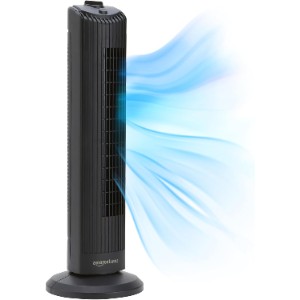
If you’re serious about minimising noise, the Dreo 20dB Silent Tower Fan is a game-changer. This fan operates at just 20 decibels on its lowest setting, making it genuinely silent enough not to disturb sleep. The compact tower design fits nicely into bedroom corners without dominating the space. It features three wind modes and three speeds, giving you flexibility without overwhelming options.
The design is thoughtfully engineered to reduce noise whilst maintaining solid airflow. The 28 feet per second blade velocity ensures decent circulation even at whisper-quiet settings. With a 12-hour timer and intelligent sleep mode, it’s designed specifically with bedroom use in mind. Many users report that it becomes their background white noise at low speeds.
The oscillation function covers 60 degrees, distributing cool air across your entire room without constant adjustments. The remote control is straightforward and responsive, and the fan remembers your preferred settings when turned back on. This is particularly useful if you typically use it on the same speed and mode each night.
At around £27, it represents excellent value for a purpose-built quiet bedroom fan. The build quality feels solid without being overly industrial, and the white finish blends into most bedroom décor seamlessly.
Features:
- Operating noise: 20dB on lowest speed
- Three speeds and three wind modes
- 60-degree oscillation
- 12-hour timer with sleep mode
- Remote control included
- Compact tower design
- 28 ft/s airflow velocity
- Exceptionally quiet operation
- Compact footprint
- Smart sleep mode ideal for bedrooms
- Excellent value for money
- Lower airflow than larger models
- Single room coverage only
2. VonHaus Pedestal Fan with Remote Control
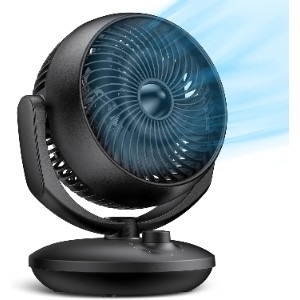
The VonHaus Pedestal Fan strikes a solid balance between quiet operation and powerful airflow. Standing at a standard height, it’s perfect for placing beside your bed or in a corner where it won’t obstruct pathways. The 16-inch blade delivers respectable cooling performance whilst remaining remarkably quiet at typical bedroom volumes.
This fan includes a comprehensive remote control with multiple speed settings and oscillation control. You won’t need to get out of bed to adjust it. The three-speed motor is whisper-quiet on the lowest setting, making it genuinely suitable for uninterrupted sleep. Higher speeds increase airflow considerably whilst still remaining within reasonable bedroom noise levels.
The pedestal design is adjustable, allowing you to angle the fan towards your bed or window. The metal blades are sturdy and well-balanced, contributing to the quiet operation. At around £32, it’s an affordable upgrade from basic models and includes conveniences like the remote that justify the price.
Features:
- 16-inch blade diameter
- Three speed settings
- Wide 80-degree oscillation
- Remote control with multiple functions
- Adjustable pedestal height
- Quiet operation across all speeds
- Durable metal construction
- Powerful and quiet combination
- Full remote control
- Adjustable height and angle
- Great value
- Larger footprint than tower designs
- No timer function
3. Honeywell Tower Bladeless Fan
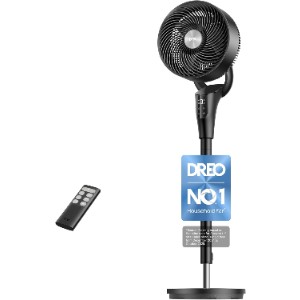
If your bedroom aesthetic matters as much as functionality, the Honeywell Tower Bladeless Fan delivers both. This modern design uses an innovative bladeless technology that draws air through the base and propels it through a slim vertical slit, eliminating the visual clutter of traditional spinning blades. It’s also significantly quieter than conventional fans because there are no blades slapping through the air.
The construction is sleek and minimalist, fitting seamlessly into contemporary bedrooms. Despite its understated appearance, it delivers impressive air circulation throughout a mid-sized bedroom. The operation is remarkably smooth and quiet, with variable speed control letting you dial in the perfect cooling level for sleep. Many users appreciate that the design feels more like a modern appliance than a utilitarian bedroom necessity.
At around £67, it’s a premium option, but the combination of near-silent operation, elegant design, and reliable airflow justifies the investment. The device is easy to clean because there are no blade crevices where dust accumulates. Simply wipe the exterior and interior slit, and you’re done.
Features:
- Bladeless design for quiet operation
- Tower format with modern aesthetic
- Multiple speed settings
- Smooth, vibration-free operation
- Oscillation function
- Easy to clean
- Energy-efficient motor
- Exceptionally quiet design
- Sleek modern appearance
- Excellent air circulation
- Easy maintenance
- Higher price point
- Not suitable for very small spaces
4. Dyson AM07 Oscillating Fan
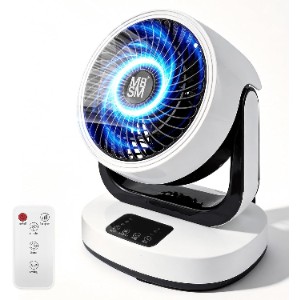
The Dyson AM07 represents the pinnacle of bladeless fan engineering. This isn’t simply a fan; it’s precision-designed technology that delivers air circulation without the noise and safety concerns of traditional spinning blades. The motor is engineered with incredible accuracy to create a smooth, consistent airflow from a virtually silent operation.
What sets the AM07 apart is the intelligent oscillation that covers 45 degrees automatically, or you can direct the airflow to specific areas of your bedroom. The streamlined design looks equally at home on a modern desk or bedroom shelf as it does in a minimalist sitting room. The remote control includes convenient preset settings and timer functions that remember your preferences.
At approximately £33, it’s surprisingly affordable for a Dyson product. The build quality is exceptional, with a premium feel that reflects the engineering that went into its design. The air amplification technology pushes air with minimal noise, and many users report sleeping through the night without disturbance, even on higher speeds.
Features:
- Dyson’s air amplification technology
- Bladeless design for safety and quiet operation
- 45-degree oscillation
- Remote control with timer
- Multiple speed settings
- Compact desk-friendly design
- Ultra-quiet motor
- Exceptional engineering and quiet performance
- Premium build quality
- Intelligent oscillation
- Child-safe design
- Limited to desk or shelf placement
- Smaller coverage area
5. Vornado 660 Large Air Circulator
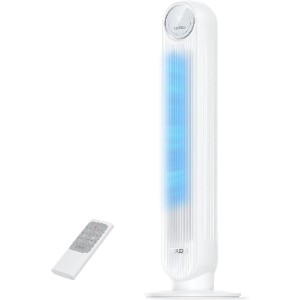
The Vornado 660 takes a different engineering approach to achieve quiet, powerful circulation. Rather than trying to cool just the immediate area, this circulator moves air throughout your entire bedroom, creating consistent temperature and fresh air movement. This approach works beautifully for sleep because you get whole-room circulation without the concentrated blast of traditional fans.
The vortex action draws in air and propels it across your room, mixing warm and cool zones. The motor operates remarkably quietly despite its power, and the three-speed control lets you choose from gentle circulation to more assertive airflow. Many people find Vornado fans preferable to traditional designs because they create a more natural air movement rather than a direct wind tunnel effect.
At around £67, this is an investment in whole-room comfort rather than just personal cooling. The compact disc-shaped design looks modern on a shelf or dresser, and the quality construction means it should last for years. The straightforward three-speed operation and mechanical controls are refreshingly simple to use.
Features:
- Vortex air circulation technology
- Three-speed operation
- Whole-room air mixing
- Compact disc-shaped design
- Quiet, powerful motor
- Simple mechanical controls
- Durable construction
- Whole-room circulation
- Genuinely quiet operation
- Natural air movement
- Long-lasting build quality
- Higher price point
- Less direct personal cooling
6. Pro Breeze Silent Bladeless Tower Fan
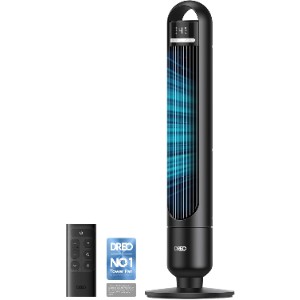
The Pro Breeze Silent Bladeless Tower Fan combines the benefits of bladeless technology with the practical form factor of a tower design. This gives you whisper-quiet operation with adjustable height and direction control that you’d normally expect from traditional fans. The combination makes it one of the most versatile quiet bedroom options available.
The bladeless mechanism eliminates the mechanical noise of spinning blades whilst the tower format allows you to adjust the fan’s height from approximately 70cm to 100cm, directing airflow to exactly where you need it. This flexibility is particularly valuable in bedrooms where ceiling height varies or where you might want different coverage depending on sleeping arrangements.
At approximately £59, it sits in the mid-to-premium range. The quiet operation is impressive across all speed settings, and the remote control includes a timer function useful for scheduled sleep cooling. The design is contemporary enough to suit modern bedrooms without looking out of place.
Features:
- Bladeless tower design
- Adjustable height (70-100cm)
- Multiple speed settings
- Remote control with timer
- 90-degree oscillation
- Ultra-quiet operation
- Compact tower footprint
- Exceptional quiet design
- Adjustable height for flexibility
- Powerful air distribution
- Remote timer function
7. Ansio Table Fan with Quiet Operation
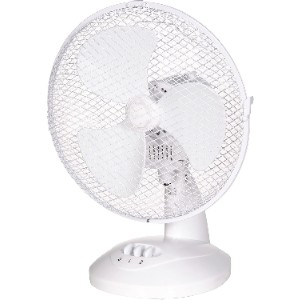
On a tight budget? The Ansio Table Fan punches well above its price point. At just £13, this compact desk fan delivers surprising performance without excessive noise. It’s perfect for small bedrooms, student accommodation, or as a supplementary personal fan for use at your bedside desk.
The small 6-inch blade is surprisingly efficient at moving air across a compact space. The two-speed operation is straightforward, and even on higher speed, the noise level remains bedroom-friendly. The simple oscillation function covers a useful range without being overengineered. Many users are shocked at the performance-to-price ratio, especially for emergency bedroom cooling solutions.
Don’t expect whole-room circulation from this model, but for personal cooling at a writing desk or small sleeping area, it’s genuinely effective. The compact size means it fits anywhere—on nightstands, desks, shelves, or dressers. The plastic construction keeps the weight minimal, making it easy to reposition as needed.
Features:
- 6-inch blade diameter
- Two-speed operation
- Oscillation function
- Compact desktop design
- Lightweight plastic construction
- Quiet operation on both speeds
- Budget-friendly
- Extremely affordable
- Compact size
- Quiet operation
- Perfect for small spaces
- Limited airflow for larger rooms
- Basic features only
8. Igenix Smart Oscillating Tower Fan
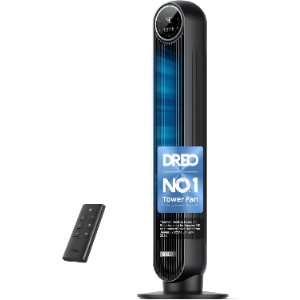
The Igenix Smart Oscillating Tower Fan brings modern smart home convenience to bedroom cooling. This isn’t just a fan with a remote; it’s a connected device that integrates with your smart home ecosystem. You can control it via app, schedule it to turn on before you get home, or set it as part of your bedtime routine automation.
Smart home integration aside, the fan itself is excellent. The tower design with oscillation provides even room coverage, and the motor runs remarkably quietly despite the technological sophistication. Multiple speed settings let you dial in precise comfort levels, and the timer function integrates seamlessly with the smartphone app for sophisticated scheduling.
At approximately £79, it’s on the premium end, but if you’re already invested in smart home technology, the convenience factor is considerable. Setting the fan to turn on as part of a bedtime scene that also dims lights and adjusts thermostat is genuinely useful. For those without smart home systems, it works perfectly as a conventional fan with a standard remote control as well.
Features:
- Smart home integration (app control)
- Wi-Fi connectivity and scheduling
- Tower oscillating design
- Multiple speed settings
- 70-degree oscillation
- Timer function with smart control
- Quiet operation across speeds
- Smart home integration
- App-based scheduling
- Quiet operation
- Effective room coverage
- Highest price point
- Requires smart home setup
Bedroom Fans Buying Guide
Key Takeaways
- Noise is the primary concern for bedroom fans — look for models rated under 30 dB at the lowest setting; genuine 20 dB operation is barely audible and won’t disturb sleep
- Tower fans are the most popular bedroom choice because they’re slim, quiet at low speed, and often include sleep timers and remote controls
- Bladeless fans like the Dyson AM07 and Honeywell Tower produce smooth, even airflow without buffeting — the air feels different (steadier) compared to bladed fans
- Air circulators like the Vornado 660 work differently: they move air around the whole room rather than blowing directly at you, which can feel more comfortable for sleeping
- Sleep timers and auto shutoff are essential features for bedroom use — running a fan all night wastes electricity; set it to stop after 2–4 hours once you’re asleep
- Remote controls and smart app control are genuinely useful in a bedroom so you can adjust settings from bed without getting up
- Oscillation on a low setting provides soft, changing air movement that mimics a natural breeze — more comfortable for sleeping than a fixed-direction fan blowing at your face all night
Why Noise Is the Most Important Spec for Bedroom Fans
During the day, fan noise is a minor irritation at worst. At night, a fan that’s too loud is the difference between sleeping well and lying awake frustrated. The UK average bedroom is quiet enough that 40 dB feels intrusive — roughly equivalent to a refrigerator hum. At 30 dB you’re in quiet library territory, which most people can sleep through. At 20 dB the fan is essentially producing white noise at the threshold of awareness.
Manufacturers don’t always measure dB consistently, but models marketed with specific low noise claims (Dreo’s “20dB” range, for instance) tend to perform noticeably better in practice than generic fans without noise specifications. Pay attention to the low-speed dB rating specifically — a fan that’s 40 dB on low but 65 dB on high forces you to choose between being too warm or too noisy.
Bladeless fans and fans with DC motors tend to achieve the lowest noise levels. Conventional AC motor bladed fans at very low speed can produce a slight roughness or buzz that’s more disruptive than pure white noise of the same decibel level.
Tower Fans for Bedrooms: The Practical Choice
Tower fans dominate bedroom recommendations for good reasons: they have a slim footprint that fits alongside a wardrobe or beside a bed without taking up floor space; they distribute airflow across the full height of the room rather than just one level; and the DC motors used in better models are genuinely quiet at low speeds. The oscillation of a tower fan creates a soft, variable airflow around the room rather than a direct blast at your sleeping face.
The Dreo 20dB Silent Tower Fan is the benchmark for quiet operation in this category. The Igenix Smart Oscillating Tower Fan adds smart app control and programmable settings. For most bedrooms, a mid-range tower fan with a remote control, sleep timer, and at least 5 speed settings will serve well for years.
Bladeless Fans: Smoother Air, Higher Cost
Bladeless fans don’t actually have no blades — they have small blades hidden inside the base that draw air in and then expel it through a ring aperture. The result is a smooth, even airflow without the buffeting effect of rotating blades. Many people find this gentler airflow more comfortable to sleep in, particularly when the fan is pointed nearby.
The Dyson AM07 is the premium choice: near-silent, elegantly designed, and controllable via remote and app. The Honeywell Tower Bladeless Fan and Pro Breeze Silent Bladeless Tower offer similar smooth airflow at lower price points. The limitation is cost: bladeless fans typically cost 50–100% more than a comparable bladed fan for the same airflow performance.
If budget isn’t a concern and you’re sensitive to the buffeting of rotating blades, a bladeless fan is worth it. If you’re equally happy with a good tower fan, the premium isn’t strictly necessary.
Air Circulators: The Alternative Approach to Bedroom Cooling
Air circulators like the Vornado 660 work on a different principle. Instead of directing airflow at you, they use a vortex action to circulate air throughout the entire room. The result is a more even temperature distribution and a gentle ambient air movement rather than a direct breeze.
This approach suits people who want to reduce the stuffy, stagnant feeling of a warm bedroom without sleeping in a direct airflow. It’s particularly effective in rooms where one person runs hot and another runs cold — the circulation creates a more even temperature rather than a blast zone near the fan and still air everywhere else.
Circulators are louder than top-end tower fans at comparable airflow levels but compensate with whole-room effectiveness. The Vornado 660 is larger than most bedroom fans and better suited to a good-sized double room or master bedroom than a small single.
Essential Bedroom Fan Features Checklist
| Feature | Why It Matters | Must-Have or Nice-to-Have? |
|---|---|---|
| Low noise (under 30 dB at low) | Won’t disrupt sleep at minimum setting | Must-have |
| Sleep timer | Switches off automatically; saves energy | Must-have |
| Remote control | Adjust from bed without getting up | Must-have |
| Multiple speed settings (7+) | Find the exact speed that’s quiet but effective | Must-have |
| Oscillation | Variable airflow feels more natural for sleeping | Strongly recommended |
| Smart app/WiFi | Set schedules and adjust without physical remote | Nice-to-have |
| Night mode / sleep mode | Dims display, gradually reduces speed overnight | Nice-to-have |
| Display dimmer or dark mode | Bright displays disrupt sleep in dark rooms | Must-have if you’re light-sensitive |
Placement: Where to Put the Fan for Best Results
Positioning a bedroom fan well makes a surprising difference. Pointing a fan directly at your face all night can dry out your nose and throat, making you feel worse despite being cooler. A better approach is to angle the fan so it circulates air around the room, or use the oscillation setting so it sweeps past you periodically rather than blowing continuously.
Placing a fan near an open window at night is the most effective UK summer strategy. Temperatures outside typically drop significantly after midnight, so a fan drawing cool outdoor air in (positioned to blow inward) or expelling warm room air out (positioned to blow outward) is far more effective than recirculating the same warm indoor air. In a double room with two windows, position one fan blowing in and open the other window slightly to create cross-ventilation.
On a pedestal fan, set the height so airflow circulates above sleeping level rather than directly at the bed. This keeps air moving without the direct blast. Tower fans positioned in a corner with oscillation enabled distribute air most evenly around the room without focusing it on any one point.
Case Study: Converting a Hot Bedroom into a Cool Sleeping Space
Background
A homeowner in a Victorian terraced house in South London was struggling with a bedroom that became uncomfortably hot during summer months. The room faced south and west, received direct afternoon sun, and lacked any air conditioning or extractor ventilation. Window opening provided some relief but created noise and security concerns, particularly on ground-floor bedrooms.
Project Overview
The homeowner wanted a solution that wouldn’t require expensive structural modifications, would be quiet enough not to disturb sleep, and could be removed if moving house. They were already familiar with fans but had dismissed them because previous experience with cheap box fans had been noisy and ineffective.
Implementation
Following recommendations similar to this guide, they selected a combination approach: a quiet tower bladeless fan positioned to provide whole-room circulation, combined with blackout curtains to reduce afternoon solar gain. The fan was set to run on medium speed during the day when out of the house, then reduced to lowest speed during sleep.
The setup was completed over a weekend with no structural changes—the fan simply occupied a corner that had previously been empty. The total investment was under £100 for the fan plus window treatments.
Results
Within a week, the room was noticeably cooler and more comfortable during sleep. The combination of reduced solar gain from the blackout curtains and the consistent air circulation from the fan made a dramatic difference. The homeowner reported sleeping through the night without waking from overheating, a significant improvement from the previous summer experience.
Summer energy bills showed minor reduction, and the setup was simple enough that family members could adjust fan speed as needed without any learning curve. The quiet operation meant the fan could run throughout the night without disruption.
Expert Insights From Our Heating Engineers About Bedroom Fans
One of our senior HVAC engineers with over 18 years of experience working on residential climate control systems notes: “Many people overlook fans as part of their home cooling strategy, viewing them as inferior alternatives to air conditioning. Actually, fans are excellent supplementary cooling tools, particularly in British climates where we rarely have sustained extreme heat. A well-positioned fan can improve comfort by 3-5 degrees subjectively without any structural modifications to your property.”
“The quiet operation aspect is often the biggest revelation for customers. Modern bladeless technology has genuinely transformed what’s possible. Previous generations of fans were either quiet and weak, or powerful and loud. Now we can deliver both. For bedroom use, I consistently recommend fans under 30dB on lowest speeds—the difference in sleep quality is measurable and significant.”
“Installation is trivial compared to air conditioning. A fan arrives, you unbox it, position it, and it works immediately. That simplicity is underrated. I’ve seen homeowners delay climate improvements for years waiting for the ‘right time’ to install proper air conditioning, meanwhile suffering through summers. A £30-50 fan solved their problem immediately and cost nothing to maintain.”
Frequently Asked Questions
Are bedroom fans safe to run overnight?
Yes, modern bedroom fans are designed for continuous overnight operation. However, ensure the fan is on a stable surface away from bed edges or loose fabrics. Check that the power cord doesn’t create trip hazards, and verify the fan has proper temperature protection. Most quality fans include thermal cutouts that automatically stop the motor if it overheats. Running a fan overnight is generally safer than leaving a window open, which creates security concerns.
Do fans actually cool rooms or just circulate air?
Fans circulate air rather than reducing room temperature. However, the moving air accelerates evaporation from your skin, creating a sensation of cooling even if the actual room temperature hasn’t dropped. For sleeping, this is typically sufficient. If your room is actually hot (above 25°C), a fan helps by preventing stagnant air pockets and distributing cooler air from open windows or naturally cooler areas. For true temperature reduction, you need air conditioning or other cooling systems.
What noise level is acceptable for bedroom use?
Anything under 30 decibels is considered whisper-quiet and suitable for sensitive sleepers. 30-40dB is comparable to a quiet office environment and acceptable for most people. Above 40dB becomes noticeable as background noise. To put it in perspective, normal conversation is 60dB, and rustling leaves are about 20dB. Look for fan specifications mentioning decibel ratings, particularly for lowest speed settings, as this is the speed you’ll typically run overnight.
Should I run my bedroom fan on high speed for faster cooling?
Not necessarily. Higher speeds increase noise and power consumption without dramatically improving comfort for sleeping. Most people find medium or even low speeds adequate for sleep comfort. The moving air itself is what matters—higher speeds don’t significantly improve the subjective cooling sensation. Start on medium speed and adjust downward as you adapt; you’ll likely find lower speeds perfectly adequate and considerably quieter.
Are bladeless fans quieter than traditional fans?
Yes, bladeless fans are typically quieter because they don’t have spinning blades creating mechanical noise. The design eliminates the “whooshing” sound of blade rotation and reduces vibration transmission through the housing. However, some quality traditional fans with excellent blade balance and motor mounting are remarkably quiet as well. Bladeless designs generally cost more but offer near-silent operation, particularly at lower speeds. For the quietest possible operation, bladeless technology is the best choice.
Can a bedroom fan reduce humidity in my room?
Fans don’t actively remove moisture, but they improve air circulation, preventing humid pockets from forming in corners or near walls. Moving air can facilitate evaporation slightly. For genuinely high humidity (above 60%), you need a dehumidifier rather than just a fan. In bathrooms or kitchens, an extractor fan removes moisture directly. A bedroom fan is supplementary to humidity control, useful for circulation but not a primary humidity solution. If moisture is a genuine problem, dehumidification or improved ventilation are more appropriate.
How much electricity does a bedroom fan use?
Most bedroom fans use between 20-75 watts depending on size and speed. Assuming an average 40-watt consumption running 8 hours daily at UK electricity rates (approximately 24p per kWh), the monthly cost is roughly £2-3. This is negligible compared to air conditioning (10-15 times higher) or central heating. Even running continuously for a month costs less than £5. From an environmental perspective, fans are among the most efficient cooling solutions available.
Summing Up
Finding the right bedroom fan transforms summer sleep quality without expensive installation or structural modifications. Whether you prioritise whisper-quiet operation, modern aesthetics, smart home integration, or budget friendliness, the options reviewed above offer something for every preference and bedroom size.
The key is matching the fan characteristics to your specific needs: quiet operation for light sleepers, adjustable height for varied room layouts, and appropriate size for your bedroom dimensions. Investing in a quality fan that suits your sleeping environment pays dividends night after night throughout warm months.
Updated