
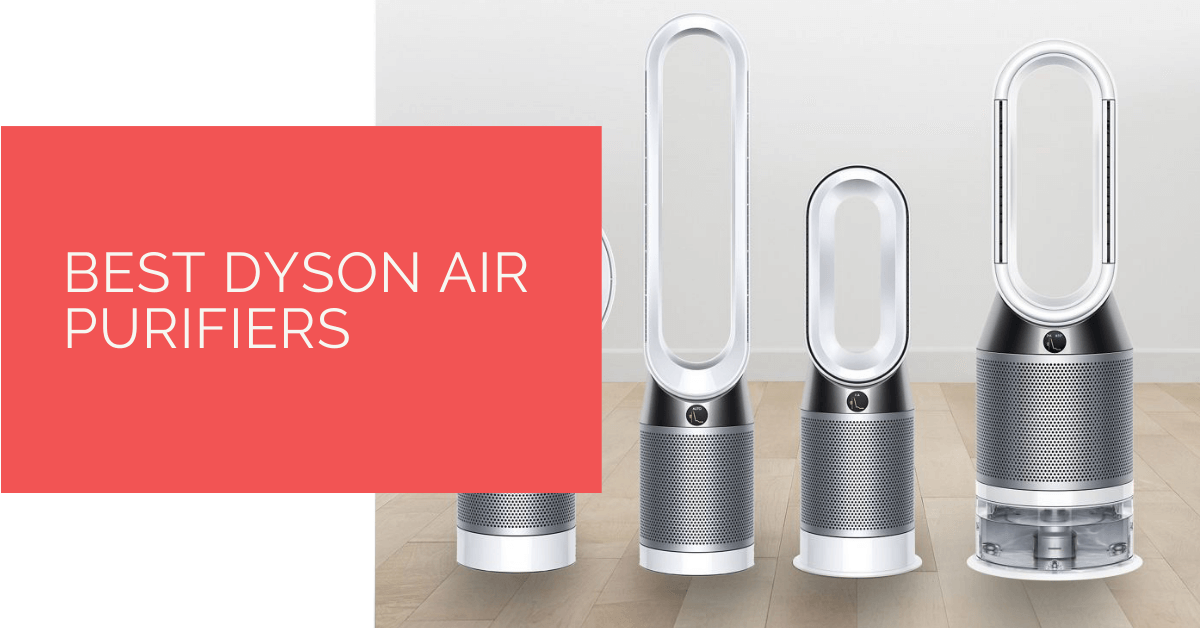
For most UK buyers, the Dyson Purifier Hot+Cool Gen1 HP10 is the best dyson air purifier to buy. It offers the strongest mix of practical performance, value and usability in a category where the right choice depends heavily on your room, budget and expectations.
Dyson purifiers are expensive, so the best choice depends on whether you need heating, cooling, humidifying, formaldehyde removal, or a quieter purifier for a larger room.
Contents
- 1 Our Top Picks
- 2 5 Best Dyson Air Purifiers
- 3 Dyson Air Purifiers Buying Guide
- 3.1 Key Takeaways
- 3.2 What Are Dyson Air Purifiers and How Do They Work?
- 3.3 Dyson Air Purifier Models: Cool, Hot+Cool, Humidify+Cool, and Cryptomic
- 3.4 Understanding HEPA Filters and Activated Carbon: What Each Actually Removes
- 3.5 Room Size Coverage and Air Change Rates: Will It Actually Work in Your Space?
- 3.6 Multi-Function Comparison: Cool, Heat, and Humidity All in One
- 3.7 Noise Levels and Silent Running at Night: When Whisper Mode Matters
- 3.8 Filter Replacement Costs and Ongoing Maintenance: What You’ll Actually Spend
- 3.9 Real-Time Air Quality Monitoring: Is the Sensor and App Actually Useful?
- 3.10 Auto Mode vs. Manual Speed Control: Let the Machine Do the Work
- 3.11 Size and Placement: Compact vs. Big, and Where to Put It
- 3.12 Quick Decision Guide: Which Dyson Purifier Should You Buy?
- 4 Case Study: Improving Comfort in a UK Home
- 5 Expert Insights From Our Heating Engineers About Dyson Air Purifiers
- 6 Frequently Asked Questions
- 7 Summing Up
Our Top Picks
| Image | Name | |
|---|---|---|
| Dyson Purifier Hot+Cool Gen1 HP10 | |
| Dyson Purifier Hot+Cool HP1 | |
| Dyson Purifier Big+Quiet Formaldehyde BP03 | |
| Dyson Purifier Humidify+Cool Formaldehyde PH04 | |
| Dyson Purifier Cool Gen1 TP10 |
5 Best Dyson Air Purifiers
1. Dyson Purifier Hot+Cool Gen1 HP10
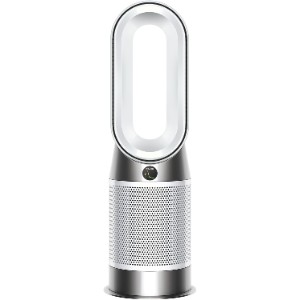
This is the Dyson to start with if you want one machine that works beyond allergy season. It purifies, heats and circulates air, so it earns its floor space in a living room, bedroom or home office. The sealed filtration is the key detail. Air has to pass through the filter rather than leaking around it, and the activated carbon layer helps with odours and gases as well as particles.
It is still a premium purchase, and it will not replace a proper air conditioner in summer. As a year-round purifier with heating, though, it is the most sensible Dyson pick here. Dyson Purifier Hot+Cool Gen1 HP10 is worth judging as a long-term room appliance rather than a cheap seasonal gadget. The appeal of Dyson is the mix of filtration, airflow and controls in one polished unit, but that only pays off if those functions match the room you plan to use it in.
In everyday use, the important question is not whether it has the longest feature list. It is whether you will run it often enough, replace filters on time and use the correct mode for the situation. A purifier left on the wrong setting in the wrong room will not feel like good value, no matter how advanced it looks.
Features
- Purifying fan heater
- Sealed HEPA filtration
- Activated carbon filter
- Auto mode
- Heats and cools
- Remote control
- Best year-round Dyson choice
- Heating makes it more useful in winter
- Sealed filtration
- Good for bedrooms and living rooms
- Premium price
- Cooling is fan airflow, not air conditioning
2. Dyson Purifier Hot+Cool HP1
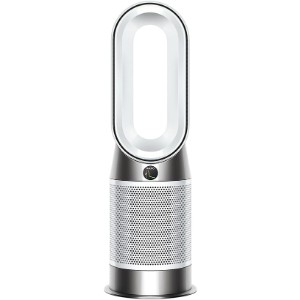
If you want the Hot+Cool format but prefer a current smart model, the HP1 is the more connected choice. App support and voice control make it easier to adjust without hunting for the remote. Dyson Purifier Hot+Cool HP1 is worth judging as a long-term room appliance rather than a cheap seasonal gadget. The appeal of Dyson is the mix of filtration, airflow and controls in one polished unit, but that only pays off if those functions match the room you plan to use it in.
The airflow projection is useful in awkward rooms where a basic box purifier can clean nearby air but struggle to circulate it across the room. It costs more than many excellent non-Dyson purifiers, so it makes most sense if you specifically want the Dyson combination of purification, air movement and heating. In everyday use, the important question is not whether it has the longest feature list. It is whether you will run it often enough, replace filters on time and use the correct mode for the situation. A purifier left on the wrong setting in the wrong room will not feel like good value, no matter how advanced it looks.
Features
- HEPA H13 sealed filtration
- Hot and cool airflow
- Air Multiplier technology
- MyDyson app support
- Voice-control compatible
- Remote control
- Strong smart features
- Useful heating and fan modes
- Good room circulation
- Expensive
- Overkill if you only need basic filtration
3. Dyson Purifier Big+Quiet Formaldehyde BP03
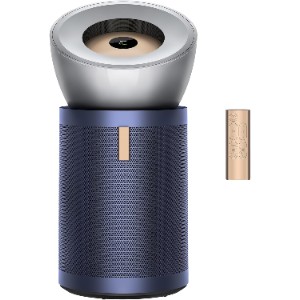
The Big+Quiet BP03 is the one to consider for larger open-plan rooms where a smaller tower model feels too directional. It is not trying to be a heater. It is trying to purify a bigger space quietly. The formaldehyde feature is useful if you are concerned about off-gassing from furniture, flooring, paints or renovation work. It will not solve every indoor air issue, but it gives you a more specialist filtration package.
The price is steep, even by Dyson standards. Buy it for large-room quiet purification, not because you need a fan heater. Dyson Purifier Big+Quiet Formaldehyde BP03 is worth judging as a long-term room appliance rather than a cheap seasonal gadget. The appeal of Dyson is the mix of filtration, airflow and controls in one polished unit, but that only pays off if those functions match the room you plan to use it in.
In everyday use, the important question is not whether it has the longest feature list. It is whether you will run it often enough, replace filters on time and use the correct mode for the situation. A purifier left on the wrong setting in the wrong room will not feel like good value, no matter how advanced it looks. If allergies, pet dander, cooking smells or traffic pollution are your main concerns, think about where the pollution enters the home and where you spend the most time. A bedroom purifier used every night may be more useful than a larger model that only runs occasionally in a hallway.
Features
- Large-room purifier
- Formaldehyde capture
- HEPA filtration
- Quieter airflow design
- App-connected monitoring
- Premium floor-standing design
- Best for larger rooms
- Quieter than many high-output purifiers
- Targets formaldehyde as well as particles
- Very expensive
- No heating mode
4. Dyson Purifier Humidify+Cool Formaldehyde PH04
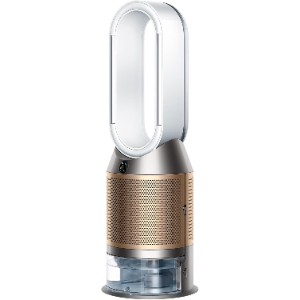
This is the most specialist Dyson in the list. It makes sense if your home gets dry in winter and you also want purification in one machine.
The catch is maintenance. Any humidifier needs cleaning, water handling and sensible humidity control. If you will not keep up with that, a purifier-only model is the safer buy. For the right home, the PH04 is clever. For a damp or poorly ventilated home, adding moisture can be the wrong move. Dyson Purifier Humidify+Cool Formaldehyde PH04 is worth judging as a long-term room appliance rather than a cheap seasonal gadget. The appeal of Dyson is the mix of filtration, airflow and controls in one polished unit, but that only pays off if those functions match the room you plan to use it in.
In everyday use, the important question is not whether it has the longest feature list. It is whether you will run it often enough, replace filters on time and use the correct mode for the situation. A purifier left on the wrong setting in the wrong room will not feel like good value, no matter how advanced it looks.
Features
- Purifier and humidifier
- Formaldehyde capture
- Fan cooling airflow
- Automatic humidity control
- Sealed filtration
- App-connected monitoring
- Purifies and humidifies
- Good for dry winter air
- Useful sensor feedback
- Needs regular cleaning
- Not suitable for already damp homes
- High price
5. Dyson Purifier Cool Gen1 TP10
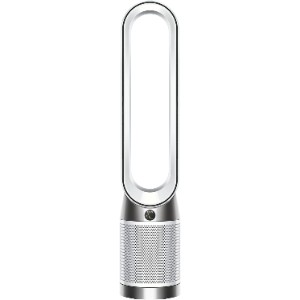
The TP10 is the simpler choice if you do not need heat. It gives you the familiar Dyson tower format, strong air projection and purification in a slimmer design. It is best for bedrooms, studies and living rooms where airflow matters as much as filtration. Night mode and lower fan settings are the ones most people will actually use day to day. If your main problem is cold winter air, choose a Hot+Cool instead. If you want a purifier that can also act as a fan, this is the cleaner fit.
Dyson Purifier Cool Gen1 TP10 is worth judging as a long-term room appliance rather than a cheap seasonal gadget. The appeal of Dyson is the mix of filtration, airflow and controls in one polished unit, but that only pays off if those functions match the room you plan to use it in. In everyday use, the important question is not whether it has the longest feature list. It is whether you will run it often enough, replace filters on time and use the correct mode for the situation. A purifier left on the wrong setting in the wrong room will not feel like good value, no matter how advanced it looks.
Features
- Tower purifier fan
- HEPA filtration
- Air Multiplier projection
- Remote control
- Oscillation
- Fan cooling airflow
- Good purifier-fan format
- Slim tower design
- Lower cost than many heater models
- No heating
- Still pricey compared with non-Dyson purifiers
Dyson Air Purifiers Buying Guide
Key Takeaways
- Dyson air purifiers are multi-function units that combine powerful purification with cooling or heating capabilities, making them work harder than standard purifiers alone.
- Room size matters most. Choose a model rated for at least 5 air changes per hour in your space, or you’re paying for a machine that won’t keep up with contamination.
- Filter costs are significant and ongoing. Dyson recommends replacing filters annually, which typically costs £40 to £80 per filter depending on the model.
- HEPA and carbon layers work together. You need both to remove particles, odours, and gases like formaldehyde and nitrogen dioxide, not just dust and pollen.
- The Dyson app and real-time monitoring sound gimmicky but are genuinely useful for tracking air quality trends and understanding when your home actually needs purification.
- Noise levels vary considerably between models and fan speeds. If you plan to run it at night, look for machines that operate below 30 decibels on lower settings.
- Multi-function models cost more upfront, but combining purifier plus fan (or heater, or humidifier) eliminates the need to buy separate appliances.
- Not all Dyson purifiers have the same filter technology. Some remove formaldehyde, others don’t. Check the spec sheet for your specific pollutant concerns.
What Are Dyson Air Purifiers and How Do They Work?
Dyson air purifiers aren’t just passive filters that sit in the corner. They use what Dyson calls its “loop amplifier” technology to actively pull dirty air in, force it through multi-stage filters at high speed, and then project purified air back into the room with enough force to circulate throughout your space. This is why a Dyson purifier feels more like an active appliance than a silent box in the background.
The key difference between a Dyson and a standard air purifier is function overlap. Most Dyson models do double or triple duty. The Purifier Cool functions as both a purifier and a fan. The Purifier Hot+Cool adds heating. The Humidify+Cool adds humidification. This design philosophy means you get purified air circulation, temperature control, and (if applicable) moisture adjustment all in one unit.
Internally, Dyson purifiers use sealed HEPA H13 filters (capturing 99.95% of particles as small as 0.1 microns) combined with activated carbon layers to trap odours, VOCs (volatile organic compounds), and formaldehyde. Some premium models go further with additional filter stages targeting specific gases like nitrogen dioxide.
Dyson Air Purifier Models: Cool, Hot+Cool, Humidify+Cool, and Cryptomic
Dyson offers four distinct purifier lines, each with a different set of capabilities. Understanding the difference is crucial because you don’t want to buy a Purifier Cool if you actually need heating or humidity control.
Purifier Cool is the simplest and most affordable Dyson purifier range. It handles air purification and acts as a fan to circulate the cleaned air. This is your entry point if you want Dyson technology without extra features. Models like the TP07 and TP09 (Formaldehyde) sit in this category.
Purifier Hot+Cool adds electric heating to the equation, making it useful year-round. In winter, it heats while purifying. In summer, it switches to cool mode and functions as a fan. This is a genuine space-saver if you currently own a separate fan heater and an air purifier.
Purifier Humidify+Cool is specifically designed for dry environments. If you live in a heated home during winter and suffer from dry skin, sinuses, or respiratory irritation, this model adds evaporative humidification while purifying. It cannot heat but works well in spring and autumn when you want moisture without warmth.
Purifier Cryptomic (available on select models) includes a special filter stage with a photocatalytic compound that breaks down formaldehyde molecules rather than just trapping them. This is genuinely different technology and costs more, but it’s worth considering if you have concerns about off-gassing from furniture, new carpets, or office equipment.
Understanding HEPA Filters and Activated Carbon: What Each Actually Removes
All Dyson air purifiers use HEPA H13 filters, which captures 99.95% of particles as small as 0.1 microns. But “particles” is a broad term that includes dust, pet dander, pollen, mould spores, and fine particulates from traffic and heating. If you have allergies or asthma, the HEPA filter alone will make a measurable difference within days.
The activated carbon layer is where things get more interesting. Carbon doesn’t remove particles, it absorbs gases and odours. This includes cooking smells, pet odours, tobacco smoke, and chemical VOCs from paint, cleaners, and new furniture. If your home has any smell you can’t quite place, carbon filtration targets exactly that problem.
The important distinction is that HEPA and carbon work on completely different contaminants. You cannot buy a Dyson purifier with “just HEPA” because Dyson doesn’t make them that way. Every model pairs both. This means you’re getting a genuinely comprehensive filter system, not just a particle trap. However, if your only concern is dust and allergies, you’re paying a bit extra for carbon filtration you might not need.
Some Dyson models add a third filter stage specifically for gases like formaldehyde and nitrogen dioxide. The Purifier Cool Formaldehyde TP09 and Humidify+Cool Formaldehyde PH04 include this upgrade. It’s worth the extra cost if you live near a busy road (nitrogen dioxide), have a new home with off-gassing building materials (formaldehyde), or are sensitive to chemical smells.
Room Size Coverage and Air Change Rates: Will It Actually Work in Your Space?
This is where many people make a critical mistake. You cannot simply buy the cheapest Dyson model and expect it to purify your entire home. Air purifiers work on the principle of air changes per hour. The target is 5 air changes per hour for effective purification, which means the machine should process your room’s entire air volume 5 times in 60 minutes.
Here’s the practical problem: if you have a 40 square metre lounge and you buy a purifier rated for 25 square metres, it will run continuously but never catch up with new pollution being introduced. You’ll notice the air feels cleaner immediately near the unit, but air quality drops off sharply 2 metres away. In larger rooms, position matters enormously, and you may need a purifier rated above your room size to achieve that 5-change target with the unit against a wall.
Dyson provides specific room size ratings for each model. The Purifier Cool TP07 covers up to 36 square metres. The Purifier Big+Quiet Formaldehyde covers up to 56 square metres. The compact HushJet covers 100 square metres in single-pass mode but is designed for noise reduction, not maximum output. Before you buy, measure your lounge or bedroom and cross-reference that against the product spec. If it’s borderline, choose the larger model.
One more consideration: the stated coverage assumes the purifier is placed in an open part of the room, not hidden in a corner or behind furniture. If your space is cluttered or you need the purifier tucked away, account for that by choosing a model rated slightly higher than your actual room size.
Multi-Function Comparison: Cool, Heat, and Humidity All in One
| Model Type | Filter Technology | Cooling Function | Heating | Humidifying | Room Size | Typical Price |
|---|---|---|---|---|---|---|
| Purifier Cool TP07 | HEPA + Carbon | Yes (fan only) | No | No | Up to 36 m² | £499-549 |
| Purifier Cool Formaldehyde TP09 | HEPA + Carbon + Gas removal | Yes (fan only) | No | No | Up to 36 m² | £549-599 |
| Purifier Hot+Cool | HEPA + Carbon | Yes (fan) | Yes (2kW heater) | No | Up to 36 m² | £599-649 |
| Purifier Humidify+Cool PH04 | HEPA + Carbon + Gas removal | Yes (fan) | No | Yes (evaporative) | Up to 40 m² | £699-749 |
| Purifier Big+Quiet Formaldehyde | HEPA + Carbon + Gas removal | Yes (fan) | No | No | Up to 56 m² | £749-799 |
The table above shows you don’t need to buy multiple appliances anymore. If you want heating, purification, and cooling in one unit, the Hot+Cool model eliminates three separate machines taking up space in your home. Similarly, if dry skin is a winter problem, the Humidify+Cool handles purification and moisture in one go. The only catch is that you’re paying premium prices for convenience, and if one component fails, you’re without all three functions until it’s repaired.
Noise Levels and Silent Running at Night: When Whisper Mode Matters
Dyson purifiers are not silent machines. At maximum speed, they can reach 60 decibels or more, which is comparable to a normal conversation. For daytime use, that’s fine. For overnight sleeping, it’s a problem unless you actively want white noise.
The critical specification is noise level at the lowest fan speed or in “Sleep” or “Quiet” mode. Dyson models typically operate between 20 to 30 decibels at the lowest setting, which is quieter than a refrigerator and won’t disrupt sleep for most people. The Purifier Big+Quiet models are specifically engineered to maintain efficiency while minimising noise, so if overnight running is essential, they’re worth the premium.
Here’s a real-world consideration: if you buy a quiet model but run it at full speed all night because air quality is bad, you lose the benefit. A better strategy is to use auto mode, which lets the machine monitor air quality and automatically increase speed only when it detects pollution. This keeps noise minimal most of the time whilst still protecting against sudden spikes in contaminants.
Filter Replacement Costs and Ongoing Maintenance: What You’ll Actually Spend
Dyson recommends replacing air purifier filters annually, and this is not negotiable if you want the purifier to work at rated efficiency. A clogged filter captures less, flows more slowly, and puts additional strain on the motor. After 12 months of continuous use, your filter is saturated with dust, pollen, and chemical particles.
A replacement Dyson air purifier filter costs between £40 and £80 depending on the model. The standard HEPA+Carbon filter runs around £50. The Cryptomic filter with formaldehyde removal costs closer to £70. If you run your purifier 24/7, that’s a recurring annual cost of £40 to £80, or roughly £3.30 to £6.70 per month.
This is worth factoring into your decision. If you buy the cheapest Dyson model at £300 but then spend £60 per year on filters for the next 5 years, your true cost of ownership is £600, not £300. Some people justify this by the improved health benefits and not needing separate fan or heating appliances. Others conclude that a more basic air purifier makes more financial sense if they’re budget-conscious.
The good news is you can buy filters in bulk and keep spares on hand. Dyson filters have a shelf life of several years, so buying two or three at a time during sales is a reasonable strategy. Also, watch for filter pack discounts where you buy the annual filters upfront at a 10 to 15 percent discount.
Real-Time Air Quality Monitoring: Is the Sensor and App Actually Useful?
Every Dyson air purifier includes real-time air quality sensors and an optional smartphone app. The sensors track PM2.5, PM10, NO2, VOCs, and (on some models) formaldehyde levels in your home and display them on an LCD screen or in the app. It sounds like a gimmick, but it’s genuinely valuable for understanding when your home actually needs purification.
Here’s why it matters: you cannot always smell bad air quality. A room can have elevated PM2.5 from cooking, traffic, or heating systems while smelling perfectly fine. The sensor catches this and shows you real numbers. After a week or two, you start recognising patterns: air quality drops after cooking, improves during rain, spikes on high-pollen days. This data lets you run your purifier intelligently rather than running it constantly out of paranoia.
The Dyson app adds convenience by showing air quality trends over days or weeks, controlling the purifier remotely (useful if you’re away and want to start it before you arrive home), and sending alerts when filters need replacing. If you’re someone who enjoys data-driven home health tracking, the app is excellent. If you prefer simple mechanical appliances, you can ignore it and just use the buttons on the machine itself.
One warning: the app requires your home WiFi to work. If your home has poor WiFi coverage near where the purifier sits, the app might disconnect frequently, which is annoying. You can use the physical controls on the machine without WiFi, but you lose remote monitoring.
Auto Mode vs. Manual Speed Control: Let the Machine Do the Work
All modern Dyson purifiers offer an auto mode that monitors air quality and automatically adjusts fan speed to match pollution levels. In clean air, the machine runs at near-silent, minimal speed. When pollution is detected, it ramps up gradually. When air quality improves, it backs off again.
For most people, auto mode is the best way to run your purifier. It balances efficiency, noise, and ongoing air quality without requiring you to think about it. You set it and let the sensor do the work. Manual speed control is useful if you want to force maximum purification before guests arrive, or if you want to run the machine at a specific noise level regardless of current air quality.
A subtle advantage of auto mode is that it extends filter life slightly. Because the machine spends most of its time at lower speeds when air quality is good, the filter degrades more slowly than if you ran at full speed continuously. Over the course of a year, this might extend filter life by a month or two, saving you a bit on replacement costs.
Size and Placement: Compact vs. Big, and Where to Put It
Dyson makes two major categories here: compact models (like the HushJet) designed for small spaces or desks, and full-size models (like the Big+Quiet) for larger rooms or living areas. Compact models are quieter and take up minimal floor space, but they have lower coverage. Full-size models handle larger rooms but require more dedicated space.
Placement is surprisingly important. Dyson purifiers work best in open areas away from walls, furniture, and obstructions. If you tuck a purifier into a corner or under a shelf, airflow suffers and coverage drops significantly. The loop amplifier technology relies on air circulating freely, so give your purifier at least 30 centimetres of clear space on all sides if possible. If your room layout makes this difficult, accept that you’ll need a slightly larger model than the room size technically requires.
In open-plan homes, one central purifier often covers the entire downstairs if positioned well. In separated rooms, you need a separate unit for each space, or you need a model with exceptional coverage like the Big+Quiet.
Quick Decision Guide: Which Dyson Purifier Should You Buy?
| What You Need | Recommended Model | Why |
|---|---|---|
| Budget-conscious, small room (under 30 m²), purification only | Purifier Cool TP07 | Most affordable entry to Dyson technology with excellent performance for compact spaces and HEPA+Carbon filtration. |
| Concerns about off-gassing, formaldehyde, or chemical odours | Purifier Cool Formaldehyde TP09 | Adds a gas-removal filter stage at moderate cost increase over the TP07, targeting formaldehyde and VOCs specifically. |
| Year-round comfort with heating and cooling | Purifier Hot+Cool | Replaces three appliances (heater, fan, purifier) in one unit without premium multi-function pricing. |
| Dry winter skin, sinus issues, or humid climate concerns | Purifier Humidify+Cool PH04 | Combines purification with evaporative humidification to restore moisture to dry indoor air without adding dust. |
| Large living area (40+ m²) with noise sensitivity | Purifier Big+Quiet Formaldehyde | Engineered for large spaces with low noise signature and advanced gas removal, worth premium price for whole-home coverage. |
| Compact desk, bedroom, or small flat (under 20 m²) | Purifier HushJet Compact | Smallest Dyson purifier with extremely quiet operation and minimal space footprint, perfect for personal spaces. |
Case Study: Improving Comfort in a UK Home
Background
A family in a 1990s detached house wanted to improve comfort in a bedroom and home office. The rooms were not dangerously poor, but they felt stale at night and uncomfortable during winter heating season.
Project Overview
Rather than buying the first product with the highest rating, they looked at room size, noise, maintenance and what problem they were actually trying to fix.
Implementation
They chose equipment matched to the room instead of the largest unit available. They also changed daily habits: better ventilation after cooking and showering, regular filter checks, and more consistent monitoring of humidity and indoor air readings.
Results
The rooms felt easier to live with, and the family avoided buying a product that would have added moisture or noise in the wrong place. The biggest improvement came from matching the product to the cause rather than the symptom.
Expert Insights From Our Heating Engineers About Dyson Air Purifiers
“The product that looks strongest on paper is not always the best one for a real home. Room size, airflow, moisture, power supply and maintenance are what decide whether it works day after day.”
“One of our senior heating engineers with over 15 years of experience recommends checking the upkeep before you buy. Filters, descaling, replacement parts and installation costs are easy to overlook, but they are often what decide whether people are still happy six months later.”
“Do not use smart readings as decoration. If a monitor shows high CO2, ventilate. If humidity is high, reduce moisture and improve airflow. If a purifier filter needs replacing, replace it. The data only helps when it changes what you do.”
Frequently Asked Questions
Are Dyson air purifiers worth it?
They can be worth it if you want premium build quality, sealed filtration, strong airflow projection and smart monitoring in one machine. They make the most sense in rooms where you will use them daily, such as bedrooms, living rooms and home offices. If you only need basic HEPA filtration for a small room, a cheaper purifier may offer better value.
Do Dyson air purifiers remove mould?
Dyson air purifiers can capture some airborne mould spores as they pass through the filter, but they do not remove mould from walls, silicone, furniture or hidden damp areas. If mould is growing, the main fix is moisture control: ventilation, heating balance, leak repair and reducing condensation. A purifier can support air quality, but it should not be treated as a mould solution.
Which Dyson purifier is best for bedrooms?
For bedrooms, look for quiet low-speed operation, night mode, dimmed display settings and enough output for the room size. A Cool tower model can work well if you mainly want purification and fan airflow, while a Hot+Cool model makes sense if the room also needs extra winter heat. Avoid overspending on a Humidify+Cool unless the bedroom is genuinely dry.
Do Dyson Hot+Cool purifiers cool the air?
They cool you in the same way a fan does: by moving air across your skin. They do not refrigerate the air or reduce the room temperature like an air conditioner. That distinction matters in heatwaves, because a Hot+Cool can improve comfort but will not solve an overheated room in the way proper air conditioning can.
How often do Dyson purifier filters need changing?
It depends on the model, usage hours and pollution level in the home. Homes with pets, smokers, heavy cooking, open fires or high outdoor pollution may load filters faster than lightly used rooms. Use the filter indicator as a guide, but also check replacement cost before buying because filter ownership is part of the real long-term price.
Should I buy a Dyson Humidify+Cool?
Buy a Dyson Humidify+Cool only if your home is genuinely dry and you are willing to keep up with cleaning and water maintenance. It can be useful in dry heated rooms, especially in winter, but it is the wrong direction for damp rooms, condensation problems or mould-prone spaces. Measure humidity first rather than guessing.
Summing Up
The Dyson purifier range is strongest when you choose by use case rather than by price alone. A Hot+Cool model is the safest all-round choice if you want year-round use, while a Cool tower model suits people who already have heating and mainly want purification plus fan airflow. Big+Quiet is the more specialist large-room option, and Humidify+Cool should only be considered when dry air is a real problem.
For most homes, the Dyson Purifier Hot+Cool Gen1 HP10 is the best starting point because it combines purification, heating and everyday usability without becoming as specialist as the larger or humidifying models. Check room size, filter costs and whether you actually need heating or humidifying before buying, because those details decide whether a Dyson feels like a premium upgrade or an expensive mismatch.
Updated