
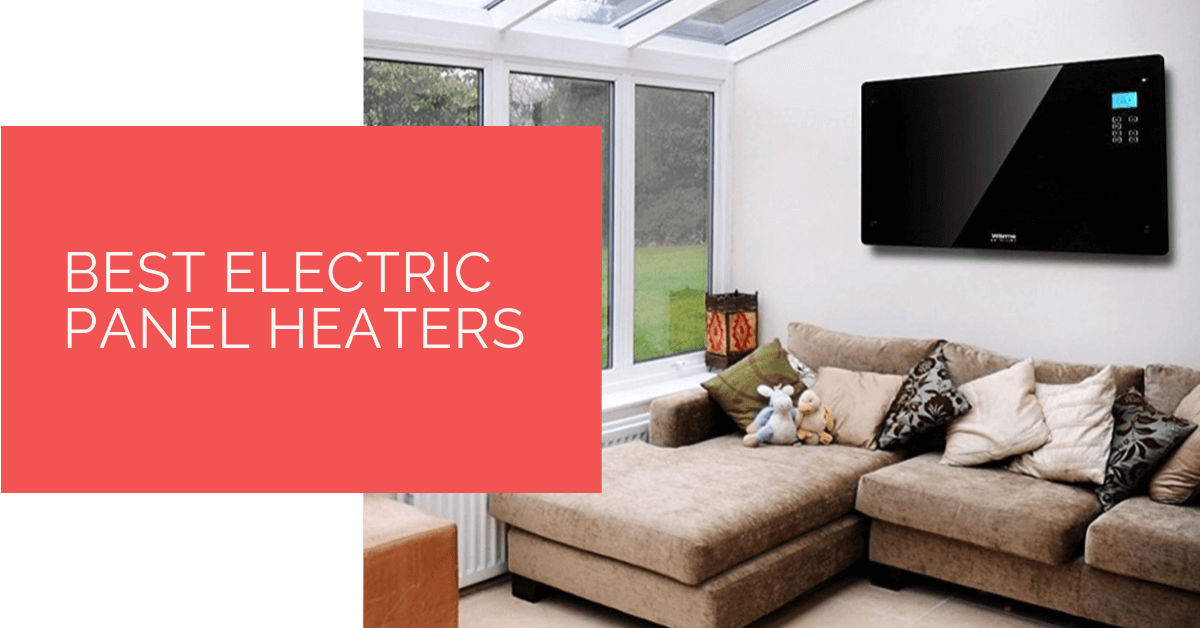
For a slim, wall-mountable heater that looks the part and works efficiently, the Devola WiFi Enabled Smart Electric Glass Panel Heater 2000W is our top choice. It has over 1,200 Amazon reviews at 4.3 stars, connects to Alexa and Google Home, and includes open window detection to avoid wasting energy. If you want smart heating without the bulk of a traditional radiator, this is the one.
That said, the right electric panel heater depends on your room size, budget, and how much control you want. We’ve reviewed eight of the best electric panel heaters currently available on Amazon.co.uk, covering glass panel heaters, convection panel heaters, and budget options from under £43 to around £120.
Our Top Picks
| Image | Name | |
|---|---|---|
| Devola WiFi Enabled Smart Electric Glass Panel Heater 2000W | |
| Duronic Electric Heater HV220 Oil Free Convection Heater 2000W | |
| Devola WiFi Enabled Smart Electric Glass Panel Heater 1000W | |
| Duronic Electric Heaters HV101 Oil Free Convection Heater 2500W | |
| Mylek Glass Panel Heater WiFi Enabled 2000W | |
| JSH WiFi Enabled Electric Glass Panel Heater 2000W | |
| Devola DVNDM10 Eco Electric Panel Heater 1000W | |
| Glen 2150Tie7 Electric Convector Heater 500W |
8 Best Electric Panel Heaters
1. Devola WiFi Enabled Smart Electric Glass Panel Heater 2000W
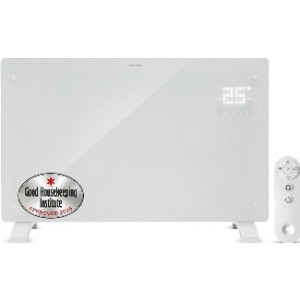
This is the panel heater we’d put in most UK homes. The Devola 2000W has quietly become one of the best-reviewed glass panel heaters on Amazon, and with good reason. It heats a medium-sized room effectively, the glass front stays cool to the touch on the sides (only the element gets warm), and the WiFi connectivity via the Smart Life app is genuinely useful rather than gimmicky. You can set schedules, control it remotely, and get it integrated with Alexa or Google Home in a few minutes.
The open window detection is a nice touch. When it senses a sudden temperature drop — consistent with a window being opened — it pauses heating automatically, which can make a real difference to your energy bills over a winter. It’s Lot 20 compliant, meaning it meets the UK’s energy-related product regulations, so you know it’s been independently verified for efficiency.
Installation is straightforward. It comes with wall-mounting brackets, but it also sits on the included feet as a free-standing unit if you’d rather not drill. The white glass finish is clean and modern. At £119.99 it isn’t the cheapest panel heater on this list, but it’s the most capable, and with 1,297 reviews to back it up, the reliability is proven.
Features
- 2000W output — suitable for rooms up to 20m²
- WiFi enabled via Smart Life / Tuya app
- Amazon Alexa and Google Home compatible
- Open window detection with automatic pause
- 7-day programmable timer and adjustable thermostat
- Wall mounted or free standing with included feet
- Lot 20 compliant for energy efficiency
- White glass front panel
- Excellent smart home integration — Alexa, Google Home, app scheduling
- Open window detection saves energy automatically
- 1,297 reviews at 4.3 stars — very well proven
- Lot 20 compliant, verified energy efficiency
- At £119.99, it’s the priciest pick on this list
- App setup can take a few attempts for some users
2. Duronic Electric Heater HV220 Oil Free Convection Heater 2000W
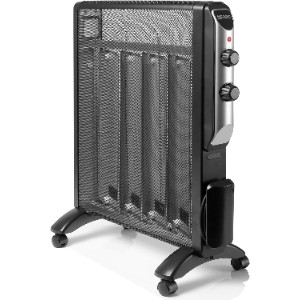
The HV220 sits at an interesting intersection: it’s not a glass panel heater, and it’s not an oil-filled radiator either. Duronic’s micathermic technology means it heats up almost instantly (like a fan heater) but radiates that heat silently and evenly (like a radiator). The result is a panel heater that feels more comfortable to sit near than a fan heater, without the slow warm-up time of oil.
At £69.99 with 561 reviews at 4.5 stars, it punches well above its price. It can be wall mounted or used freestanding, and at just 25mm deep it barely protrudes from the wall. There’s a manual thermostat dial and two heat settings (1000W and 2000W). It’s not smart — no WiFi, no app — but for a bedroom or home office where you want silent, efficient heat without fuss, it’s hard to beat.
The lack of a timer is the main limitation. You’re controlling it manually or via a plug-in timer, which isn’t ideal. But if you don’t need scheduling and just want a slim, quiet, genuinely effective panel heater for under £70, this is our mid-range pick.
Features
- 2000W micathermic output — heats up almost instantly
- Completely silent operation — no fan, no moving parts
- Wall mountable or freestanding (25mm depth)
- Manual thermostat dial and dual heat settings (1000W / 2000W)
- Overheat protection and tip-over cut-off
- 561 reviews at 4.5 stars
- Ultra-slim 25mm depth — barely noticeable on the wall
- Silent operation — perfect for bedrooms and offices
- Excellent value at £69.99 with 561 well-reviewed units
- No built-in timer — need a separate plug-in timer
- Manual controls only, no smart features
- Two heat settings only — less precise than thermostat models
3. Devola Wifi Enabled Smart Electric Glass Panel Heater 1000W
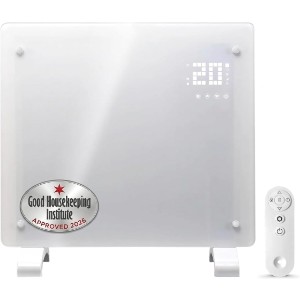
If you want the same Devola smart features as the 2000W version but for a smaller room — or you’d simply rather run a lower-wattage heater to keep bills down — the 1000W variant is worth a look. It has the same WiFi connectivity, Alexa and Google Home integration, and open window detection. The 430 reviews at 4.4 stars suggest it’s just as reliable as the higher-wattage sibling.
For a small bedroom, home office, or single-person study up to around 10m², the 1000W output is more than adequate. Running it at full power costs approximately 24p per hour at current UK electricity rates — notably cheaper than a 2kW unit running continuously. With programmable scheduling, you can bring the temperature up before you arrive in the room and let it tick over at a lower setting throughout the day.
Features
- 1000W output — ideal for smaller rooms up to 10m²
- WiFi via Smart Life / Tuya app, Alexa and Google Home compatible
- Open window detection
- 7-day programmable timer and digital thermostat
- Wall mounted or freestanding
- Lot 20 compliant
- 430 reviews at 4.4 stars
- Lower running costs than 2kW models
- Full smart home integration at a mid-range price
- Well-reviewed with 430 verified purchases
- 1000W will struggle in larger or poorly insulated rooms
- Essentially the same price as the 2000W if you need more power
4. Duronic Electric Heaters HV101 Oil Free Convection Heater 2500W
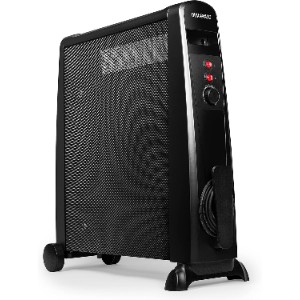
If you need to heat a large room — a kitchen-diner, an open-plan living area, or a conservatory — the HV101’s 2500W output puts it ahead of most panel heaters on this list. Duronic’s micathermic technology means you get that power silently, with no fan noise, and the panel heats up in seconds rather than minutes. It’s the same core technology as the HV220 but scaled up, and with 805 reviews at 4.4 stars it’s clearly doing something right.
Like the HV220, it’s wall mountable or freestanding, and the slim profile means it doesn’t dominate the room. There’s a manual thermostat and two heat settings. No timer, no smart features. For spaces where output is the priority and noise is not acceptable — think sleeping babies, people working from home on calls, or light sleepers — the combination of 2500W and silent operation is genuinely hard to find elsewhere at this price point.
Features
- 2500W micathermic output — one of the most powerful silent panel heaters available
- Completely silent — no fan, no moving parts
- Wall mounted or freestanding
- Manual thermostat and dual heat settings
- Overheat protection and tip-over safety cut-off
- 805 reviews at 4.4 stars
- 2500W is unusually powerful for a silent panel heater
- Well-proven with 805 Amazon reviews
- Great for large or hard-to-heat rooms
- No timer or smart controls
- Higher wattage means higher running costs if left on all day
- Manual controls only
5. Mylek Glass Panel Heater WiFi Enabled 2000W
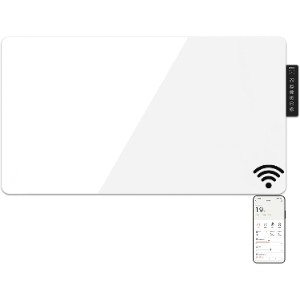
The most divisive pick on this list, in a good way. The Mylek WiFi Glass Panel Heater has the highest rating of anything here at 4.7 stars — but with only 55 reviews, that figure comes with a caveat. It’s a relatively new listing, so the sample size is still small. That said, 55 people agreeing it’s excellent is not nothing, and the specification for the price is genuinely strong.
At £89.99 for a 2000W WiFi-enabled glass panel heater, it undercuts the Devola 2000W by £30. It has app control, and it sits freestanding or wall-mounts cleanly. If you want smart glass panel heating but are put off by the Devola’s price, the Mylek is worth serious consideration — just be aware you’re buying into a shorter track record.
Features
- 2000W output
- WiFi enabled with smart app control
- Glass front panel — white finish
- Wall mounted or freestanding
- Programmable timer and thermostat
- 4.7 stars from 55 reviews
- Best-rated panel heater on this list at 4.7 stars
- £30 cheaper than the equivalent Devola WiFi model
- Smart app control with full scheduling
- Only 55 reviews — limited long-term reliability data
- Newer brand, less established than Devola or Duronic
- No open window detection
6. JSH WiFi Enabled Electric Glass Panel Heater 2000W
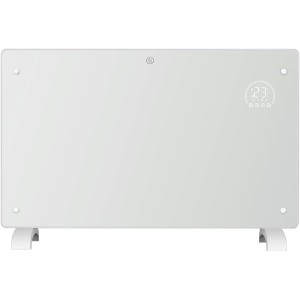
Another strong contender in the crowded smart glass panel space. The JSH 2000W WiFi heater comes with both app control and a physical remote, which is something neither the Devola nor Mylek includes — useful if you’d rather not reach for your phone every time you want to tweak the temperature. It’s priced at £99.99 and carries 4.5 stars from 53 reviews.
The remote is particularly appreciated in bedrooms and living rooms where you want to make quick adjustments without getting up. App scheduling works in the same way as other WiFi models on this list, and it’s compatible with Alexa. The review count is still relatively low, but the scores are consistent and the specification is competitive for the price.
Features
- 2000W output
- WiFi app control and included physical remote
- Alexa compatible
- Glass front panel
- Wall mounted or freestanding
- Programmable timer and thermostat
- 4.5 stars from 53 reviews
- Includes a physical remote — rare in this category
- App and Alexa compatible
- Competitive price for a 2000W WiFi glass panel
- Only 53 reviews — limited long-term data
- Slightly more expensive than the Mylek equivalent
- Lesser-known brand
7. Devola DVNDM10 Eco Electric Panel Heater 1000W
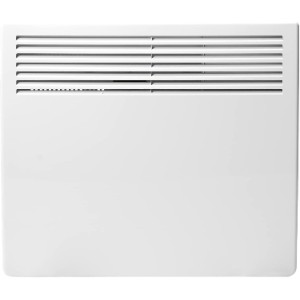
This is a no-nonsense, non-smart panel heater from Devola that’s well worth considering if you don’t need WiFi or app control. The DVNDM10 is a traditional slim panel heater with an adjustable thermostat, 24-hour timer, and two heat settings. At £69.99 with 186 reviews at 4.4 stars, it’s a solid, reliable option for anyone who finds the idea of pairing a heater with their phone unnecessary.
It’s slim, wall-mountable, and the white finish blends into most rooms without drawing attention. The 1000W output makes it best suited to bedrooms and small offices rather than larger living areas. If your main priority is keeping a single room comfortable at a low price without the complexity of smart features, this covers the bases well.
Features
- 1000W output — suited to rooms up to 10m²
- Adjustable thermostat with 24-hour programmable timer
- Two heat settings
- Wall mounted or freestanding
- Slim, low-profile design
- 186 reviews at 4.4 stars
- Simple to use — no app required
- Good value at £69.99
- Slim and unobtrusive design
- 1000W only — not powerful enough for larger rooms
- No smart home integration
- Basic controls compared to WiFi models
8. Glen 2150Tie7 Electric Convector Heater 500W
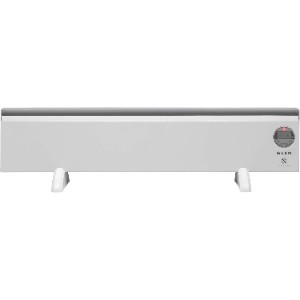
At £42.50 this is the cheapest pick on this list, but the Glen convector heater earns its place. A 500W output sounds modest, but for a small room, a hallway, or a bathroom (it’s splash-proof), it’s often all you need — and running it costs just 12p per hour at current UK electricity rates. With 444 reviews at 4.4 stars, it’s better-reviewed than several pricier options here.
The 7-day LCD programmable timer is a genuine highlight at this price point. You can set different schedules for different days, which most heaters at under £50 simply don’t offer. It wall mounts with included fixings or sits freestanding with feet. The skirting board-style form factor is slim and unobtrusive. It’s not going to heat a large room, but for what it is, it represents very good value.
Features
- 500W output — ideal for small rooms, hallways, or bathrooms
- 7-day LCD programmable timer
- Wall mounted or freestanding
- Slim skirting board-style profile
- Splash-proof rated
- 444 reviews at 4.4 stars
- Very affordable at £42.50
- 7-day timer is impressive at this price
- Cheapest running costs on this list — 12p/hr
- 500W — only suitable for very small spaces
- No smart features or remote control
- Not suitable as a primary heater for living areas
Key Takeaways
- Electric panel heaters combine radiant and convective heat in a slim, wall-mounted or freestanding format. The panel surface radiates warmth directly into the room while the casing shape promotes natural air convection from below, giving more even heat distribution than a pure convector or pure radiant heater
- Lot 20 compliance is essential. All compliant electric panel heaters must include a digital thermostat, a 24/7 programmable timer, and at least one additional energy-saving feature such as open window detection or adaptive start. Non-compliant models waste electricity running without precision control
- Panel heaters are typically thinner than oil-filled radiators or convector boxes, making them the preferred choice for hallways, kitchens, conservatories, and rooms where wall space or floor depth is limited. Most wall-mounted models are under 100mm deep
- Smart panel heaters with Wi-Fi connectivity and app control allow individual room scheduling independently of the central thermostat. This can save 15 to 20% on heating costs by heating rooms only when occupied rather than following a whole-house schedule
- Wattage sizing: 100W per m² for well-insulated rooms; 150W per m² for older properties. A 1,500W panel heater suits a 15m² room; a 2,000W model suits up to 20m². At 27p/kWh, a 2kW panel heater with thermostat cycling costs 15 to 25p per hour in typical UK conditions
How Electric Panel Heaters Work
An electric panel heater contains a heating element (typically ceramic, mica, or aluminium-based) mounted behind or within the panel surface. When energised, the element heats the panel, which both radiates warmth outward and heats the air in contact with the panel surface. Cool air enters from below, is warmed by contact with the panel, rises, and circulates back into the room. The combination of direct radiation and convective airflow produces more even heat distribution than a convector or radiator alone.
The slim profile is a defining characteristic. Most panel heaters are 50 to 100mm deep, compared to 150 to 200mm for a traditional oil-filled radiator. This allows installation in spaces too shallow for conventional heaters: above a kitchen worktop, in a narrow hallway, beside a door, or below a low window sill.
Ceramic vs Aluminium vs Mica Elements
Ceramic elements are the most common in UK panel heaters. They heat up quickly (3 to 5 minutes to full output), self-limit their temperature safely, and produce consistent warmth. PTC (Positive Temperature Coefficient) ceramic elements are the most sophisticated: they automatically regulate output as the panel temperature changes, maintaining efficient operation without overheating.
Aluminium-bodied panel heaters heat up faster than ceramic and distribute warmth more evenly across the panel surface due to aluminium’s high thermal conductivity. They’re also compatible with lower flow temperatures, which makes them the preferred choice for electric heating in homes considering a future heat pump installation. They cost more than ceramic alternatives but are worth the premium for permanent installations.
Mica panel heaters use thin mineral sheets that warm up very quickly (under 2 minutes) but have a smaller heated surface area than ceramic or aluminium alternatives. They suit rooms where rapid heat-up matters most, such as bathrooms used briefly in the morning.
Smart Features and Lot 20
The most significant upgrade from a basic to a quality panel heater is the control system. Lot 20-compliant models include a digital thermostat accurate to 1°C, a 24/7 programmable timer, and at least one energy-saving feature. Open window detection is the most useful: the heater monitors for a sudden temperature drop, switches off for 15 to 20 minutes to avoid heating cold incoming air, then resumes.
Wi-Fi-connected smart panel heaters add remote control via phone app and integration with Alexa, Google Home, or Apple HomeKit. For a property heated entirely by electric panel heaters (common in flats and properties without gas), smart control allows genuinely individual room scheduling: the bedroom heats for 30 minutes before bed, the home office heats during working hours only, the spare bedroom never heats at all until a guest is expected.
Adaptive start is a useful feature on premium models. The heater learns how long it takes to warm a room from cold and automatically starts earlier or later to reach the target temperature at the scheduled time, rather than just switching on at the programmed hour regardless of conditions.
Wall-Mounted vs Freestanding
Wall-mounted installation is the better choice for any panel heater that will be used as a permanent fixture in one room. Mounting improves convection (air circulates freely beneath the panel), removes trailing cable hazards, and looks neater. Most panel heaters include wall brackets; hardwiring via a fused spur is recommended for permanently installed models above 2kW.
Freestanding panel heaters on legs or castors are better if you want to move the heater between rooms or don’t want to drill into walls. The freestanding format places the element lower than a wall-mounted unit, which slightly reduces convection efficiency but is adequate for most domestic applications.
Things to Keep in Mind Before Buying
Panel heaters in bathrooms must be IP-rated and zone-appropriate. A standard panel heater is not safe in a bathroom. IP24-rated models are suitable for Zone 2 (within 0.6m horizontally of a shower or bath); for closer to water, IP44 or higher is required. Bathroom panel heaters typically have pull-cord or remote controls rather than touch panels to keep electrical components away from water.
Check the depth before ordering for tight spaces. A panel heater described as “slim” might still be 80mm deep, which won’t fit in a recess designed for a 50mm fitting. Most product listings state front-to-back depth in the specifications; measure your available space before ordering.
Types of Electric Panel Heater
Basic plug-in panel heaters (500W to 2,000W, freestanding or wall-mountable) suit occasional supplementary heating. Available with basic mechanical thermostat. Price range £30 to £80.
Lot 20-compliant panel heaters with digital thermostat, 24/7 timer, and open window detection. The correct choice for primary room heating. Brands including Haverland, Rointe, and Elnur. Price range £80 to £250.
Smart Wi-Fi panel heaters with app control, voice assistant integration, and individual room scheduling. Best choice for all-electric properties. Price range £120 to £350.
Designer aluminium panel heaters combine efficient heating with contemporary aesthetics. Slim profiles in white, black, or anthracite. Often wall-mounted and hardwired. Compatible with heat pump systems at low flow temperatures. Price range £150 to £500.
Electric Panel Heater Buying Guide
Key Takeaways
- All electric panel heaters sold in the UK since January 2018 must comply with Lot 20 ERP regulations, which require a programmable timer, a precise thermostat, and at least one additional energy-saving feature such as open-window detection
- This means the cheapest Lot 20-compliant panel heater you can buy is still smarter and more energy-efficient than even a mid-range convector heater from a decade ago
- Wattage sizing: 500 to 750W for rooms under 10m²; 1,000 to 1,250W for 10 to 15m²; 1,500 to 2,000W for larger rooms; older properties need 20 to 30% more output
- Running costs at 27p/kWh: 500W costs 13.5p/hr; 1,000W costs 27p/hr; 1,500W costs 40.5p/hr at full power, but the thermostat typically keeps actual run-time well below 100%
- Glass panel heaters have a contemporary look suited to living rooms and bedrooms; aluminium-bodied heaters are more robust and suit commercial or high-traffic environments
- Plug-in panel heaters offer flexibility; hardwired models are more discreet and suit permanent installations in bathrooms, hallways, and rental properties
What Is an Electric Panel Heater?
An electric panel heater is a slim, wall-mountable electric heater that warms a room primarily through convection. Cool air enters through vents at the base, passes over a ceramic or aluminium heating element, and exits as warm air through the top. The panel body itself also radiates some heat directly, adding to the overall warmth output. The result is a heater that looks more like a modern radiator than a traditional plug-in appliance.
Panel heaters are designed as permanent or semi-permanent room heating solutions rather than portable plug-in appliances. They are the most common electric heating choice for newly built UK homes, rental properties without gas central heating, extensions, loft conversions, garden rooms, and any space where running new pipework for a wet central heating system is impractical or prohibitively expensive.
Lot 20 Regulations: What You Need to Know
Lot 20 refers to the EU Energy-Related Products regulation that came into effect for space heaters in January 2018. In the UK, this regulation was retained and continues to apply post-Brexit. The requirements mean every panel heater legally sold in the UK must include a programmable timer, a thermostat with a minimum accuracy of ±1°C, and at least one additional energy-saving feature. Open-window detection, the most common, cuts the heater automatically when it senses a rapid temperature drop, which typically indicates a window has been opened.
The practical effect is significant. A budget £50 Lot 20-compliant panel heater includes features that were only available on premium models before 2018. If you see a panel heater advertised without a programmable timer or thermostat, it is either non-compliant (and should not be sold in the UK) or it is being described inaccurately. Any new panel heater from a reputable UK retailer should be Lot 20-compliant as standard.
Choosing the Right Wattage
Electric panel heaters are usually sold in 500W increments: 500W, 750W, 1,000W, 1,250W, 1,500W, 2,000W and 2,500W. Use the standard UK sizing guide of 100W per m² for a modern, well-insulated home as a starting point. A 12m² bedroom in a new build needs around 1,200W, so a 1,250W model is appropriate. The same room in a Victorian terrace with original single glazing might need 1,500W or 1,750W.
Under-sizing is the most common mistake. A panel heater that is too small for the room will run at or near full power continuously to maintain temperature, wearing the element faster and providing less comfortable warmth. Buying one step up from the minimum calculation costs more upfront but typically runs at 60 to 70% power for the same room, extending the product lifespan and reducing element stress.
Glass Panel vs Aluminium Panel
The two most common panel heater formats in the UK are glass-fronted models and aluminium-bodied models. The difference is primarily aesthetic and practical rather than performance-related.
Glass panel heaters have a smooth, flat front face that suits contemporary interiors. They look more like a design feature than an appliance, which is why they are popular in living rooms, bedrooms, and any room where the heating installation is visible. The glass front stays cooler to the touch than the heating vents on an aluminium model, though it is still not safe to touch during operation. Glass panels are slightly more fragile and require a clean mounting surface. Price range £80 to £350.
Aluminium-bodied panel heaters are more robust and better suited to heavy-use environments: rental properties, classrooms, hotel rooms, commercial offices. The aluminium heats evenly and dissipates heat efficiently. Finish is typically white or grey powder coat. Less aesthetically distinctive than glass models but more damage-tolerant. Price range £60 to £250.
Smart Controls and WiFi
Beyond the Lot 20-mandated timer and thermostat, many panel heaters now include Wi-Fi connectivity for remote control via a smartphone app. The practical benefits are straightforward: turn heating on 30 minutes before you arrive home, switch it off if you realise you have left it running, or set different schedules for different rooms from a single interface.
Better-specified Wi-Fi panel heaters also offer energy monitoring, showing actual consumption in kWh alongside cost estimates. This is more useful than it might sound: it reveals whether your thermostat settings are resulting in efficient cycling or excessive continuous running, which helps optimise settings over time.
Voice assistant integration (Amazon Alexa, Google Home) is increasingly standard on Wi-Fi models. This does not materially change heating performance but allows voice control of temperature and schedules, which some users find convenient. The heating hardware is identical to non-smart equivalents at the same wattage; you are paying for the connectivity module and app.
Running Costs
An electric panel heater converts every watt of electricity it consumes directly into heat, so a 1,000W model costs exactly 27p per hour at current UK electricity rates when the element is active at full power. A 1,500W model costs 40.5p per hour.
The important practical figure is the duty cycle: how much of the time the element is actually active. A well-insulated modern room with a precise thermostat set to 20°C might only need the element running 25 to 35% of the time once the room has reached temperature. At that duty cycle, a 1,500W model’s effective hourly cost drops to around 14p per hour, roughly the same as having a 150W appliance on continuously.
Running a 1kW panel heater for 8 hours per day for a 5-month UK heating season (at 50% duty cycle) costs approximately £198 per year. This is comparable to gas central heating for a single room, and significantly less than running a basic oil-filled radiator at full power for the same period.
Safety Features
Panel heaters operate at lower surface temperatures than many other electric heater types, which makes them safer around children and pets. The panel face of a glass model typically reaches 50 to 70°C on the warm sections, which is uncomfortable but not immediately scalding. The heating element itself is sealed within the housing and inaccessible.
All Lot 20-compliant panel heaters include overheat protection. Open-window detection, which is also standard, provides the additional safety benefit of preventing the heater from running unnecessarily when the room is being ventilated. Tip-over switches are standard on free-standing models. Wall-mounted models cannot tip over, but ensure the fixings are into solid wall material capable of bearing the unit’s weight.
Plug-In vs Hardwired Panel Heaters
Plug-in panel heaters connect to a standard 13A socket and can be positioned anywhere along a wall where a socket is available. They can be moved if needed and require no electrical work. The limitation is that the socket and cable are visible, and heaters above 2.5kW exceed the safe continuous load for a standard socket in UK wiring.
Hardwired panel heaters connect directly to a fused spur, with no visible plug or cable. The installation requires a qualified electrician (typically £80 to £150 per unit), but the result is a permanent, clean installation with no trailing cables. Hardwired is the preferred option for rental properties (where landlords want a durable, damage-resistant setup), bathrooms (where electrical installation must comply with BS 7671 zone requirements), and new-build installations where sockets are positioned for furniture, not heaters.
Things to Keep in Mind Before Buying
Measure your wall space before ordering. Panel heaters are wider at lower wattages than the label might suggest: a 500W slim panel might be 60cm wide, while a 2,000W model could be 150cm. Ensure you have sufficient unobstructed wall width below your intended mounting height.
Check the minimum installation height. Most manufacturers specify a minimum clearance of 15cm above floor level for free-standing models, and many require a specific clearance below window sills. Fitting a panel heater directly beneath a window can cause the warm air to be drawn over the glass and out through any gaps, reducing efficiency significantly.
Types of Electric Panel Heater
Glass-fronted panel heaters are the premium consumer format. Flat glass or stone-effect face, suitable for living rooms and bedrooms. Available in white, black, and grey finishes. Wi-Fi variants widely available. Price range £80 to £350.
Aluminium-bodied panel heaters are the workhorse format for rental, commercial, and high-traffic settings. More robust than glass models. Lot 20-compliant across the market. Price range £60 to £250.
Slim line low-profile panel heaters are designed to fit in restricted spaces: under windows, between furniture, or in narrow hallways. Output is typically 400 to 750W. Useful for spaces that do not need full room heating but where a small, permanent heater is preferable to a portable plug-in. Price range £50 to £150.
Bathroom panel heaters are rated IP24 or higher for use in Zone 2 bathroom locations. Usually hardwired. Towel rail-style models combine panel heating with a heated rail for towel drying. Price range £80 to £250.
Smart Wi-Fi panel heaters add app control, energy monitoring, and voice assistant integration. Available in both glass and aluminium formats. Recommended for rooms in daily use where precise scheduling and remote control add genuine value. Price range £100 to £400.
Case Study: Heating a Home Extension in Bristol
Background
A family in a semi-detached house in Bristol added a single-storey rear extension to create an open-plan kitchen-diner. The extension measured approximately 22m² and was well-insulated with underfloor insulation and double glazing, but had no connection to the existing gas central heating system.
Project Overview
The family needed a heating solution that was cost-effective to install, controllable independently from the rest of the house, and capable of maintaining a comfortable temperature in a relatively large space. Running new radiator pipework back to the existing boiler was quoted at over £1,200 by a local plumber.
Implementation
They chose two Devola WiFi 2000W glass panel heaters — one at each end of the extension — wired into the ring main via a qualified electrician. Total installation cost was around £350, including electrician fees and the heaters themselves. Both heaters were linked via the Smart Life app and set on an identical 7-day schedule that mirrors the family’s typical usage pattern.
Results
In the first winter of use, the family reported the extension was consistently warm on arrival and that the scheduling had removed the need to think about the heating at all. Running costs worked out at approximately £38–£45 per month across the colder months, which the family considered reasonable given the space. The open window detection feature activated during periods when the bi-fold doors were opened onto the garden, automatically pausing heating and resuming when the doors were closed.
Expert Insights From Our Heating Engineers About Electric Panel Heaters
One of our senior heating engineers with over 18 years of experience working with domestic and light commercial heating systems shared his view on the panel heater market: “The biggest mistake people make when buying a panel heater is under-speccing on wattage. A 1000W heater in a 20m² living room will run flat out all day and never get comfortable. I always recommend going slightly above the minimum calculation — it’s far cheaper to let a 2000W heater run at half power via the thermostat than to have a 1000W unit struggle constantly.”
“The Lot 20 compliance question comes up a lot. In plain terms, it means the heater has been independently verified to meet minimum energy efficiency standards introduced by the UK government. It’s not a meaningless certification — it requires built-in electronic thermostats, open window detection, and adaptive start features. When I’m recommending a heater to a client, I always check for Lot 20 compliance first. It’s the quickest proxy for whether a heater is going to be efficient in real-world use.”
“On the smart vs. non-smart debate: the data consistently shows that programmable heating saves money over manual control. The discipline to turn a heater off when you leave a room simply isn’t there for most people — especially children. A WiFi heater with a schedule removes that variable entirely. For anyone spending significant time in a single room, I’d always recommend paying the extra for scheduling capability, even if you never use the remote app features.”
Frequently Asked Questions
What wattage electric panel heater do I need?
Allow roughly 100W per square metre for a well-insulated modern room. A 10m² bedroom needs around 1000W; a 20m² living room needs around 2000W. Add 25–50% for rooms with poor insulation, high ceilings, or large single-glazed windows. It’s better to slightly over-specify and let the thermostat do the work than to under-specify and run the heater at full power all day.
Are electric panel heaters expensive to run?
At the current UK rate of around 24p per kWh, a 2000W panel heater running for one hour costs approximately 48p. A 1000W heater costs 24p per hour. With a programmable thermostat and timer — which most modern panel heaters include — the heater won’t run at full power for the entire period, so real-world costs are typically lower than these maximum figures suggest.
Can electric panel heaters be wall mounted?
Yes — virtually all electric panel heaters on this list can be wall mounted using the included brackets. Wall mounting keeps the floor clear, positions the heater at the optimal height for heat distribution, and reduces the risk of it being knocked over. Most models also come with freestanding feet if you’d rather not drill. Always follow the manufacturer’s instructions and make sure the wall can support the weight.
What is the difference between a glass panel heater and a convection panel heater?
Glass panel heaters have a glass or crystallite front surface that radiates heat outward — they look sleeker and are often WiFi-enabled. Convection panel heaters draw cool air in from the bottom, heat it, and release warm air from the top. Micathermic heaters (like the Duronic models) combine both radiant and convection heating for near-instant, silent warmth. Glass panel heaters typically cost more; convection models are simpler and often cheaper.
Are electric panel heaters safe to leave on overnight?
Modern panel heaters include overheat protection and tip-over cut-off switches as standard, which makes them significantly safer than older models. Panel heaters with no exposed elements — glass panel or micathermic types — are generally considered the safest for overnight use. As with any heater, keep them clear of curtains, bedding, and upholstered furniture, and check that the heater isn’t blocked or covered while running.
What does Lot 20 compliant mean on an electric heater?
Lot 20 is a UK government energy efficiency regulation that applies to electric local space heaters. A Lot 20 compliant heater must have an electronic thermostat (not just a dial), open window detection, and an adaptive start function that learns how long the room takes to warm up. These features reduce wasted energy significantly. If you’re buying a new electric heater, Lot 20 compliance is one of the quickest indicators of real-world efficiency.
Can I use an electric panel heater in a bathroom?
Some electric panel heaters are bathroom-safe, but you must check the IP rating before installing one in a bathroom. The Glen convector on this list is splash-proof, but most glass panel heaters on this list are not rated for bathroom use. UK wiring regulations (Part P) also require that heaters installed in bathrooms comply with specific zone requirements — it’s worth consulting a qualified electrician before installing any heater near water.
Is an electric panel heater better than a storage heater?
Panel heaters and storage heaters suit different situations. Storage heaters charge overnight on cheaper off-peak electricity (typically on Economy 7 tariffs) and release heat throughout the day — this can be very cost-effective if you’re on the right tariff. Panel heaters run on-demand at standard electricity rates but give you precise control over when and where you heat. If you’re on a standard tariff and want flexible control, a modern WiFi panel heater will usually be more practical. If you’re on Economy 7 and want to keep bills low across the whole house, storage heaters remain competitive.
Summing Up
The Devola WiFi Enabled Smart Electric Glass Panel Heater 2000W is the best all-round electric panel heater for most UK homes. With over 1,200 reviews at 4.3 stars, smart home integration, open window detection, and Lot 20 compliance, it covers the bases better than anything else at this price point. If budget is tighter, the Duronic HV220 delivers excellent silent performance at £69.99, and the Glen 500W convector is unbeatable for small spaces at under £43.
For large rooms where output is the priority, the Duronic HV101 2500W is the standout silent option. And if you want smart glass heating without paying Devola prices, the Mylek 2000W WiFi is worth a look — just bear in mind the lower review count.
Updated