
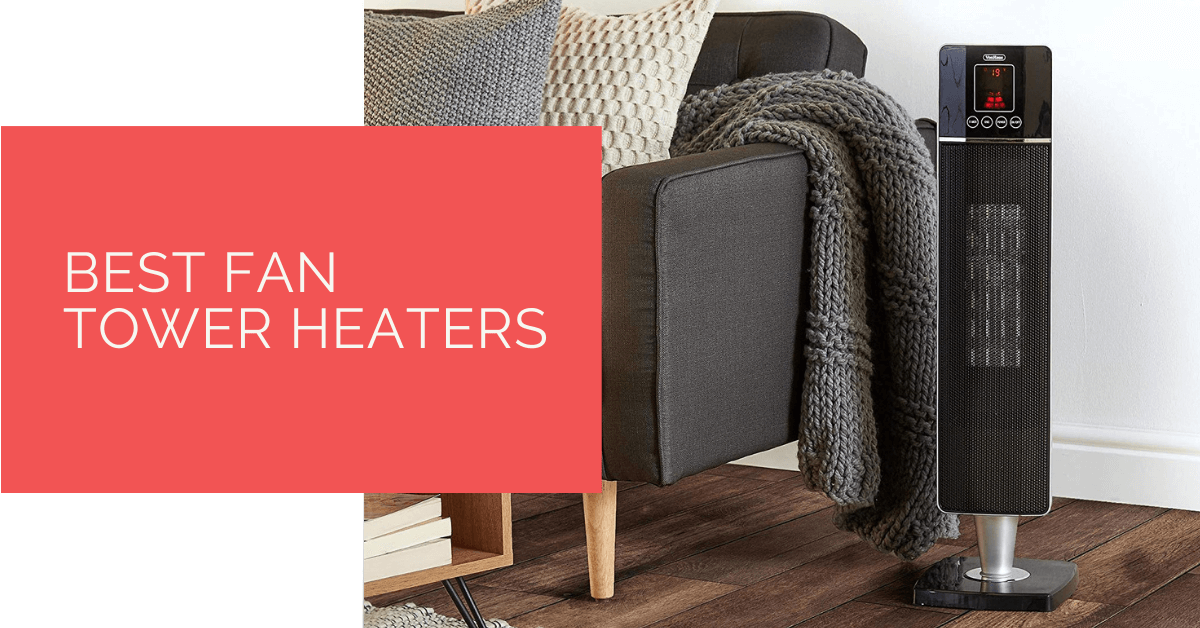
For most UK homes, the Dreo 25 Inch Tower Heater with 70° Oscillation is the best fan tower heater to buy. It spreads warm air more evenly than a compact fan heater, has a strong Amazon UK track record, and uses a 1500W ceramic element rather than defaulting to a full 2000W draw every time you switch it on.
We’ve reviewed eight of the best fan tower heaters for living rooms, bedrooms, studies, and draughty home offices, including compact budget heaters, remote-controlled ceramic towers, and one premium hot and cool option for year-round use.
Contents
- 1 Our Top Picks
- 2 8 Best Fan Tower Heaters
- 2.1 1. Dreo 25 Inch Tower Heater with 70° Oscillation
- 2.2 2. Dimplex DXSTG25 Studio G Ceramic Tower Heater
- 2.3 3. Dreo 16 Inch Electric Heater with Remote
- 2.4 4. Igenix IG9031 Oscillating Ceramic Tower Fan Heater
- 2.5 5. Pro Breeze 2000W Ceramic Tower Fan Heater
- 2.6 6. Dyson Hot+Cool AM09 Fan Heater
- 2.7 7. Dreo 70° Oscillation Electric Heater
- 2.8 8. Dreo Atom 320 Ceramic Electric Heater
- 3 Fan Tower Heater Buying Guide
- 3.1 Key Takeaways
- 3.2 What Are Fan Tower Heaters?
- 3.3 How Do Fan Tower Heaters Work?
- 3.4 Fan Tower Heater vs Ceramic Heater vs Oil-Filled Radiator
- 3.5 Heating Power and Room Size
- 3.6 Oscillation and Air Distribution
- 3.7 Thermostats, Eco Modes, and Timers
- 3.8 Noise Levels and Bedroom Use
- 3.9 Safety Features to Check
- 3.10 Plug, Extension Lead, and Socket Safety
- 3.11 How Much Does a Fan Tower Heater Cost to Run?
- 3.12 When a Fan Tower Heater Is the Wrong Choice
- 3.13 Useful Features Worth Paying For
- 3.14 Common Mistakes to Avoid
- 3.15 Before You Buy: Quick Checklist
- 3.16 Fan Tower Heater Placement
- 3.17 Thermostats, Timers and Daily Use
- 4 Case Study: Heating a Draughty Home Office
- 5 Expert Insights From Our Heating Engineers About Fan Tower Heaters
- 6 Frequently Asked Questions
- 6.1 Are fan tower heaters expensive to run?
- 6.2 Are ceramic tower heaters better than normal fan heaters?
- 6.3 Can I leave a fan tower heater on overnight?
- 6.4 What wattage fan tower heater do I need?
- 6.5 Do fan tower heaters cool rooms in summer?
- 6.6 Are fan tower heaters safe around children?
- 6.7 Where should I place a fan tower heater?
- 7 Summing Up
Our Top Picks
| Image | Name | |
|---|---|---|
| Dreo 25 Inch Tower Heater with 70° Oscillation | |
| Dimplex DXSTG25 Studio G Ceramic Tower Heater | |
| Dreo 16 Inch Electric Heater with Remote | |
| Igenix IG9031 Oscillating Ceramic Tower Fan Heater | |
| Pro Breeze 2000W Ceramic Tower Fan Heater | |
| Dyson Hot+Cool AM09 Fan Heater | |
| Dreo 70° Oscillation Electric Heater | |
| Dreo Atom 320 Ceramic Electric Heater |
8 Best Fan Tower Heaters
1. Dreo 25 Inch Tower Heater with 70° Oscillation
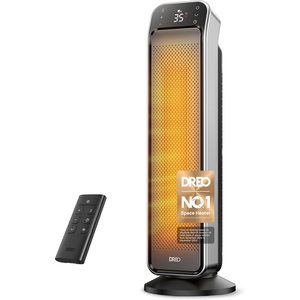
This is the one we’d put in a living room first. The Dreo 25 Inch Tower Heater has the shape, height, and oscillation that make a tower heater worth buying in the first place. Instead of blasting hot air at your shins, it sweeps warmth across the room at a more useful level, which makes it a better fit for sofas, open-plan spaces, and larger bedrooms.
The 70° oscillation is the main reason it stands out. Small fan heaters can be excellent for warming one person at a desk, but they often leave cold patches around the room. This Dreo moves the airflow in a wider arc, so you get more even heat without constantly repositioning the unit.
At 1500W, it should also cost less to run than a 2000W heater when used on equivalent settings. That doesn’t make it magic, because electric resistance heating is still electric resistance heating, but it does mean the unit is designed around controlled room heating rather than maximum blast all the time.
The drawbacks are practical rather than dramatic. It needs floor space, it still uses a fan, and the taller body means you’ll want to place it somewhere stable. For most people looking specifically for a fan tower heater, though, this is the most balanced option.
In everyday use, the most important question is whether the heater feels controlled rather than just powerful. A tower heater can warm a room quickly, but the better models are easier to turn down once the space is comfortable, which matters if you use it beside a sofa, desk or bed.
Features
- Power: 1500W
- PTC ceramic heating element
- 70° horizontal oscillation
- 25 inch tower design, around 64cm tall
- Multiple heat settings and thermostat control
- Sleep mode with dimmed display
- Tip-over and overheat protection
- Strong all-round pick for living rooms and bedrooms
- Oscillation distributes heat better than fixed fan heaters
- 1500W draw is more economical than many 2000W alternatives
- Tall design pushes heat at a more useful height
- Needs floor space and a stable position
- Fan noise is still noticeable on higher settings
2. Dimplex DXSTG25 Studio G Ceramic Tower Heater
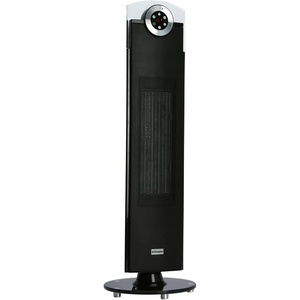
If you prefer a more established heating brand, the Dimplex DXSTG25 Studio G is still worth keeping on the shortlist. It has a 2.5kW output, which gives it more heating headroom than most compact ceramic fan heaters. That matters if you’re warming a larger room or a space that loses heat quickly.
The Studio G design is slim and tidy, so it can sit in a corner without looking like workshop equipment. The control panel is straightforward, the heat output is strong, and the ceramic element means you get quick warm air without waiting for oil or metal fins to build up heat.
The big caveat is running cost. A 2.5kW heater can cost more to run than a 1500W model if it stays on continuously, so this is better as a fast warm-up heater than something you’d leave ticking away all evening. Used sensibly with thermostat cycling, it can still make sense.
Noise and airflow are worth thinking about as well. A strong fan can be useful in a cold room, but it can become tiring if it blows directly at you for hours. Oscillation, a thermostat and sensible placement usually make the heater much nicer to live with.
Features
- Power: 2.5kW maximum output
- Ceramic heating technology
- Slim tower design
- Oscillation for wider heat spread
- Electronic controls
- Designed for modern living spaces
- Higher maximum output than most tower heaters
- Dimplex is a well-known UK heating brand
- Slim design works well in living rooms
- 2.5kW draw can be expensive if used constantly
- Not the cheapest option in the category
- Availability should be checked before publishing
3. Dreo 16 Inch Electric Heater with Remote
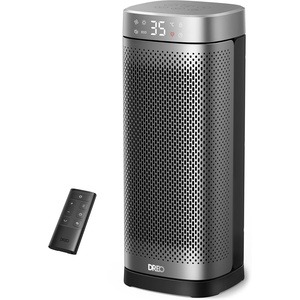
The Dreo 16 Inch Electric Heater is a good compromise if you like the Dreo feature set but don’t want a taller floor-standing tower. It has a 1200W ceramic heater, 70° oscillation, remote control, a 12-hour timer, and several operating modes, so it feels more modern than the older 2000W towers that simply run hot until you switch them off.
The lower wattage is the most interesting part. A 1200W heater won’t warm a cold open-plan room as aggressively as a 2kW model, but it can be a smarter choice for bedrooms, studies, and small lounges where you want steady background heat without overcooking the room.
It is also easier to place than a full-height tower. The 16 inch body is still tall enough to spread air better than a tiny cube heater, but it doesn’t dominate the room visually. The remote and timer are genuinely useful if you use it from a sofa or bedside table.
This is also the kind of product where safety habits matter. Keep the outlet clear, avoid soft furnishings, and do not treat a portable fan heater as background heating while you are out of the room.
Features
- Power: 1200W
- PTC ceramic heating
- 70° oscillation
- Remote control included
- 12-hour timer
- 5 operating modes
- Overheat and tip-over protection
- Lower 1200W output suits bedrooms and smaller rooms
- Remote control and timer are useful daily features
- Compact tower shape is easy to place
- Less powerful than 2000W and 2500W options
- Not ideal as the only heat source in a large room
- Newer listing needs final review-count verification
4. Igenix IG9031 Oscillating Ceramic Tower Fan Heater
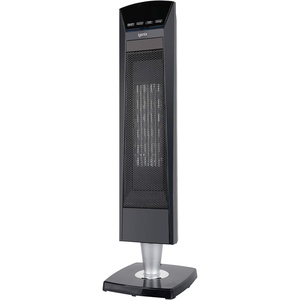
The Igenix IG9031 is the sort of tower heater that makes sense if you want familiar controls, decent power, and a remote without spending Dyson money. It uses a ceramic element, has two heat settings, and includes oscillation so the heat doesn’t sit in one narrow strip of the room.
At 2000W on its higher setting, it has enough output for quick warm-ups in medium rooms. The lower setting is useful once the space is comfortable, and the timer helps avoid leaving it running longer than needed. That combination is exactly what most people should look for in a fan tower heater.
It isn’t the most stylish or sophisticated pick here, and it won’t be as efficient as a lower-wattage model if you run it flat out. But as a practical, recognisable, remote-controlled ceramic tower heater, it remains a sensible mid-range choice.
In everyday use, the most important question is whether the heater feels controlled rather than just powerful. A tower heater can warm a room quickly, but the better models are easier to turn down once the space is comfortable, which matters if you use it beside a sofa, desk or bed.
Features
- Power: 1200W and 2000W heat settings
- PTC ceramic heating element
- Oscillation function
- Remote control
- LCD display and touch controls
- Timer function
- Tip-over and overheat protection
- Good balance of power, controls, and price
- Remote control makes it easy to use from a sofa or bed
- Two heat settings give better control than one-speed heaters
- Design feels more functional than premium
- Fan noise is noticeable in quiet rooms
- Needs availability checked against current Amazon UK listing
5. Pro Breeze 2000W Ceramic Tower Fan Heater
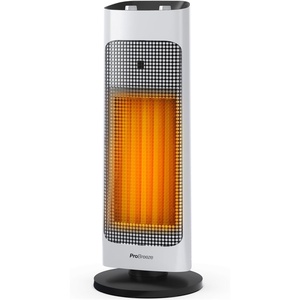
Pro Breeze tends to do well in this category because its heaters are simple, affordable, and easy to understand. This 2000W ceramic tower fan heater is built around the basics: quick heat, oscillation, adjustable settings, and a footprint that fits beside a sofa, desk, or bed.
This is the one to consider if you want a value pick and don’t need premium smart features. The 2000W output gives it enough punch to warm a small or medium room quickly, and the ceramic element should heat faster than an oil-filled radiator. It is best used for shorter heating sessions rather than all-day background warmth.
The trade-off is refinement. Budget fan tower heaters are rarely silent, and the controls usually feel more basic than Dreo, Dyson, or Dimplex. If the price is right when you check Amazon, that compromise may be perfectly acceptable.
Noise and airflow are worth thinking about as well. A strong fan can be useful in a cold room, but it can become tiring if it blows directly at you for hours. Oscillation, a thermostat and sensible placement usually make the heater much nicer to live with.
Features
- Power: 2000W
- Ceramic heating element
- Oscillation for wider heat coverage
- Adjustable heat settings
- Compact tower body
- Overheat protection
- Good budget route into ceramic tower heating
- 2000W output warms small and medium rooms quickly
- Simple controls are easy to live with
- Not as refined as higher-priced models
- Can be noisy on stronger fan settings
- Check exact listing before publishing, as Pro Breeze variants change often
6. Dyson Hot+Cool AM09 Fan Heater
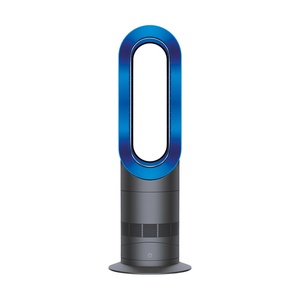
The Dyson AM09 used to be the obvious headline product for this article, but it shouldn’t be the default top pick anymore. It is still beautifully made, still safer-looking than exposed-element heaters, and still useful in summer because it works as a fan. The issue is price. For pure heating, cheaper ceramic tower heaters now offer better value.
Where the AM09 still earns its place is in homes that want one neat appliance for both heating and air movement. Dyson’s bladeless design is easy to clean, looks far better than most heaters, and avoids the exposed grille-and-element look that puts some people off traditional fan heaters.
It also gives you precise temperature control and a remote, with focused and diffused airflow modes. That makes it more flexible than a basic tower heater if you want to warm one person at a desk or spread air around a room.
Buy it because you value design, safety feel, and year-round use, not because it is the best bang for your buck. On cost alone, the Dreo and Igenix models are easier to recommend.
This is also the kind of product where safety habits matter. Keep the outlet clear, avoid soft furnishings, and do not treat a portable fan heater as background heating while you are out of the room.
Features
- Heating and cooling fan modes
- Bladeless Air Multiplier design
- Remote control
- Focused and diffused airflow settings
- Precise temperature control
- Tip-over automatic cut-off
- No exposed heating elements
- Excellent design and safer-feeling bladeless body
- Works as a fan in warmer months
- Flexible focused or diffused airflow
- Very expensive compared with ceramic tower heaters
- Not the strongest value choice for heating alone
- Availability and ASIN should be checked before updating the live page
7. Dreo 70° Oscillation Electric Heater
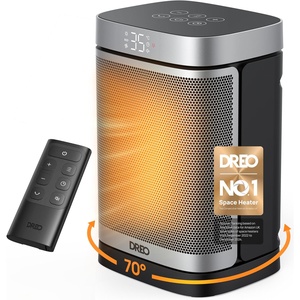
If the full-size Dreo tower feels too large, this oscillating Dreo heater is the compact alternative to consider. It keeps the useful 70° oscillation and ceramic heat, but in a smaller body that is easier to move between rooms.
It is better for personal and small-room heating than for a cold lounge. Put it in a study, spare bedroom, or beside a dining table and it makes more sense. The thermostat helps it cycle rather than running continuously, while the oscillation stops the warmth feeling too directional.
In everyday use, the most important question is whether the heater feels controlled rather than just powerful. A tower heater can warm a room quickly, but the better models are easier to turn down once the space is comfortable, which matters if you use it beside a sofa, desk or bed.
Features
- PTC ceramic heating
- 70° oscillation
- Digital thermostat
- Portable upright design
- Multiple heat modes
- Tip-over and overheat protection
- More portable than a full-size tower heater
- Oscillation gives better coverage than fixed compact heaters
- Good fit for studies and smaller bedrooms
- Less room coverage than a taller tower model
- Not as visually discreet as a wall heater
- Exact specs need confirming from the current Amazon UK page
8. Dreo Atom 320 Ceramic Electric Heater
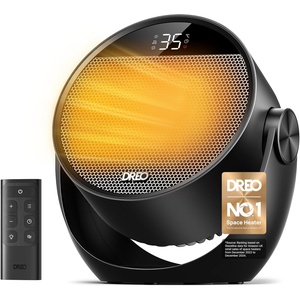
The Dreo Atom 320 is included for buyers who care more about compact heating than a traditional tall tower shape. It is a ceramic space heater with digital thermostat control, and it sits neatly in the same buying decision as smaller fan tower heaters.
This is not the model for warming a large lounge. It is the model for a home office, bedroom corner, or quick burst of heat where a full tower would be overkill. If your main complaint is cold feet under a desk, this may be more useful than a taller tower across the room.
Noise and airflow are worth thinking about as well. A strong fan can be useful in a cold room, but it can become tiring if it blows directly at you for hours. Oscillation, a thermostat and sensible placement usually make the heater much nicer to live with.
Features
- Power: 1500W
- Ceramic heating element
- Digital thermostat
- Compact portable body
- Multiple heat modes
- Safety cut-off features
- Compact enough for offices and small bedrooms
- Digital thermostat is useful for controlled heating
- Not a true full-height tower heater
- Less suitable for larger rooms
- Needs final current listing verification before going live
Fan Tower Heater Buying Guide
Key Takeaways
- Choose a fan tower heater if you want fast, portable heat spread across a room rather than silent background warmth.
- For most UK homes, a 1500W ceramic tower heater is the best balance of useful heat, sensible running cost, and manageable plug load.
- Oscillation matters more than many buyers realise. A tall outlet and 60° to 90° sweep can make a room feel more evenly heated than a small fixed fan heater.
- Look for tip-over protection, overheat protection, a thermostat, and a timer as minimum features.
- Fan tower heaters are best for short, targeted heating sessions. They are not usually the best option for quiet overnight heating or all-day background warmth.
- Do not run high-wattage heaters through cheap extension leads. Plug them directly into a wall socket unless the manufacturer says otherwise.
- Dyson-style hot and cool fans are useful year-round, but they are premium comfort appliances rather than the best-value way to heat a room.
What Are Fan Tower Heaters?
A fan tower heater is a portable electric heater built in a tall, narrow housing. Most models use a ceramic or PTC ceramic heating element and an internal fan to push warm air into the room. The tower shape gives you a taller air outlet than a compact cube heater, which helps warm seated areas rather than only heating the floor.
The main reason to buy one is fast zonal heating. If you work from home in one room, sit in a cold lounge in the evening, or want to warm a bedroom before bed, a fan tower heater can be more practical than turning up the central heating for the whole house.
They are not the same as tower fans. A tower fan only moves air. A fan tower heater uses electricity to generate heat, then uses fan airflow and oscillation to distribute that heat.
How Do Fan Tower Heaters Work?
Most modern tower heaters use PTC ceramic heating. PTC stands for Positive Temperature Coefficient. In simple terms, the ceramic element heats quickly and has a degree of self-regulating behaviour as it gets hotter. A fan then draws cool room air through the unit and pushes warm air out through the front grille.
Some models run at a fixed heat output, while better ones combine a thermostat, fan speeds, eco mode, and timer. The thermostat lets the heater cycle rather than running flat out continuously, which makes the room more comfortable and helps avoid waste.
Because they heat air directly, fan tower heaters feel quick. The downside is that once you switch them off, the room can cool again quite quickly, especially if it is draughty or poorly insulated.
Fan Tower Heater vs Ceramic Heater vs Oil-Filled Radiator
A fan tower heater is best when you want quick warmth and better room coverage than a small desk heater. The fan and oscillation move warm air around the room, so you feel the effect within minutes.
A compact ceramic heater is better for personal heating at a desk, bedside, or small room. It is usually cheaper and easier to store, but it will not distribute heat as evenly across a lounge.
An oil-filled radiator is better for silent, steady, long-duration heat. It takes longer to warm up, but it retains heat after switching off and is usually nicer for overnight use. If fan noise bothers you, an oil-filled radiator or panel heater may be a better fit.
An infrared heater is different again. It heats people and objects directly rather than warming all the air in the room. That can work well in draughty spaces, workshops, or conservatories, but it does not give the same moving warm-air feel as a fan tower heater.
Heating Power and Room Size
Most fan tower heaters sit between 1200W and 2000W. A 1200W model can work well in a bedroom, study, or small lounge. A 1500W model is a strong all-rounder for regular home use. A 2000W or 2500W heater warms faster, but it also costs more per hour when running at full output.
Do not judge room suitability by wattage alone. Airflow, grille height, oscillation angle, insulation, ceiling height, and draughts all affect how warm the room feels. A well-designed 1500W oscillating tower can feel better in a seating area than a fixed 2000W heater pointed at one corner.
As a rough guide, use compact heaters for personal spaces, 1500W towers for small to medium rooms, and higher-output models only where the room size and electrical setup justify them. Large open-plan spaces may still be better served by central heating, an oil-filled radiator, or a properly sized fixed heater.
Oscillation and Air Distribution
Oscillation is one of the biggest reasons to choose a tower heater over a basic fan heater. A 60° to 90° sweep spreads warm air across a wider area, reducing the hot-one-side, cold-other-side problem that small heaters often create.
Look at the outlet height as well as the oscillation angle. A tall grille pushes warm air higher into the occupied zone, which is useful when you are sitting on a sofa or working at a desk. Some compact heaters have good oscillation but a low outlet, so much of the heat still starts near floor level.
Placement matters too. If the heater oscillates into the side of a sofa, curtains, or a wall, the airflow is wasted. Position it where the sweep crosses the part of the room you actually use.
Thermostats, Eco Modes, and Timers
A proper thermostat is worth paying for. Basic high/low heaters keep running until you switch them off, which can make the room too hot and waste electricity. A thermostat lets the heater cycle once the room reaches the target temperature.
Eco modes vary by brand, but the useful ones adjust heat output or cycling based on the room temperature. They do not make electric heat magically cheap, but they can stop the heater running flat out when it does not need to.
A timer is both a comfort and safety feature. It is useful for warming a room before bed, heating a home office for a set working block, or avoiding the classic mistake of leaving the heater running after you leave the room.
Noise Levels and Bedroom Use
Any fan heater makes noise because it moves air. Some are quiet enough for background use in an office, while others are too noticeable for light sleepers. If you plan to use a tower heater in a bedroom, look for a sleep mode, low fan setting, dimmable display, and published decibel rating where available.
Even a quiet fan can feel more intrusive at night than during the day. For overnight heating, an oil-filled radiator is often more comfortable because it is silent and does not blow air around the room.
A fan tower heater is better used to warm the bedroom before you sleep, then switched off or left on a timer if the manufacturer says it is suitable.
Safety Features to Check
Safety is non-negotiable with portable electric heaters. At minimum, choose a model with tip-over protection and overheat protection. Tip-over protection cuts the heater if it falls. Overheat protection cuts power if the internal temperature gets too high.
A stable base is especially important on a tower design because the body is taller and narrower than a cube heater. Place it on a flat, hard floor, not on deep carpet, bedding, furniture, or an uneven surface.
Keep clear space around the grille and air intake. Do not cover the heater, do not use it to dry clothes, and do not place it close to curtains, bedding, paper, or soft furnishings. If you have children or pets, position it where it cannot be knocked over easily.
Plug, Extension Lead, and Socket Safety
High-wattage heaters draw a lot of current. A 2000W heater is a heavy load for long periods, so it should normally be plugged directly into a wall socket. Avoid cheap multi-socket extensions, cable reels, and old adapters.
If you must use an extension lead, check the heater manual and use a properly rated lead that is fully unwound. Any plug, socket, or cable that becomes hot to the touch is a warning sign. Switch off and stop using it until it has been checked.
Never run a heater from a damaged socket or a plug that sparks, smells hot, or feels loose. This is one of those boring checks that matters a lot.
How Much Does a Fan Tower Heater Cost to Run?
Running cost depends on wattage, electricity unit rate, and how long the heater runs at full power. A 1500W heater uses 1.5kWh per hour at full output. A 2000W heater uses 2kWh per hour. To estimate cost, multiply the kWh by your electricity price per kWh.
For example, at 25p per kWh, a 1500W heater costs about 37.5p per hour if running continuously. A 2000W heater costs about 50p per hour. If your unit rate is higher or lower, adjust the calculation.
In real use, a thermostat may reduce the average cost because the heater cycles on and off once the room reaches temperature. Draughty rooms, open doors, poor insulation, and high ceilings all make the heater work harder.
When a Fan Tower Heater Is the Wrong Choice
A fan tower heater is not always the best answer. If you want silent heat all night, choose an oil-filled radiator. If you need to heat a large open-plan room for hours, central heating or a fixed heater may be more suitable. If the space is draughty, infrared heating may feel more effective because it heats people and surfaces directly.
It is also not ideal for bathrooms unless the model is specifically rated for bathroom use and installed or positioned according to the manufacturer’s instructions. Most portable electric heaters should be kept well away from water.
If you are trying to solve a permanently cold room, also look at draught-proofing, radiator balancing, insulation, curtains, and door gaps. A portable heater can help, but it should not be the only plan if the room is losing heat constantly.
Useful Features Worth Paying For
- Remote control: Useful in living rooms and bedrooms where the heater is across the room.
- Digital thermostat: Gives more control than a simple dial.
- Eco mode: Helps reduce full-power running once the room is warm.
- Timer: Helps avoid unnecessary run time.
- Sleep mode: Lowers fan speed, dims the display, and keeps noise down.
- Cool fan mode: Useful in summer, although it will not cool the air like an air conditioner.
- Carry handle: Makes moving the heater between rooms safer and easier.
- Memory function: Restores previous settings, useful if you use the same room every day.
Common Mistakes to Avoid
- Buying the highest wattage model without checking running cost or socket suitability.
- Putting the heater in a corner where oscillation cannot cover the room.
- Using a cheap extension lead with a 2000W heater.
- Assuming fan-only mode works like air conditioning.
- Leaving the heater running with clothes, curtains, or bedding nearby.
- Choosing a noisy fan heater for overnight bedroom use.
- Ignoring draughts and insulation, then blaming the heater for poor performance.
Before You Buy: Quick Checklist
- Measure where the heater will sit and check the tower height and base footprint.
- Choose 1200W to 1500W for smaller rooms and 2000W only where you need faster warm-up.
- Look for at least 60° oscillation for shared rooms.
- Check for tip-over protection and overheat protection.
- Choose a thermostat and timer if you plan to use it daily.
- Check noise level and display dimming if using it in a bedroom.
- Plan to plug it directly into a wall socket.
- Make sure the airflow path is clear of furniture, curtains, and bedding.
Fan Tower Heater Placement
Place a fan tower heater where the airflow can move across the room without being blocked by furniture, curtains or bedding. A corner can work if the oscillation has space, but a heater pushed tightly beside a sofa or under a desk may overheat or feel unpleasantly direct.
Thermostats, Timers and Daily Use
A thermostat is useful because fan heaters can make a room warm quickly and then overshoot. Timers are useful for short evening sessions, home offices and bedrooms before sleep, but portable heaters should still be used with supervision and care.
Case Study: Heating a Draughty Home Office
Background
A homeowner in a 1930s semi-detached house was using a spare bedroom as a home office. The room had one external wall, an older double-glazed window, and no heating on during the day unless the whole central heating system was switched on.
Project Overview
The goal was to warm the office during working hours without heating the entire house. A compact fan heater was already being used, but it only warmed the area directly under the desk and left the rest of the room feeling cold.
Implementation
The homeowner switched to a 1500W oscillating tower heater with a thermostat and timer. It was placed near the internal wall, angled so the oscillation swept across the desk and seating area. The heater was used in short bursts, then left to cycle on the thermostat.
Results
The room warmed more evenly, especially around the desk and chair. The heater still made fan noise, but the wider airflow meant it did not need to run at full power for as long. The homeowner kept the central heating off during most working mornings and used the tower heater only in the occupied room.
Expert Insights From Our Heating Engineers About Fan Tower Heaters
“The mistake people make with fan tower heaters is treating them like permanent central heating. They’re brilliant for fast room warm-up and targeted heating, but they need space around them and a sensible thermostat setting. If you put one behind furniture or aim it into a corner, you’re wasting most of the benefit.”
“One of our senior heating engineers with over 15 years of experience recommends checking the wattage before buying. A 2kW heater is powerful, but if you’re only heating a small bedroom or office, a 1200W or 1500W model with good oscillation can feel more comfortable and cost less to run. The airflow pattern matters as much as the headline wattage.”
“For safety, keep it boring. Plug the heater directly into the wall, keep fabric away from the grille, and use the timer. A fan tower heater should never be covered, never be left running where it can be knocked over by children or pets, and never be used as a drying rack.”
Frequently Asked Questions
Are fan tower heaters expensive to run?
They can be if you run them continuously at full power. A 1500W heater uses 1.5kWh per hour, while a 2000W heater uses 2kWh per hour. A thermostat and timer help reduce wasted running time. Check the wattage, thermostat, timer and placement before using one regularly, because daily comfort depends as much on control as on heat output.
Are ceramic tower heaters better than normal fan heaters?
For room heating, usually yes. Ceramic tower heaters tend to spread warm air more evenly because they are taller and often oscillate. A small fan heater is still useful for personal heat at a desk. Check the wattage, thermostat, timer and placement before using one regularly, because daily comfort depends as much on control as on heat output.
Can I leave a fan tower heater on overnight?
Only if the manufacturer says it is suitable and it has proper safety features, including overheat protection, tip-over protection, and a timer. Even then, many people are better served by an oil-filled radiator for overnight heat because it is silent and less draughty. Check the wattage, thermostat, timer and placement before using one regularly, because daily comfort depends as much on control as on heat output.
What wattage fan tower heater do I need?
For a small bedroom or office, 1200W to 1500W is often enough. For a medium lounge or draughtier room, 2000W may be more practical. Larger, poorly insulated rooms may need central heating or a different heating approach. Check the wattage, thermostat, timer and placement before using one regularly, because daily comfort depends as much on control as on heat output.
Do fan tower heaters cool rooms in summer?
Some have a fan-only mode, but they do not cool the air like an air conditioner. They simply move room-temperature air around. Dyson Hot+Cool models and some ceramic heaters can be useful as fans, but don’t expect refrigerated cooling. Check the wattage, thermostat, timer and placement before using one regularly, because daily comfort depends as much on control as on heat output.
Are fan tower heaters safe around children?
They can be safer than older exposed-element heaters, but they still need supervision. Choose a model with tip-over and overheat protection, keep it away from bedding and curtains, and place it where it cannot be knocked over easily. Check the wattage, thermostat, timer and placement before using one regularly, because daily comfort depends as much on control as on heat output.
Where should I place a fan tower heater?
Place it on a flat, stable floor with clear space around the air inlet and outlet. For oscillating models, aim the sweep across the occupied part of the room rather than into furniture or a wall. Check the wattage, thermostat, timer and placement before using one regularly, because daily comfort depends as much on control as on heat output.
Summing Up
For most buyers, the Dreo 25 Inch Tower Heater with 70° Oscillation is the best fan tower heater because it gets the essentials right: useful height, wide oscillation, sensible 1500W output, and enough control for daily use. It is the easiest model to recommend for living rooms, bedrooms, and home offices.
If you want maximum heat output, the Dimplex DXSTG25 is worth considering. If you want something more compact, the Dreo 16 Inch Electric Heater is the neater choice. The Dyson AM09 still has a place for design-led homes, but it is a premium year-round fan and heater rather than the best-value heating buy.
Updated