
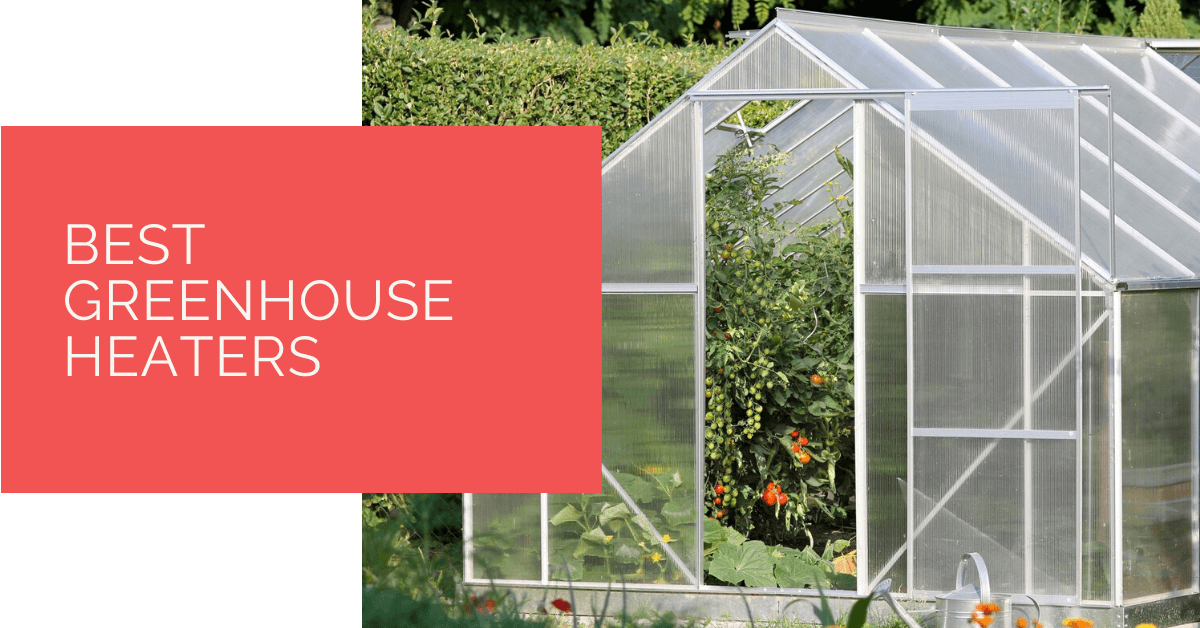
Keeping a greenhouse warm through a UK winter is harder than most people expect. Temperatures can drop well below freezing overnight, and even a few hours of cold can wipe out tender plants, seedlings, and overwintering cuttings. The right heater makes the difference between a productive greenhouse and a freezer. Our top pick for most growers is the Sunhouse (Dimplex) SHTTH2 Tubular Heater: over 2,700 reviews, outstanding value at around £31, and genuinely effective frost protection for the typical UK greenhouse.
Whether you want a low-energy tubular heater for frost protection, a powerful fan heater for larger spaces, or a smart heater with temperature control, the options below cover all the main types and price points.
Contents
- 1 Our Top Picks
- 2 8 Best Greenhouse Heaters
- 2.1 1. Sunhouse (Dimplex Group) SHTTH2 Tubular Heater 80W
- 2.2 2. Bio Green PAL 2.0/GB 2kW Palma Heater with Digital Thermostat
- 2.3 3. AC Infinity THERMOFORGE T3 Grow Tent Heater
- 2.4 4. Dimplex ECOT2FT Tubular Heater with Built-In Thermostat
- 2.5 5. LightHouse ECOH-135 915mm 135W Eco Heat Greenhouse Heater
- 2.6 6. Mylek Tubular Heater 135W 1050mm
- 2.7 7. Gardeners Corner Hydroponics 2kW Indoor Greenhouse Heater
- 2.8 8. Simplicity 2kW Greenhouse Fan Heater with Digital Thermometer
- 3 Greenhouse Heater Buying Guide
- 4 Case Study: Protecting Tender Plants Through a Cold Berkshire Winter
- 5 Expert Insights From Our Heating Engineers About Greenhouse Heaters
- 6 Frequently Asked Questions
- 6.1 What size heater do I need for my greenhouse?
- 6.2 Are tubular heaters better than fan heaters for greenhouses?
- 6.3 How much does it cost to run a greenhouse heater?
- 6.4 Do I need a thermostat with my greenhouse heater?
- 6.5 What temperature should I keep my greenhouse at in winter?
- 6.6 Can I use a standard indoor heater in a greenhouse?
- 6.7 How can I reduce greenhouse heating costs?
- 6.8 How long should a greenhouse heater last?
- 7 Summing Up
Our Top Picks
| Image | Name | |
|---|---|---|
| Sunhouse (Dimplex Group) SHTTH2 Tubular Heater 80W | |
| Bio Green PAL 2.0/GB 2kW Palma Heater with Digital Thermostat | |
| AC Infinity THERMOFORGE T3 | |
| Dimplex ECOT2FT Tubular Heater with Built-In Thermostat | |
| LightHouse ECOH-135 915mm 135W Eco Heat Greenhouse Heater | |
| Mylek Tubular Heater 135W 1050mm | |
| Gardeners Corner Hydroponics 2kW Indoor Greenhouse Heater | |
| Simplicity 2kW Greenhouse Fan Heater with Digital Thermometer |
8 Best Greenhouse Heaters
1. Sunhouse (Dimplex Group) SHTTH2 Tubular Heater 80W
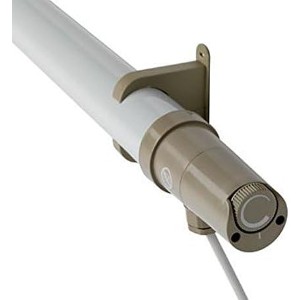
If you want reliable, low-cost frost protection backed by real-world proof, this is the one. The Sunhouse SHTTH2 has accumulated over 2,700 Amazon reviews at 4.4 stars, making it by far the most reviewed greenhouse heater on the UK market. It’s an 80W tubular heater, 2ft in length, with built-in thermal cutout protection and a classic straight-bar design that mounts neatly along the base of a greenhouse wall or under staging.
At around £31 it’s also one of the cheapest options on this list, and the running costs reflect that. At 80W it draws less power than a kettle when it’s actually on. In a small to medium greenhouse with decent insulation, it keeps temperatures above freezing overnight without running constantly. If you have a larger greenhouse, two or three of these spaced around the perimeter will do the job far more effectively than one higher-wattage unit.
The Sunhouse brand sits within the Dimplex Group, which gives you confidence in the build quality. This isn’t a no-name product. The design is simple because it doesn’t need to be complicated: plug it in, mount it, and it keeps your plants alive through the winter. That’s exactly what thousands of UK gardeners have been doing with this heater for years.
The one limitation worth naming is the lack of a thermostat. The SHTTH2 runs at full output whenever it’s switched on. For frost protection that’s usually fine because most people simply leave it on a timer set for overnight, but if you want precise temperature control, the Dimplex ECOT2FT (number 4 on this list) adds a built-in thermostat for a couple of pounds more.
Features
- 80W tubular heating element
- 2ft (60cm) length
- Built-in thermal cutout protection
- Wall and floor mounting brackets included
- From the Dimplex Group
- Most reviewed greenhouse heater on Amazon UK by far
- Excellent value at around £31
- Very low running costs at 80W
- Reliable brand heritage from the Dimplex Group
- No built-in thermostat
- 80W suits small to medium greenhouses only
2. Bio Green PAL 2.0/GB 2kW Palma Heater with Digital Thermostat
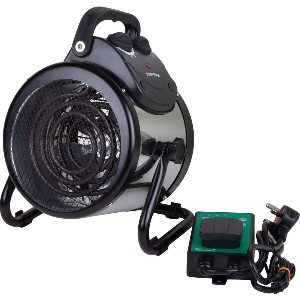
Bio Green is one of the few brands that makes greenhouse heaters specifically rather than repurposing general domestic or industrial products. The PAL 2.0 is their flagship electric fan heater for UK consumers: 2kW output, a precise digital thermostat with half-degree increments, and an IP44 waterproof rating that makes it genuinely safe for the damp, humid environment a greenhouse produces. The thermostat memory retains your preferred temperature between power cycles, which is a small but practically useful feature.
At around £149 it’s the most expensive pick on this list, but what you’re paying for is precision and longevity. The digital thermostat means the heater cycles on and off to maintain your chosen temperature exactly, rather than running flat out. Over a winter, that makes a meaningful difference to your electricity bill. The IP44 rating means it won’t suffer from moisture damage the way a standard fan heater would. Most domestic fan heaters last two or three winters in a greenhouse before the electrics fail. The PAL 2.0 is built to last longer.
With 252 reviews and 4.3 stars it has a strong track record. If you grow tender exotics, overwinter dahlias or pelargoniums, or want to push your growing season into early spring, the temperature precision this heater offers is worth the investment. For gardeners who just want frost protection and don’t need precise control, the Sunhouse at number one is sufficient and costs far less.
Features
- 2kW fan heater output
- Digital thermostat with half-degree precision
- IP44 waterproof rated
- Thermostat memory function
- Purpose-built for greenhouse use
- Purpose-built for greenhouses by a specialist brand
- Precise digital thermostat with half-degree increments
- IP44 waterproof rated for damp environments
- Significantly more expensive than budget alternatives
- Fan noise audible in a quiet greenhouse
- Overkill for basic frost protection only
3. AC Infinity THERMOFORGE T3 Grow Tent Heater
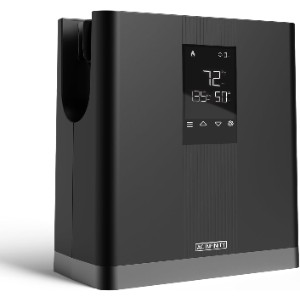
The AC Infinity THERMOFORGE T3 comes from grow tent culture but translates very well to greenhouse use. It’s a PTC fan heater with a 10-level heat output dial, a VPD temperature controller, and an extension hose with a duct adapter that lets you direct heat precisely where you need it. For serious growers managing specific temperature and humidity targets, this is the most technically sophisticated heater on this list. The 632 reviews at 4.4 stars back that up.
At around £139 it’s positioned near the Bio Green PAL in price, but it offers a different set of advantages: more granular heat output control, VPD monitoring for plant health optimisation, and the ducted airflow system. It’s particularly well suited to raised beds or growing areas within a larger greenhouse where you want to concentrate heat rather than warm the whole structure. The PTC element is also more efficient than a conventional resistance element, making better use of electricity at lower heat settings.
It’s worth noting this is primarily marketed for grow tents, so the aesthetics are functional rather than refined. If you want something that looks at home in a potting shed or traditional greenhouse, the Bio Green PAL looks more appropriate. But on performance per pound, the THERMOFORGE T3 is a compelling option for technically minded growers.
Features
- PTC fan heater, 10-level output control
- VPD temperature controller
- Extension hose and duct adapter included
- Suitable for grow tents, grow rooms, and greenhouses
- 632 reviews at 4.4 stars
- 10-level heat output control for precision
- VPD monitoring for plant-specific climate management
- PTC element is efficient at lower settings
- Primarily designed for grow tents, not traditional greenhouses
- Functional aesthetics won’t suit everyone
- More complex than most greenhouse growers need
4. Dimplex ECOT2FT Tubular Heater with Built-In Thermostat
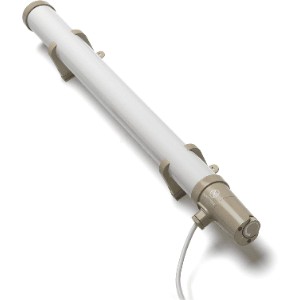
The Dimplex ECOT2FT improves on the basic tubular heater formula in one important way: it has a built-in thermostat. That means it cycles on and off to maintain a set temperature rather than running continuously, which cuts electricity use significantly over a cold winter. At 80W and around £33, it costs barely more than the Sunhouse SHTTH2 but adds proper temperature regulation. With 1,082 reviews at 4.5 stars, it’s one of the highest-rated heaters on this list.
The mounting brackets, the 2ft length, and the overall form factor are essentially the same as the Sunhouse. The key practical difference is that dialling in the thermostat means your plants stay above a set minimum temperature without wasting electricity when the greenhouse is already warm enough. For most UK greenhouse growers, this is the more sensible choice over a heater without a thermostat, and the price difference is minimal.
Features
- 80W tubular heating element
- 2ft (60cm) length with built-in thermostat
- Thermal cutout safety protection
- Mounting brackets included
- From Dimplex, one of the UK’s most trusted heating brands
- Built-in thermostat at a near-budget price point
- 4.5 stars from over 1,000 reviews
- Trusted Dimplex brand
- 80W only suits smaller greenhouses
- No fan to distribute heat
5. LightHouse ECOH-135 915mm 135W Eco Heat Greenhouse Heater
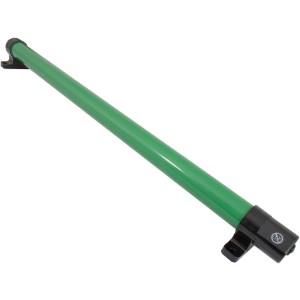
The LightHouse ECOH-135 is a 135W tubular heater at 915mm (just under 3ft) in length. It’s a step up in wattage from the 80W options and comes in a distinctive green and black finish that suits a greenhouse setting rather than a garage or workshop. With over 1,250 reviews at 4.1 stars, it has a large enough sample size to take seriously. At around £43, it sits comfortably in the mid-range of tubular heaters.
The 135W output gives it a slight advantage over 80W models in larger greenhouses or on particularly cold nights, though it still won’t be sufficient as the sole heat source in anything larger than 6m² when temperatures drop below minus 5°C. Best used as a supplement or as part of a multi-heater setup in a larger structure. No thermostat is included, so external timer or thermostat control is advisable.
Features
- 135W heating element
- 915mm (approx 3ft) length
- Greenhouse-specific green and black design
- Mounting brackets included
- Thermal overload protection
- 135W gives a little more output than 80W rivals
- Greenhouse-specific design and colouring
- No built-in thermostat
- 4.1 stars is the lowest rating on this list
- Still not sufficient alone for larger structures
6. Mylek Tubular Heater 135W 1050mm
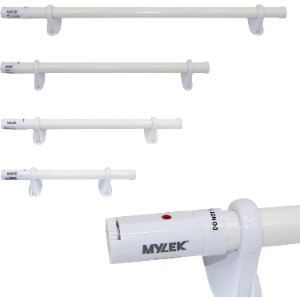
The Mylek is the newest tubular heater on this list and a strong contender in the 135W bracket. It’s 1050mm long, comes with a built-in thermostat, and includes mounting brackets. The 4.5-star rating from 80 reviews is encouraging, though the relatively low review count means there’s less long-term data than the Dimplex or Sunhouse options. At around £42, it competes directly with the LightHouse but adds the thermostat, which is a meaningful advantage.
Features
- 135W tubular heating element
- 1050mm (approx 3.5ft) length
- Built-in thermostat
- Mounting brackets included
- Suitable for greenhouses, garages, and caravans
- Built-in thermostat at mid-range price
- 4.5 stars from early reviewers
- Only 80 reviews, limited long-term track record
- Newer brand less established than Dimplex
7. Gardeners Corner Hydroponics 2kW Indoor Greenhouse Heater
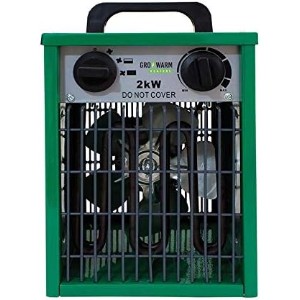
For growers who need active air circulation alongside heat, a fan heater is more effective than a tubular heater. The Gardeners Corner 2kW model is specifically marketed for greenhouse and hydroponics use, with quiet fan operation and a compact UK plug design. At around £48 with 66 reviews at 4.4 stars, it’s a reasonable mid-range option for anyone who finds tubular heaters insufficient for their space.
The 2kW output heats a greenhouse far faster than any 80W or 135W tubular unit. Useful when you need to bring the temperature up quickly after a particularly cold night, or when opening the greenhouse in the morning before a day’s work. Note that fan heaters in a greenhouse environment need protection from moisture if positioned near damp staging or plant misters.
Features
- 2kW fan heater output
- Quiet fan operation
- UK plug, compact design
- Suitable for greenhouses and hydroponics
- 2kW heats a greenhouse quickly
- Quiet fan operation
- Only 66 reviews
- No IP rating stated. Keep away from direct moisture
- Higher running costs than tubular heaters
8. Simplicity 2kW Greenhouse Fan Heater with Digital Thermometer
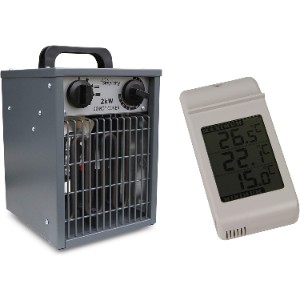
The Simplicity set bundles a 2kW fan heater with a digital max/min thermometer, which is a practical pairing for any greenhouse grower who wants to monitor temperature swings as well as manage them. At around £50 for both items, it represents decent value. The 4.4-star rating from 29 reviews is encouraging for a less mainstream brand, though the small review count means you’re relying more on trust than on a large body of user experience. For those who want everything in one purchase and don’t want to source a thermometer separately, it’s worth considering.
Features
- 2kW fan heater
- Digital max/min thermometer included
- Thermostat control
- UK plug
- Heater and thermometer bundled together
- 2kW heats up quickly
- Only 29 reviews. Limited track record
- Lesser-known brand
- No IP or waterproofing rating stated
Greenhouse Heater Buying Guide
Key Takeaways
- Frost protection (3–5°C) needs much less wattage than active growth heating (10–15°C). A 80W heater works for frost protection in small greenhouses, but you’ll need 2–3kW for maintaining growth temperatures.
- Tubular heaters provide gentle, consistent warmth ideal for frost protection and hardy plants. Fan heaters distribute heat faster and help prevent disease by improving air circulation.
- Thermostat accuracy matters enormously. A ±1°C digital thermostat like the Bio Green PAL prevents wild temperature swings that stress or kill delicate plants. Cheap bimetallic thermostats can vary by 5°C or more.
- Greenhouse size, insulation, and your target temperature determine wattage. A 6x4ft greenhouse with basic insulation needs roughly 1–1.5kW for growth heating, whilst a poorly insulated 12x8ft needs 3–4kW.
- IP rating matters in greenhouses. Damp air, water splashes, and condensation mean you need IP44 minimum. Cheaper heaters without proper sealing will fail fast.
- Electrical safety in damp environments requires an RCD (residual current device) protection. Never use standard extension leads or plug heaters into outdoor sockets without IP-rated covers.
- Running costs are modest if you’re heating overnight only. A 2kW heater running 8 hours a night at 24p per kilowatt-hour costs around £4–5 per week, making it economical for year-round growing.
- Don’t overspend on wattage you won’t use. Many growers start with a single 2kW fan heater and add a second heater only if they find cold spots or expand their greenhouse.
Frost Protection vs Active Heating
The first decision is simple: do you want to keep your plants frost-free, or do you want to heat them warm enough to keep growing year-round?
Frost protection means keeping the greenhouse at 3–5°C during winter nights. Your plants sleep and grow slowly, but they don’t die. This approach uses minimal electricity. The Sunhouse SHTTH2 at 80W can handle frost protection in a small, well-insulated greenhouse because the job is just preventing ice, not generating warmth. You’re essentially asking the heater to offset the cold, not create warmth from scratch.
Active heating for growth means maintaining 10–15°C or higher, depending on what you’re growing. Tender crops like tomatoes, cucumber, and peppers need 12–15°C to grow. This requires much more heater capacity. A 2kW heater is the practical minimum for sustained growth heating in most UK greenhouses, which is why the Bio Green PAL, Gardeners Corner, and Simplicity fan heaters are all around that wattage.
The difference in running costs is dramatic. Eighty watts running 12 hours costs about 20p per night. Two kilowatts running 10 hours costs £4.80. Over winter, those costs add up, so be honest about what you’re trying to grow. If you’re protecting hardy alpines or overwintering perennials, frost protection is fine. If you’re growing tender vegetables in January, you need proper heating.
Many growers use a hybrid approach: fit a low-wattage thermostat heater (like the LightHouse ECOH-135 at 135W) for frost nights, then add a 2kW fan heater when they actively grow crops. This spreads the investment and lets you scale heating to the season.
Tubular Heaters vs Fan Heaters
Greenhouse heaters fall into two main types, and each has genuine advantages depending on what you’re growing.
Tubular heaters are passive heating elements. They warm up and radiate steady, gentle heat. The Dimplex ECOT2FT, Sunhouse SHTTH2, LightHouse ECOH-135, and Mylek models are all tubular. They’re simple, reliable, and excel at frost protection and low-level warmth. There’s no motor to fail, no noise, no moving parts. You mount them horizontally beneath a bench or along a wall, and they heat quietly. Tubular heaters warm the air around them gently, which is ideal if you’re worried about damaging delicate seedlings or if you want to avoid blowing air around pots.
Fan heaters blow heated air actively. The Bio Green PAL, AC Infinity THERMOFORGE, Gardeners Corner, and Simplicity models all use fans. They heat faster and distribute warmth evenly, reaching cold corners that a tubular heater might miss. More importantly, the air movement prevents condensation and fungal diseases. Damp, still air in a greenhouse is a recipe for grey mould and powdery mildew. A fan heater keeps air circulating, which improves plant health significantly. If you’re growing high-value crops or fighting fungal problems, a fan heater is often worth the extra noise and running cost.
The practical answer is often both. Use a low-wattage tubular heater on a thermostat for frost protection, and add a fan heater when you’re actively growing crops. This gives you gentle background warmth and active heating when you need it.
How Much Heat Does Your Greenhouse Need?
Wattage requirements depend on three things: greenhouse size, insulation quality, and how warm you want to keep it. A poorly insulated 12×8 ft greenhouse losing lots of heat through single-layer polycarbonate needs far more power than a small, well-insulated structure.
The simplest guide is to calculate the heat loss using greenhouse size and insulation factor, then convert to watts. The rough rule in the UK is that a greenhouse loses between 4 and 8 watts per cubic metre per 1°C temperature difference, depending on insulation. A 6×4 ft greenhouse with 6.5ft headroom is roughly 16 cubic metres. If you want to maintain 10°C when it’s 0°C outside (10°C difference), and your greenhouse is averagely insulated, you need about 16 × 6 × 10 = 960 watts. A 1–1.5kW heater covers you.
Here’s a practical sizing table based on common UK greenhouse sizes with average bubble wrap insulation:
| Greenhouse Size | Volume (m³) | Frost Protection (3–5°C) | Growth Heating (10–15°C) | Recommended Heater |
| 6×4 ft | ~16 | 80–135W | 1–1.5kW | LightHouse 135W + fan heater |
| 8×6 ft | ~30 | 135–200W | 1.5–2kW | 2kW fan heater (e.g., Bio Green PAL) |
| 10×8 ft | ~50 | 200–300W | 2–3kW | 2kW fan heater + tubular backup |
| 12×8 ft | ~60 | 300–400W | 3–4kW | 2 × 2kW fan heaters |
These figures assume you’ve added bubble wrap insulation to the roof and walls. Uninsulated greenhouses need roughly 50% more power. Conversely, a heavily insulated greenhouse with air gap layers can get away with 30–40% less.
One useful conversion: 1kW equals roughly 3,400 BTU per hour. If you’ve read BTU ratings on heaters elsewhere, that’s how to compare. A 2kW heater produces about 6,800 BTU/hr, which is in the mid-range for UK greenhouse heating.
The key is not to oversise. A 3kW heater in a small greenhouse will overshoot your target temperature and cost a fortune to run. A thermostat helps manage this, but it’s better to pick the right wattage first.
Thermostat Accuracy
This is where many growers make expensive mistakes. A thermostat that swings wildly between 8°C and 16°C when you’ve set it to 12°C will kill tender plants just as surely as no heating at all.
Cheap thermostats built into budget heaters often use bimetallic strips, which are reliable but imprecise. They might swing by ±5°C around the set point. That means your greenhouse could be 7°C one hour and 17°C the next, cycling on and off constantly. Plants hate that. Tender crops wilt in the cold and cook in the heat spikes.
The Bio Green PAL uses a digital thermostat with ±1°C accuracy. You set it to 12°C, and it holds 11–13°C, which is stable enough for plant growth. Digital thermostats sense temperature with greater precision and switch the heater on or off in smaller increments, keeping temperature bands narrow. If you’re growing anything beyond hardy perennials, this accuracy matters hugely.
The Dimplex ECOT2FT comes with a built-in thermostat that’s reliable if basic. It’s adequate for frost protection, where a swing of 2–3°C doesn’t matter. The AC Infinity THERMOFORGE has a digital control as well, which is another good benchmark.
When you’re comparing heaters, don’t just look at the thermostat feature. Check the accuracy spec if it’s listed. Ask the supplier or read reviews to see if the heater maintains stable temperatures. If a heater’s reviews mention temperature swings or complaints that plants are stressed, the thermostat is probably too loose for what you need.
A high-accuracy thermostat is genuinely worth paying extra for if you’re growing tender crops. Frost protection is forgiving. Growth heating isn’t.
Electrical Safety in Greenhouses
Greenhouses are damp environments. Water condenses on heaters, splashes from watering, sits on surfaces. Electrical appliances in damp spaces need proper protection, or you’re creating a hazard.
First, IP rating. The numbers tell you how well the heater resists dust and water. IP44 (the fourth digit indicates water jet protection) is the minimum for a greenhouse heater. It means the unit can withstand splashes from any direction without water getting into the electrics. Cheaper heaters might be IP20 or not rated at all, which isn’t acceptable in a greenhouse.
Second, RCD protection. An RCD (residual current device) is a circuit breaker that cuts power instantly if there’s an electrical fault or leakage to ground. Any heater in a greenhouse should run through an RCD-protected socket. Most UK homes have RCD protection on outdoor sockets, but verify it. If not, fit an RCD-protected extension lead or plug adapter. This isn’t optional in a wet environment.
Third, cable routing. Never run extension leads through puddles or coil them near water sources. Route cables to a dry storage area or strap them up the greenhouse frame where they won’t gather moisture. If using an extension lead, ensure it’s rated for outdoor use (usually marked with a weather symbol). Standard indoor extension leads can fail and cause fires in damp conditions.
Fourth, inspection. Before winter, visually inspect your heater and cables. Look for cracks, corrosion, or loose connections. If you see any damage, don’t use it. Greenhouse heating elements age in damp air, and failure risk increases each season. Replacing a heater is far cheaper than dealing with an electrical fire.
Finally, never overload a circuit. A 2kW heater draws roughly 8.7 amps. If you’re also running a fan, grow lights, or other equipment on the same circuit, you’ll exceed capacity. Use a dedicated outlet where possible, or ensure your circuit breaker is sized for the load.
It sounds fussy, but electrical safety in greenhouses is genuinely important. The cost of proper protection is negligible against the risk.
Energy Efficiency
Greenhouse heating runs 24/7 during winter, so efficiency directly affects your bills. A 2kW heater running 10 hours a night at 24p per kWh costs about £48 per month. Over six months, that’s £288. It’s not enormous, but there are ways to reduce it substantially.
The most cost-effective approach is insulation. Adding bubble wrap to your roof and walls can reduce heat loss by 30–40%. The material costs very little compared to the savings. Thermal mass helps too. Large water butts inside the greenhouse absorb heat during the day and release it at night, stabilizing temperature and reducing heater runtime. Barrels and stone slabs work similarly.
Door seals matter. A poorly sealed greenhouse door bleeds heat constantly. Weatherstripping tape is cheap and cuts heat loss significantly. So is keeping the door closed and minimizing ventilation during heating season.
The thermostat itself is your best efficiency tool. A precise thermostat that holds 12°C doesn’t overshoot to 16°C and waste heat. It runs the heater only when needed. The ±1°C accuracy of the Bio Green PAL saves money over time compared to a ±5°C bimetallic thermostat that overshoots frequently.
Night-time heating is more efficient than round-the-clock heating because outdoor temperatures drop at night, so your heater works against a smaller temperature difference. Heating 10 hours at night might achieve your goals more economically than heating 24 hours at a lower temperature.
Finally, size matters. A 3kW heater oversized for your greenhouse will overshoot temperature constantly and waste energy. A properly sized heater runs at closer to its rated capacity, which is more efficient. A 2kW heater in a 12×8 greenhouse sized to it will run steadier and use less total energy than an undersized 1.5kW heater struggling to reach temperature.
Things to Keep in Mind Before Buying
Before you commit to a heater, work through this practical checklist to avoid costly mistakes.
Measure your greenhouse accurately. Write down the length, width, and average height in feet or metres. Estimate insulation. Are you using bubble wrap or single-layer polycarbonate? Is the base on concrete or bare soil (soil loses more heat)? These details determine wattage, and undersizing is a common regret.
Decide what you’re growing. Hardy overwintering plants? Frost protection is sufficient. Tender vegetables in winter? You need active heating to 12–15°C. The answer determines whether a 135W backup heater or a 2kW primary heater is right for you. Don’t buy based on wattage alone without knowing your goal.
Verify power supply access. Where will you plug the heater in? Is there a socket inside the greenhouse or nearby? Can you run a weatherproof cable to it? A 2kW heater draws roughly 8.7 amps, so you need a proper socket, not an adaptor hanging off an indoor lead. If power access is awkward, plan that work before buying.
Check the IP rating. Don’t accept IP20 or unrated heaters. Insist on IP44 minimum. It’s the only way to protect electrical components in a damp environment.
Assess thermostat quality. If the product page doesn’t specify thermostat accuracy, ask the seller or read reviews. If early reviews mention temperature swings or overheating, the thermostat is probably inadequate. Digital thermostats with ±1°C accuracy are now the standard for serious growers.
Plan for two heaters if you’re ambitious. Many successful greenhouse growers start with one 2kW fan heater for active heating, then add a low-wattage tubular heater on a separate circuit for frost protection backup. This spreads investment and gives redundancy. If your primary heater fails mid-winter, the backup keeps plants alive until you can repair or replace it.
Consider noise. Fan heaters are noisier than tubular heaters. If your greenhouse is next to a window or neighbour’s boundary, noise might matter. Tubular heaters are silent but heat slower.
Budget for controls. Separate plug-in thermostats are available (around £20–40) if your heater’s built-in thermostat isn’t good enough. It’s cheaper to retrofit a good thermostat than to replace the whole heater later because temperature control failed.
Plan maintenance. Set a reminder to inspect heater and cables at the start of each heating season. Condensation, corrosion, and age can damage heaters quickly in damp environments. A 15-minute inspection once a year catches problems early.
Greenhouse heating is straightforward once you know your greenhouse size, insulation quality, and growing goals. Take time to answer these questions before browsing heater specs, and you’ll pick something that works reliably and economically for years.
Case Study: Protecting Tender Plants Through a Cold Berkshire Winter
Background
A keen grower in rural Berkshire had been overwintering tender perennials and dahlia tubers in a 6ft by 8ft polycarbonate greenhouse for several years, relying on fleece and luck. After losing a collection of valued cannas and a young banana plant to an unexpected late frost in March, they decided to invest in a proper heating solution before the following winter.
Project Overview
The greenhouse had a power supply via an extension cable from the house, so an electric solution was practical. The grower needed enough heat to keep temperatures above 5°C overnight during the coldest months, December through February, while keeping running costs manageable. The structure was fairly well insulated with bubble wrap lining, which helped significantly.
Implementation
An 80W tubular heater with a built-in thermostat was installed along the back wall, set to maintain 5°C. The bubble wrap lining was extended to cover all four sides and the roof panels. A digital max/min thermometer was placed at plant level to monitor overnight temperatures. On nights when forecasts showed temperatures below minus 5°C, a second 80W tubular heater was borrowed and added temporarily along the opposite wall.
Results
The collection came through the following winter without losses. The single tubular heater ran for an average of six to eight hours per night during the coldest months at a cost of roughly £1.20 per week. The dahlias came out of storage in spring in far better condition than in previous years, and the cannas produced shoots earlier than expected. The grower has since added a second heater permanently, which they keep set to a lower 3°C threshold as a backup.
Expert Insights From Our Heating Engineers About Greenhouse Heaters
“The biggest mistake greenhouse owners make is buying a heater that’s just big enough and then being surprised when it doesn’t cope on the coldest nights. Always buy with a margin. If your calculation says you need 160W for frost protection, buy a 200W or 240W unit and run it at a lower thermostat setting. That way it has headroom on extreme nights and runs more efficiently in between.”
“Tubular heaters are almost always the right answer for hobby greenhouses. One of our senior heating engineers with over 20 years of experience puts it simply: for a standard 6ft by 8ft greenhouse with decent insulation, a pair of 80W tubular heaters with thermostats set at 3°C will get you through a typical UK winter for pennies a week. A 2kW fan heater will do it faster but cost significantly more to run. Unless you need rapid warm-up or you’re growing tropical plants at higher temperatures, the tubular approach is more efficient.”
“Don’t overlook the insulation side. I’ve seen greenhouses with 500W of heating struggling to maintain frost-free temperatures because the glass was single-pane and there was no bubble wrap lining. The same greenhouse with £15 of horticultural bubble wrap and a single 80W heater can easily stay above 5°C overnight. The heater and the insulation work together. People often underestimate how much difference the insulation makes.”
Frequently Asked Questions
What size heater do I need for my greenhouse?
A rough guide is 40W per cubic metre for frost protection in a reasonably insulated greenhouse. A standard 6ft by 8ft greenhouse with average height has a volume of around 8 to 10 cubic metres, so 320 to 400W is a realistic minimum for cold winters. Many growers use two 80W or 135W tubular heaters rather than one larger unit, as it distributes heat more evenly and gives redundancy if one fails.
Are tubular heaters better than fan heaters for greenhouses?
For most hobby greenhouse growers, yes. Tubular heaters are cheaper to run, last longer, and require no maintenance. They heat the space gradually and maintain a steady temperature overnight. Fan heaters heat up faster, which is useful for larger structures or growers who need to bring the temperature up quickly, but they cost more to run and the air movement can be counterproductive in some growing situations. Most experienced greenhouse growers use tubular heaters for background warmth.
How much does it cost to run a greenhouse heater?
An 80W tubular heater costs around 2p per hour at current electricity unit rates, so running it for eight hours overnight costs roughly 16p. Over a four-month winter season that’s around £20 total. A 2kW fan heater at the same hours would cost around £1.60 per night, adding up to roughly £190 over the same period. The difference in running costs is the main reason most growers prefer tubular heaters for long overnight runs.
Do I need a thermostat with my greenhouse heater?
Not strictly, but it’s strongly advisable. Without a thermostat, the heater runs at full output whenever it’s switched on, regardless of the actual temperature. A thermostat cycles it on and off to maintain your chosen temperature, which reduces electricity consumption significantly. Over a full winter the savings can easily cover the cost of the thermostat. Several heaters on this list include a built-in thermostat; alternatively, an external plug-in thermostat can be added to any heater.
What temperature should I keep my greenhouse at in winter?
For basic frost protection, a minimum of 2°C is the standard recommendation. Most growers set their thermostat to 3°C to give a margin of safety. If you’re overwintering tender exotics such as citrus, bougainvillea, or tropical plants, you’ll need a minimum of 7 to 10°C, which requires considerably more heating power. Hardy perennials, shrubs, and most vegetables being overwintered can survive at 2°C or even slightly lower with decent insulation.
Can I use a standard indoor heater in a greenhouse?
You can, but with caveats. Standard fan heaters designed for indoor domestic use are not rated for the humidity levels inside a greenhouse and may suffer electrical problems over time. They also typically lack thermostats calibrated for low frost-protection temperatures. If you do use a domestic heater temporarily, keep it away from sources of moisture and replace it with a purpose-designed greenhouse heater for long-term use.
How can I reduce greenhouse heating costs?
The single most effective step is adding horticultural bubble wrap insulation to the inside of the glass or polycarbonate panels. This alone can cut heat loss by 30 to 40 per cent, which directly reduces how often the heater needs to run. Beyond that, using a thermostat to avoid running the heater unnecessarily, placing heaters low to the ground where cold air pools, and sealing draughts around doors and vents all make a meaningful difference. Reducing the size of the space you heat, for example by partitioning off one end of a large greenhouse for overwintering, is another effective tactic.
How long should a greenhouse heater last?
A good quality tubular heater from a reputable brand like Dimplex or Sunhouse should last 15 to 20 years with normal use. The element is sealed and protected, so damp air has minimal impact on it. Electric fan heaters have a shorter lifespan in greenhouse conditions, typically 5 to 8 years, because the fan motor and internal components are more exposed to humidity. Buying from an established brand and keeping the heater clear of direct water splash extends its service life considerably.
Summing Up
For the vast majority of UK greenhouse growers, the Sunhouse (Dimplex) SHTTH2 Tubular Heater is the best starting point: over 2,700 reviews, reliable performance, very low running costs, and a price that makes adding a second unit perfectly affordable for larger greenhouses. If you want a thermostat built in, the Dimplex ECOT2FT costs only marginally more and adds proper temperature regulation. For growers who want premium precision from a dedicated greenhouse brand, the Bio Green PAL 2.0 is the pick, and tech-minded growers managing specific temperature and humidity targets will appreciate the AC Infinity THERMOFORGE T3.
Whatever you choose, pair it with bubble wrap insulation and you’ll find the heater works far harder for far less money.
Updated