

The Cyclone 18-Inch Industrial Floor Fan is our top pick for workshops, warehouses, and commercial spaces. It delivers powerful, sustained airflow at around £69, has earned an exceptional 4.8-star rating from hundreds of verified buyers, and is built to run continuously without the motor degradation that plagues cheaper alternatives. Whether you’re cooling a busy garage or keeping air moving in a storage facility, it handles the job without complaint.
Industrial fans aren’t complicated products, but choosing the wrong one is an expensive mistake. Too small and it won’t shift the air you need. Too cheap and the motor burns out after a season. The eight options below cover everything from compact 12-inch bench fans to professional-grade air movers used by tradespeople and flood restoration crews.
Contents
- 1 Our Top Picks
- 2 8 Best Industrial Fans
- 2.1 1. Cyclone 18-Inch Industrial Floor Fan
- 2.2 2. CCGIRU 20-Inch Industrial Fan 5500 CFM
- 2.3 3. Air Mover 1100 CFM Floor Drying Fan
- 2.4 4. HOMCOM 20-Inch Industrial Pedestal Fan
- 2.5 5. Master MAC-12F Industrial Pedestal Fan
- 2.6 6. Oypla Industrial Floor Fan
- 2.7 7. Belaco 18-Inch Metal Industrial Floor Fan
- 2.8 8. Belaco 12-Inch Metal Industrial Fan
- 3 Industrial Fans Buying Guide
- 3.1 Key Takeaways
- 3.2 CFM Explained: How Much Airflow Do You Actually Need?
- 3.3 Floor Fans vs Pedestal Fans: Choosing the Right Configuration
- 3.4 Metal vs Plastic Construction: Durability in the Real World
- 3.5 Air Mover Fans: A Different Tool for a Different Job
- 3.6 Noise Levels in Work Environments
- 3.7 Choosing by Use Case
- 3.8 Safety: Guards, Stability, and Electrical Ratings
- 4 Case Study: Cooling a Working Forge in the East Midlands
- 5 Expert Insights From Our Heating Engineers About Industrial Fans
- 6 Frequently Asked Questions
- 6.1 What is CFM and why does it matter for industrial fans?
- 6.2 Can industrial fans be used indoors safely?
- 6.3 How much electricity does an industrial fan use?
- 6.4 What’s the difference between an industrial fan and an air mover?
- 6.5 How loud are industrial fans?
- 6.6 Can industrial fans be used outdoors?
- 6.7 How do I size an industrial fan for my space?
- 7 Summing Up
Our Top Picks
| Image | Name | |
|---|---|---|
| Cyclone 18-Inch Industrial Floor Fan | |
| CCGIRU 20-Inch Industrial Fan 5500 CFM | |
| Air Mover 1100 CFM Floor Drying Fan | |
| HOMCOM 20-Inch Industrial Pedestal Fan | |
| Master MAC-12F Industrial Pedestal Fan | |
| Oypla Industrial Floor Fan | |
| Belaco 18-Inch Metal Industrial Floor Fan | |
| Belaco 12-Inch Metal Industrial Fan |
8 Best Industrial Fans
1. Cyclone 18-Inch Industrial Floor Fan
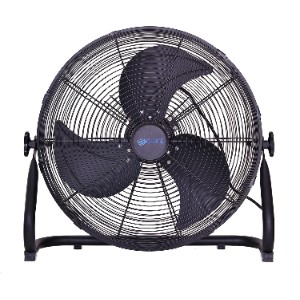
The Cyclone is the industrial fan that gets recommended again and again in trade forums and contractor circles, and it’s not hard to see why. At around £69, it sits in a sweet spot between budget box fans that give up under sustained use and premium commercial units that cost three or four times as much. The 18-inch blade diameter moves serious volumes of air, and three speed settings let you dial the output from a steady background circulation to a full-blast working environment.
The build is proper industrial quality. The metal construction feels solid in your hands rather than rattling around like cheaper plastic alternatives, and the adjustable tilt means you can direct airflow exactly where you need it. The circular guard design is tighter than you’d expect at this price point, which matters in workshop environments where dust, cables, and loose material are always present.
What impresses most is the sustained performance. Many cheaper fans perform fine for the first week, then start humming, vibrating, or running hot as the motor strains. The Cyclone’s motor is rated for continuous operation, which is precisely what you need in a professional environment. Users running these in workshops and warehouses report years of reliable service without the motor degradation that plagues lesser units.
At 4.8 stars from a substantial number of reviews, this is one of the most consistently praised industrial fans on Amazon UK. If you need one fan for a general-purpose workshop or commercial space, start here. You’d have to spend considerably more to get meaningfully better performance.
Features:
- 18-inch blade diameter
- Three-speed operation
- Adjustable tilt head
- All-metal construction
- Industrial-grade motor for continuous operation
- Safety guard with tight mesh spacing
- Stable weighted base
- Exceptional value for money
- Robust all-metal build
- Rated for sustained continuous use
- Outstanding 4.8-star rating
- Not as powerful as premium 20-inch models
- Louder on highest speed setting
2. CCGIRU 20-Inch Industrial Fan 5500 CFM
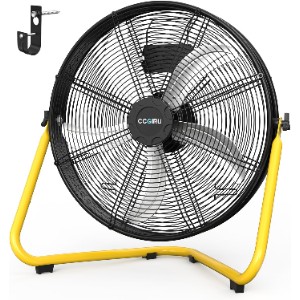
When you genuinely need to move large volumes of air, the CCGIRU 20-inch steps up where smaller fans can’t. Rated at 5,500 CFM (cubic feet per minute), this is serious commercial-grade airflow designed for large warehouses, production floors, loading bays, and events venues where you’re fighting heat across a substantial area. The 20-inch blade and high-torque motor deliver output that smaller units simply cannot match.
The construction reflects the premium positioning. Heavy-duty metal housing, professional-grade motor bearings, and a robust stand that holds the fan steady even at full power. The adjustable tilt allows precise direction of airflow, and the three-speed control is smooth. This isn’t a fan you’d buy for a small garage. It’s designed for spaces where air circulation is a genuine operational requirement rather than a comfort preference.
At just over £246, it costs considerably more than mid-range options. That’s the price of genuine heavy-duty commercial performance. If you’re running a facility where inadequate ventilation costs money through staff productivity or equipment overheating, the CCGIRU pays for itself quickly. Contractors, site managers, and commercial facility operators will find the performance justifies the investment. For a home garage or small workshop, it’s more than you need.
The 4.7-star rating from verified buyers backs up the performance claims. Reviewers consistently highlight the sustained output and build quality. This is an investment purchase for professional environments, and it delivers accordingly.
Features:
- 20-inch blade diameter
- 5,500 CFM airflow rating
- Three-speed control
- Adjustable tilt and height
- Heavy-duty metal construction
- Professional-grade motor for industrial use
- Commercial-class build quality
- Highest CFM airflow in this roundup
- Genuinely industrial-grade build
- Excellent for large commercial spaces
- Strong 4.7-star rating
- Premium price point
- Overkill for smaller spaces
3. Air Mover 1100 CFM Floor Drying Fan
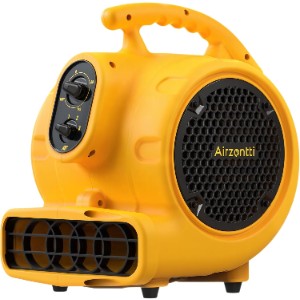
This one does something different. Where most industrial fans are about moving air across open spaces, the Air Mover is designed to accelerate drying by directing high-velocity airflow across surfaces. Flood restoration professionals, tradespeople laying screed or plaster, and painting contractors use air movers like this to cut drying times dramatically. The 1,100 CFM output in a directed, angled stream is more effective for drying than a conventional fan’s dispersed airflow.
The compact, low-profile design sits flat on floors or angles against walls, directing airflow precisely where needed. Construction is toughened for job-site conditions. At £169, it’s priced as a professional tool rather than a general-purpose fan. If you’re in the trades and regularly deal with drying times, the efficiency gains are significant. If you need to cool down a workshop, a conventional floor fan at half the price will serve you better.
The 4.9-star rating is the highest in this roundup and reflects how well this specialist tool performs in its intended role. Reviewers in restoration and trades applications are consistently enthusiastic. It’s a niche product, but if it fits your use case, it’s the best option available.
Features:
- 1,100 CFM directed airflow
- Low-profile air mover design
- Angled floor and wall positioning
- Robust job-site construction
- Multiple positioning options
- High-velocity concentrated airstream
- Highest-rated fan in this roundup (4.9 stars)
- Outstanding specialist drying performance
- Compact and stackable for job sites
- Specialist drying tool, not general cooling
- Higher price relative to CFM output
- Limited use outside of drying applications
4. HOMCOM 20-Inch Industrial Pedestal Fan
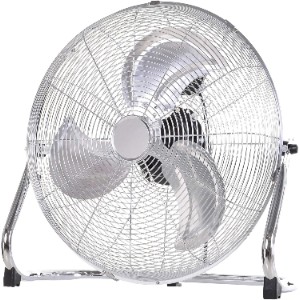
The HOMCOM 20-inch brings a chrome finish to what is otherwise a practical, capable industrial pedestal fan. If your space has any aesthetic consideration alongside pure function, the HOMCOM is a step up from the utilitarian look of most industrial fans. Gym environments, commercial showrooms, and studios often need working airflow without the fan looking like it’s been borrowed from a building site. The HOMCOM fits that brief well.
Performance is solid. The 20-inch blade delivers strong room-wide circulation, and the adjustable height and tilt give you flexibility in positioning. Three-speed operation covers the range from background circulation to assertive cooling. The oscillation function adds automatic coverage for larger spaces. Build quality is good, which is reflected in the 4.7-star rating it carries from buyers in both commercial and residential applications.
At its price point, it competes directly with the Cyclone for general use, with the HOMCOM bringing more aesthetic appeal alongside a larger blade diameter. For purely functional settings where appearance doesn’t matter, the Cyclone is the sharper value. For environments where presentation matters as much as performance, the HOMCOM justifies itself.
Features:
- 20-inch blade diameter
- Chrome finish for presentable appearance
- Adjustable height and tilt
- Three-speed operation
- Oscillation function for wide coverage
- Stable weighted base
- Presentable chrome aesthetic
- Strong 20-inch blade airflow
- Oscillation for wide-area coverage
- Solid 4.7-star rating
- Pricier than comparable functional fans
- Chrome finish shows dust more readily
5. Master MAC-12F Industrial Pedestal Fan
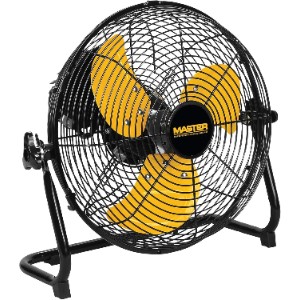
Master is a professional brand in the heating and ventilation trade, and the MAC-12F reflects that heritage. At £97, it sits above budget options but below premium commercial units, occupying the middle ground where most small business owners and serious hobbyists tend to land. The build is professional-grade, the motor is rated for continuous operation, and the adjustable height suits most workshop environments.
The 12-inch blade won’t match the raw power of 18 or 20-inch models, but the MAC-12F compensates with efficiency and reliability. The motor runs cool under sustained use, which is a sign of quality engineering that cheaper alternatives consistently fail to deliver. For spaces up to roughly 40 square metres, it provides consistent circulation without the noise and energy draw of larger models. The 4.6-star rating reflects reliable performance over sustained periods of use.
If you’re a professional who values brand reliability and continuous-duty performance over raw output, the MAC-12F is a sound purchase. It’s not the cheapest option and not the most powerful, but it delivers consistently and should last for years under normal industrial use.
Features:
- Professional-grade Master brand engineering
- Adjustable height pedestal
- Three-speed operation
- Continuous-duty motor rating
- Adjustable tilt head
- Industrial-class construction
- Trusted professional brand
- Genuine continuous-duty motor
- Solid 4.6-star rating
- Smaller blade than similarly priced competitors
- Less raw airflow than 18 and 20-inch alternatives
- Mid-range price for 12-inch output
6. Oypla Industrial Floor Fan
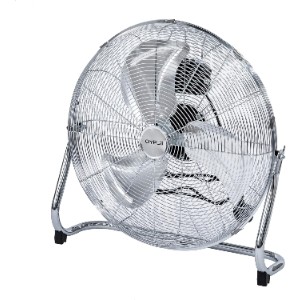
Oypla makes solid, no-frills industrial equipment, and this floor fan is a fair representation of their range. At £55, it’s positioned as an accessible mid-tier option for small workshops, garages, and utility spaces. The 4.6-star rating across a good number of reviews suggests it’s doing the job reliably. It’s not trying to compete with professional-grade continuous-duty fans, but for intermittent workshop use or seasonal cooling, it holds its own.
The design is functional rather than impressive: three-speed operation, adjustable tilt, and straightforward controls. If you need supplementary airflow in a workspace without spending heavily, the Oypla is a reasonable choice. Don’t expect commercial endurance from a £55 fan, but for a private garage or occasional-use utility space, it’s adequate and competitively priced.
Features:
- Industrial floor fan design
- Three-speed operation
- Adjustable tilt head
- Metal construction
- Stable weighted base
- Good value for mid-tier performance
- Decent 4.6-star rating
- Reliable for occasional workshop use
- Not rated for sustained continuous operation
- Best suited to smaller spaces
- Less robust than professional alternatives
7. Belaco 18-Inch Metal Industrial Floor Fan
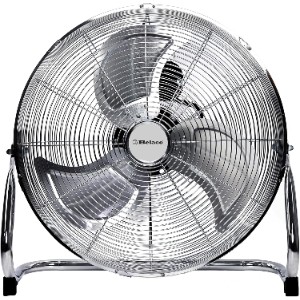
At £53, the Belaco 18-inch is the budget pick for buyers who need serious blade diameter without the price tag of established premium brands. The metal construction is a genuine advantage over similarly priced plastic alternatives. Three speeds, adjustable tilt, and a straightforward design that’s easy to use and maintain. For a secondary fan in a large space or a first industrial fan for a home workshop, it’s a practical starting point.
The honest assessment: it’s good for the money, but the motor isn’t in the same league as the Cyclone or Master for sustained heavy use. Light to moderate workshop applications will be fine. Running it continuously in a high-heat commercial environment is asking more than the price point can reliably deliver. Buy it knowing its limitations and it won’t disappoint.
Features:
- 18-inch blade diameter
- Metal construction
- Three-speed operation
- Adjustable tilt
- Budget-accessible pricing
- Strong 18-inch output at budget price
- Metal build for this price point
- Motor not rated for continuous heavy use
- Less refined than premium alternatives
- Best for light to moderate applications only
8. Belaco 12-Inch Metal Industrial Fan
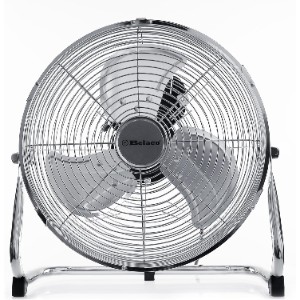
The compact option for smaller spaces or tighter budgets. At £36, the Belaco 12-inch is the entry point into metal industrial fans, and it does the basics competently. Three speed settings, adjustable tilt, and a small footprint that works on a workbench or aimed at a specific work area. For a home shed, small utility room, or as a personal fan in a larger workshop, it’s a sensible spend.
Don’t mistake compact for capable of large-space coverage. A 12-inch blade has physical limits. This fan suits targeted airflow in smaller environments, not whole-room industrial circulation. If your space is small and your budget tight, it’s a reasonable purchase. If you need serious airflow, step up to the 18 or 20-inch options.
Features:
- 12-inch blade diameter
- Metal construction
- Three-speed operation
- Adjustable tilt
- Compact and lightweight design
- Entry-level pricing
- Very affordable entry point
- Metal build for durability
- Limited to smaller spaces
- Not suitable for large commercial areas
- Less powerful than larger alternatives
Industrial Fans Buying Guide
Key Takeaways
- CFM (cubic feet per minute) is the most important specification for industrial fans — it tells you how much air is moved per minute; workshop cooling typically needs 3,000–6,000 CFM
- Floor fans sit low and are better for drying floors, cooling equipment, or moving air under obstacles; pedestal fans are height-adjustable and better for cooling people working at bench height
- Metal construction is more durable than plastic for workshop and industrial use — look for all-metal blades and a cast or heavy steel housing if longevity matters
- Air mover fans (low-profile, very high CFM) are designed specifically for drying carpets, floors, and walls after floods or cleaning — different purpose from general cooling fans
- Noise is expected in industrial settings, but check the dB rating if the fan will run alongside conversation or machinery where hearing matters
- Most industrial floor fans have 3 speed settings; some pedestal models add oscillation, which is useful for cooling a workshop area rather than just one spot
- IP ratings matter in damp environments like garages or basements — look for at least IPX4 if the fan might get splashed
CFM Explained: How Much Airflow Do You Actually Need?
CFM (cubic feet per minute) is the standard measure of how much air a fan moves. Higher CFM means more air movement, faster cooling, and quicker drying. To put the numbers in context: a basic household fan might move 1,000–2,000 CFM; an industrial floor fan typically moves 3,000–6,000 CFM; high-velocity models like the CCGIRU 20″ push 5,500 CFM, which is enough to create noticeable air movement across a large warehouse bay.
For a typical garage workshop (around 20–30 m²), 3,000–4,500 CFM is usually sufficient for general cooling and ventilation. For a commercial kitchen, spray booth, or larger workshop, 5,000 CFM+ is more appropriate. Air mover fans work differently: they focus on a very tight, high-velocity airflow for drying specific surfaces rather than general room cooling, making a 1,100 CFM rating appropriate for their purpose even though it sounds lower than a general industrial fan.
Floor Fans vs Pedestal Fans: Choosing the Right Configuration
Industrial floor fans sit directly on the ground, usually at a 15–45° fixed or adjustable upward angle. This low profile is ideal for drying floors and carpets after water damage, pushing air under pallets or shelving, ventilating crawl spaces, and cooling equipment or machinery at ground level. They’re stable, usually light enough to carry, and hard to knock over.
Pedestal-mounted industrial fans adjust in height (typically 90–130 cm) and often include oscillation. They’re better for cooling workers at a bench or desk, moving air in a large open space, and covering a wider area. The HOMCOM 20″ and Master MAC-12F both offer height-adjustable pedestals, making them more flexible for workshops where cooling requirements change.
If you need to dry something or move air close to the floor, choose a floor fan. If you need to cool a work area where people are standing or sitting at height, a pedestal with oscillation is the better pick.
Metal vs Plastic Construction: Durability in the Real World
Consumer fans are predominantly plastic. Industrial fans mix both materials: the best have all-metal blades (steel or aluminium), metal guards, and heavy-gauge metal housings. All-metal construction withstands knocks, resists heat from nearby machinery, and lasts years of continuous use in dusty, damp, or dirty environments.
Plastic components aren’t automatically a problem: the motor housing can be robust plastic without affecting durability, and plastic-bladed fans often run more quietly. But in genuine workshop use, all-metal blades and guards outlast plastic equivalents significantly. If the fan is for occasional home use (summer garage, drying after mopping), plastic construction is perfectly adequate. If it’s running 8–12 hours a day in a commercial setting, pay the premium for metal blades.
Air Mover Fans: A Different Tool for a Different Job
Air mover fans (sometimes called carpet blowers or floor dryers) look different from standard industrial fans. They’re low-profile, usually rectangular or drum-shaped, and designed to direct very high-velocity air across a flat surface at a low angle. They’re the machines professional cleaners and water damage restoration companies use to dry carpets, subfloors, and walls after flooding or wet cleaning.
Don’t confuse a 1,100 CFM air mover with a general-purpose industrial fan. The air mover wins at what it’s designed for: saturating a wet surface with high-velocity air. It’s not effective for general room cooling because the airflow is too focused and too low. If you need to dry floors after cleaning or water damage, an air mover is exactly right. If you need to cool a workshop, get a proper floor or pedestal fan.
Noise Levels in Work Environments
Industrial fans are louder than household fans. A typical 18–20″ industrial floor fan running at full speed reaches 65–75 dB, which is comparable to normal conversation at close range. In a noisy workshop this is irrelevant. In a garage where you’re listening to the radio or talking, it becomes intrusive.
Speed settings help: most 3-speed industrial fans are significantly quieter on setting 1 and acceptable for background use. If the fan will run in a space where clear communication matters (a garage where you talk to customers, a classroom, a small office), check the low-speed noise spec specifically. A fan that’s 55 dB on low but 72 dB on high gives you flexibility. A fan that’s 68 dB on low is loud regardless of the setting you choose.
Choosing by Use Case
| Use Case | Best Fan Type | CFM Target | Key Feature |
|---|---|---|---|
| Garage workshop cooling | 18–20″ floor fan or pedestal | 3,000–5,000 | Metal blades, 3 speeds |
| Drying floors after cleaning/flood | Air mover / floor dryer | 1,000–1,500 | Low-profile, tilted nozzle |
| Cooling workers at bench/desk | Pedestal with oscillation | 3,000–4,500 | Adjustable height, tilt |
| Large warehouse or commercial kitchen | 20″+ high-velocity floor fan | 5,000+ | All-metal, heavy-duty motor |
| Damp or wet environment (basement, car wash) | IP-rated floor fan | 2,500–4,000 | IPX4 or higher, metal housing |
Safety: Guards, Stability, and Electrical Ratings
All fans on this list meet UK/EU electrical safety standards. For industrial use, check the blade guard spacing — tight mesh guards prevent fingers and cables from reaching blades, while wide-spaced guards on high-velocity fans are slightly less child-safe. If children are ever present, prioritise a model with a fine metal guard.
Stability matters in busy workshops. A fan that gets knocked over is a hazard. Wide-based floor fans with low centres of gravity are more resistant to tipping than tall pedestal models. If the fan will be used near foot traffic, floor models with heavy bases or bolt-down options are safer. Some models include a thermal overload protection that cuts power if the motor overheats, which is a worthwhile safety feature for continuous-use environments.
Case Study: Cooling a Working Forge in the East Midlands
Background
A blacksmith operating a working forge in a converted barn in the East Midlands was struggling with extreme heat during summer months. The forge itself generates temperatures well above ambient even in winter, and in summer the combination of forge heat and building heat gain made conditions uncomfortable and, at times, unworkable. The barn had large doors at either end but cross-ventilation was inconsistent and depended heavily on wind direction.
Project Overview
The tradesperson needed a solution that could move large volumes of air continuously during working hours without creating electrical or fire hazards in a space where sparks and hot metal are a constant reality. The budget was modest, under £150 for the full solution, and the equipment needed to be robust enough to survive a physically demanding environment.
Implementation
Two Cyclone 18-inch industrial fans were positioned at opposite ends of the workshop: one drawing air in from the open door and one pushing air toward the opposite exit. Running on medium speed, the combination created a consistent through-draft that replaced the warm air in the space on a roughly five-minute cycle. A third smaller fan was positioned near the quench bucket to direct cooling air toward the working position specifically.
Results
The temperature at the working position during summer operation dropped by an estimated 6 to 8 degrees Celsius compared to the previous summer, making the most demanding sessions sustainable for longer periods. Total equipment cost was under £160 for all three fans. The Cyclone units ran throughout working days without any motor heat issues or performance degradation over the full season.
Expert Insights From Our Heating Engineers About Industrial Fans
One of our senior HVAC engineers with over 21 years of experience in commercial ventilation projects notes: “People consistently underestimate the importance of continuous-duty ratings when specifying industrial fans. A fan that overheats and trips a thermal cutout in a working environment isn’t just inconvenient, it can disrupt production and create safety issues. Genuine industrial fans with properly rated motors are designed to run all day without thermal stress. That’s the non-negotiable difference between professional equipment and consumer fans with industrial aesthetics.”
“The other thing buyers miss is positioning strategy. One powerful fan positioned correctly will outperform three underpowered fans placed randomly. You want to create a directed airflow path through the space, not just add turbulence. Identify where hot air accumulates and design the airflow to move it out. In most workshop environments, that means one fan at the heat-source end pushing air toward an exit, rather than a fan in the middle blowing air in circles.”
“Blade diameter is important, but don’t ignore CFM ratings. A 20-inch fan doesn’t automatically outperform an 18-inch model — motor torque, blade pitch, and housing design all contribute to the final output figure. Read the CFM specifications, not just the blade size. And if a manufacturer doesn’t publish CFM ratings, that’s usually a sign the performance doesn’t match the claims on the box.”
Frequently Asked Questions
What is CFM and why does it matter for industrial fans?
CFM stands for cubic feet per minute and measures how much air a fan moves per minute. It’s the most useful single figure for comparing industrial fans because it reflects actual airflow output rather than just motor wattage or blade size. A fan with a high wattage motor and a large blade can still have a poor CFM rating if the blade pitch is wrong or the housing is inefficient. For a typical workshop of 50 square metres, you’d want a minimum of 2,000 to 3,000 CFM for meaningful ventilation. Large warehouse spaces need considerably more, which is why products like the CCGIRU 20-inch with its 5,500 CFM rating exist.
Can industrial fans be used indoors safely?
Yes. Standard industrial floor and pedestal fans are designed for indoor use and are safe when operated correctly. Ensure the fan is on a stable, level surface and that cables don’t create trip hazards. In environments with flammable substances or explosive atmospheres, standard industrial fans are not appropriate — those situations require ATEX-rated equipment. For typical workshops, garages, warehouses, and commercial spaces, a standard industrial fan is perfectly safe in normal operating conditions.
How much electricity does an industrial fan use?
Most industrial floor fans draw between 100 and 250 watts depending on size and speed setting. At UK electricity rates of approximately 24p per kWh, a 150-watt fan running eight hours daily costs roughly £3 per week, or about £12 per month. Running continuously at 24 hours a day rises to around £26 per month for the same 150-watt unit. Larger commercial fans drawing 250 to 300 watts cost proportionally more. Air movers in the 500 to 750-watt range cost considerably more to operate continuously and are typically only run during active drying jobs rather than left on indefinitely.
What’s the difference between an industrial fan and an air mover?
Industrial fans circulate air across a room or space to improve ventilation and reduce ambient temperature. Air movers direct a high-velocity airstream across surfaces to accelerate evaporation and drying. They’re different tools for different jobs. If you need to cool a workshop or warehouse, an industrial pedestal fan is what you want. If you need to dry a floor after flooding or speed up plaster or paint drying times, an air mover will do the job far more effectively than a conventional fan. Some buyers purchase air movers expecting general cooling performance and are disappointed — understand the distinction before you buy.
How loud are industrial fans?
Noticeably loud on higher speeds, typically 55 to 75 decibels depending on the model and speed setting. Normal conversation is around 60 decibels and a vacuum cleaner is about 75dB for comparison. In an active workshop where machinery is running, that’s perfectly acceptable background noise. In a customer-facing space or office-adjacent environment, running fans on lower speeds reduces noise significantly, though at the expense of airflow. If noise is a serious constraint, look for specialist low-noise industrial fans rather than general-purpose models.
Can industrial fans be used outdoors?
Standard indoor industrial fans should not be used outdoors in wet conditions as the motor and electrical components aren’t rated for moisture exposure. However, in covered outdoor environments like marquees, open-sided industrial units, and sheltered loading bays where rain won’t reach the fan, most industrial pedestal fans will operate without issue. If you need a fan for genuinely outdoor use in variable British weather, look for IP-rated industrial fans designed for outdoor environments. Always check the manufacturer’s IP rating before using any fan in wet conditions.
How do I size an industrial fan for my space?
A practical starting rule is to target 6 to 10 air changes per hour for workshop ventilation. Calculate your room volume in cubic metres, convert to cubic feet by multiplying by 35.3, then divide by 60 to find the CFM needed per minute for one air change. Multiply by your target air changes per hour. A 50 square metre workshop with 3-metre ceilings contains 150 cubic metres (5,297 cubic feet), requiring roughly 700 CFM for one air change per minute. For 8 air changes per hour, that’s around 930 CFM — a single 18 or 20-inch industrial fan running on medium will achieve this comfortably. High-heat environments with significant equipment generating heat need more.
Summing Up
For most workshops, garages, and light commercial environments, the Cyclone 18-inch delivers the best combination of performance, build quality, and value. At around £69 with a 4.8-star rating from genuine buyers, it’s the easiest recommendation in this roundup. Step up to the CCGIRU 20-inch if you’re running a larger commercial operation and need genuine high-output performance. For drying applications specifically, the Air Mover 1100 CFM sits in a different category to conventional fans and earns its premium price.
Match the fan to the space and duty cycle. An oversized fan in a small space is unnecessary expense; an undersized fan in a large industrial environment is simply ineffective. The range above covers everything from a £36 compact bench fan to a £246 commercial powerhouse, so there’s a sensible option for every genuine need.
Updated