
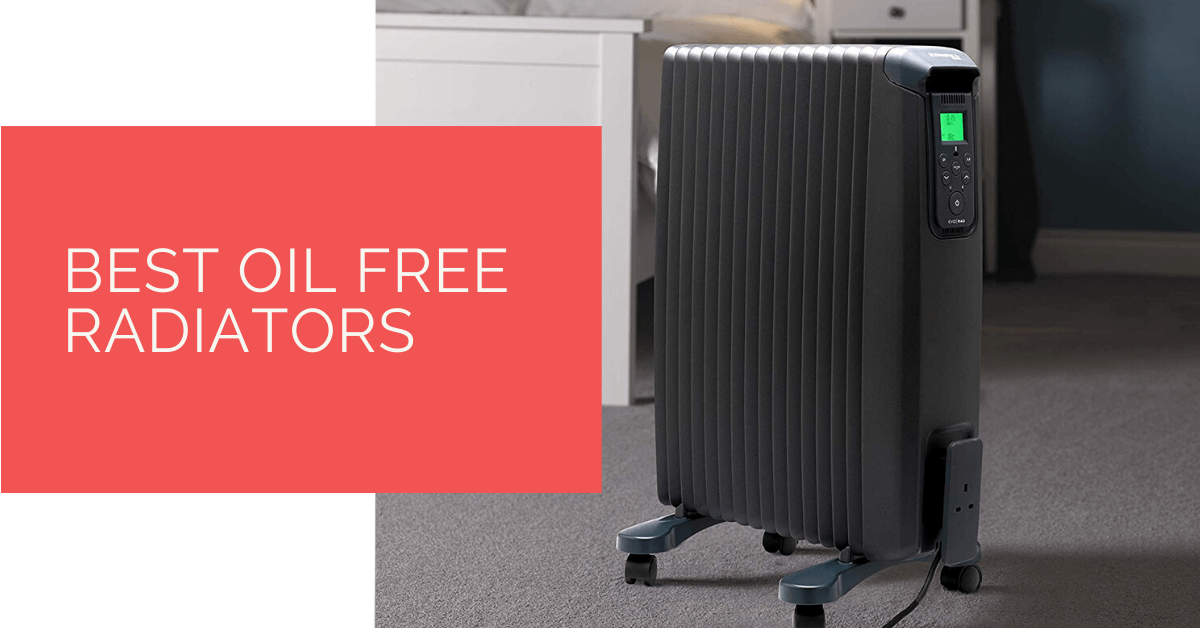
The Dimplex ECR20Tie 2kW Oil Free Eco Radiator is our top pick for most homes. It heats up quickly, runs quietly, and has been the benchmark for oil-free electric radiators for years. Whether you’re kitting out a living room, bedroom, or home office, it covers all the bases without fuss.
Oil-free radiators have come a long way. Where the old oil-filled types could take 30 to 45 minutes to warm a room, the best oil-free models get going in a fraction of that time. If you’re spending money on electricity to heat a space, that speed makes a real difference to your bills.
Our Top Picks
| Image | Name | |
|---|---|---|
| Dimplex ECR20Tie 2kW Oil-Free Column Radiator | |
| Dimplex FuturRad FUTM2CE 2kW Smart Oil-Free Radiator | |
| Dimplex ECR24TiFB 2.4kW Oil-Free Radiator with Turbo Fan | |
| Devola 2kW Smart WiFi Glass Panel Heater | |
| Dimplex 2kW Oil-Free Column Radiator | |
| Dimplex ECR15 1.5kW Oil-Free Column Radiator | |
| Dimplex OFRB7N Eco Chico Mini 700W Oil-Free Radiator | |
| Dimplex ML2T 2kW Oil-Free Convector Heater |
8 Best Oil-Free Radiators
1. Dimplex ECR20Tie 2kW Oil Free Eco Radiator
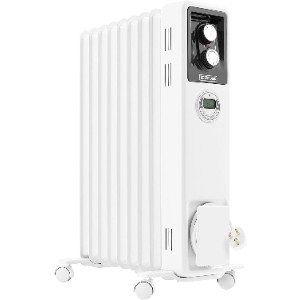
The ECR20Tie earns its place at the top through sheer consistency. It’s the oil-free column radiator that most heating engineers would recommend without hesitation, and for good reason. The 2kW output is right for rooms up to around 20 square metres, the built-in thermostat keeps temperatures stable, and the 24-hour programmable timer means you only heat when you need to. Run it on a schedule and it’s genuinely economical.
What separates oil-free from oil-filled is the heating medium inside. Instead of oil, this Dimplex uses a glycol-based fluid that heats up much faster. You’ll feel warmth within a few minutes of switching on rather than waiting half an hour. The column design also distributes heat gently and evenly, so there’s no blast of hot air and no noise to speak of.
The ECR20Tie is straightforward to set up. It comes on castors so you can move it room to room, and the cord is long enough not to force awkward placement near sockets. Dimplex includes a 3-year guarantee as standard, and with over 360 reviews averaging 4.6 stars, the track record speaks for itself.
Features
- 2kW output, suitable for rooms up to 20m²
- Oil-free glycol heating technology for faster warm-up
- 24-hour programmable timer with adjustable thermostat
- Castor wheels for easy portability
- 3-year manufacturer’s guarantee
- Quiet convective heat distribution
- Heats up significantly faster than oil-filled equivalents
- Reliable thermostat keeps room temperature steady
- Quiet enough for bedrooms and home offices
- Strong review record with hundreds of verified buyers
- Retains heat less after switch-off than oil-filled models
- Timer controls can take a few minutes to get used to
2. Dimplex FUTM2CE FuturRad 2kW Smart Oil-Free Radiator
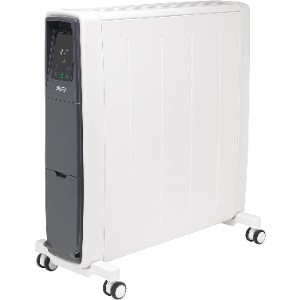
If you want the smartest, most feature-rich oil-free radiator available, the FuturRad is Dimplex’s answer. The touchscreen LED display and precision digital thermostat put you in proper control of your heating. An eco mode adjusts output intelligently to reduce waste, and the 12-hour runback timer means you won’t accidentally leave it on all day. The 10-year guarantee is a strong signal of build confidence.
It’s more expensive than the ECR20, and some buyers will wonder whether the extra cost is justified. The honest answer is: it depends on how you heat. For people who like to dial in exact temperatures and schedule heating precisely, the FuturRad earns its premium price. For others who just want to plug in and stay warm, the standard ECR20 does that just as well.
Features
- 2kW oil-free ThermoCore XR technology
- LED colour display with touch controls
- Eco mode for energy-conscious heating
- 12-hour runback and daily timer
- 10-year manufacturer’s guarantee
- Freestanding, white finish
- Most precise temperature control in the range
- Eco mode genuinely helps reduce energy use
- 10-year guarantee is exceptional for this category
- Clean, modern look suits contemporary rooms
- Premium price point not everyone will need
- Fewer reviews than longer-established models
3. Dimplex ECR24TiFB 2.4kW Oil-Free Radiator with Turbo Fan
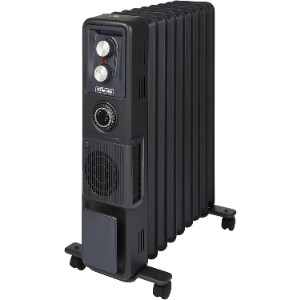
The most divisive pick on this list. The ECR24TiFB has a built-in turbo fan that can blast heat around a room very quickly, which is great if you walk into a cold space and need it warm in minutes. But turbo mode is noticeably louder than standard convective radiators, so if you’re sensitive to noise, this is worth knowing before you buy.
On the upside, 2.4kW covers larger rooms comfortably, and the turbo boost gives it genuine versatility: low and silent for overnight use, full fan mode for quick morning warm-ups. The black finish also stands out from the white-dominated oil-free category, which might matter if the aesthetics of your room count. At £105, it’s priced fairly for the extra output and fan feature.
Features
- 2.4kW output with integrated turbo fan boost
- Oil-free technology with fast heat-up
- Black finish for a contemporary look
- Freestanding on castors
- Suitable for larger rooms up to ~25m²
- Fastest room warm-up on this list thanks to turbo fan
- Higher 2.4kW output handles larger spaces
- Black finish is a nice alternative to standard white
- Turbo mode adds noise, unsuitable for quiet rooms
- Fewer reviews than more established ECR models
- Higher running cost than 2kW options
4. Devola 2kW Smart WiFi Glass Panel Heater
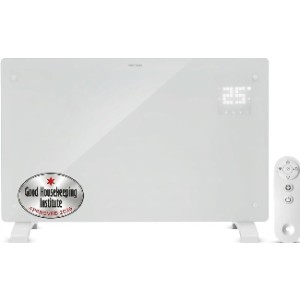
If you want app control, this is the one. The Devola connects to your home WiFi and integrates with Alexa, letting you adjust temperature, set schedules, and monitor heating remotely from your phone. The open window detection is a genuinely useful touch: the heater automatically pauses when it senses a sudden temperature drop consistent with a window being opened, which stops you heating the street.
Approved by the Good Housekeeping Institute in 2025, the Devola also has Lot 20 energy efficiency compliance, which matters for landlords and anyone who wants to stay on the right side of evolving regulations. It’s wall-mountable as well as freestanding, with IP24 splash protection making it suitable for bathrooms or kitchens where water vapour is a factor. Over 1,300 reviews at 4.3 stars is a solid real-world track record.
Features
- 2kW electric glass panel heater with WiFi and Alexa control
- Open window detection auto-pauses heating
- Good Housekeeping Institute approved 2025
- Lot 20 energy efficiency compliant
- IP24 splash-proof rating
- Wall mountable or freestanding
- Best smart control features on this list
- Works with Alexa for voice and remote scheduling
- Open window detection is a practical energy saver
- Good Housekeeping approved for credibility
- Glass panel style is different from traditional column radiator look
- Higher price than basic Dimplex column options
5. Dimplex 2kW Oil-Free Column Radiator
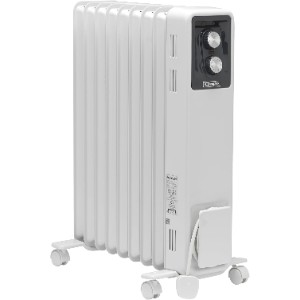
This is Dimplex’s current-generation 2kW column radiator. Three heat settings with an adjustable thermostat keep it simple to use, and the familiar column form factor blends into any room without drawing attention. If you’re replacing an older model or want a no-frills replacement for a spare room, this is a reliable, no-fuss choice.
It’s worth noting this is a newer variant with fewer reviews than the ECR20 range, so the track record is still being established. That said, Dimplex’s build quality is consistent across their oil-free line, and the 3-year guarantee offers reassurance. At £87.97 it sits slightly below the ECR20, making it worth considering if you find the ECR out of stock.
Features
- 2kW output with 3 heat settings
- Adjustable thermostat for temperature control
- Oil-free column design
- 3-year manufacturer’s guarantee
- Freestanding, white finish
- Simpler controls suit those who just want to plug in and use
- Slightly lower price than the ECR20
- Reliable Dimplex build quality
- Fewer reviews means less established track record
- No programmable timer on this model
- Limited to basic thermostat control
6. Dimplex ECR15 1.5kW Oil Free Eco Column Heater
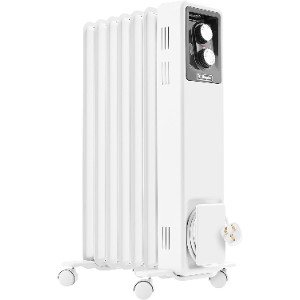
A bedroom or small home office doesn’t need 2kW. The ECR15 delivers 1.5kW in the same column format as its bigger siblings, keeping running costs proportionately lower. At 24p per kWh, the ECR15 costs around 36p per hour at full load versus 48p for a 2kW model. Over a winter’s worth of use, that difference adds up.
The ECR15 shares the same ECR eco technology as the ECR20, so heat-up time is equally quick. It’s a sensible option for anyone who finds 2kW overkill for a smaller room, or for a second heater to supplement main heating in a specific area. 290 reviews at 4.6 stars puts it on par with the ECR20 for user satisfaction.
Features
- 1.5kW output, suited to rooms up to around 15m²
- Oil-free ECR eco technology
- Freestanding column design on castors
- 24-hour timer with adjustable thermostat
- 3-year guarantee
- Lower running costs than 2kW models
- Same ECR quality and heat-up speed as ECR20
- Ideal for bedrooms and smaller rooms
- Not powerful enough for large open-plan spaces
- Slightly fewer features than the premium FuturRad
- Not suitable as a sole heat source in poorly insulated rooms
7. Dimplex OFRB7N Eco Chico Mini Oil Free Radiator
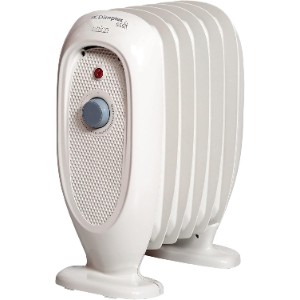
Plug it in, set the thermostat, done. The Eco Chico Mini is the simplest oil-free radiator on this list, and for small spaces it’s genuinely hard to beat. At 700W it’s not going to heat a living room, but for a study, box room, or under a desk, it does exactly what’s needed without taking up much floor space. Running costs at 700W work out to about 17p per hour at 24p/kWh.
Over 627 reviews at 4.4 stars shows it has a long, trusted track record. It’s been around long enough that many people are buying their second or third one. Simple controls, compact size, decent build quality. If all you need is a small room kept comfortable, the Eco Chico Mini is the easiest recommendation on this list.
Features
- 700W output for small rooms and supplementary heating
- Oil-free eco heating technology
- Compact size with minimal footprint
- Simple thermostat control
- Long-established model with strong review record
- Lowest running costs on this list at 700W
- Compact enough for very small spaces
- Excellent track record with hundreds of reviews
- 700W won’t heat anything larger than a small room
- No timer function
- Very basic controls compared to newer models
8. Dimplex ML2T 2kW Convector Heater
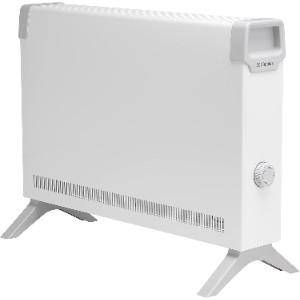
This is a direct recommendation for budget-conscious buyers. The ML2T is a straightforward 2kW convector heater: no oil, quick heat, simple thermostat dial, very easy to use. At under £50 it’s the most affordable option on this list, and it has 232 reviews at 4.4 stars, which means buyers are consistently satisfied at the price.
It won’t have the refinements of the ECR range. The controls are analogue rather than programmable, and the convector form factor looks more utilitarian than the column-style radiators above it. But if your need is essentially “warm this room cheaply,” the ML2T does it reliably. A solid backup heater or first heater for a rented room.
Features
- 2kW output with convection heating (no oil)
- Adjustable thermostat dial
- Lightweight and portable
- Plug-in ready, no installation needed
- Dimplex reliability at a budget price
- Best value on this list by some margin
- Simple enough for anyone to use straight away
- Good review record for the price
- No programmable timer limits energy efficiency
- Analogue controls feel basic next to digital models
- Less effective heat distribution than column-style radiators
Key Takeaways
- Oil-free radiators use dry thermal elements (ceramic, mica, or aluminium) to generate heat, rather than warming oil as a thermal medium. They heat up faster than oil-filled radiators, typically reaching full output within 5 to 10 minutes versus 20 to 30 minutes for oil-filled models
- The trade-off is heat retention. Oil-filled radiators continue radiating warmth for 30 to 40 minutes after switching off because the oil stores thermal energy. Oil-free models cool down within minutes. For rooms where you want lingering warmth after leaving, oil-filled is better; for rooms you need to heat quickly on demand, oil-free is preferable
- Lot 20 regulations (in force since January 2021) require all electric heaters sold in the UK to include a digital thermostat, a 24/7 programmable timer, and at least one additional energy-saving feature such as open window detection. Any oil-free radiator without these features is non-compliant and likely to be inefficient to run
- Wattage sizing: 100W per m² is the standard starting point for a well-insulated room with average ceiling height. A 15m² bedroom typically needs a 1,500W model; a 20m² living room needs 2,000W minimum. Add 10 to 20% for older properties with poor insulation
- Running costs at 27p/kWh: a 1,500W oil-free radiator costs approximately 40p per hour at full output. With a thermostat cycling the element, effective running cost is typically 15 to 25p per hour depending on heat loss and target temperature
- Aluminium heating elements warm up and cool down faster than ceramic or mica. Ceramic elements produce gentle, even radiant heat and are less harsh on air humidity. Mica elements combine fast warm-up with a larger heated surface area
- IP ratings matter if the radiator will be used in a bathroom or kitchen. IP24 (splash-proof) is the minimum for Zone 2 bathroom use; IP44 for closer to water sources
Oil-Free vs Oil-Filled: Choosing the Right Type
The naming causes confusion. Both types are electric radiators, and both heat a room through the same combination of convection and radiation. The difference is internal: oil-filled models heat a sealed reservoir of thermal oil, which then slowly releases warmth into the room. Oil-free models heat a dry element directly, which warms the surrounding air through convection.
Oil-free radiators suit spaces you heat intermittently and want warm quickly: a bathroom before a shower, a home office that’s cold after a weekend, a bedroom just before bed. They’re also lighter and easier to move than oil-filled models, which carry several litres of oil in the base. The downside is that the moment you switch them off, the room starts cooling. For a living room you want to keep warm for hours, oil-filled retains heat more efficiently between thermostat cycles.
Modern oil-free radiators close much of this gap with better element design and Lot 20-compliant thermostats that cycle precisely around a set temperature. The practical difference in running cost between a quality oil-free and a quality oil-filled radiator in the same room is small. The choice usually comes down to how quickly you need the room warm and whether you’re happy with the room cooling as quickly as it heats.
Heating Elements: Ceramic, Mica, and Aluminium
The heating element type affects warm-up speed, heat character, and longevity. The three main technologies are:
- Ceramic (PTC): Positive Temperature Coefficient ceramic elements self-regulate their temperature. As the element heats up, its electrical resistance increases, reducing current draw and preventing overheating. PTC ceramics are inherently safe, cannot glow red-hot, and produce a gentle, even heat. They take 5 to 8 minutes to reach operating temperature and are common in mid-range to premium oil-free radiators
- Mica: Mica is a naturally occurring mineral that conducts heat efficiently. Mica panel heaters have a large surface area, producing radiant heat with a warm glow. They heat up within 2 to 3 minutes and are among the fastest portable heaters available. They run hotter than PTC ceramics at the element surface, so require clear space in front and should not be placed against furniture
- Aluminium: Aluminium conducts heat more efficiently than steel or iron. Aluminium-bodied radiators heat up quickly and transfer warmth evenly across a larger surface area. They’re increasingly popular in home settings because their slim, modern profiles suit contemporary rooms. Aluminium radiators are also compatible with lower flow temperatures, making them the preferred choice for heat pump-compatible central heating systems
Lot 20 Compliance: Why It Matters
Lot 20 is UK and EU legislation that sets minimum energy efficiency requirements for electric heaters. All compliant models must include a digital thermostat accurate to 1°C, a 24-hour/7-day programmable timer, and at least one additional energy-saving feature. The most useful additional feature is open window detection: the heater monitors for a sudden drop in room temperature (indicating a window or door has been opened), switches off automatically, and resumes once the temperature stabilises.
Buying a non-Lot-20-compliant heater means paying to heat rooms when you don’t need to, without the scheduling and sensing tools that reduce waste. The difference in running cost between a compliant and non-compliant heater over a winter is significant. Budget models sold without Lot 20 certification are often cheaper upfront but more expensive to run. Check for explicit Lot 20 compliance in the product listing before buying.
Sizing and Running Costs
Use 100W per m² as a starting wattage rule for rooms with average ceiling heights (2.4m) and reasonable insulation. For older properties with single-glazed windows or poor wall insulation, increase this by 20 to 30%. For well-insulated modern properties, you may find 80W/m² is sufficient.
| Room Size | Recommended Wattage | Cost per Hour (full output) | Typical Cycling Cost per Hour |
|---|---|---|---|
| 8m² (small bedroom) | 800W | 22p | 8 to 12p |
| 12m² (standard bedroom) | 1,200W | 32p | 12 to 18p |
| 15m² (large bedroom) | 1,500W | 41p | 15 to 22p |
| 20m² (living room) | 2,000W | 54p | 20 to 30p |
Running costs assume 27p/kWh. Cycling cost assumes the thermostat operates the element at 50 to 75% duty cycle to maintain target temperature in a typical UK room. A well-insulated room with a properly calibrated thermostat will be at the lower end of this range.
Things to Keep in Mind Before Buying
Check the IP rating if you’re buying for a bathroom. Zone 1 (above a bath or shower to 2.25m height) requires IP45 minimum; Zone 2 (within 0.6m horizontally of a bath or shower) requires IP24 minimum. Most oil-free radiators are not rated for zone 1 or zone 2 use and should only be installed in zone 3 or outside (more than 0.6m from water sources).
Wall-mounted installation is worth doing for any radiator that will be in permanent use in one room. Wall-mounting improves heat distribution (air can circulate beneath), removes the trip hazard of floor-standing units and trailing cables, and looks cleaner. Most oil-free radiators include wall-mounting brackets.
Freestanding oil-free radiators on castors are more practical if you move the heater between rooms. Check that the castor wheels roll smoothly on your floor type and that the power cable is long enough (2 to 3 metres is standard; extension leads can create a trip hazard).
Types of Oil-Free Radiator
Ceramic PTC panel radiators are the most common type and suit most domestic applications. Safe self-limiting element, Lot 20 compliant models widely available, slim profiles for wall mounting. Output from 500W to 2,500W. Price range £50 to £200.
Mica panel heaters heat up fastest of any oil-free type and suit bathrooms and rooms where rapid warm-up matters more than sustained gentle heat. Available in IP-rated models for bathroom use. Output 750W to 2,000W. Price range £40 to £150.
Aluminium radiators (oil-free) combine fast heat-up with a large, elegant radiating surface. Popular as permanent replacements for central heating radiators in rooms with electric-only heating, or as supplementary heat in extensions. Compatible with smart thermostats. Output 500W to 2,500W. Price range £80 to £350.
Designer oil-free radiators prioritise aesthetics with slim vertical or horizontal profiles in anthracite, white, or metallic finishes. Often wall-mounted and hardwired. Suited to living rooms and hallways where the radiator is a visible design element. Price range £150 to £600.
Oil-Free Radiator Buying Guide
Key Takeaways
- Oil-free radiators heat up in 60–90 seconds compared to 20–45 minutes for oil-filled models
- For UK rooms, allow roughly 100W per square metre as a starting point, then adjust for insulation
- Running costs at 28p/kWh: a 1kW radiator costs 28p per hour; a 2kW model costs 56p per hour
- LOT 20 compliance (EU/UK Ecodesign) is mandatory for all new electric heaters — check before buying
- A programmable 24/7 timer and thermostat are the single biggest factor in keeping running costs down
- Plug-in models (up to 3kW) need no installation; hardwired models above 3kW require an electrician
What Is an Oil-Free Radiator?
An oil-free radiator is an electric heater that uses a dry heating element — typically a ceramic, dry stone, or aluminium core — rather than oil as the heat-transfer medium. Traditional oil-filled radiators heat the oil inside the fins, which then radiates warmth into the room. Oil-free models skip that stage entirely: the element heats up and the fins warm directly.
The practical difference is start-up time. An oil-filled radiator can take 20 to 45 minutes to reach operating temperature. An oil-free radiator with a ceramic or dry stone core is typically ready in 60 to 90 seconds. If you’re heating a room intermittently — a home office you switch on at 8am, a bedroom you warm for an hour before bed — that speed matters. You’re not paying to heat a room while waiting for the radiator to catch up.
The trade-off is that oil-free radiators don’t retain heat as long once switched off. Oil-filled models coast for 30 minutes or more after the element cuts out. Oil-free models cool faster. For continuous background heating, that’s less relevant. For rooms you heat in short bursts, the faster start-up more than compensates.
Types of Oil-Free Radiators
Ceramic core: The most common type. A ceramic element heats up quickly and emits a consistent, even warmth. Ceramic radiators tend to be lighter than dry stone models and are well suited to living rooms, bedrooms, and home offices. They’re also generally the quietest type, with no fan noise.
Dry stone (mineral) core: Uses a solid mineral block — often called dry stone or dry element — as the heat reservoir. These heat up a little more slowly than pure ceramic but retain warmth slightly longer once the element cuts out. The Dimplex Eco range uses this technology. Good for rooms where you want more sustained heat with fewer on/off cycles.
Fan-assisted: Adds a small fan behind the heating element to push warm air into the room faster. Useful for larger spaces or when you need to raise room temperature quickly. The fan adds some noise — typically 40–45 dB — which is worth considering for bedrooms. Some models allow you to run the element without the fan for quieter overnight use.
Panel radiators: Slim, wall-mounted electric radiators that look like wet central heating panels. These are the most space-efficient option and increasingly popular in rooms where floor space is at a premium. Most have built-in thermostats and WiFi control. They heat by convection rather than radiation, so warm air rises naturally around the panel. Response time is fast — usually under two minutes.
What Size Radiator Do You Need?
The rough rule for UK homes is 100W per square metre for a well-insulated room with double glazing. For older, draughtier properties, use 120–150W per square metre. Here’s how that works out for common room sizes:
| Room size | Well-insulated | Older/draughty |
|---|---|---|
| 8 m² (small bedroom) | 800W | 1,000–1,200W |
| 12 m² (double bedroom) | 1,200W | 1,500–1,800W |
| 15 m² (living room) | 1,500W | 1,800–2,250W |
| 20 m² (large living room) | 2,000W | 2,400–3,000W |
| 25 m² (open-plan kitchen/diner) | 2,500W | 3,000–3,750W |
If you’re unsure, size up rather than down. A 2kW radiator running at 50% thermostat duty is more efficient than a 1kW radiator running flat-out trying to reach temperature. Most thermostatic models will naturally modulate their output — they switch the element on and off to maintain a set temperature rather than running continuously.
Running Costs
Electric heating is direct conversion: 1kW of electricity becomes 1kW of heat, so there’s no efficiency calculation to do. The cost is straightforward. At 28p per kWh (the approximate Ofgem price cap rate as of late 2026):
| Wattage | Cost per hour | 4 hrs/day (monthly) | 8 hrs/day (monthly) |
|---|---|---|---|
| 500W | 14p | £1.68 | £3.36 |
| 1,000W (1kW) | 28p | £3.36 | £6.72 |
| 1,500W (1.5kW) | 42p | £5.04 | £10.08 |
| 2,000W (2kW) | 56p | £6.72 | £13.44 |
| 2,500W (2.5kW) | 70p | £8.40 | £16.80 |
The key variable is thermostat duty cycle — how often the element actually fires. A well-insulated room with a good thermostat might only need the element on 30–40% of the time to maintain 20°C. A draughty room might need 70–80%. A programmable 7-day timer that only heats rooms when they’re in use will have more impact on your bills than any other single factor.
LOT 20 and UK Ecodesign Compliance
All electric local space heaters sold in the UK must comply with the Ecodesign Regulation (known as LOT 20). This sets minimum requirements for energy efficiency and means every compliant heater must include: an electronic thermostat (accurate to within 1°C), a 24-hour programmable timer, an open-window detection function, and an adaptive start feature that learns when to begin heating to reach your target temperature on schedule.
In practice, LOT 20 compliance is your baseline quality check. Any current model from a reputable brand will be compliant. If you’re looking at older stock or grey-market imports, check the product listing for LOT 20 or Ecodesign certification. A heater without it won’t be eligible for UK sale legitimately, and you’ll lose all the energy-saving smart features that make modern electric radiators genuinely economical to run.
Smart Features Worth Having
Electronic thermostat with 0.1°C precision: The more accurate the thermostat, the less the element overshoots and undershoots. A bi-metal thermostat (the cheap kind) swings 2–3°C either side of the target. Electronic thermostats hold within 0.5°C or better, which means less wasted energy.
7-day programmable timer: Essential for anyone with a regular weekly routine. Set weekday and weekend schedules independently. Most oil-free radiators now include this as standard under LOT 20.
WiFi / app control: Allows you to adjust temperatures remotely and set up zone-by-zone schedules. Useful if your routine varies or if you want to pre-heat a room before you arrive. Not essential, but worth paying for if you want flexibility.
Adaptive start: The heater calculates how long it needs to reach your target temperature and starts early automatically. So if you set 7am at 21°C, the heater begins warming at 6:45am (or whenever it needs to). LOT 20 mandates this feature.
Open-window detection: Senses a rapid temperature drop (caused by opening a window) and temporarily suspends heating. Prevents wasted energy heating an open room.
Safety Features to Check
All reputable oil-free radiators include tip-over protection (a switch on the base that cuts power if the unit falls) and overheat protection (a thermal cutout that trips if the element reaches a dangerous temperature). These are mandatory for UK sale.
For bathrooms, look for an IP rating. IP24 is the minimum for bathroom Zone 2 (more than 0.6m from a bath or shower). IP44 is suitable for Zone 1 (directly above a bath). Most standard oil-free radiators are not IP-rated and should not be used in bathrooms — for bathroom use, specifically choose a bathroom-rated model or a heated towel rail.
Child lock is worth having if you have young children. It prevents the temperature controls being changed. Some models also include a surface temperature limit so the outer casing doesn’t get dangerously hot to the touch.
Installation: Plug-In vs Hardwired
Radiators up to 3kW (13A plug) can be used as standard plug-in appliances — no installation required. Most models on this list are plug-in. If you’re running several in one room on one circuit, be mindful of load: two 2kW radiators on one ring circuit is fine; three or more on one socket run via extension leads is not safe practice.
Hardwired models (typically 3kW+) must be installed by a Part P registered electrician and connected to a dedicated circuit. This adds installation cost but gives you a permanent, clean installation with no trailing cables. Some wall panel radiators are designed to be hardwired as a neater finish even at lower wattages.
Pre-Buy Checklist
- Have you calculated the wattage you need based on your room size and insulation?
- Does the model have LOT 20 / UK Ecodesign compliance?
- Does it have a 7-day programmable timer and electronic thermostat?
- Is it plug-in (up to 3kW) or will you need an electrician for hardwiring?
- If for a bathroom, does it have an appropriate IP rating (minimum IP24)?
- Does it have tip-over and overheat protection?
- Do you need WiFi control or app scheduling?
- Have you checked the warranty length? (Look for 2+ years as standard)
Case Study: Heating a Garden Home Office in Surrey
Background
A couple in Surrey converted their detached garage into a home office in late 2024. The 16m² space had insulated walls and a new roof, but no central heating. They needed a reliable electric heating solution that wouldn’t require installation work or a plumber.
Project Overview
The priority was a heater that would warm the space quickly before the working day started, hold a steady temperature, and be easy to control without having to go into the office cold to switch it on. Budget was a consideration but not the primary driver.
Implementation
They went with the Dimplex ECR20Tie 2kW. The 24-hour timer was configured to start heating 20 minutes before the working day began, at 20°C. During milder months, the thermostat held the temperature without running continuously. In colder weather, the heater ran more frequently but never struggled with the space. A second Eco Chico Mini was added to provide supplementary warmth near the desk without raising the whole room temperature further.
Results
After three months of use through winter, the setup worked well. The office reached temperature quickly each morning with no cold start. Running costs came to approximately £1.80 to £2.20 per day during the coldest weeks, based on roughly 4 to 5 hours of combined active heating. The timer function was singled out as the most useful feature, removing the daily habit of remembering to switch it on and off.
Expert Insights From Our Heating Engineers About Oil-Free Radiators
One of our senior heating engineers with over 22 years of experience fitting and specifying electric heating systems shared some practical thoughts on the oil-free category.
“The most common mistake I see is people sizing down to save money and ending up with a heater that runs flat out and still doesn’t get the room warm. If you’re on the borderline between 1.5kW and 2kW, go with the 2kW. The thermostat will back it off once the room is up to temperature. You’ll use less energy with an appropriately sized heater on a thermostat than with an undersized heater running constantly.”
“The timer question matters more than most people realise. A heater with a 24-hour programmable timer essentially pays for itself versus a basic model over a heating season. You’re not running it when you’re out, not heating rooms that don’t need it, and the thermostat is doing the work of holding temperature rather than you switching it on and off manually. It sounds obvious, but the number of people running heaters on maximum all day with no thermostat is still high.”
“On the oil-free versus oil-filled debate: the speed advantage is real. If your lifestyle involves coming home to a cold house and wanting it warm quickly, oil-free wins that comparison every time. If you want a heater that keeps a room gently warm all day and you don’t mind it taking time to get going, oil-filled can be fine. For most people working from home or using rooms intermittently, oil-free is the better match.”
Frequently Asked Questions
Are oil-free radiators cheaper to run than oil-filled ones?
Running cost depends on wattage, not the heating medium. A 2kW oil-free radiator and a 2kW oil-filled radiator cost exactly the same per hour of use at the same power setting. The difference is in how you use them: oil-free radiators reach temperature faster, so in practice you tend to run them for shorter periods to achieve the same warmth. That responsiveness can make them more economical day-to-day, but it’s not a property of the technology itself.
How long does it take an oil-free radiator to heat a room?
Most oil-free column radiators are producing useful heat within 3 to 5 minutes of switching on. A typical bedroom or home office (10 to 15m²) with a 1.5kW or 2kW model will reach a comfortable temperature within 15 to 20 minutes in a well-insulated room. Oil-filled equivalents typically take 30 to 45 minutes to reach the same output level.
Can I leave an oil-free radiator on overnight?
Yes, provided it has a functioning thermostat and is used as intended. All the models on this list have overheat protection and are designed for continuous use. Set a temperature on the thermostat rather than leaving it at maximum, and ensure it’s not placed too close to curtains, bedding, or furniture. Using a timer to reduce output or switch off during sleeping hours is the most energy-efficient approach.
What size oil-free radiator do I need?
A rough guide for well-insulated modern rooms: 700W to 1kW for rooms up to 10m², 1.5kW for 10 to 15m², 2kW for 15 to 25m², 2.4kW for larger or poorly insulated spaces. These are starting points. Rooms with large windows, poor insulation, or high ceilings will need more output. If in doubt, size up rather than down.
Do oil-free radiators need servicing?
No. One of the practical benefits of oil-free and glycol-based electric radiators is that they have no combustion, no gas connections, and no annual service requirement. They’re sealed units. The main maintenance is keeping them clean and ensuring ventilation slots aren’t blocked. Beyond that, they’re genuinely low-maintenance over their lifespan.
Are oil-free radiators safe in a bathroom?
Only if the specific model carries an appropriate IP rating. An IP24 rating (available on the Devola and some other panel heaters) protects against water splashes from any direction, which is the minimum required for bathroom use. Standard unrated models should not be used in a bathroom. Always check the product specification before fitting any electric heater in a wet zone.
What is the difference between an oil-free radiator and a panel heater?
The terms are sometimes used interchangeably but describe different form factors. An oil-free radiator typically refers to a column-style unit (like the Dimplex ECR range) that produces gentle convective heat similar to a traditional radiator. A panel heater is a slim, flat unit, often wall-mounted, that heats via a resistive element behind a flat front. Both are oil-free. Panel heaters tend to be more directional; column radiators distribute heat more evenly around the room.
How much does it cost to run a 2kW oil-free radiator?
At the current UK electricity rate of approximately 24p per kWh, a 2kW radiator costs around 48p per hour at full output. In practice, a thermostat-controlled radiator won’t run at full power continuously once the room reaches the set temperature. A typical hour of actual use in a well-insulated room might correspond to 30 to 40 minutes of active element operation, bringing the effective hourly cost closer to 24p to 32p.
Summing Up
The Dimplex ECR20Tie 2kW remains our top recommendation for most people. It strikes the right balance between quick warm-up, quiet operation, good controls, and proven reliability. If budget is the primary concern, the Dimplex ML2T delivers 2kW at under £50 and gets the job done. And if you want smart control with app scheduling and Alexa integration, the Devola glass panel heater is a strong choice with over 1,300 satisfied buyers behind it.
Oil-free radiators aren’t a complicated purchase once you match the output to the room and prioritise the controls that suit your routine. Get those two decisions right and any of the eight on this list will serve you well.
Updated