
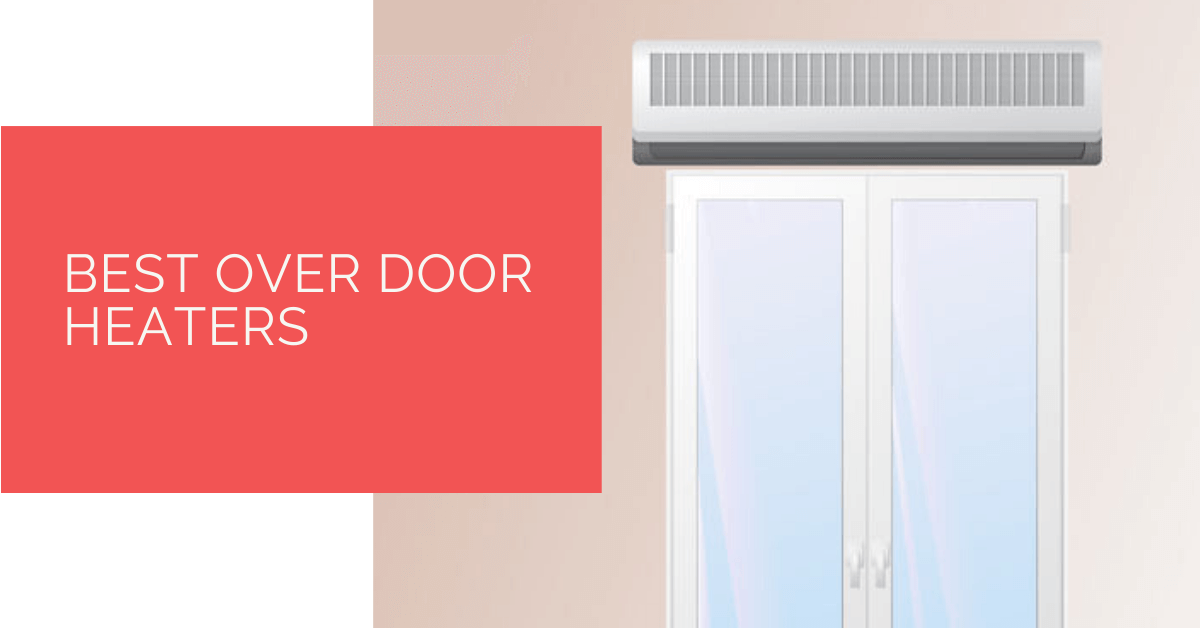
For most UK buyers, the MYLEK 2000W Smart Overdoor Air Curtain Heater is the best over door heater to buy. It gives the strongest balance of practical warmth, safety-conscious design and everyday usability. Over door heaters are built for one specific problem: cold air pouring through a doorway. They work best above shop entrances, offices, workshops, porches and reception areas where people open the door regularly.
Over door heaters work best above frequently opened doorways, where a warm air curtain can reduce draughts and improve entrance comfort. Choosing well depends on door width, mounting height, traffic, output and the electrical supply available. The reviews below compare smaller 2kW models, higher-output 3kW and 4kW units, and smarter options with timers or remote controls.
Contents
- 1 Our Top Picks
- 2 6 Best Over Door Heaters
- 3 Over-Door Heater Buying Guide
- 4 Case Study: Choosing Safer Supplementary Heat
- 5 Expert Insights From Our Heating Engineers About Over Door Heaters
- 6 Frequently Asked Questions
- 7 Summing Up
Our Top Picks
| Image | Name | |
|---|---|---|
| MYLEK 2000W Smart Overdoor Air Curtain Heater | |
| MYLEK 2000W Over Door Heater | |
| Devola 3kW Over Door Electric Heater | |
| Prem-i-air 2kW Over Door Heater/Fan | |
| Pro Elec PEL00925 3kW Over Door Air Curtain Heater | |
| Devola 4kW Over Door Electric Heater |
6 Best Over Door Heaters
1. MYLEK 2000W Smart Overdoor Air Curtain Heater
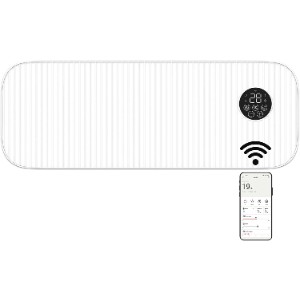
The MYLEK Smart Overdoor Air Curtain Heater is the best all-round option because it combines the familiar 2kW over-door format with newer smart controls. It suits small shops, offices, reception areas and draughty entrances. The PTC heater and downflow design help create a curtain of warm air near the doorway rather than simply heating the room like a normal fan heater.
It still needs correct mounting height and positioning. If it is installed too far from the doorway or aimed badly, performance will suffer.
MYLEK 2000W Smart Overdoor Air Curtain Heater will only perform well if the doorway setup suits it. Output matters, but mounting height, distance from the opening and airflow direction can make the difference between a useful warm air curtain and a noisy heater above the door.
Think about the door itself before choosing wattage. A small internal doorway with occasional use may not need a large unit, while an exposed entrance with constant traffic can overwhelm a modest 2kW heater on cold days.
Features
- 2000W PTC heater
- Smart Wi-Fi app control
- Remote control
- Overdoor downflow design
- Timer
- Air curtain function
- Best all-round choice
- Smart controls
- Good for entrances
- Needs proper mounting
- 2kW may be limited for large commercial doors
2. MYLEK 2000W Over Door Heater
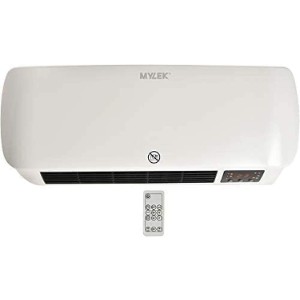
This MYLEK 2kW model is a strong non-smart choice if you want the core over-door heater features without app control. It is well suited to smaller commercial entrances and home workshop doors.
The thermostat, LED display and timer make it easier to control than older basic air curtains. Remote control is helpful because the heater is mounted high. It is a good fit where 2kW is enough. Larger doorways may need a higher-output model or a more commercial air curtain.
For shops and offices, timers and remotes are more than convenience features. They make it easier to run the heater during occupied hours and switch it off outside trading times, which helps avoid paying for heat when nobody benefits from it.
Features
- 2000W output
- Thermostat
- LED display
- Timer
- Remote control
- Wall-mounted overdoor design
- Good value
- Useful controls
- Remote included
- No smart app control
- Limited for large entrances
3. Devola 3kW Over Door Electric Heater
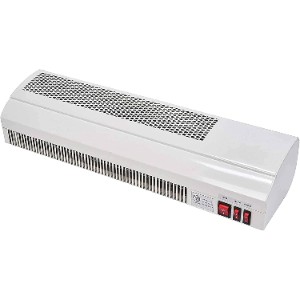
The Devola 3kW model is the one to consider if 2kW heaters feel underpowered for the doorway. The extra output helps in colder entrances and busier doorways. Open window detection is useful for Lot 20 style efficiency, and the flexible mounting options add installation flexibility.
The trade-off is electrical demand. Check the supply and installation requirements before buying. Think about the door itself before choosing wattage. A small internal doorway with occasional use may not need a large unit, while an exposed entrance with constant traffic can overwhelm a modest 2kW heater on cold days.
Devola 3kW Over Door Electric Heater will only perform well if the doorway setup suits it. Output matters, but mounting height, distance from the opening and airflow direction can make the difference between a useful warm air curtain and a noisy heater above the door.
Features
- 3kW output
- Air curtain design
- Open window detection
- Wall or ceiling mounting
- Two heat settings
- PTC heating
- Higher output
- Flexible mounting
- Open window detection
- Higher electrical load
- May need more careful installation
4. Prem-i-air 2kW Over Door Heater/Fan
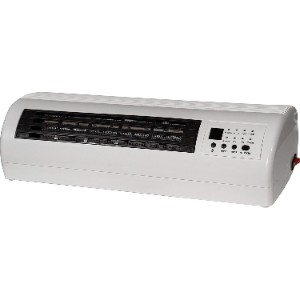
The Prem-i-air 2kW Over Door Heater is a practical option if timer control is high on your list. The 24-hour and 7-day timer can help in small business settings with regular opening hours.
It can also run as a fan, which gives it some use outside the coldest months.
It is not the most powerful unit here, but it is a sensible controlled option for smaller doorways. Installation deserves proper attention. These heaters sit above head height, so secure fixing, electrical suitability and clear airflow are part of the buying decision rather than afterthoughts.
Features
- 2kW heater/fan
- Remote control
- 24-hour timer
- 7-day timer
- Overdoor mounting
- Fan mode
- Good timer controls
- Fan mode
- Useful for shops and offices
- Only 2kW
- Less premium than smart models
5. Pro Elec PEL00925 3kW Over Door Air Curtain Heater
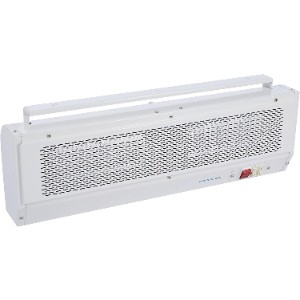
The Pro Elec 3kW heater is a more powerful air curtain option for users who need stronger downflow heat. It is better suited to commercial-style entrances than small domestic doorways. The extra output can help combat draughts, but it also means installation and supply requirements matter more.
Choose it for output and simplicity rather than smart features.
Pro Elec PEL00925 3kW Over Door Air Curtain Heater will only perform well if the doorway setup suits it. Output matters, but mounting height, distance from the opening and airflow direction can make the difference between a useful warm air curtain and a noisy heater above the door.
Features
- 3kW output
- Over door air curtain
- Electric fan heater
- Wall-mounted design
- Commercial-style use
- Strong output
- Good for larger entrances
- Basic controls
- Higher power demand
6. Devola 4kW Over Door Electric Heater
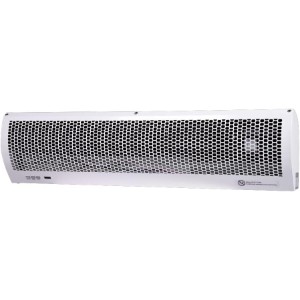
The Devola 4kW model is the high-output pick for larger or busier doorways where smaller heaters are not enough. It is closer to a light commercial choice than a domestic convenience heater.
The PTC heating element and remote control are useful, but output is the main reason to buy it. Check the electrical supply carefully. A 4kW heater is not a casual plug-in upgrade for every doorway.
For shops and offices, timers and remotes are more than convenience features. They make it easier to run the heater during occupied hours and switch it off outside trading times, which helps avoid paying for heat when nobody benefits from it.
Features
- 4kW output
- PTC heating element
- Remote control
- Wall or ceiling mounting
- Air curtain design
- Highest output here
- Good for larger doorways
- Small review base
- Installation requirements matter
Over-Door Heater Buying Guide
Key Takeaways
- Over-door heaters (also called air curtain heaters) work by projecting a high-velocity curtain of warm air across the door opening, creating an invisible barrier between the warm interior and cold exterior. They are most effective when the heater width matches or slightly exceeds the door width. A heater that’s too narrow leaves gaps at the edges where cold air infiltrates
- For domestic use, a 1kW to 2kW model with 90cm to 120cm coverage suits most standard door openings. For commercial settings (shop entrances, warehouse loading bays), or restaurant doors. A wider, higher-output 3kW to 5kW unit is needed to maintain an effective barrier against frequent foot traffic and large door openings
- Lot 20 compliance requires over-door heaters used for room heating to include a digital thermostat, 24/7 timer, and at least one additional energy-saving feature. Air curtains designed purely as draught barriers without a heating element are exempt, but heated models sold for use as room heaters must comply
- Most domestic over-door heaters use a PTC (positive temperature coefficient) ceramic heating element, which is self-regulating and more energy-efficient than a standard wire element. PTC elements automatically reduce power output as the element reaches its target temperature, cutting wasted electricity
- At 27p/kWh, a 2kW over-door heater running continuously costs 54p per hour. In practice, a thermostatically controlled unit in a hallway cycles at 20 to 40% duty cycle once the room is warm, bringing effective hourly running costs to 11 to 22p, comparable to a standard panel heater
Air Curtain vs Supplementary Heater: Understanding the Difference
Over-door heaters serve two distinct functions, and some models do both simultaneously. As an air curtain, the unit projects a high-velocity airstream across the door opening that physically deflects incoming cold air and outgoing warm air. The curtain effect works even without heating. Some commercial air curtains use an unheated airstream purely for draught and insect exclusion. As a supplementary heater, the unit heats the airstream and contributes to room heating.
For domestic applications, the dual function is almost always what you want. A heated air curtain warms the hallway or entrance area, reduces the draught sensation when the door opens, and maintains comfort without the need for a separate heater on a cold wall. For commercial applications (shops, cafes, salons), the air curtain function reduces heating bills by stopping conditioned indoor air escaping every time the door opens, which can account for 30% or more of heating loss in a frequently accessed space.
Sizing: Width and Wattage
The unit must span the full width of the door opening. An air curtain that’s narrower than the door leaves uncovered zones at the edges where cold air and insects can enter unimpeded. Width should match or exceed the door frame width, not just the door leaf. Standard UK interior door openings are 750mm to 900mm wide; external doors are typically 900mm to 1,050mm wide.
| Application | Door Width | Recommended Unit Width | Output |
|---|---|---|---|
| Domestic hallway | 750–900mm | 900mm | 1–2kW |
| External domestic door | 900–1,050mm | 1,000–1,200mm | 2–3kW |
| Small commercial/retail | 900–1,200mm | 1,200mm | 3–4kW |
| Warehouse/loading bay | 2,000mm+ | 2,000mm+ | 5–9kW |
Mounting height affects coverage: air curtains mounted higher above the door need higher airflow velocity to reach the floor effectively. Most domestic units are designed for mounting heights of 2.2m to 2.5m. Commercial units handling higher mounting positions (3m+) require higher-velocity fans to maintain an unbroken curtain to floor level.
Controls and Timer Features
Basic over-door heaters have a simple on/off switch and a single heat setting. These work but offer no energy management. For daily use in a hallway or entrance area, a thermostatically controlled unit is worthwhile: it maintains a set temperature and cycles off when the space is warm enough. Look for units with a built-in digital thermostat rather than a manual dial, which is more accurate and reduces overshoot.
Some models include a remote control, which is particularly useful when the unit is mounted above head height. A 7-day timer allows you to programme heating periods to match your household schedule, coming on 30 minutes before the morning rush, switching off at night. For commercial applications, 7-day programming is the standard specification.
Things to Keep in Mind Before Buying
Over-door heaters must be installed directly above the door frame, centred on the opening. The airstream needs to project downward at a slight forward angle. Some units allow you to adjust the louvre angle. If the unit is mounted too far back from the door, the airstream falls short of the door opening and the curtain effect is lost.
Noise is a relevant consideration for domestic installation. Fan-driven air curtains produce audible airflow noise, typically 45dB to 55dB, comparable to a desktop fan. In a quiet hallway this is noticeable. Look for models specifying low-noise operation if you plan to run the heater in a living space or bedroom corridor.
Types of Over-Door Heater
Domestic fan heater/air curtains (1kW to 2kW, 90cm to 120cm width) suit standard UK door openings in homes and small offices. PTC elements, built-in thermostat, remote control optional. Price range £40 to £150.
Commercial air curtain heaters (3kW to 9kW, 1m to 2m width) handle high-traffic entrances, shop fronts, and warehouse doors. Higher airflow velocity, industrial build quality, often three-phase supply. Price range £150 to £800.
Unheated air curtains project an unheated airstream purely for insect and draught exclusion. Used in food premises and commercial kitchens where heat would be unwanted. Price range £80 to £300.
Slimline over-door panel heaters are wall-mounted above a door and heat the doorway area without the air curtain effect. Simpler and cheaper than air curtain models, suited to domestic use where draught exclusion isn’t the priority. Price range £30 to £100.
Case Study: Choosing Safer Supplementary Heat
Background
A homeowner wanted extra heat in a space that was cold at certain times of day, but did not want to run the main heating system for the whole house.
Project Overview
The goal was not simply to buy the highest-wattage heater. They checked the room size, power supply, ventilation, cable route, clearance around furniture and how long the heater would realistically run.
Implementation
They chose a heater matched to the actual task and set simple rules for use: clear space around the heater, no unattended running and no use near fabrics, clutter or blocked airflow.
Results
The space became more comfortable without relying on an oversized heater or creating avoidable safety risks. The biggest improvement came from choosing the right heater type for the job.
Expert Insights From Our Heating Engineers About Over Door Heaters
“Portable and supplementary heaters are useful when they are chosen for the right space. The problems usually start when people ask a small heater to do a big heater’s job, or use a powerful heater too close to furniture and fabrics.”
“One of our senior heating engineers with over 15 years of experience recommends checking wattage, clearances, controls and the intended use before buying. The safest heater is the one that suits the room and is easy to use correctly every time.”
“For any heater, do not ignore the manual. Tip-over switches, thermostats and overheat protection are helpful backups, not permission to place the heater badly or leave it running unattended.”
Frequently Asked Questions
Do over door heaters work?
Yes, when they are correctly sized and mounted. They work best above frequently opened doors where a downward air curtain can reduce draughts. They are less effective if mounted too high, too far from the doorway or in a very exposed entrance.
What size over door heater do I need?
Small doors may suit 2kW models, while colder or busier entrances may need 3kW or more. Door width, mounting height, draught level and foot traffic all matter. For commercial entrances, it may be worth getting installer advice.
Are over door heaters expensive to run?
They can be if left running constantly at high output. A 3kW heater can use up to 3kWh per hour. Timers, thermostats, door management and correct sizing help reduce waste.
Can I install an over door heater myself?
Some smaller models may be suitable for competent DIY wall mounting, but electrical safety and secure fixing matter. Higher-output units may need professional installation or a dedicated supply. Always follow the manufacturer instructions.
Can over door heaters be used as normal room heaters?
They can add heat to a room, but they are designed mainly for doorways and downflow air. If you simply need to heat a room, a wall heater, panel heater or portable radiator may be more appropriate.
What is the difference between an over door heater and an air curtain?
Many over door heaters are heated air curtains. An air curtain focuses on creating a downward airflow barrier across a doorway, while a basic over door heater may simply blow warm air down. In practice, the terms often overlap.
Summing Up
The MYLEK 2000W Smart Overdoor Air Curtain Heater is the best over door heater for most people because it gives the most sensible balance of warmth, control and value. It is the model we would start with before comparing the more specialist options in the list, especially if you want a dependable recommendation rather than simply the highest wattage on the page.
The right choice still depends on the space. Check output, clearances, safety features, running cost and how the heater will actually be used before ordering. A heater that fits the task will feel better, run more sensibly and be easier to use safely than one chosen purely by headline wattage. That is the thread running through all the picks here: choose the heater for the situation, not just the spec sheet.
Updated