
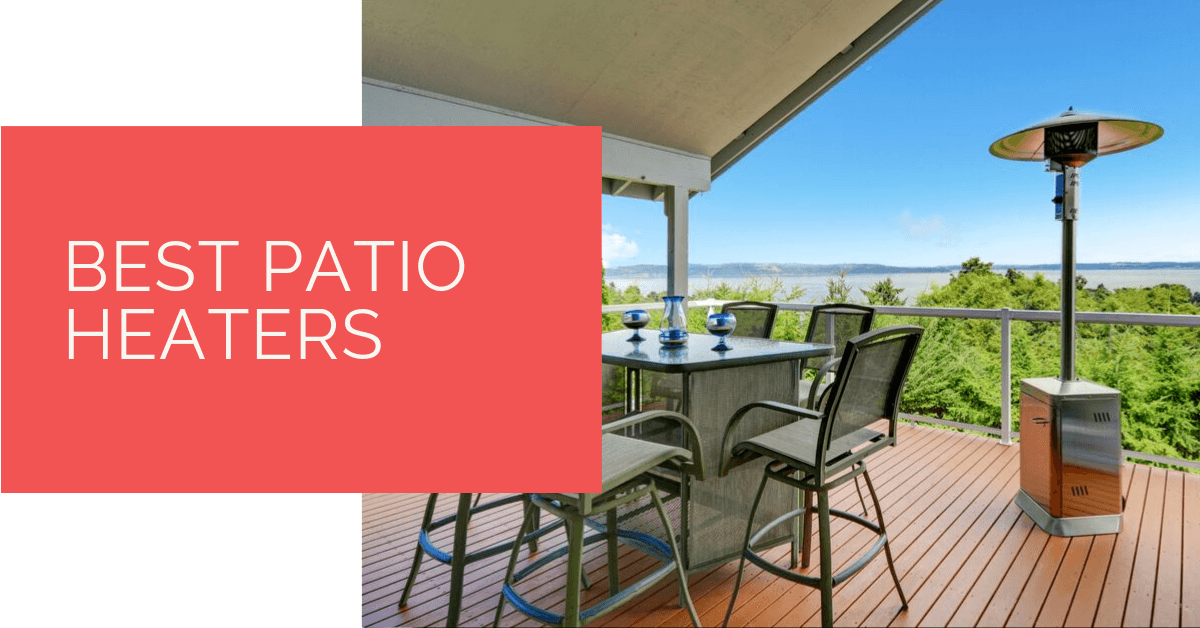
A good patio heater extends your outdoor season by weeks. With a decent electric infrared model and a mild UK evening, you can be sitting outside comfortably in October when you’d otherwise be indoors. Our top pick for most gardens is the Luxeva Infrared Outdoor Heater 1000/2500W: smart app control, IP55 weatherproofing, and 4.7-star ratings across six heat modes.
Whether you want a budget freestanding heater, a wall-mounted model with remote control, or a premium ceiling-hung unit for a covered terrace, the options below cover the full range of what’s available in the UK market right now.
Our Top Picks
| Image | Name | |
|---|---|---|
| Luxeva Infrared Outdoor Heater 1000/2500W | |
| Heatlab 2KW IPX4 FreeStanding Infrared Electric Garden Outdoor Patio Heater | |
| HARRIER 2000W Rounded Standing Outdoor Patio Heater | |
| Ex-Pro 2KW Electric Wall Mounted Patio Heater | |
| Devola Electric Infrared Patio Heater Wall Mounted 2000W with WiFi | |
| DONYER POWER Outdoor Patio Heater 800W and 2000W Halogen Hanging Heater | |
| Heatlab Vintage Hanging Infrared Patio Heater | |
| Carbon Fibre 2000W Wall Mounted Infrared Patio Heater |
8 Best Patio Heaters
1. Luxeva Infrared Outdoor Heater 1000/2500W with Smart App Control
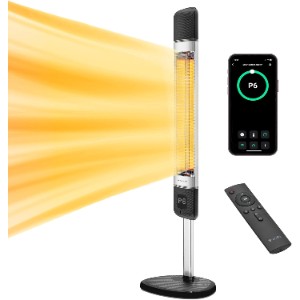
The Luxeva sits at the top of this list because it covers more ground than most patio heaters at this price. You get 1000W and 2500W settings, six heat modes, IP55 waterproofing, and control via a smartphone app. That last feature is genuinely useful outdoors: you can adjust the heat from your chair rather than reaching for the unit. It’s rated 4.7 stars from over 45 buyers, which is impressive for a newer product.
The compact black design suits modern garden spaces without looking industrial. Carbon infrared heating warms people and objects directly rather than trying to heat the surrounding air, which makes it more efficient in an open garden. At 1000W it’s economical to run for background warmth; step it up to 2500W when temperatures drop and you actually feel the difference.
IP55 means it’ll handle rain and garden conditions without issue. Installation is straightforward for a wall-mount, and freestanding options are available depending on which variant you choose. If you want one patio heater that adapts to both cool evenings and colder nights, this is the one to buy.
Features
- 1000W and 2500W power settings
- Smart App control via smartphone
- IP55 waterproofing
- 6 heat modes
- Carbon infrared heating element
- Compact black design
- App control is genuinely useful outdoors
- Two power levels suit varied conditions
- IP55 waterproof for year-round use
- 4.7-star rating, compact and stylish
- Newer product with fewer reviews than established competitors
- Premium price for the specification
2. Heatlab 2KW IPX4 FreeStanding Infrared Electric Garden Outdoor Patio Heater
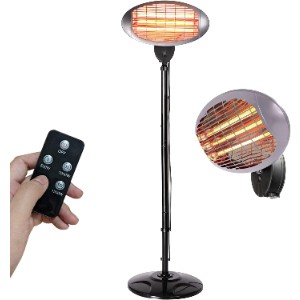
The Heatlab is a strong freestanding option. similar 2kW output, but with a few practical extras that justify the higher price. Chief among them is a remote control, which lets you adjust heat settings from your chair without getting up. There are also three power settings (low, medium, high), a 4.8-metre cable for flexible positioning, and an adjustable heating element angle of 45 degrees up or down. With 903 reviews at 4.3 stars it has a strong track record.
The IPX4 rating and waterproof construction make it suitable for use in light rain. The adjustable cable length is particularly useful in gardens where the power socket isn’t conveniently positioned. If you regularly entertain outdoors and want a heater you can control without moving, the The remote control is a genuine convenience outdoors.
One point worth noting: the heat element is tilted rather than pointing directly outward by default, so take a moment to adjust the angle when setting it up. Once positioned correctly, the coverage is good for a typical outdoor dining table and chairs grouping.
Features
- 2kW infrared heating element
- IPX4 waterproof rated
- 3 heat settings
- Remote control included
- 45-degree adjustable element angle
- 4.8m detachable cable
- Remote control for convenience
- Over 900 reviews at 4.3 stars
- 3 heat settings for flexibility
- More expensive than budget freestanding options
- Element angle needs adjusting out of the box
- No timer function
3. HARRIER 2000W Rounded Standing Outdoor Patio Heater
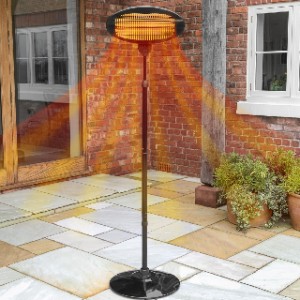
The HARRIER earns its place here by being genuinely two heaters in one. The 2000W unit works as a freestanding heater on its weighted base or mounts directly to a wall. If you’re not sure yet whether you’d prefer a freestanding or fixed heater, this hedges your bets. The IPX4 approval covers both configurations. At around £49 it undercuts many wall-mounted models significantly, while the 287 reviews at 4.3 stars suggest buyers are generally happy with the compromise.
Three heat settings and a 9kg base weight give it stability outdoors. The rounded design is more modern-looking than some older freestanding heaters, which suits a contemporary garden or decked area better.
Features
- 2000W infrared heating element
- IPX4 rated for outdoor use
- 2-in-1 freestanding or wall-mounted
- 3 heat settings
- 9kg weighted base for freestanding stability
- Freestanding or wall-mounted flexibility
- Budget-friendly at around £49
- Modern rounded design
- No remote control
- Lower review count than Heatlab
- Wall mounting requires additional brackets
4. Ex-Pro 2KW Outdoor Wall Mounted Quartz Electric Patio Heater
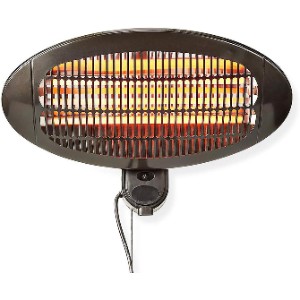
If you want a wall-mounted patio heater that does the job without unnecessary complexity, the Ex-Pro 2KW is worth considering. It uses a quartz heating element, which heats up quickly and provides consistent infrared warmth. The IP34 rating handles light rain and garden conditions. Three power settings let you adjust the output to suit the evening, and the adjustable heat angle means you can direct the warmth exactly where people are sitting.
At 2000W it has enough output for a covered patio or sheltered garden area. Installation is a standard wall-bracket affair. It’s a simple, no-fuss option that works reliably and costs less than the smarter connected alternatives on this list.
Features
- 2000W quartz infrared heating element
- IP34 weatherproof rating
- 3 power settings
- Adjustable heat angle bracket
- Wall-mounted design
- Simple and reliable wall-mount design
- Adjustable angle to direct heat precisely
- 3 power settings for flexibility
- IP34 rating only (not fully weatherproof)
- No remote control or timer
- Lower review count than established brands
5. Devola Electric Infrared Patio Heater Wall Mounted 2000W with WiFi
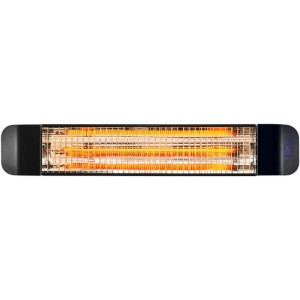
The Devola takes the wall-mounted formula further with WiFi connectivity, a 24-hour timer, an LED display, and IP65 waterproofing. If you want to schedule your patio heater to come on before you head outside, or control it from your phone, this is the model to consider. The IP65 rating is genuinely higher than most rivals, meaning it handles rain rather than just splash. At 150 reviews and 4.4 stars, the feedback is positive if not yet extensive.
The timer function is more useful than it might initially seem. Setting the heater to switch on 15 minutes before guests arrive means stepping out into a pre-warmed terrace rather than waiting for the chill to dissipate. For anyone who entertains regularly and values that kind of convenience, the price premium over simpler wall-mounted options is defensible.
Features
- 2000W infrared wall-mounted heater
- IP65 waterproof rated
- WiFi enabled with app control
- 24-hour programmable timer
- LED display and remote control
- WiFi and app control for remote scheduling
- IP65 waterproof rating, higher than most rivals
- 24-hour timer for pre-heating
- Only 150 reviews, less proven than some competitors
- App setup required for full functionality
- Higher price than budget wall-mounted alternatives
6. DONYER POWER Outdoor Patio Heater 800W and 2000W Halogen Hanging Heater
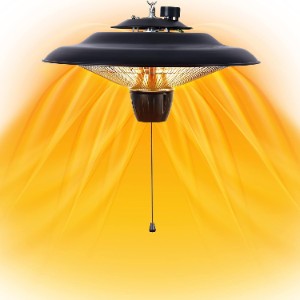
The DONYER POWER offers something different: a hanging or ceiling-mount installation via an adjustable 1-metre chain. This format suits covered pergolas and gazebos particularly well, distributing heat downward over a seating area without occupying wall or floor space. Two heat settings (800W and 1000W, though the listing says 2000W combined output) produce rapid warmth. With 268 reviews at 4.2 stars, it’s a reasonable choice for this format.
Installation takes some planning since the chain height needs to suit the ceiling height and the positioning of the seating area beneath. Done well, a ceiling-hung heater is one of the most effective formats for a covered outdoor space. The DONYER’s chain is adjustable, which gives some flexibility.
Features
- 800W and 2000W heat settings
- Ceiling/hanging mount via 1m adjustable chain
- Rapid 3-second heat-up
- Suitable for pergolas, gazebos, and covered areas
- Ceiling-mount ideal for covered outdoor areas
- Adjustable chain for flexible positioning
- Requires ceiling or overhead mounting point
- 4.2 stars is the lowest rating on this list
- Installation more involved than freestanding options
7. Heatlab 1.5kW Vintage Style Hanging Ceiling Outdoor Electric Patio Heater
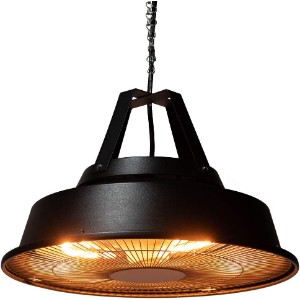
The Heatlab Vintage is the most distinctive-looking heater on this list. The retro black cage design looks at home in a pub garden, a covered terrace, or any outdoor space that leans towards a rustic aesthetic. At 1.5kW it won’t deliver quite the output of a 2kW unit, but for a ceiling-hung heater in a partially covered space that’s usually sufficient. IPX4 weatherproofing means rain and splashes aren’t a problem.
Heatlab is a brand with a decent UK track record, and this model’s 4.5 stars from over 50 buyers reflects consistent quality. The hanging ceiling mount keeps it out of the way while delivering warmth downward where people are sitting. If you want something that looks good as well as works well, this is the pick.
Features
- 1500W infrared heating element
- Vintage-style cage design in black
- IPX4 weatherproof rating
- Ceiling/hanging mount installation
- 4.5 stars, 54+ reviews
- Distinctive vintage look suits pub-garden and terrace settings
- Ceiling mount keeps floor space clear
- IPX4 for outdoor use in wet weather
- 1.5kW lower output than 2kW competitors
- No remote control or smart features
- Same brand as P2 — fewer brand options
8. Carbon Fibre Wall-Mounted Electric Patio Heater 2000W with Remote
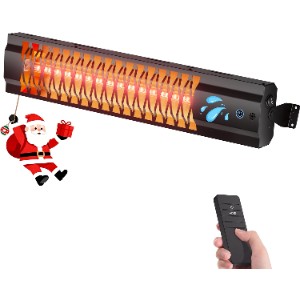
The carbon fibre element sets this wall-mounted heater apart from the quartz and halogen options elsewhere on this list. Carbon fibre heats up faster than quartz, reaches temperature in seconds, and produces a gentler, more even warmth without the harsh glow of some infrared heaters. At 2000W with full IP65 waterproofing it’s one of the more capable options on this list, suitable for a wide range of outdoor settings including garages, gazebos, and restaurant terraces.
The remote control is included, which is the practical detail that matters most when you’re sitting outside. The black finish looks smart against rendered walls or timber pergolas. Fewer buyers have reviewed it than some competitors but the 4.6-star average is consistent and encouraging. A solid choice if you want carbon fibre technology without paying a premium price.
Features
- 2000W carbon fibre infrared heating element
- IP65 fully waterproof rating
- Remote control included
- Wall-mounted, suitable for indoor and outdoor use
- Black finish, suited to restaurants, gardens, garages, and gazebos
- Carbon fibre heats faster and more gently than quartz
- IP65 fully weatherproof
- Remote control included
- Newer product with fewer reviews
- No smart/app connectivity
- Lower brand recognition than Devola or DONYER
Patio Heater Buying Guide
Key Takeaways
- Most patio heaters produce meaningful warmth up to 2 metres from the unit on their highest setting. Beyond that, radiated heat drops off sharply — buy for the zone you want to warm, not the total garden area.
- Infrared patio heaters are the most efficient choice for windy UK gardens: they heat people and objects directly rather than warming the surrounding air, so gusts don’t rob you of warmth.
- Gas heaters produce five to six times more heat than electric (13kW vs 2kW) but cost £2–3 per hour to run vs 50–60p for electric. For six or more people on a large patio, gas is the only realistic option. For everyday two-to-four person use, electric wins on cost and convenience.
- IP ratings are non-negotiable outdoors. IP44 minimum for covered areas; IP55 or IP65 for exposed installations.
- Gas heaters must never be used in enclosed spaces — carbon monoxide risk is fatal. Always check the anti-tilt safety cut-off before each season.
Heat Source: Electric, Infrared, Gas, or Natural Gas?
The choice of heat source determines everything else — running costs, coverage, convenience, and where you can safely use the heater.
Electric patio heaters use a heating element that warms a reflector, radiating heat towards people nearby. Quiet, clean, easy to use, and plugs into a standard outdoor socket. Most run at 1.5–2.4kW, enough to keep two or three people comfortable at close range. Running cost at current UK rates: around 50–58p per hour at 2kW.
Infrared patio heaters work on fundamentally different physics from standard electric. They emit infrared radiation that heats people and objects directly, rather than warming the surrounding air first. That distinction matters in windy conditions: ordinary warm air blows away, but infrared warmth stays with you regardless of the breeze. Infrared also reaches operating temperature in seconds rather than the 3–5 minutes a ceramic element takes. Running costs are identical to standard electric at the same wattage — the advantage is efficiency, not lower energy consumption. If your patio is at all exposed, infrared is the smarter choice.
Propane gas patio heaters run from a 13kg propane cylinder available from Calor stockists and most garden centres. Output is typically 10–13kW — five to six times what electric delivers — meaning meaningful warmth across a 3–4 metre radius. A 13kg tank lasts roughly 15 hours at full output or 25+ hours on low. Running cost: approximately £2.30–3.30 per hour. For large gatherings of six or more people on a generous patio, gas is the only realistic option. For everyday use with two to four people, it’s expensive and fussy by comparison.
Natural gas patio heaters plumb permanently into your household gas supply. Running costs drop significantly — around 40–60p per hour at high output — and you never buy propane cylinders again. The catch is upfront installation by a Gas Safe registered engineer (typically £400–800) and a fixed outdoor position. This only makes financial sense if you entertain regularly and expect 200+ hours of annual use over several years.
How Much Wattage Do You Need?
Matching output to your space matters more than any other specification. Too little and the heater is useless. Too much and you’re wasting money.
- Up to 1,500W — one or two people at very close range (under 1.5 metres). Good for a compact balcony or sheltered spot.
- 1,500–2,000W — the sweet spot for most UK gardens. Heats two or three people around a bistro table at 1.5–2 metres distance.
- 2,000–2,500W — four people seated, or any space where the heater is more than 2.5 metres from the seating area.
- 3,000W+ — four to six people, or windy gardens where heat dissipates quickly.
For gas heaters, 10–13kW is the standard range and covers six to eight people at a 3–4 metre radius. Anything below 8kW in a gas heater isn’t worth the propane management overhead — you’d be better served by a 2kW electric unit at a fraction of the running cost.
IP Ratings for Outdoor Use
An IP (Ingress Protection) rating is a standardised measure of how well an electrical appliance resists moisture and dust. Using a non-outdoor-rated heater outside is a fire and electrocution risk — never do it regardless of weather conditions or how sheltered you think the spot is.
- IP44 — protected against splashing water from any direction. Minimum acceptable for covered outdoor areas: pergolas, gazebos, and sheltered patios.
- IP55 — protected against low-pressure water jets. Right for exposed installations where rain can blow in from the side.
- IP65 — dust-tight with resistance to directed water jets. For the most exposed outdoor positions: open walls, fences, uncovered patios.
If a product listing doesn’t clearly state an IP rating, assume it’s not outdoor-rated. Check the manufacturer’s specification sheet rather than relying on the product title. “Suitable for outdoor use” in marketing copy is not a substitute for a certified IP rating.
Running Costs: What to Budget
Based on current UK electricity rates (approximately 27–29p/kWh) and typical propane costs, here’s what patio heating actually costs over a season:
| Heater Type | Output | Cost per Hour | Annual Cost (4hrs/week, 30 weeks) |
|---|---|---|---|
| Electric infrared 2kW | 2kW | ~54–58p | ~£65–70 |
| Electric standard 2kW | 2kW | ~54–58p | ~£65–70 |
| Propane gas pyramid | 13kW | ~£2.30–3.30 | ~£280–400 |
| Natural gas (plumbed) | 10kW | ~40–60p | ~£48–72 |
Electric is clearly cheapest for regular use. Propane gas costs four to six times more per hour, though it heats a dramatically larger area. Run a gas heater to warm twelve people and the cost-per-person equation starts to balance out — but for typical UK evening use with a small group, electric is significantly more economical.
One caveat: running at lower heat settings saves money proportionally. A 2kW electric heater with a 1kW low setting costs just 27–29p per hour on low — worth using on mild evenings when you don’t need full output.
Types of Patio Heater
Freestanding floor models are the most popular type — a pole-mounted heating element on a weighted base, typically 150–190cm tall. Height-effective for warming standing guests or people seated at a dining table. Moveable without tools, but they take up floor space and can topple in strong wind without a stable base.
Wall-mounted and ceiling-mounted heaters clear floor space entirely and give a clean, permanent installation. Nearly always electric infrared. Requires a hardwired outdoor fused spur and a solid beam or wall to mount to. Once fitted, the heater is out of the way, invisible from eye level, and heats the seating area below it directly. Most effective in covered areas — pergolas, outdoor kitchens, verandas — where the heater can point straight down at seated people.
Pyramid gas heaters are the large freestanding propane models with the visible glass-tube flame. The aesthetic appeal is real — a lit flame creates atmosphere that electric can’t match. Typically 190–200cm tall, 13kW output, and heavy enough (20kg+) to need the integrated castors to move. Require propane cylinder storage nearby and more careful handling than electric alternatives.
Tabletop heaters sit on a dining table or outdoor surface, heating from close range (50–80cm). Electric or small-canister gas. Good for intimate settings where people are seated close together. Trade-off is table space and supervision requirements around food, drinks, and children.
Hanging and ceiling-mount models suspend from a pergola beam directly overhead. Less common but highly effective for covered entertaining areas. Heat drops straight down onto seated users, the heater is completely out of foot traffic, and the design is unobtrusive.
Smart Features and Controls
Higher-end patio heaters now come with smart features worth knowing about before you buy.
Remote control is genuinely useful on a patio heater — you can adjust settings from the dining table without getting up. Particularly worth having on wall-mounted models where the controls are out of arm’s reach when you’re seated.
WiFi and app control lets you switch the heater on from inside the house before heading out. More useful on models with a slower warm-up time; less so on infrared models that are instant-on anyway.
Programmable timers are handy for evening use: set the heater to run for two hours and it shuts off automatically. Useful if you might forget to turn it off before bed.
Thermostats regulate heat output based on ambient temperature, saving energy on mild evenings when full output isn’t needed.
For most buyers, a remote control is the one feature worth paying extra for. WiFi control and thermostats are nice-to-haves that rarely justify a significant price premium on a patio heater.
Where to Position Your Patio Heater
Position matters as much as the heater you choose. Poor placement wastes money on heat that never reaches anyone.
Observe these minimum clearances:
- 1 metre from any flammable material — wooden pergola beams, garden umbrellas, cushions, hanging plants, fabric windbreaks
- 50 centimetres from any wall or solid surface — for airflow and heat distribution
- 1.5–2 metres from the seating area for floor-standing models — closer becomes uncomfortably hot; further and the warmth is negligible
For infrared heaters, point the unit directly at the seating area — infrared is directional and doesn’t warm anything meaningfully outside its beam. For freestanding electric models, positioning centrally between two seating groups works better than placing the heater to one side.
Wind direction is often overlooked. Position the heater on the windward side of your seating area so warm air is pushed towards guests rather than away from them. A solid windbreak on the other side — a garden wall, dense hedge, or close-boarded fence — significantly amplifies perceived warmth. In practice, a windbreak can effectively double the heater’s reach at 2 metres distance.
Safety: What You Must Know
Patio heaters cause injuries in the UK every year — not from product failures, but from incorrect use. Most serious incidents involve gas heaters in enclosed spaces. Take this section seriously.
Gas heaters outdoors only, always. Gas combustion produces carbon monoxide — a colourless, odourless gas that is lethal in enclosed spaces. Never use a propane or gas patio heater in a shed, garage, marquee, or any gazebo or pergola with closed sides. Even a covered structure should have at least two fully open sides if you’re running gas beneath it. When in doubt, use electric instead.
Test the anti-tilt safety cut-off every season. All reputable patio heaters include a safety switch that triggers if the unit tips more than 30 degrees. Test it before first use each year: gently push the heater until it’s at a clear tilt — the element or flame should cut off immediately. If it doesn’t, the heater is unsafe to use until repaired or replaced.
Electric heaters require outdoor-rated sockets. An indoor socket with an extension lead run to the patio is a fire and shock risk. Use a properly installed outdoor socket with RCD protection, rated at least IP44. If you don’t have one, have an electrician fit one before buying any wired patio heater.
Supervise children and pets at all times. Electric heating elements reach 300°C or more. Gas heater meshes reach 500°C or more. Contact causes severe burns instantly. Never leave a running patio heater unattended when children or animals are nearby.
Annual maintenance check for gas heaters. Before first use each season, inspect the hose for cracks or stiffness and check the regulator connector for corrosion. Replace any component that looks degraded. As a general rule, replace hoses every five years regardless of apparent condition — they degrade internally before showing visible signs of wear.
Maintenance and Storage
Electric patio heaters with IP55 or IP65 ratings can remain outdoors year-round, but a weatherproof cover still significantly extends the life of the reflector and electrical connections. It also stops the element housing filling with leaves and insects over winter, which can cause hot spots and early failure.
For gas models, disconnect the propane cylinder whenever the heater won’t be used for more than a few days. Store cylinders upright outdoors — never inside a house, flat, or attached garage. Keep the valve closed when not in use.
At the end of each season, wipe down the reflector with a damp cloth to remove accumulated grime. On infrared models, inspect the quartz tube for hairline cracks — a cracked tube should be replaced before further use. Most manufacturers sell replacement tubes directly at modest cost.
For electric heaters being stored indoors over winter, a dry shed or garage is ideal. Moisture ingress at connection points is the most common cause of early patio heater failure, and most warranty claims trace back to exactly that — so proper protection during storage matters more than it might seem.
Things to Keep in Mind Before Buying
- Do you have an outdoor socket? If not, factor in electrician installation cost before committing to an electric model.
- How exposed is your patio? A sheltered courtyard and a windswept roof terrace need different IP ratings and different wattage.
- How many people are you regularly heating? Two to four people: 1.5–2kW electric is plenty. Six or more: you need gas.
- Do you want portability? Gas heaters go anywhere without a socket but are heavier to move. Electric heaters are lighter but cable-limited in placement.
- Is storage space a constraint? Pyramid gas heaters are 190cm tall and 50cm wide — they need proper outdoor storage or garage space when not in use.
- When will you use it? Summer-only occasional use: a budget electric model makes sense. March-to-October regular use: invest in something properly weatherproofed with a solid IP rating and full seasonal warranty cover.
Case Study: Extending the Season at a Converted Outbuilding in Cheshire
Background
A homeowner in rural Cheshire had converted an outbuilding into a covered outdoor entertaining area, with three open sides, a polycarbonate roof, and a flagstone floor. They used it regularly from May to September but found October evenings too cold for guests to remain comfortable, cutting the season short just as autumn entertaining was getting into full swing.
Project Overview
The structure had a single power socket and exposed timber beams overhead. The client wanted to extend the usable season by at least six weeks and wanted a solution that didn’t require a gas cylinder or ongoing fuel management. Wiring wasn’t an option given the rental status of the property. Budget was flexible, but value for money mattered.
Implementation
Two 2kW freestanding electric infrared heaters were positioned at either end of the seating area, angled toward the centre. Extension leads were cable-managed along the walls to minimise trip hazards. Both heaters were IPX4 rated, suitable for the semi-exposed conditions. On milder evenings only one was needed; on colder nights both ran simultaneously at full output.
Results
The covered outdoor area was used comfortably through October and into early November. Two evenings of temperatures below 5°C with both heaters running at 2kW each were notably less comfortable than milder nights, but workable with outdoor blankets available. Total electricity cost over the extended six-week period was under £15. The homeowner’s view: the heaters paid for themselves in extended use within the first season.
Expert Insights From Our Heating Engineers About Patio Heaters
“The most common mistake people make is buying a single 2kW heater for a large open patio and being disappointed. One of our engineers with over 18 years of experience in outdoor heating installations makes this point regularly: infrared heaters work on line of sight. If you’re sitting three metres away from a 2kW heater in the open air, a significant portion of the heat is missing you entirely. Two heaters at 1kW each, positioned on either side of the seating area, will warm people more effectively than one 2kW unit at the end of the table.”
“Waterproof ratings are often misunderstood. IPX4 is fine for UK outdoor use in typical conditions, but if your heater will be in a position where water could fall directly onto the element, such as under a leaky pergola or next to a downpipe, you want IP55 or IP65. The IP rating system specifies direction and intensity of water contact; IPX4 only guarantees protection from splash from any angle, not sustained direct water contact from above.”
“Carbon fibre infrared elements are genuinely worth the premium for regular users. Halogen elements produce a bright reddish light which some people find uncomfortable after prolonged exposure, particularly in the dark. Carbon fibre elements glow at a lower temperature with a subtler light, which is easier on the eyes during a long evening outside. They also tend to last longer. For occasional use the difference matters less, but for a patio heater that runs for four or five hours an evening through autumn, it’s noticeable.”
Frequently Asked Questions
What is the best type of patio heater for a UK garden?
For most UK domestic gardens, a 2kW electric infrared freestanding heater is the most practical starting point. It requires only a standard power socket, produces instant heat, generates no fumes, and can be moved as needed. Wall-mounted models suit permanent covered areas like pergolas and verandas better, as they free up floor space and distribute heat more evenly over a seating group. Gas patio heaters work well where mains power isn’t available but require gas cylinder management.
How much does it cost to run an electric patio heater?
At current UK electricity rates, a 2kW electric patio heater costs around 50–60p per hour to run at full power. Run it for three hours on a Friday evening and you’re looking at roughly £1.50–£1.80. Over a full autumn season of twice-weekly use, that’s in the region of £30–£40 in electricity costs. Using the lower heat settings extends running time for the same cost. Most people find the cost very manageable compared to the value of being able to use their outdoor space comfortably through autumn.
Can I leave a patio heater outside in the rain?
Short answer: it depends on the IP rating. Heaters rated IPX4 can handle rain splashing from any direction, which covers typical UK rainfall in normal use. Models rated IP55 or IP65 handle more sustained water contact and are better suited to more exposed positions. That said, leaving any electric heater switched on in heavy rain isn’t advisable regardless of rating, and most manufacturers recommend storing freestanding heaters indoors when not in use to maximise their lifespan.
Are electric patio heaters safe to use under a covered area?
Yes, electric infrared heaters are among the safest options for covered outdoor areas. They produce no fumes, no combustion byproducts, and no carbon monoxide risk. Gas heaters, by contrast, require adequate ventilation in covered spaces. The main safety consideration with electric heaters under a cover is ensuring there’s adequate clearance between the element and any overhead surface, and that the heater is positioned away from flammable materials like timber beams and fabric. Always check the manufacturer’s clearance recommendations before installation.
How much wattage do I need for a patio heater?
As a rough guide, 2kW is sufficient to warm a small to medium patio area (up to around 8–10 square metres) in typical UK autumn temperatures. For larger spaces, or open exposed patios where heat dissipates quickly, 2.5kW or two separate 2kW units provide better coverage. Covered and enclosed outdoor areas retain heat more effectively, so a single 2kW heater can work well in a covered pergola even at low temperatures. Open exposed gardens need more power or multiple units.
What’s the difference between halogen and carbon fibre patio heaters?
Both produce infrared radiant heat, but carbon fibre elements operate at a lower temperature and emit a softer, subtler light. Halogen elements get hotter and produce a brighter reddish-orange glow that some users find uncomfortable over a long evening. Carbon fibre heaters also tend to be more durable and more energy-efficient at lower settings. The downside is cost: carbon fibre models typically start at £150–£250, while halogen heaters are available from under £50. For occasional use the difference matters less; for regular long-evening use, carbon fibre is worth considering.
Do I need planning permission for a patio heater?
No planning permission is required for a standard domestic patio heater. They’re treated like any other garden appliance. If you’re fitting a wall-mounted heater to the exterior wall of a listed building, it’s worth checking with your local authority, but for standard domestic properties, no permission is needed. Electrical work for permanently wired heaters should be carried out by a qualified electrician and may require a building regulations notification, but plug-in models need no formal approval at all.
How long do electric patio heaters last?
A good quality electric infrared patio heater, stored properly when not in use and kept dry, should last five to ten years. The main wearing part is the heating element itself. Quartz and halogen elements can be replaced in many models if they fail, keeping the cost of ownership low. Carbon fibre elements have a longer expected lifespan. The biggest factors in longevity are protection from sustained moisture and physical damage, so storing freestanding units indoors through winter makes a significant difference.
Summing Up
For most UK gardens, the Luxeva Infrared Outdoor Heater 1000/2500W is the top choice: app control, IP55 waterproofing, and dual power settings for flexibility. If you want remote control and IPX4 waterproofing, the Heatlab is the natural step up. For wall-mounted options, the Ex-Pro 2KW gives you adjustable heat angle without fuss, while the Devola WiFi model adds smart scheduling for those who want it. At the premium end, the Carbon Fibre Wall-Mounted Heater offers IP65 waterproofing and carbon fibre heat and a more refined finish for covered terraces where quality matters.
Updated