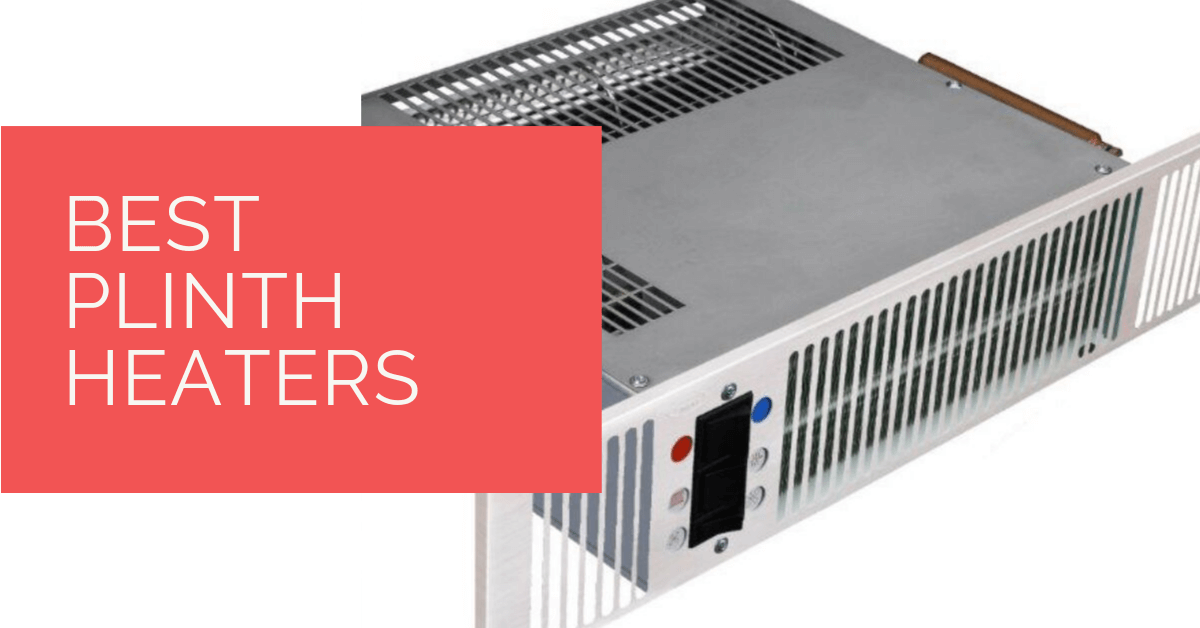
The SIA PLH1 2kW Stainless Steel Plinth Heater is the top pick for most kitchens. It delivers reliable 2kW output from a slimline unit that tucks neatly beneath most standard kitchen plinths, costs well under £60, and has earned one of the strongest review records in this category on Amazon.co.uk.
Plinth heaters solve a specific problem: kitchens are consistently the hardest room to heat in a UK home. Tiled floors, draughty sash windows, and the constant opening of exterior doors mean convection heat bleeds away before it builds up. A plinth heater sits at floor level, where heat is needed most, and pushes warm air directly into the room. The seven models below cover every situation from a simple plug-in electric unit to a permanently installed hydronic heater running from your central heating system.
The white-finish version of the PLH1. Same 2000W output and three heat settings — the right choice for kitchens with white or light-coloured units. Read more
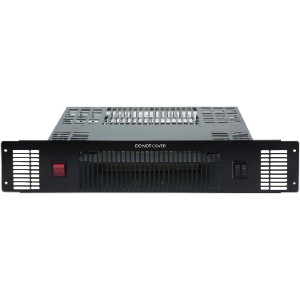
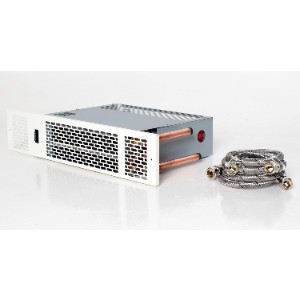
A++ rated hydronic plinth heater that connects to your central heating system. Dramatically cheaper to run than electric alternatives — the long-term value pick. Read more
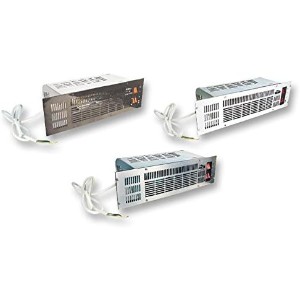
Highest-output electric plinth heater at 2400W. Includes thermostat, three power settings, and three interchangeable fascias (white, brown, stainless). Read more
Diamond 1.9kW Electric Plinth Heater with Timer, White Grille
White-grille version of the Diamond 1.9kW with 7-day timer and room thermostat. Same full programmable functionality — the right choice for light-coloured kitchens. Read more
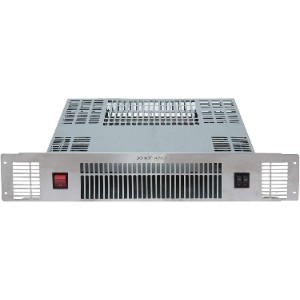
This is the best electric plinth heater you can buy right now. The SIA PLH1 runs at 2000W, slots into any plinth with a 98mm-high opening, and comes with three heat settings: cool fan, warm, and hot. It works entirely independently of your central heating, so you can warm the kitchen on a cold morning without having the whole system running. The stainless steel front grill is 10cm high and 50cm wide, discreet enough to blend into most kitchens.
The controls sit on the front face of the unit and are large enough to operate with your foot, which matters when you don’t want to crouch on a tiled floor before your first coffee. No remote control is included, but you can wire the SIA PLH1 to a smart plug to add voice control or app scheduling through Alexa or Google Home. The 1.5-metre cable gives you decent flexibility in positioning.
With over 4.6 stars across hundreds of reviews, the PLH1 has an unusually consistent customer satisfaction record for a heater in this price range. Most buyers report it heats a standard-sized kitchen noticeably faster than a fan heater of the same wattage because the heat output stays close to floor level rather than immediately rising to the ceiling. The unit comes without a plug fitted, so you’ll either need to wire it yourself or have an electrician do it, but this is standard for hardwired kitchen appliances in the UK.
If your kitchen has silver or stainless steel fixtures, this is the obvious choice. If you have white or dark units, the SIA PLH3 and PLH2 below offer the same core performance in matching finishes.
Features
2000W output with three heat settings (cool fan, warm, hot)
Slimline 100H x 500W x 225D mm body
98mm plinth cutout height required
1.5m power cable, supplied without plug
Overheat protection with auto cut-off
Compatible with smart plugs for remote control
Pros:
Excellent 4.6-star rating from a large number of verified reviews
Heats independently of central heating — no plumber needed
Subtle stainless steel grill suits most kitchen styles
2. Diamond 1.9kW Electric Plinth Heater with 7-Day Timer
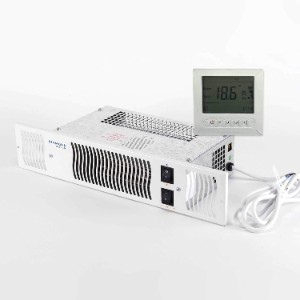
If you want a plinth heater you can genuinely set and forget, this is the one to buy. The Diamond 1.9kW is an electric plinth heater with a fully programmable 7-day timer and a room thermostat built in. You set the temperature you want and the times you want it, and the heater manages itself from there. In practice, this means a warm kitchen waiting for you every morning without touching the controls.
The separate control unit can be installed at worktop height on the wall rather than on the heater itself. This is a significant practical advantage: you’re not crouching down to adjust settings, and it looks cleaner in the kitchen. The heater runs at either 950W or 1900W depending on how much warmth is needed. The thermostat will switch between these automatically to maintain your target temperature, which keeps running costs lower than a simple on/off heater that blasts full power until you switch it off.
The 3-metre power cable is notably generous and gives you real flexibility in positioning relative to the socket. The front grill is available in stainless steel and white versions, so you can match your kitchen. Running costs depend on your tariff, but because the thermostat prevents the heater running unnecessarily, many users report noticeably lower bills compared to running a basic 2kW model at full power.
Features
1900W output with 950W and 1900W settings
Integrated 7-day programmable timer
Room thermostat with wall-mountable control panel
3m power cable for flexible positioning
Stainless steel front grill (white version also available)
Overheat protection
Pros:
7-day timer and thermostat prevent energy waste
Wall-mounted control panel means no bending down
3m cable gives much more positioning flexibility
Two power settings suit varying room sizes and conditions
Cons:
More expensive than a basic plinth heater
Timer programming is fiddly until you’re familiar with it
2. Diamond 1.9kW Electric Plinth Heater with 7-Day Timer
If you want a plinth heater you can genuinely set and forget, this is the one to buy. The Diamond 1.9kW is an electric plinth heater with a fully programmable 7-day timer and a room thermostat built in. You set the temperature you want and the times you want it, and the heater manages itself from there. In practice, this means a warm kitchen waiting for you every morning without touching the controls.
The separate control unit can be installed at worktop height on the wall rather than on the heater itself. This is a significant practical advantage: you’re not crouching down to adjust settings, and it looks cleaner in the kitchen. The heater runs at either 950W or 1900W depending on how much warmth is needed. The thermostat will switch between these automatically to maintain your target temperature, which keeps running costs lower than a simple on/off heater that blasts full power until you switch it off.
The 3-metre power cable is notably generous and gives you real flexibility in positioning relative to the socket. The front grill is available in stainless steel and white versions, so you can match your kitchen. Running costs depend on your tariff, but because the thermostat prevents the heater running unnecessarily, many users report noticeably lower bills compared to running a basic 2kW model at full power.
Features
1900W output with 950W and 1900W settings
Integrated 7-day programmable timer
Room thermostat with wall-mountable control panel
3m power cable for flexible positioning
Stainless steel front grill (white version also available)
Overheat protection
Pros:
7-day timer and thermostat prevent energy waste
Wall-mounted control panel means no bending down
3m cable gives much more positioning flexibility
Two power settings suit varying room sizes and conditions
Cons:
More expensive than a basic plinth heater
Timer programming is fiddly until you’re familiar with it
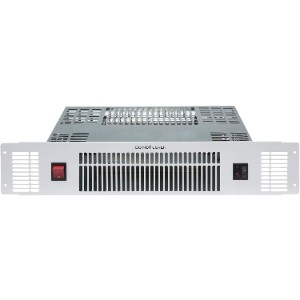
The SIA PLH3 is the white version of the PLH1 reviewed above. The output, heat settings, and overall build are identical, but the white front grill makes it the right choice for kitchens with white or light-coloured units. If your kitchen is fitted with white cabinetry — which covers the majority of UK kitchens — the PLH3 blends in rather than drawing the eye the way a stainless steel panel would.
Like the PLH1, it has three heat settings including a fan-only mode, a 1.5-metre cable, and overheat protection. The controls sit on the front panel and are easy to operate without fully crouching. It fits any plinth with a 98mm cutout and comes supplied without a plug, so installation requires basic wiring work.
The PLH3 has the same strong review profile as the PLH1. The only meaningful difference is the finish, and for kitchens where white is the dominant colour, it’s the better looking of the two options.
Features
2000W output with cool fan, warm, and hot settings
White front grill to match light-coloured kitchen units
Slimline body: 100H x 500W x 225D mm
1.5m power cable, supplied without plug
Overheat protection with auto cut-off
Pros:
White finish suits most UK kitchens with light cabinetry
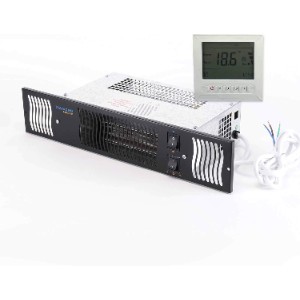
Black kitchen units are increasingly common in UK homes, and the SIA PLH2 was designed specifically for them. The dark front grill disappears into a black or graphite plinth in a way no stainless or white panel ever could. Everything else is identical to the PLH1: 2000W output, three heat settings, fan-only mode, 1.5m cable, and no plug supplied.
It’s slightly more affordable than the PLH1 and PLH3, making it a reasonable budget choice for dark kitchens where matching the finish matters. Don’t buy it purely on price if your kitchen is white or stainless — it’ll look out of place. But for the growing number of UK kitchens with black or anthracite units, it’s a no-brainer.
Features
2000W output with three heat settings
Black front grill for dark-coloured kitchens
100H x 500W x 225D mm body
1.5m cable, no plug supplied
Overheat protection
Pros:
Black finish is the right choice for dark kitchen units
Good value — often the most affordable SIA plinth option
Same core performance as PLH1 and PLH3
Cons:
No thermostat or timer
Only worth considering if your units are dark — otherwise choose PLH1 or PLH3
If your home has gas central heating and you want the most energy-efficient plinth heater available, this is it. The Thermix KPH-1500 Classic is a hydronic plinth heater: it connects to your central heating pipework and uses the hot water already flowing through your system to warm the kitchen. The only electricity it draws is to power the fan, not to generate heat, which gives it an A++ energy rating.
It has two settings: a standard mode and a boost mode for colder days. A built-in thermostat prevents the fan from switching on until the water in the pipes reaches 38°C, so it won’t blow cold air into the kitchen when the boiler is just warming up. Once the system is running properly, it can heat rooms up to 27 square metres. The noise level is low — around 32dB on standard speed and 37dB on boost — roughly equivalent to a quiet refrigerator.
Installation requires a plumber to connect the heater to your central heating flow and return pipes. That’s an added cost upfront, but once it’s in, the running cost is negligible because you’re using heat your boiler was already generating. If you plan to keep the house for several years and want a set-and-forget solution that doesn’t add meaningfully to your electricity bill, the Thermix is the long-term value pick.
Features
1500W hydronic output using central heating hot water
A++ energy rating
Two speed settings: standard (32dB) and boost (37dB)
Built-in thermostat prevents fan activating below 38°C
Heats rooms up to 27m²
Connects to standard central heating pipework
Pros:
A++ energy rating — the most efficient type of plinth heater
Very quiet at both speed settings
Set-and-forget once connected to central heating
Covers larger rooms than most electric plinth heaters
The Eterna PFH2400 is the highest-output electric plinth heater on this list at 2400W, and it includes a thermostat, three heat settings (800W, 1600W, and 2400W), and three interchangeable front fascias in white, brown, and stainless steel. That last feature is unusual: most plinth heaters force you to choose a finish at purchase, but the Eterna ships with all three so you can match whatever kitchen you install it in or switch later if you redecorate.
The thermostat prevents it running at full power constantly, which keeps running costs more reasonable than the raw 2400W figure suggests. The four rubber feet keep it stable in the plinth cavity, and the 1.5-metre pre-wired cable comes with illuminated switches so you can see the settings at a glance in a dark corner of the kitchen. Three colour-matched screw sets are included for each fascia.
This is the pick for larger or particularly draughty kitchens where a 2000W model struggles to keep up. If your kitchen loses heat quickly through original sash windows, a stone-flagged floor, or a frequently used back door, the extra 400W of headroom makes a real difference. For well-insulated modern kitchens, the SIA PLH1 is probably sufficient, but for older properties the Eterna earns its place.
Features
2400W output with 800W, 1600W, and 2400W settings
Built-in thermostat
Three interchangeable fascias: white, brown, stainless steel
1.5m pre-wired cable with illuminated switches
Four rubber feet included
Three colour-matched screw sets
Pros:
2400W is the highest output electric plinth heater available
Three fascias included so you can match any kitchen finish
Built-in thermostat prevents energy waste
Three power settings give good control over output and running cost
Cons:
More expensive than basic electric plinth heaters
Higher wattage means higher running cost at full power
7. Diamond 1.9kW Electric Plinth Heater with Timer, White Grille
This is the white grille variant of the Diamond 1.9kW reviewed above as product 2. The specification is identical — 950W and 1900W settings, 7-day programmable timer, room thermostat, wall-mountable control panel, and 3-metre cable — but with a white front panel instead of stainless steel. If you want the convenience of thermostatic control and timed heating but your kitchen has white units, this is the version to choose.
The practical considerations are the same as the black version: timer programming takes a bit of patience to set up initially, but once it’s configured to your routine, the heater manages itself. The wall-mounted controller is a genuine quality-of-life improvement and both versions carry it as standard.
Features
1900W output with 950W and 1900W settings
White front grille for light-coloured kitchens
7-day programmable timer and room thermostat
Wall-mountable separate control panel
3m power cable
Pros:
White finish matches light cabinetry better than stainless
Full thermostatic and timer functionality at this price
Wall-mounted controller eliminates the need to crouch
Cons:
Timer setup is fiddly initially
Premium price compared to basic electric plinth heaters
Electric plinth heaters are cheaper to buy and easier to install — plug-in or simple wiring, no plumber needed
Hydronic plinth heaters are the most efficient option but require a plumber to connect them to your central heating system
A standard UK kitchen plinth cutout is approximately 98mm high and 500mm wide — always measure yours before buying
2000W is sufficient for most standard kitchens; draughty or large kitchens benefit from 2400W or a hydronic model
At 25p per kWh, a 2000W electric plinth heater costs 50p per hour to run — thermostat and timer functions significantly reduce actual running time
The SIA range (PLH1, PLH2, PLH3) offers the best balance of price, reliability, and review quality for straightforward electric plinth heating
What Is a Plinth Heater?
A plinth heater is a compact fan heater designed to fit inside the cavity beneath kitchen or bathroom cabinets. The plinth — the strip of material running along the base of kitchen units between the floor and the cabinet door — typically hides a 10cm gap that would otherwise be dead space. Plinth heaters slot into this gap and use a fan to push warm air out at floor level, where it can circulate effectively throughout the room.
Unlike a wall-mounted panel heater or a freestanding radiator, a plinth heater is completely invisible when installed. It doesn’t take up any worktop, wall, or floor space, and adds no visible intrusion to the kitchen. The output is typically heard rather than seen: a low fan hum and warm air flowing at floor level.
They’re used almost exclusively in kitchens, bathrooms, and utility rooms — spaces that tend to be colder than the rest of the house because of stone or tile floors, external walls, and heavy ventilation. Hallways and conservatories with suitable cabinetry can also benefit from them.
How Do Plinth Heaters Work?
An electric plinth heater works by drawing cool air in through the back of the unit, passing it over an electric heating element, and then pushing the warmed air out through the front grill at floor level. The whole process is fan-assisted, which means the air moves quickly and begins warming the room within a minute or two of switching on.
A hydronic plinth heater works differently. Instead of an electric element, it contains a heat exchanger connected to your central heating pipework. Hot water from the boiler flows through this exchanger, and the fan then blows air across the warm surfaces and out into the room. The heater itself draws no electrical power for heating — only for the fan — which is why hydronic models are significantly cheaper to run once installed.
Both types mount inside the plinth cavity and expel air through a front grille, so the visible result in the kitchen is the same. The difference is in how they generate and pay for the heat.
Benefits of Using Plinth Heaters
The single biggest benefit is the location of the heat output. Hot air rises, which means conventional ceiling-mounted or wall-mounted heaters often heat the top third of the room disproportionately. A plinth heater pushes warm air out at floor level, where it rises naturally through the room and creates a more even temperature throughout. In kitchens with cold tile or stone floors, this difference is immediately noticeable.
Space efficiency is the other major advantage. A plinth heater occupies space that would otherwise be completely unused. It doesn’t displace a chair, block a walkway, or interrupt the visual flow of kitchen units the way a freestanding or wall-mounted heater would. For small kitchens where every square centimetre matters, this is a genuine practical benefit rather than a marketing point.
Hydronic models specifically offer the additional advantage of running costs that are a fraction of electric alternatives. Because the heat comes from the central heating system rather than an electric element, the only running cost is the electricity consumed by the small fan motor, typically just a few watts. Over a heating season, the difference in running cost between a 2000W electric plinth heater and a hydronic equivalent is substantial.
Things to Keep in Mind Before Buying
Measure your plinth before choosing a model. The standard cutout for most UK plinth heaters is 98mm high and 460–500mm wide, but older kitchens may have smaller plinths, and high-end kitchen units sometimes have different dimensions. A heater that doesn’t fit the opening correctly will leave visible gaps or require expensive modifications to the cabinetry.
Decide between electric and hydronic before looking at specific models. If you don’t have central heating, or if you want to heat the kitchen independently of the rest of the house, an electric model is the only viable option. If you have gas central heating and plan to stay in the property long-term, a hydronic model will save money over time despite the higher installation cost. If you’re renting or uncertain about the long-term, electric is easier to remove and take with you.
Consider whether you want a thermostat and timer. Basic electric plinth heaters run at full power until switched off. This is fine if you’re in the kitchen and can monitor the temperature, but it wastes energy if you forget to turn it off or if the room reaches temperature quickly. A thermostat maintains a target temperature efficiently, and a timer automates the whole thing. The Diamond 1.9kW models with their 7-day timers essentially run themselves once set up.
Check the power supply situation. Plinth heaters are typically supplied without a plug in the UK, which means they need to be wired into a fused spur or connected by an electrician. Hydronic models additionally require a plumber to make the pipe connections. Factor both costs into your budget if you’re comparing electric and hydronic on price alone.
Types of Plinth Heaters
Electric plinth heaters are the most common type and the easiest to install. They run from a mains electrical connection and can operate any time regardless of whether central heating is active. Modern electric plinth heaters typically have multiple heat settings and a fan-only mode for summer use. The SIA range — PLH1 (stainless), PLH2 (black), PLH3 (white) — represents the most widely reviewed and recommended electric options currently on Amazon.co.uk, with consistent 4.5 to 4.6-star ratings across the range.
Electric plinth heaters with thermostats and timers sit above the basic range. The Diamond 1.9kW models reviewed above add a 7-day programmable timer, a room thermostat, and a wall-mounted control panel. For kitchens used on a predictable daily schedule — a warm kitchen at 7am Monday to Friday, for instance — this type of heater effectively replaces a conventional radiator in the kitchen without any of the space or aesthetic drawbacks.
Hydronic plinth heaters connect to the central heating system. The Thermix KPH-1500 reviewed above is the best-reviewed option on Amazon.co.uk. These models require professional installation but reward the investment with an A++ energy rating and near-silent operation. They’re the right choice for households with gas central heating who plan to stay in the property for at least three to five years, because the installation cost is offset by running cost savings over time.
High-output electric plinth heaters offer more than the standard 2000W. The Eterna PFH2400 at 2400W is the highest-wattage option commonly available on Amazon.co.uk. It suits older properties with high heat loss, very large kitchen-diner spaces, or rooms with particularly cold stone or concrete floors where 2000W simply doesn’t provide enough output to feel comfortable.
Case Study: Heating a Victorian Terrace Kitchen Year-Round
Background
A homeowner in Sheffield with a Victorian terraced house struggled to maintain a comfortable temperature in their north-facing kitchen throughout autumn and winter. The kitchen had original quarry tile floors, a single-glazed window above the sink, and an external door that was opened frequently when the family had dogs to let in and out. A previous 2000W wall-mounted panel heater had been removed during a kitchen renovation and not replaced, leaving only the central heating radiator — which sat behind the kitchen door and was partially blocked — to heat the room.
Project Overview
The challenge was finding a heating solution that didn’t require wall space, didn’t disrupt the newly fitted kitchen, and worked quickly enough to heat the kitchen to a comfortable temperature within a few minutes of arrival in the morning. Running costs also needed to be reasonable given the frequency of use. A plinth heater was identified as the ideal solution because the kitchen had standard 98mm plinths beneath new-build kitchen units installed during the renovation.
Implementation
On our recommendation, they installed the Diamond 1.9kW with 7-day timer in the kitchen plinth below the sink unit, with the control panel mounted at eye level on the wall beside the fridge. An electrician wired it into a dedicated fused spur. The 7-day timer was programmed to switch on at 6:30am on weekdays and 7:30am at weekends, with the thermostat set to 19°C. The heater would then maintain that temperature automatically, switching between 950W and 1900W modes as needed throughout the morning.
Results
The kitchen was noticeably warmer within three to four minutes of the heater switching on, with the floor-level air output effectively addressing the cold quarry tiles that had previously made the kitchen uncomfortable to stand in with bare feet. The 7-day timer eliminated the previous habit of switching on the heater when already cold and waiting. Monthly electricity costs for the kitchen heating ran to approximately £18 during a cold January, compared to an estimated £30 to £35 for continuous use of the previous wall-mounted heater. The wall-mounted Diamond control panel was highlighted as a key practical advantage: adjusting the temperature required no bending, and the illuminated display was easy to read across the kitchen.
Expert Insights From Our Heating Engineers About Plinth Heaters
One of our senior heating engineers with over 22 years of experience in domestic heating installation and kitchen fitting shared their observations on plinth heater selection and installation:
“The most common mistake I see is people buying a plinth heater without measuring the cavity first. The standard 98mm cutout fits most modern UK kitchens, but older fitted kitchens from the 1990s and early 2000s sometimes have shallower plinths, and bespoke or German-engineered kitchen units can have different dimensions entirely. Measure height, width, and depth before you order anything. A few millimetres either way can make installation awkward or impossible without modification.”
“On the electric versus hydronic question: if someone has gas central heating and they’re asking me about plinth heaters, I always recommend hydronic unless they specifically need independent kitchen heating — for a home office setup or because the kitchen is kept at a different temperature from the rest of the house. The running cost difference is significant over a heating season, and installation is a few hours of plumbing work that pays for itself within two or three winters. The myth that hydronic is complicated or problematic is outdated — modern units are straightforward to fit into standard two-pipe systems.”
“For electric models with timers: take the time to programme it properly in the first week. I’ve seen plenty of homeowners spend good money on a thermostatic plinth heater and then use it in manual mode because they couldn’t be bothered with the initial setup. The Diamond range has a slightly fiddly controller but the instructions are clear enough if you sit down with them for twenty minutes. Once it’s set, you genuinely don’t touch it again for the whole winter.”
Frequently Asked Questions
Are plinth heaters expensive to run?
At approximately 25p per kWh, a 2000W electric plinth heater costs 50p per hour at full power. However, most electric plinth heaters with thermostats don’t run continuously — they cycle on and off to maintain a target temperature, so actual running time is less than continuous use. A hydronic plinth heater costs only the electricity to power its fan (typically 30 to 50 watts), making it dramatically cheaper to run than an electric equivalent for equivalent heat output.
Can I install a plinth heater myself?
Electric plinth heaters can be installed by a competent DIYer with basic electrical knowledge, though most are supplied without a plug and require connection to a fused spur — something many homeowners prefer to leave to an electrician. Hydronic plinth heaters must be installed by a qualified plumber who can connect the unit to the central heating pipework correctly. Incorrect hydronic installation can affect system pressure and boiler performance, so professional fitting is strongly recommended.
What size plinth heater do I need?
For a standard UK kitchen of 10 to 15 square metres with reasonable insulation, a 2000W electric plinth heater or a 1500W hydronic model is sufficient. Larger kitchens, open-plan kitchen-diners, or rooms with significant heat loss (quarry tile floors, single glazing, external walls) benefit from 2400W electric or a hydronic model with boost mode. As a rough guide, allow 100W per square metre for a well-insulated kitchen and add 20 to 30 per cent for older properties.
Do plinth heaters fit all kitchens?
Most modern UK kitchens have a standard plinth with a 98mm high cutout, which is what the majority of plinth heaters on the market require. However, older kitchens, bespoke kitchens, and some continental European kitchen brands may have different plinth dimensions. Always measure the height, width, and depth of your plinth cavity before purchasing. If the cavity is too shallow, the heater may not fit flush, and if the height is less than 98mm, most standard models won’t fit at all.
Can a plinth heater heat a whole kitchen?
Yes, for most standard-sized UK kitchens. A 2000W electric plinth heater can comfortably maintain a temperature in a 12 to 15 square metre kitchen even in mid-winter. Larger kitchens or those with significant heat loss may need a 2400W model or a hydronic plinth heater. In very cold or draughty kitchens, a plinth heater works best as the primary heat source supplemented by the central heating radiator rather than replacing the radiator entirely.
What is a hydronic plinth heater?
A hydronic plinth heater connects to your central heating system’s hot water pipes. Instead of an electric element, it contains a heat exchanger through which your central heating water flows. A fan blows air across this warm exchanger and into the room. Because the heat comes from the boiler rather than electricity, the only electrical consumption is the fan motor — typically 30 to 50 watts. Hydronic heaters are much cheaper to run than electric models but require a plumber to install them and can only operate when the central heating is on.
Which is the best electric plinth heater?
The SIA PLH1 2kW Stainless Steel is the best electric plinth heater for most people. It delivers reliable 2000W output, has a fan-only mode for summer, fits the standard 98mm plinth cutout, and has consistently strong reviews on Amazon.co.uk. If you want thermostat and timer functions, the Diamond 1.9kW range is the best-equipped option. If output is the priority in a large or draughty kitchen, the Eterna PFH2400 at 2400W is the highest-power option available.
Summing Up
The SIA PLH1 2kW Stainless Steel Plinth Heater is the best plinth heater for most UK kitchens. It’s straightforward, well-reviewed, affordable, and fits the standard plinth cutout without any modification. If your kitchen has white units, the SIA PLH3 is the same product in a matching finish. If you want thermostat and timer control, the Diamond 1.9kW range covers both the stainless and white versions with full programmable functionality. For larger or older kitchens with significant heat loss, the Eterna PFH2400 at 2400W provides the extra output headroom they need. And if you have gas central heating and plan to stay in the property, the Thermix KPH-1500 Hydronic is the most efficient choice by a considerable margin once installation costs are factored over a few winters.
This website uses cookies to improve your experience while you navigate through the website. Out of these cookies, the cookies that are categorized as necessary are stored on your browser as they are as essential for the working of basic functionalities of the website. We also use third-party cookies that help us analyze and understand how you use this website. These cookies will be stored in your browser only with your consent. You also have the option to opt-out of these cookies. But opting out of some of these cookies may have an effect on your browsing experience.
Necessary cookies are absolutely essential for the website to function properly. This category only includes cookies that ensures basic functionalities and security features of the website. These cookies do not store any personal information.