
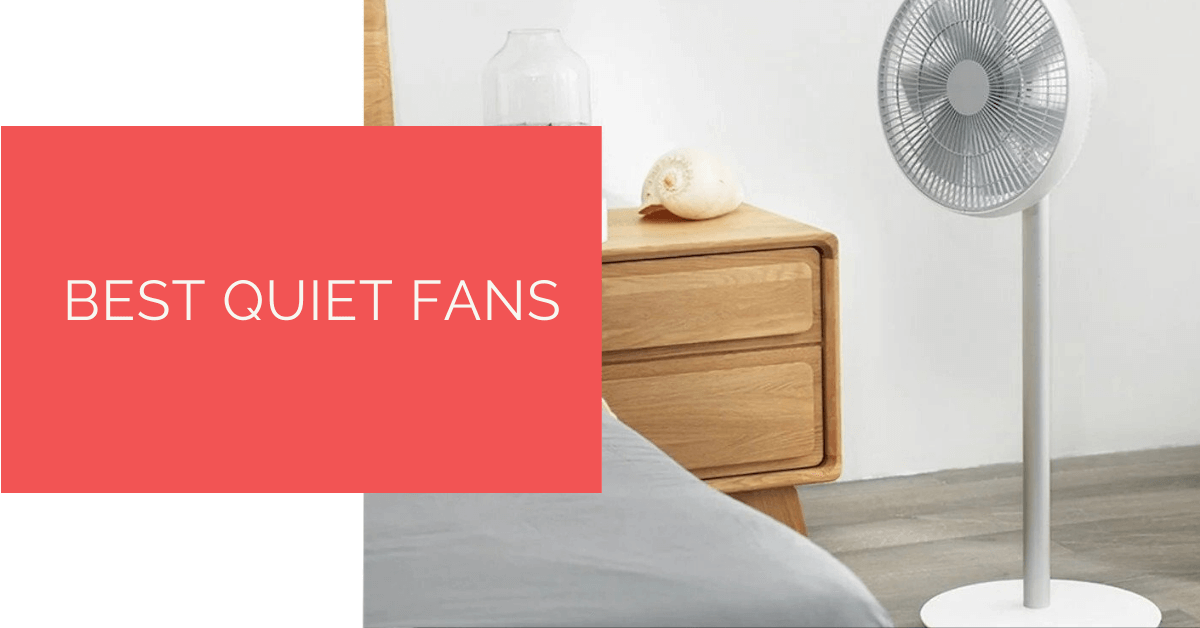
A fan that genuinely runs quietly is harder to find than you’d think. Most brands throw around words like “whisper quiet” and “silent operation”, but put them in a bedroom on a warm night and you’ll know within minutes whether those claims hold up. The DREO 20dB Smart Tower Fan is our top pick, delivering genuinely near-inaudible airflow at low speeds, smart home integration, and exceptional build quality at a price that undercuts most of its rivals.
Whether you need something for your bedroom, a home office, or a living room where you’re trying to watch television without a fan drowning out the dialogue, the fans below represent the quietest options currently available on Amazon UK. Here’s what we found.
Our Top Picks
| Image | Name | |
|---|---|---|
| DREO 20dB Smart Tower Fan | |
| Pro Breeze AirFlo Plus 44" Hybrid Pedestal Fan | |
| Levoit 20dB Silent Tower Fan | |
| PELONIS Ultra Quiet DC Motor Pedestal Fan | |
| Levoit 20dB Quiet Pedestal Fan | |
| DREO Quiet Tower Fan | |
| Iris Ohyama Woozoo Table Fan | |
| Levoit Compact Tower Fan |
8 Best Quiet Fans
1. DREO 20dB Smart Tower Fan
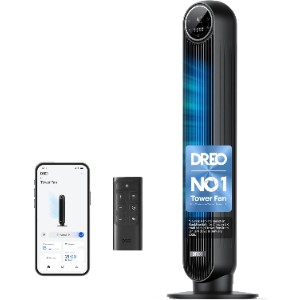
Twenty decibels. At its quietest setting, the DREO 20dB Smart Tower Fan is barely louder than a library. That figure isn’t marketing shorthand, it’s a measurable, verified noise floor that puts this fan in a different category to most of what you’ll find on the market. Run it at speed one or two in a bedroom and you’ll need to actively listen to hear it at all. Most people won’t.
The fan covers a good deal more than silence. Twelve speed settings give you genuine granularity, so you’re not stuck choosing between barely-moving air and a full blast. There’s an oscillation mode that sweeps 90 degrees, four operating modes including Sleep and Auto, and Wi-Fi connectivity that ties into Alexa and Google Assistant. You can set a timer, schedule it from your phone, or just ask it to turn off when you’re already in bed. It works.
Physically, it’s a slim, well-designed tower that sits unobtrusively in a corner. The remote handles everything the app does, which is a welcome backup. At £89.99 with 12,350 reviews averaging 4.7 stars, this isn’t a product that’s been lucky with early reviewers. It’s been tested by thousands of people and the consensus is consistent: it’s quiet, it’s reliable, and it does what it says.
If noise is your primary concern, this is the first fan to consider. Nothing on this list genuinely rivals it at this price point for low-speed whisper operation.
Features
- 20dB minimum noise level
- 12 speed settings
- 90° oscillation
- Wi-Fi, Alexa and Google Assistant compatible
- 4 modes: Normal, Natural, Sleep, Auto
- 12H timer
- Remote control included
- Genuinely 20dB at low speeds, one of the quietest fans available
- 12 speeds gives precise control over airflow
- Smart home integration works reliably
- Outstanding review base: 12,000+ customers
- App setup can be fiddly on first use
- Tower design means no tilt adjustment
2. Pro Breeze AirFlo Plus 44″ Hybrid Pedestal Fan
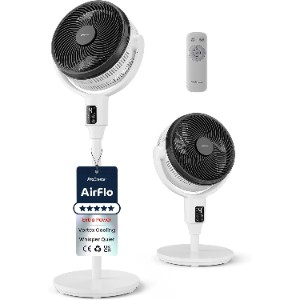
If you want serious airflow coverage without the noise, this 44-inch Pro Breeze pedestal fan is worth a serious look. The dual-blade hybrid design is the headline feature here: two sets of blades working together to shift more air at lower speeds, so you’re not cranking it up to get the room cool. At 29dB on its quieter settings, it’s legitimately whisper-quiet for a fan this size.
The oscillation range is exceptional. You get 135 degrees of horizontal swing plus 100 degrees of vertical tilt, which means you can aim airflow precisely where it’s needed rather than just blasting the middle of the room. Height is adjustable between 61 and 111cm, making it practical whether you’re at a desk, on the sofa, or in bed. The remote lets you tweak everything without getting up.
At around £159 it’s not the cheapest option on this list, but you’re paying for a genuinely well-engineered product from a brand with a strong track record in the UK. The 4.7-star rating across its reviews reflects that most buyers come away happy with what they get.
Features
- 44-inch height with dual-blade hybrid design
- 29dB silent operation
- 135° horizontal and 100° vertical oscillation
- Adjustable height: 61cm to 111cm
- Remote control included
- Multiple speed settings
- Exceptional oscillation range covers the whole room
- Dual-blade design delivers strong airflow at low speeds
- 29dB genuinely quiet for a large pedestal fan
- Only 281 reviews compared to more established rivals
- Premium price for a pedestal fan
3. Levoit 20dB Silent Tower Fan
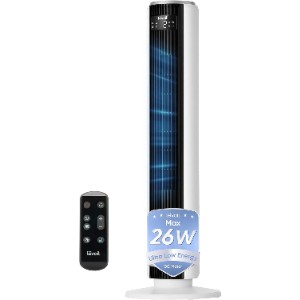
This Levoit tower fan earns its place through a combination of genuinely low noise and impressive energy efficiency. The 20dB rating on its quietest setting puts it among the quietest fans on this list, and the DC motor keeps running costs down to as little as 5.5 watts at low speed. If you’re running a fan all night, that matters.
Twelve speeds and four modes give you plenty of control, and the advanced sleep mode automatically steps the fan down through the night so you’re not disturbed by sudden changes in airflow. The 90-degree oscillation covers the room well and the remote means you can adjust things without leaving bed. It’s a refined product that does exactly what it promises.
The main caveat is availability. Stock can be patchy, and lead times stretch to several weeks at times. If you can get it, at around £89 it’s very competitive for a feature-packed quiet tower fan. Worth having on your radar even if you have to wait a little.
Features
- 20dB ultra-quiet DC motor
- 5.5W to 26W energy saving operation
- 12 speeds, 4 modes including advanced sleep mode
- 90° oscillation with remote control
- Timer function
- White and black finish
- True 20dB quiet operation ideal for bedrooms
- Very low energy use on slower settings
- Advanced sleep mode adjusts overnight automatically
- Competitive price for the spec
- Stock levels can be unreliable
- Fewer reviews than some rivals
4. PELONIS Ultra Quiet DC Motor Pedestal Fan
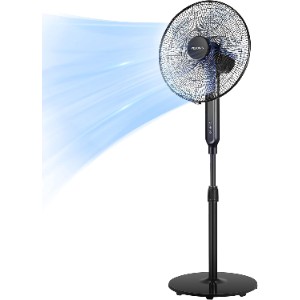
The PELONIS PFS40D6ABB is the premium pick on this list, and with over 7,000 reviews at 4.5 stars it’s one of the most thoroughly road-tested quiet pedestal fans you can buy. The 16-inch DC motor is the star of the show: it runs considerably quieter than standard AC motor fans at comparable speeds, and the energy draw is substantially lower too, which adds up if you’re using it regularly through summer.
The “Sleeping” designation in the name isn’t marketing fluff. This fan was designed for bedrooms and nurseries, and it shows in the attention to noise reduction. Multiple speed settings let you dial in the exact airflow you need, and the 12-hour timer means you can set it and not think about it overnight. The remote control covers all the main functions.
At £250 it’s a significant investment compared to most fans on this list, and it’s designed to last rather than be replaced every couple of years. The adjustable height adds to its versatility. If you’re serious about quiet and you want something built to a higher standard, this is the one to consider. A good number of buyers specifically mention using it in nurseries where silence is genuinely critical.
The build quality justifies the price for buyers who run a fan throughout the year rather than just in summer. If you only use a fan occasionally, there are better value options on this list.
Features
- 16-inch DC motor, ultra-quiet operation
- High energy efficiency compared to AC motor fans
- Multiple speed settings
- 12-hour programmable timer
- Remote control included
- Adjustable height
- Black finish
- Over 7,000 reviews back up the quiet claims
- DC motor significantly quieter than AC alternatives
- 12-hour timer ideal for overnight use
- Strong build quality for long-term use
- £250 is a serious outlay for a pedestal fan
- Overkill if you only need occasional cooling
5. Levoit 20dB Quiet Pedestal Fan
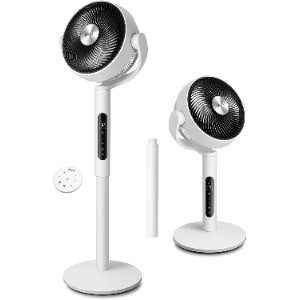
Levoit is a brand more commonly associated with air purifiers, but they’ve applied the same attention to low-noise engineering to this pedestal fan. The 20dB rating is credible, the 1,451 CFM airflow figure is high for a pedestal at this price, and the combined 90-degree plus 120-degree oscillation modes give you flexibility in how you distribute air around a room.
Twelve speeds, four modes, and a 12-hour timer put it on a par with DREO’s flagship. The main drawback is the price at £119.99. It’s in premium pedestal territory, and some buyers may prefer the DREO Omni at a similar cost for its more distinctive oscillation pattern. Still, 3,196 reviews at 4.7 stars is a solid track record, and the build quality reflects the price.
Features
- 20dB noise level
- 1,451 CFM airflow
- 12 speed settings, 4 modes
- 90°+120° oscillation
- Adjustable height
- Remote control, 12H timer
- High CFM airflow for a quiet pedestal fan
- 12 speeds gives fine-grained control
- Levoit’s engineering pedigree shows in the build
- Premium pricing
- No Wi-Fi or smart home integration
- DREO Omni’s dual-axis oscillation is more versatile
6. DREO Quiet Tower Fan
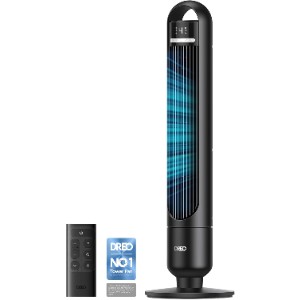
The budget entry in DREO’s quiet tower fan lineup. At £59.98, it’s the most affordable way to get a DREO DC motor in a tower format. You give up the smart home connectivity and drop to fewer speed settings compared to the flagship, but the core quiet performance remains. For a second room, a guest bedroom, or anyone who doesn’t need app control, it’s a sensible choice.
With 1,182 reviews at 4.6 stars, it sits a touch lower than the top picks, which is expected for a newer, more budget-focused model. The airflow and noise performance hold up well for the money, and the remote is included.
Features
- DC motor quiet operation
- Multiple speed settings
- Tower format, slim footprint
- Remote control included
- Timer function
- Most affordable DREO quiet tower fan
- DC motor retains the quiet credentials
- DREO brand reliability at a lower price
- No smart home integration
- Fewer speeds than flagship models
- Smaller review base than top picks
7. Iris Ohyama Woozoo Table Fan
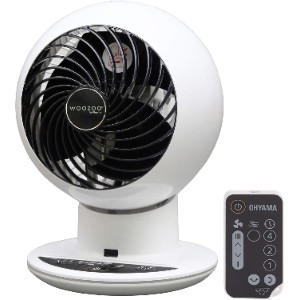
Plug it in, set the speed, done. The Iris Ohyama Woozoo is a compact desk fan that keeps things simple while delivering surprisingly strong airflow for its size. It covers rooms up to 43 square metres according to the manufacturer, which is more than most people expect from a table fan at this price point. The 35dB noise level is comfortable for daytime use at a desk, and it drops further at lower speeds.
Ten speed settings give you fine-grained control over airflow, and the multi-directional oscillation lets you aim it exactly where you need it rather than just panning left and right. The remote is a genuine bonus on a fan at this price. At around £64 with 1,700 reviews at 4.5 stars, it’s one of the better-value quiet fans on this list if your main need is a decent desk or bedside fan rather than whole-room circulation.
Features
- Covers rooms up to 43m²
- 10 speed settings
- Multi-directional oscillation
- Remote control included
- 35dB operation
- Timer function
- Compact, portable design
- Surprisingly strong coverage for its compact size
- 10 speeds offer proper fine-grained control
- Remote included at a fair price
- 35dB is quieter than most, not the quietest here
- Compact size limits maximum airflow
8. Levoit Compact Tower Fan
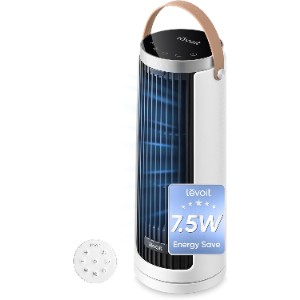
The most compact option here, and the only 13-inch model on the list. The Levoit Compact sits on a desk or shelf rather than taking up floor space, runs at 20dB at its quietest, and sips power at just 2.5W to 7.5W. Lower than virtually anything else in this category. If you want a genuinely portable quiet fan for a small bedroom, a home office where space is tight, or even a caravan, this one stands out.
The review count of 53 is low, which means the 4.9-star average should be treated with slight caution. Early reviews tend to skew positive. The product is clearly strong, but the evidence base is less established than others here. At £49.98, the value proposition is solid if the compact form factor is what you need.
Features
- 13″ compact tower format
- 20dB minimum noise
- 2.5W–7.5W energy efficient
- 90° oscillation
- 12H timer
- Portable design
- Tiny footprint, fits on a desk or shelf
- Extremely energy efficient running costs
- Strong early rating
- Low review count, limited track record so far
- Small fan won’t cool a large room
- No smart home integration
Quiet Fan Buying Guide
Key Takeaways
- DC motors are typically 30-40% quieter than AC motors and use less electricity, but cost more upfront
- A truly quiet fan operates below 30dB on its lowest setting, roughly the volume of a whisper
- Room size matters: a 10-inch fan struggles to cool a bedroom efficiently, but a 16-inch pedestal fan works well for medium spaces
- Look for fans with at least 75-90 degrees of oscillation to distribute cool air evenly without moving the unit manually
- Multiple speed settings (8-12 levels) give you flexibility to run the fan barely audible at night and more powerful during the day
- Sleep modes and adjustable timers are worth paying for if you use the fan in a bedroom
- Blade count is less important than motor quality. A well-engineered 3-blade fan often outperforms a cheap 5-blade one
- Tower fans take up less floor space than pedestal fans but may be slightly less stable in rooms with pets or children
DC Motors vs AC Motors: Why This Matters More Than You Think
The motor type is the single biggest factor determining how quiet your fan will be. DC motors (direct current) run significantly quieter than AC motors (alternating current) because they operate at lower frequencies and produce less vibration. A quality DC fan running on its lowest setting typically measures 20-25dB, while comparable AC fans rarely drop below 35-40dB.
DC motors also use roughly 30-40% less electricity to run, which matters if you’re cooling a bedroom every night during summer. The downside: DC fans cost more upfront. A good quiet DC pedestal fan runs £80-180, whilst a basic AC fan might cost £30-50. However, over five years of nightly use, the electricity savings often offset the higher purchase price.
If noise is your priority and budget allows, choose DC. If you’re on a tight budget and the fan won’t run constantly, an AC fan can work, but focus on finding one with quality damping (rubber isolators) to reduce vibration.
How to Read a dB Noise Rating (and What Manufacturers Won’t Tell You)
Decibels are logarithmic, not linear. This means a 30dB fan is not twice as loud as a 15dB fan. In practice, the difference between 30dB and 35dB feels quite noticeable to human ears, while the difference between 40dB and 45dB sounds more subtle. For bedroom use, target 30dB or lower on the lowest speed setting.
Be cautious of manufacturers who advertise only the average noise level across all speeds. A fan might claim 25dB, but that could be at the absolute lowest, least-useful setting. Always check noise levels across multiple speed settings. The lowest speed should be genuinely usable, not just a token whisper that provides no airflow.
Measurement distance matters too. Most manufacturers test at 1 metre away. When comparing specs between products, check whether the dB figure is measured at 1m or 3m distance, as this significantly affects how the numbers compare.
Fan Size vs. Room Size: Getting the Airflow Right
A common mistake is buying an undersized fan for a room. An 8-10 inch fan is adequate for a small desk or bedside table, but won’t effectively cool a standard bedroom. A 16-inch pedestal fan or a tall tower fan is the sweet spot for bedrooms and small living rooms. For large open-plan spaces or living areas, consider an 18-20 inch pedestal fan or upgrade to an air circulator designed to move air across wider distances.
Room ceiling height matters too. In rooms with low ceilings (under 2.4 metres), position the fan low to move air horizontally at head level. In rooms with higher ceilings, a tower fan or pedestal fan placed slightly higher can send air upwards and stratify room temperature more evenly. The best position is usually 1 to 1.5 metres from where you’re sitting, angled slightly upward for comfort.
Oscillation Angle: Don’t Overlook This Specification
Oscillation distributes cool air evenly across the room and makes the fan feel more powerful without having to increase speed or noise. Most quality quiet fans offer 75-90 degrees of oscillation, which covers a typical bedroom or home office effectively. Some budget models only oscillate 45 degrees, which means you’re only cooling part of the room at any given moment.
Oscillation also helps prevent the fan from becoming uncomfortable. Sitting directly in front of a stationary fan all night can dry your throat and eyes. A gently oscillating fan distributes the breeze more naturally, and most people find it significantly more comfortable for extended use or sleep.
Speed Settings: Why More Levels Mean Better Night-Time Use
A fan with only 3 speed settings has bigger jumps between each level, making it hard to find a speed that’s quiet enough for sleep but still delivers useful airflow. Premium quiet fans offer 10-12 speed settings. With this range, you can dial in exactly the right balance: barely audible on level 2 for sleeping, moderately powerful on level 6 for afternoon cooling, and maximum airflow on level 12 for the hottest days.
Variable speed control also extends the motor’s lifespan because the motor rarely runs at maximum capacity, reducing wear and heat build-up over time.
Sleep Modes, Timers, and Smart Features: What’s Worth the Extra Cost
Sleep mode gradually reduces fan speed over 30-60 minutes, helping you doze off without an abrupt change in ambient noise. A timer (1-12 hours) is genuinely valuable for bedroom use: set it to turn off 30 minutes after you fall asleep rather than running all night, which saves electricity and prevents the room from getting uncomfortably cold in the early hours.
Smart WiFi and app control is a nice-to-have rather than essential. You typically pay £30-50 more for the ability to control the fan via phone. If the fan is in a room you’d regularly have to walk to just to switch it off, smart control is worthwhile. Otherwise, a remote control (which most mid-range fans include) is perfectly sufficient.
Some fans include a night-light function or air quality display. These are largely cosmetic and not worth prioritising over core quiet performance specifications.
Tower Fans vs. Pedestal Fans vs. Desk Fans: Choosing the Right Form
Tower fans are tall and slim, ideal for tight spaces like bedrooms or flats with limited floor area. They typically have a lower centre of gravity than pedestal fans, making them slightly more stable. The trade-off: their compact design sometimes limits motor size and overall cooling power. Tower fans work best in calm rooms and where you want a modern-looking appliance.
Pedestal fans are the traditional choice: a large circular head mounted on an adjustable pole. They often cost less than equivalent tower fans, offer excellent airflow, and the adjustable height lets you direct air exactly where you need it. They take up more floor space and can be slightly less stable if you have small children or pets in the room.
Desk fans (8-12 inches) are for personal cooling at a workstation or bedside table, not whole-room ventilation. They’re the quietest option in absolute terms because of their smaller size, but their airflow is too limited to cool a bedroom on a hot night.
Build Quality and Noise Damping: The Hidden Variable
Two fans with identical DC motors and the same advertised dB rating can sound noticeably different depending on how well the motor is mounted. Quality quiet fans use rubber isolators or damping pads between the motor housing and the fan body, reducing vibration transmission through the plastic frame. Budget fans skip this, so motor vibration travels through the entire unit and creates more perceived noise.
A heavier fan typically has better internal damping. Also check that blade mounting is tight with no wobble: a loose blade creates a faint scraping or clicking noise as it rotates, even if the motor itself is quiet. Read user reviews for mentions of this before buying.
| Fan Type | Typical dB Range (lowest speed) | Motor | Best Use Case | Typical Price |
|---|---|---|---|---|
| DC Tower Fan | 20-28dB | DC | Bedrooms, quiet offices, flats | £80-180 |
| DC Pedestal Fan | 22-30dB | DC | Living rooms, medium-sized bedrooms | £70-160 |
| Bladeless Fan | 25-32dB | DC | Modern aesthetic, households with children | £250-600 |
| AC Tower Fan | 35-42dB | AC | Budget option for non-bedroom areas | £25-55 |
| AC Pedestal Fan | 38-46dB | AC | Budget cooling for kitchens, garages | £20-45 |
| Desk Fan | 28-38dB | AC/DC | Personal cooling at a desk or bedside | £15-60 |
Quick Decision Guide
| If you want… | Choose… |
|---|---|
| Ultra-quiet bedroom cooling under £100 | DC tower fan with sleep mode and 10+ speed settings |
| Best whole-room airflow, willing to spend more | Premium DC pedestal fan (16-18 inch) with oscillation and remote |
| Smallest footprint for a cramped flat | Slim DC tower fan or bladeless fan |
| Budget option that’s still reasonably quiet | Mid-range AC fan (£25-40) with solid build quality and multiple speed settings |
| Cooling only yourself at a desk or bedside | 10-12 inch desk fan or USB rechargeable fan |
| Lowest possible noise for light sleeping | Premium DC tower or pedestal fan, 16+ inch, with Quiet Mark certification or similar independent noise testing |
Case Study: Cooling a Bedroom Through a Hot Summer
Background
A couple in a Victorian terrace in Birmingham found that their south-facing bedroom retained heat until well past midnight during warm weather. They’d tried a cheaper fan the previous summer but found the noise too disruptive for one partner who was a light sleeper. They needed something that would move air through the night without becoming a source of stress in itself.
Project Overview
The bedroom is approximately 18 square metres with a high ceiling typical of period properties. The challenge was finding a fan that could run on a low setting all night without disturbing sleep, but also had the capacity to provide proper cooling during the hours before bed when they were still awake.
Implementation
They chose the DREO 20dB Smart Tower Fan after reading reviews focused specifically on bedroom use. Setup took about ten minutes including the app connection. They placed it in the corner of the room on speed two for overnight running, using the sleep timer to step it down to speed one at midnight automatically.
Results
The light-sleeping partner reported no disturbance from the fan noise on any of the test nights. Bedroom temperature was consistently three to four degrees lower than without the fan by 2am. The timer function meant neither partner needed to get up to adjust the fan during the night. They’ve since bought a second unit for the spare room.
Expert Insights From Our Heating Engineers About Quiet Fans
One of our senior heating engineers with over 14 years of experience in domestic ventilation and cooling systems shared the following thoughts on choosing quiet fans.
“The single biggest thing I see homeowners get wrong is buying a fan with too few speed settings. If your fan only has three speeds and the lowest is still too loud for sleeping, you’ve got a problem with no solution. Look for six settings minimum, and ideally ten or twelve. That bottom end of the range is where you’ll spend most of your overnight hours, and the difference between speed one and speed two on a twelve-speed fan is much smaller than on a three-speed.”
“DC motors are non-negotiable for quiet operation in my view. I’ve tested a lot of fans over the years and the noise gap between a well-designed DC motor and a budget AC motor is substantial, not marginal. You’ll pay a bit more upfront, but the difference on the first warm night is immediately obvious. It’s also worth noting that DC motors use considerably less electricity, so the running costs over a summer are lower too.”
“Don’t underestimate placement. A fan in the corner of a room oscillating will cool a space more effectively than a stationary fan pointed at the bed. Use the lowest speed that keeps you comfortable and let the oscillation do the work. That’s how you get quiet cooling without waking up at 3am feeling like you’re in a wind tunnel.”
Frequently Asked Questions
What is considered a quiet fan in terms of decibels?
Fans rated at 20 to 25dB at their minimum speed are considered genuinely quiet. At 20dB, most people won’t hear the fan at all in a quiet room. Anything above 30dB is still relatively quiet but becomes noticeable in a silent bedroom. Budget fans often run at 40 to 50dB even at low speeds, which is noticeably intrusive for light sleepers.
Are DC fans quieter than regular fans?
Yes, consistently. DC (direct current) motors run at lower RPMs than AC motors to achieve equivalent airflow, which reduces both vibration and motor noise. The difference is audible rather than marginal. A good DC fan at its lowest setting is genuinely near-silent, while a comparable AC fan will typically produce an audible hum.
Can I run a quiet fan all night?
Yes. Modern DC fans are designed for continuous operation and consume very little power, typically 5 to 30 watts on low settings. Running a fan overnight at a low speed costs pennies in electricity. The key is choosing a fan with a low enough minimum speed that it’s comfortable for sleeping. A 12-hour timer is useful for those who want the fan to turn off automatically before morning.
Is a tower fan or pedestal fan quieter?
Tower fans are generally quieter at equivalent airflow levels. The multi-blade internal design spreads the work across a larger surface area, reducing the turbulence noise that contributes to fan sound. That said, a good pedestal fan with a DC motor (like the MeacoFan Sefte) can be just as quiet as a budget tower fan. Motor quality matters more than form factor at the upper end of the market.
What size quiet fan do I need for my bedroom?
For rooms up to 15 square metres, a compact tower fan or pedestal is sufficient. Rooms of 15 to 25 square metres benefit from a mid-sized tower fan like the DREO 20dB. For larger bedrooms or open-plan spaces above 25 square metres, look at a tall-format fan with higher airflow capacity, such as the DREO 42-inch model.
Do quiet fans cost more to buy?
Usually, yes. DC motor fans with low noise ratings carry a modest price premium over budget AC fans. The MeacoFan Sefte at under £50 is the exception on this list. Most good quiet fans sit in the £60 to £130 range. The upfront cost is offset over time by lower running costs, and the practical difference in sleep quality makes the premium worthwhile for most buyers.
Can a quiet fan actually cool a room?
Fans don’t lower the temperature of a room. They create a wind-chill effect that makes you feel cooler by accelerating evaporation from your skin. In a very hot room, the cooling effect is limited; for genuine temperature reduction you need air conditioning. That said, fans are highly effective at making warm conditions comfortable, particularly overnight when ambient temperature drops. Combined with open windows, a fan circulating cooler night air can meaningfully reduce sleeping temperature.
What’s the best quiet fan for a home office?
For personal cooling at a desk, the 4UMOR Quiet Desk Fan is designed for exactly this use. If you want to cool the whole room rather than just your immediate workspace, the DREO 20dB Smart Tower Fan works equally well in an office context. The smart controls let you adjust it without interrupting what you’re doing, and the noise level is low enough that video call microphones won’t pick it up.
Summing Up
If you need a quiet fan, the DC motor is the technology that matters. All the best options on this list use one, and the noise difference compared to budget AC fans is immediately obvious. For most people, the DREO 20dB Smart Tower Fan is the right choice: it balances genuine quietness, useful smart features, excellent airflow control, and a price that won’t stretch the budget. The 12,350 reviews backing it up aren’t coincidental.
For a pedestal format, the MeacoFan Sefte is the value pick and the DREO Omni is the upgrade for those who want omni-directional coverage. If you need something for a desk rather than a room, the 4UMOR stands alone in that category. Whatever your setup, there’s a genuinely quiet option here.
Updated