
If you’re switching to a heat pump, the radiators that served your old gas boiler well probably won’t cut it any more. Heat pumps run at lower flow temperatures, typically 35-55°C rather than the 65-80°C of a gas boiler, which means your radiators need to work harder to deliver the same amount of heat. The good news is that the right radiators can make a heat pump system work brilliantly. Our top pick is the Adept Kava 600x755mm Aluminium Radiator, which combines the thermal advantages of aluminium construction with a compact, wall-hung design that suits most rooms.
We’ve tested and researched the eight best options available on Amazon UK right now, covering everything from compact aluminium radiators to large column designs and budget steel panels. Whether you’re upgrading one room or planning a whole-house swap, this guide will help you choose the right radiator for heat pump use.
Our Top Picks
| Image | Name | |
|---|---|---|
| Adept Kava 600x755mm Aluminium Radiator Anthracite | |
| Adept Kava 600x1135mm Aluminium Radiator Anthracite | |
| ELEGANT 600x836mm Anthracite Double Flat Panel Radiator | |
| Acezanble 600x1180mm Anthracite Horizontal Column Radiator | |
| iBathUK Strata Double Oval 20-Section Column Radiator White | |
| Sky Bathroom 600x1180mm Double Oval Panel Radiator White | |
| ELEGANT 600x1216mm White Double Flat Panel Radiator | |
| Baridi 600x560mm Double Flat Panel Radiator |
8 Best Radiators for Heat Pumps
1. Adept Kava 600x755mm Aluminium Radiator Anthracite
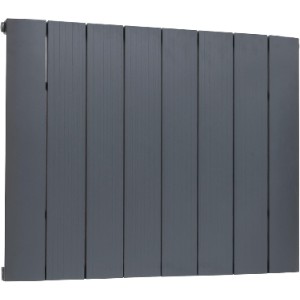
Aluminium is the best material you can choose for a heat pump radiator, and the Adept Kava is the standout option in this category. Aluminium has roughly three times the thermal conductivity of mild steel, which means it transfers heat from the water to the air far more efficiently at the lower flow temperatures a heat pump produces. You’ll get meaningful output from this radiator even when your heat pump is running at 40-45°C, whereas an equivalent steel panel would struggle.
The 755mm width gives you a good surface area without dominating a standard wall. At heat pump flow temperatures, you’re realistically looking at around 55-65% of the rated output, but because aluminium heats up so quickly, the system responds well to thermostat setbacks and weather compensation, the radiator warms the room in minutes rather than the sluggish warm-up you can get from heavy steel. That responsiveness is particularly useful in homes with smart heating controls.
The anthracite finish is sharp and modern. It fits neatly beneath standard sills and pairs well with contemporary interiors. The build quality is solid, with neat welds and consistent coating across the fins. At this price point, it genuinely competes with radiators costing twice as much from plumbers’ merchants. If you’re upgrading for heat pump use and you want the single best choice for most rooms, this is it.
One honest caveat: Adept is a newer brand with fewer long-term reviews than the established players. The product itself is well-made, but if a 20-year track record matters to you, the ELEGANT models further down this list have been around longer. For most buyers, though, the aluminium advantage outweighs brand familiarity by a wide margin.
Features
- Dimensions: 600mm H x 755mm W
- Material: Aluminium
- Colour: Anthracite
- Connection: Standard 1/2″ BSP central or side entry
- Working pressure: up to 10 bar
- Max flow temperature: 110°C
- Finish: Matt powder coat
- Aluminium construction gives best low-temperature output of any radiator type
- Fast heat-up and cool-down suits weather compensation and smart controls
- Attractive anthracite finish suits modern interiors
- Competitively priced for an aluminium radiator
- Newer brand with a shorter track record than some competitors
- Anthracite only, no white option in this size
2. Adept Kava 600x1135mm Aluminium Radiator Anthracite
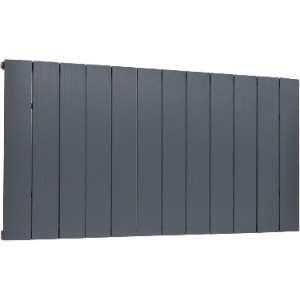
The same aluminium construction as the top pick, stretched to 1135mm for larger rooms. If you have a living room or open-plan kitchen-diner that needs serious heat output at low flow temperatures, this is the version to buy. The extra width increases the radiating surface proportionally, giving you substantially more output from the same flow temperature. It’s a proper solution for rooms that would otherwise need two smaller radiators.
Sizing a single long radiator rather than two shorter ones also tends to be neater and cheaper to install. One set of pipe connections, one valve pair, and a cleaner wall. The anthracite finish means it can anchor a feature wall rather than hide under a windowsill. If you’re placing it in a main living space, consider having your heating engineer calculate the required output at your system’s design flow temperature before ordering, that way you can be sure one unit is enough.
At around £50 more than the smaller version, the price-to-output ratio is actually better here than buying two 750mm units. For large rooms in a heat pump-heated home, this is a sensible investment rather than a luxury.
Features
- Dimensions: 600mm H x 1135mm W
- Material: Aluminium
- Colour: Anthracite
- Connection: Standard 1/2″ BSP
- Working pressure: up to 10 bar
- Max flow temperature: 110°C
- Higher output than the 750mm version, suits living rooms and open-plan spaces
- Single radiator solution avoids twin-radiator plumbing
- Same excellent aluminium heat transfer advantage
- Better value per BTU than buying two smaller units
- Requires a longer clear wall run, measure carefully
- Same newer brand caveat as the 750mm version
- Anthracite only
3. ELEGANT 600x836mm Anthracite Double Flat Panel Radiator
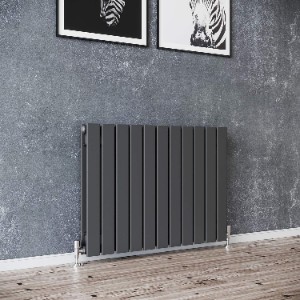
ELEGANT have been selling radiators on Amazon UK for years, and this double flat panel anthracite is one of their best sellers for good reason. The double panel design (K2, two water panels with two sets of convector fins) delivers roughly 50% more heat output than a single panel at the same dimensions. That extra output matters a lot at heat pump temperatures, where you need every square centimetre of radiating surface working for you.
Steel is heavier and slower to respond than aluminium, but the double panel design largely compensates for the lower-temperature disadvantage. This radiator is better suited to homes where the heat pump runs continuously on weather compensation rather than cycling on and off, the slow thermal mass works in your favour when the system is running steadily. It’s a good practical choice if you already have steel radiators elsewhere and want to keep things consistent.
The anthracite flat-panel look is smart and modern. ELEGANT’s manufacturing quality is consistent, and at 4.7 stars with a strong review base, buyers generally find it easy to install and well-sized. If aluminium isn’t available or doesn’t suit your aesthetic, this is the best steel double panel in its price range for heat pump applications.
Features
- Dimensions: 600mm H x 836mm W
- Type: Double panel, double convector (K2)
- Material: Steel
- Colour: Anthracite
- EN 442 tested and certified
- Max working pressure: 10 bar
- Includes fixing brackets and bleed key
- Double panel gives more output than single panel at same flow temperature
- Established brand with strong reviews and UK availability
- EN 442 certified, meets UK/EU radiator performance standards
- Attractive anthracite flat-panel finish
- Steel is less thermally efficient than aluminium at low temperatures
- Heavier and slower to respond than an aluminium equivalent
- Less suitable for systems with frequent on-off cycling
4. Acezanble 600x1180mm Anthracite Horizontal Column Radiator
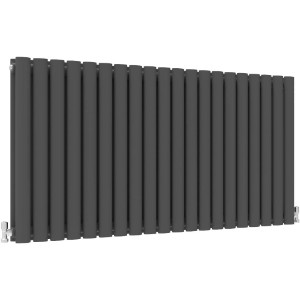
Column radiators are a natural fit for heat pump systems. The multiple individual columns create an enormous surface area in a compact footprint, more exposed metal surface means more convective heat transfer even when water temperatures are modest. This Acezanble model packs a serious amount of radiating surface into 1180mm of wall, rated at 5220 BTU at Delta T 50, which translates to a useful output at heat pump temperatures.
The 1.5mm mild steel construction is solid and BS EN 442 certified. At 131 reviews and 4.6 stars, this is a product that has been tested by real buyers, not just manufacturers. The 15-year warranty is also a good indicator of confidence in the build. Installation uses standard 15mm or 22mm centre-bottom connections.
If you want a radiator that looks the part in a living room or hallway while actually performing well at low flow temperatures, column designs like this are worth the premium over plain flat panels. The anthracite finish is consistent and smart. This is a good middle ground between the pure thermal efficiency of aluminium and the traditional look of classic column cast iron.
Features
- Dimensions: 600mm H x 1180mm W
- Type: Horizontal column
- Material: 1.5mm mild steel
- Colour: Anthracite
- BS EN 442 and CE certified
- Output: 5220 BTU (rated)
- Max pressure: 20 bar
- 15-year warranty
- Large column surface area suits low-temperature heat pump operation
- BS EN 442 certified with 15-year warranty
- Good number of real-buyer reviews for confidence
- Attractive designer look suits living rooms and hallways
- Heavier than flat panels, wall fixings must be into masonry or solid noggins
- Steel column rather than aluminium, so less efficient at very low flow temps
5. iBathUK Strata Double Oval 20-Section Column Radiator White
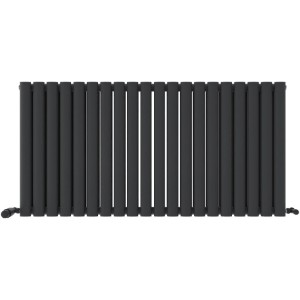
The Strata is for buyers who want a traditional-looking column radiator that also performs well with a heat pump. The 20-section double oval column design gives it a substantial radiating surface, and the white finish makes it a natural replacement for classic cast-iron radiators in period properties. iBathUK have been selling in the UK for years and the Strata has consistently strong reviews at 4.6 stars.
The oval tube profile is a nice design touch, smoother and more contemporary than round columns while keeping the classic look that suits Victorian and Edwardian properties. It’s a sensible choice for period homes where the aesthetic matters as much as the output, and where the previous owner may have had cast iron radiators that worked fine at low temperatures for exactly the same surface-area reasons.
Features
- 20 sections, double oval column
- Colour: White
- Material: Steel
- Suitable for central heating systems including heat pumps
- Standard 1/2″ BSP connections
- 4.6 stars with strong long-term reviews
- Large column surface area works well at low flow temperatures
- Traditional look suits period properties
- White finish, easier to blend in than anthracite
- Heavy, verify wall fixing points before ordering
- Steel construction, not aluminium
- Higher price than flat panel equivalents
6. Sky Bathroom 600x1180mm Double Oval Horizontal Panel Radiator White
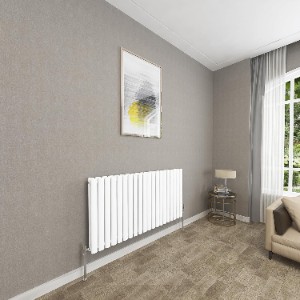
If you want a sleek, contemporary look with the surface-area benefits of a double oval design, the Sky Bathroom 1180mm is worth considering. The wider 1180mm run gives a generous radiating length, and the double oval panel construction gives a good output-to-depth ratio. At 4.7 stars across a growing number of reviews, buyers have been pleased with both the build and the look.
The white finish makes this more versatile than anthracite for hallways, landings, and bedrooms where you want the radiator to blend rather than stand out. The oval panel profile is slightly more refined than a plain flat panel and adds a subtle design element without shouting about it. A good choice if you’re after the extra output of a longer radiator without the industrial look of some column styles.
One note on Sky Bathroom as a brand: they sell primarily through Amazon and have fewer high-street reviews than older names like ELEGANT. The product itself is well-reviewed, but as with all newer brands, you’re relying more heavily on Amazon buyer feedback than on established installer experience.
Features
- Dimensions: 600mm H x 1180mm W
- Type: Double oval horizontal panel
- Colour: White
- Standard central heating connections
- Includes brackets and bleed key
- 4.7 stars buyer rating
- Long 1180mm run gives good surface area for heat pump use
- Double oval design adds output without increasing depth
- Versatile white finish suits most rooms
- Newer brand with a shorter established track record
- Steel rather than aluminium
7. ELEGANT 600x1216mm White Double Flat Panel Radiator
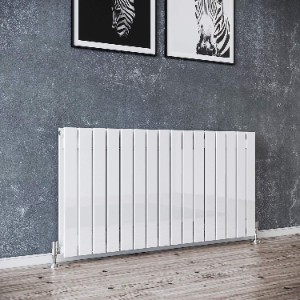
The largest steel panel on this list, the ELEGANT 1216mm white double flat panel is the right choice when you have a long wall and a big room to heat. The 1216mm width maximises radiating area in a standard height, and the double panel K2 design compounds that advantage. At heat pump temperatures, you need area, and this radiator gives you plenty of it. ELEGANT’s manufacturing quality is reliable and the EN 442 certification ensures the output figures are independently verified.
The white finish is clean and practical. This is the kind of radiator that goes in a large kitchen, dining room, or open-plan extension where you need maximum output in a single unit. Worth checking the required BTU at your system’s design flow temperature before buying, at this size, you may well find one unit is sufficient for rooms that would otherwise need two.
Features
- Dimensions: 600mm H x 1216mm W
- Type: Double panel double convector (K2)
- Colour: White
- EN 442 certified
- Material: Steel
- Includes brackets and bleed key
- Maximum surface area for large rooms
- EN 442 certified, verified output figures
- Established ELEGANT brand with strong track record
- Requires a long clear wall, 1216mm is substantial
- Heavy, professional installation recommended
- Steel, not aluminium
8. Baridi 600x560mm Double Flat Panel Radiator
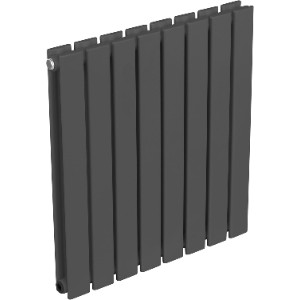
The budget option on this list, and it shows in the smaller 560mm width. But if you’re upgrading a small bedroom, study, or hallway where a compact double panel is enough, the Baridi does the job at a fraction of the cost of the aluminium options. The double panel construction is the key: at heat pump temperatures, single panels in smaller rooms often struggle, but a K2 double panel in a compact size can work well for light heating duties.
Buy this for secondary rooms where you want to keep costs down, not for living rooms or large bedrooms where you need serious output. If your heat pump engineer has calculated that a small double panel is sufficient, this is a cost-effective way to tick that box without spending big.
Features
- Dimensions: 600mm H x 560mm W
- Type: Double panel
- Material: Steel
- Standard central heating connections
- Compact size suits studies and smaller bedrooms
- Lowest price on this list
- Double panel suits heat pump temperatures better than single panel
- Good for small secondary rooms
- Small size limits output, not suitable for large or poorly insulated rooms
- Steel construction, not aluminium
- Fewer reviews than established brands
Heat Pump Radiator Buying Guide
Key Takeaways
- Heat pumps run at 35-55°C flow temperature, compared to 65-80°C for a gas boiler, radiators must be significantly larger to compensate.
- At 45°C flow temperature, a radiator delivers around 43% of its rated output (which is tested at Delta T 50). You’ll typically need radiators 2-3x larger than your current ones.
- Aluminium radiators are the best material for heat pump systems: higher thermal conductivity, faster response, and better output per kilogram of material.
- Double panel (K2) radiators deliver substantially more output than single panel (K1) at the same wall footprint, important when wall space is limited.
- You don’t always need to replace every radiator, a heat loss calculation room-by-room will tell you exactly which ones are undersized.
What Is a Heat Pump Compatible Radiator?
Any standard central heating radiator can technically be connected to a heat pump. “Heat pump compatible” doesn’t describe a special certification or standard, it describes whether a radiator is large enough and has sufficient surface area to deliver the required heat output at the lower flow temperatures a heat pump produces. A radiator that was adequate with a gas boiler at 70°C will likely be undersized when the same system runs at 45°C. The fix is either a physically larger radiator or one with better thermal properties, most importantly aluminium.
Manufacturers are increasingly marketing radiators specifically for heat pump use, but buyers should focus on the underlying physics: surface area and material. A large double-panel steel radiator rated at 6,000 BTU will work better than a small single-panel aluminium one, all else being equal. The aluminium advantage matters most in constrained spaces where you can’t go much wider or taller.
How Do Heat Pumps Affect Radiator Performance?
A gas boiler delivers water to your radiators at 65-80°C. A heat pump, running efficiently, typically delivers water at 35-55°C. The rate at which a radiator transfers heat to a room depends heavily on the temperature difference between the radiator surface and the room air, the greater the difference, the faster the heat transfer. This relationship is described by Delta T (the temperature difference).
Radiator output is standardised and tested at Delta T 50 (mean water temperature of 70°C, room at 20°C). When you run a heat pump at 45°C flow and 35°C return, the mean water temperature is 40°C, giving you Delta T 20 versus the 20°C room. The correction factor at Delta T 20 is roughly 0.30, meaning the radiator only delivers about 30% of its rated output. At 45°C mean water temperature (ΔT25), you get around 43% of rated output. This is why heat pump radiator sizing is so critical.
Delta T Explained: How to Size a Radiator for a Heat Pump
The table below shows correction factors for different heat pump flow temperatures. Use these to work out how large a radiator needs to be to deliver the required output in each room.
| Flow Temp | Return Temp | Mean Water Temp | Delta T vs 20°C room | Correction Factor |
|---|---|---|---|---|
| 55°C | 45°C | 50°C | ΔT30 | × 0.56 |
| 50°C | 40°C | 45°C | ΔT25 | × 0.43 |
| 45°C | 35°C | 40°C | ΔT20 | × 0.30 |
| 40°C | 30°C | 35°C | ΔT15 | × 0.18 |
How to use this table: First, find out what flow temperature your heat pump runs at (your installer or the system controller will show this). Then divide the room’s required heat output by the correction factor to get the minimum radiator rating you need to buy.
Example: Your living room needs 1,500W. Your heat pump runs at 50°C flow / 40°C return (mean 45°C, ΔT25). Correction factor is 0.43. Required radiator rating = 1,500 / 0.43 = 3,488W at ΔT50. So you need a radiator rated at at least 3,500W at ΔT50 to deliver 1,500W of actual heat at your system temperature.
Aluminium vs Steel: Which Is Better for Heat Pumps?
Aluminium wins for heat pump use, and it isn’t particularly close. Aluminium has a thermal conductivity of around 205 W/m·K, compared to mild steel’s 50 W/m·K. In practice, this means aluminium sections transfer heat from the water to the air roughly four times more readily than steel. At low flow temperatures, where there’s less thermal drive to begin with, this difference becomes even more significant.
Aluminium radiators also have a much lower thermal mass, they heat up and cool down quickly. This suits heat pump systems that use weather compensation or smart controls, because the radiator responds to demand changes in minutes rather than the slow warm-up and cool-down of heavy steel. If your heat pump uses frequent short cycles (which is less efficient and best avoided, but does happen), aluminium’s faster response means less energy wasted.
Steel remains cheaper, more widely available, and perfectly adequate for heat pump use when properly sized. If you’re on a tight budget or have specific size requirements that aluminium products don’t meet, double panel steel radiators are a reasonable choice. But if you’re choosing between comparable products, always go aluminium when there’s a heat pump involved.
Types of Radiators That Work Best at Low Temperatures
Column radiators have a high surface area relative to their wall footprint, which makes them naturally better suited to heat pump operation. The multiple vertical or horizontal columns expose a large amount of hot metal surface to the surrounding air, producing strong convective heat transfer even when the water temperature is modest. Traditional cast-iron column radiators were actually excellent at low-temperature heating for exactly this reason, which is why they suited early heating systems that ran cooler than modern boilers.
Double panel (K2) and triple panel (K3) convector radiators dramatically outperform single panel (K1) at the same footprint. The second panel roughly doubles the output, and the convector fins attached to the panels add further surface area for air to move across. For most rooms where wall space is limited, upgrading from K1 to K2 is a straightforward way to double your output without changing the physical footprint.
Fan-assisted radiators, sometimes called fan coils, are the most efficient option at very low flow temperatures, some are designed to work at just 35°C flow. They use a small electric fan to force air across the heat exchanger, dramatically increasing output. They cost more to buy and require an electrical connection, but they’re worth considering for rooms where you simply can’t fit a large enough passive radiator.
Running Costs and COP: What to Budget For
Heat pumps don’t just move heat from one place to another, they do so at a coefficient of performance (COP) of typically 2.5 to 4.5, meaning for every 1 kWh of electricity used, you get 2.5 to 4.5 kWh of heat. At the current Ofgem price cap rate of approximately 24p/kWh (as of mid-2026), this works out to an effective heat cost of around 5-10p per kWh of heat delivered. A gas boiler at 85% efficiency and 7p/kWh gas costs around 8p/kWh of heat delivered, so a well-optimised heat pump with a COP of 3+ is genuinely cheaper to run.
The key word is “optimised.” A heat pump forced to run at 55°C flow temperature (because undersized radiators can’t deliver enough heat at lower temperatures) might achieve a COP of only 2.0-2.5, eroding the running cost advantage. This is why radiator sizing matters not just for comfort but for economy. Getting the radiators right lets your heat pump run at its most efficient flow temperature, keeping your bills down.
Do You Need to Replace All Your Radiators?
Not necessarily. The answer depends on a room-by-room heat loss calculation. Many homes, especially well-insulated ones built after 2000, will find that some existing radiators are already oversized relative to the room’s heat demand, they were oversized to compensate for boilers that the original installer expected to run at lower-than-rated temperatures. These radiators may work fine with a heat pump.
Older properties with poor insulation, single glazing, or solid walls are a different story. Heat loss is higher, the required output per room is higher, and radiators that were just adequate with a gas boiler will definitely be undersized for a heat pump. In these cases, you’ll need to either upgrade the radiators or the insulation, ideally both.
Ask your heat pump installer to carry out a MCS-compliant heat loss calculation before installation. This will identify which rooms need larger radiators and give you the actual required output at the design flow temperature. Replacing only the undersized rooms is far cheaper than replacing every radiator in the house, and it gives the same result.
Room-Specific Recommendations
Living rooms and open-plan spaces: These rooms have the highest heat demand and often have limited wall space due to furniture and windows. Prioritise the largest aluminium radiator or column radiator that will physically fit. The Adept Kava 1135mm or the Acezanble 1180mm column are both good choices here. A single large radiator in a good position beats two smaller ones at opposite walls.
Bedrooms: Output requirements are usually lower, and you want the room to stay at a comfortable temperature overnight. Aluminium is helpful here because it responds quickly when the heating comes on in the morning. The Adept Kava 750mm suits most standard bedrooms. Avoid the temptation to undersize: a bedroom that won’t get above 16°C in winter is miserable.
Hallways and landings: Long horizontal radiators work well in corridors because they heat the air that circulates to other rooms. The Sky Bathroom 1180mm or Acezanble 1180mm are both good fits here. Hallways also tend to have higher heat loss than their size suggests, so don’t undersize.
Kitchens: Kitchens generate a lot of internal heat from cooking and appliances, so requirements are often lower than other rooms. A mid-sized double panel like the ELEGANT 836mm is usually plenty for a standard kitchen. Focus the budget and the larger radiators on living spaces and bedrooms instead.
Bathrooms: Bathrooms need their heat output carefully calculated, high heat loss from external walls, windows, and extraction fans. A heated towel rail is standard, but make sure it’s rated for the heat output the room needs, not just chosen for aesthetics. Consider a supplementary panel radiator if the towel rail alone won’t deliver enough heat at your system’s flow temperature.
Common Mistakes When Buying Radiators for a Heat Pump
The most common mistake is replacing radiators on a like-for-like basis. People measure the existing radiator, order the same size in a different style, and then wonder why the new heat pump struggles to heat the room. The existing radiator was sized for a 70°C boiler. At heat pump temperatures, you need something 2-3x larger. Always start from a heat loss calculation, not from what’s already on the wall.
The second common error is choosing single panel radiators for heat pump use. Single panels are fine for supplementary heating in a well-insulated modern home, but for a heat pump primary heating system, double panels are almost always the right choice. The difference in output for the same wall space is significant enough to justify the price difference every time.
Ignoring aluminium is another expensive mistake. Buyers who are unfamiliar with the material often assume steel is more durable or more reliable. In practice, aluminium radiators sold for central heating are just as robust as steel ones, and their thermal advantage at low flow temperatures is substantial. The price premium for aluminium over comparable steel is usually around 20-40%, but the performance benefit is much larger than that.
Finally, forgetting about flow rates. Heat pumps use lower flow temperatures but higher flow rates than boilers to compensate. This means your pipework, valves, and pump all need to be capable of the required flow. Fitting larger radiators that demand more flow without checking the rest of the system can cause noise, poor distribution, and uneven heating. Your installer should balance the system after fitting new radiators.
When Not to Upgrade Your Radiators
If your property has very poor insulation and single glazing, upgrading radiators without addressing the insulation first is treating the symptom rather than the cause. The heat demand will be so high that even well-sized radiators will struggle, and your heat pump’s COP will suffer because it’s working at higher flow temperatures. Insulate first, then size your radiators for the post-insulation heat demand.
If your heat pump installation hasn’t been commissioned yet, don’t buy radiators before the installer has done the room-by-room heat loss calculation. The required size may be very different from what you expect. It’s a waste to order and fit radiators only to discover they’re still undersized.
If a room is very rarely used (a spare bedroom, a storage room), the cost of upgrading the radiator may outweigh the benefit. Thermostatic radiator valves (TRVs) that let you reduce heat to unused rooms are a better investment in these cases. Focus the budget on rooms that are used daily.
Quick Buyer Checklist
- Do you know the required heat output for each room at your system’s design flow temperature?
- Have you used the Delta T correction factor to calculate the required radiator rating at ΔT50?
- Is there a long enough clear wall for the radiator size you need?
- Does the wall have suitable fixing points (masonry or solid noggins) for the radiator weight?
- Have you chosen aluminium where possible for heat pump operation?
- Are the TRVs and lockshield valves compatible with the new radiator size and flow requirements?
- Has your installer planned to rebalance the system after the new radiators are fitted?
- Have you checked whether any rooms are already adequately sized and don’t need replacing?
Case Study: Whole-House Radiator Upgrade in a 1930s Semi
Background
A homeowner in the East Midlands had a 1930s three-bedroom semi-detached property with solid front walls, cavity-filled rear walls, double glazing throughout, and a loft insulated to 200mm. The house was heated by an ageing combi boiler running at 70°C. The decision was made to replace the boiler with a 7kW air source heat pump.
Project Overview
Before installation, an MCS-accredited engineer carried out a full room-by-room heat loss calculation. The design flow temperature was set at 50°C. At ΔT30 (the correction factor for 50°C flow), existing radiators would deliver only 56% of their rated output. Several rooms had radiators that were borderline adequate at boiler temperatures and clearly undersized for heat pump use.
Implementation
The living room and main bedroom were identified as the priority upgrades. The living room received a new aluminium column radiator rated at 4,800 BTU, replacing a single-panel K1 unit rated at 3,200 BTU. The main bedroom was upgraded from a 600x600mm single panel to a 600x900mm double panel. The two smaller bedrooms were found to already have adequately sized double panel radiators. The kitchen and bathroom were left unchanged.
Results
After commissioning, the system was balanced and the heat pump ran consistently at 48-50°C flow temperature, achieving a monitored seasonal COP of 3.1 across the first winter. The living room and main bedroom reached target temperature without the heat pump needing to increase flow temperature. The homeowner reported noticeably warmer rooms than with the old boiler, and energy bills for heating came in approximately 18% lower than the previous year’s gas costs despite slightly higher electricity prices.
Expert Insights From Our Heating Engineers About Radiators for Heat Pumps
“The number one thing I’d tell someone upgrading to a heat pump is this: don’t guess the radiator sizes. Get a proper heat loss calculation done. I’ve seen homeowners buy oversized heat pumps and then struggle all winter because three of their radiators were still undersized from the original installation. The heat pump keeps the house warm but only by running at 58°C flow, which wrecks the efficiency numbers. Get the radiators right first, and let the heat pump run cool.”, one of our senior heating engineers with over 18 years of experience in heat pump installations across the East of England.
“Aluminium makes a genuine difference. When I have a customer who has limited wall space and can’t fit the size of steel radiator the calculation says they need, aluminium is the answer. Even if the aluminium option is rated slightly lower at ΔT50, it performs proportionally better at heat pump temperatures. I specify aluminium in about a third of my heat pump installations now, always in rooms where space is tight.”
“People worry about replacing all their radiators, which puts them off going ahead with a heat pump at all. The reality is usually that 60-70% of the radiators in a well-insulated house are already adequate. The job is to identify the ones that aren’t and deal with those. In a typical three-bed semi, that might mean upgrading four rooms, not ten. It’s a much smaller job than the horror stories suggest.”
Frequently Asked Questions
Do I need to replace all my radiators when installing a heat pump?
Not necessarily. The right answer depends on a room-by-room heat loss calculation done at your system’s design flow temperature. In a well-insulated modern home, many existing radiators may already be adequately sized. Poorly insulated older properties typically need more replacements. A MCS-compliant heat pump installer should carry out this calculation before installation and tell you exactly which rooms need larger radiators. Replacing only the undersized rooms is far cheaper than a whole-house swap.
What size radiator do I need for a heat pump?
Take the required heat output for your room (in watts or BTU) and divide it by the correction factor for your system’s flow temperature. At 50°C flow and 40°C return (mean 45°C, ΔT25), the correction factor is approximately 0.43, meaning you need a radiator rated at roughly 2.3 times the required output. For example, a room needing 1,000W requires a radiator rated at around 2,300W at ΔT50. Always use the calculated room heat demand rather than the existing radiator size as your starting point.
Are aluminium radiators better for heat pumps than steel?
Yes, significantly. Aluminium has roughly four times the thermal conductivity of mild steel, which means it transfers heat from the water to the air far more efficiently at low flow temperatures. Aluminium radiators also heat up and cool down quickly, which suits heat pump systems running on weather compensation. They cost a little more than steel equivalents but the performance advantage at heat pump temperatures is well worth the premium.
What flow temperature do heat pump radiators need to work at?
Most heat pumps are designed to run efficiently at 35-55°C flow temperature. The lower the flow temperature your system can achieve while still hitting target room temperatures, the better the heat pump’s COP and the lower your running costs. Ideally, you want to run at 45-50°C or below, but this is only possible if the radiators are sized correctly. Poorly sized radiators force the heat pump to increase flow temperature, reducing efficiency.
Are column radiators good for heat pumps?
Yes. Column radiators have a high surface area relative to their wall footprint, which is exactly what you want for heat pump operation. The multiple columns expose a large amount of hot metal to the air, producing strong convective heat transfer even at modest water temperatures. Traditional cast-iron column radiators were originally designed to work at lower temperatures, which is part of why they suit heat pumps well. Modern steel column radiators share this advantage.
Can I keep my existing single panel radiators with a heat pump?
In some rooms, yes, if the single panel radiator is significantly oversized for the room’s heat demand. But in most rooms that were heated adequately by a single panel at boiler temperatures, a single panel will underperform with a heat pump. The safer approach is to upgrade to double panels (K2) in any room where the current radiator is doing real work, keeping single panels only in rooms where heating demand is very low.
What is the difference between K1, K2, and K3 radiators?
K1 is a single panel radiator with one water panel and one set of convector fins on the back. K2 has two panels and two sets of fins, roughly double the output at the same width and height. K3 has three panels and three sets of fins, the highest output option, but also the deepest. For heat pump systems, K2 is the standard recommendation. K3 is worth considering in rooms with limited wall width but a high heat demand.
Will upgrading my radiators improve my heat pump’s efficiency?
Directly, yes. A heat pump’s COP (coefficient of performance) increases as flow temperature decreases. If your current radiators are undersized and forcing the heat pump to run at 58°C to heat your rooms, upgrading them to allow the system to run at 45°C could improve the COP from around 2.0 to 3.0 or better, cutting your heating electricity use by a third. Radiator sizing is one of the most cost-effective things you can do to improve the running economy of an existing heat pump installation.
Summing Up
For most homes switching to a heat pump, the radiator upgrade is the step that makes or breaks the system’s efficiency. Get the sizing right, choose aluminium where you can, and prioritise double panel over single panel throughout. Our top pick is the Adept Kava 600x755mm Aluminium Radiator, it combines the best thermal performance available at heat pump temperatures with a compact design and a competitive price. For larger rooms, step up to the 1135mm version. For those on a tighter budget or with specific aesthetic requirements, the ELEGANT and Acezanble column options are solid choices.
The golden rule is to always start from a heat loss calculation rather than measuring the existing radiator. What’s on the wall now was designed for a different system. Size for the heat pump you’re installing, not the boiler you’re replacing.
Updated