
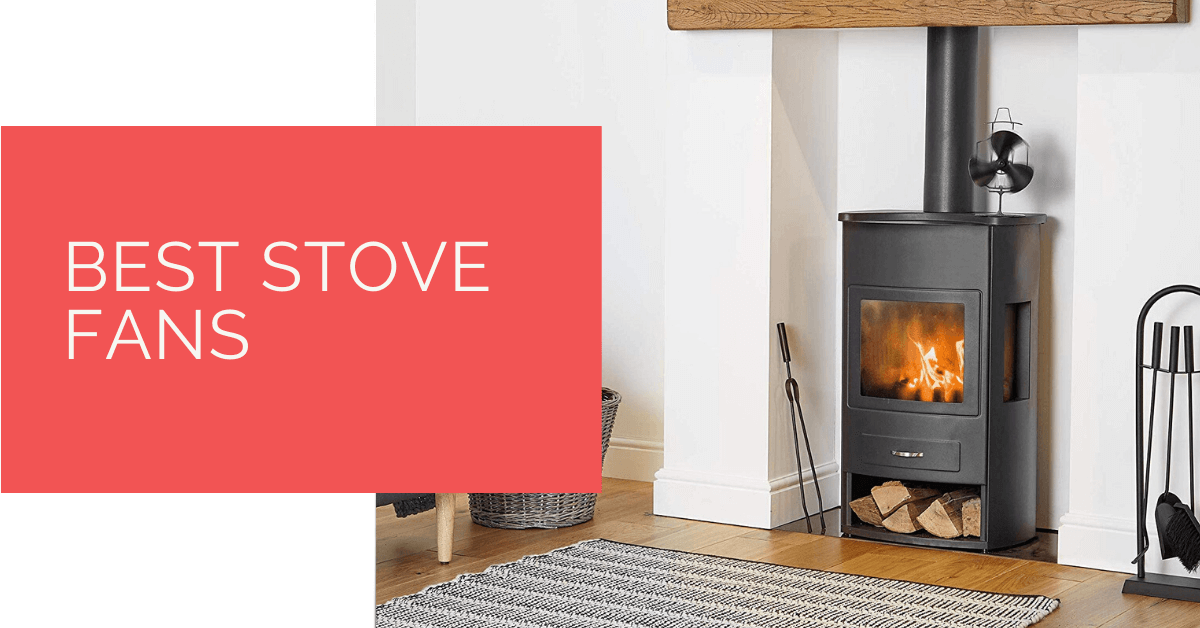
For most UK buyers, the Tomersun 8-Blade Heat Powered Stove Fan is the best stove fan to buy. It offers the strongest mix of practical performance, value and usability in a category where the right choice depends heavily on where and how you plan to use it. Stove fans are simple-looking products, but the useful ones get the small details right: starting temperature, blade balance, stove-top footprint, noise and whether a thermometer is included. They will not make your stove produce more heat, but they can make the heat you already have feel less trapped around the appliance.
A good stove fan will not create extra heat, but it can help move warm air away from the stove and into the room more evenly. The picks below include compact fans for smaller stoves, larger multi-blade models and twin-motor designs for broader airflow. The main thing is to match the fan to the stove top and fireplace recess rather than assuming more blades always means better performance.
Contents
- 1 Our Top Picks
- 2 8 Best Stove Fans
- 2.1 1. Tomersun 8-Blade Heat Powered Stove Fan
- 2.2 2. 6-Blade Heat Powered Log Burner Fan
- 2.3 3. JossaColar 6-Blade Log Burner Fan
- 2.4 4. Hanaoyo Twin Motor Stove Fan
- 2.5 5. Forest Master Mini SuperFast Air Stove Fan
- 2.6 6. COMBIUBIU 4-Blade Mini Stove Fan
- 2.7 7. Xmasneed 5-Blade Log Burner Stove Fan
- 2.8 8. Perfirefan 6-Blade Ultra Quiet Stove Fan
- 3 Stove Fan Buying Guide
- 4 Case Study: Choosing Heat for a Real UK Space
- 5 Expert Insights From Our Heating Engineers About Stove Fans
- 6 Frequently Asked Questions
- 7 Summing Up
Our Top Picks
| Image | Name | |
|---|---|---|
| Tomersun 8-Blade Heat Powered Stove Fan | |
| 6-Blade Heat Powered Log Burner Fan | |
| JossaColar 6-Blade Log Burner Fan | |
| Hanaoyo Twin Motor Stove Fan | |
| Forest Master Mini SuperFast Air Stove Fan | |
| COMBIUBIU 4-Blade Mini Stove Fan | |
| Xmasneed 5-Blade Log Burner Stove Fan | |
| Perfirefan 6-Blade Ultra Quiet Stove Fan |
8 Best Stove Fans
1. Tomersun 8-Blade Heat Powered Stove Fan
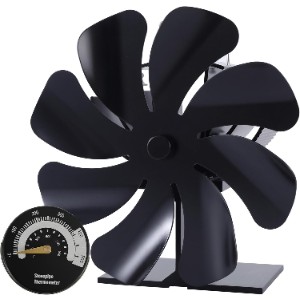
Tomersun 8-Blade Heat Powered Stove Fan is the strongest starting point in this list because it gives most buyers a sensible mix of performance, practical features and everyday usability. The best all-round stove fan, with an eight-blade design, heat-powered operation, thermometer and strong review base.
Tomersun 8-Blade Heat Powered Stove Fan is worth judging by how naturally it works with your stove rather than by blade count alone. A fan needs enough stove-top temperature to start, enough clearance in the fireplace recess and a position where it can move warm air out into the room.
The best results usually come in rooms where the stove already heats well but warmth collects around the appliance. In that situation, a fan can make the far side of the room feel less neglected and reduce the sharp contrast between the stove corner and the rest of the space.
Do not expect miracles in a large open-plan area or a room with poor insulation. A stove fan redistributes existing heat, so wet logs, a struggling stove or blocked airflow between rooms will still limit the result.
Features
- Heat-powered stove fan
- Eight blades
- Supplied thermometer
- Silent operation
- No batteries or mains power
- Suitable for wood burners and multi-fuel stoves
- Excellent value
- Large review base
- Thermometer included
- No wiring or batteries
- Performance depends on stove top temperature
- Not for cool-touch or insulated tops
2. 6-Blade Heat Powered Log Burner Fan
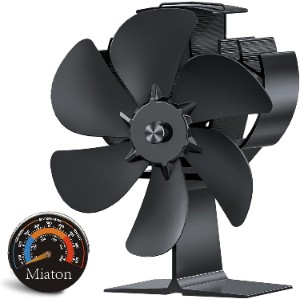
6-Blade Heat Powered Log Burner Fan earns its place as a practical alternative, especially if its particular format suits your setup better than the top pick. A good-value six-blade stove fan with a supplied thermometer, quiet running and straightforward heat-powered operation.
The best results usually come in rooms where the stove already heats well but warmth collects around the appliance. In that situation, a fan can make the far side of the room feel less neglected and reduce the sharp contrast between the stove corner and the rest of the space.
Do not expect miracles in a large open-plan area or a room with poor insulation. A stove fan redistributes existing heat, so wet logs, a struggling stove or blocked airflow between rooms will still limit the result.
Features
- Six-blade fan
- Heat-powered motor
- Thermometer included
- Silent operation
- Compact footprint
- Affordable
- Simple to use
- Thermometer helps protect the fan
- Brand recognition is limited
- May move less air than larger twin units
3. JossaColar 6-Blade Log Burner Fan
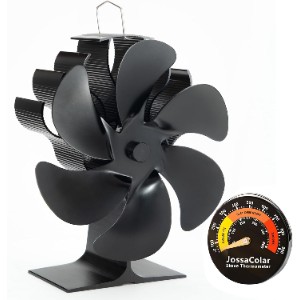
JossaColar 6-Blade Log Burner Fan earns its place as a practical alternative, especially if its particular format suits your setup better than the top pick. A popular heat-powered wood burner fan with six blades, silent running and a strong customer review base.
Do not expect miracles in a large open-plan area or a room with poor insulation. A stove fan redistributes existing heat, so wet logs, a struggling stove or blocked airflow between rooms will still limit the result.
A thermometer is a useful extra because it helps protect the fan and the stove. Running too cool means the fan barely works, while running too hot can damage the motor or thermoelectric module.
JossaColar 6-Blade Log Burner Fan is worth judging by how naturally it works with your stove rather than by blade count alone. A fan needs enough stove-top temperature to start, enough clearance in the fireplace recess and a position where it can move warm air out into the room.
Features
- Heat-powered stove fan
- Six blades
- Silent operation
- No electricity required
- Designed for log burners and fireplaces
- Strong review count
- Good everyday choice
- Quiet operation
- No dramatic effect in large open rooms
- Needs correct stove placement
4. Hanaoyo Twin Motor Stove Fan
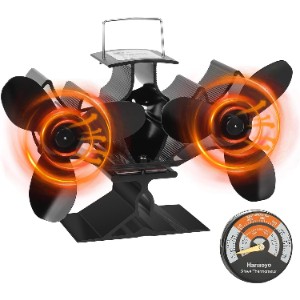
Hanaoyo Twin Motor Stove Fan earns its place as a practical alternative, especially if its particular format suits your setup better than the top pick. A twin-motor stove fan for users who want broader airflow from a single unit on a larger stove top.
A thermometer is a useful extra because it helps protect the fan and the stove. Running too cool means the fan barely works, while running too hot can damage the motor or thermoelectric module.
Hanaoyo Twin Motor Stove Fan is worth judging by how naturally it works with your stove rather than by blade count alone. A fan needs enough stove-top temperature to start, enough clearance in the fireplace recess and a position where it can move warm air out into the room.
Features
- Twin motor design
- Double fan layout
- Heat-powered operation
- Silent heat circulation
- For wood stoves and log burners
- Broader airflow than a small single fan
- Good for larger stove tops
- No external power
- Needs more stove top space
- Small review base
5. Forest Master Mini SuperFast Air Stove Fan
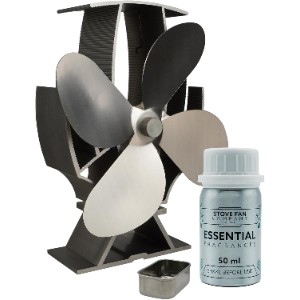
Forest Master Mini SuperFast Air Stove Fan earns its place as a practical alternative, especially if its particular format suits your setup better than the top pick. A compact stove fan from a recognisable UK garden and forestry brand, useful where stove-top space is tight.
Forest Master Mini SuperFast Air Stove Fan is worth judging by how naturally it works with your stove rather than by blade count alone. A fan needs enough stove-top temperature to start, enough clearance in the fireplace recess and a position where it can move warm air out into the room.
The best results usually come in rooms where the stove already heats well but warmth collects around the appliance. In that situation, a fan can make the far side of the room feel less neglected and reduce the sharp contrast between the stove corner and the rest of the space.
Features
- Mini heat-powered stove fan
- Compact footprint
- Fragrance holder
- Designed for wood burners and log burners
- No mains power required
- Compact for small stove tops
- Recognisable brand
- Good for tight spaces
- Not the most powerful option
- Fragrance holder is optional rather than essential
6. COMBIUBIU 4-Blade Mini Stove Fan
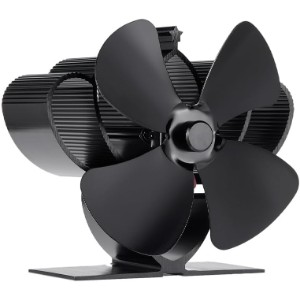
COMBIUBIU 4-Blade Mini Stove Fan earns its place as a practical alternative, especially if its particular format suits your setup better than the top pick. A small four-blade stove fan for compact stoves and fireplaces where larger fans will not fit comfortably.
The best results usually come in rooms where the stove already heats well but warmth collects around the appliance. In that situation, a fan can make the far side of the room feel less neglected and reduce the sharp contrast between the stove corner and the rest of the space.
Do not expect miracles in a large open-plan area or a room with poor insulation. A stove fan redistributes existing heat, so wet logs, a struggling stove or blocked airflow between rooms will still limit the result.
Features
- Four-blade mini stove fan
- Heat-powered operation
- Silent operation
- Compact design
- For wood burners and fireplaces
- Small and easy to place
- Good for compact stoves
- Less airflow than larger fans
- Basic feature set
7. Xmasneed 5-Blade Log Burner Stove Fan
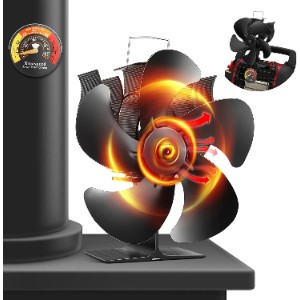
If you want something with a proven track record and nearly 3,000 reviews behind it, the Xmasneed is worth a look. The five-blade design moves more air than the typical four-blade entry-level fan, and the claimed noise level of under 25dB means it runs quietly enough to be unnoticeable once the stove is burning well.
At £23.99 it sits in the mid-range of the market. The thermoelectric module kicks in from around 65°C, which is a realistic starting temperature for a stove that’s been going for 15 to 20 minutes. Circulation is broad rather than directional, so it suits open-plan rooms where you want warmth distributed evenly rather than pushed into one specific corner.
It does not include a thermometer, which is a minor omission at this price. That said, the review count speaks for itself: this is a product that has been tested by a lot of UK buyers and returned consistently positive results. A solid all-rounder for a medium-sized living room.
Features
- 5-blade design for higher airflow than standard 4-blade fans
- Noise level under 25dB for quiet background operation
- Heat-powered via thermoelectric module, no batteries or cables
- Suitable for wood, coal and pellet-burning stoves
- Compact footprint fits most standard stove tops
- Nearly 3,000 reviews — proven performer
- 5-blade airflow improvement over budget 4-blade models
- Very quiet operation under 25dB
- No thermometer included
- Brand less established than Tomersun or Dimplex equivalents
- Limited colour options
8. Perfirefan 6-Blade Ultra Quiet Stove Fan
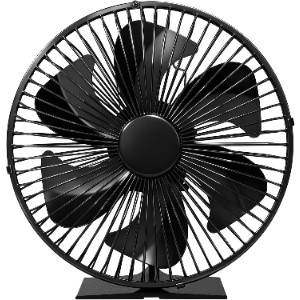
The cheapest pick on this list at £13.99, and it comes with a built-in safety guard that most fans at this price omit. The guard covers the blades and is worth having in homes with children or pets who might brush past the stove area.
Performance is modest at the lower end of its operating temperature range, but it picks up well once the stove surface reaches 200°C. The 4.5-star rating from around 290 reviews is encouraging for a newer product. Don’t expect it to circulate a large room on its own, but for a small lounge or conservatory with a compact stove, it does the job without costing much to find out.
Features
- 6-blade design for broader airflow coverage
- Built-in safety guard protects against accidental blade contact
- Heat-powered with no batteries or electricity required
- Ultra-quiet thermoelectric motor
- Compact size suits smaller stove surfaces
- Lowest price on the list at £13.99
- Built-in safety guard included as standard
- Fewer reviews than more established models
- Less effective at lower stove temperatures
- Better suited to smaller rooms
Stove Fan Buying Guide
Key Takeaways
- Stove fans are entirely self-powered: they use the heat from the stove itself to generate the small amount of electricity needed to spin the blades, with no mains connection or batteries required
- The thermoelectric module at the base converts a temperature difference into electrical current. The hotter the stove surface and the cooler the top of the fan, the more electricity is generated and the faster the blades spin
- Most stove fans start moving at around 60 to 70°C on the stove surface and reach their optimal speed between 200 and 300°C. Running a fan on a stove that hasn’t reached proper temperature produces little airflow and risks damaging the thermoelectric module over time
- Airflow is measured in CFM (cubic feet per minute). For a typical living room of 20 to 30m², a fan rated at 150 CFM or above will make a noticeable difference to heat distribution. Smaller rooms and alcoves benefit even from 80 to 100 CFM models
- Blade count affects both noise and airflow balance: fans with 4 or more blades tend to run quieter and distribute air more evenly than 2 or 3-blade designs, because the additional blades reduce vibration and turbulence
- Stove fans only work on solid fuel and wood-burning stoves with a flat, hot top surface. They are not designed for gas stoves, open fires, or pellet stoves where the top surface stays cool
- Placement matters as much as the fan itself: position the fan at the back of the stove top, not the front edge, so it draws cool room air from behind and pushes warm air forward into the room
How Stove Fans Work
A stove fan has no plug, no battery, and no external power supply. The base of the fan sits directly on the hot stove surface. Inside the base is a thermoelectric module (a Peltier device) that exploits the Seebeck effect: when one side of the module is hot and the other side is cool, an electrical voltage is generated. The hotter the bottom surface and the cooler the top (where the aluminium heat sink dissipates heat into the room), the greater the voltage and the faster the motor runs.
This means performance is directly tied to stove temperature. A well-burning wood stove at 250 to 300°C will run a quality fan at near-maximum speed. A stove that’s just been lit and has barely reached 100°C will produce minimal airflow. The fan is essentially telling you how efficiently your stove is burning: slow rotation usually means the fire needs more fuel or air, not that the fan is broken.
The result is passive heat distribution. Without a fan, the hot air from the stove rises directly to the ceiling and slowly convects down the walls. The stove fan intercepts that warm air and projects it horizontally across the room, reducing the temperature stratification between floor and ceiling and making the room feel warmer without burning any additional fuel.
What CFM Actually Means for Your Room
CFM (cubic feet per minute) is the standard measure of airflow. A higher CFM moves more air, which means faster and more even heat distribution. As a practical guide:
- 60 to 100 CFM: Suitable for small rooms up to 15m², alcoves, or as a secondary fan alongside a larger unit. Budget models typically fall in this range
- 100 to 160 CFM: The practical sweet spot for most UK living rooms and open-plan kitchen-diners up to 25m². A fan producing 120 to 140 CFM at working temperature will distribute heat noticeably faster than convection alone
- 160 to 250 CFM: Premium and multi-blade models. Better suited to larger rooms, higher ceilings, or homes with open stairwells where heat otherwise disappears upwards immediately. Two fans at 140 CFM will outperform one fan at 250 CFM in a wide room because the airflow is distributed from two points
Manufacturer CFM figures are measured at the fan’s maximum operating temperature, which is often 250 to 300°C. In normal use, where stove surface temperature varies considerably, actual airflow will be lower. Treat published CFM figures as a comparison tool rather than an absolute performance guarantee.
Blade Count and Noise
The number of blades affects both airflow character and noise. Two-blade and three-blade fans spin faster to move the same volume of air, which can produce more audible turbulence. Four-blade and five-blade designs move more air per revolution, allowing slower rotation for the same CFM output. The practical effect is that higher blade-count fans tend to be quieter and produce a smoother airflow with less buffeting.
That said, blade design (pitch, curve, and surface area) matters as much as count. A well-designed three-blade fan will outperform a poorly designed five-blade unit. Look for blades with a pronounced pitch and curved cross-section rather than flat paddles, which generate less turbulence at speed.
Most stove fans are audible at maximum speed but well below conversational noise levels. If you’re sensitive to fan noise, multi-blade designs and fans with a stated maximum speed below 700 RPM tend to be the quietest in practice.
Temperature Range and Overheat Protection
Every stove fan has a minimum start temperature (typically 60 to 80°C) and a maximum operating temperature. Running a fan above its rated maximum temperature degrades the thermoelectric module permanently over time. Most quality fans include a bimetal safety mechanism that lifts the base of the fan slightly off the stove surface if temperatures exceed the safe limit, breaking the heat path and slowing the fan before damage occurs.
If your stove runs very hot (above 350°C on the surface), look for fans with this auto-protection feature. Signs that a fan has been overheated include reduced maximum speed and eventual failure of the thermoelectric module. The module can be replaced on many quality fans, but this requires disassembly. Budget fans typically use lower-grade modules without replaceable components.
The ideal stove surface temperature for most fans is 200 to 300°C. At this range, a good fan will be spinning at or near maximum speed. Glass thermometers designed for stove surfaces are available for under £10 and are a useful tool for understanding whether your stove is genuinely reaching operating temperature.
Placement: Where to Put the Fan
Position makes a significant difference to how much useful airflow a stove fan delivers. The fundamental principle is that the fan needs cool air behind it to maintain the temperature differential across the thermoelectric module, so it must be positioned away from the hottest part of the stove top.
The back third of the stove top is the optimal position. Placed here, the fan draws cooler room air from behind and projects warm air towards the front of the room and along the walls. Placing the fan at the front edge of the stove means the hottest air is already in front of it and the temperature differential across the module is reduced.
On multi-opening stoves or those positioned in corners, a second smaller fan on the opposite side of the stove top from the main fan can significantly improve whole-room distribution. The fans effectively create a circular airflow pattern that reaches corners and doorways that a single-fan setup might miss.
Things to Keep in Mind Before Buying
Stove fans only work where there’s a hot, flat metal surface. They are suitable for wood-burning stoves, multi-fuel stoves, log burners, and pellet stoves where the top plate becomes hot during operation. They do not work on gas fires (the top stays cool), open fireplaces (no surface to place the fan on), or any stove where the flue exits from the top and heats the surface unevenly.
Check your stove top dimensions before ordering. Wide-based fans (over 20cm) may overhang the stove surface on compact or narrow models, which reduces stability and can be a safety risk. Most fan listings include base dimensions.
Storage matters. Leaving a stove fan on the stove through summer means it’s exposed to residual heat from brief fires or accidental activation, which adds unnecessary thermal cycles to the thermoelectric module. Store it off the stove during periods of extended non-use.
Types of Stove Fan
Two-blade fans are the most common entry-level design. Compact, lightweight, and affordable. Adequate for small rooms and short-session use. The simpler blade design tends to produce more audible airflow noise at high temperatures, but for occasional use the price advantage is significant.
Four-blade and five-blade fans produce smoother, quieter airflow and typically achieve higher CFM ratings at equivalent temperatures. The additional blades distribute the air more evenly and reduce the pulsing effect that some people find irritating with two-blade designs. The premium over two-blade models is usually modest given the improvement in performance.
Twin-motor fans use two separate thermoelectric modules and two motor/blade assemblies on a single base. They produce significantly higher airflow (200 CFM and above) and are worth considering for rooms over 30m² or homes with open-plan ground floors where a single fan struggles to move enough air to make a perceptible difference at distance.
Baffle-style fans add a directional baffle above the blades to project airflow in a specific direction. Useful for rooms with a particular cold spot or for directing heat along a corridor. Less common but effective for targeted distribution in awkward room layouts.
Case Study: Choosing Heat for a Real UK Space
Background
A homeowner needed extra heat for a cold, awkward space that was not being served well by the main heating system. The first instinct was to buy the most powerful portable heater available.
Project Overview
Instead of choosing on output alone, they compared the space size, ventilation, power supply, clearance around furniture and how long the heater would run each day.
Implementation
The final choice was a heater matched to the actual use case rather than the biggest model on the page. The setup also included safer cable routing, better placement and a clear rule that the heater would not be used outside the manufacturer instructions.
Results
The space became more comfortable without overloading the power supply or creating avoidable safety risks. The biggest improvement came from choosing the right heater type, not simply more heat.
Expert Insights From Our Heating Engineers About Stove Fans
“The right heater is the one that suits the space, the power supply and the user. A powerful heater in the wrong place can be inefficient, uncomfortable or unsafe.”
“One of our senior heating engineers with over 15 years of experience recommends checking the practical details first: ventilation, clearance, cable route, fuel storage, IP rating and whether the heater is designed for that exact environment.”
“Do not treat safety features as permission to ignore the manual. Tip-over switches, overheat protection and oxygen sensors are backups, not a substitute for proper use.”
Frequently Asked Questions
Do stove fans really work?
Yes, but they distribute existing heat rather than creating new heat. They are best for making the area around a stove feel less hot while pushing warmth further into the room. The key is to match the product to the space and follow the manufacturer instructions rather than relying on the headline output alone.
Do stove fans need electricity?
Most stove fans are heat powered and need no mains electricity or batteries. They use the temperature difference between the fan base and top. If you are unsure, choose the more conservative setup and prioritise ventilation, clearance and stable placement.
Where should I place a stove fan?
Place it on a flat hot part of the stove top, usually towards the rear or side, while following the manufacturer instructions. For regular use, controls and safe habits matter just as much as the product specification.
Can a stove fan overheat?
Yes. If the stove top gets hotter than the fan rating, it can damage the fan. A stove thermometer helps you avoid this. The key is to match the product to the space and follow the manufacturer instructions rather than relying on the headline output alone.
Are more blades better on a stove fan?
Not always. Blade design, motor quality and operating temperature matter as much as blade count. If you are unsure, choose the more conservative setup and prioritise ventilation, clearance and stable placement.
Can I use a stove fan on any log burner?
Only if the stove has a suitable hot top surface. Cool-touch, inset, or heavily insulated designs may not work well. For regular use, controls and safe habits matter just as much as the product specification.
Summing Up
The Tomersun 8-Blade Heat Powered Stove Fan is the best stove fan for most people because it gives the most sensible balance of performance, value and everyday usability. It is the product we would start with before comparing the more specialist options, especially if you want a dependable answer rather than simply chasing the highest output.
The other options are still worth considering if your situation is more specific. Think about where the heater will be used, how it will be powered, whether ventilation is needed, and how easy it will be to use safely every time. The right heater should make the space more comfortable without creating extra problems in the process.
Updated