
Home air conditioning is no longer unusual in the UK. Warmer summers, better-insulated homes and more home working mean many households are looking beyond fans and open windows. The right system depends on whether you need occasional bedroom cooling, whole-home comfort, heating as well as cooling, or a permanent solution for a difficult room.
The main options are portable air conditioners, single split systems, multi-split systems and ducted systems. They all cool, but they differ hugely in cost, noise, installation, efficiency and how natural they feel to live with.
Key Takeaways
- Portable AC is flexible but noisier and less efficient than fixed systems.
- Split air conditioning is usually the best permanent option for one or two rooms.
- Multi-split systems can serve several rooms from one outdoor unit.
- Ducted AC suits larger renovations but is more disruptive.
- Refrigerant-based fixed systems need qualified installation.
What A Home Air Conditioning System Needs To Achieve
A good system is not simply the coldest unit you can buy. It should remove heat at the right rate, control humidity, operate quietly enough for the room, and fit the property without creating planning, drainage or maintenance problems. Bedrooms, loft conversions, garden offices and open-plan living spaces all behave differently, so the right answer is often room-specific.
Competitor guides usually compare portable, split and ducted systems. The more useful decision is practical: where the outdoor unit goes, how condensate drains, how much noise neighbours may hear, and whether one large unit will actually cool the rooms you use most.
Types Of Home Air Conditioning System

| System | Best For | Main Trade-Off |
|---|---|---|
| Portable AC | Renters, occasional use, quick cooling | Noise, hose, lower efficiency |
| Single split | One bedroom, office or living room | Needs outdoor unit and installation |
| Multi-split | Several rooms | More design and installation complexity |
| Ducted AC | Whole-home or high-end renovation | High disruption and space requirement |
| Air-to-air heat pump | Cooling plus efficient room heating | Does not usually provide hot water |
Portable AC Vs Fixed Split Systems
Portable units are useful when you need cooling quickly or cannot install a fixed system. They still need a hose to exhaust heat outdoors, and most UK models are single-hose designs. They can cool one room, but they are bulky, audible and less elegant than a fixed unit.
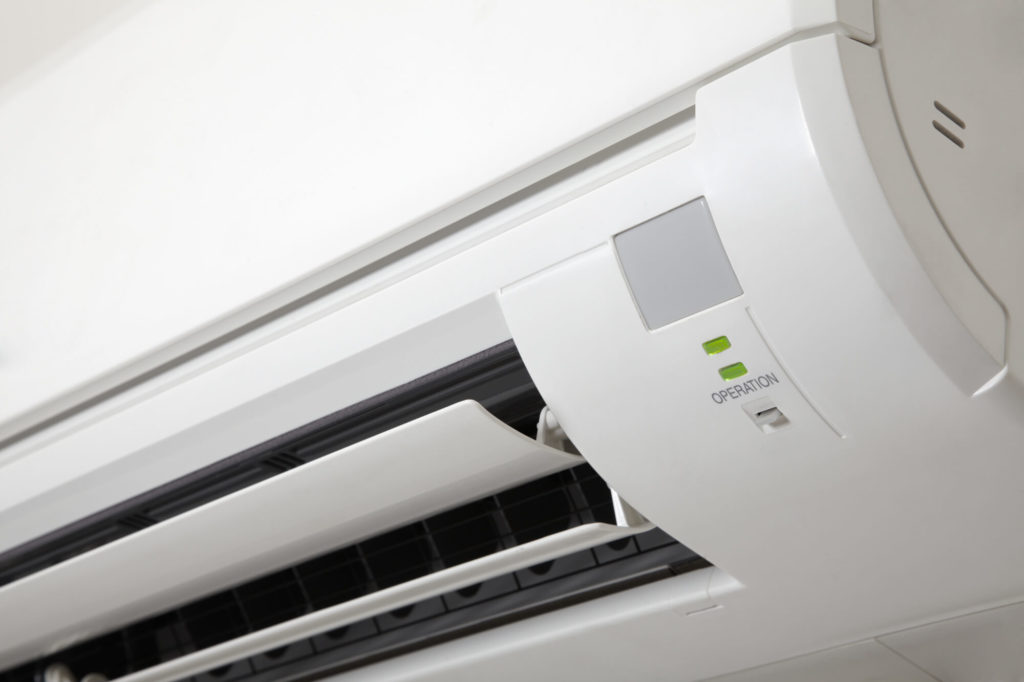
Split systems place the noisy compressor outside and the indoor unit on the wall. They are usually quieter and more efficient in use, but they require professional installation, an outdoor unit location and refrigerant pipework. If you only need one bedroom cooled every summer, a split may feel expensive upfront but far better to live with.
Sizing And Room Suitability
Air conditioning size is usually discussed in BTU or kW cooling capacity. Bigger is not automatically better. An undersized unit runs constantly and struggles; an oversized unit may cycle poorly, cost more and feel less comfortable.

Room size, ceiling height, glazing, insulation, sunlight, occupancy and heat-producing equipment all matter. For portable sizing, our portable air conditioner sizing guide gives a practical BTU table.
Installation And Legal Considerations
Fixed air conditioning systems containing refrigerant should be installed by qualified professionals. Poor installation can cause leaks, poor performance, noise issues and drainage problems. Outdoor unit location also matters for airflow, access, neighbours and appearance.
Some domestic installations may fall under permitted development, while flats, listed buildings, conservation areas or prominent outdoor units may need extra checks. A competent installer should discuss condensate drainage, electrical supply, noise, pipe routes and maintenance access before quoting.
The practical installation questions are often more important than brochure features. Can the outdoor unit be serviced safely? Will condensate drain by gravity or need a pump? Is the indoor unit placed where it can move air across the room rather than short-cycling near a doorway? A neat route for pipework, cables and drain lines can make the difference between a discreet installation and one that feels like an afterthought.
Noise should be considered for both occupants and neighbours. Bedrooms need low indoor noise at night, while outdoor units should be positioned away from sensitive boundaries where possible. A unit that is technically permitted can still cause frustration if it is mounted on a lightweight wall that vibrates or beside a neighbour’s bedroom window.
Running Costs And Efficiency
Running cost depends on unit efficiency, room heat gain, set temperature, outdoor temperature and tariff. A well-sized split system used to maintain a sensible temperature can be more efficient and comfortable than a portable unit fighting a badly sealed hose during the hottest part of the day.
Use shading, night ventilation and reduced internal heat gains first. Air conditioning works best when it is part of a cooling strategy, not the only defence against a room that has been allowed to overheat all day.
| Use Pattern | Cost Risk | Better Approach |
|---|---|---|
| Bedroom cooling for a few hot nights | Overspending on whole-house equipment | Consider a quiet single split or well-chosen portable unit |
| Daily summer use in a loft room | Poor comfort if the unit is undersized | Size the unit to heat gain, not just floor area |
| Open-plan living space | Uneven cooling and long run times | Plan airflow, shading and unit position together |
| Multiple rooms | High installation cost if every room has a separate system | Compare multi-split, zoning and priority-room cooling |
Which System Should You Choose?
| Situation | Likely Best Option |
|---|---|
| Rented home | Portable AC or non-permanent cooling |
| One hot bedroom | Single split or portable AC |
| Several upstairs rooms | Multi-split design |
| Major renovation | Ducted or planned multi-room system |
| Cooling and occasional heating | Air-to-air heat pump |
For simpler cooling ideas before investing, see our guide to ways to cool down a room.
Cost And Disruption Expectations
Portable air conditioning is the least disruptive because it needs no permanent installation. The compromise is the hose, noise and floor space. A single split is more disruptive because it needs mounting, pipework, drainage and an outdoor unit, but it usually feels much better in daily use.
Multi-split and ducted systems need more design work. They can be excellent, but they should be planned around room use, pipe routes, condensate drainage, electrical supply and maintenance access. In many homes, the neatest installation is the one designed before decoration or renovation, not after.
Comfort Features Worth Considering
| Feature | Why It Helps |
|---|---|
| Quiet mode | Important for bedrooms |
| Timer and scheduling | Pre-cools before peak heat |
| Dehumidification | Improves comfort in muggy weather |
| Heating mode | Useful shoulder-season warmth |
| Smart control | Helpful if used sensibly, not essential |
Do not buy on features alone. A quiet, correctly sized unit in the right position will usually outperform a feature-heavy unit installed badly or placed where airflow cannot reach the occupied part of the room.
Questions To Ask An Installer
- What cooling load have you assumed for each room?
- Where will the outdoor unit sit, and how will noise be managed?
- How will condensate drain safely?
- What maintenance access will be needed?
- Is the system sized for cooling only, or heating as well?
- Are there planning, leasehold or conservation constraints?
Good installers should explain these points clearly. If a quote lists only a brand, model and price, ask for more detail before accepting it. The position of the indoor unit also matters: airflow should reach the occupied part of the room without blowing uncomfortably across beds, sofas or desks.
For bedrooms, the quietest practical system is often more valuable than the most powerful one. For living rooms, airflow spread and solar gain may matter more. For garden offices and loft rooms, insulation and shading should be checked before sizing the unit.
Expert Insights From Our Heating And Cooling Engineers
Our engineers find that the most successful home AC projects start with the problem room, not the product. Is the room hot because of solar gain, poor ventilation, roof heat, electronics, or because the whole house traps heat? That diagnosis changes the system choice.
For fixed systems, installation quality is everything. A neat indoor unit is only half the job; drainage, pipe routes, outdoor airflow, noise and commissioning decide whether the system stays reliable and pleasant.
We also encourage homeowners to think about maintenance from day one. Filters need cleaning, condensate drains need to stay clear, and outdoor units should not be boxed in by sheds, bins or overgrown planting. Easy access keeps the system efficient and reduces the chance of summer breakdowns.
Frequently Asked Questions
What Type Of Air Conditioning Is Best For A UK Home?
For one or two rooms, a fixed split system is often the most comfortable permanent option. Portable AC suits renters or occasional use. Larger homes may need multi-split or ducted systems, especially during renovation.
Can Air Conditioning Heat A Room Too?
Many split air conditioners are air-to-air heat pumps, so they can provide efficient room heating as well as cooling. They do not usually provide domestic hot water, so they are not a direct replacement for a full wet central heating system.
Do I Need Planning Permission For Home Air Conditioning?
Many installations may be possible under permitted development, but flats, listed buildings, conservation areas and awkward outdoor unit positions can need extra checks. Always ask the installer to confirm local requirements before work starts.
Is Portable Air Conditioning Worth It?
Portable AC can be worth it for renters, occasional heatwaves or rooms where fixed installation is not possible. It is usually noisier and less efficient than a split system, and it must be vented properly through a window or other outlet.
How Big Should A Home Air Conditioner Be?
Size depends on room area, glazing, sunlight, ceiling height, insulation and occupancy. Do not choose only by floor area. An installer should calculate cooling load for fixed systems, while portable units can be matched using a BTU sizing guide.
Can One Air Conditioner Cool A Whole House?
Usually not unless it is a designed ducted or multi-room system. A single portable or split unit may improve nearby spaces, but doors, stairs and heat gains make whole-house cooling from one room unit unrealistic.
Summing Up
Home air conditioning systems range from quick portable units to designed multi-room installations. The best choice depends on the room, ownership situation, budget, noise tolerance and whether you want permanent cooling, heating support or occasional heatwave relief. The strongest results come from matching the system to the room problem first, then choosing the unit type.
Updated