
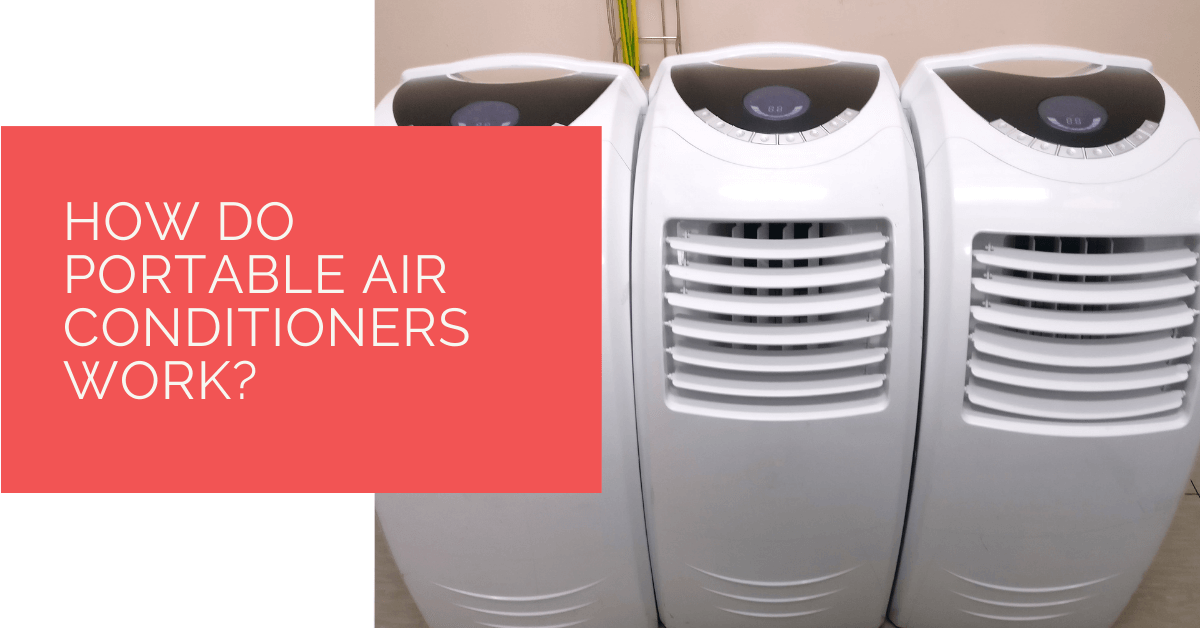
A portable air conditioner cools a room by moving heat from indoors to outdoors. It does not make heat disappear. It absorbs heat from room air, releases that heat through a condenser, and sends the hot air outside through an exhaust hose.
That hose is the detail people underestimate. Without proper venting, a portable AC is just moving heat around the room while using electricity. With a good window seal, the right BTU size and a closed door, it can make a hot bedroom, office or living room much more comfortable.
Key Takeaways
- Portable ACs use a refrigeration cycle, like other air conditioners.
- The cold side absorbs heat from room air.
- The hot side releases that heat outdoors through a hose.
- Most UK portable units are single-hose models.
- Correct venting and room sealing are essential for performance.
The Short Version
A portable air conditioner cools the room by moving heat from indoor air into refrigerant, then pushing that heat outside through an exhaust hose. The cold air you feel is only half the story. The unit must also get rid of heat, moisture and warm exhaust air, otherwise it is just moving discomfort around.
The Cooling Cycle In Simple Terms

Inside the unit, refrigerant circulates through an evaporator, compressor, condenser and expansion device. At the evaporator, the refrigerant absorbs heat from warm room air. A fan blows the cooled air back into the room. The compressor then raises the refrigerant pressure and temperature so the captured heat can be released at the condenser.
The condenser side gets hot, so the unit must get rid of that heat. A portable AC does this by blowing hot air through the exhaust hose to the outside.
The Refrigeration Cycle Step By Step
- Warm room air passes over the cold evaporator coil.
- Refrigerant inside the coil absorbs heat and changes state.
- The compressor raises the refrigerant pressure so it can release heat.
- The condenser side rejects that heat into the exhaust air stream.
- The hose carries hot air outside, while the fan returns cooled air to the room.
This is why a portable air conditioner needs both electricity and a route outdoors. The electricity runs the compressor and fans; the hose removes the heat that has been collected from the room. Without the hose, the unit would release the same heat back indoors.
Why The Exhaust Hose Is Essential
The exhaust hose is not optional. If it vents into a hallway, loft, cupboard or badly sealed window gap, much of the removed heat comes straight back. Keep the hose short, straight and properly connected to a window kit wherever possible.
For awkward rooms, see our guide to venting a portable air conditioner without a window. The principle remains the same: heat must leave the building.
| Hose Problem | What Happens | Better Fix |
|---|---|---|
| Hose left loose out of a window | Hot outdoor air leaks back in | Use a sealing kit matched to the window type |
| Hose extended too far | Heat builds in the hose and airflow drops | Keep it short and as straight as possible |
| Vented into a loft, hall or cupboard | Heat stays inside the property | Vent outdoors only |
| Sharp bends or crushed hose | Compressor works harder and cooling falls | Reposition the unit closer to the outlet |
Single-Hose Vs Dual-Hose Units
Most portable air conditioners sold in the UK use one hose. They draw room air across the condenser, heat it, and exhaust it outside. This can create negative pressure, pulling replacement warm air in through gaps under doors, around windows or from nearby rooms.
Dual-hose units use one hose to bring in outdoor air for the condenser and another to exhaust heated air. This can reduce pressure imbalance and improve performance in demanding rooms, although dual-hose units can be bulkier, more expensive and less common in the UK.
| Type | Strength | Weakness |
|---|---|---|
| Single hose | Simple, common, easier to install | Can pull warm air into the room |
| Dual hose | Better pressure balance | Bulkier and less common |
What Happens To Moisture?
As warm room air passes over the cold evaporator coil, moisture can condense out of the air. That is why many portable ACs also reduce humidity. Some collect water in a tank, some use a drain hose, and some evaporate much of the condensate through the exhaust stream.

If the tank fills, many units stop cooling until it is emptied. In humid weather, drainage may matter as much as cooling capacity. Our guide on how often portable air conditioners need draining covers this in more detail.
Why Portable ACs Feel Less Powerful Than Fixed AC
Portable units put the compressor inside the room, so they are noisier than split systems. Single-hose models also exhaust some indoor air, which can draw warm replacement air back into the building. The hose itself can radiate heat if it is long or poorly positioned.
That does not mean portable ACs do not work. It means they work best in one enclosed room, with a properly sealed window kit, sensible BTU size and shading to reduce solar gain. For sizing, see our portable air conditioner size guide.
Setup Checklist For Better Cooling

- Choose the right BTU for the room.
- Seal the window kit properly.
- Keep the hose short and straight.
- Close doors to the room being cooled.
- Shade sunny windows before the room heats up.
- Clean filters regularly.
- Empty or drain condensate as instructed.
- Do not expect one unit to cool multiple rooms.
What Each Internal Part Does
| Part | Role | What You Notice |
|---|---|---|
| Evaporator coil | Absorbs heat from room air | Cool air from the front vent |
| Compressor | Raises refrigerant pressure | Hum and cycling noise |
| Condenser coil | Releases captured heat | Hot air sent through hose |
| Fan | Moves air across coils | Airflow and fan noise |
| Condensate system | Handles removed moisture | Tank emptying or drain hose |
Common Problems And What They Mean
| Problem | Likely Cause | What To Check |
|---|---|---|
| Room does not cool | Undersized unit, poor hose seal or too much heat gain | Window kit, room size, sunlight, doors |
| Unit fills with water | High humidity or condensate system full | Drain plug, tank and manual instructions |
| Hot air blows back | Hose leak or poor venting | Hose connection and window seal |
| Unit cycles on and off | Thermostat satisfied, airflow blocked or fault | Set temperature, filter and vents |
| Unit is loud at night | Compressor noise, vibration or hard flooring | Night mode, placement and anti-vibration mat |
| Cooling gets worse over time | Dirty filter or blocked intake | Clean filters and keep clearance around the unit |
If a portable air conditioner cools well for ten minutes and then struggles, the fault is often not the refrigerant. It is usually airflow, exhaust leakage, a full condensate tank, a dirty filter or a room gaining heat faster than the unit can remove it. Refrigerant repairs are specialist work and are rarely economical on cheaper portable units.
Using A Portable AC Efficiently
Portable air conditioners work best when they are maintaining a room, not trying to reverse hours of heat gain. Close curtains or blinds before direct sun hits the glass. Start the unit before the room becomes unbearable. Close the door so the machine cools one defined space.
Filter cleaning also matters. A clogged filter reduces airflow across the evaporator, which can reduce cooling and increase noise. If the unit starts blowing less air, smells musty or cycles strangely, check the filter and water tank before assuming the compressor has failed.
Common Misunderstandings
A portable AC is not the same as a fan. A fan helps your body lose heat by moving air over your skin, but the room temperature may not fall. A portable AC removes heat from the room and sends it outside, which is why it uses more power and needs a hose.
It is also not the same as an evaporative air cooler. An air cooler uses water evaporation and can add moisture to the air. A portable AC removes moisture as part of the cooling process. In humid UK weather, that difference can be significant for comfort.
Finally, the thermostat on the unit measures conditions near the appliance, not necessarily beside your bed or desk. If the unit short cycles or leaves the far side of the room warm, airflow direction and placement may need adjusting.
Expert Insights From Our Cooling Engineers
Our engineers see portable AC problems caused by setup more often than by the refrigeration cycle itself. A unit can be correctly sized but still disappoint if the hose leaks, the window is open around the panel or the room is full of afternoon sun.
The best way to use a portable AC is to start early, close the room, shade the glass and let the unit maintain comfort rather than rescue a room that has already absorbed heat all day.
We also advise setting a realistic target. Dropping a sun-baked loft room from 30C to 20C may be beyond a small portable unit, especially if the roof, walls and windows are still absorbing heat. A more realistic target, such as making the room comfortable enough to sleep, usually leads to better product choice and fewer disappointments.
Frequently Asked Questions
Does A Portable Air Conditioner Really Cool A Room?
Yes, a true portable air conditioner can cool a room because it uses a refrigeration cycle to remove heat and exhaust it outdoors. It works best in one enclosed room with a properly sealed hose and correctly sized BTU output.
Why Does A Portable AC Need A Hose?
The hose carries captured heat outside. Without it, the unit would release heat back into the same room and fail to cool effectively. A poor hose seal can also let warm air back in and reduce performance.
What Is The Difference Between A Portable AC And An Air Cooler?
A portable AC uses refrigerant and a compressor to remove heat from the room. An air cooler uses evaporation and does not exhaust heat outdoors. Air coolers can help in some dry conditions but are not true air conditioners.
Do Portable Air Conditioners Dehumidify?
Yes, most portable ACs remove some moisture as air passes over the cold evaporator coil. The water may collect in a tank, drain through a hose or be partly expelled with the exhaust air, depending on the model.
Are Dual-Hose Portable Air Conditioners Better?
They can be more efficient in some rooms because they reduce the negative pressure created by single-hose models. However, they are usually bulkier, cost more and are less common in the UK, so the best choice depends on the room and budget.
Why Is My Portable AC Not Cooling Properly?
Common causes include an undersized unit, poor window seal, blocked filter, long or kinked hose, open doors, direct sunlight, full water tank or unrealistic expectations for multiple rooms. Fix setup issues before assuming the unit is faulty.
Summing Up
Portable air conditioners work by absorbing heat from room air and venting that heat outdoors through an exhaust hose. They can cool effectively, but only when sized correctly, sealed properly and used in an enclosed room with realistic expectations.
Updated