
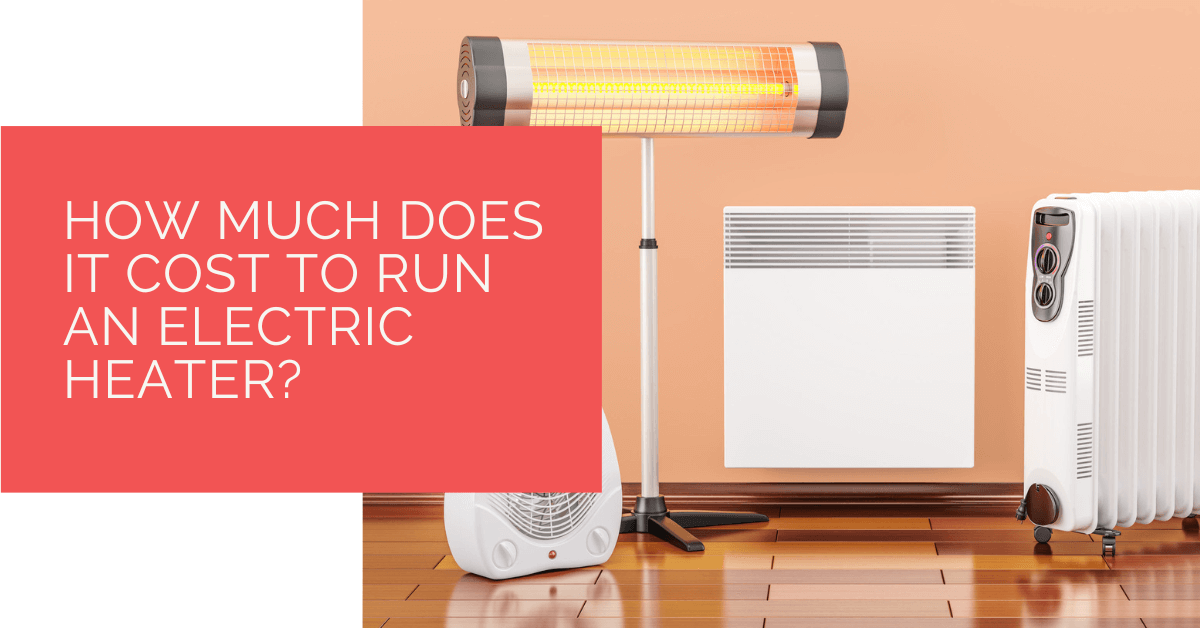
An electric heater’s running cost is easy to calculate, but easy to misunderstand. The wattage tells you how much electricity the heater can use at full power. The real bill depends on how long it runs, your electricity unit rate, the thermostat, the room’s heat loss and whether the heater is solving a small comfort problem or trying to heat a whole home.
At the April to June 2026 Ofgem average Direct Debit electricity unit rate of 24.67p per kWh, a 1kW electric heater costs about 25p per hour if it runs continuously. A 2kW heater costs about 49p per hour. In real use, a thermostat may cycle the heater on and off once the room is warm, so the actual cost can be lower than the full-power calculation.
This guide shows the running cost formula, gives worked examples for common heater sizes, explains what “100% efficient” really means, and helps you decide when electric heating is useful and when it becomes an expensive habit.
Contents
- 1 Key Takeaways
- 2 The Running Cost Formula
- 3 Cost Per Hour by Heater Wattage
- 4 Worked Examples for Real Rooms
- 5 Are Electric Heaters Efficient?
- 6 Heater Types Compared
- 7 Room Size, Insulation and Thermostats
- 8 Monthly Cost Scenarios
- 9 How to Reduce Running Costs
- 10 Safety and Electrical Load
- 11 When Electric Heating Makes Sense
- 12 Case Study: Heating a Home Office Without Letting Costs Run Away
- 13 Expert Insights From Our Heating Engineers
- 14 Frequently Asked Questions
- 14.1 How Much Does a 2kW Electric Heater Cost to Run Per Hour?
- 14.2 How Much Does a 1kW Electric Heater Cost to Run?
- 14.3 Are Electric Heaters 100% Efficient?
- 14.4 Is It Cheaper to Heat One Room With an Electric Heater?
- 14.5 Which Type of Electric Heater Is Cheapest to Run?
- 14.6 Do Oil-Filled Radiators Use Less Electricity Than Fan Heaters?
- 14.7 Should I Leave an Electric Heater on Overnight?
- 14.8 How Can I Reduce Electric Heater Running Costs?
- 14.9 How Do Electric Heaters Compare With Heat Pumps?
- 15 Summing Up
Key Takeaways
- Electric heater cost is calculated as: kW rating x hours used x electricity unit rate.
- At 24.67p/kWh, a 1kW heater costs about 25p per hour and a 2kW heater costs about 49p per hour at full power.
- Thermostats, timers and room insulation can reduce real running cost by cutting unnecessary runtime.
- Most electric resistance heaters are close to 100% efficient at point of use, but that does not mean they are cheap.
- Fan, convector, oil-filled, infrared and panel heaters mainly differ in how they deliver heat, not in magical energy savings.
- Electric heaters work best for short-term, room-specific heating. They are usually expensive for whole-home heating over long periods.
- Portable heaters draw a lot of power, so safety, socket condition and clear space around the heater matter.
The Running Cost Formula
The formula is straightforward:
Heater power in kW x hours used x electricity unit rate = running cost.
A 2kW heater running at full power for three hours uses 6kWh of electricity. At 24.67p/kWh, that costs about £1.48. A 1kW heater running for the same three hours uses 3kWh and costs about 74p.
The important phrase is “at full power”. Many heaters cycle on and off once the room reaches temperature. A thermostat does not change the cost of each kWh, but it can reduce the number of kWh used by stopping the heater from running constantly.
Your own tariff may differ from the Ofgem average. Ofgem’s energy price cap is a useful reference point, but your bill is the figure to use for exact calculations.
Cost Per Hour by Heater Wattage
The table below uses 24.67p/kWh, the Ofgem average Direct Debit electricity unit rate for April to June 2026. It assumes the heater runs continuously at full output for the full hour.
| Heater Rating | Electricity Used Per Hour | Approx. Cost Per Hour | Typical Use |
|---|---|---|---|
| 500W | 0.5kWh | 12p | Personal heat, under-desk use or very small spaces |
| 1kW | 1kWh | 25p | Small rooms or background support |
| 1.5kW | 1.5kWh | 37p | Bedrooms, home offices and moderate rooms |
| 2kW | 2kWh | 49p | Faster warm-up or colder rooms |
| 2.5kW | 2.5kWh | 62p | Larger spaces, usually with careful controls |
These figures do not mean a lower-wattage heater is always cheaper in practice. If a 500W heater cannot warm the room, it may run for hours and still disappoint. A correctly sized thermostatic heater can be more sensible than an underpowered heater that never reaches temperature.
Worked Examples for Real Rooms
A home office is a common electric-heater use case. Imagine a 1.5kW heater running at full power for the first hour, then cycling for about half the time over the next three hours. That uses roughly 3.75kWh, costing about 93p at 24.67p/kWh. If the same heater runs flat out for all four hours in a cold room, it uses 6kWh and costs about £1.48.
For a living room, a 2kW heater used at full power for two evening hours uses 4kWh, costing about 99p. If it then cycles half the time for another two hours, add around 2kWh, bringing the evening to about £1.48. Over a month, repeated evening use can become noticeable.
For a small bathroom, a correctly rated fixed heater used briefly may cost little per session. But portable heaters near water are a safety concern and should not be improvised. Bathrooms need equipment suitable for the location and installed correctly.
Are Electric Heaters Efficient?
Most electric resistance heaters are close to 100% efficient at point of use. Nearly all the electricity they draw becomes heat in the room. The Centre for Sustainable Energy makes the same point clearly: electric room heaters are efficient in the sense that electricity is converted into heat, but this does not make them cheap to run.
The confusion comes from mixing up efficiency and cost. A 2kW fan heater, 2kW convector and 2kW oil-filled radiator all use 2kWh if they run at full output for one hour. The energy cost is the same. What changes is how the heat feels, how quickly the room warms, whether the thermostat cycles accurately, and how long the heater needs to run.
A heat pump is different because it moves heat rather than creating it directly. A well-designed heat pump may deliver several units of heat for each unit of electricity. That is why direct electric heaters can be efficient at point of use but still less economical for long-term whole-home heating.
Heater Types Compared
Electric heater types are best compared by use case, not by vague claims about being the cheapest. The right heater is the one that delivers comfort in the room you are actually using without running longer than necessary.
| Heater Type | What It Does Well | Main Drawback | Best Use |
|---|---|---|---|
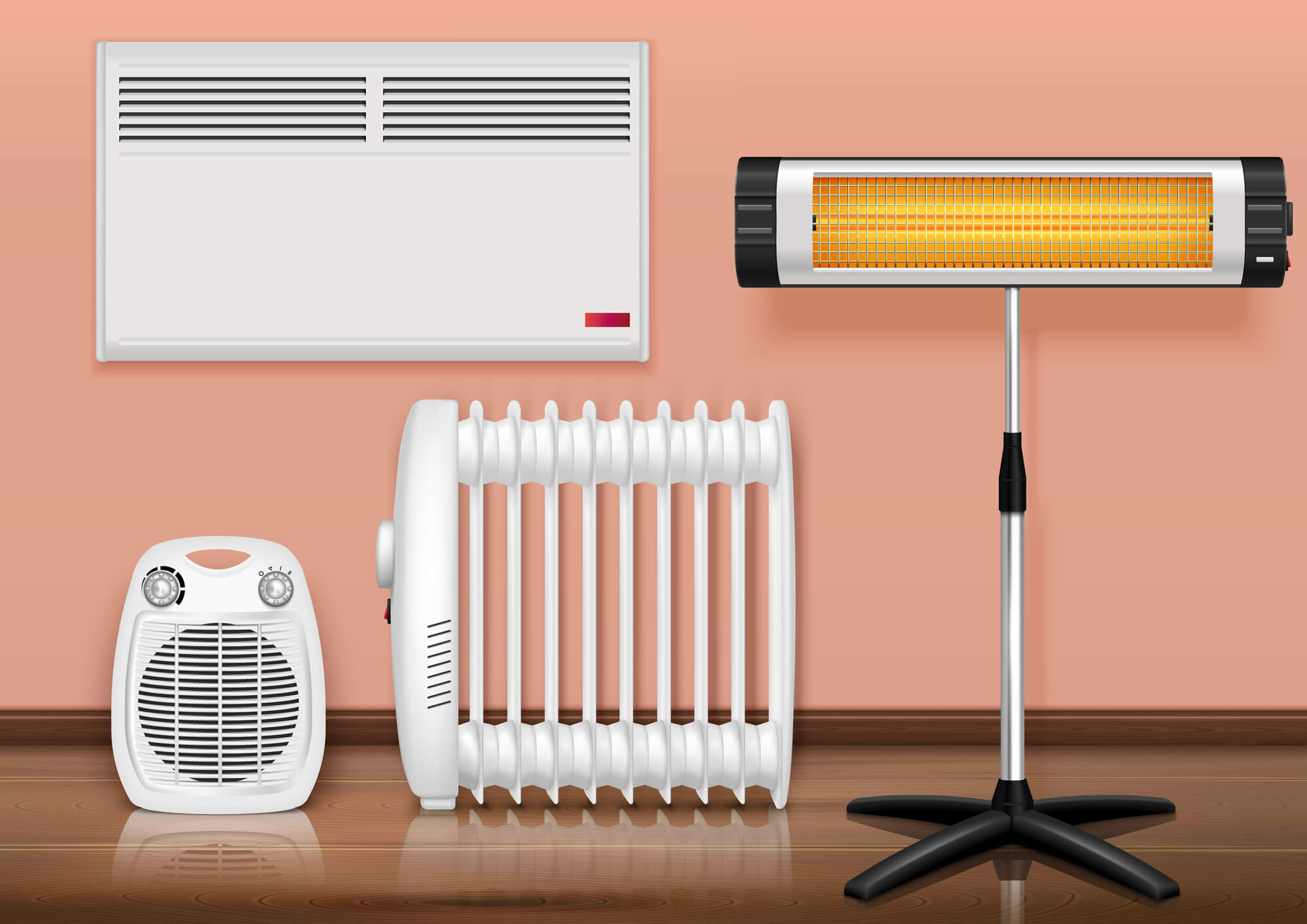
| Fan Heater | Fast, direct warm-up | Noisy and cools quickly after switching off | Short bursts in small rooms |
| Convector Heater | Warms room air fairly quickly | Can lose comfort quickly in draughty spaces | Bedrooms, living rooms and occasional support |
| Oil-Filled Radiator | Gentle, steady warmth after warm-up | Slow to heat from cold | Longer sessions in offices or bedrooms |
| Panel Heater | Slim and wall-friendly | Needs good controls to avoid waste | Background room heating |
| Infrared Heater | Warms people and surfaces directly | Less useful when you need all the room air warmed | Targeted heat, workshops and draughtier spaces |
| Halogen Heater | Instant radiant warmth | Limited range and important safety clearances | Short, localised heating |
Room Size, Insulation and Thermostats
A heater does not know whether the room is easy or difficult to heat. It only supplies heat. If the room loses heat faster than the heater can replace it, the heater will run continuously and the room may still feel cold.
For a small insulated home office, a 1kW or 1.5kW heater with a thermostat may be enough. For a conservatory, garage, open-plan living space or draughty room, even a 2kW heater may struggle. In that case, another heater is often a costly way to avoid fixing the room.
Thermostat quality matters. A heater with a crude dial may overshoot or run longer than needed. A heater with a clear thermostat, timer and eco mode can be easier to control. Smart plugs with energy monitoring can also show how much the heater actually uses, though they must be correctly rated for the load.
Monthly Cost Scenarios
A 2kW heater used for two full-power hours every evening for 30 days uses 120kWh. At 24.67p/kWh, that costs about £29.60 for the month. If the heater cycles and averages closer to 1kW over those two hours, the monthly cost is about £14.80.
A 1.5kW office heater used for five hours on 20 working days could use up to 150kWh if running flat out, costing about £37.00. If it cycles half the time after the room warms, the cost might be closer to £18.50. Real use sits somewhere between the maximum rating and the thermostat-controlled average.
This is why monitoring is useful. The wattage label shows the maximum draw. A plug-in energy monitor shows what is actually happening in your room.
How to Reduce Running Costs
- Use a thermostat rather than leaving the heater on full power.
- Use a timer for predictable periods, such as home office hours.
- Close the door to the room being heated.
- Seal obvious draughts around doors and windows.
- Use curtains, blinds or rugs where they reduce heat loss safely.
- Choose the lowest comfortable temperature rather than chasing instant heat.
- Keep the heater clear so air can circulate properly.
- Compare your actual tariff, not only national average figures.
If a room still feels cold while the heater runs constantly, fix the heat loss before buying another heater. Draught-proofing, insulation, radiator balancing or repairing the main heating can give better value than adding more plug-in heat.
Safety and Electrical Load
Electric heaters are high-load appliances, so safety matters. Plug portable heaters directly into a wall socket unless the manufacturer says otherwise. Keep them away from curtains, bedding, clothes, paper and furniture. Never cover a heater or use it for drying laundry.
Avoid damaged plugs, scorched sockets, loose connections and lightweight extension leads. If a heater trips electrics, smells hot, buzzes, rattles or shows visible damage, stop using it. Electrical Safety First has practical portable heater safety advice that is worth checking before using a heater for long periods.
Be especially careful with bathrooms, bedrooms and overnight use. Portable heaters should not be treated like fixed heating systems unless the product is designed and installed for that setting.
When Electric Heating Makes Sense
Electric heaters are useful when the job is specific: warming a home office during the day, taking the chill off a spare room, providing short-term backup during boiler repairs, or heating a workshop for a limited period.
They make less sense when they quietly become the main heating source for several rooms every day. At that point, the running cost can overtake the convenience. If you are relying on plug-in heaters because the main system cannot keep up, the underlying problem may be insulation, radiator sizing, boiler controls, air leakage or an unsuitable heating schedule.
If you are comparing longer-term heating options, our electric heating options guide and gas boiler alternatives guide are better starting points than judging by portable heater purchase price alone.
Case Study: Heating a Home Office Without Letting Costs Run Away
Background
A homeworker used a 2kW portable heater in a small office because heating the whole house during the day felt wasteful. At first, the heater was switched on high and left running for most of the working day.
Assessment
The office warmed quickly, but heat escaped through a draughty door and an uninsulated external wall. The heater was not the only issue. The room was losing heat faster than it needed to.
Changes Made
The household added a draught excluder, used the thermostat more deliberately and set a timer for working hours. They also used a plug-in energy monitor to see when the heater was running constantly and when it was cycling.
Result
The heater became a targeted comfort tool rather than background heating. The room still cost money to heat, but the household could see the trade-off clearly and avoid leaving the heater running longer than needed.
Expert Insights From Our Heating Engineers
One of our senior heating engineers with over 18 years of experience says the wattage label is the honest starting point.
“A 2kW heater can use 2kWh every hour. That is not a problem for short targeted use, but it becomes expensive when people forget it is running. Controls are what stop occasional heating turning into an expensive habit.”
He also warns against judging heaters only by type. “People ask whether oil-filled, fan or infrared is cheapest. The better question is what room you are heating, how long for, and whether the heater will actually switch off once the room is comfortable.”
Frequently Asked Questions
How Much Does a 2kW Electric Heater Cost to Run Per Hour?
At 24.67p/kWh, a 2kW electric heater costs about 49p per hour if it runs continuously at full output. If the thermostat cycles the heater on and off once the room warms, the real cost may be lower.
How Much Does a 1kW Electric Heater Cost to Run?
A 1kW heater uses 1kWh for every hour it runs at full power. At 24.67p/kWh, that is about 25p per hour. Over four full-power hours, it would cost about 99p.
Are Electric Heaters 100% Efficient?
Most electric resistance heaters are close to 100% efficient at point of use because nearly all the electricity becomes heat in the room. That does not automatically make them cheap. Electricity unit rates are usually higher than gas, and direct electric heating uses one unit of electricity for roughly one unit of heat.
Is It Cheaper to Heat One Room With an Electric Heater?
Often, yes, if you only need one room warm for a short period. It can be cheaper than heating the whole home unnecessarily. If the heater runs for many hours every day, the cost can climb quickly, especially in a cold or draughty room.
Which Type of Electric Heater Is Cheapest to Run?
The cheapest heater to run is usually the one with the lowest wattage that still heats the space adequately and has good controls. Fan heaters, convectors, oil-filled radiators and infrared heaters all use electricity according to their wattage. The best choice depends on whether you need quick heat, steady warmth or targeted comfort.
Do Oil-Filled Radiators Use Less Electricity Than Fan Heaters?
Not automatically. A 2kW oil-filled radiator and a 2kW fan heater use the same electricity at full output. Oil-filled radiators can feel more economical during longer sessions because they release heat gently and may cycle differently, while fan heaters are better for quick bursts.
Should I Leave an Electric Heater on Overnight?
Portable electric heaters are generally not ideal for unattended overnight use. If you need bedroom heating, use equipment designed for that setting, keep it clear of fabrics, follow the manufacturer’s instructions and avoid damaged sockets or extension leads. Fixed heating with proper controls is safer for regular overnight heating.
How Can I Reduce Electric Heater Running Costs?
Use a thermostat, set a timer, heat only the room you are using, close doors, fix draughts and avoid running the heater at full power longer than needed. A plug-in energy monitor can also show whether the heater is cycling or running constantly.
How Do Electric Heaters Compare With Heat Pumps?
Direct electric heaters produce roughly one unit of heat for one unit of electricity. A well-designed heat pump can deliver several units of heat for each unit of electricity because it moves heat from outside rather than creating all the heat directly. For long-term whole-home heating, that difference can be significant.
Summing Up
To work out the cost of running an electric heater, multiply the heater’s kW rating by the number of hours used and your electricity unit rate. At 24.67p/kWh, a 2kW heater costs about 49p per hour at full power, while a 1kW heater costs about 25p.
Electric heaters are useful when used deliberately: one room, clear purpose, controlled runtime and safe placement. They are less useful as a hidden whole-home heating strategy, especially in poorly insulated rooms. The heater type matters, but the bigger questions are how much power it draws, how long it runs, and whether the room is holding onto the heat.
Updated