
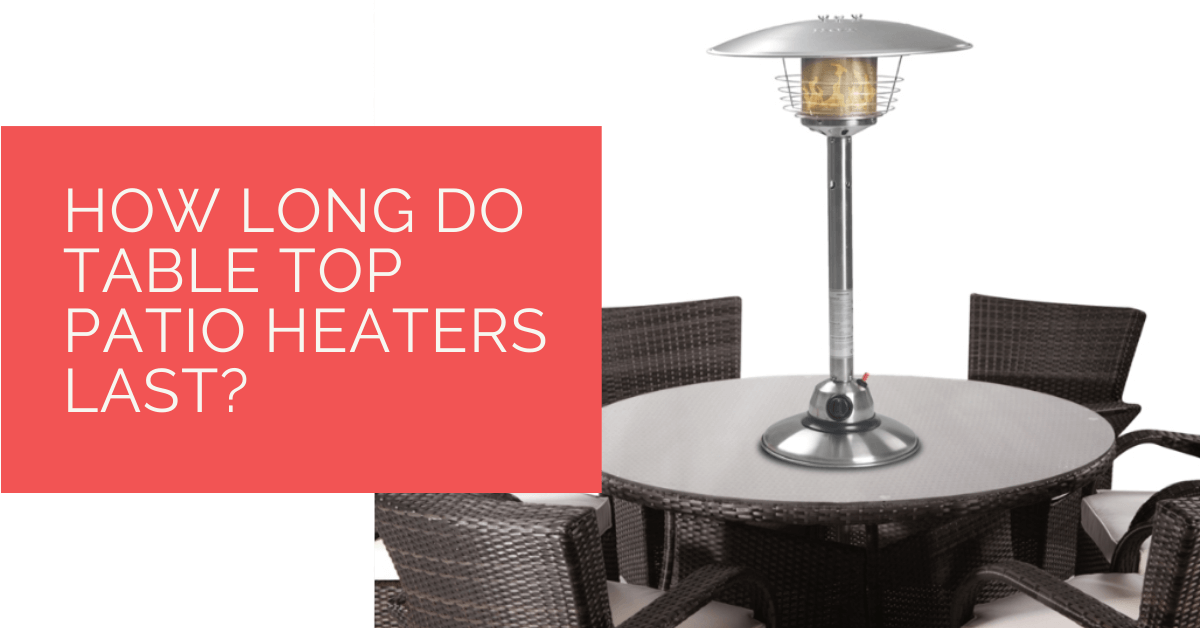
A table top patio heater can last several years, but lifespan depends heavily on whether it is electric or gas, how often it is used, where it is stored and how well it is protected from weather.
The lifespan of a tabletop patio heater depends less on the calendar and more on weather exposure. Outdoor heaters deal with rain, wind, heat cycles, corrosion, insects and occasional knocks, so storage and maintenance matter more than many buyers expect.
Contents
- 1 Key Takeaways
- 2 Typical Lifespan
- 3 Electric Vs Gas Lifespan
- 4 Case Study: Two Identical Patio Heaters With Different Lifespans
- 5 Expert Insights From Our Heating Engineers
- 6 Frequently Asked Questions
- 6.1 How Long Do Table Top Patio Heaters Last?
- 6.2 Do Electric Patio Heater Lamps Wear Out?
- 6.3 Do Gas Tabletop Heaters Last Longer Than Electric Ones?
- 6.4 Can I Leave A Tabletop Patio Heater Outside All Year?
- 6.5 When Is A Patio Heater Unsafe To Keep Using?
- 6.6 Are Stainless Steel Tabletop Heaters Worth It?
- 6.7 Can Patio Heater Parts Be Replaced?
- 6.8 Does Frequent Use Shorten A Patio Heater’s Life?
- 7 Summing Up
Key Takeaways
- Many tabletop patio heaters last around 3 to 7 years, depending on type and care.
- Electric models often need lamp or element replacement before the whole heater fails.
- Gas models need hose, regulator, burner and ignition checks.
- Leaving any patio heater outside uncovered will usually shorten its life.
- Replace a heater if electrical parts, gas fittings or the base are damaged.

Typical Lifespan
Electric tabletop heaters often last 3 to 7 years with seasonal use, while gas models can last longer if the burner, regulator and body are maintained. Cheap units left outside uncovered may fail much sooner.
What Fails First
For electric models, lamps, switches and cables are common weak points. For gas models, ignition systems, regulators, hoses and corrosion are the usual concerns.
Tabletop patio heaters often have shorter lives than wall-mounted or commercial outdoor heaters because they are moved, stored, knocked, covered and uncovered more often. They also sit closer to drinks, damp tables and wind-blown debris. Lifespan therefore depends as much on handling and storage as on the rated life of the heating element or burner.
How To Make One Last Longer
Store it dry, cover it when not in use, clean reflectors, check cables or hoses and avoid leaving it exposed to rain. Weather protection matters more than most buyers expect.
| Care Habit | Why It Helps | Applies To |
|---|---|---|
| Store indoors when not in season | Reduces corrosion, damp and UV damage | Electric and gas |
| Use a breathable cover | Protects from rain while avoiding trapped condensation | Electric and gas |
| Clean reflectors and grilles | Keeps heat output consistent and reduces smells | Mainly electric infrared |
| Check gas hose and regulator | Reduces leak and ignition risks | Gas models |
| Keep cable connections dry | Protects switches and electrical safety | Electric models |
When To Replace
Replace a heater with cracked elements, damaged cables, unstable bases, corroded gas parts or unreliable ignition. Outdoor heat is not worth a safety risk.
For gas tabletop heaters, any smell of gas, damaged hose, unstable flame or suspected regulator fault should be treated seriously. For electric models, visible cable damage, water ingress, repeated tripping or signs of overheating are clear stop-use signals. A cheap patio heater is not worth repairing if the repair leaves doubts about outdoor electrical or gas safety.
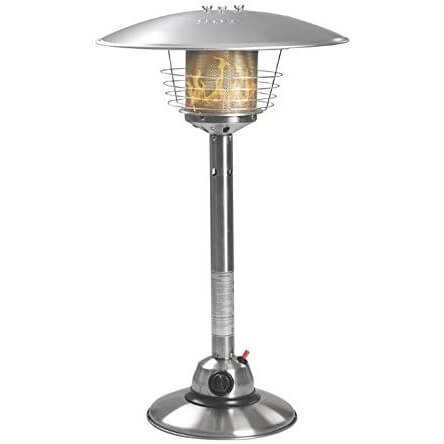
For buying guidance, see our table top heater guide.
Electric Vs Gas Lifespan
| Type | Common Wear Points | Practical Lifespan Notes |
|---|---|---|
| Electric halogen or quartz | Lamp, element, switch, cable and reflector | Often simple to use, but lamps are consumable parts |
| Gas table top heater | Burner, regulator, hose, ignition and body corrosion | Can last well if gas parts are inspected and stored dry |
| Stainless steel body | Ignition and consumables before body failure | Usually better outdoors, but not maintenance-free |
| Budget painted steel | Rust, unstable fittings and worn controls | May deteriorate quickly if left outside |
Weather Is The Biggest Enemy
Outdoor heaters fail because they live in harsh conditions. Rain reaches switches and fixings, wind blows dirt into burners, temperature changes loosen parts, and corrosion starts around screws, seams and bases.
If the heater is light enough to bring indoors, do it. If not, use a breathable weather cover and keep it upright. Covering a wet heater can trap moisture, so let it dry first.
Pre-Season Safety Check
At the start of the season, check stability, cables, plugs, elements, reflectors, gas hoses, regulators and ignition. For gas units, smell is not a reliable safety system; use proper leak checks and follow the manual. If a heater has been stored for months, do not assume it is ready because it worked last year.
Do the same check before putting the heater away. Wipe off dirt, allow the unit to cool fully, dry any wet surfaces and disconnect gas cylinders where the manual instructs it. End-of-season care is often what decides whether the heater starts cleanly next spring or emerges rusty, damp and unreliable.
What To Buy If Longevity Matters
Choose a heater with a stable base, replaceable parts, clear manual, weather-resistant finish and sensible warranty. For electric models, check whether replacement lamps are available. For gas models, check regulator and hose availability.
Avoid choosing purely by heat output. A powerful heater with thin metal, poor fixings or weak weather protection may not last as long as a slightly less powerful model built for real outdoor use. If the heater will live near the coast, corrosion resistance becomes even more important.
Also match the heater to how often you use the space. A tabletop unit is convenient for occasional meals outside, but it may not be the longest-lasting choice for a patio heated several nights a week. In that case, a better-quality freestanding or wall-mounted infrared heater may cost more upfront but avoid repeated replacement of lightweight tabletop models.
Common Mistakes That Shorten Lifespan
The biggest mistakes are storing the heater wet, using the wrong gas parts, ignoring corrosion, dragging the unit by weak fittings and continuing to use it after ignition becomes unreliable. Outdoor heaters often fail gradually. A little rust, a loose guard or a temperamental switch may look minor, but those small faults can become safety issues once heat, gas or electricity is involved.
Another mistake is treating all tabletop heaters as disposable. If replacement lamps, regulators or hoses are available and the body is sound, a simple part replacement may extend useful life. If the body is unstable, the reflector is badly corroded or electrical parts have been wet, replacement is usually the more sensible option.
Case Study: Two Identical Patio Heaters With Different Lifespans
Background
Two neighbours bought similar tabletop patio heaters in the same year. One was stored in a shed after each season; the other stayed outside under a loose cover.
What Changed
After three winters, the exposed heater had corrosion around fixings and unreliable ignition. The stored heater needed only cleaning and a replacement consumable part.
Result
Weather exposure, not usage time, made the biggest difference.
Expert Insights From Our Heating Engineers
One of our senior heating engineers with over 20 years of experience says outdoor heaters age fastest when they are stored wet or left uncovered. The burner, lamp, cable or ignition system usually fails before the basic idea of the heater becomes obsolete.
He recommends a pre-season safety check every year. If the heater is unstable, corroded, cracked, sparking, leaking gas or difficult to light, replacement is usually safer than trying to squeeze out another season.
He also advises against ignoring small movement or instability. A tabletop heater that rocks, leans or has loose fixings is more likely to be knocked, damaged or used unsafely. Outdoor heating combines heat, weather and people moving around furniture, so mechanical condition matters as much as whether the lamp or burner still works.
For electric heaters, check the cable route and plug condition before every season. For gas heaters, hose age, regulator condition and clean burner ports are the details that often decide whether the heater is still safe as well as merely old.
Frequently Asked Questions
How Long Do Table Top Patio Heaters Last?
Many last around 3 to 7 years, but the range is wide. A well-built heater stored dry and used seasonally can last longer, while a budget unit left outside through winter may deteriorate much faster.
Do Electric Patio Heater Lamps Wear Out?
Yes. Halogen, quartz and infrared lamps are consumable parts. The body of the heater may still be usable after a lamp fails, but only replace lamps with the correct type specified by the manufacturer.
Do Gas Tabletop Heaters Last Longer Than Electric Ones?
They can, especially if the body is stainless steel and the heater is stored properly. However, gas models have hoses, regulators, burners and ignition parts that need checking, so longevity depends on maintenance as well as materials.
Can I Leave A Tabletop Patio Heater Outside All Year?
It is better not to. Rain, frost, wind and condensation shorten the life of electrical parts, gas fittings, screws and reflectors. If it must stay outside, use a suitable cover only after the heater is dry.
When Is A Patio Heater Unsafe To Keep Using?
Stop using it if the base is unstable, cables are damaged, lamps are cracked, gas hoses are perished, ignition is unreliable, corrosion is severe or you smell gas. Outdoor comfort is not worth taking a fire or gas-safety risk.
Are Stainless Steel Tabletop Heaters Worth It?
They can be worth paying more for if the heater will be used outdoors regularly. Stainless steel usually resists corrosion better than painted budget metal, although burners, lamps, hoses and controls still need care.
Can Patio Heater Parts Be Replaced?
Often, yes. Lamps, regulators, hoses and some ignition parts may be replaceable if compatible spares are available. Before buying a heater, check whether the brand sells spares rather than treating the whole product as disposable.
Does Frequent Use Shorten A Patio Heater’s Life?
Frequent use wears lamps, ignition parts and gas components faster, but careful maintenance can offset some of that. Weather exposure and poor storage are often more damaging than normal use.
Summing Up
A table top patio heater may last several years, but weather protection, storage and safety checks decide whether it reaches the upper end of that range. Keep it dry, inspect it before each season and replace it when electrical, gas or structural parts become suspect. If you use outdoor heating regularly, buy for durability and spare-part availability rather than choosing only by heat output or the lowest upfront price. A heater that can be maintained safely will usually be better value than a cheaper model that has to be replaced after one or two wet winters, especially in exposed gardens or coastal locations where salt air accelerates corrosion around screws, seams and controls.
Updated