
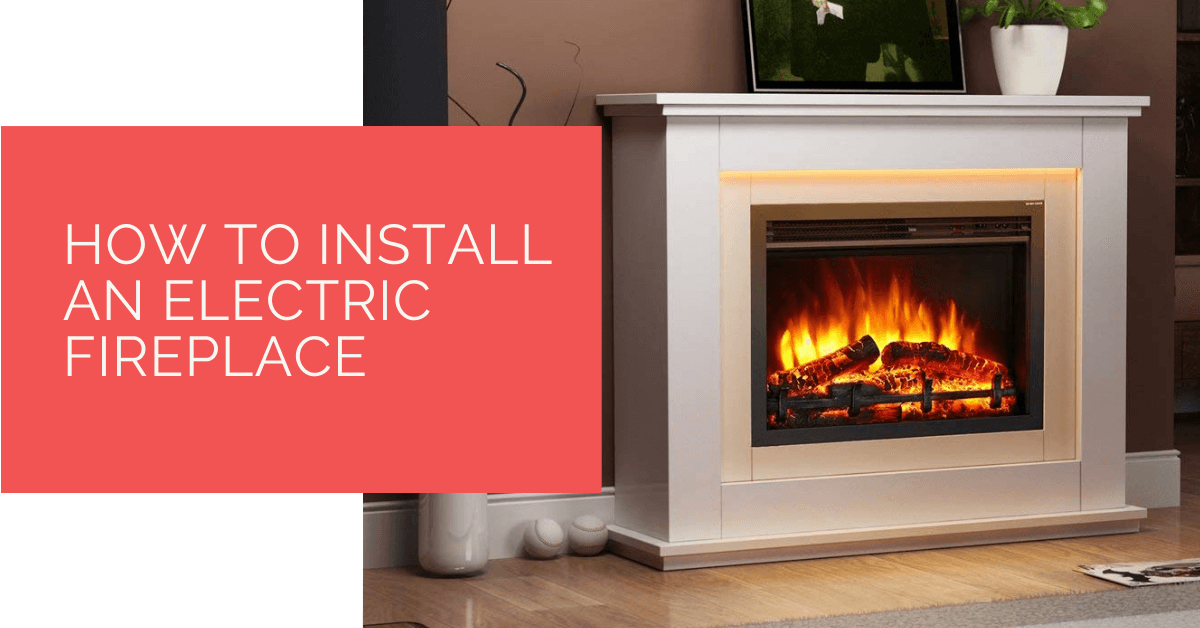
Installing an electric fireplace is often simpler than fitting a gas or solid-fuel fire, but it still deserves careful planning. The appliance may not need a chimney or flue, yet it does need a suitable location, secure fixing, safe power and enough clearance for heat and airflow.
The right method depends on the type: freestanding suite, wall-mounted fire, inset fire, media-wall unit or stove-style heater. Treat the manufacturer instructions as the final document, and use this guide to understand the checks that prevent the common mistakes.
Contents
- 1 Key Takeaways
- 2 Choose The Right Installation Type
- 3 Pre-Installation Checks
- 4 Wall-Mounted Fireplace Steps
- 5 Inset And Suite Installation
- 6 Media Wall, TV And Cable Planning
- 7 When To Use An Electrician
- 8 Safety And Finish Checklist
- 9 Expert Insights From Our Heating Engineers
- 10 Summing Up
- 11 Frequently Asked Questions
- 11.1 Can I Install An Electric Fireplace Myself?
- 11.2 Does An Electric Fireplace Need A Chimney?
- 11.3 Can I Plug An Electric Fireplace Into An Extension Lead?
- 11.4 How High Should A Wall-Mounted Electric Fireplace Be?
- 11.5 Can An Electric Fireplace Go Under A TV?
- 11.6 What Should I Check Before Cutting An Inset Opening?
Key Takeaways
- Plug-in freestanding fireplaces are usually the easiest to install.
- Wall-mounted models need suitable fixings and a wall that can carry the load.
- Inset and media-wall fires need accurate recess dimensions and ventilation clearance.
- High-load heaters should normally plug directly into a suitable wall socket.
- Use an electrician for new sockets, hardwiring or hidden cable routes.
Choose The Right Installation Type
A freestanding electric fireplace suite may only need assembly and positioning. A wall-mounted model needs brackets fixed into a suitable wall. An inset electric fire needs a recess with the right depth and airflow. A media-wall fire often needs joinery, cable planning and sometimes professional electrical work.
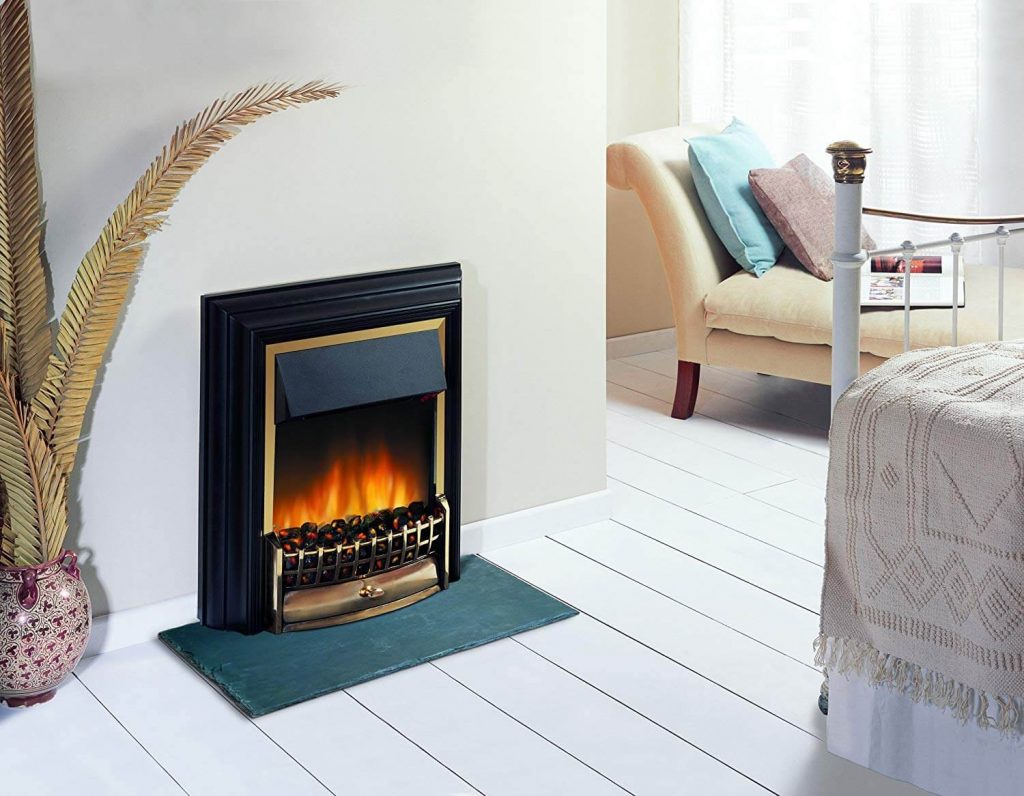
If you are still choosing a heater style, our guide to choosing an electric stove heater is helpful for comparing flame effect, heat output and room suitability.
Pre-Installation Checks
Confirm the appliance wattage, socket location, cable route, clearances, wall type and finished height before drilling or cutting. Electric fireplaces commonly use around 1 to 2 kW for heat, so the electrical supply must be suitable. Electrical Safety First advises care with extension leads and overloaded sockets, especially with high-load appliances.
Check for hidden pipes and cables before drilling. For plasterboard walls, use the fixing method specified by the manufacturer and do not rely on weak fixings for a heavy unit. For masonry, use suitable plugs and screws, keeping the bracket level.
Decide the finished height while sitting in the room, not while standing with a tape measure. A flame effect that looks impressive at eye level in a showroom can feel too high above a sofa, and a low heater outlet can blow directly into furniture if the room layout is tight. Mark the outline on the wall with low-tack tape before drilling so you can judge sightline, cable reach and furniture clearance together.
Wall-Mounted Fireplace Steps
- Unpack the appliance and check all fixings against the manual.
- Mark the bracket height and confirm clearances from furniture, curtains, shelves and TVs.
- Check the wall for hidden services and structural suitability.
- Drill, plug and fix the bracket level.
- Lift the fireplace onto the bracket with help if needed.
- Route the cable safely and test flame-only mode before heat mode.
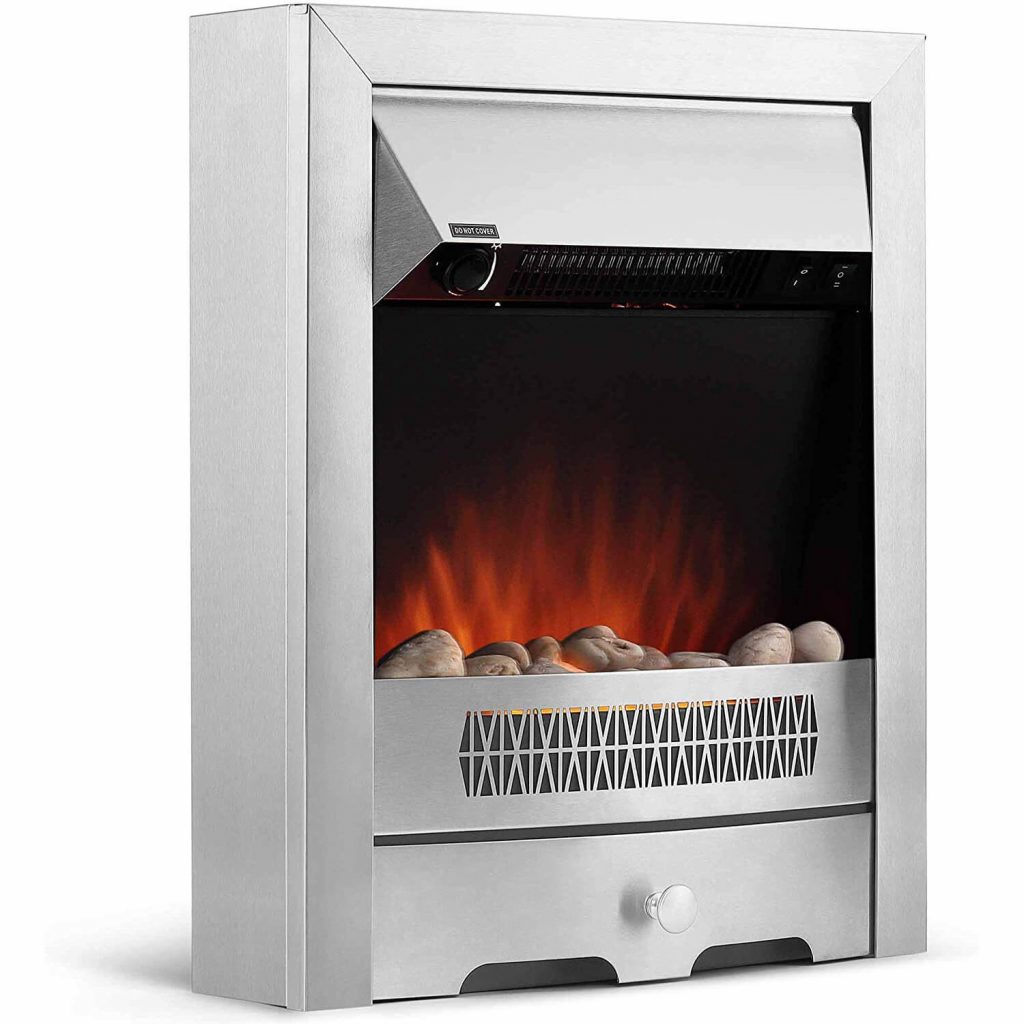
Do not do the final lift alone if the unit is wide, glass-fronted or awkward to grip. Many wall-mounted fires are not extremely heavy, but they are easy to twist while engaging the bracket. A second person helps keep the glass away from the wall, prevents the bracket scraping the finish and makes it easier to confirm that both hanging points have seated correctly.
Inset And Suite Installation
Inset fires need more precision. Measure the appliance body, trim and required recess, not just the visible front. Leave the ventilation gaps specified in the manual and avoid sealing the appliance into a tight box. If the unit needs to be removed for cleaning or repair, plan access before the surround is finished.
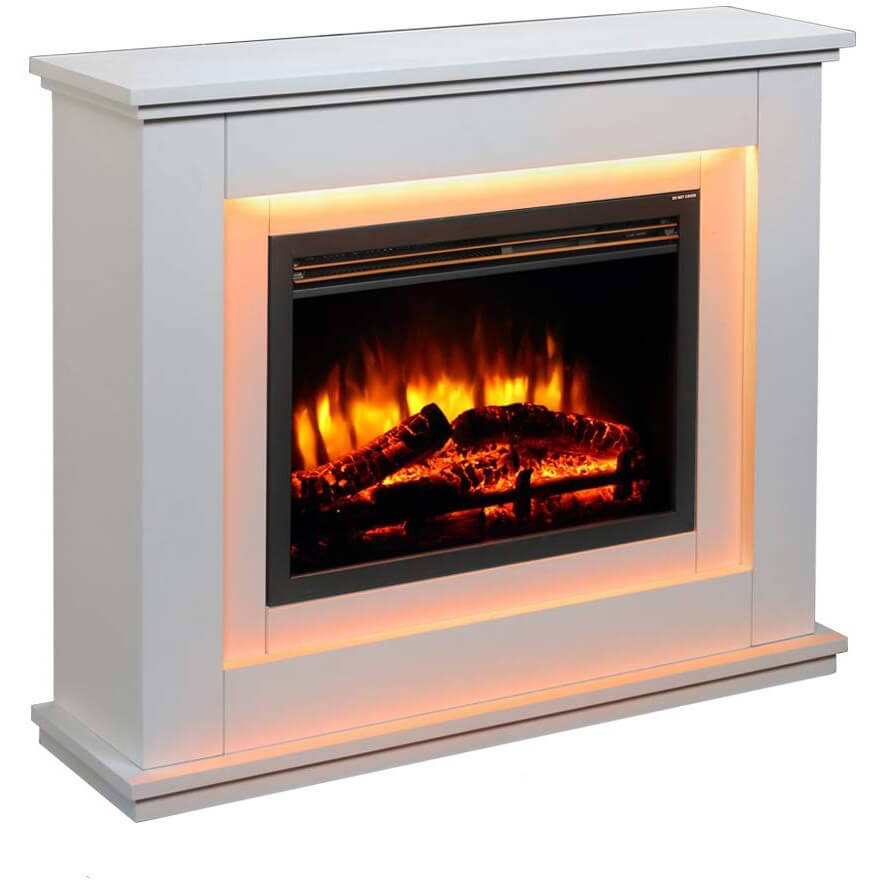
For a fireplace suite, assemble on a flat surface, protect the floor and check that the unit sits level against the wall. Anti-tip brackets are worth fitting where supplied, especially in homes with children or pets. If the suite is designed to sit against a flat wall, do not cut into the wall simply to make it look more built-in; that can create cable, fixing and ventilation problems the product was not designed around.
Media Wall, TV And Cable Planning
Media-wall installations need more planning than a simple wall bracket. The fire, TV, soundbar, sockets, aerial points and cable routes all compete for the same wall space. A common mistake is to build a neat-looking recess that leaves no access to the plug, no ventilation gap around the fire and no sensible route for replacing a cable later. Plan the appliance as something that may need servicing, cleaning or removal, not as a sealed ornament.
TV placement needs particular care. Some electric fires push heat from the front, some from the bottom and some from the top. Follow the manufacturer’s clearance guidance for your exact model rather than assuming all electric fireplaces are cool above the flame effect. If warm air is blowing towards a TV, shelf, cabinet or soundbar, move the layout before the wall is finished. It is much easier to change a drawing than to rebuild plasterboard and trim.
| Decision | Good Practice | Common Problem |
|---|---|---|
| Socket Position | Accessible, correctly rated and not crushed behind the appliance | Plug hidden permanently behind a sealed panel |
| Recess Depth | Matched to the fire body, trim and ventilation requirement | Opening based only on the visible front dimensions |
| TV Clearance | Checked against the fire manual and heat outlet position | TV placed above a top-venting heater without enough separation |
| Cable Route | Planned before boarding and reachable if a lead fails | Flexible leads trapped behind trim or run through sharp openings |
When To Use An Electrician
You can often assemble a freestanding electric fireplace or hang a plug-in wall-mounted model if the instructions, fixings and wall type are straightforward. Use an electrician when the job involves a new socket, a fused spur, hardwiring, hidden cable routing, an old or suspect circuit, repeated tripping, outdoor-adjacent cabling, or any uncertainty about electrical load. A 2 kW heater is not a decorative lamp; it is a sustained high-load appliance.
Do not hide an extension lead inside a media wall to avoid calling an electrician. It may look tidy on day one, but it creates access, heat and load problems. If the finished design needs the cable hidden, build the cost of proper electrical work into the project from the start. Also check whether the appliance warranty expects professional installation for particular installation types, especially inset and built-in units.
If an existing socket feels warm, crackles, is loose on the wall or already serves several high-load appliances, do not use it as the supply for a new fireplace. Fix the electrical issue first, then install the fire.
Safety And Finish Checklist
| Check | Why It Matters |
|---|---|
| Correct socket | Prevents overloaded leads and unsafe cable runs |
| Clear heat outlet | Stops furniture, shelves or TVs being warmed excessively |
| Secure fixing | Prevents wall-mounted units pulling away from the wall |
| Ventilation gap | Allows the heater to cool itself as designed |
Before calling the job finished, test the fireplace in flame-only mode and then on heat mode while watching where warm air travels. Check that the cable is not pinched, the plug remains accessible, the unit does not rattle on its bracket and the surround does not block controls or filters. If the fireplace has a remote, pair it and test all heat settings before putting tools away.
For running costs, remember that the flame effect usually uses far less power than the heater. The room-heating element is the part that uses serious electricity, so installation decisions should include where the heat actually goes. Our guide to electric heater running costs explains how wattage and usage time affect bills.
Expert Insights From Our Heating Engineers
Our engineers see most electric fireplace problems come from planning rather than the appliance itself. Cables are trapped behind trim, sockets are inaccessible, media walls are built too tight, or a heater is placed where warm air blows directly onto a TV or cabinet.
The neatest installation is not always the safest one. Keep service access, ventilation and electrical loading in mind from the start. If you want a completely hidden cable route, plan it as electrical work rather than disguising a flexible lead behind a sealed structure.
Summing Up
Install an electric fireplace by matching the method to the appliance type, checking the wall and power supply, following clearance rules and avoiding improvised wiring. Simple plug-in suites can be straightforward, but wall-mounted, inset and media-wall installations need more thought about fixings, ventilation, cable access and heat direction.
The best installation is not just the one that looks neat in photographs. It is the one that remains safe, serviceable and comfortable to use after the room is finished. If the plan involves new sockets, hidden cables, hardwiring or a built-in structure, get the electrical side designed properly before drilling, cutting or closing up the wall. If the layout feels complicated on paper, it will usually feel worse once plasterboard, trim and furniture are in the way. Careful planning is the cheapest part.
Frequently Asked Questions
Can I Install An Electric Fireplace Myself?
Many freestanding and plug-in wall-mounted electric fireplaces can be installed by a competent DIYer following the manufacturer instructions. You should not attempt hardwiring, new sockets, chasing cables into walls or altering fixed electrics unless you are qualified. When the installation affects wiring or structure, use a professional.
Does An Electric Fireplace Need A Chimney?
Most modern electric fireplaces do not need a chimney because they do not burn fuel or produce flue gases. The fireplace still needs enough space for airflow and safe heat discharge. A decorative chimney breast or media wall is optional, but clearances and cable access still matter.
Can I Plug An Electric Fireplace Into An Extension Lead?
It is usually better to plug an electric fireplace directly into a suitable wall socket. Electric heaters draw a high load, and extension leads can overheat if they are underrated, damaged, coiled or used permanently. Always check the appliance rating and manufacturer instructions before using any temporary lead.
How High Should A Wall-Mounted Electric Fireplace Be?
The correct height depends on the model, viewing position, heat outlet and clearances from TVs, shelves and furniture. Many living rooms look best when the flame effect sits around seated eye level, but safety instructions come first. Leave enough space above heat outlets to avoid warming objects.
Can An Electric Fireplace Go Under A TV?
Some electric fireplaces can be installed below a TV, but only if the heat outlet and clearances make it safe. Models with front or bottom heat outlets are often easier to pair with media walls than top-venting heaters. Check both the fireplace and TV guidance because heat can shorten electronics lifespan.
What Should I Check Before Cutting An Inset Opening?
Check the appliance dimensions, required recess depth, ventilation gaps, wall construction, hidden pipes or cables, socket location and access for future servicing. A neat opening is useless if the appliance overheats, the plug cannot be reached or the wall cannot carry the load.
Updated