
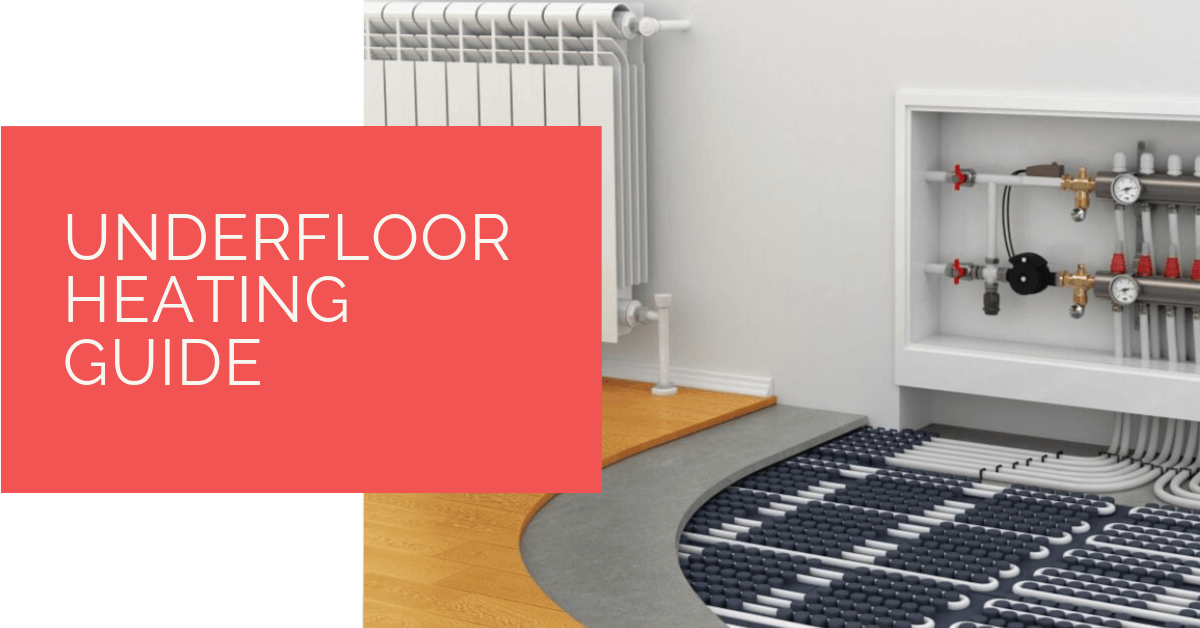
Underfloor heating works best when it is designed as part of the room, not added as an afterthought. The floor becomes the heat emitter, which means comfort, running cost and response time all depend on the floor build-up, insulation, pipe or cable layout, controls and the heat source behind it.
In a new build, extension or major renovation, underfloor heating can be one of the most comfortable ways to heat a home. It spreads warmth evenly, frees wall space and pairs especially well with heat pumps because it can run at lower water temperatures than many radiator systems. In a small retrofit bathroom, electric underfloor heating can also make sense, but usually as comfort heating rather than cheap whole-home heating.
This guide explains how underfloor heating works, the difference between wet and electric systems, what it costs, which floors work best, and how to decide whether it is better than radiators for your project.
Key Takeaways
- Underfloor heating turns the floor into a large heat emitter, creating even warmth from below.
- Wet underfloor heating uses warm water in pipes and is usually best for larger areas, new builds, extensions and heat pump systems.
- Electric underfloor heating uses cables or mats and is usually best for bathrooms, small rooms and simpler retrofits.
- Insulation below the system is essential. Without it, heat can be lost into the subfloor instead of the room.
- Floor coverings matter. Tile and stone transfer heat well, while thick carpet and some timber floors need careful checking.
- Underfloor heating can replace radiators, but only if the heat output is designed around the room’s heat loss.
- It works best with steady controls, sensible zoning and realistic expectations about warm-up time.
How Underfloor Heating Works
Underfloor heating warms the floor surface so heat rises gently into the room. Instead of relying on a small hot radiator on one wall, it spreads heat across a much larger area. This can make the room feel evenly warm and reduce the cold spots that sometimes happen with radiators.
There are two main ways to do this. A wet underfloor heating system circulates warm water through pipes beneath the floor. An electric underfloor heating system uses heating cables, mats or foil elements powered by electricity.
The floor surface does not need to become very hot. In fact, a well-designed underfloor heating system usually works with lower surface and water temperatures than a radiator system. That is why it can feel comfortable without blasting heat into the room.

Wet vs Electric Underfloor Heating
The biggest decision is whether to use wet or electric underfloor heating. They can feel similar once installed, but they suit different projects.
Wet Underfloor Heating
Wet underfloor heating uses water pipes connected to a boiler, heat pump or other wet heating source. The pipes are usually embedded in screed, clipped into panels or fitted into a low-profile overlay system. A manifold controls the flow of warm water to each zone.
Wet systems are usually better for larger areas and long running hours because they can connect to efficient central heating. They are especially strong in new builds, extensions, whole ground floors and homes moving towards heat pumps.
Electric Underfloor Heating
Electric underfloor heating uses cables, loose wire, mats or foil systems beneath the floor covering. It is thinner and often easier to retrofit than wet underfloor heating, especially in bathrooms and small rooms.
The trade-off is running cost. Electric resistance heating is simple, but each unit of heat normally needs one unit of electricity. For a small bathroom used briefly, that may be fine. For a large living area used every day, it can become expensive compared with a wet system.
| System Type | Best Suited To | Main Advantage | Main Trade-Off |
|---|---|---|---|
| Wet Underfloor Heating | New builds, extensions, large rooms and heat pump homes | Lower running cost potential for regular heating | More installation work and floor build-up |
| Electric Mat System | Bathrooms, en-suites and small retrofit areas | Thin, quick to install and good for comfort heating | Higher running cost if used for long periods |
| Low-Profile Wet System | Retrofits where floor height is limited | Wet heating benefits with less floor build-up | Needs careful output checks and can cost more |
| In-Screed Wet System | New floors and major renovations | Excellent heat spread and thermal mass | Slower response time |
Where Underfloor Heating Works Best
Underfloor heating is at its best when the floor is already being built, lifted or replaced. That is why it is popular in extensions, kitchen renovations, new builds and deep retrofits. The installation can be planned into insulation, floor height, thresholds, doors, skirting and final floor finishes.
Bathrooms are a common use case for electric underfloor heating because the area is small and tile floors can feel cold underfoot. In this setting, the system may be used for comfort rather than as the only heat source.
Open-plan kitchen and dining spaces are often good candidates for wet underfloor heating. Radiator wall space can be limited by glazing, units and doors, while a heated floor can deliver warmth without taking up wall space. The heat loss still needs calculating. A large glass extension can lose a lot of heat, and underfloor heating should not be assumed to cope without proper design.
Underfloor Heating vs Radiators
Radiators and underfloor heating deliver heat differently. Radiators heat from a smaller, hotter surface, so they can respond quickly. Underfloor heating uses a larger, cooler surface, so it tends to feel more even but slower to change.
Underfloor heating can be more comfortable because heat is spread across the room. It also frees wall space and can help low-temperature heating systems run efficiently. Radiators are usually cheaper and easier to install in existing homes, especially when floors are not being replaced.
The best answer is often mixed. A renovated kitchen extension might use wet underfloor heating, while upstairs bedrooms keep radiators. That can be more practical than forcing one system into every room. Our underfloor heating vs radiators guide covers the comparison in more detail.
Underfloor Heating With Heat Pumps
Underfloor heating pairs very well with heat pumps because both favour lower flow temperatures. A heat pump is usually more efficient when it does not have to produce very hot water. Underfloor heating can warm a room with a lower water temperature because the whole floor is working as the emitter.
This does not mean every heat pump home must have underfloor heating. Correctly sized radiators can also work well. But where the floor is already being built or replaced, wet underfloor heating can be one of the best emitter choices for an air source or ground source heat pump.
The design still matters. Pipe spacing, flow temperature, insulation, floor covering and controls all affect performance. If the floor cannot release enough heat into the room, the heat pump may need to run hotter, which weakens efficiency. Energy Saving Trust gives a useful overview of heat pump systems and why low-temperature design matters.
Floor Build-Up, Insulation and Floor Coverings
Underfloor heating performance depends heavily on what sits below and above the system. Insulation below the pipes or cables is essential because it pushes heat upwards into the room rather than down into the subfloor, slab or ground.
Floor build-up affects thresholds, doors, stairs, skirting and kitchen units. A wet in-screed system may be easy to plan in a new floor but awkward in an existing finished room. Low-profile retrofit systems reduce height build-up, but they still need enough output for the room.
Floor coverings matter too. Tile, stone and polished concrete transfer heat well. Vinyl and laminate can work if approved by the manufacturer. Engineered timber may be suitable, but temperature limits and moisture movement need care. Carpet can work, but thick carpet and underlay insulate the floor and reduce heat output.
Before choosing the final floor finish, check the tog rating, maximum surface temperature and adhesive or underlay compatibility. A beautiful floor that blocks heat can make the heating system look worse than it is.
Installation Process
A good underfloor heating installation starts with heat loss, not pipe or cable. The installer should calculate how much heat each room needs, then design pipe spacing, cable output, zones and controls around that requirement.
Wet Underfloor Heating Installation
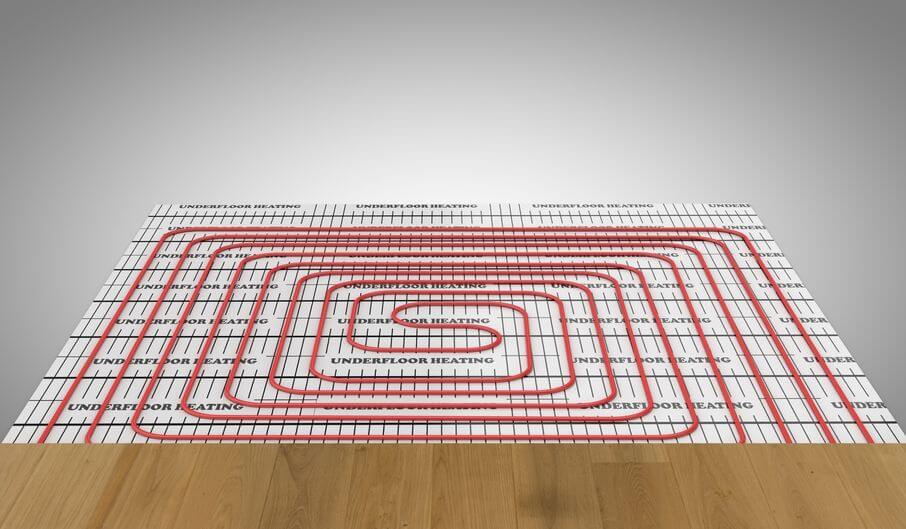
Wet systems usually involve insulation, pipe layout, manifold installation, pressure testing, connection to the heat source and commissioning. In screed systems, the pipes are covered by screed before the final floor finish is added. In overlay systems, the pipes sit in panels or boards above the existing floor structure.
Pressure testing before the pipes are covered is essential. Once a wet system is buried beneath a finished floor, faults are far harder to correct.
Electric Underfloor Heating Installation
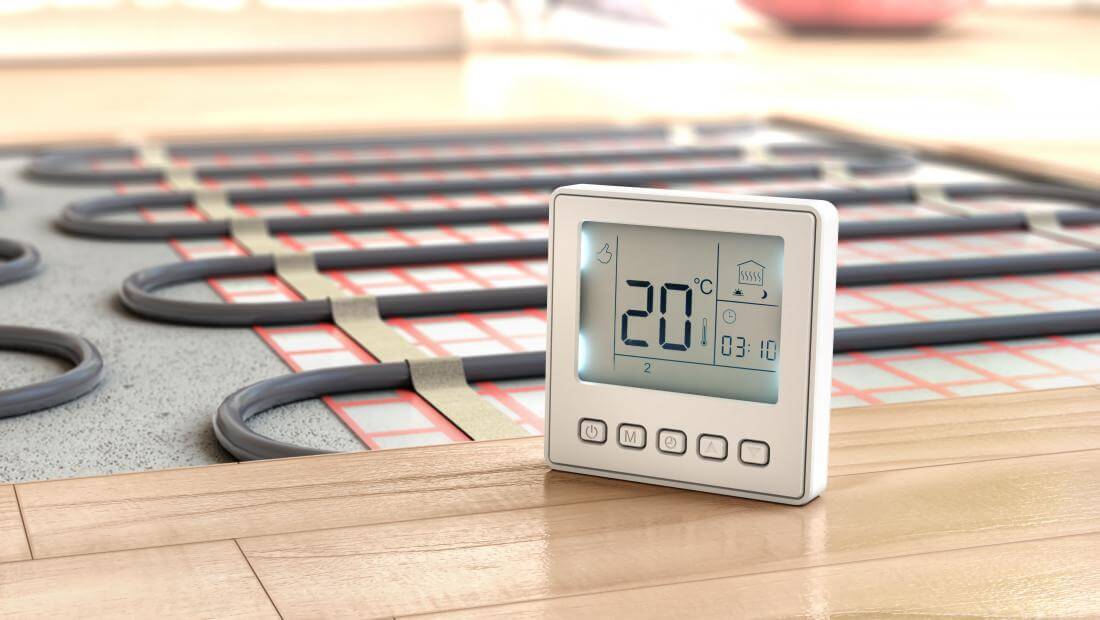
Electric systems usually involve insulation boards, heating mats or loose cables, a floor temperature sensor, thermostat wiring and the final floor finish. Electrical work should be done by a qualified person, and the floor sensor should be positioned correctly so the system controls the floor temperature safely.
Electric mats are straightforward in square rooms, while loose cable can suit awkward shapes. Foil systems may be used beneath some floating floors. The exact system should match the floor finish and room use.
Costs and Running Costs
Underfloor heating costs vary widely because the system is only part of the job. Insulation, floor preparation, screed, overlay boards, manifolds, thermostats, electrical work, plumbing, floor finishes and reinstatement can all affect the final cost.
As a broad rule, electric underfloor heating is usually cheaper to install but more expensive to run. Wet underfloor heating usually costs more upfront but can be cheaper to run in larger areas, especially when connected to an efficient boiler or heat pump.
Be careful with simple cost-per-square-metre figures. A small bathroom electric mat and a whole ground-floor wet system are not comparable projects. For running costs, look at the wattage or heat demand, hours of use, electricity or heating tariff, insulation and controls.
Controls, Warm-Up Times and Zoning
Underfloor heating works best with steady, well-zoned controls. Each room or area should have a thermostat suited to how the space is used. Bedrooms, bathrooms and open-plan living spaces do not all need the same schedule.
Warm-up time depends on the system. Electric mats close to the floor surface can feel warm relatively quickly. Screeded wet systems have more thermal mass, so they respond more slowly but hold heat well. This is not a fault. It just means they should be controlled differently from radiators.
A common mistake is turning the thermostat up sharply because the floor feels slow. That can overshoot comfort and waste energy. It is usually better to use sensible schedules, weather compensation where relevant and small temperature changes.
Pros and Cons of Underfloor Heating
Pros
- Even heat distribution across the room.
- Warm floor comfort, especially with tile or stone.
- No radiators taking up wall space.
- Good match for heat pumps and low-temperature heating.
- Useful zoning and room-by-room control.
- Can improve comfort at slightly lower air temperatures.
Cons
- More disruptive to install than radiators, especially in finished rooms.
- Wet systems can add floor height and need careful planning.
- Electric systems can be expensive to run in large or frequently used areas.
- Some floor coverings reduce heat output.
- High-mass floors can respond slowly.
- Poor design is difficult to fix after the floor is finished.
Common Underfloor Heating Mistakes
- Installing the system without a room-by-room heat loss calculation.
- Skipping or reducing insulation beneath the system.
- Choosing the final floor covering before checking heat transfer.
- Using electric underfloor heating for large daily-use areas without checking running cost.
- Expecting a screeded wet system to heat like a quick-response radiator.
- Failing to pressure-test wet pipework before covering it.
- Putting too many rooms on one control zone.
- Forgetting floor height changes at doors, stairs and thresholds.
Most underfloor heating problems are design or expectation problems. The system can be excellent, but it needs to be specified for the room, the heat source and the floor finish.
Case Study: Adding Underfloor Heating to a Kitchen Extension
Background
A family building a rear kitchen extension wanted a warm, open-plan space without radiators taking up wall space. The room had large glazed doors and a tiled floor, so comfort and heat loss both needed careful attention.
Assessment
The installer calculated the room heat loss before the floor was built. Wet underfloor heating was chosen because the room would be used every day and the system could be planned into the new floor build-up. Extra insulation was included below the pipework.
Decision
The family originally wanted a thicker floor finish, but the heating and flooring suppliers advised a more suitable tile specification to improve heat transfer. The room was given its own zone so it could run differently from the radiator-heated parts of the house.
Result
The finished space felt evenly warm, and the walls remained free for kitchen units and furniture. The key lesson was that underfloor heating worked because it was planned before the floor was finalised. Retrofitting the same system later would have been far more disruptive.
Expert Insights From Our Heating Engineers
One of our senior heating engineers with over 18 years of experience says underfloor heating is excellent when the floor build-up is treated as part of the heating system.
“The pipe or cable is only one part of it. Insulation, floor finish, controls and heat loss decide whether underfloor heating feels brilliant or disappointing. If someone asks about underfloor heating after the floor has already been specified, the best options may already be limited.”
He also says heat pump projects benefit from early planning. “Wet underfloor heating is a natural fit for heat pumps, but it still needs proper output calculations. Low flow temperature is good for efficiency only if the floor can actually deliver enough heat.”
Frequently Asked Questions
How Does Underfloor Heating Work in Simple Terms?
Underfloor heating warms the floor so the room is heated from a large surface area. Wet systems circulate warm water through pipes under the floor. Electric systems use heating cables or mats. The heat rises gently and spreads more evenly than heat from a small radiator surface.
Is Wet or Electric Underfloor Heating Better?
Wet underfloor heating is usually better for larger areas, whole rooms and regular heating because it can connect to efficient central heating or a heat pump. Electric underfloor heating is usually better for small retrofit areas, such as bathrooms, where installation simplicity matters more than long running hours.
Can Underfloor Heating Replace Radiators?
Yes, if it is designed to meet the room’s heat loss. Underfloor heating can be the main heat source in a room or whole home, but the output must match the building. In some homes, a mixed system with underfloor heating downstairs and radiators upstairs is the most practical option.
Is Underfloor Heating Good With a Heat Pump?
Yes, wet underfloor heating is often an excellent match for heat pumps because it can heat rooms using lower water temperatures. Lower flow temperatures usually help heat pumps run more efficiently. The system still needs proper insulation, pipe spacing, controls and heat-loss calculations.
What Flooring Works Best With Underfloor Heating?
Tile, stone and polished concrete usually transfer heat very well. Vinyl, laminate and engineered timber can also work if approved by the manufacturer. Carpet can be used, but thick carpet and underlay reduce heat output, so the combined tog rating needs checking.
Is Underfloor Heating Expensive to Run?
It depends on the system type, room heat loss, insulation, floor covering, controls and tariff. Electric underfloor heating can be expensive in large rooms used for long periods. Wet underfloor heating can be economical in well-insulated spaces, especially with a heat pump or efficient central heating source.
How Long Does Underfloor Heating Take to Warm Up?
Electric systems near the floor surface may warm fairly quickly. Screeded wet systems are slower because the floor has more thermal mass, but they hold heat well. Underfloor heating is usually best controlled steadily rather than switched on and off for short bursts.
Can Underfloor Heating Be Retrofitted?
Yes, but the practicality depends on floor height, construction, room use and budget. Electric systems and low-profile wet systems are common retrofit options. Retrofitting is easiest when floors are already being lifted or replaced as part of a renovation.
What Can Go Wrong With Underfloor Heating?
Common problems include poor insulation, unsuitable floor coverings, weak heat output, poor zoning, slow response expectations and leaks or faults hidden beneath finished floors. Good design, pressure testing, proper controls and clear commissioning records reduce the risk.
Summing Up
Underfloor heating can be comfortable, efficient and space-saving, but it needs proper planning. Wet systems are usually the stronger choice for larger areas, extensions and heat pump homes. Electric systems are usually better for small rooms and comfort heating where simple installation matters.
The best results come when the floor, insulation, heat source, controls and floor covering are designed together. If you are already renovating or building an extension, that is the ideal moment to consider underfloor heating. If the floor is already finished, check the practicalities carefully before committing.
Updated