

CADR is one of the few air purifier specifications that can actually help you compare models. It tells you how quickly a purifier can deliver cleaned air for specific particles, rather than simply claiming to be powerful or suitable for a large room.
It is not the only number that matters, but it is a useful reality check when a purifier’s marketing sounds better than its airflow and filtration performance.
Contents
Key Takeaways
- CADR stands for Clean Air Delivery Rate.
- It measures cleaned airflow, usually in cubic feet per minute.
- Separate CADR scores may be given for smoke, dust and pollen.
- Higher CADR means faster air cleaning for the tested particle type.
- CADR does not measure gases, odours, noise, energy use or filter cost.
What CADR Measures
CADR combines airflow and filtration efficiency. A purifier with a strong fan but weak filter will not score well, and neither will a great filter with poor airflow. The number indicates how much clean air the unit can deliver per minute under the test conditions.
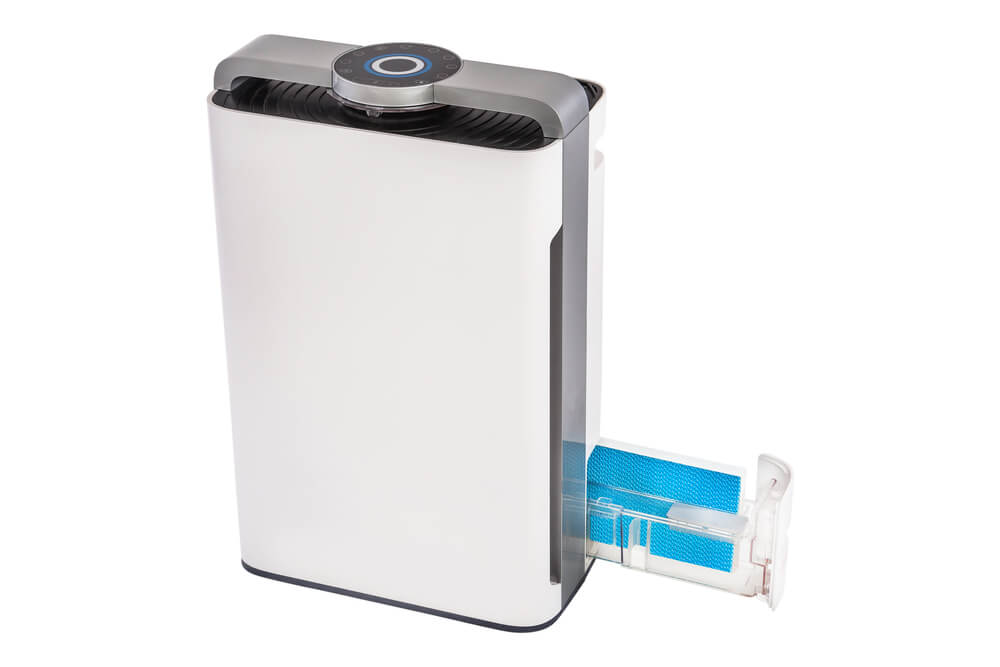
AHAM Verifide explains CADR as separate scores for smoke, dust and pollen, with higher numbers meaning faster filtration for those pollutants. That makes it more useful than vague phrases such as powerful purification.
How To Match CADR To Room Size
A common AHAM rule of thumb is that the CADR should be at least two-thirds of the room area in square feet for standard 8 ft ceilings. In UK terms, you may need to convert room measurements or use the manufacturer’s room-size chart carefully.
| Room Area | Approx Minimum CADR | Use Case |
|---|---|---|
| 120 sq ft | 80 cfm | Small bedroom |
| 180 sq ft | 120 cfm | Medium bedroom |
| 300 sq ft | 200 cfm | Large room |
Smoke, Dust And Pollen Scores
CADR may be listed as three numbers because particle sizes differ. Smoke particles are smaller, dust is medium-sized and pollen is larger. If allergies are the main concern, dust and pollen scores matter. If fine particles from smoke or pollution are the issue, smoke CADR deserves attention.
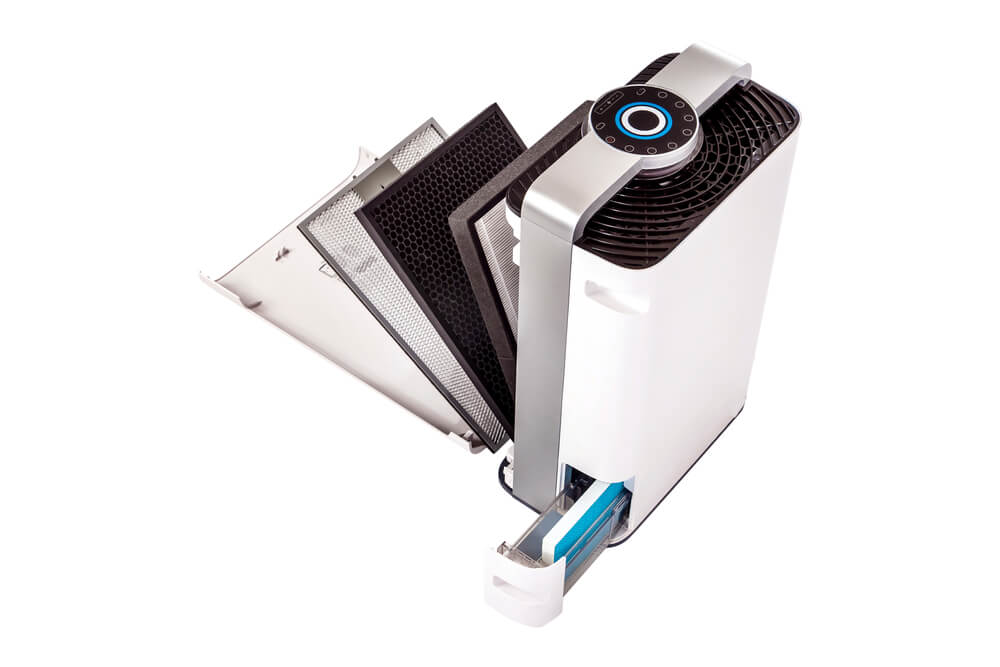
Our guide to air filters explains how CADR relates to HEPA, carbon and pre-filter design.
What CADR Does Not Tell You
CADR does not tell you whether the purifier is quiet enough for sleep, how much replacement filters cost, whether it handles odours well, or how it performs on low fan settings. Many purifiers achieve their best CADR on maximum speed, which may be too noisy for everyday use.
If you are buying a purifier, compare CADR alongside filter availability, noise, energy use and room layout. Our air purifier guide covers those practical buying factors.
CADR, ACH, CFM And HEPA: What Is The Difference?
CADR tells you the effective cleaned airflow for a particle type. CFM is airflow volume, whether cleaned or not. ACH, or air changes per hour, estimates how many times the room air volume is processed. HEPA describes filter efficiency, not room-cleaning speed. A good air purifier needs enough airflow and a good filter.
This is why CADR is useful: it combines fan movement and filtration into one tested performance number. It is still not perfect, but it is harder to fake than a vague large-room claim.
Worked Room Examples
| Room | Approx Area | Useful CADR Direction |
|---|---|---|
| Box bedroom | 9 m² / 97 sq ft | Small purifier may be enough |
| Double bedroom | 14 m² / 151 sq ft | Look for stronger dust/smoke CADR |
| Open-plan living room | 30 m² / 323 sq ft | Needs high CADR or multiple units |
How CADR Can Mislead If Used Alone
Many units achieve their headline CADR on maximum fan speed. If that setting is too noisy for sleep, the real overnight cleaning rate is lower. CADR also does not show filter replacement cost, carbon quantity for odours, sensor quality or how well air circulates around furniture.
Placement changes performance too. A purifier tucked behind a sofa, boxed into a corner or placed with the intake against a wall may not process room air properly. Leave enough clearance around the intake and outlet, and keep internal doors in mind. A purifier sized for a bedroom will not clean an open-plan downstairs space just because the packaging uses a generous room-size claim.
For allergy use, CADR is only one part of exposure reduction. Bedding, dust reservoirs, pet dander, damp and pollen entry all still matter. A high-CADR purifier can reduce airborne particles, but it cannot remove allergens settled in carpets or stop new particles being generated.
Using CADR In A Real Buying Decision
Start with the room where the purifier will spend most of its time. Measure that room, choose a CADR that suits it, then check whether the unit can deliver useful cleaning at a noise level you can live with. For bedrooms, low-speed performance can matter more than the headline maximum setting.
If a manufacturer lists only a very large room size and no CADR, be cautious. It may still be a decent unit, but you have less objective evidence. CADR is not perfect, but it gives you a common language for comparing air purifiers that would otherwise rely on marketing claims.
For higher ceilings, open-plan rooms or wildfire-smoke concerns, use a more powerful purifier than the basic room-area rule suggests.
Expert Insights From Our Heating Engineers
Our engineers treat CADR as a sizing tool, not a guarantee of healthy air. A correctly sized purifier can reduce airborne particles in one room, but it will not fix damp, remove settled dust, stop pollen entering or replace ventilation.
They recommend buying enough CADR for the real room, then running the purifier at a setting you can tolerate. A powerful unit left switched off because it is too noisy cleans no air.
Summing Up
CADR means Clean Air Delivery Rate. Use it to compare how quickly air purifiers clean smoke, dust and pollen particles, then check noise, filter costs, placement and room size before deciding.
Frequently Asked Questions
Is A Higher CADR Always Better?
A higher CADR means faster particle cleaning for the tested pollutant, but it is not the only factor. Noise, filter cost, energy use, room size and low-speed performance also matter. A very high CADR unit may be unnecessary in a small room.
What CADR Do I Need For A Bedroom?
Measure the room area and use the manufacturer’s guidance or AHAM-style sizing rules. A larger bedroom needs a higher CADR, especially if you want effective cleaning on a quieter setting. Bedrooms also need low noise and dim lights for sleep.
Is CADR The Same As HEPA?
No. HEPA describes filter efficiency against certain particle sizes, while CADR describes how much clean air the whole purifier delivers. A purifier can have a good filter but low CADR if the fan moves too little air.
Does CADR Measure Odours Or VOCs?
No, CADR is mainly about particle removal, commonly smoke, dust and pollen. Odours and VOCs depend more on activated carbon quantity, contact time and source control. A purifier with high particle CADR may still be weak on smells.
Why Do Some Air Purifiers Not List CADR?
Some manufacturers avoid CADR because the product has not been tested, uses a technology not suited to the rating, or the score is less impressive than the marketing. Lack of CADR does not automatically mean poor performance, but it makes comparison harder.
Should I Trust Manufacturer Room Size Claims?
Treat them cautiously unless you know the CADR, ceiling height and fan setting used. Some room-size claims assume low air changes or maximum speed. CADR gives a more transparent way to compare models across brands.
Updated